France’s public transport is one of the country’s quieter travel advantages — the kind of thing that doesn’t show up in a highlight reel but makes every single day of a trip easier. The TGV network alone means you can genuinely skip renting a car for most itineraries, and city-level transport in Paris, Nice, Lyon, and Strasbourg is dense enough that a taxi becomes the exception rather than the default. This guide covers exactly what to buy, what changed recently, and how to move between cities without wasting a travel day on logistics.
Table of Contents
- Getting around Paris: Metro, RER, and bus
- Paris ticket types and 2026 prices
- Getting between cities: the TGV
- Getting around Nice and the Riviera
- Getting around Lyon and Strasbourg
- Airport transfers
- Mistakes to avoid
- FAQs
Getting around Paris: Metro, RER, and bus
The Paris Metro is one of the densest urban rail networks in the world — 16 lines and over 300 stations packed into a relatively compact city, which means you’re rarely more than a 5-10 minute walk from an entrance. The RER (the regional express network) extends further out, connecting to both airports and destinations like Versailles. Buses cover what the Metro doesn’t, though as a visitor you’ll likely use them far less than the trains.
A quirk worth knowing: metro-to-bus transfers require a separate ticket — unlike some cities where one fare covers a full journey across transport types, Paris treats them as distinct trips unless you’re using a time-based pass. Bus tickets are valid for 90 minutes but don’t allow return travel on the same route within that window.
Paris ticket types and 2026 prices
Paris overhauled its ticketing system in 2025, and the old carnet (the discounted 10-ticket bundle most guidebooks still reference) and the classic Ticket t+ paper ticket are no longer sold — if you’re reading an older travel guide that mentions either, it’s out of date. Here’s what’s actually available now:
- Single Metro/RER/train ticket: €2.55
- Single bus/tram ticket: €2.05
- Airport transfer ticket: €14.00 flat fare (Roissybus and Orlybus, the dedicated airport bus lines, no longer operate as separate services, so this is built into the standard RER/train fare structure now)
- Navigo Day pass: €12.30, valid until midnight regardless of purchase time — breaks even at roughly 5 single-ticket trips
- Paris Visite pass: €30.60-€78 depending on 1-5 day duration, and includes airport access, which the Navigo Day pass doesn’t
- Weekly Navigo pass: €32.40, running strictly Monday to Sunday regardless of which day you start
- Monthly Navigo pass: €90.80
For most trip lengths, the practical answer is a Navigo Easy card — a reloadable €2 card that holds up to 20 Metro/RER/train tickets or 20 bus/tram tickets at a time, bought and topped up at station machines or through the RATP and Île-de-France Mobilités apps. It avoids the need to buy a new ticket for every single ride while still being flexible if your daily trip count is unpredictable. If you’re taking more than 5 trips on a single day, switch to the Navigo Day pass for that day instead.
One rule to know before you board anything: ticket inspections happen, and fines for travelling without a valid ticket run around €100 per person, paid on the spot. It’s not a common tourist trap so much as a genuine rule that locals respect — keep your ticket until you’ve fully exited the system, since some stations check on the way out too.

Getting between cities: the TGV
France’s TGV (train à grande vitesse, or high-speed train) network is genuinely one of the best reasons to skip renting a car for a multi-city France trip. Paris to Lyon takes under 2 hours; Paris to Nice runs roughly 5.5-6 hours direct, or can be broken up with a connection; Paris to Strasbourg is about 1 hour 50 minutes. Fares are dynamic, similar to airline pricing — booking 2-3 months ahead can get you a third of what the same route costs booked the week before travel, so if your dates are fixed, lock in TGV tickets early rather than treating them as a last-minute purchase.
Trains depart from specific Paris stations depending on direction — Gare de Lyon for the south and east (Lyon, Nice, Marseille), Gare du Nord for the north and international routes (including the Eurostar to London), Gare de l’Est for Strasbourg and eastern France. Double-check which station your ticket departs from; they’re not close to each other, and this is a genuinely common way to miss a train.

Getting around Nice and the Riviera
Nice’s tram network covers the old town, the main shopping streets, and connects out toward the airport, and it’s simple enough to use without much planning — buy tickets at machines on the platform or through the Lignes d’Azur app. For day trips along the coast — Villefranche-sur-Mer, Èze, Monaco, Cannes, Antibes — the regional TER trains running along the coastline are frequent, cheap, and arguably the best way to see the Riviera’s dramatic cliffside geography, since the rail line hugs the coast for long stretches.
Getting around Lyon and Strasbourg
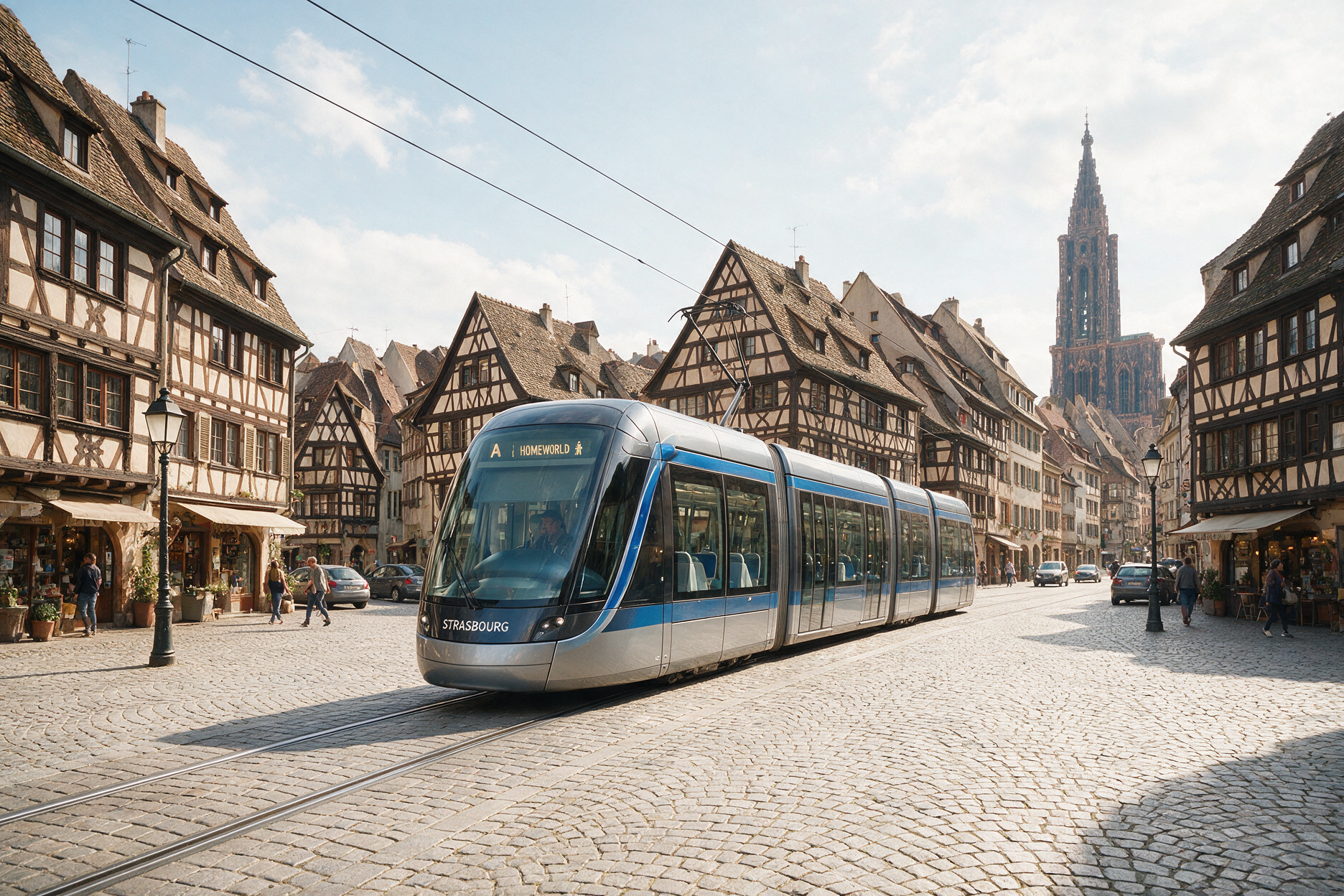
Lyon runs an integrated metro, tram, and bus network (TCL) that’s straightforward to navigate, with tickets and passes similar in structure to Paris but at somewhat lower prices. Strasbourg’s tram network is arguably the more pleasant experience of the two — the trams run right through the historic Petite France district and around the cathedral, doubling as a low-effort way to see the city’s architecture while getting somewhere. Both cities are compact enough that a lot of central sightseeing is walkable, with transit filling in for longer hops or tired feet at the end of a day.
Airport transfers
From Charles de Gaulle into central Paris, the RER B train is the fastest and cheapest option at around 35-50 minutes and the €14 flat airport fare mentioned above; taxis run a fixed rate of roughly €56-65 depending on which bank of the Seine you’re heading to, and take 45-60 minutes depending on traffic. From Nice Côte d’Azur Airport, the tram runs directly into the city centre and is the simplest option for most hotels along or near the Promenade des Anglais.
Mistakes to avoid
- Buying a Navigo weekly pass on a Thursday. It runs Monday to Sunday regardless of purchase date, so buying mid-week wastes several days of validity — a daily pass or Navigo Easy tickets make more sense in that case.
- Assuming old guidebook advice about carnets still applies. The 2025 ticketing overhaul genuinely changed what’s available; if a source mentions buying a carnet of 10 tickets, it’s outdated.
- Booking TGV tickets too close to travel dates. Fares climb significantly in the final weeks before departure on popular routes, especially Paris-Nice in summer.
- Not validating tickets where required. Some regional and TER trains still require you to validate a paper ticket at a machine before boarding — an easy step to forget if you’re used to fully digital systems.
Apps and payment worth having on your phone
Download the Île-de-France Mobilités (IDF Mobilités) app before you land — it handles route planning, real-time delays, and digital ticket purchases for the entire Paris region, and it’s noticeably more reliable than Google Maps for live disruption info on the Metro specifically. For intercity trains, the SNCF Connect app is where you’ll book and hold your TGV tickets; it’s also where fare drops and last-minute promotional prices show up first, so it’s worth checking a couple of times if your dates are flexible. In Nice, Lyon, and Strasbourg, each local operator (Lignes d’Azur, TCL, and CTS respectively) has its own app, and all three are straightforward enough to figure out even without fluent French, since the interface is largely icon and map-based.
A small but genuinely useful detail: most French transit apps and payment terminals now accept international contactless cards directly, which means you can often skip the local ticketing app entirely for single trips and just tap your Indian bank card or phone wallet at the gate — though check with your bank about foreign transaction fees before relying on this as your primary method across a full week of travel, since those small charges add up.
A photography tip while you’re in transit
Several Paris Metro entrances — particularly at Abbesses and Porte Dauphine — still have their original Art Nouveau ironwork canopies designed by Hector Guimard in the early 1900s, and they’re some of the most photographed transit entrances in the world for good reason. If you’re near either station, it’s worth the five-minute detour even if you’re not actually taking the Metro from there — early morning light before the crowds gather makes for a noticeably better shot than midday.
FAQs
Do I need a car to see France?
Not for the cities covered in this guide — Paris, Nice, Lyon, and Strasbourg are all well connected by train, and each has solid local transit. A car becomes more useful if you’re planning to explore rural regions like the Loire Valley château country or the Provençal countryside in depth.
Is the Paris Metro safe for tourists?
Yes, it’s used by millions of people daily and is generally safe, though like any major city system, it’s worth keeping bags zipped and being aware of pickpockets in crowded stations, particularly around major tourist stops.
Can I use contactless payment on the Paris Metro?
Increasingly yes — many stations now accept contactless bank cards directly at the gates for single fares, though the Navigo Easy card remains the more cost-effective option if you’re taking multiple trips.
How far in advance should I book TGV tickets?
Ideally 2-3 months ahead for the best fares, especially for the Paris-Nice route in summer. Tickets typically go on sale about 3-4 months before the travel date.
What’s the best way to get from Paris to Mont Saint-Michel by public transport?
There’s no direct train — the standard route is TGV to Rennes, then a connecting bus (roughly 4-4.5 hours total), which is exactly why most visitors, including us, recommend a guided day tour instead if you’re doing it as a day trip rather than an overnight stay.
Are French trains usually on time?
The TGV network has a strong on-time record by European standards, though regional TER trains and the Paris RER are more prone to occasional delays and strikes, which are a genuine (if infrequent) part of French public life. Building a little buffer time before a flight connection is sensible if your journey involves an RER leg to the airport.
Plan the logistics, then forget about them
Getting the transit details right is what lets you actually enjoy a trip rather than manage it — it’s baked into how we build every France itinerary, down to which train station you need for each leg. Our France travel guide covers the bigger picture of where to stay near the transit hubs that matter, and our team handles train bookings as part of every custom France trip we plan — get in touch to have the logistics sorted before you land.