France’s food culture is built on butter, cream, and animal fat in a way that can genuinely worry a vegetarian traveller before the trip even starts — and it’s a fair worry, since classic French technique leans on all three more than almost any other major cuisine. Stock, the base of most French sauces, is traditionally made from meat or fish bones; even a seemingly innocent vegetable soup at a traditional restaurant may have started life with a chicken or beef stock base, so “vegetarian” on a French menu sometimes needs a follow-up question rather than a glance.
The good news, which surprises a lot of our clients, is that France’s cities have quietly built some of Europe’s more interesting plant-based food scenes over the last decade, running alongside the traditional bistro world rather than replacing it. You just need to know where to look instead of hoping the hotel restaurant has a decent salad.
This vegetarian and vegan food guide for France gives you one to two specific, real restaurant recommendations in each of six cities — Paris, Lyon, Nice, Strasbourg, and the Normandy and Mont Saint-Michel area — so you’re not improvising on day one, plus the practical vocabulary and habits that make the rest of the trip easier.
A quick honest note before we get into the city guides: this isn’t a ranking of the single best vegetarian restaurant in France, and it isn’t trying to be. It’s a working list — places we or our travellers have actually eaten at and would send someone back to, chosen for being genuinely representative of what each city does well, not just the most Instagrammed option.
Table of Contents
- Paris
- Lyon
- Nice
- Strasbourg
- Normandy
- Mont Saint-Michel
- Practical tips for vegetarian travel in France
- FAQs
Paris
Paris genuinely has one of Europe’s better vegan food scenes now, which is not something most first-time visitors expect. Soya, a casual cafe with a globally-inspired vegan menu and excellent house-made desserts, is a reliable, unfussy lunch spot that doesn’t require a reservation. For something distinctly French, VG Pâtisserie is a dedicated vegan bakery doing entirely plant-based versions of classic French pastries and macarons — genuinely worth a visit even if you’re not vegan, purely for the craft of pulling off a French pastry without butter or eggs.
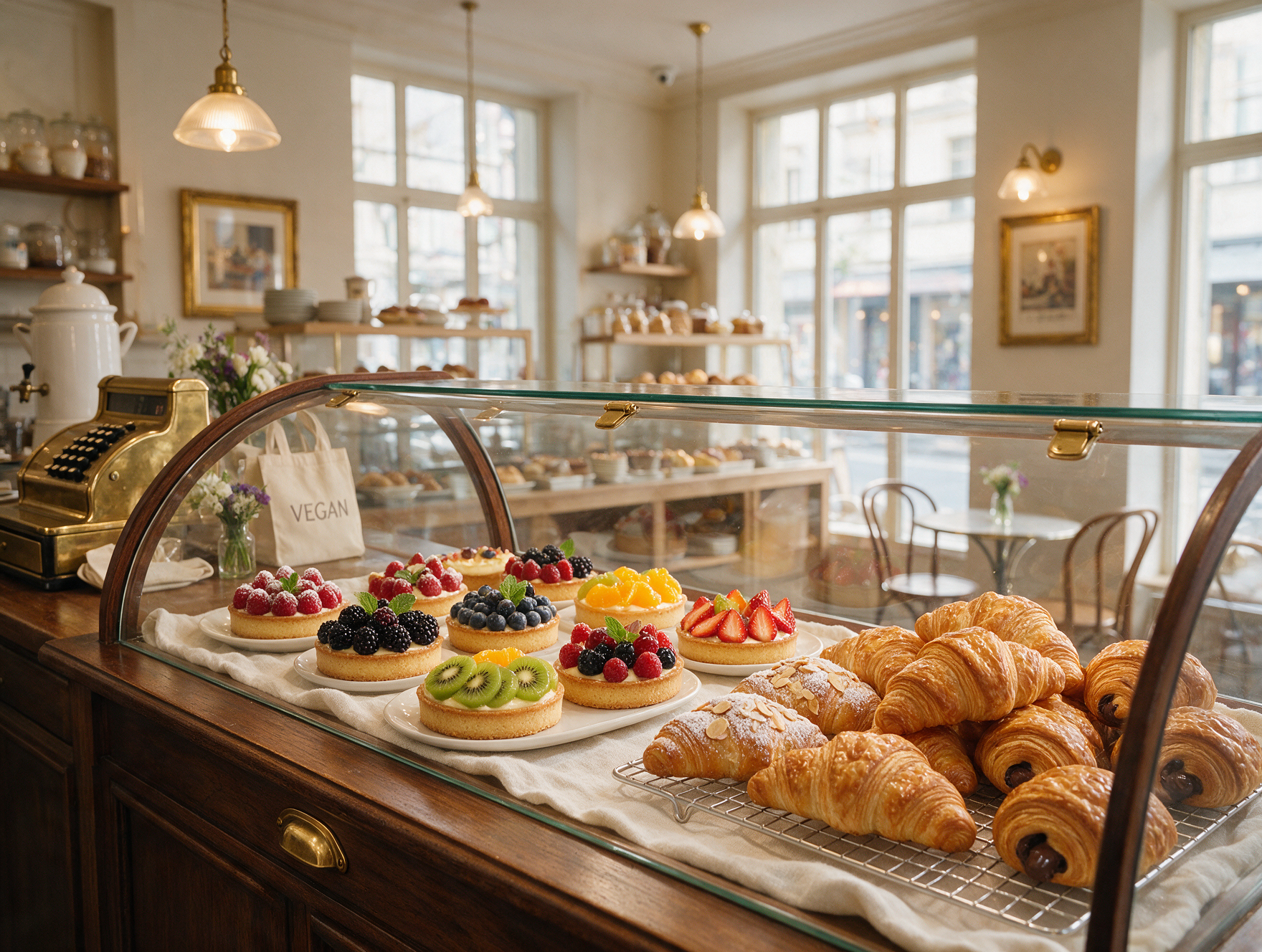
Beyond these two, the broader Paris vegetarian scene has grown enough that entire neighbourhoods now have a cluster of options — the 11th arrondissement around Oberkampf and the upper Marais both have a noticeably higher density of vegetarian and vegan cafes than the more tourist-heavy areas near the Eiffel Tower or the Louvre, which is worth keeping in mind if you’re choosing where to stay and food matters to your trip.
Lyon
Lyon’s traditional bouchon food culture is one of the most meat-heavy in France, which makes its plant-based dining scene feel like even more of a deliberate rebellion. Like an Elephant is a genuine fine-dining option doing fusion bao buns and vegan interpretations of French classics, including a memorable vegan cheese board — worth booking for a proper evening out. ZEITGEIST café is the better casual pick, especially for breakfast: their “French Vegan” plate — a flaky croissant, scrambled tofu, vegan bacon, and plant-based cream cheese — is a genuinely good reinterpretation of a French breakfast rather than a workaround.
Nice
Nice’s Mediterranean base — vegetables, olive oil, chickpeas — makes it naturally one of the easier French cities for vegetarian travellers, even outside dedicated vegan restaurants. Saj by Milla leans into that with a Mediterranean menu drawing on Greek, Cypriot, and Lebanese cuisine and a genuinely large plant-based selection. Paper Plane is the pick for a relaxed daytime meal — fluffy pancakes and vibrant salads, plus plant-based takes on seafood and meat dishes for anyone missing the format of a non-vegetarian meal.
Strasbourg
Alsatian food is traditionally built around sausages and sauerkraut, so Strasbourg takes a bit more deliberate planning — but the options that exist are good. Café Potager is a “fast-good” spot serving vegetarian and vegan dishes made with fresh, local, seasonal ingredients, and works well for a casual lunch between sightseeing stops. Harmonie Bowl and Juice leans further into the health-food end with seasonal, organic, vegan, and gluten-free bowls — a good reset if you’ve had a few heavy Alsatian meals in a row.
Normandy
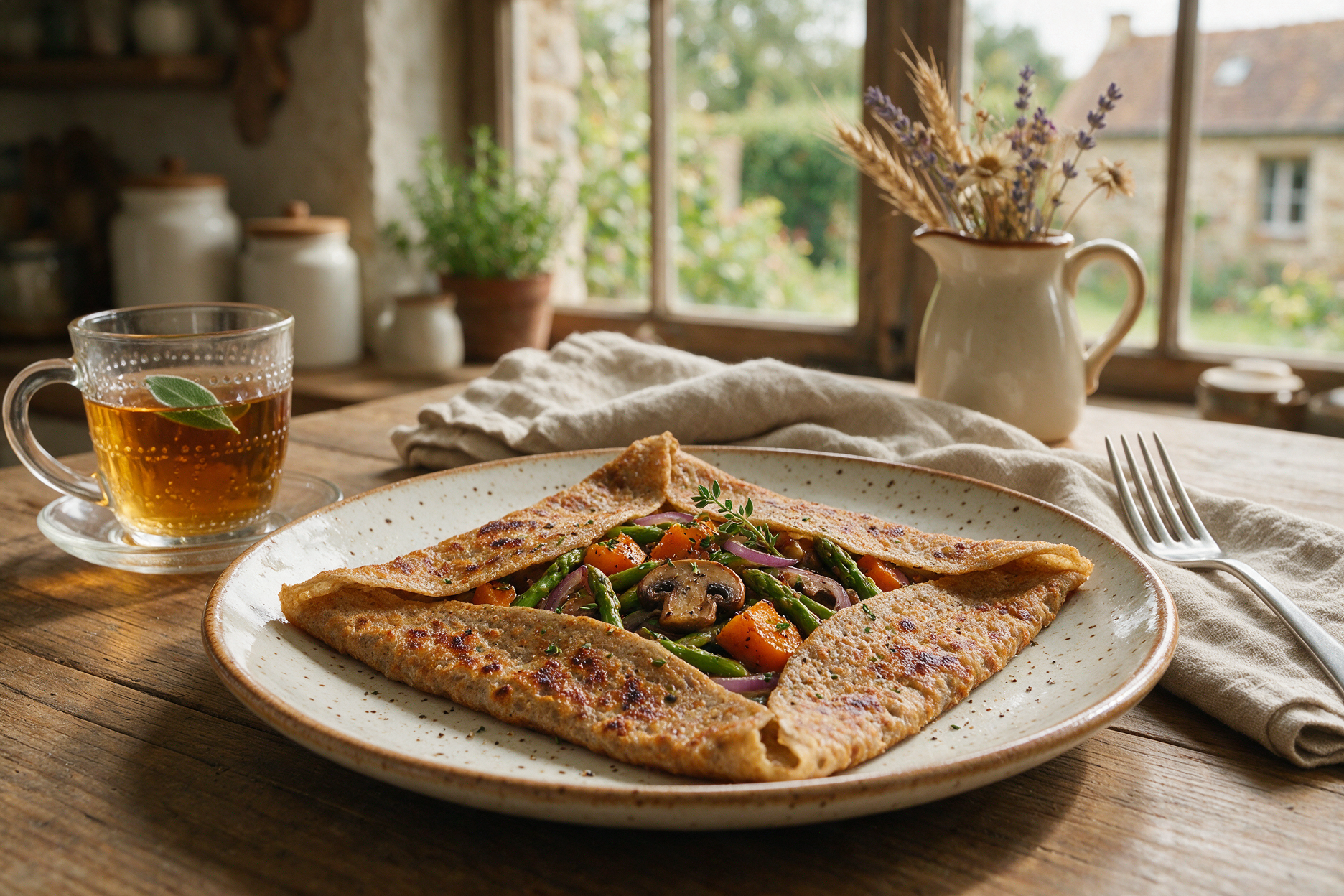
This is the honest-caveat section of the guide: rural Normandy, including the Bayeux and D-Day beaches area, doesn’t have the density of dedicated vegetarian restaurants that Paris, Lyon, or Nice do. What it does have is a good number of French restaurants with genuinely solid vegetarian dishes on the regular menu — Le Marsala and La Table du Lion, both in Bayeux, are well-reviewed French restaurants that accommodate vegetarian diners properly rather than as an afterthought. Beyond named restaurants, Normandy’s crêperies are your best friend here — a buckwheat galette filled with cheese, mushroom, and vegetables is on nearly every menu without needing to ask.
Mont Saint-Michel
Options on the island itself are genuinely limited — it’s a small tidal island with a handful of restaurants geared toward day-trippers, and vegetarian choices tend to be whatever a given kitchen happens to offer rather than a dedicated menu. La Mère Poulard, the island’s famous historic restaurant, can do a cheese-and-vegetable version of its signature omelette on request, though it’s priced for the novelty as much as the meal. Our honest recommendation: eat a proper meal in Pontorson or Avranches on the mainland before or after your visit, and treat anything you eat on the island itself as a snack rather than a full meal.
Practical tips for vegetarian travel in France
A few things worth knowing before you go: the phrase to know is “je suis végétarien(ne)” (I’m vegetarian) or “je suis végétalien(ne)” (I’m vegan) — most restaurant staff in cities understand this immediately, though smaller-town places may need a follow-up explanation that you don’t eat fish or gelatin either, since “vegetarian” is sometimes interpreted loosely outside major cities. It’s worth being specific rather than assuming the word alone covers everything — a mistake we’ve seen a few first-time travellers make is ordering something labelled “vegetarian” on a menu and having it arrive with a fish-stock-based sauce, because the distinction wasn’t obvious to the kitchen.
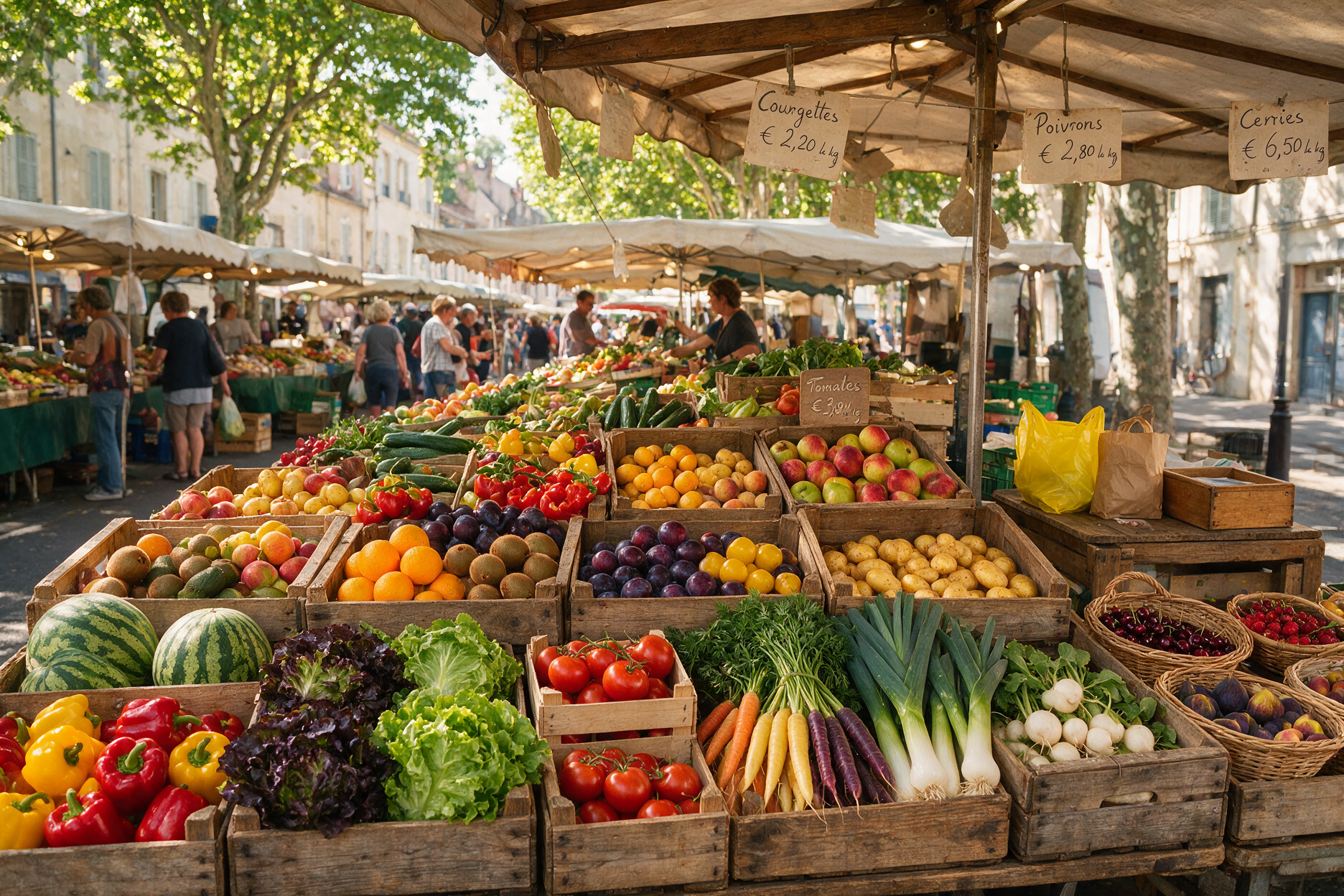
Cheese, a cornerstone of French vegetarian cooking, is very often made with animal rennet, so if you’re strictly vegetarian rather than flexible about that detail, it’s worth asking specifically — a fromagerie assistant will usually know off the top of their head which wheels are rennet-free. French markets — every city and even small towns run at least a weekly one — are one of the most reliable vegetarian fallbacks anywhere in the country: bread, cheese, fruit, and vegetables make an easy, satisfying meal with zero language barrier involved, and picking up a market lunch to eat in a park is one of the more pleasant, low-effort ways to spend a midday hour anywhere in France.
Supermarkets are a good backup too, and a genuinely underrated one — Monoprix and Carrefour in particular carry a reasonable range of plant-based products now, including dedicated vegan sections in their larger city branches, which is useful on a day when you’d rather not hunt for a sit-down restaurant. It’s also worth knowing that “sans viande” means “without meat” and is a slightly different, sometimes more broadly understood phrase than “végétarien” in smaller establishments — having both in your pocket covers more situations than either alone.
One hidden-gem tip that applies in every city on this list: look for restaurants near university areas. Student neighbourhoods in Paris (near the Sorbonne), Lyon (around Université Lyon 2), and Strasbourg tend to have a disproportionate number of affordable, genuinely good vegetarian and vegan spots, since students are both budget-conscious and, statistically, more likely to eat plant-based than the general population. It’s not a guarantee, but it’s a pattern worth using when you’re in an unfamiliar part of a city and need a reliable heuristic — and it tends to work just as well for finding good coffee as it does for finding a solid vegetarian lunch.
A mistake to avoid
Don’t assume a restaurant’s English-language menu or translated app listing accurately reflects what’s vegetarian. Translation apps and even printed English menus in touristy areas sometimes mistranslate or simplify dish descriptions, occasionally dropping a “with lardons” or “cooked in beef stock” detail that would have been obvious in the original French. When in doubt, it’s worth asking your server directly rather than trusting the English copy, especially for anything described only as a “vegetable” dish — that word alone doesn’t guarantee the preparation is meat-free.
FAQs
Is France a difficult destination for vegetarians?
It’s more work than, say, India or Southeast Asia, but genuinely manageable with a bit of planning — major cities have real vegetarian and vegan restaurant scenes now, and markets and crêperies fill the gaps in smaller towns.
Is French cheese vegetarian?
Not always — traditional French cheese often uses animal rennet in the production process. Vegetarian-labelled cheese exists but isn’t the default, so it’s worth asking directly if this matters to you.
What should vegans know about French bread and pastries?
Standard French bread (a plain baguette) is usually vegan, but croissants, brioche, and most pastries are made with butter, eggs, and often milk — dedicated vegan bakeries like VG Pâtisserie in Paris are the reliable way to get the pastry experience without the animal products.
Are there vegetarian options at traditional bouchons in Lyon?
Limited ones — bouchon menus are built around meat by tradition, so a dedicated vegetarian or vegan restaurant is a more reliable choice in Lyon specifically than hoping a bouchon has something suitable.
Do I need to book vegan restaurants in advance?
In Paris and Lyon, yes for dinner, especially on weekends — the good vegan spots are popular with locals, not just tourists, and can fill up. Lunch is usually easier to walk into.
Is it easier to be vegetarian or fully vegan in France?
Vegetarian is meaningfully easier — cheese and egg-based dishes (quiche, omelettes, and cheese-heavy tarts) show up on almost every traditional menu, giving vegetarians a fallback that vegans don’t have. Vegans should lean more heavily on the dedicated restaurants listed above rather than assuming a traditional bistro will have a suitable main course.
What’s a realistic vegetarian breakfast in France?
Hotel breakfasts across France are generally vegetarian-friendly by default — bread, pastries, cheese, yoghurt, and fruit cover most of what’s on offer, and it’s one meal of the day you rarely need to plan around. Vegans will want to check in advance, since plant-based milk and butter alternatives aren’t guaranteed at smaller hotels outside major cities.
Eat well, wherever you’re vegetarian or not
Good food is one of the best reasons to visit France, and it shouldn’t feel like a constraint if you eat plant-based — our full France food trail covers the traditional side of the same six cities if you’re travelling with a mixed group. Our France travel guide has more on where to stay near the neighbourhoods mentioned here, and our team builds dietary preferences into every custom itinerary from the start rather than as an afterthought — tell us what you eat and we’ll plan around it.