Iceland Hidden Gems: Skip the Ring Road Queue, Go Here Instead
Everyone’s Iceland photos look the same now. Same angle of Kirkjufell, same crowd silhouette at Seljalandsfoss, same queue of rental cars pulled onto the shoulder at Diamond Beach. None of that makes the Golden Circle or the Ring Road bad — they’re famous for good reason — but if you’ve already seen those photos a hundred times before you’ve even booked your flight, you already know what that trip looks like. This one is about the Iceland that doesn’t show up quite as often: a red-sand beach ranked among the best in the world that most visitors have never heard of, a fjord region locals will tell you is the “real” Iceland, and a geothermal soak with an infinity view of the Atlantic that costs less than half of the one everyone photographs.
None of this replaces the classics entirely — you should still see the Golden Circle once. But if this isn’t your first Iceland trip, or you’d simply rather not queue for your photos, here’s where to go instead.
In this guide:
- The Westfjords: Iceland’s quietest corner
- Snæfellsnes Peninsula: the “Iceland in miniature” locals actually mean
- South Coast, minus the tour buses
- Skip the Blue Lagoon queue: Sky Lagoon and Secret Lagoon
- Best time to visit
- Getting there from India
- Visa and entry requirements
- What it actually costs
- A mistake to avoid
- FAQs
The Westfjords: Iceland’s Quietest Corner
The Westfjords barely register on a standard Ring Road trip because they’re a genuine detour — a jagged peninsula hanging off Iceland’s northwest corner that the ring road doesn’t touch at all. That detour is exactly why it’s worth it: this region sees a small fraction of the visitors the south coast does, and the landscape earns the trip on its own terms rather than as a box to tick.
Rauðasandur is the headline: a sweeping red-and-gold sand beach — the color shifts with the light, from apricot to deep rust — that’s been ranked among the best beaches in the world by international travel press, and on most days you’ll have long stretches of it to yourself. It’s a bumpy gravel road down to reach it, which is precisely the filter keeping the crowds away.
Nearby, Látrabjarg is Iceland’s largest bird cliff and, in summer, home to one of the most accessible puffin colonies in the country — walk carefully along the cliff edge (the drop is real and the ground gives no warning) and you can get remarkably close without a boat tour. For anyone willing to properly commit, Hornstrandir Nature Reserve at the peninsula’s northern tip is reachable only by hiking or boat, has no roads at all, and holds Iceland’s largest Arctic fox population — this is multi-day hiking-trip territory, not a drive-by stop, but it’s the closest thing Iceland has left to genuine wilderness.
Honest caveat: the Westfjords demand time and a rental car with real ground clearance — the roads are gravel, distances are longer than the map suggests, and there’s no fast way through. Budget at least 3-4 days here rather than trying to bolt it onto a week-long Ring Road trip; it’s better as its own dedicated leg than a rushed add-on.
Snæfellsnes Peninsula: The “Iceland in Miniature” Locals Actually Mean
Snæfellsnes gets called “Iceland in miniature” often enough that it’s nearly a cliché itself — glacier, lava fields, fishing villages, and coastline packed into a single peninsula about two and a half hours from Reykjavík. Kirkjufell mountain is the postcard shot everyone knows, and it’s worth seeing, but treat it as the start of the visit rather than the whole point.
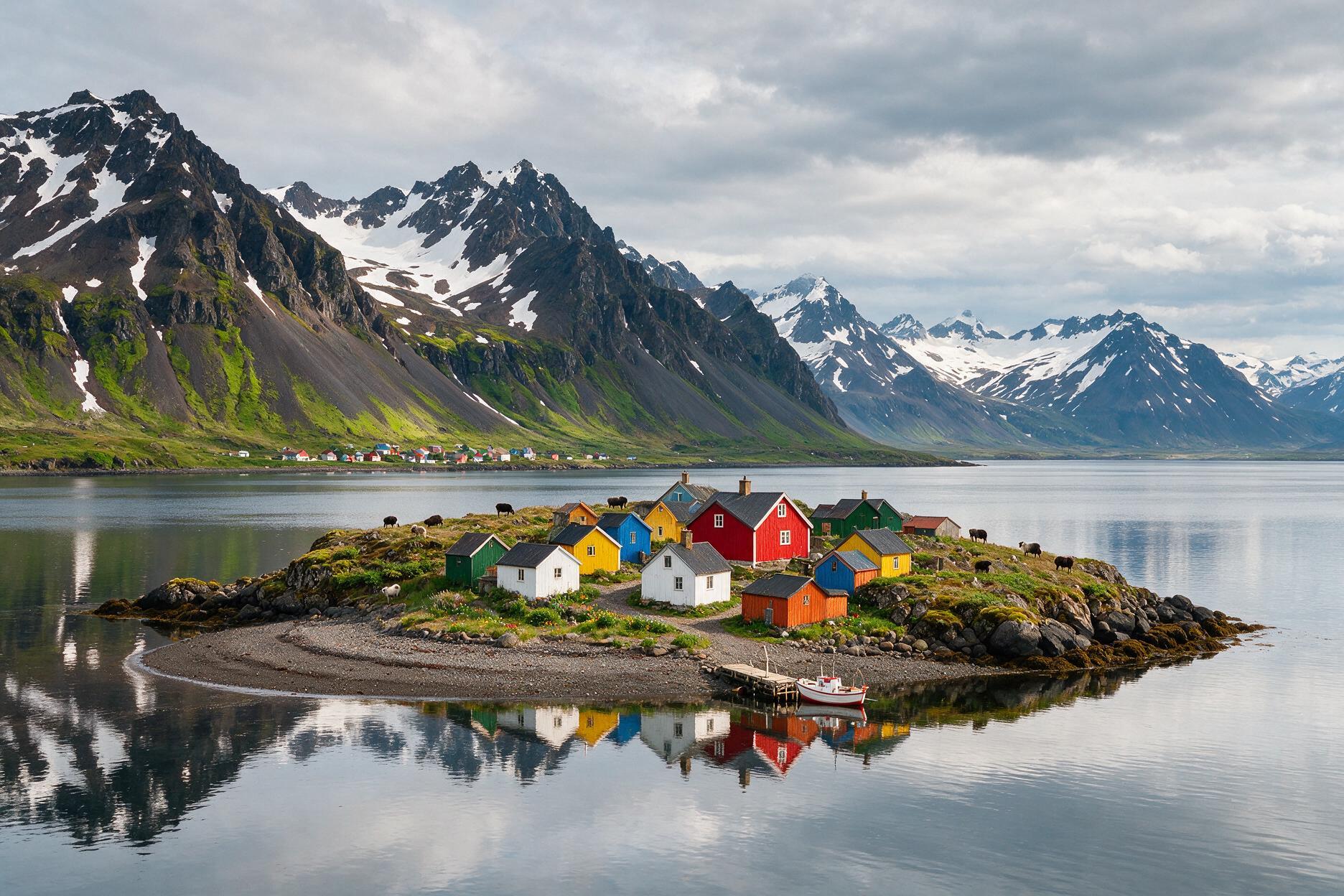
Flatey Island, a small seasonal settlement in Breiðafjörður Bay reachable only by ferry, is the actual hidden gem here — a scattering of brightly painted 19th-century houses, no cars, and a population that drops to around six people through the winter. In summer it hosts small concerts and has a handful of guesthouses; it’s the kind of place where an afternoon feels like enough and also somehow not nearly enough. Hvammsvík Hot Springs, a newer geothermal bathing spot on the drive out toward the peninsula along Hvalfjörður fjord, is a genuinely relaxing stop with tidal pools that change temperature and size with the sea — arrive at low tide for the best combination of pools.
South Coast, Minus the Tour Buses
The south coast is Iceland’s most-visited stretch precisely because Seljalandsfoss and Skógafoss are spectacular — but both get a steady stream of coach tours from around 10am onward. A few minutes’ walk from Seljalandsfoss, most of that crowd never bothers to find Gljúfrabúi, a waterfall tucked behind a narrow cave-like rock entrance that you wade partway into to see properly (waterproof shoes, not sandals — the rocks are slick and the spray is constant).
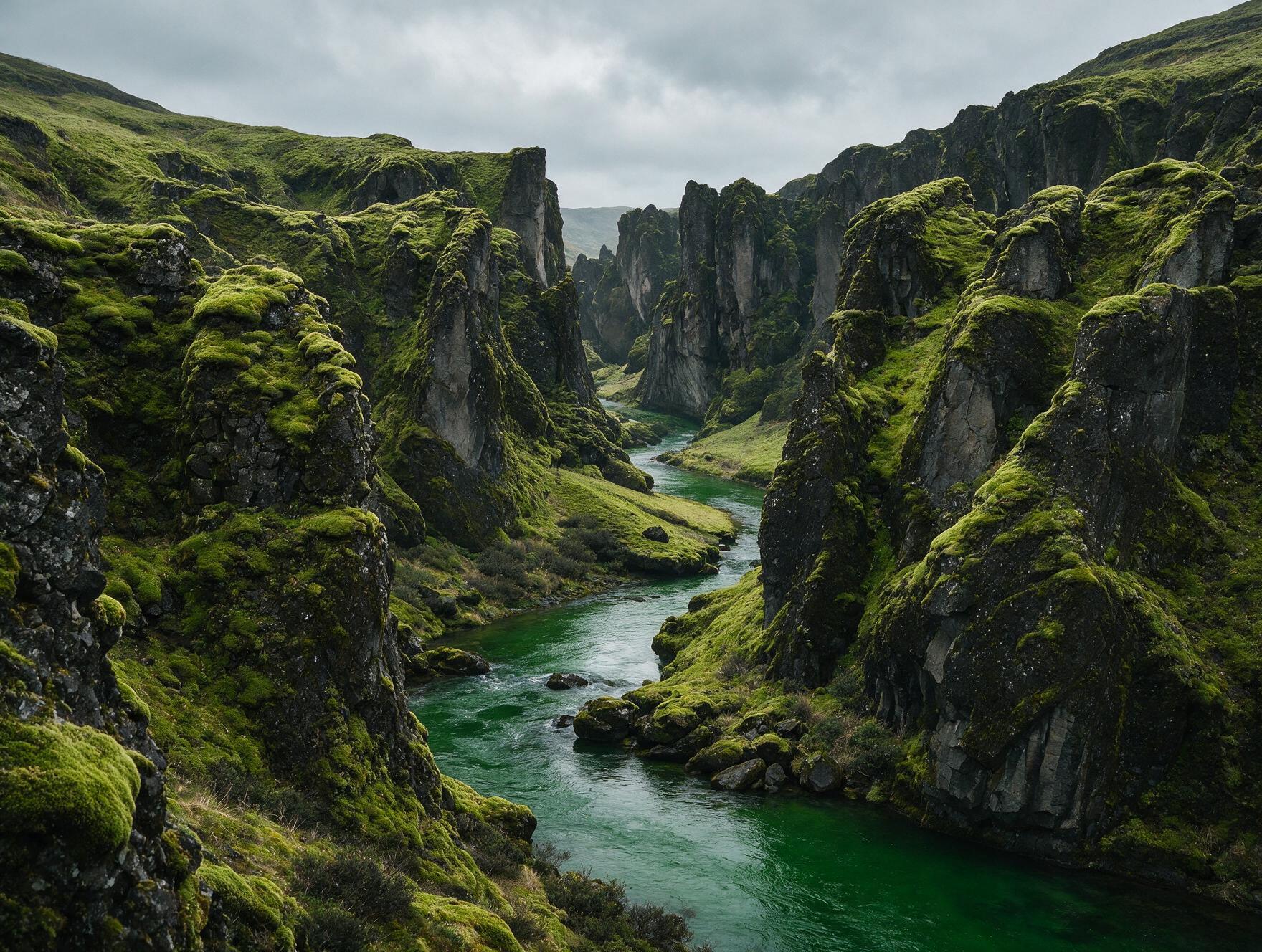
Seljavallalaug, one of Iceland’s oldest swimming pools, sits in a valley between a mountain, a glacier, and a volcano, and it’s free to use — no ticket booth, no changing rooms beyond a basic concrete structure, just a genuinely strange and beautiful place for a swim that most Ring Road itineraries skip entirely because it requires a 20-minute walk in from the car park. Further east, Fjaðrárgljúfur Canyon — mossy, dramatic, a few hundred meters from the road — gets a fraction of the crowds that Reynisfjara’s black sand beach draws just because it requires a short detour and isn’t quite as famous, despite being arguably more photogenic. If you want a full-circle finish to a south coast day, Þakgil campground, tucked into a sheltered volcanic valley near Vík with a dining cave built into the rock, makes a genuinely memorable stop for a coffee even if you’re not camping.
Skip the Blue Lagoon Queue: Sky Lagoon and Secret Lagoon
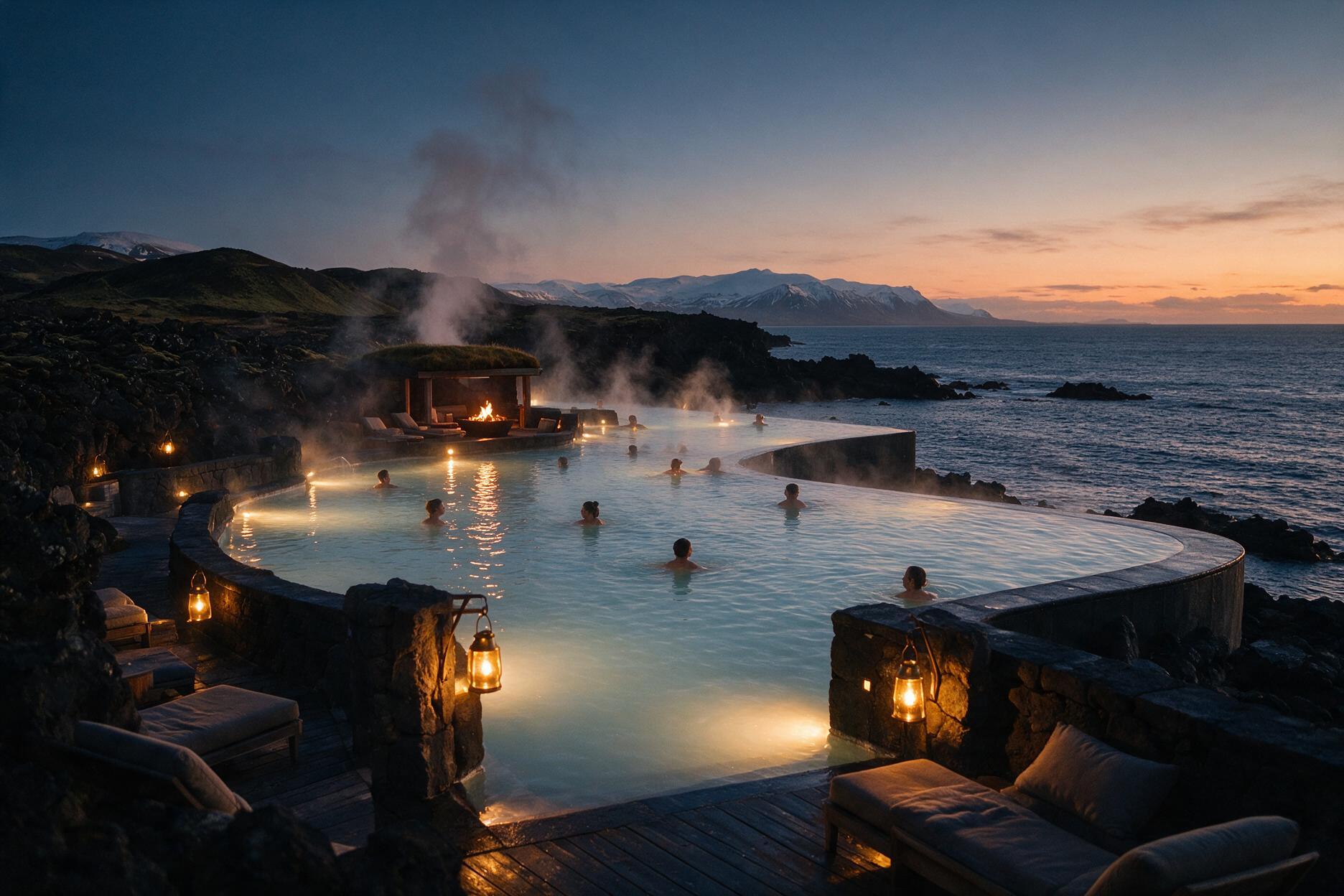
The Blue Lagoon is a legitimately good experience, and we’re not going to pretend otherwise — but it’s also become a victim of its own fame, with timed-entry crowds and prices that have climbed steadily. Sky Lagoon, about 15 minutes from Reykjavík in Kópavogur, does the same core idea — geothermal water, ocean views — with an infinity edge looking straight out at the Atlantic, a Nordic seven-step ritual of hot pool, cold plunge, sauna, and steam, and a swim-up bar, all for noticeably less than the Blue Lagoon’s comparable tier. It also skips children under 12, which keeps the atmosphere calmer if you’re after a quiet soak rather than a family outing. For something even more understated, the Secret Lagoon near Flúðir — genuinely one of Iceland’s oldest pools — trades the design-forward architecture for a simpler, warmer, more local feel, and sits right on the Golden Circle route if you’re combining the two regions in one trip.
Best Time to Visit
For the Westfjords and Snæfellsnes, June through August gives you the longest daylight and the most reliable road conditions — some Westfjords roads are seasonal and can be affected by weather outside summer. If the northern lights are the priority instead, late September through March is the window, with late October to mid-November and late February to early March hitting the sweet spot of dark-enough skies and more stable weather than deep midwinter. Iceland genuinely does get 5-7 aurora-visible nights a week during peak season away from Reykjavík’s light pollution, so pairing a Westfjords or Snæfellsnes trip with an aurora hunt in the shoulder months is a realistic plan, not just a marketing line.
Getting There From India
There’s no direct flight from India to Iceland, so budget one stop. Frankfurt (via Lufthansa) is typically the cheapest and most frequent connection from Delhi, Mumbai, or Bengaluru, with Helsinki (Finnair), Zurich (Swiss), London, Amsterdam, and Copenhagen all workable alternatives depending on your home city and the fares on the week you’re searching. All-in travel time usually lands between 14 and 22 hours including the layover, and round-trip fares commonly fall in the ₹85,000 to ₹1.4 lakh range per person depending on season and how far ahead you book — book the shoulder months (May-June or September) for a better fare-to-crowd ratio than peak July-August.
Visa and Entry Requirements
Iceland is part of the Schengen Area, so Indian passport holders need a Schengen Type C short-stay visa before traveling — there’s no visa-on-arrival or e-visa option. The fee is €90 per adult (roughly ₹8,100, plus a VFS service charge that brings the practical total closer to ₹10,500-11,000), processing typically takes 15-30 calendar days but can stretch to 60 in peak season, so apply well ahead rather than close to your travel dates. The visa covers up to 90 days within any 180-day period across all 29 Schengen countries, which is genuinely useful if Iceland is the anchor of a longer Europe trip rather than a standalone visit — just make sure Iceland is your main destination or first point of entry when you apply.
What It Actually Costs
Iceland has a reputation for being expensive, and it’s a fair one — this isn’t a destination to frame around doing it cheaply, but it is worth knowing real numbers so the budget doesn’t come as a surprise. A realistic 7-day trip combining Reykjavík, Snæfellsnes, and a south coast loop runs roughly ₹2.2-3 lakh per person including flights, mid-range accommodation, a rental car, food, and one or two paid experiences like Sky Lagoon or a glacier walk — solo travelers should add ₹40,000-60,000 for the single-occupancy hit on hotels and car rental. Adding a proper Westfjords leg extends the trip by 3-4 days and pushes costs up accordingly, mostly through extra accommodation and fuel for the longer gravel-road driving distances involved.
A Mistake to Avoid
Don’t underestimate driving times on Iceland’s secondary roads, especially in the Westfjords, where gravel surfaces, single-lane bridges, and blind hill crests mean a route that looks like a 90-minute drive on the map can genuinely take three hours. Rental cars here are also generally not permitted on certain F-roads (highland routes) without the correct 4×4 category, and driving off-road — even to get “the shot” on untouched moss or lava fields — carries real fines and does lasting damage to terrain that takes decades to recover; Iceland enforces this seriously and so should you.
Frequently Asked Questions
Is it worth skipping the Golden Circle entirely for these hidden gems?
Not entirely — the Golden Circle (Þingvellir, Geysir, Gullfoss) earns its reputation and is worth seeing at least once. The recommendation here is to add the Westfjords, Snæfellsnes, and lesser-known south coast stops as a second layer, especially on a repeat trip or a longer first visit.
How many days do I need to properly see the Westfjords?
Plan for at least 3-4 dedicated days given the driving distances and gravel roads. It doesn’t combine well as a quick add-on to a standard one-week Ring Road itinerary.
Do Indian travelers need a visa for Iceland?
Yes — a Schengen Type C visa is required in advance; there’s no visa-on-arrival or e-visa. Apply at least a month ahead, especially if traveling in the June-August peak season.
Is Sky Lagoon really better than the Blue Lagoon?
“Better” depends on what you want — the Blue Lagoon has the bigger reputation and a more otherworldly milky-blue color. Sky Lagoon is quieter, closer to Reykjavík, and generally cheaper, with a stronger ocean view. Many repeat visitors to Iceland prefer Sky Lagoon; first-timers often still want to see the Blue Lagoon at least once.
Can I self-drive to all of these spots, or do I need a tour?
A rental car works for Snæfellsnes and the south coast stops comfortably. The Westfjords are also doable self-drive, but budget more time than GPS estimates suggest and make sure your rental is rated for gravel roads and, if you’re going in shoulder season, winter conditions.
What’s the best month to combine northern lights with these hidden gems?
Late October and early November tend to offer the best balance — dark enough skies for aurora activity, and Snæfellsnes and south coast roads are still in reasonably good condition before the harshest winter weather sets in.
Before You Book the Standard Loop
Iceland’s fame was built on a handful of places that are genuinely worth seeing — but a trip that only hits those places is a trip that looks like everyone else’s. The Westfjords, the quieter corners of Snæfellsnes, and the south coast spots a five-minute walk off the main road are where the country stops feeling like a checklist and starts feeling like somewhere you actually went.
If you’d rather not spend your trip figuring out which gravel roads are worth the detour and which aren’t, our Iceland itineraries are built around exactly this balance of the essential and the overlooked. Talk to Get Tripped about an Iceland trip and we’ll route it properly — the famous stops and the ones that aren’t in everyone’s photos yet.