Mount Kenya is Africa’s second-highest peak at 5,199 metres, and the equator runs across its southern slopes. That detail alone — equatorial snow and ice at the same latitude as Nairobi — is strange enough to be worth going for. But even if you have no ambition to summit anything, Mount Kenya National Park is worth a full day: forest trails with buffalo, elephant, and giant forest hogs; a highland moorland that looks nothing like the savannah Kenya is known for; and a quieter, more contemplative version of wildlife watching than anything available on the open plains.
This guide structures a full day in the park and its surrounding areas, starting at the main Naro Moru or Sirimon gate (the two most popular access points for non-climbers) and working through morning, afternoon, and evening. You don’t need to be a trekker or even particularly fit to do most of what’s here — though a half-day forest walk requires a reasonable level of comfort on uneven ground.
Table of Contents
- 6:30 AM – Morning: Into the Montane Forest
- Wildlife in the Forest Zone
- 10:00 AM – Moorland: The Afroalpine Landscape
- Midday: Base Camp Lunch and Rest
- 2:00 PM – Afternoon: Teleki Valley or Lake Ellis
- 5:30 PM – The Evening Summit View (If the Clouds Cooperate)
- Where to Stay
- Getting to Mount Kenya
- About the Summit Attempt
- Frequently Asked Questions
6:30 AM – Morning: Into the Montane Forest
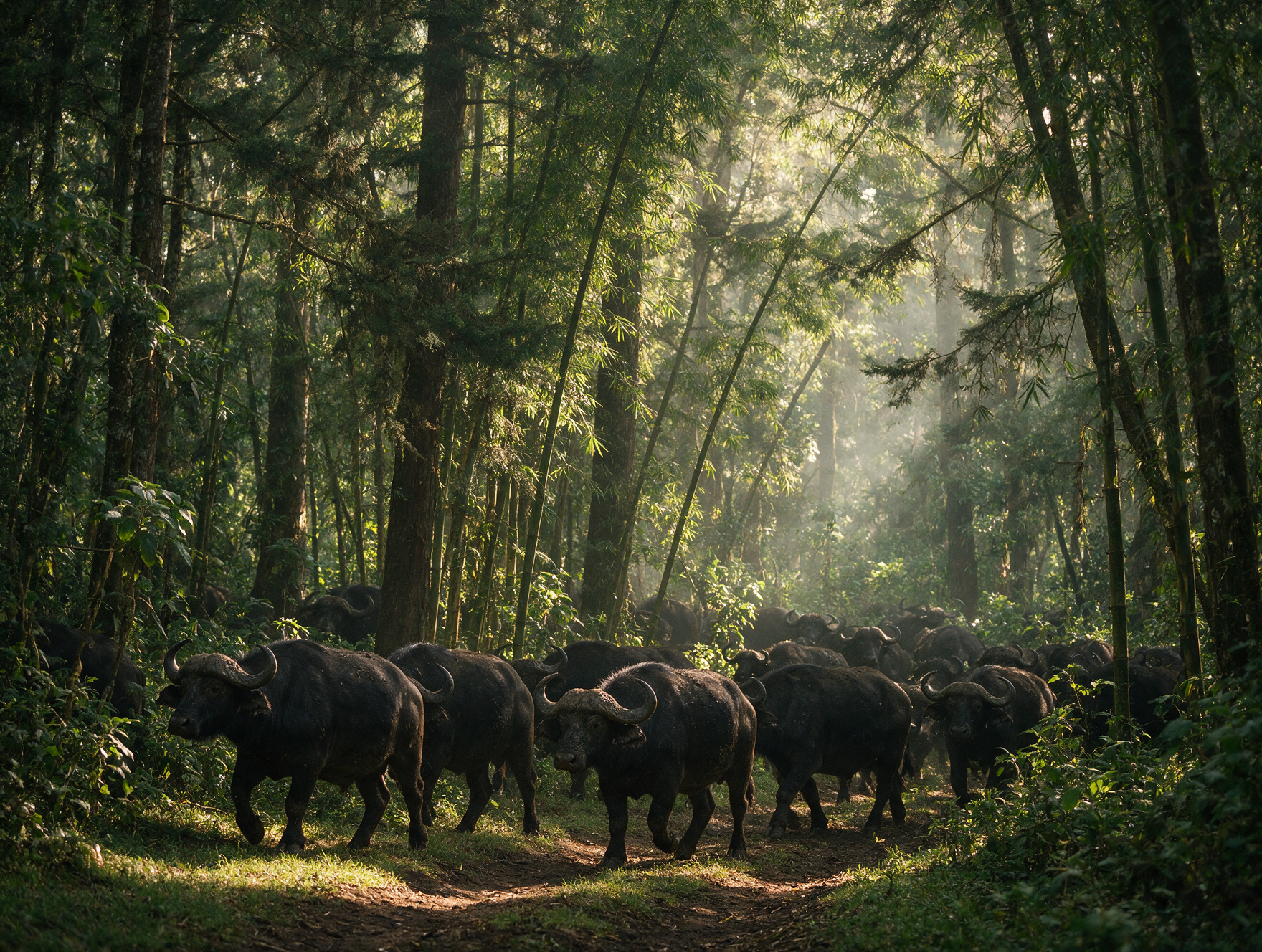
Enter through the Naro Moru Gate on the mountain’s western side (the most accessible gate from Nairobi, about 3 hours north on the A2 highway) by 6:30 AM if you can. The forest is thick cedar and Podocarpus at this altitude (2,000–3,000 m), and the wildlife in it is more active in the early morning when the cool air keeps temperatures low.
KWS park fees are USD 52 per adult per day. You’ll need a guide inside the park (compulsory for the forest sections, not as strictly enforced as Kilimanjaro but strongly recommended). KWS rangers at the gate can be hired for USD 20–30 per half day and know the forest trails well. Alternatively, book through Mountain Rock Hotel in Naro Moru or the Serena Mountain Lodge, both of which have established guide arrangements.
The first two hours of the forest walk will feel like entirely different wildlife country from anything you’ve seen on the plains. The footpath is narrow and often wet underfoot from the moisture that the forest traps from cloud and fog. Bamboo sections alternate with open cedar glades. The air at 2,500 m is noticeably cooler than Nairobi — a light fleece is comfortable at this hour even in August.
Wildlife in the Forest Zone
Mount Kenya’s forest is home to several wildlife species that don’t exist elsewhere in Kenya:
Cape Buffalo: The forest buffalo is more compact than the savannah buffalo and, if anything, more dangerous — they move quietly through dense vegetation and surprise encounters are possible. Your guide knows how to read sign (freshly broken bamboo, dung, muddy footprints) and will manage approach distances. If you hear crashing in the undergrowth and your guide signals stop, stop immediately.
Elephant: The Mount Kenya elephant population has adapted to forest life — they’re found up to the bamboo zone (around 3,000 m). Forest elephants are generally more cautious around humans than savannah elephants and less frequently seen, but the forest trail systems run through their feeding and watering areas. Your guide may hear them — the forest carries sound differently from open grassland — before you see anything.
Giant Forest Hog: Probably the world’s largest pig species, with males reaching 275 kg. They look implausible — oversized, long-tusked, oddly prehistoric. They’re found in forest clearings and bamboo edges, and sightings are more common on the Sirimon route than Naro Moru. If you encounter one, give it space.
Sykes’ Monkey and Colobus: Both monkey species are reliably present in the mid-altitude forest and frequently visible from the trail. The Black-and-white Colobus here (Colobus guereza, distinct from the Angolan colobus at Diani) are the most striking — their long white capes make them visible even in the forest canopy.
Birds: The forest is exceptional for highland bird species. Hartlaub’s Turaco (electric green and red), the African Crowned Eagle (a large raptor that hunts the forest canopy), and Jackson’s Francolin (endemic to the mountain and highland moorlands) are the standout species. A birder with a good guide can easily record 40–50 species in a morning walk.
10:00 AM – Moorland: The Afroalpine Landscape
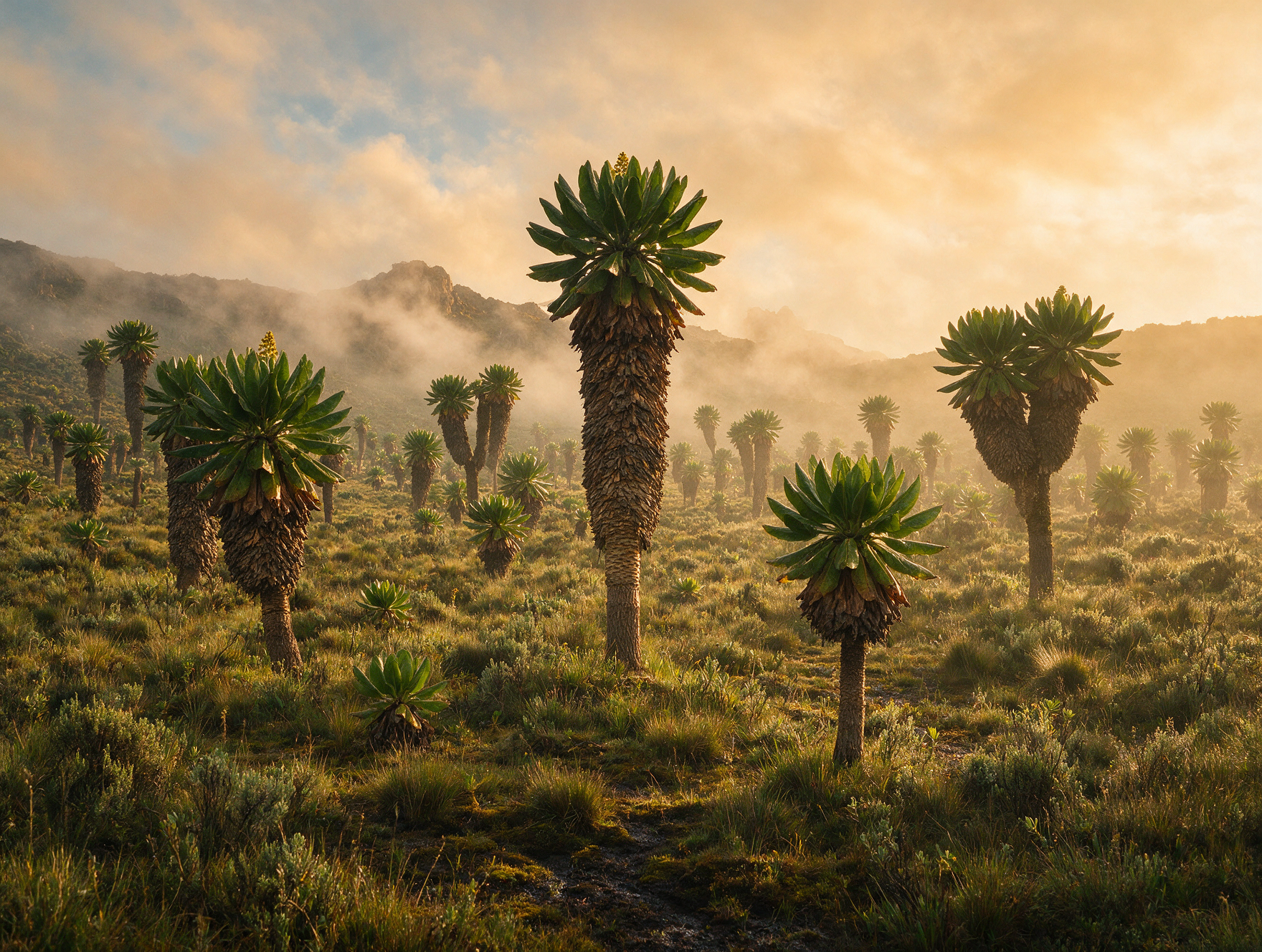
Above the forest line at around 3,000 m, the vegetation shifts completely. You exit the forest canopy into open moorland — giant groundsel (Dendrosenecio) trees with prehistoric silhouettes, giant lobelia spires, and wide boggy meadows of tussock grass. This Afroalpine zone looks nothing like conventional Kenya, and nothing like any European or Asian mountain landscape either. It’s specific to the highlands of East Africa.
The giant groundsel plants grow roughly 30 cm per year and can reach 10 m in height. They protect their growing tip against night frost with a woolly packing that insulates like a down jacket — there’s genuine ice on these plants some mornings, which, at less than 1 degree north of the equator, is disorienting in the best possible way.
If you’re not trekking to the summit, the vehicle track from the Naro Moru meteorological station (3,050 m) gives access to the lower moorland by 4WD. From here you can walk into the moorland zone without a full trekking commitment — a 2-hour return walk across the bog takes you up to roughly 3,400 m and gives you full Afroalpine landscape without the altitude stress of going higher.
At this altitude, altitude acclimatisation is real. People from sea-level cities (including most Indian travelers arriving via Nairobi) may notice breathlessness, mild headache, or unusual fatigue above 3,000 m. These are normal initial reactions. The acclimatisation rule (ascend slowly, drink water, don’t push through serious headache or nausea) applies here as at any high altitude. A day walk to 3,400 m and return is well within the range of most reasonably fit adults; going higher requires proper acclimatisation days.
Midday: Base Camp Lunch and Rest
Serena Mountain Lodge (at 2,195 m, just inside the Kirian Gate on the mountain’s eastern side) is the best midday stop if your route takes you around the mountain’s eastern access. The lodge is built around an active waterhole — buffalo, elephant, and black-and-white colobus visit the waterhole throughout the day, and the lodge’s underground viewing tunnel allows eye-level observation of animals drinking without vehicle interference. Lunch at the lodge as a day visitor can be arranged in advance.
For those coming via the Naro Moru or Sirimon routes, the Mountain Rock Hotel at the base of the Naro Moru access road serves straightforward hot meals and is a useful fuel stop. Less dramatic than Serena but practical.
Rest for 90 minutes at midday regardless. The combination of altitude, morning exertion, and equatorial sun is more tiring than it seems during the activity. The afternoon wildlife walk will be better if you’ve rested and rehydrated.
2:00 PM – Afternoon: Teleki Valley or Lake Ellis
For trekkers or those comfortable with a longer afternoon walk, two highland destinations within day-range merit the effort:
Lake Ellis (at 3,500 m, accessible from Meru Gate on the northeast side) is a glacial tarn with black-necked ravens, moorland francolins, and on clear days, a view up to the main peaks. The approach from the Ithanguni Forest Station is a 4–5 km walk each way — manageable in an afternoon for fit walkers. The lake is rarely visited because the Meru side of the mountain is the least-developed access route; you’ll likely have it to yourself.
Teleki Valley (approaching from Naro Moru toward the Mackinder’s Camp area) is the classic trekking valley used by summit aspirants, with the Teleki River running through boulder fields and moorland. As a partial day walk — going 5–6 km into the valley before turning back — it gives you the most dramatic highland scenery on the mountain without requiring summit preparation.
Neither of these should be attempted without a guide — altitude, changeable weather, and navigation through featureless moorland terrain all require local knowledge. Both are available through KWS rangers or accredited guide services at the gates.
5:30 PM – The Evening Summit View (If the Clouds Cooperate)
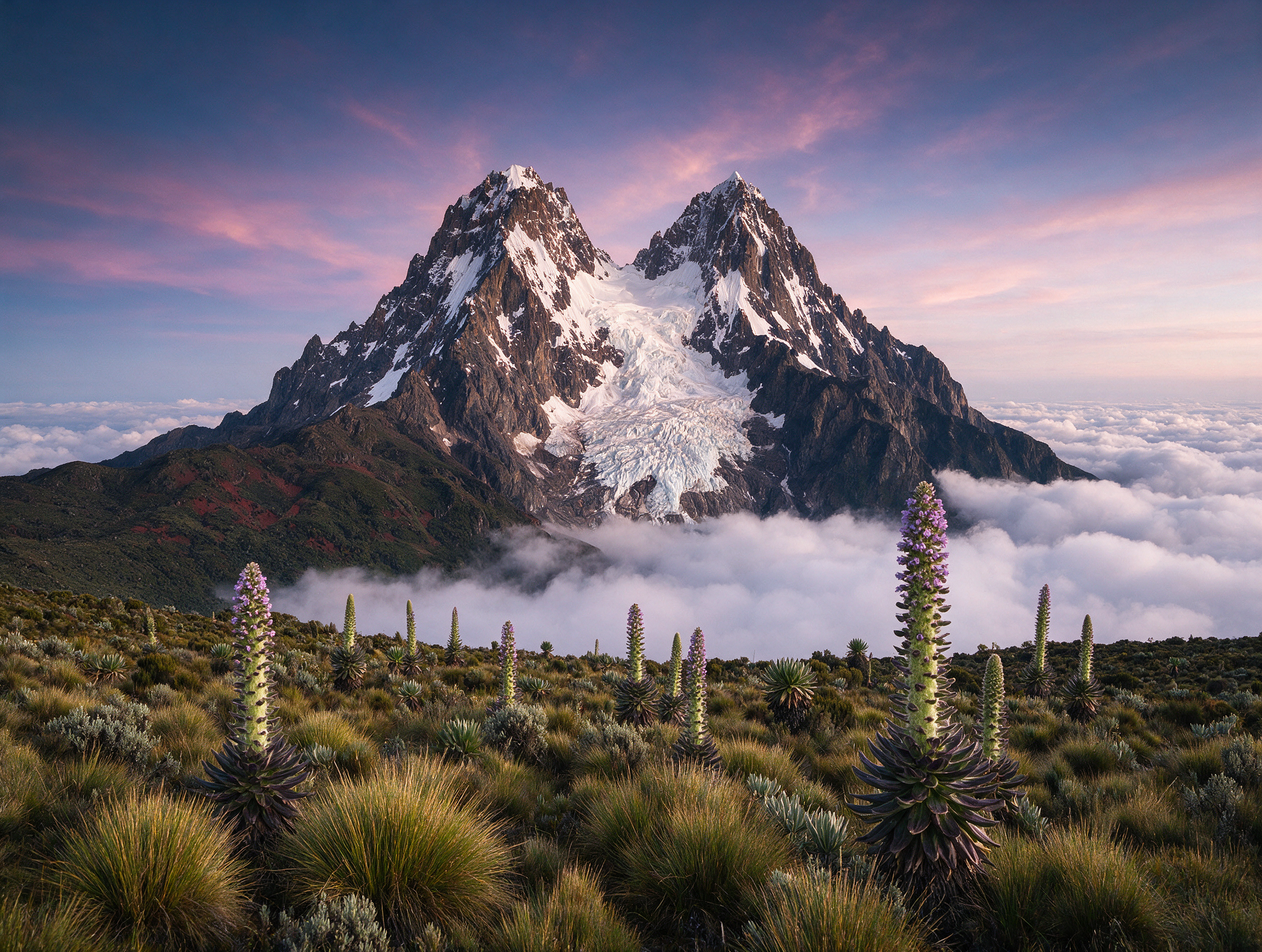
Mount Kenya’s peaks attract cloud and mist by mid-afternoon — the equatorial convergence zone creates reliable cloud build-up. But the mountain often clears again in the late afternoon, particularly in the dry seasons (January–February and June–September), and the evening light on the glaciated summit is worth positioning for.
The best views of the summit from below — clearly seeing all three main peaks (Batian, Nelion, and Lenana) — come from the moorland zone between 3,000 and 3,500 m on the western and northwestern approaches, where the viewing angle is best. By 5:30 PM, if the cloud is clearing, find a clearing in the moorland or the edge of the escarpment and wait. The alpenglow on the Lewis Glacier, which sits between the two main peaks, turns orange at around 15–20 minutes post-sunset before fading quickly.
A practical note: temperatures at this altitude after sunset drop quickly, particularly in June–August. A proper mid-layer and wind shell are not excessive. Have your vehicle and driver accessible — you don’t want to be descending in the dark on forest trails without a guide.
Where to Stay Near Mount Kenya
Serena Mountain Lodge (eastern approach, Kirian Gate): Best in-park option, with the waterhole and underground viewing. USD 300–500 per person full board. Requires reaching the eastern side of the mountain, which is further from Nairobi (4+ hours).
Mountain Rock Hotel (Naro Moru, western approach): Practical base for trekkers and day visitors, with comfortable rooms, an established guide service, and access to the main western trail network. USD 100–180 per person half-board. Good value.
The Old Nanyuki Cottages (Nanyuki town): For those arriving from Laikipia, Nanyuki’s self-catering cottages and small boutique guesthouses in town are good for a night before and after the mountain. The Sportsman’s Arms Hotel is an old colonial property in Nanyuki with good rooms and a garden restaurant.
Getting to Mount Kenya from India
Fly to Nairobi, then drive 3–4 hours north via the A2 highway through Thika and Karatina. Nanyuki (the town at the mountain’s northern base) is the main access hub for both the Sirimon route (excellent for wildlife) and the Naro Moru route (best forest walking). A car hire from Nairobi with a 4WD is necessary for the final section into the park.
Mount Kenya pairs well with a Kenya safari itinerary as a contrast to the plains — a night or two at the mountain between Maasai Mara (south) and Samburu or Laikipia (north) gives your Kenya trip an ecological breadth that few other African destinations can match. The mountain ecosystem — forest, moorland, glaciers — is simply different from anything else in the country.
eTA for Indian travelers: Apply at evisa.go.ke, USD 50, 3–5 working days. Park fee: USD 52 per adult per day. Guide fees additional.
About the Summit Attempt
Point Lenana (4,985 m) is the non-technical summit accessible to trekkers without rock climbing experience. Most people take 4 days minimum for a safe Lenana ascent via the Sirimon-Chogoria or Naro Moru routes, including proper acclimatisation nights. The summit attempt for Batian or Nelion (the true highest points) requires advanced rock climbing skills and is a multi-day technical climb — not a trekking objective.
A day visit to the park is not a summit attempt. Don’t let the altitude data in this guide suggest otherwise. People die on Mount Kenya every year, usually from altitude sickness combined with inadequate preparation. If you want to trek to Lenana, plan it as a standalone multi-day trip with a licensed guide company.
Frequently Asked Questions
Can you see wildlife at Mount Kenya National Park?
Yes — the forest zone has buffalo, elephant, forest hog, colobus, and a rich bird list. The moorland zone above the forest has different species (Eland, rock hyrax, sunbirds). It’s wildlife watching in a completely different context from the open plains parks, and the species list overlaps surprisingly little with Maasai Mara or Amboseli.
Is a day trip to Mount Kenya National Park worth it from Nairobi?
Just about, if you can leave Nairobi by 5:30 AM and return by 9 PM — it’s a very long day. Better to plan an overnight at the mountain. Even one night at Mountain Rock Hotel or Serena Mountain Lodge gives you an early morning walk, the full day in the forest and moorland, and an evening summit view without the pressure of driving back in the dark.
What is the best time to visit Mount Kenya National Park?
January–March and July–September for the clearest summit views and driest walking conditions. April–June (long rains) and October–November (short rains) bring heavy rainfall that can make trails slippery and cloud the summit for days at a time. The mountain creates its own weather regardless of season — always carry rain gear.
Is Mount Kenya hard to climb?
Point Lenana (the trekker’s summit) is challenging due to altitude but requires no technical climbing skills. The standard routes take 3–5 days; most healthy adults with previous hiking experience can complete Lenana with proper acclimatisation. Batian and Nelion (the true summits) are technical rock climbs requiring mountaineering experience and equipment.
Can families with children visit Mount Kenya National Park?
For a day visit to the lower forest and moorland zones: yes, with children who are comfortable on uneven trail surfaces. Altitude effects above 3,000 m are more pronounced in children — keep the altitude modest (below 2,500 m) for younger children and watch for symptoms of AMS (headache, nausea, unusual tiredness). The forest wildlife encounter at lower altitudes is excellent for older children.
Conclusion
A day on Mount Kenya reads as strange in a Kenya itinerary if you’ve only thought about Kenya as safari country. That strangeness is the point. The equatorial forest with its buffalo and giant hogs, the moorland that looks like a science fiction planet, and the ice-capped summit above the cloud line — it’s a completely different Kenya from what exists four hours south on the Mara plain. One day on the mountain and one day in the Mara, and you start to understand why Kenya has the biodiversity it does. The ecosystems are stacked, not spread out.
For help including Mount Kenya in a Kenya holiday package from India, Get Tripped can help structure the logistics so the mountain fits properly into your safari circuit without unnecessary backtracking. The routing matters here more than most Kenya itineraries.