The immigration officer at Ngurah Rai barely glanced up when she scanned my e-VOA barcode last April — she’d already processed four other Indian passports that hour, all pulled up on phones instead of printed. That’s the part nobody tells you about visiting Indonesia in 2026: you almost certainly need a visa, it takes about ten minutes to sort out online, and yet half the Indian travelers in that queue looked like they were figuring it out for the first time, mid-line, on airport wifi.
Indonesia is not visa-free for Indian passport holders, and it never has been in the way Thailand or Malaysia briefly were. What Indian travelers get instead is the Visa on Arrival / Electronic Visa on Arrival (VOA/e-VOA) — a real visa, just a fast and cheap one. This guide covers the current Indonesia visa for Indians 2026 rules: how to apply, what it costs, what documents you actually need, how long you can stay, how to extend, and the mistakes that get people pulled aside at immigration in Bali and Jakarta.
A quick note on sourcing: visa rules change without much warning, so every fact below is checked against Indonesia’s official immigration portal (evisa.imigrasi.go.id) and the Consulate General of India in Bali’s traveler advisory, current as of September 2026. Where something is genuinely unclear or subject to on-the-ground discretion, we’ve said so rather than guessing.
Quick Navigation
- Does Indonesia Require a Visa for Indians in 2026?
- How to Apply for the Indonesia e-VOA
- Visa Fees: INR, IDR and USD
- Documents You Actually Need
- Duration of Stay and How to Extend
- Entry Points: Bali, Jakarta and Beyond
- The All Indonesia Arrival Card and Customs Rules
- Health and Vaccination Requirements
- Common Visa Mistakes Indian Travelers Make
- Immigration Line Tips for Bali and Jakarta Airports
- Best Time to Visit and What an Indonesia Trip Costs
- FAQs
Does Indonesia Require a Visa for Indians in 2026?
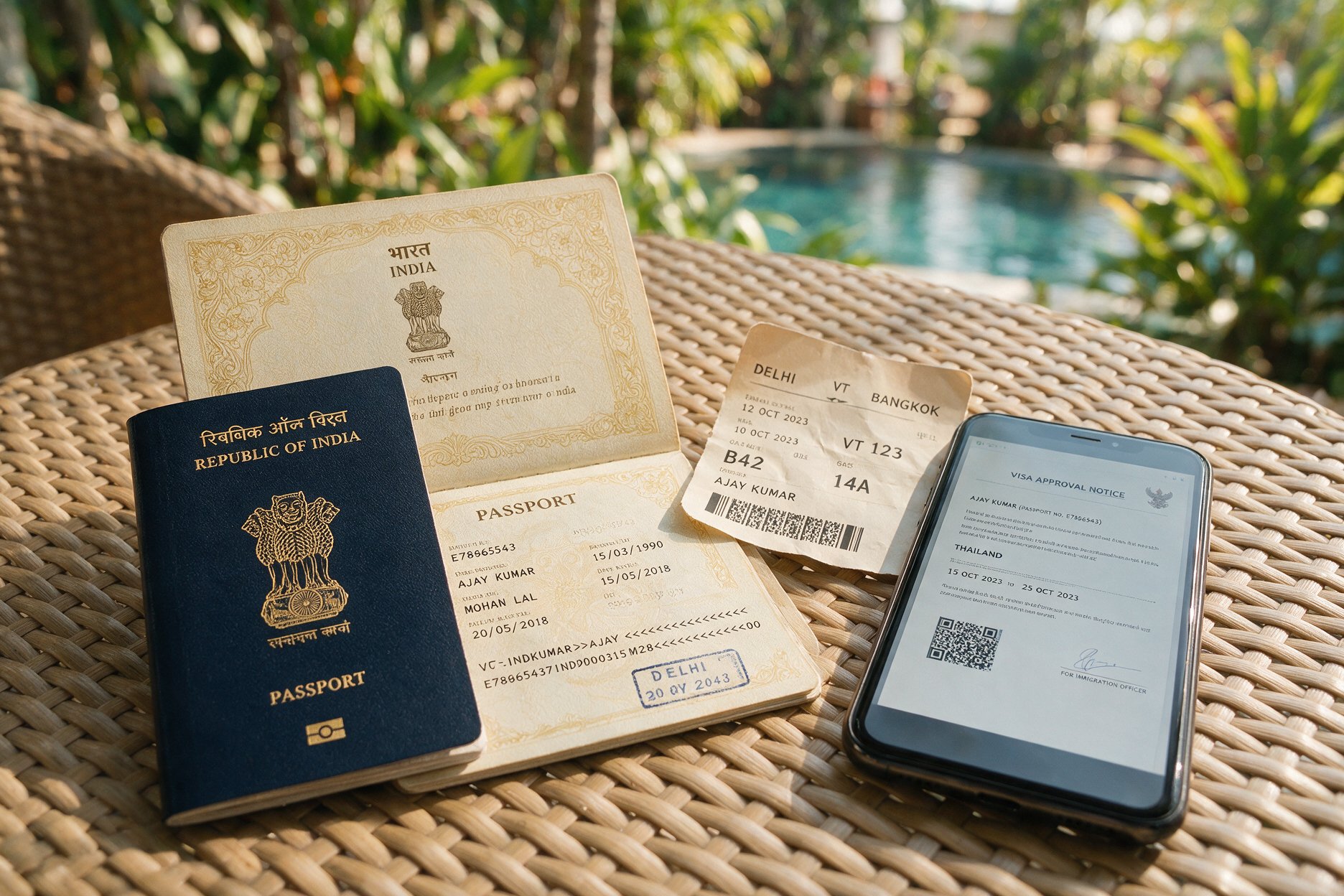
Yes. India has never been on Indonesia’s visa-exemption list. What changed, back on 6 April 2022, is that India was added to the list of nationalities eligible for the e-VOA — the online version of the visa on arrival — which is why so many Indian travelers now assume, incorrectly, that Bali is visa-free. It isn’t. What it is, is easy: you’re not filling out consulate paperwork or booking an embassy appointment. You’re paying a fee, uploading a few documents, and getting an approval PDF before you fly.
Both the VOA (paid at the airport counter on arrival) and the e-VOA (applied for online beforehand) grant the same thing: a single-entry, 30-day tourist visa. The e-VOA is simply the version you sort out in advance, and it’s the one we recommend for almost everyone reading this, for reasons that’ll be obvious once you see the airport queues.
How to Apply for the Indonesia e-VOA
Applying Online Before You Fly
Go to the official portal, evisa.imigrasi.go.id, and only that domain — there’s a small industry of copycat sites that charge Indian travelers two or three times the real fee for the same visa, and TripAdvisor’s Indonesia forum has a steady stream of people who found out the hard way. The genuine process is:
- Create an account and select the e-VOA (tourism/visit purpose) category.
- Upload a passport photo, your passport bio page, and your return or onward ticket.
- Enter your Indonesia accommodation details (a confirmed hotel or villa booking works).
- Pay online via Visa, Mastercard or JCB, or Indonesia’s SIMPONI billing system.
- Wait for approval — usually same-day to a couple of days — and download the PDF, which carries a barcode immigration scans on arrival.
Apply at least 2 business days before you fly to leave a buffer if anything needs correcting. One genuinely useful feature: a single e-VOA application can cover up to five travelers at once, so a family or a couple traveling together can do it in one sitting instead of five separate logins.
Getting the Visa on Arrival at the Airport
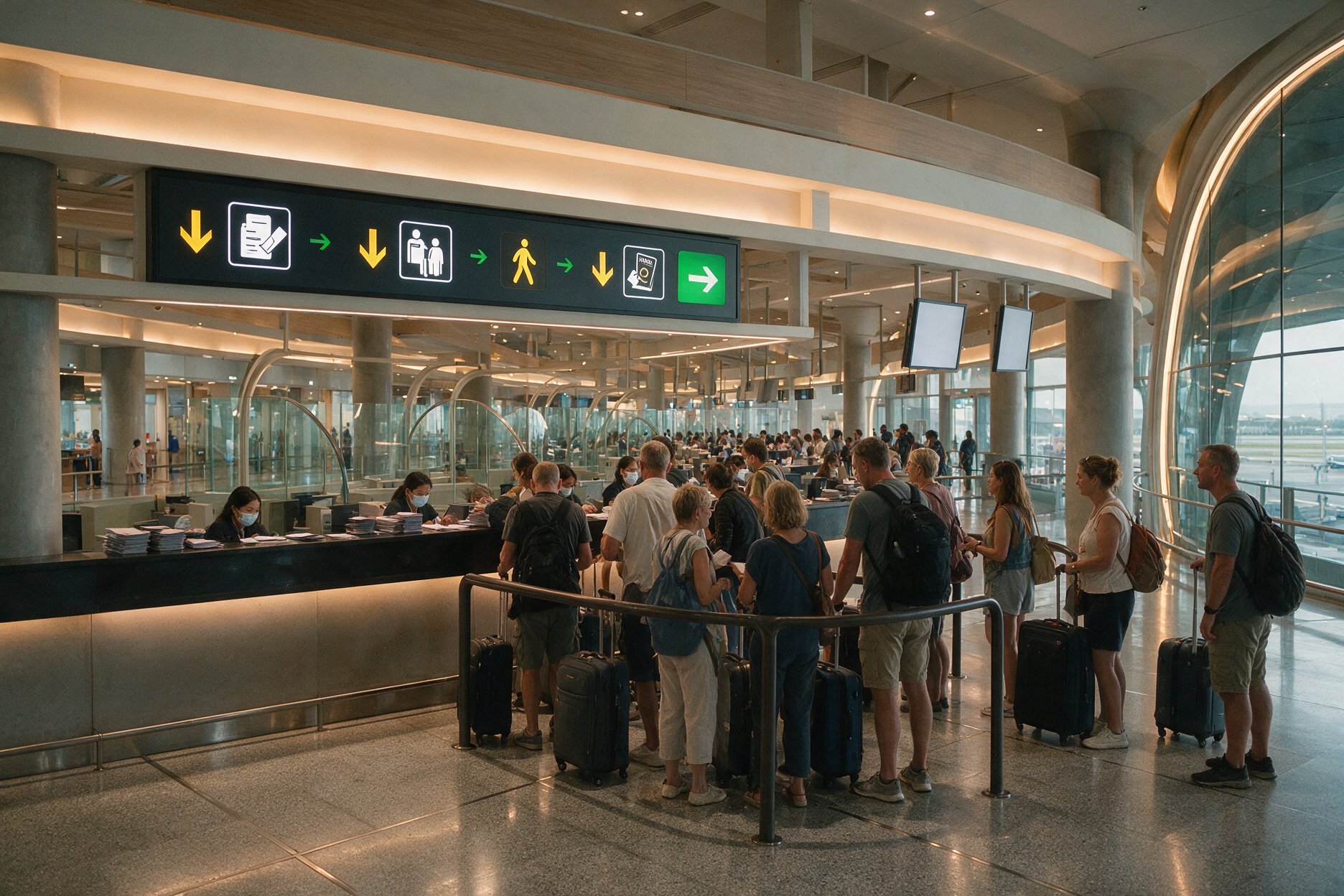
If you land without having applied online, you can still get a VOA at a counter before immigration — but you’ll queue twice, once at the VOA payment counter and again at the immigration desk, and you can’t use the e-gates. On a busy evening at Ngurah Rai, that’s easily an extra 30–45 minutes standing around after a long flight. Our honest opinion: unless you’re arriving somewhere with no reliable internet access beforehand, there’s no real reason to skip the online e-VOA.
Indonesia Visa Fees for Indians: INR, IDR and USD
The e-VOA and airport VOA cost the same amount — the only difference is where you pay it.
| Item | Fee (IDR) | Approx. USD | Approx. INR |
|---|---|---|---|
| e-VOA / VOA (single entry, 30 days) | IDR 500,000 | ~US$30 | ~₹2,700 |
| One-time 30-day extension | IDR 500,000 | ~US$30 | ~₹2,700 |
| Overstay fine (per day) | IDR 1,000,000 | ~US$60 | ~₹5,400 |
INR conversions move with the exchange rate, so treat them as rough — but they’ve stayed in this band for a while. Pay only through the official portal or the airport counter; if a travel agent quotes you a wildly different number for the visa itself (as opposed to their service fee for handling it), ask what exactly you’re paying for.
Documents You Actually Need
Immigration officers in Indonesia have discretion to ask for any of these, and it’s the difference between a smooth walk-through and a side conversation at the desk:
- Passport validity: at least 6 months remaining from your date of arrival in Indonesia, non-negotiable and checked at check-in in India, not just on landing.
- Blank pages: at least one completely blank page for stamps.
- Return or onward ticket: a confirmed flight out of Indonesia within your visa validity. An open-ended one-way ticket is a common reason for extra questioning.
- Proof of accommodation: a hotel or villa booking confirmation for at least part of your stay.
- Proof of funds: not always checked, but immigration can ask for evidence you can support yourself — a bank statement or forex card balance is enough if it comes up.
- A clear reason for travel: tourism, in plain terms, if asked directly.
A passport photo and your accommodation and ticket details are also needed for the e-VOA application itself, so gather these before you sit down to apply rather than mid-form.
How Long Can You Stay, and How to Extend
The e-VOA/VOA is valid for 30 days from arrival and is single-entry — leave Indonesia and you need a fresh visa to come back, the old one doesn’t reactivate. It can be extended once, for another 30 days, for a total maximum stay of 60 days.
The extension itself is applied for online through Indonesia’s immigration system (the “Molina” portal), but — and this trips people up — it isn’t fully digital. You still need to show up in person at an immigration office for biometrics: fingerprints, a photo, and a digital signature. Start the process around 14 days before your visa expires, and plan for the in-person biometric appointment about 3–5 days before expiry, since offices in Bali and Jakarta can get booked out. The extension fee is the same IDR 500,000. Miss the window and you’re looking at the overstay fine of IDR 1,000,000 per day, and beyond a certain point, overstays escalate to detention and deportation rather than just a fine — this isn’t a “pay and leave” situation once it drags on.
One thing worth knowing before you plan a long Indonesia trip around visa runs: the e-VOA explicitly does not permit any paid work or income-generating activity, and 60 days is the hard ceiling under this visa type. Longer stays need a different visa category entirely, which is outside the scope of a tourist trip and worth talking to a visa specialist about directly.
Entry Points: Bali, Jakarta and Beyond
Most Get Tripped travelers land at one of two airports:
- I Gusti Ngurah Rai International Airport, Denpasar (DPS) — Bali’s airport. Fun fact: the airport code DPS refers to Denpasar, not Bali, which trips up a surprising number of people booking flights for the first time.
- Soekarno-Hatta International Airport, Jakarta (CGK) — the main gateway if your itinerary includes Jakarta, or you’re connecting onward within Indonesia.
The e-VOA is valid for entry through Indonesia’s designated international airports and seaports, which cover both of these plus other major hubs like Surabaya and Batam. If your route is unusual — arriving by sea, for instance, on a cruise itinerary — it’s worth double-checking your specific port is on the current eligible list on the official portal before you travel, since the list is occasionally revised.
The All Indonesia Arrival Card and Customs Rules
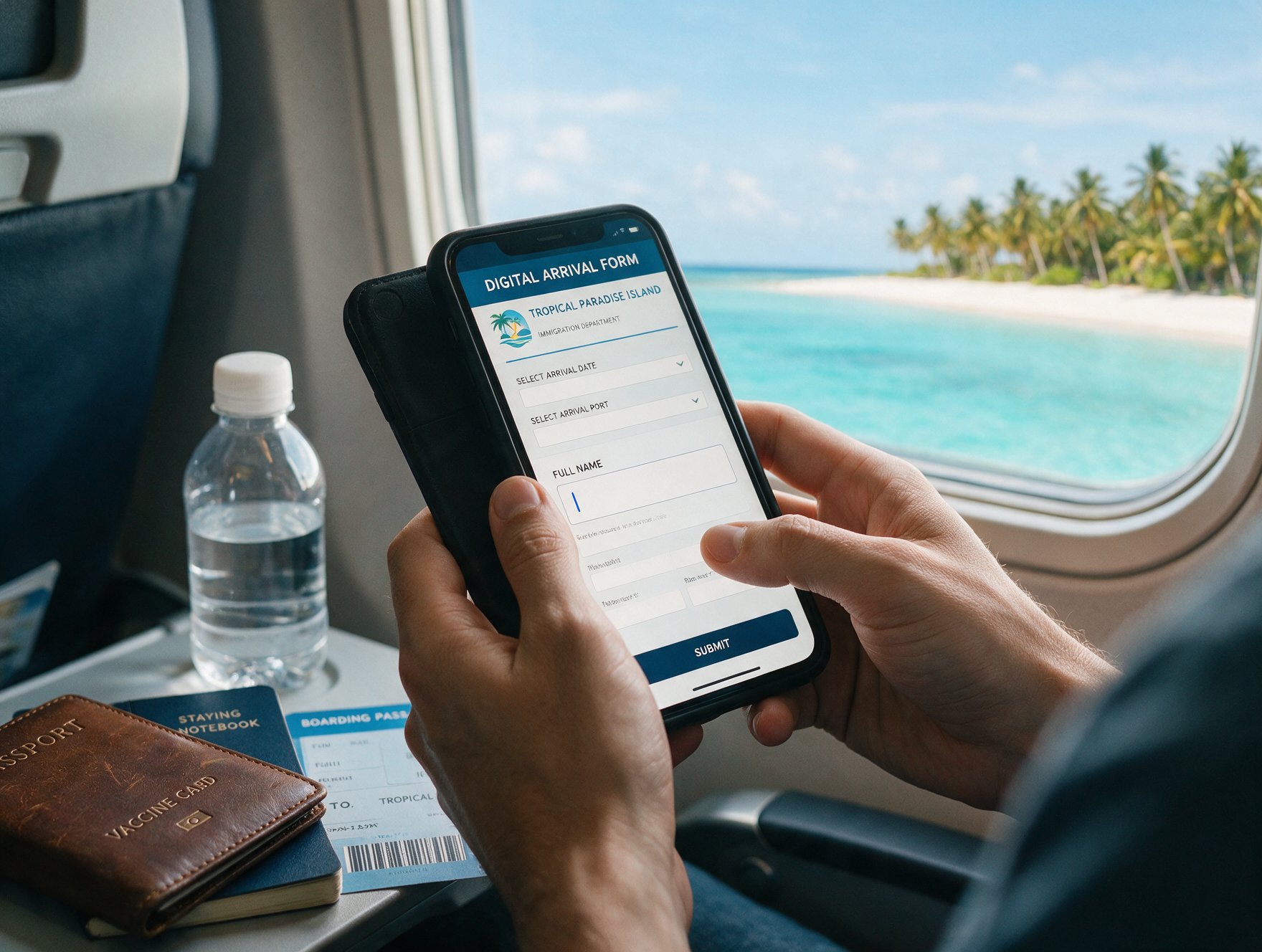
Since 1 October 2025, Indonesia has run a single digital arrival system called All Indonesia, which merges what used to be three separate forms — immigration, customs, and health declarations — into one. You fill it out online (or via the All Indonesia app) within 3 days before you land, at allindonesia.imigrasi.go.id, and it generates a QR code you show at the airport. It’s free — a real problem on earlier systems was third-party sites charging a “processing fee” for something that costs nothing, and that pattern has carried over to All Indonesia too, so bookmark the official domain and ignore search ads for anything else.
On the customs side, the allowances that matter for most tourists:
- Personal goods bought abroad: duty-free up to FOB US$500 per person.
- Alcohol: 1 litre per adult.
- Tobacco: 200 cigarettes, or 25 cigars, or 100g of tobacco per adult.
- Cash: carrying IDR 100 million or more (or the equivalent in other currency) must be declared; undeclared cash above that threshold can be fined 10% of the amount, capped at IDR 300 million.
- Electronics: up to two mobile phones qualify under the personal-use exemption, but their IMEI numbers need registering with customs — worth doing if you’re traveling with a spare or upgrading phones while abroad.
None of this is exotic if you’ve traveled internationally before — it’s a standard declaration, just bundled into a new single system that replaced Indonesia’s old paper customs form and an earlier separate e-CD app.
Health and Vaccination Requirements
For travelers flying direct or via common transit hubs (Singapore, Kuala Lumpur, Doha, Dubai) from India, there’s no mandatory vaccination for entry. Indonesia does require a yellow fever vaccination certificate if you’re arriving from — or have recently transited through — a country with risk of yellow fever transmission, which mostly applies to parts of Africa and South America, not India. If your itinerary happens to route through one of those regions beforehand, check current requirements before you fly, since this is enforced.
Routine travel health advice still applies — hepatitis A and typhoid vaccination is commonly recommended by travel clinics for Southeast Asia generally, and it’s sensible for street food-heavy trips, but that’s a personal health decision, not a visa requirement. We’re not medical professionals, so check with a travel clinic or your doctor for anything specific to your health history.
Common Visa Mistakes Indian Travelers Make
A few patterns show up again and again in traveler forums and in what our own travelers run into:
- Assuming Bali is visa-free. It genuinely isn’t, and this is the single most repeated mistake. The e-VOA process is quick, but it’s still a required step, not a formality.
- Booking flights with less than 6 months of passport validity. Airlines in Mumbai and Delhi check this at check-in and will deny boarding — it never even reaches the Indonesia side.
- Buying the visa from a lookalike website that charges a markup over the IDR 500,000 official fee. If a site doesn’t end in imigrasi.go.id, verify it’s a licensed agent, not the government portal itself.
- Skipping the All Indonesia Arrival Card because it’s new and unfamiliar, then discovering it at the immigration desk with a dead phone battery and no wifi.
- Assuming the extension is fully online. It isn’t — the in-person biometric visit is mandatory, and leaving it to the last few days risks missing your window entirely.
- Carrying an open one-way ticket with no return or onward flight booked, which is a documented reason immigration in Indonesia has questioned or delayed travelers.
Immigration Line Tips for Bali and Jakarta Airports
Ngurah Rai gets genuinely busy in the early evening, when flights connecting through Singapore, Kuala Lumpur and the Gulf hubs tend to cluster on arrival — if your itinerary gives you any flexibility, a late-morning or early-afternoon arrival generally means a shorter wait. Practical things that save time at the desk:
- Have your e-VOA approval PDF and your All Indonesia QR code saved offline (screenshot, not just a bookmark) — airport wifi is inconsistent and you don’t want to be searching your inbox mid-queue.
- Keep your passport, boarding pass stub, and printed or downloaded visa approval together rather than split across a bag pocket and a phone app.
- Fill in the arrival card the moment your flight lands wifi permitting, or better, the day before — don’t wait until you’re in the queue.
- E-VOA holders still go through a standard immigration counter, not an e-gate, so don’t expect an automated fast lane just because you applied online.
Best Time to Visit and What an Indonesia Trip Costs from India
The dry season, roughly May through September, is the easiest window for island-hopping to Nusa Penida, diving trips, and volcano hikes — this is genuinely the best time to visit Indonesia if your itinerary depends on the weather cooperating. November through March is wetter and greener, with short, heavy afternoon downpours rather than all-day rain, and it’s also when hotel and villa rates tend to soften a little.
On the ground, Indonesia trip cost from India varies a lot by how you travel. A comfortable mid-range trip — 4-star hotels, private transfers, a mix of paid experiences and free time — typically runs noticeably less per day than a comparable trip in Europe, which is part of why Bali remains such a popular first international honeymoon or family holiday from India. A villa-based luxury stay in Ubud or Seminyak, with a private pool and a driver on call, sits at the other end of that range. Either way, the visa itself is a small, fixed cost against the rest of the trip — it’s the flights, stay, and experiences that move the needle on your total budget.
Frequently Asked Questions
Is Indonesia visa-free for Indian citizens in 2026?
No. Indian passport holders need a Visa on Arrival or e-VOA for tourism visits — there is no visa-free entry for Indian citizens as of 2026.
How much does the Indonesia visa on arrival cost for Indians?
IDR 500,000, roughly US$30 or ₹2,700, whether you apply online (e-VOA) or pay at the airport counter (VOA). The extension costs the same amount again.
Can I apply for the Indonesia visa online before I travel?
Yes, through the official e-VOA portal at evisa.imigrasi.go.id. It’s the recommended route since it skips the airport payment counter queue and lets you use immigration desks that aren’t the crowded on-arrival VOA line.
How long can Indian tourists stay in Indonesia?
30 days on the initial e-VOA/VOA, extendable once for another 30 days, for a maximum of 60 days on this visa type. It’s single-entry, so leaving the country ends that visa’s validity.
Is Indonesia visa for Indians the same as the Bali visa?
Yes — Bali is part of Indonesia, so the same national e-VOA/VOA applies whether you’re landing in Denpasar for Bali or in Jakarta. There’s no separate “Bali visa.”
Is Indonesia safe for tourists, particularly for solo travelers and families from India?
Indonesia is a well-established, high-volume tourist destination, and Bali specifically sees large numbers of Indian visitors every year. The Consulate General of India in Bali’s own traveler advisory focuses less on crime and more on practical caution: don’t flash cash or valuables, use hotel safes, take water-activity and cliff-photography warning signs seriously since hazard markers aren’t always present, and get proper travel insurance. That’s a reasonable read of the actual risk profile for most travelers.
What is the All Indonesia Arrival Card and do I need to fill it out?
Yes, everyone needs it. It’s Indonesia’s unified digital arrival, customs, and health declaration, mandatory since October 2025, submitted online within 3 days of arrival at the official allindonesia.imigrasi.go.id portal.
What happens if I overstay my visa in Indonesia?
A fine of IDR 1,000,000 per day for short overstays, paid at departure. Longer or repeated overstays can escalate to detention, deportation, and being barred from re-entry, so it’s not a cost worth risking for a few extra days.
None of this is complicated once you’ve done it — most of it takes less time than choosing a hotel. The bigger planning questions are usually the fun ones: how many days in Ubud versus the coast, whether to add Nusa Penida or the Gili Islands, and when to go so the weather actually cooperates. Get the Indonesia visa for Indians 2026 sorted early, ideally as soon as your flights are booked, and the rest of the trip planning gets a lot less stressful.
If you’d rather not track portal deadlines and biometric appointments yourself, that’s exactly the kind of thing Get Tripped handles as part of planning your trip — from visa assistance to building the itinerary around Bali’s better months. Get in touch and we’ll put together a custom Indonesia trip that fits how you actually want to travel, not a template with your name on it.