The most vivid coral in Aqaba’s Japanese Garden starts in water barely knee-deep. No boat, no tank, just a mask and five metres of wading from the sand — and you’re already looking down at staghorn and table coral that elsewhere on the Red Sea you’d need a dive certification to reach. That’s the thing about Aqaba that doesn’t come through in the “Jordan: Petra and the Dead Sea” itineraries: Jordan’s only coastline is 27 kilometres of Red Sea reef, and most travellers spend half a day on the public beach, take a photo of the water, and move on toward Wadi Rum.
If you’re building a Jordan vacation package that includes the southern loop — Petra, Wadi Rum, Aqaba — this is the part of the trip most Jordan tour packages from India undersell. We’ve gone past the main public beach to find the five Aqaba spots worth building a day, or two, around: a shallow reef you can snorkel straight off the sand, a wreck dive serious divers rate above its Egyptian namesake, a cluster of coral pinnacles most tour buses skip, a quieter stretch of water for anyone who wants the Red Sea without the crowd, and the unglamorous seafood counter locals actually eat at.
Table of Contents
- Why Aqaba Earns More Than a Half-Day Stop
- 1. Japanese Garden Reef — Shore-Entry Coral You Don’t Need a Tank For
- 2. The Cedar Pride Wreck — A Dive Jordan Rates Higher Than Its Egyptian Cousin
- 3. Seven Sisters — Shallow Pinnacles for Families and First-Time Snorkellers
- 4. Berenice Beach Club — The Quiet Cove South of the Crowds
- 5. Ali Baba’s Red Sea Fish House — Where Aqaba Actually Eats
- Best Time to Visit Aqaba: Water Temperature by Season
- Aqaba vs. Egypt’s Red Sea: Which One for Your Trip
- Aqaba’s Duty-Free Zone, and the Mistake Travellers Make With It
- Getting to Aqaba from Amman, Petra and Wadi Rum
- Who Aqaba Actually Suits
- FAQs
- Final Word
Why Aqaba Earns More Than a Half-Day Stop
Most Jordan Tourism Board material frames Aqaba correctly as “warm Red Sea waters, sandy beaches, fresh seafood and easy-going evenings on Jordan’s southern coast” — and then tour itineraries treat it as a one-night stopover between Wadi Rum and the airport. That’s a mistake if you actually like the water. Aqaba sits at the northern tip of the Gulf of Aqaba, the same body of water that runs past Eilat in Israel and Sharm-adjacent waters down toward Egypt, and the reef here has had decades longer to recover from mass tourism than the more famous Egyptian dive towns. Divers who’ve done both will tell you, without much hesitation, that a few of Aqaba’s sites are in better condition.
For an Indian traveller planning a 7-nights, 8-days Jordan itinerary, Aqaba is usually the last stop on the southern loop — after Petra and Wadi Rum, before the flight home or back to Amman. Two full days here, not one rushed afternoon, is what actually lets you see past the main beach. We’ve covered Jordan’s inland hidden gems separately in Jordan Hidden Gems Beyond Petra and the Dead Sea — this piece zooms all the way into Aqaba itself.
1. Japanese Garden Reef — Shore-Entry Coral You Don’t Need a Tank For
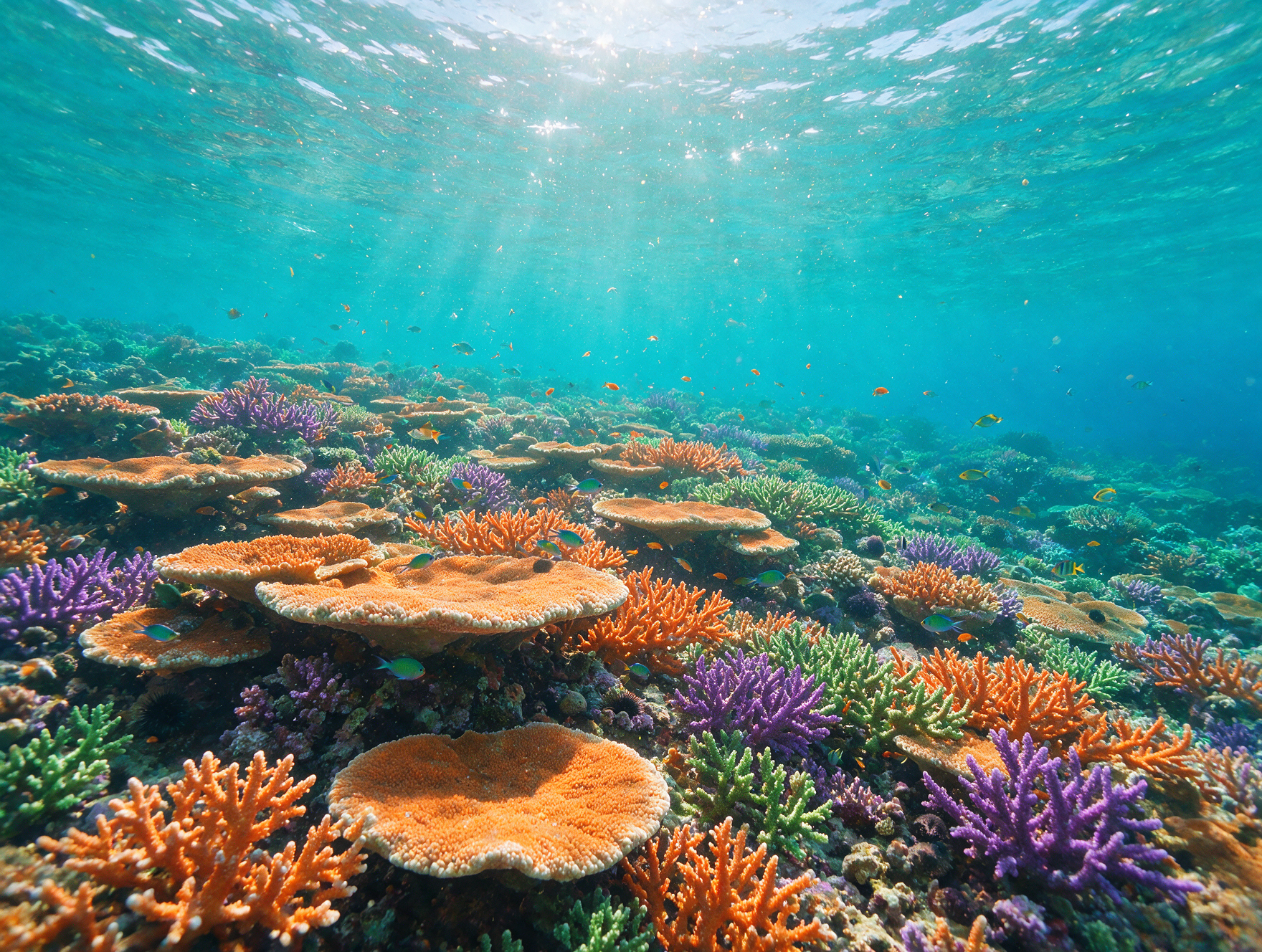
Japanese Garden sits inside the protected Aqaba Marine Park, a short walk or quick boat hop from the dive centres along South Beach. It gets its name from the way the reef steps down in tiers — like a terraced garden — rather than dropping off in one wall. Most of the written depth guides put the site’s full range at 5 to 40 metres, but the part that matters for a non-diver is this: the most colourful coral — staghorn, brain, and some genuinely enormous table corals — starts in water one to two metres deep. You can snorkel it straight from the sand.
Divers get more out of it, obviously. Two main gullies cut through the reef, sea turtles and moray eels turn up often enough that dive guides mention them as routine rather than lucky, and the site sits immediately next to the Cedar Pride wreck (below), so a single outing can combine a reef dive and a wreck dive without a long surface swim between them.
A caveat worth having: the shallow coral is also the most fragile part of the reef, and it’s taken a battering from careless fins and sunscreen runoff over the years. Wear reef-safe sunscreen, and if you’re a confident swimmer, skip the fins near the shallowest coral and just float.
2. The Cedar Pride Wreck — A Dive Jordan Rates Higher Than Its Egyptian Cousin
The Cedar Pride is a Lebanese cargo ship, deliberately sunk off Aqaba in 1985 after a fire disabled it, and it’s now one of the most photographed wrecks in the Red Sea — its hull and mast are so thickly covered in soft coral that from a distance it reads as a reef, not a ship. It sits at a maximum depth of around 25 metres, with the top of the structure reachable by less experienced divers and the engine room and holds reserved for anyone comfortable penetrating a wreck.
Here’s the detail most blog posts skip: the same reef system continues across the Gulf into Israeli waters near Eilat, where it’s often marketed under similar “Japanese Garden” branding to tourists on day trips from Tel Aviv. Local dive operators and more than one diver’s trip report note that the Jordanian side has stayed better preserved and less picked-over — fewer boats, fewer divers per square metre of reef, less anchor damage. If you’ve dived Eilat or the Sinai before and assumed Aqaba would be a watered-down version, it’s worth reconsidering.
The mistake to avoid here: Cedar Pride is routinely sold to tourists as an easy dive, and the top of the wreck is. But Jordanian dive operators do check certification cards before letting you penetrate the hull or go below about 18 metres, and for good reason — it’s still a sunken ship with sharp edges and silt that reduces visibility fast if you kick it up. If you’re not Open Water certified, this is a dive to watch from the Japanese Garden side, not attempt solo.
3. Seven Sisters — Shallow Pinnacles for Families and First-Time Snorkellers
Seven Sisters sits in Aqaba’s South Bay, a cluster of shallow coral pinnacles that top out at around 8 metres and bottom out closer to 26 feet in the gaps between them — shallow enough that sunlight still reaches the coral in full colour, which is the main reason underwater photos from here look better than deeper sites. It doesn’t carry the name recognition of Cedar Pride, which is exactly why it’s quieter: most dive boats head straight for the wreck and the Japanese Garden, leaving Seven Sisters to the operators who specifically run family and beginner trips.
It’s a genuinely good call for families travelling with kids old enough to snorkel confidently, or for couples where one person dives and the other doesn’t — the shallow pinnacles mean a snorkeller on the surface can see almost everything the diver below is seeing, which isn’t true at most of Aqaba’s deeper sites.
Photography tip: shoot here between 10am and 1pm, when the sun is close to directly overhead. At that angle, light reaches the coral with almost no colour loss, which is the difference between a photo that looks faded blue-green and one that actually shows the oranges and purples in the coral. Underwater, white balance drifts fast past 5 metres — if your camera or housing allows a manual white balance setting, use it rather than relying on auto.
4. Berenice Beach Club — The Quiet Cove South of the Crowds
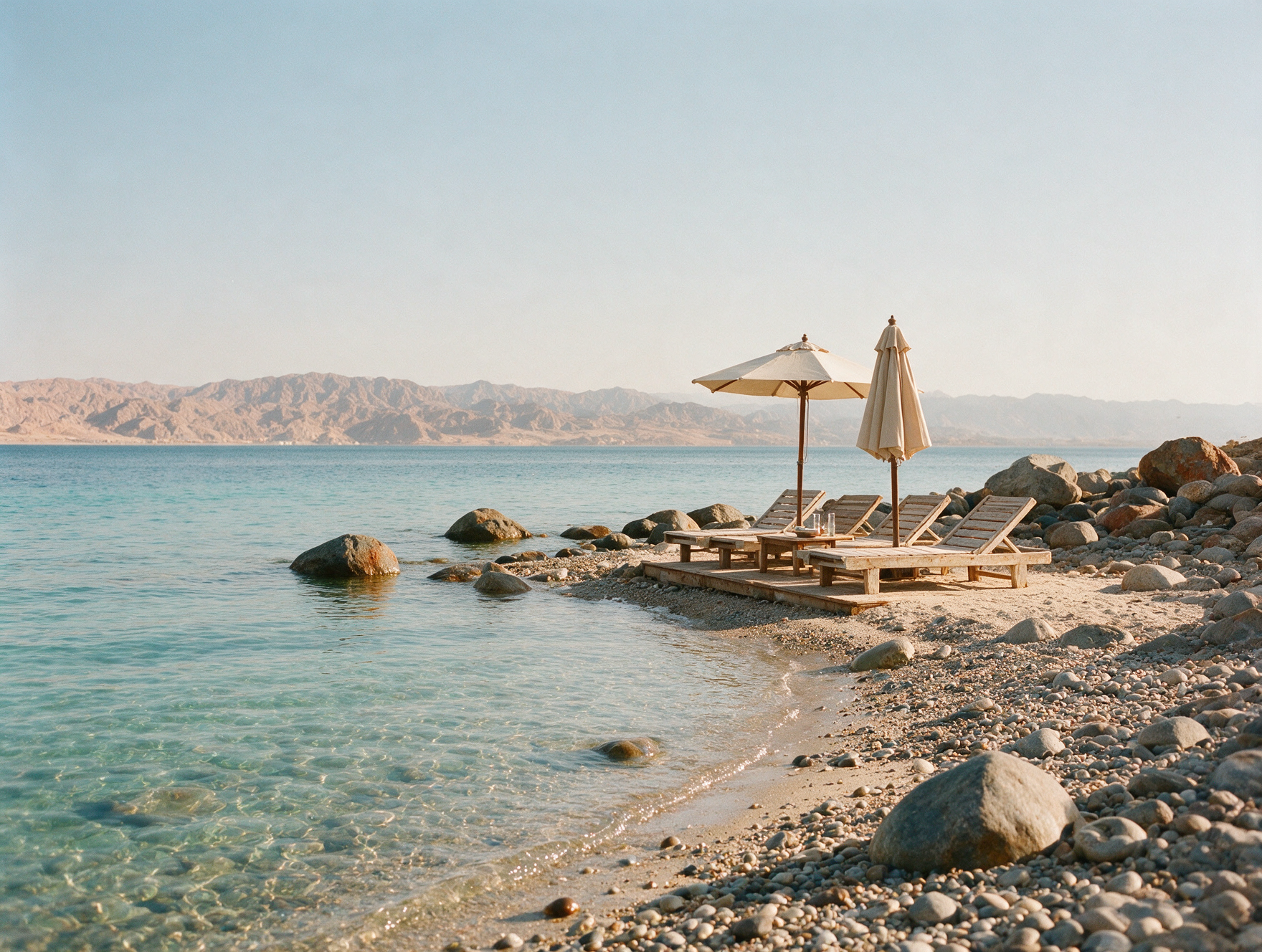
Aqaba’s main public beach — locally the Al-Ghandour stretch — gets genuinely crowded by late afternoon, especially on weekends when local families arrive after work. If you want Red Sea water without a few hundred other people in it, Berenice Beach Club, a short drive south of the town centre, is the honest answer. It’s a paid day-access club rather than a secret free beach — don’t go in expecting an undiscovered spot, because it isn’t one — but the entry fee is exactly what keeps it quiet. Loungers, shade, changing rooms, and a swimming area with a shallow reef patch just offshore, without having to fight for a patch of sand.
This is the pick for couples and luxury-leaning travellers who’d rather pay for calm than get up early to beat the crowd at the free beach. If you’re building a packing list for Jordan’s beach stretch, a reef-safe sunscreen and your own snorkel gear are worth the suitcase space — rental gear at the busier clubs runs out by mid-morning in peak season.
A smart-spending note: day passes typically bundle in a lounger and sometimes a food and drink credit. If you’re staying at a hotel along the same stretch of coast, check whether your hotel already has beach access before paying separately for a club pass — some properties include it, and double-paying for the same stretch of water is an easy way to lose money on a trip that otherwise runs cheaper than most Red Sea alternatives.
5. Ali Baba’s Red Sea Fish House — Where Aqaba Actually Eats
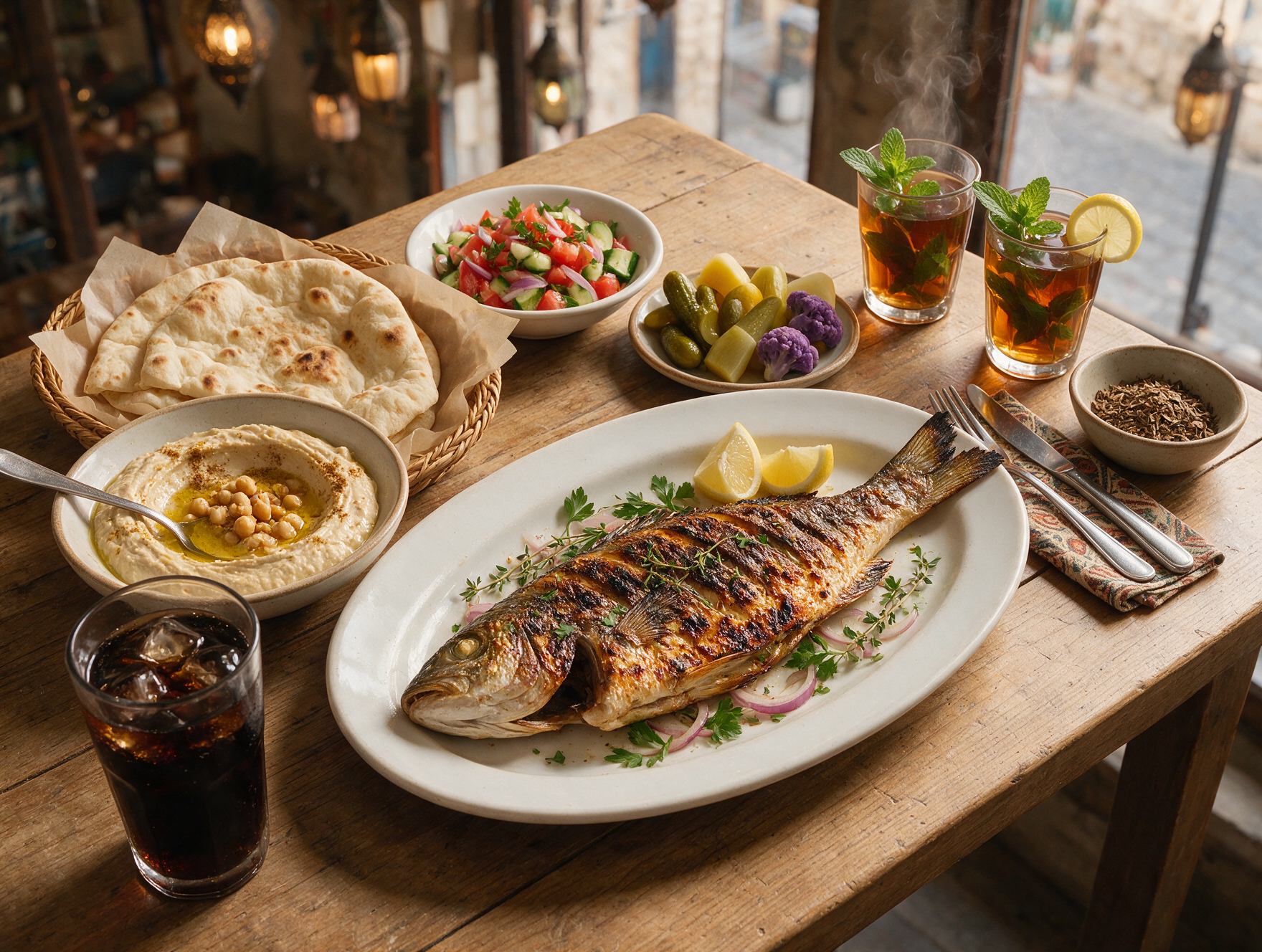
Every hotel in Aqaba has a seafood buffet, and most of them are fine. The fifth hidden gem on this list isn’t actually hidden from locals — it’s hidden from the tour-bus crowd, which is a different thing. Ali Baba Restaurant, a long-running fish house on Raghadan Street in Aqaba’s town centre, works the way a good fish restaurant should: you pick your fish from the ice counter by weight, tell them how you want it grilled or fried, and it comes out with hummus, a simple salad, and fresh flatbread — no tasting menu, no photo-ready plating, just the day’s catch done properly.
It’s the kind of place that shows up on nearly every long-time traveller’s list of Aqaba restaurants precisely because it hasn’t changed its approach to chase anyone’s Instagram feed. Zarb — meat or fish slow-cooked in a pit under sand — and sayadieh, a spiced fish-and-rice dish, are both worth asking for if they’re on the board that day. We go deeper on Jordan’s food scene, seafood included, in our Jordan food trail guide.
Fun fact worth knowing before you order: because Aqaba sits inside a special economic zone with reduced import duties, a fair amount of what lands on your plate — imported soft drinks, certain packaged goods, even some restaurant equipment — costs less here than it does 300 kilometres north in Amman. It’s a small thing, but it’s part of why Aqaba’s restaurant prices often read as better value than you’d expect from a beach town.
Best Time to Visit Aqaba: Water Temperature by Season
Aqaba’s Red Sea stays diveable and swimmable year-round, which is unusual compared to most of Jordan, where the best time to visit Jordan overall is spring or autumn to avoid both winter cold up north and summer heat inland. On the coast, the calculation is different:
- Winter (December–February): Water sits around 20–22°C. Comfortable with a light wetsuit, and this is also when Aqaba’s air temperature is most pleasant — a good window if you’re doing Petra and Wadi Rum in the same trip and want to avoid summer heat at those sites.
- Spring (March–May): Water warms to 21–24°C, with some of the clearest visibility of the year — often quoted at 20 to 30 metres, occasionally better on calm days.
- Summer (June–August): Water peaks at 26–28°C, genuinely warm enough to skip a wetsuit entirely. This is also when inland Jordan gets uncomfortably hot, so if your trip falls in the June-to-October window, Aqaba’s coast — with sea breeze and evening temperatures that drop to something walkable — is a far more comfortable base than Petra or Amman during the day.
- Autumn (September–November): Water holds at 25–27°C with visibility rivalling spring’s best days — many Aqaba-based dive operators quietly call this the best window of the year.
The mistake to avoid: underestimating the sun, not the water. Aqaba’s desert-edge climate means UV exposure on a boat or beach is sharper than the water temperature suggests, especially between May and September. A rash guard for snorkelling and reapplied sunscreen matter more here than in a lot of tropical beach destinations, precisely because the dry heat doesn’t make you feel like you’re burning the way humid heat does.
Aqaba vs. Egypt’s Red Sea: Which One for Your Trip
If you’re weighing an Egypt and Jordan tour package from India against a Jordan-only trip, it’s a fair question: Sharm El Sheikh and Hurghada are the bigger, more established dive hubs, with a larger range of dive schools, liveaboards, and reef sites overall. Aqaba’s reef system is smaller and its dive infrastructure younger. That’s the honest trade-off.
What Aqaba gives up in scale, it makes up in two ways. First, it’s genuinely less crowded — Egypt’s Red Sea resorts see far higher diver volume per reef, and reef damage from boat anchors and sheer traffic shows it in places. Second, Aqaba lets you combine Red Sea diving with Petra and Wadi Rum in the same week without a separate flight or border crossing, which is a real advantage if your trip is built around a Jordan 7-day itinerary rather than a dedicated dive holiday. If diving is the entire point of your trip and you have the extra days, Egypt’s Red Sea coast still offers more. If diving is one strong day or two inside a bigger Jordan trip, Aqaba does the job without adding a destination.
Aqaba’s Duty-Free Zone, and the Mistake Travellers Make With It
Aqaba isn’t just a beach town — it’s governed by the Aqaba Special Economic Zone Authority (ASEZA), a special economic zone set up in 2001 that exempts most goods and services inside the zone from Jordan’s standard customs duties and sales tax. In practice, that means prices on imported electronics, perfumes, cigarettes, and alcohol in Aqaba’s shops genuinely run lower than in Amman or anywhere else in the country.
The mistake to avoid: assuming “duty-free” means unlimited duty-free everywhere. The exemption applies to goods bought and used within the zone — it isn’t a blanket licence to stock up on large quantities of alcohol or cigarettes and carry them out past the zone’s checkpoints without any limit. If you’re planning to buy anything in volume, ask the shop directly about what you can carry out, rather than assuming Aqaba pricing travels with you tax-free all the way home.
Getting to Aqaba from Amman, Petra and Wadi Rum
Aqaba sits at the southern tip of Jordan, roughly four hours by road from Amman via the Desert Highway, and it’s the natural final stop on a southern loop that starts in Petra. From Petra, it’s about 125 kilometres — a private car or transfer is the straightforward option and avoids the patchier public bus schedule. From Wadi Rum, it’s shorter still: about 75 kilometres, a little over an hour by private transfer along the Desert Highway and the Aqaba Highway.
Aqaba also has its own airport (King Hussein International), so if your Jordan itinerary runs Amman → Petra → Wadi Rum → Aqaba, you can fly out of Aqaba directly rather than backtracking the whole Desert Highway to Amman — worth checking when you book your custom Jordan itinerary, since it can save the better part of a travel day.
Most Indian passport holders can get a visa on arrival at Jordan’s major entry points, including Amman’s Queen Alia International Airport, though entry rules do get updated — confirm the current requirement with your airline or travel agent before you fly rather than relying on older blog posts, this one included.
Who Aqaba Actually Suits
Couples get more out of Aqaba than almost any other stop in Jordan — it’s the one part of the trip that isn’t a monument or a hike, and a slow morning snorkelling Japanese Garden followed by a quiet dinner at a fish house on Raghadan Street is a genuinely different pace from the rest of a Jordan itinerary.
Families do well at Seven Sisters and the calmer beach clubs, where shallow water and a slower current make it easier to keep younger swimmers in sight, though note that most of Aqaba’s beach clubs don’t rent snorkel gear sized for small kids — bring your own if you’re travelling with children under ten.
Luxury seekers should look at Tala Bay, a resort-anchored stretch south of the main town with private beachfront hotels, rather than the public beach — it’s a short drive further out but delivers a noticeably different standard of beach, loungers, and service, and pairs well with a luxury Jordan travel package that treats Aqaba as a proper two- or three-night stay rather than a stopover.
FAQs
Is Aqaba safe for Indian tourists?
Yes. Aqaba is one of Jordan’s calmer, more tourism-oriented towns, and Jordan overall has a strong safety record for international visitors, including Indian tourists. Normal travel precautions apply — watch belongings on the public beach, use licensed dive operators, and keep an eye on sun exposure — but there’s no specific safety concern unique to Aqaba.
Do I need a scuba certification to see the coral in Aqaba?
No. Several of Aqaba’s best reef patches, including parts of Japanese Garden and Seven Sisters, have vibrant coral in water shallow enough to snorkel from the shore. A certification only matters if you want to go below roughly 10–12 metres or dive the deeper sections of wrecks like Cedar Pride.
How many days should I spend in Aqaba?
Two full days is the practical minimum to fit in a reef, a wreck or deeper dive site, a quieter beach stretch, and at least one proper seafood meal without rushing. One day works if Aqaba is purely a transit stop before or after Wadi Rum.
Is Aqaba better than Egypt’s Red Sea for diving?
Not in scale — Egypt’s Red Sea resorts have more dive sites and infrastructure overall. Aqaba wins on being less crowded and on letting you combine Red Sea diving with Petra and Wadi Rum in a single Jordan trip without a separate flight.
Can I combine Aqaba with Petra and the Dead Sea in one trip?
Yes, and it’s the standard southern Jordan loop — most Petra and Dead Sea tour packages can be extended south to Wadi Rum and Aqaba, or built from the start as a full loop covering all four.
What’s the best time of year to visit Aqaba specifically?
Autumn (September–November) and spring (March–May) offer the clearest water and the most comfortable air temperature. Summer works for the beach and diving itself — water is at its warmest — but inland heat during the same trip (Petra, Wadi Rum) can be intense, so plan those portions for early morning.
Is there duty-free shopping in Aqaba?
Yes — Aqaba is a special economic zone with reduced customs duties and sales tax on many goods, so prices on electronics, perfume, and alcohol are typically lower than elsewhere in Jordan. Confirm limits on what you can carry out of the zone before buying in bulk.
Does Jordan offer visa on arrival for Indian citizens arriving via Aqaba?
Most Indian passport holders can obtain a visa on arrival at Jordan’s main entry points. Requirements can change, so verify the current rule for your specific entry point with your airline or travel agent shortly before departure.
Final Word
Aqaba doesn’t need you to choose between Petra’s ruins and a beach holiday — it’s the stop on a Jordan trip where you get both without flying anywhere else. The main public beach is a fine introduction, but the five spots above are where Aqaba actually earns a place on your itinerary: a reef you can snorkel from the sand, a wreck worth the certification, a quiet pinnacle cluster for families, a paid-but-peaceful cove for couples, and a fish house that’s been doing this the same honest way for years.
If you’re mapping out where Aqaba fits into a longer Jordan trip — alongside Petra, Wadi Rum, and the Dead Sea — Get Tripped’s Jordan travel specialists can build a custom Jordan itinerary around exactly how much beach time versus desert time you want. Explore Get Tripped’s Jordan tour packages from India or get in touch to book Jordan holidays that put Aqaba’s Red Sea coast properly on the map, not just on the way to the airport.