Jordan is, somewhat unexpectedly, one of the easier Middle East destinations for vegetarian Indian travelers — not because restaurants label things “vegan” the way they do in Europe, but because mezze culture is built around vegetable, legume and dairy dishes by default. Hummus, mutabbal, moutabal, fattoush, foul medames, stuffed vine leaves, labneh — a mezze spread can be entirely meat-free without anyone treating that as a special request. The harder part isn’t finding vegetarian food; it’s knowing which specific places do it well, since a tourist-strip restaurant serving ten different nationalities a night isn’t always putting care into the vegetable dishes the way a place that’s known for them does.
Here’s a working guide across all six stops on a typical Jordan route: Amman, Petra, Wadi Rum, the Dead Sea, Aqaba, and the Dana Biosphere Reserve.
Table of Contents
- The basics: what’s naturally vegetarian in Jordanian food
- Amman
- Petra / Wadi Musa
- Wadi Rum
- Dead Sea
- Aqaba
- Dana Biosphere Reserve
- Notes specifically for vegan travelers
- Useful phrases and labels
- A mistake to avoid
- FAQs
The basics: what’s naturally vegetarian in Jordanian food
Hummus, mutabbal (smoky eggplant dip), baba ghanoush, foul medames (stewed fava beans), fattoush and tabbouleh salads, warak enab (stuffed vine leaves, usually rice and herbs), labneh with olive oil, and freshly baked flatbread form the backbone of any mezze spread, and they’re rarely an afterthought — they’re the main event alongside the meat, not a sad side salad next to someone else’s kebab. The one dish to watch for cross-contamination concerns is maqluba, which is often made with meat stock even when the visible ingredients look vegetarian, so ask specifically if you want a true vegetarian version.
Amman
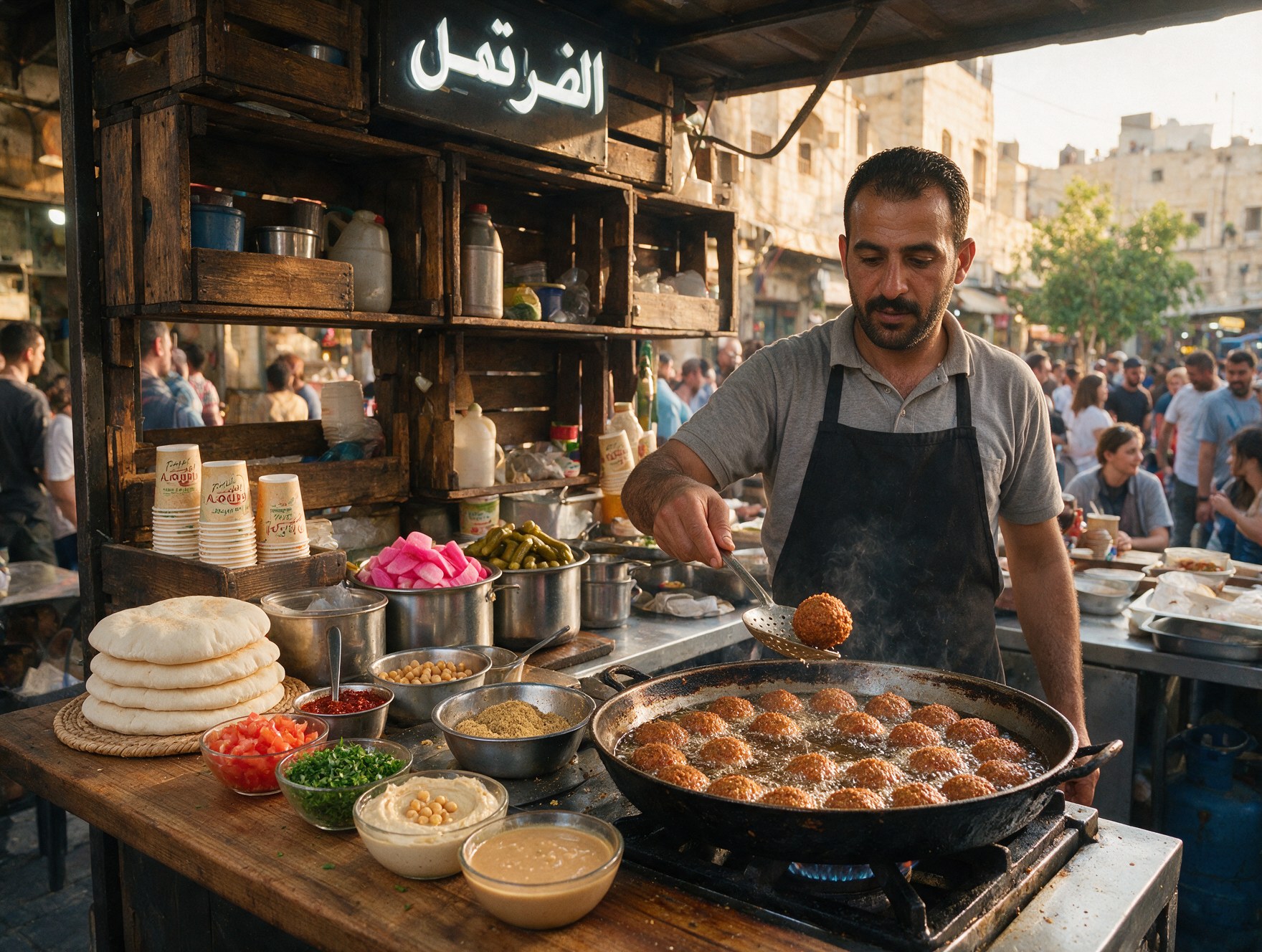
Hashem — downtown near Al Balad, running since 1952, and entirely vegetarian: falafel, hummus, foul and fresh bread, eaten at shared tables, often standing. It’s not a “vegetarian restaurant” in the deliberate modern sense; it’s just always been meat-free, which is part of why it works so well.
Shams El Balad — set in a restored downtown building with rooftop seating, farm-to-table focused, with a mostly meat-free menu that treats vegetables as the main ingredient rather than a filler. Good for a sit-down dinner rather than a quick lunch.
Worth also knowing: Wild Jordan Center near Rainbow Street runs a seasonal menu with clearly labeled vegan options and one of the better sunset views over downtown Amman you’ll get from any restaurant terrace in the city.
Petra / Wadi Musa
Petra’s restaurant scene is smaller and more tourist-oriented than Amman’s, so expectations should shift slightly — you’re looking for a solid mezze spread rather than a dedicated vegetarian concept. Al-Wadi Restaurant and My Mom’s Recipe Restaurant, both in Wadi Musa near the main hotel strip, consistently turn up in traveler reviews for generous vegetable-forward mezze platters and freshly made bread, and both can put together a full vegetarian meal without much negotiation. Confirm ahead if you’re vegan specifically, since some mezze dishes here are finished with ghee or butter rather than olive oil.
Wadi Rum
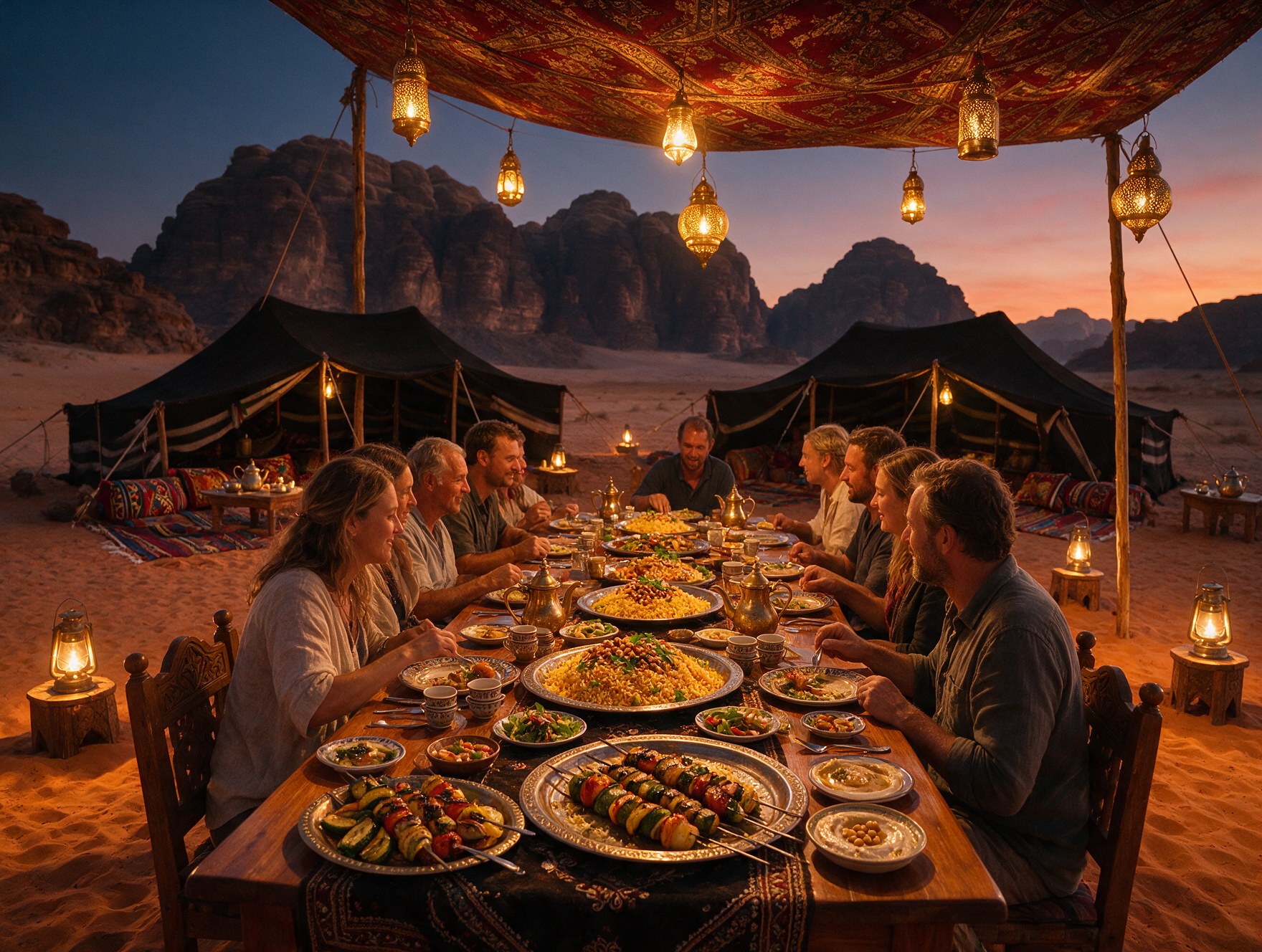
This is the one stop where “restaurant” isn’t really the right word — you’re eating at whichever Bedouin camp you’re staying at, and the good news is the zarb (the underground slow-cooked dinner) always includes a generous vegetable component cooked the same careful way as the meat, so vegetarians genuinely eat well here, not as an afterthought. Bait Ali Camp and Wadi Rum Bedouin Camp both have reputations among travelers specifically for handling vegetarian requests well if you flag it when booking, rather than leaving you with just bread and salad while everyone else gets the main event.
Dead Sea
Dining here is mostly resort-buffet style, and the major properties — Mövenpick Resort & Spa Dead Sea and Kempinski Hotel Ishtar Dead Sea — both run large international buffets with dedicated vegetarian stations (grilled vegetables, legume stews, mezze bars) alongside the main spread, which makes this one of the easier stops for a vegetarian traveler who’s tired of having to ask. It’s not the most exciting food of the trip, but it’s reliable, and after a Petra-and-Wadi-Rum stretch, reliable is sometimes exactly what you want.
Aqaba
Al-Shami, a long-running Levantine restaurant in central Aqaba, does a strong mezze spread alongside its seafood menu, and it’s an easy place to build a full vegetarian meal around hummus, fattoush, foul and grilled vegetables while everyone else at the table orders fish. Most of Aqaba’s seafood-forward restaurants will happily do a vegetable platter if you ask, since mezze is assumed as a starter for every table regardless of what follows.
Dana Biosphere Reserve
The RSCN-run Dana Guest House and nearby Feynan Ecolodge both serve simple home-style meals — lentil soup, seasonal vegetables, fresh bread — cooked for a small number of guests rather than a tourist-volume menu, and vegetarian meals here need no special request at all since a good portion of what’s served already is vegetable- and legume-based. If you’re vegan, mention it at check-in; both properties can adjust without much fuss since the kitchens are small and flexible by nature.
Notes specifically for vegan travelers
Dairy shows up constantly in Jordanian food — labneh, yogurt-based sauces, cheese in knafeh and manakish — so vegans need to ask more specifically than vegetarians do. The phrase “bidoon samna wala laban” (without ghee or dairy) is genuinely useful and gets taken seriously almost everywhere, since Jordanian hospitality culture treats a dietary request as something to solve for, not push back on. Falafel, hummus, foul, tabbouleh, fattoush and most grilled-vegetable dishes are naturally vegan as long as they’re not finished with a yogurt-based sauce on top.
Vegetarian-friendly sweets worth seeking out
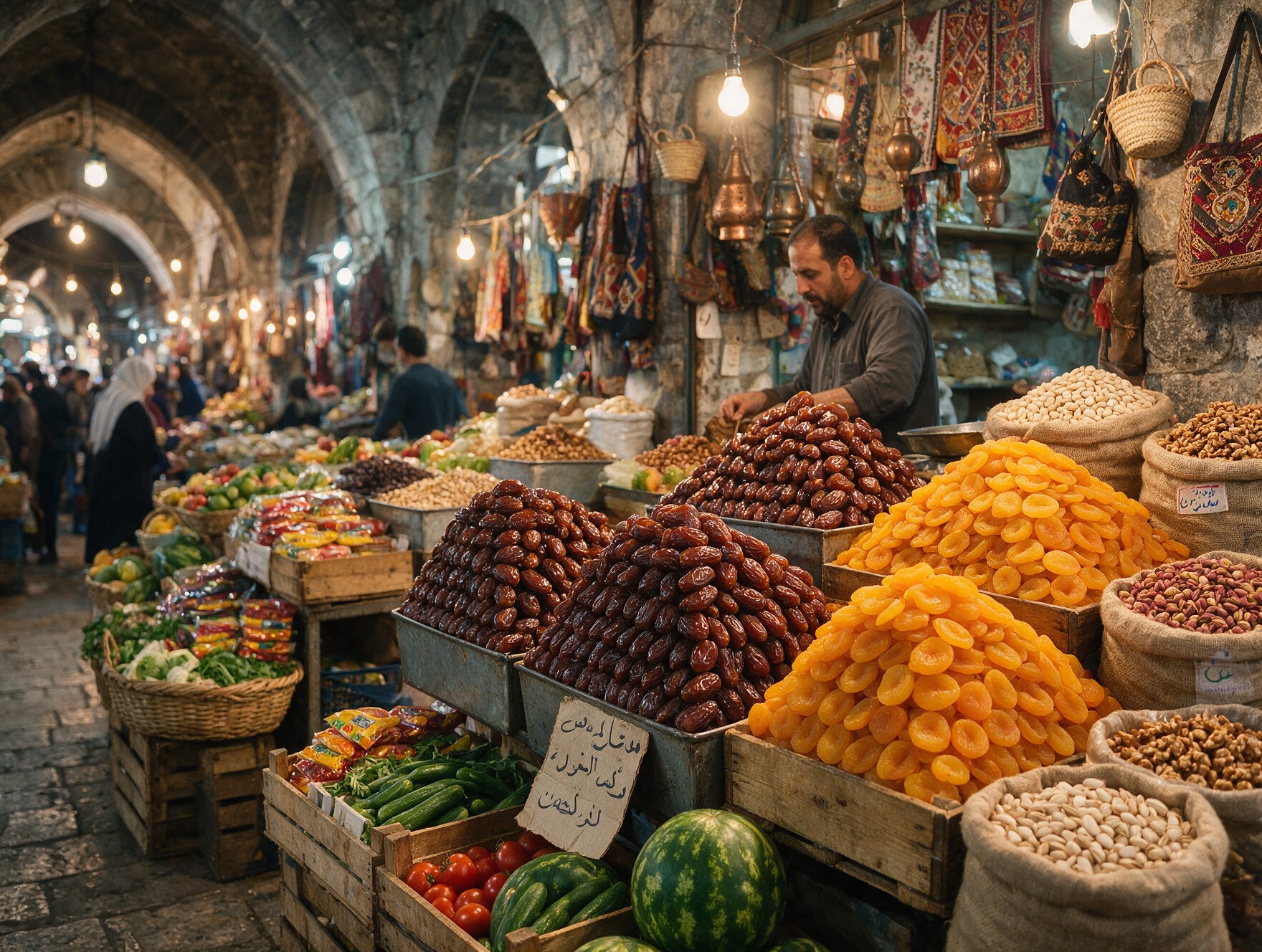
Knafeh is the headline dessert and almost always vegetarian (cheese, syrup, shredded pastry), though not vegan given the cheese and often butter base. Halawet el jibn, a sweeter rolled cheese-and-semolina dessert, falls in the same category. For a genuinely vegan sweet option, dates stuffed with nuts and simple sesame-and-honey-free halva (check the specific recipe, since some halva variants use honey) are both widely available at Amman’s sweet shops and markets, and make a better on-the-go snack than anything requiring a fork and a seated table.
Useful phrases and labels
- “Ana nabati” (أنا نباتي) — “I am vegetarian”
- “Bidoon lahma” — “without meat”
- “Bidoon samna wala laban” — “without ghee or dairy” (for vegans)
- “Sa’ima” — sometimes used loosely for “vegan,” though it’s not a universally recognized term, so pairing it with the dairy/meat phrases above works better
Why this works culturally, not just by menu luck
Jordanian hospitality culture treats a dietary request as a problem to solve, not an inconvenience to tolerate — this is worth understanding because it changes how you ask. Explaining that you don’t eat meat for religious or personal reasons is met, almost universally in our experience running trips here, with genuine effort rather than a shrug and a side salad. This matters most outside the main tourist circuit, in smaller family-run restaurants where there’s no printed vegan menu to point at, but the kitchen will happily put something together once they understand what you need.
Notes for different kinds of travelers
Solo travelers eating vegetarian will have an easier time ordering at mezze restaurants than at single-dish places, since mezze assumes multiple small plates per table regardless of party size, so a solo diner ordering three vegetarian starters doesn’t read as unusual the way it might elsewhere.
Couples where only one person is vegetarian will find Jordan genuinely easy to navigate together — mezze-first dining means the vegetarian partner isn’t stuck picking at a side salad while the other orders a full meal; everyone shares the same spread and the meat dishes simply sit alongside it.
Families with vegetarian kids should lean on the mezze-and-bread format for picky eaters, since hummus, flatbread and fries are near-universal fallback options even at restaurants that aren’t otherwise vegetarian-forward.
Luxury travelers at Dead Sea resorts and premium Wadi Rum camps can usually request a dedicated vegetarian tasting menu with a few hours’ notice, rather than working from the standard buffet or zarb spread — worth asking when you book if you want a more considered version of the meal.
If you’re self-catering or want snacks on hand
Amman has several well-stocked supermarkets (Cozmo and Carrefour both have large branches) where vegetarian and vegan packaged snacks, plant-based milk and the usual international pantry staples are easy to find — useful if you’re heading into Wadi Rum or Dana and want backup snacks beyond whatever the camp serves. Dried fruit, nuts and dates are sold everywhere and make genuinely good, naturally vegan trail snacks for long driving days or the Petra walk itself, where you won’t want to rely on the limited and pricier food options inside the site.
A quick note on Ramadan
If your trip falls during Ramadan (roughly February 17 to March 19 in 2026), many local restaurants shift their hours, opening later in the day and serving a bigger evening meal (iftar) after sunset, with some closed entirely during daylight hours outside tourist-hotel restaurants. This doesn’t meaningfully affect vegetarian options availability, but it does affect timing — plan lunches around hotel restaurants or Western-facing cafés during Ramadan daytime hours, and consider joining an iftar spread in the evening, which is often one of the more generous vegetarian-friendly mezze experiences of the whole trip given how much food is laid out at once.
A mistake to avoid
Don’t assume a mezze platter is automatically vegan just because it looks like a vegetable spread — mutabbal and some hummus preparations are sometimes finished with a swirl of ghee or a dollop of yogurt on top, which is easy to miss if you’re not asking. A quick “bidoon samna” before ordering solves this every time.
FAQs
Is Jordan vegetarian-friendly?
Yes, more than most first-time visitors expect — mezze culture means vegetable, legume and dairy-based dishes are a normal part of every meal, not a special accommodation.
Can vegans eat well in Jordan?
Yes, with a bit more specificity needed around dairy (ghee, yogurt, labneh show up often). Falafel, hummus, foul, tabbouleh and grilled vegetables are reliably vegan as long as you confirm no dairy finish.
What is mutabbal?
A smoky eggplant dip, similar to baba ghanoush but typically with a creamier, more blended texture — one of the best vegetarian dishes in Jordanian cuisine and worth seeking out specifically.
Do Bedouin camps in Wadi Rum offer vegetarian food?
Yes — the zarb (underground-cooked dinner) typically includes a substantial vegetable portion, and camps like Bait Ali and Wadi Rum Bedouin Camp are known among travelers for handling vegetarian requests well when flagged at booking.
Is hummus in Jordan different from what I’ve had elsewhere?
Often, yes — Jordanian hummus tends to be smoother and more generously topped with olive oil, sometimes with warm chickpeas or pine nuts, than versions found outside the region.
Are there dedicated vegan restaurants in Amman?
A small but growing number, including spots specifically branded vegan rather than simply vegetarian-friendly, though the more established route for a reliable vegan meal is still a strong mezze restaurant like Shams El Balad that handles the dairy-removal request well.
What should Indian vegetarian travelers specifically know about Jordanian food?
The lentil, chickpea and yogurt-forward flavor profile of a lot of Jordanian vegetarian food will feel familiar in texture even where the specific spicing doesn’t match Indian cooking, which makes it one of the easier Middle East cuisines for an Indian vegetarian traveler to adapt to quickly.
Before you go
Eating well as a vegetarian in Jordan takes almost no extra planning once you know where to go, and our drivers and guides on every Get Tripped Jordan itinerary already know which stops handle dietary requests properly. See our full Jordan travel guide, or tell us your dietary needs when you enquire and we’ll build the stops around them.