Jordan’s headline sights charge real money — Petra alone runs well over $100 a day without the Jordan Pass — which can give the impression this is an expensive country to simply wander in. It isn’t, outside the ticketed sites. Amman specifically has a genuinely good stock of free things to do, the kind that don’t feel like a consolation prize next to the paid attractions, and a few of them (the sunset view from Wild Jordan, the Friday flea market) are better than some things we’ve paid to see elsewhere.
Table of Contents
- Al Balad: Amman’s historic downtown, on foot
- Rainbow Street and the Thursday evening scene
- The view from outside the Citadel
- Sunset at Wild Jordan
- Mosques you can visit from outside
- Free art galleries
- Souq Al Juma’a, the Friday flea market
- The free downtown walking tour
- Beyond Amman: free (or near-free) moments elsewhere
- A mistake to avoid
- FAQs
Al Balad: Amman’s historic downtown, on foot
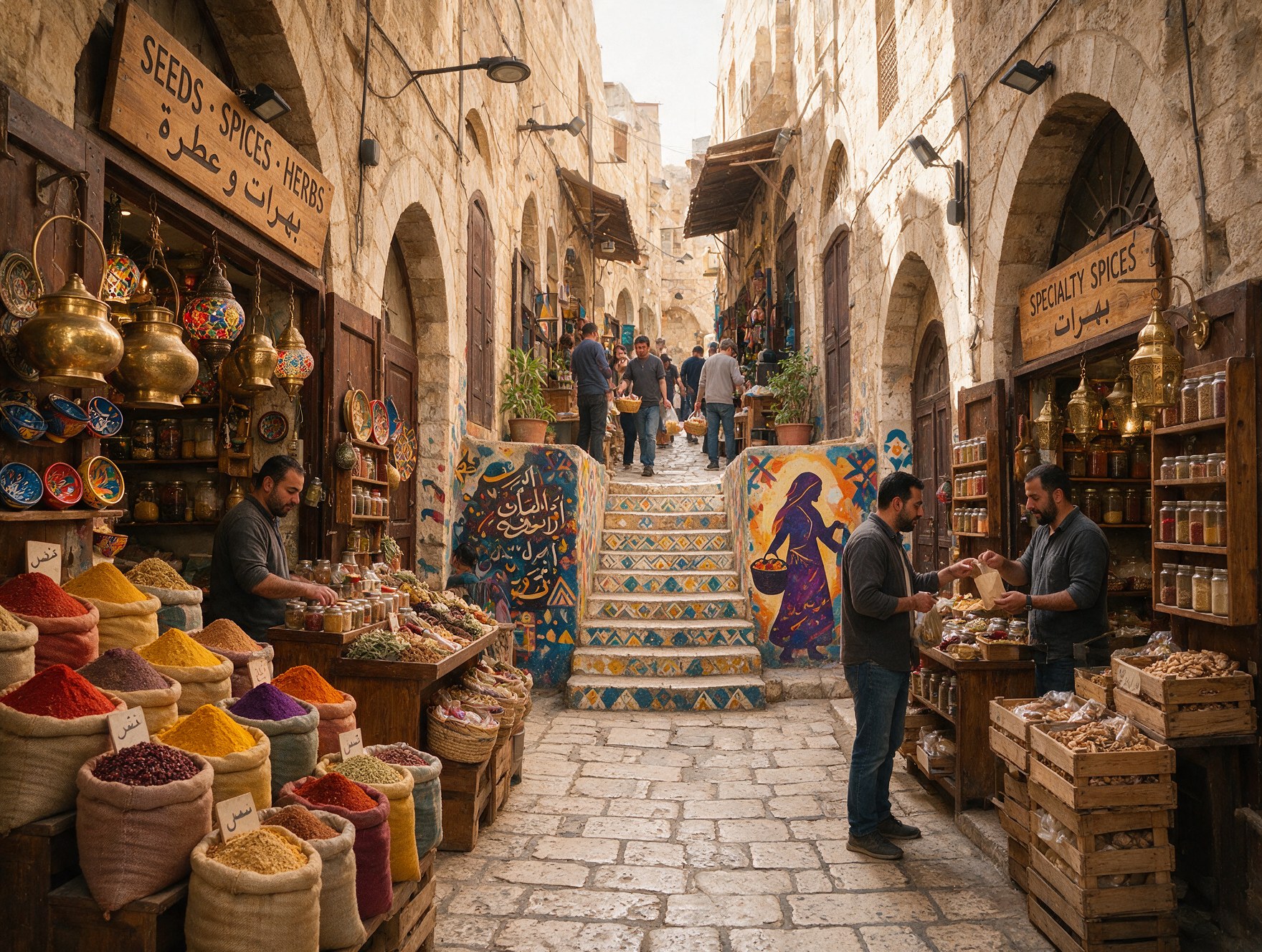
Al Balad is Amman’s old downtown, and walking it costs nothing beyond the time — spice shops with sacks of sumac and za’atar spilling into the lane, artisan stalls, stairways painted in increasingly ambitious colors as local street-art initiatives have spread through the neighborhood, and the general texture of a city that’s been continuously inhabited since the Bronze Age. Go in the late morning before the midday heat sets in, and don’t rush it; the best parts of Al Balad are the side alleys you take on a whim, not the main thoroughfare.
Rainbow Street and the Thursday evening scene
Rainbow Street itself costs nothing to walk — it’s Amman’s best-known strip for cafés and small galleries, climbing gently up through the Jabal Amman neighborhood. Thursday evenings specifically bring out a bigger crowd and a more lively atmosphere, closer to a street-fair feel than a typical weeknight, which is worth timing your visit around if your schedule allows it.
The view from outside the Citadel
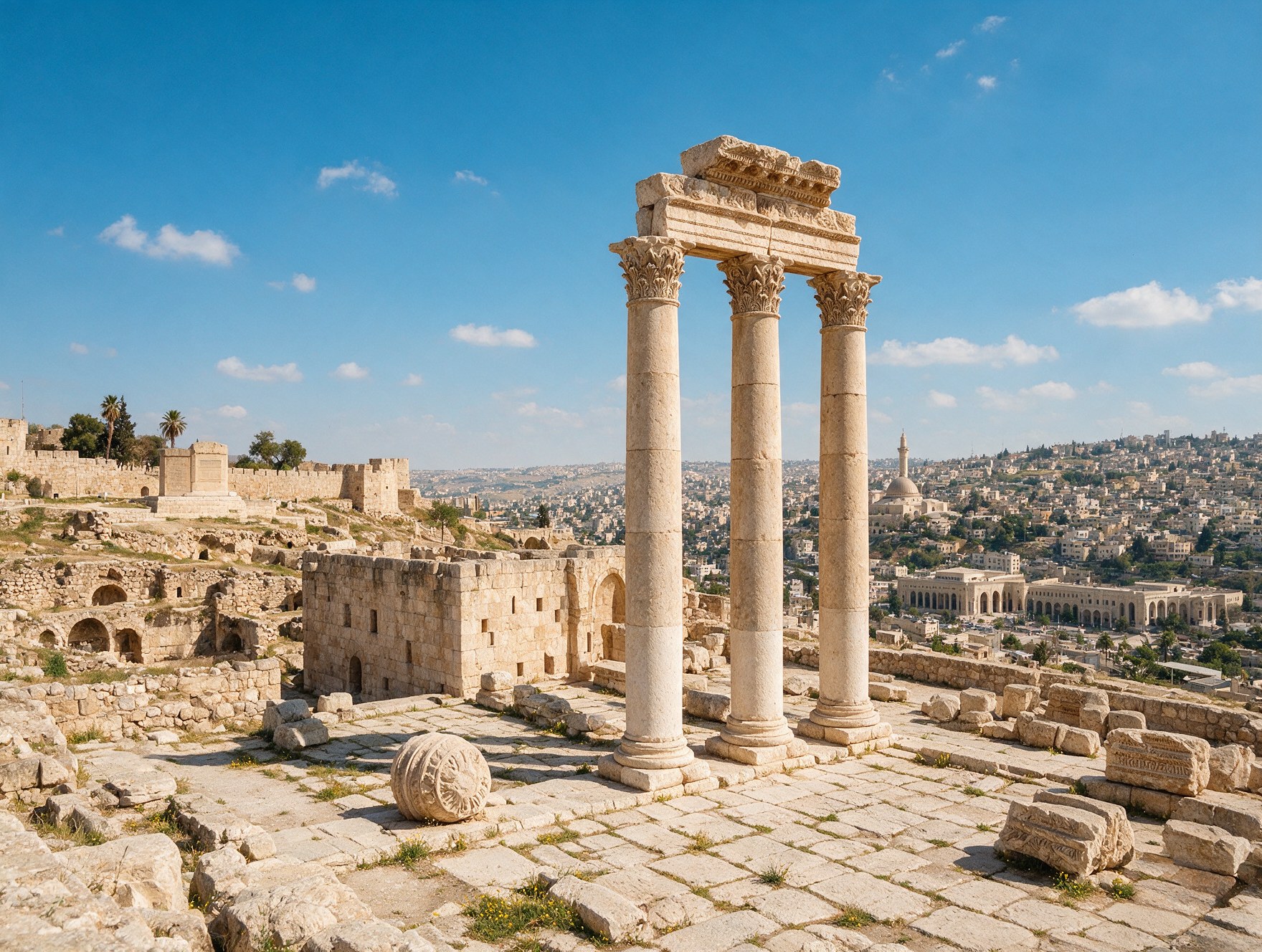
The Citadel itself has an entry fee, but you don’t need to go inside to get the payoff most people are actually after: the hilltop position of Jabal al-Qal’a gives a free panoramic view over downtown Amman and the Roman Theatre from the surrounding public areas and approach paths. If budget is genuinely tight, this is a reasonable substitute for the ticketed visit; if it isn’t, pay the entry anyway, since the Temple of Hercules ruins and small archaeological museum inside are worth it.
Sunset at Wild Jordan
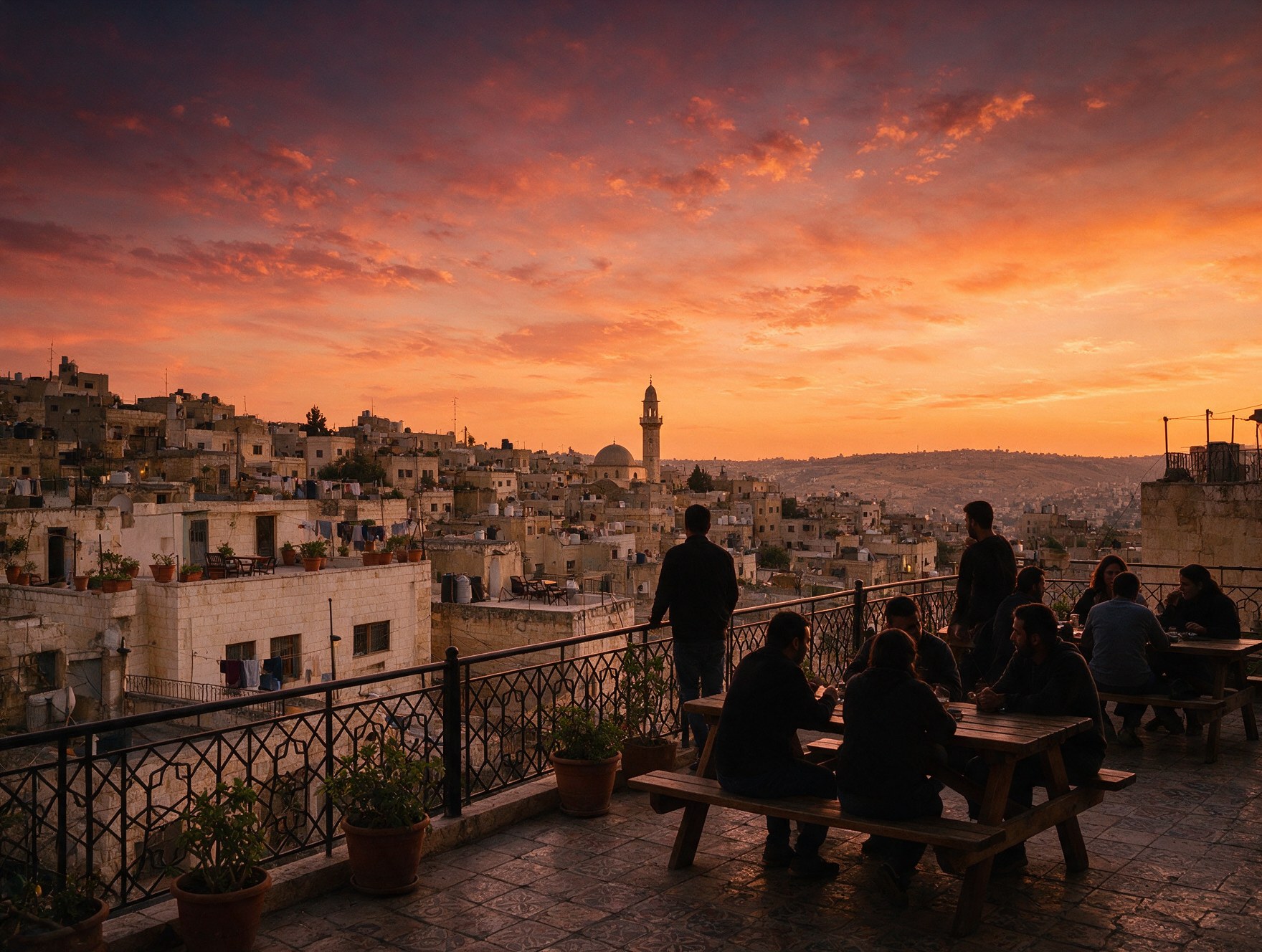
Wild Jordan Center, just off Rainbow Street, has outdoor picnic tables and terrace seating that look directly over the Lweibdeh neighborhood and catch a genuinely good sunset, free to sit and watch even if you don’t order anything (though the café here is worth supporting, and does vegan-labeled options if you want a coffee while you’re at it). This is, honestly, one of the better free views in the city and gets overlooked by visitors who assume the paid Citadel view is the only option.
Mosques you can visit from outside
King Hussein Mosque and King Abdullah Mosque are both architecturally striking and can be appreciated from outside at no cost; King Abdullah Mosque does charge a small entry fee for non-Muslim visitors who want to go inside, which is genuinely worth paying given the blue-domed interior, but the exterior alone photographs well and costs nothing. Dress modestly and be mindful of prayer times regardless of whether you’re entering.
Free art galleries
Amman has a small but real contemporary art scene, and most of its galleries — Darat Al Funun, Nabad Art Gallery, and Salam Kanaan Gallery among them — are free to enter. Darat Al Funun in particular is worth seeking out: it’s set across a cluster of restored early-20th-century buildings on a hillside, with Roman-era ruins integrated into the grounds, so you get archaeology and contemporary art in the same free visit. Calling ahead or checking current opening hours is worth doing, since gallery schedules shift more than museum ones.
Souq Al Juma’a, the Friday flea market
Amman’s Friday flea market in Al Balad is the kind of thing that doesn’t make most tourist itineraries but genuinely should — secondhand goods, local vendors, a much more “real Amman” atmosphere than the souvenir shops closer to the main tourist stops. You don’t have to buy anything; wandering it costs nothing and gives a different read on the city than the Citadel-and-Rainbow-Street circuit most visitors stick to.
The free downtown walking tour
A free two-hour walking tour of downtown Amman departs daily from the Amman Pasha Hotel at 10am and 5pm, covering the main markets, artisan shops and street art of Al Balad with a local guide. It’s tip-based rather than genuinely free in the strictest sense, but it’s a reasonable way to get oriented on your first day without committing to a paid tour, and tipping what feels fair at the end is the expected arrangement.
Beyond Amman: free (or near-free) moments elsewhere
Outside the capital, most of Jordan’s big draws are ticketed (Petra, Jerash, the Dead Sea panoramic sites), but a few moments cost nothing: watching sunrise over Wadi Rum from just outside your camp before the day’s jeep tour starts, the short walk around Wadi Musa’s upper town for a free overlook of the Petra valley rim (not the site itself, but a genuine sense of the landscape), and simply walking Aqaba’s public corniche along the Red Sea in the evening, which is free and, during the right season, a legitimately pleasant way to close out a day.
Notes for different kinds of travelers
Solo travelers will find the free downtown walking tour a genuinely good first-day option — it’s a low-commitment way to get oriented and meet a few other travelers before striking out on your own for the rest of the trip.
Couples should time a visit to Wild Jordan’s terrace for sunset specifically rather than any other time of day; it’s one of the better free romantic moments on the whole Jordan itinerary and costs nothing beyond a coffee if you want one.
Families with kids will find Al Balad’s souks hold attention better than a formal museum does — the sensory overload of spice stalls and street vendors tends to land well with children who’d otherwise be bored by a quiet gallery visit, though keep a hand held in the busier lanes.
Luxury travelers shouldn’t assume “free” means “skip it” — the Wild Jordan sunset view and Al Balad’s atmosphere are genuinely worth building into even a high-end itinerary, not just a budget-conscious one; some of Get Tripped’s premium Amman days include a private guide for exactly this downtown walk, which adds context without taking away the fact that the sights themselves cost nothing.
A quick safety note for wandering Al Balad
Al Balad is generally safe to walk, including for solo travelers, during the day and early evening, and it’s one of the more watched and busy parts of the city. Keep the usual city-travel awareness around bags in the more crowded souk lanes, and note that as with the rest of Jordan, it’s worth checking your government’s current travel advisory close to your travel date given the broader regional situation in 2026.
Free people-watching spots that double as orientation
Hashem’s outdoor seating area, even if you’re not ordering, functions as one of the better free windows into actual downtown Amman life — families, students and regulars moving through at all hours, which tells you more about the city’s rhythm than a guidebook paragraph would. Similarly, the steps and public plazas around the Roman Theatre fill up with local families in the evening once the heat breaks, especially on weekends, and simply sitting there for twenty minutes is a genuinely good way to feel the city’s actual pace rather than its tourist-hour version.
A few more free viewpoints worth the short walk
Beyond Wild Jordan, the public overlook near the Abu Darwish Mosque in the Jabal al-Jofeh neighborhood gives a less-visited but genuinely striking view over Amman’s hillside sprawl, with the mosque’s distinctive black-and-white banded exterior in the foreground. It’s a longer, steeper walk up than the Rainbow Street cluster of viewpoints, which keeps it quieter — worth the climb on a cooler morning rather than at midday.
Best time of day for each free activity
Al Balad rewards a late-morning visit once the souks are fully open but before the midday heat sets in properly; Rainbow Street comes alive in the early evening and especially on Thursday nights; the Wild Jordan sunset view is, obviously, a dusk-only activity and worth arriving twenty minutes before the sun actually drops to get a seat on the terrace; and the Friday flea market, true to its name, only runs on Fridays, so it’s worth checking your dates against your itinerary rather than assuming it’s a daily fixture.
A mistake to avoid
Don’t try to see the Citadel’s free exterior view and skip the paid entry thinking you’re getting the full experience — the exterior view is a genuine bonus, not a substitute, and the small archaeological museum inside the Citadel grounds has pieces (including a fragment of a monumental Hercules hand) that are worth the ticket price on their own.
FAQs
What are the best free things to do in Amman?
Walking Al Balad and Rainbow Street, watching sunset from Wild Jordan’s terrace, visiting free art galleries like Darat Al Funun, and browsing the Friday flea market in downtown Amman.
Is the Amman Citadel free?
No, there’s an entry fee for the Citadel grounds and museum, though the hilltop view over the city from the surrounding public areas is free.
Can I visit mosques in Amman for free?
Yes, from outside. King Abdullah Mosque charges a small fee for non-Muslim visitors who want to enter; King Hussein Mosque can be viewed from outside at no cost.
Is there a free walking tour in Amman?
Yes, a tip-based two-hour tour departs daily from the Amman Pasha Hotel at 10am and 5pm, covering downtown’s markets and street art.
Are there free things to do outside Amman?
Fewer, since Jordan’s major outside-Amman sights (Petra, Jerash, the Dead Sea sites) are ticketed, but sunrise in Wadi Rum, a walk along Aqaba’s corniche, and the upper-town overlook of the Petra valley in Wadi Musa are all free.
Is downtown Amman (Al Balad) safe to walk around for free sightseeing?
Yes, generally, including for solo travelers during the day and early evening; it’s a busy, well-trafficked part of the city, though standard city-travel awareness around bags in crowded souk lanes still applies.
Do I need to pay to enter Rainbow Street or Al Balad?
No, both are public streets and neighborhoods free to walk at any time; only specific ticketed sites within or near them, like the Citadel, charge entry.
How a free day changes your overall trip budget
Building one or two genuinely free days into an otherwise ticket-heavy Jordan itinerary makes a real difference to the overall trip cost, not just a token saving. A day spent on Al Balad, Rainbow Street and the Wild Jordan sunset costs essentially nothing beyond meals and a coffee, compared with a Petra or Jerash day that’s running well into the ticket price before you’ve eaten anything. For a family of four, swapping even one paid sightseeing day for a free Amman day can offset a meaningful chunk of the Jordan Pass cost elsewhere in the trip, which is part of why we often build an Amman free day in right at the start of a Get Tripped itinerary, before the Petra, Wadi Rum and Dead Sea costs start stacking up.
Before you go
A city day in Amman doesn’t have to be an expensive one, and several of the best things to do here — the Rainbow Street atmosphere, the Wild Jordan sunset, Al Balad’s side alleys — cost nothing at all. See our full Jordan travel guide for how a free Amman day fits around the ticketed sights further south.