By the time you’ve walked the Siq at Petra with four hundred other people, photographed the Treasury from the exact angle every other photo of the Treasury is taken from, and queued for the camel photo op outside, Jordan has already shown you the version it shows everyone. It’s a genuinely extraordinary version — Petra earns every bit of its reputation — but it’s also only about a third of what the country actually has, and most Indian itineraries stop right there, tack on the Dead Sea, and call it done.
The rest of Jordan — a Crusader-era castle most tour buses skip entirely, a nature reserve where you can sleep in a wooden bungalow above the Jordan Valley, a hilltop fortress that watched over the old King’s Highway trade route for eight centuries — gets a fraction of the visitors and, honestly, deserves a lot more of your time than the standard four-day Petra-and-Dead-Sea loop allows for.
Table of Contents
- Ajloun Castle and Forest Reserve: The North Nobody Visits
- Karak Castle: The King’s Highway’s Best-Kept Secret
- Wadi Rum, Done Properly
- The Dead Sea’s Quieter Corners
- Aqaba’s Reef, Not Just Its Beach
- Visa Rules for Indians
- Getting There and Best Time to Visit
- Costs and Where to Stay
- Food, Culture, and a Mistake to Avoid
- FAQs
Ajloun Castle and Forest Reserve: The North Nobody Visits
Most Jordan itineraries run Amman–Petra–Wadi Rum–Dead Sea in a straight line south and never look north. That’s the whole reason Ajloun is worth the detour: it’s about 75 kilometres and roughly an hour and fifteen minutes from Amman, close enough for a half-day trip, and most operators simply don’t route their standard packages through it.
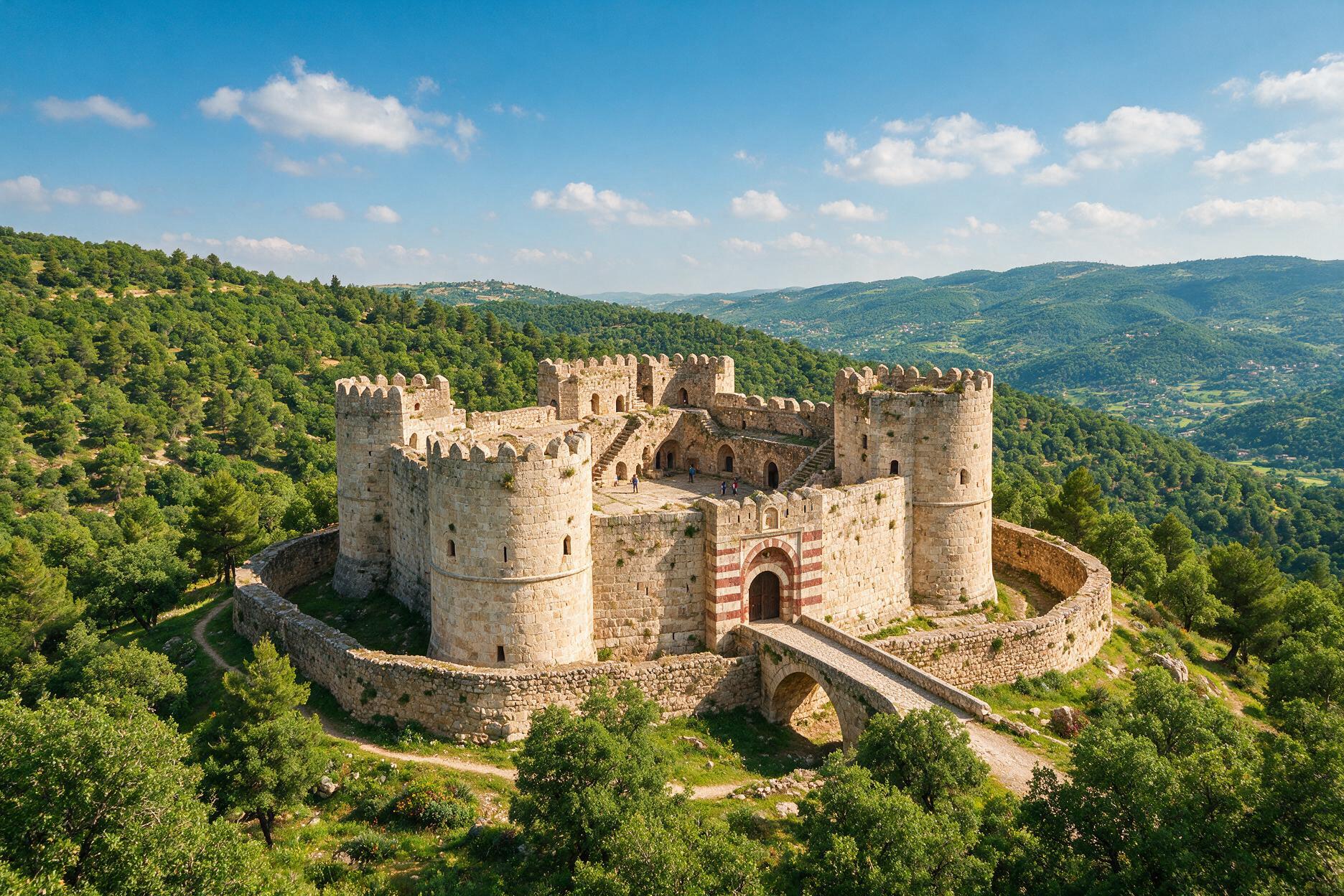
Ajloun Castle was built in 1184 by one of Saladin’s generals specifically to counter the Crusader fortresses further west, and it’s widely considered the finest surviving example of Ayyubid military architecture in the country — rounded towers instead of the rectangular Crusader style, four levels of vaulted rooms you can still climb through, and views from the top that stretch across the Jordan Valley toward the West Bank hills on a clear day. Entry is around 3 JOD, covered if you’re carrying a Jordan Pass, and it rarely feels crowded even in peak season.
Three kilometres below the castle sits Ajloun Forest Reserve, 13 square kilometres of oak, strawberry tree, and carob woodland managed by Jordan’s Royal Society for the Conservation of Nature — genuinely unusual terrain for a country most people picture as entirely desert. The Castle Trail connects the two sites on a scenic five-kilometre walk, and RSCN runs guided hikes ranging from one to four hours, plus simple wooden Biscuit Forest Bungalows if you want to actually stay the night in the reserve rather than treating it as a drive-through stop. Spring, March through May, is genuinely the best time to come — the forest is green, wildflowers are out, and the views aren’t hazed out by summer heat.
Karak Castle: The King’s Highway’s Best-Kept Secret
If Ajloun is the castle nobody visits because it’s out of the way, Karak is the one nobody visits despite being directly on the standard route south. It sits on the old King’s Highway between Amman and Petra, which means most itineraries drive right past the turnoff on their way to book another night near the Treasury instead of stopping.
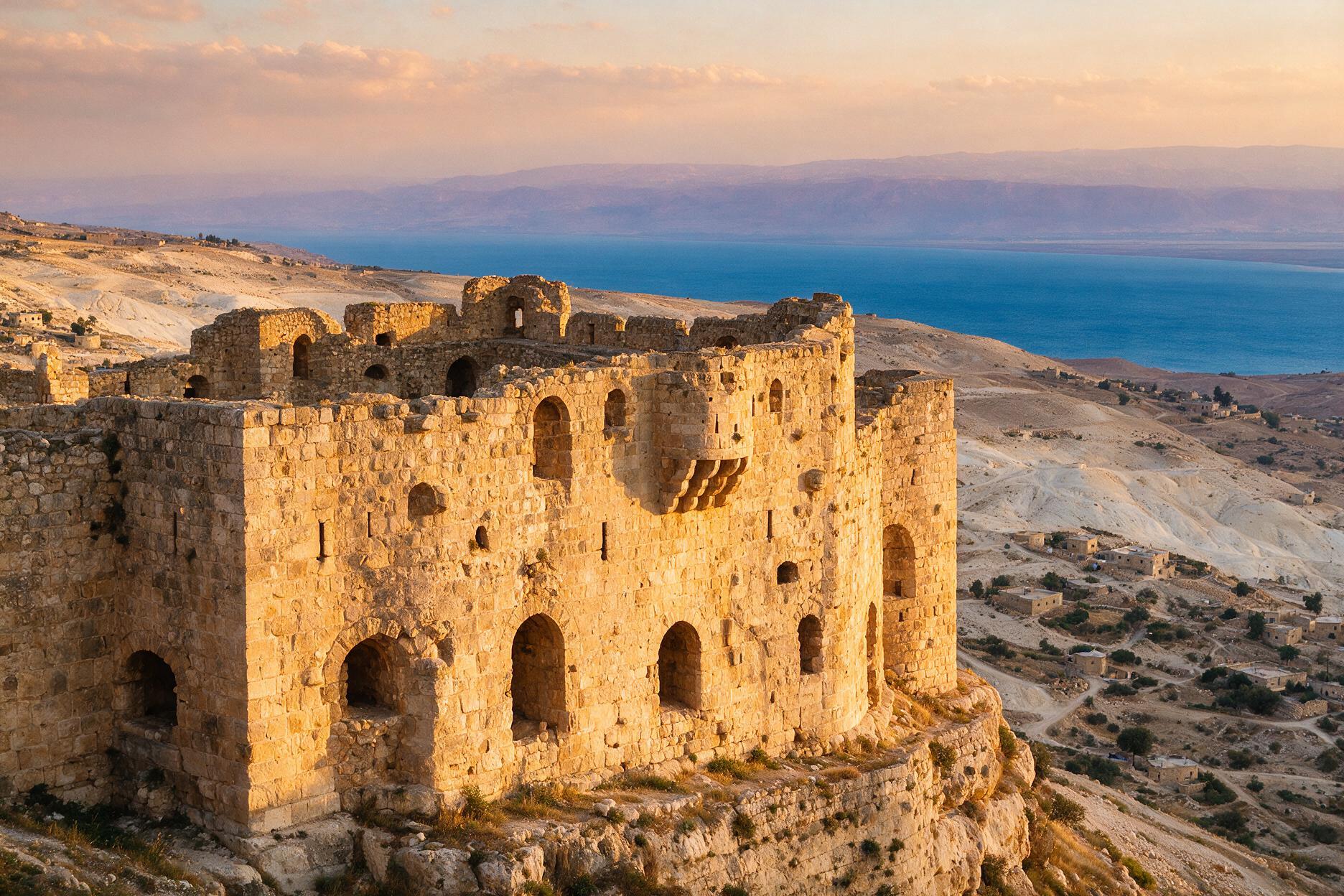
Karak is a genuinely massive Crusader fortress, built in the 1140s and fought over for the next two centuries between Crusader, Ayyubid, and Mamluk forces — you can still walk through cavernous vaulted stables and galleries carved directly into the hill it sits on, with a small museum inside covering the region’s layered history. What makes it worth the stop isn’t just the scale, it’s the town around it: Karak is a real, lived-in Jordanian town rather than a tourist set piece, and the castle’s ramparts give a sweeping view over the Dead Sea valley to the west that most Petra-focused itineraries simply never see. Build in an hour and a half here on the drive between Amman and Petra or Petra and the Dead Sea — it barely adds to the day and changes the trip.
Wadi Rum, Done Properly
Wadi Rum itself isn’t a secret — it’s on every Jordan itinerary, thanks in no small part to Lawrence of Arabia and, more recently, The Martian. What’s less understood is how differently a night here can go depending on which camp you pick. The desert has been overrun in places with camps built for the Instagram photo rather than the experience — inflatable “bubble domes” clustered close together, generator noise running through the night, buffet dinners served to fifty people at once.
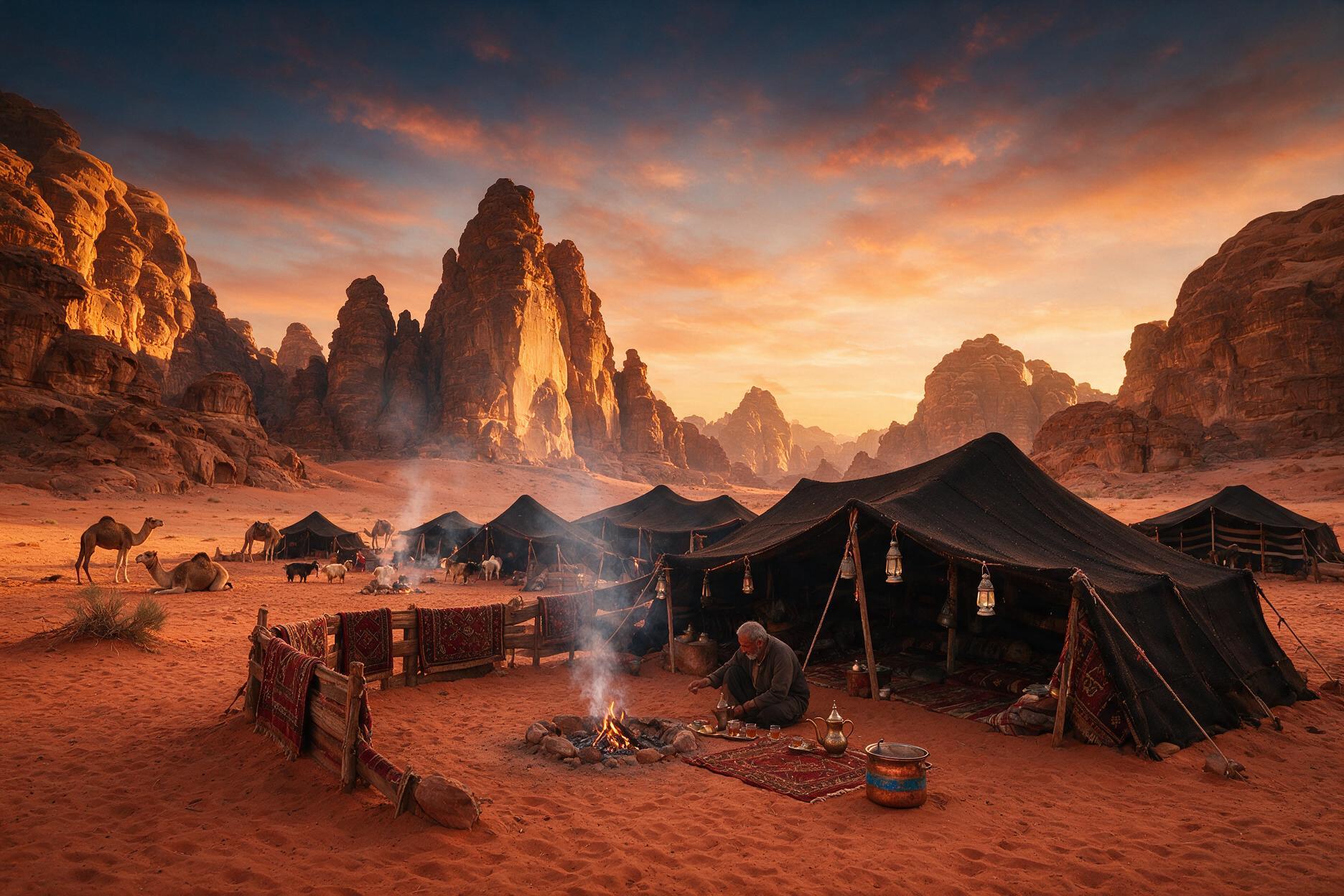
The better version is a small Bedouin-run camp, ideally one recommended by an operator who’s actually stayed there rather than just listed it — traditional goat-hair tents, a camp small enough that the stargazing after dinner is actually quiet, and a Bedouin family running it rather than a hospitality company that happens to be based in the desert. Expect to pay somewhere around 80–150 JOD per person for a night with a jeep safari, dinner, and breakfast included, depending on the camp’s size and how private the setup is. One honest caveat: the classic “sunset jeep tour” stop is genuinely beautiful but also where every camp’s vehicles converge at once — if you can, ask your camp to time the drive fifteen minutes off the standard slot, either just before or after the crowd window, and you’ll get the same rock formations with a fraction of the other jeeps in frame.
The Dead Sea’s Quieter Corners
Most travelers experience the Dead Sea exactly one way: a resort beach near Sweimeh, the famous float, a mud mask, done in an afternoon. That’s a perfectly good afternoon, but the northern Dead Sea shoreline near Suwayma and the lesser-visited public beaches away from the resort strip give you the same mineral-dense water and the same surreal salt formations along the shore without the pool-deck crowd. If you’re willing to skip one resort day for a public beach and a picnic instead, it’s a genuinely different, quieter experience of the same sea.
One practical note worth knowing before you go: the Wadi Mujib Siq Trail — a wade-and-swim canyon hike that ends near the Dead Sea and is one of the more physically memorable things you can do in the country — closes from November through April due to canyon flooding risk. If a Mujib hike is on your list, that narrows your visit window to roughly May through October, and even then, check conditions locally before committing, since flash flood closures can happen with short notice outside the official closed season too.
Aqaba’s Reef, Not Just Its Beach
Aqaba tends to get treated as a one-night stopover between Wadi Rum and the airport, which undersells it. Jordan’s only coastal city sits on the Red Sea, and the reef just offshore is a legitimate, underrated diving and snorkeling destination — warmer water than the Dead Sea obviously allows, visible coral, and none of the crowds you’d find at more famous Red Sea dive spots across the water in Egypt. A half-day snorkeling trip runs around 25 JOD and is a genuinely good way to end a Jordan trip that’s otherwise been mostly desert and ruins — something different in the itinerary’s last stretch rather than one more historical site.
Visa Rules for Indians
Indian passport holders can get a visa on arrival at Queen Alia International Airport (Amman) for 40 JOD, with processing typically taking 15–45 minutes; it’s also available at the Sheikh Hussein Bridge and Wadi Araba land crossings, though not at the King Hussein (Allenby) Bridge crossing from Israel/the West Bank. An e-visa option exists through Jordan’s Ministry of Interior portal if you’d rather have it sorted before you fly — apply at least two weeks ahead, since processing runs 3–5 business days.
The visa is single-entry and valid for a 30-day stay, extendable at local police stations. As of January 2026, border officers have reportedly started stamping longer, 90-day validity on non-work visas at entry — worth asking about directly if you’re planning a longer trip, since policy details like this shift and confirming at the border costs nothing.
The genuinely useful workaround for most travelers: the Jordan Pass. If you’re staying at least two nights and buy the pass in advance at jordanpass.jo, it waives the visa fee entirely and bundles in entry to 40-plus sites including Petra — the Wanderer tier (one day at Petra) runs 70 JOD, Explorer (two days) 75 JOD, and Expert (three days) 80 JOD. Given the visa alone costs 40 JOD, the math works out in the Pass’s favor for almost anyone spending real time at Petra, and it’s one less queue to stand in on arrival.
Getting There and Best Time to Visit
There’s no non-stop flight from India to Amman yet, so you’re routing through a Gulf hub — Emirates via Dubai, Etihad via Abu Dhabi, and Qatar Airways via Doha are the most common, alongside Royal Jordanian’s own connections. Round-trip fares from Mumbai or Delhi typically fall in the ₹35,000–₹55,000 range depending on season and how far ahead you book, with the lower end usually needing a two-month-plus advance purchase.
Skip June through August entirely if you can help it — inland Jordan, including Petra and Wadi Rum, regularly hits 35–45°C in summer, and walking the Siq or hiking around Petra’s back trails in that heat is genuinely unpleasant rather than just uncomfortable. April–May and September–November are the sweet spots, with daytime temperatures around 15–28°C at Petra and Wadi Rum — warm enough for the desert evenings to still be comfortable, cool enough that a full day of walking doesn’t wreck you. Winter (December–February) brings cold nights, occasionally down to -5°C in Wadi Rum, but also the rare, genuinely spectacular sight of snow dusting Petra’s sandstone, if you don’t mind packing for the cold and catching it on the right week.
Costs and Where to Stay
A comfortable week in Jordan, mixing mid-range hotels with a Wadi Rum camp night, runs somewhere around ₹1,20,000–₹1,40,000 per person including flights, or higher if you’re adding Dead Sea resort nights or upgrading the desert camp. On the ground: a solid mid-range hotel in Amman runs roughly 55 JOD a night; a guesthouse in Wadi Musa (Petra’s gateway town), often including meals, comes in cheaper at around 28 JOD; Wadi Rum’s better small camps land around 85 JOD per person with full board and a jeep safari included. Dead Sea resorts sit at the premium end of the trip — this is the one night worth spending more on, since the resort’s private beach access and spa facilities are genuinely most of the point.
Getting between these places: a JETT bus from Amman to Petra runs about 8 JOD and is a reasonable budget option, but a private driver or rental car (25–50 JOD a day) gives you the flexibility to actually stop at Karak and Ajloun along the way rather than being locked to a bus schedule — worth the extra cost for exactly the reason this piece exists.
Food, Culture, and a Mistake to Avoid
Mansaf — lamb cooked in a fermented dried-yogurt sauce called jameed, served over rice with almonds and pine nuts — is Jordan’s national dish and worth having at least once at a proper sit-down restaurant rather than a tourist buffet version. Amman’s Rainbow Street and the Weibdeh neighborhood both have a genuinely good, unfussy restaurant scene beyond the hummus-and-falafel basics, and it’s worth spending an evening there rather than eating every meal near the hotel.
On etiquette: Jordan is a Muslim-majority country and a comfortable one for visitors, but modest dress matters more outside Amman’s more cosmopolitan pockets — shoulders and knees covered is a safe default, particularly at religious sites and in smaller towns like Karak or Wadi Musa. Ramadan dates shift each year; if your trip overlaps with it, daytime restaurant hours in smaller towns can be limited, which is worth checking before you finalize dates.
The mistake worth naming directly: budgeting only one day for Petra. The site is enormous — the Treasury is genuinely just the entrance — and the further trails (the Monastery climb, the High Place of Sacrifice) take real time and reward a second, quieter day when the tour-bus crowds from Petra by Night thin out. If Ajloun and Karak are pulling a day away from your itinerary elsewhere, take it from the Dead Sea resort stretch, not from Petra.
Frequently Asked Questions
Is Jordan safe for Indian travelers, including solo and women travelers?
Yes — Jordan is consistently one of the more stable, tourist-friendly countries in the region, and solo and women travelers visit regularly without major incident. Standard precautions apply, and modest dress in smaller towns goes a long way toward smoother interactions.
Do I need the Jordan Pass if I’m only visiting Petra once?
If you’re staying two or more nights, the Jordan Pass’s Wanderer tier (70 JOD) still works out cheaper than paying the 40 JOD visa fee plus Petra’s standalone entry (50–55 JOD) separately — so yes, it’s worth it even for a single Petra visit.
Can I visit Ajloun and Karak without a private driver?
It’s possible by public bus and local taxi, but genuinely slow and involves multiple transfers. A private driver or small-group tour is the realistic way to fit both into a trip without losing a full extra day to transit.
Is Wadi Rum worth an overnight stay, or is a day trip enough?
Overnight, without much debate — the stargazing and the desert at dawn are the actual highlight, and a day trip alone misses both.
What’s the best time to avoid crowds at Petra?
Early morning, right at opening, or a second day spent on the further trails (Monastery, High Place of Sacrifice) rather than the main Treasury approach, which stays busy most of the day.
Is tap water safe to drink in Jordan?
Bottled water is the safer default for visitors, particularly outside Amman — it’s cheap and widely available, and most hotels and camps provide it as standard.
The Bottom Line
Petra deserves the reputation it has, and no Jordan itinerary should skip it. But a trip that’s only Petra and the Dead Sea is seeing maybe a third of what the country actually offers — a Crusader castle on a hilltop nobody stops at, a forest reserve that doesn’t match anyone’s mental image of the country, a stretch of Red Sea reef most people don’t know exists. Building Ajloun and Karak into the drive south, and choosing a smaller Wadi Rum camp over the crowded ones, doesn’t add much time to the trip — it just changes what the trip actually is. Get Tripped’s Jordan itineraries route through all of this — talk to our travel experts about building yours around more than just Petra.