Malaysia 7 Nights 8 Days Itinerary: The Route That Actually Works for Indian Travelers
Most Malaysia itineraries try to stuff in too much. The result is a trip where you spend half your time on flights or in taxis, and the other half looking at places you were already moving on from when you arrived. This 7-night, 8-day plan is different — it covers the highlights from Kuala Lumpur to Penang to Langkawi, gives you real time in each place, includes a half-day in the heritage town of Malacca, and is built around the actual logistics of getting between these cities rather than the optimistic assumption that everything is 20 minutes away.
It works because the routing flows north — KL to Malacca (day trip) to Penang (by air or bus) to Langkawi (by ferry) — and doesn’t backtrack. You’ll see the best of peninsular Malaysia without retracing your steps, and you’ll end the trip on a beach, which is always the right call.
Contents
Trip Overview and Quick Logistics
This itinerary is built for a group of 2–4 traveling from a major Indian city (Mumbai, Delhi, Bangalore, or Chennai). Fly into KL, fly out of Langkawi (or return to KL if your routing requires it — a short domestic flight back is easy to add).
Best time to travel: May through August hits the sweet spot for peninsular Malaysia’s west coast — the northeast monsoon hasn’t arrived, the skies are mostly clear over Langkawi, and Penang’s beaches are at their best. December through February works too but brings slightly higher crowds and some rainy days in KL. Avoid the east coast (Taman Negara, Perhentian Islands) between October and February — that’s peak monsoon there.
Flight to KL from India: AirAsia, IndiGo (codeshare), Malaysia Airlines, and Air India all serve KLIA/KLIA2 from multiple Indian cities. Mumbai has the most options; Chennai is quick and often the cheapest. Expect 4–6 hours of flight time.
Days 1–3: Kuala Lumpur — The City That Doesn’t Slow Down
Day 1: Arrive, Settle In, Eat Properly
Arrive at KLIA or KLIA2 and take the KLIA Ekspres to KL Sentral — it’s 28 minutes, runs on time, and at RM 55 (about ₹1,000) is the most stress-free option versus taxis during peak hours. Check in to your hotel, then resist the urge to do anything ambitious on arrival day.
Dinner at Jalan Alor, KL’s best-known street food strip in the Bukit Bintang area, is the right move. It’s touristy, yes — but the food quality is genuinely good, the atmosphere at 8 PM is lively without being overwhelming, and you’ll get your bearings in the city without navigating very far from most mid-range hotels. Try the grilled seafood (especially the butter prawns), wonton noodles, and oyster omelette. Budget around RM 60–100 for two people.
Day 2: Petronas, Batu Caves, Thean Hou
Start early at Batu Caves — the 272 steps up to the main cave are doable in 20 minutes, the golden Murugan statue is genuinely spectacular, and the caves themselves are worth the climb. Go before 9 AM if you can; after 10 AM the crowds (and the heat) become part of the experience in a less pleasant way. Entry to the main cave is free.
After Batu Caves, take a Grab to the Petronas Twin Towers in KLCC. The towers are worth seeing from the outside even if you don’t go up — the park below is a good place to sit with a coffee. The observation deck at Level 86 costs RM 80–90 per person and sells out fast; book via the official Petronas website in advance if you want it.
In the evening, Thean Hou Temple on a hillside in Seputeh is a genuinely beautiful stop that most visitors skip in favor of the more famous sites. Six floors, decorated with lanterns and carved details, and a city view from the terrace. No entry fee. Best visited around sunset.
Day 3: Petaling Street, Merdeka Square, Chinatown
The last full KL day is best spent at street level. Petaling Street in KL’s Chinatown has the expected mix of knockoffs and souvenirs, but the food stalls running perpendicular to the main strip are where the interest is — specifically, the half-covered lanes of Jalan Petaling where vendors have been doing the same dishes for decades. Chee Cheong Fun (rice noodle rolls), Hokkien mee, and the surprisingly good chicken rice at a stall that has exactly no signage but a line of local office workers at lunch: find that stall.
Merdeka Square, a 10-minute walk away, has the flagpole that Malaysian children are taught is one of the tallest in the world, the colonial-era Selangor Club building, and a quiet park that provides a break from the noise. The Sultan Abdul Samad Building opposite the square, all copper dome and Moorish arches, makes for great photos in early morning light.
Day 4: Malacca Half-Day + Travel North to Penang
Malacca (also spelled Melaka) is 2 hours by bus from KL’s Puduraya terminal. Leave by 8 AM, spend 3–4 hours in the city center, and then continue north to Penang — either by overnight bus (around 5 hours) or by flying back to KL and catching a short AirAsia hop to Penang.
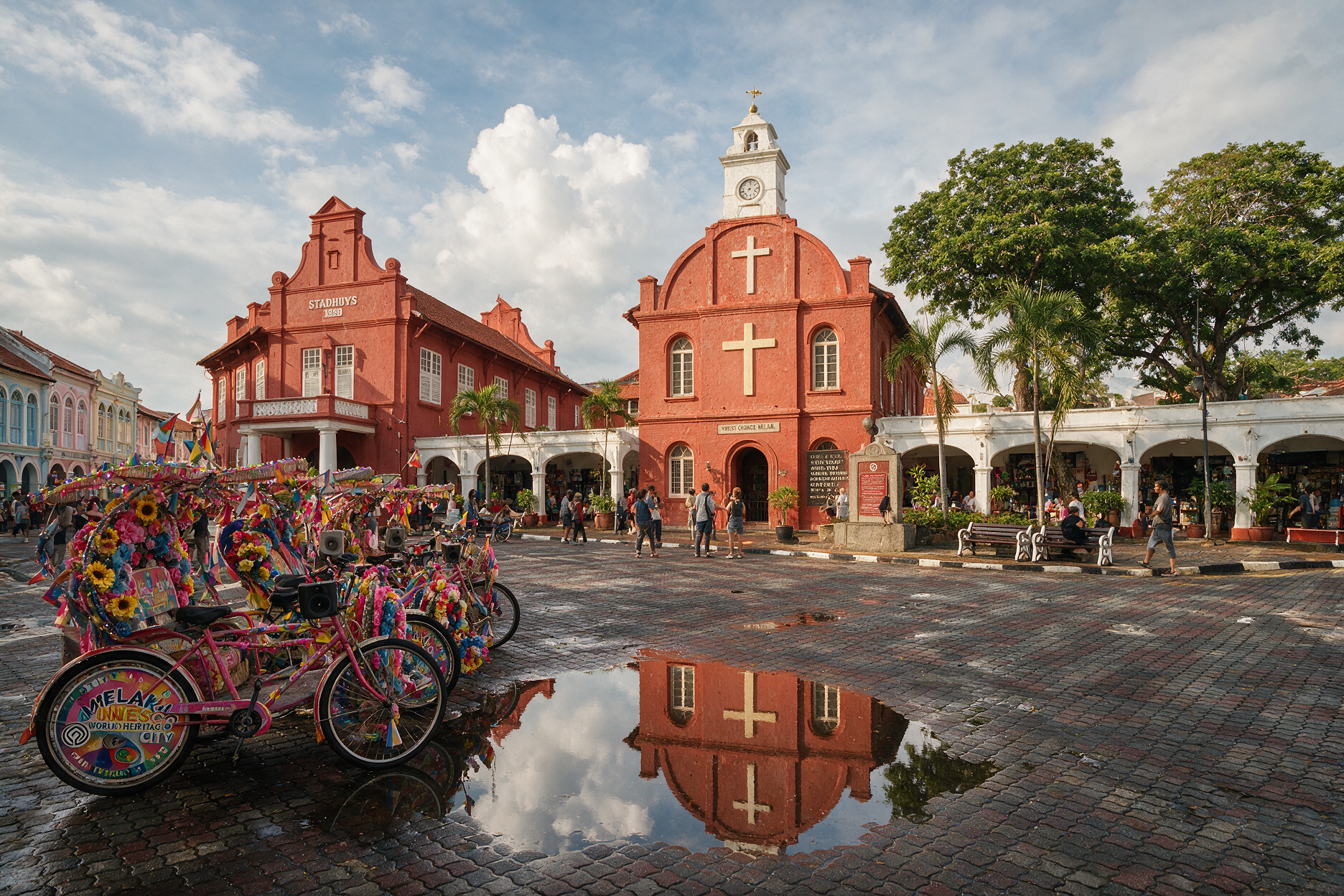
In Malacca, head directly to Jonker Street in the heritage zone. The Dutch Stadthuys (the red colonial administrative building) and Christ Church are right on the main square — unmissable. Walk south from there into the lanes: Jonker Street itself runs through the old Peranakan (Baba-Nyonya) neighborhood. Small museums, antique dealers, and pastry shops run by families who’ve been doing it since the 1800s. Poh Piah (Peranakan spring rolls) at a cart near the Cheng Hoon Teng Temple is worth stopping for.
The Malacca River cruise (RM 10–15) gives you 45 minutes on the water passing painted murals and old shophouses — good value, and the boat schedule means you can fit it in without losing much walking time.
Eat lunch before leaving: Nyonya cuisine (the Peranakan hybrid of Chinese and Malay flavors) is Malacca’s gift to Malaysian food culture, and Restoran Nyonya Makko is one of the better options in the heritage zone. Achar (spiced pickled vegetable), Asam Pedas (tamarind fish stew), and Chicken Pongteh are the dishes to try.
Days 5–6: Penang — George Town’s Streets and Tables
Day 5: Heritage, Murals, and Street Food
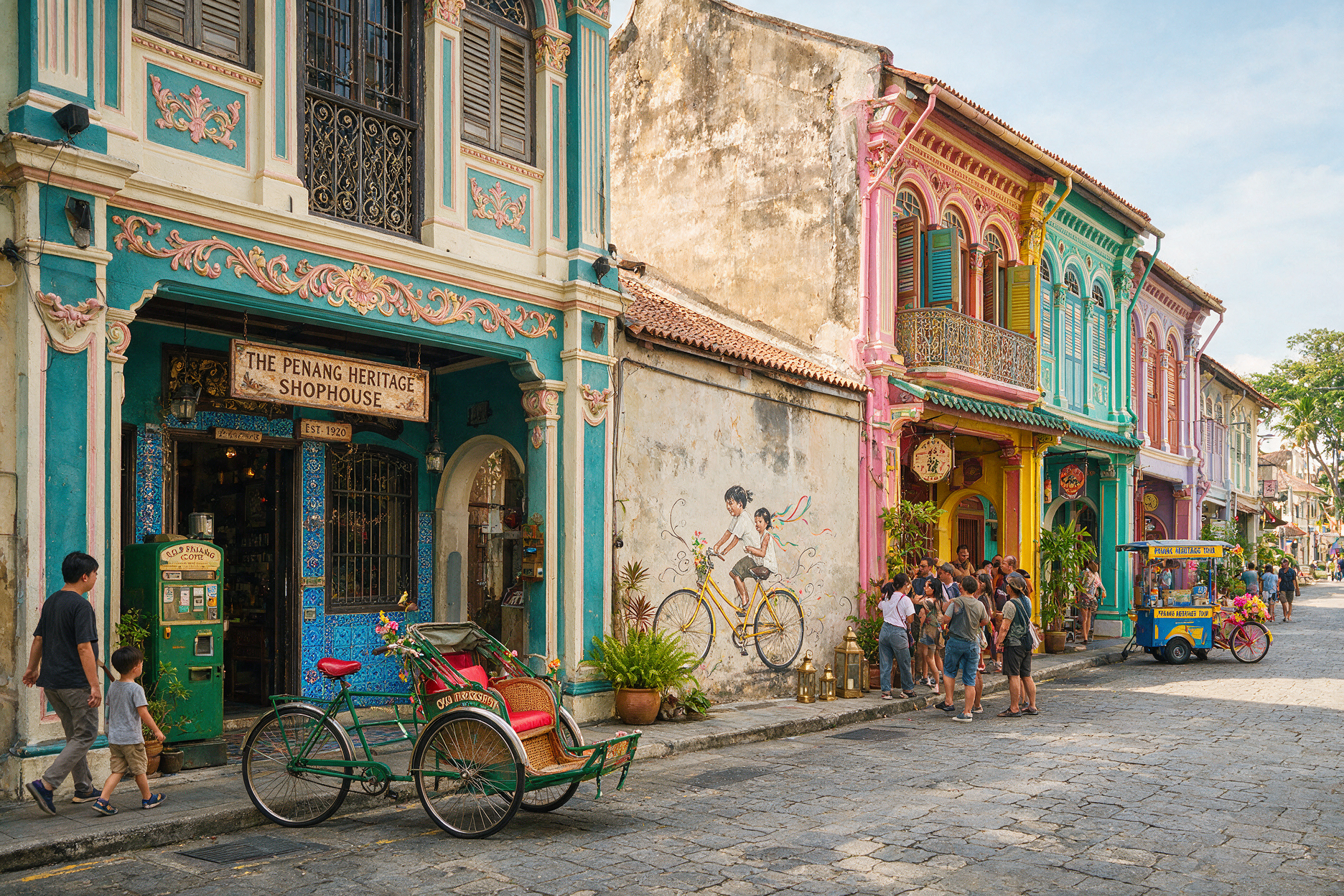
George Town in Penang has UNESCO World Heritage status for its living heritage district — an unusually intact collection of pre-war shophouses, clan jetties, mosques, temples, and colonial civic buildings that actually functions as a working city rather than a museum set. It’s best experienced on foot over half a day.
The street art is legitimately worthwhile. Lithuanian artist Ernest Zacharevic’s installations — children on a swing mounted to a building, a boy cycling a virtual bike — are scattered through the heritage zone and have become so photographed that there’s a printed map of their locations sold at most guesthouses. The iron rod sculptures by Sculpture at Work, matching actual scenes to caricature wall art, are the more interesting ones to find.
For food: Penang’s claim to be Malaysia’s food capital is not just marketing. Asam Laksa (a sour, tamarind-based noodle soup that tastes nothing like the coconut-milk Laksa you’ve had elsewhere), Char Kway Teow (wok-fried flat rice noodles with egg, cockles, and a serious amount of char), and Nasi Kandar (a Southern Indian-influenced mixed rice dish where the gravy combination is the art) are the three to get in Penang. Gurney Drive hawker centre handles all three in one place.
Day 6: Penang Hill + Kek Lok Si Temple
The funicular up Penang Hill takes 5 minutes and drops you at 830 metres above sea level, with a view over the island and across the Strait of Malacca toward the mainland. Early morning — before 9 AM — has the best light and the coolest temperature. The summit has a few cafes (The Habitat is the nicest), a small owl museum, and trails through secondary forest. Tickets around RM 15–30 depending on time slot.
Kek Lok Si Temple at Air Itam is the largest Buddhist temple in Malaysia — a 7-floor pagoda that blends Chinese, Thai, and Burmese architectural styles, surrounded by cable cars and a 30-metre Kuan Yin statue. The climb up costs RM 2 and is worth it for the view. Below the temple, the market around Air Itam Dam has some of the best Asam Laksa in Penang, which you can eat while the cable car lines at the temple annex fill up with the morning tour groups.
Days 7–8: Langkawi — Beaches and Mangrove
The ferry from Penang to Langkawi takes 2.5–3 hours and runs twice daily (check current schedules with Langkawi Ferry Service, as timing shifts seasonally). The boat crosses open water — motion sickness medication if you’re prone to it. The alternative is a 50-minute AirAsia flight for RM 80–150 each way; worth it if sea travel isn’t your preference.
Langkawi is a duty-free island. Alcohol, chocolates, and certain electronics are meaningfully cheaper here than on the mainland or back in India. The main tourist areas — Pantai Cenang and Pantai Tengah — are on the southwest coast: beach bars, resorts, watersports rentals, and the excellent Cenang area night food market.
On Day 7, spend the afternoon at Cenang Beach. The water is clear and shallow enough to wade, the sunset faces the Andaman Sea and is excellent, and the cluster of seafood restaurants along the beachfront road do fresh fish and prawns at prices that feel like a gift compared to Indian coastal tourist areas. Dinner at one of the beachfront restaurants — Red Tomato or Naam Thai are reliable — with Langkawi’s duty-free Tiger beer is the correct end to the day.
Day 8 is for the Langkawi Mangrove Kayak or the island-hopping boat tour. The mangrove tour (usually 3–4 hours, around RM 80–130 per person) takes you through Kilim Geopark’s cave and river systems by kayak, passing monitor lizards, eagles, and bat caves — the kind of morning that makes you forget you have to fly home tomorrow. The island-hopping tour covers Pulau Dayang Bunting (freshwater lake in the middle of the sea), a snorkeling stop, and eagle feeding. Both are good; the mangrove tour is more memorable if you’re only doing one.
Getting Between Cities: The Logistics Version
- KL → Malacca: Bus from Hentian Duta or Puduraya terminals, RM 10–15, 2–2.5 hours
- Malacca → Penang: Overnight bus (Transnasional or Aeroline), RM 40–60, 5–6 hours — saves a night’s accommodation
- Penang → Langkawi: Ferry from Swettenham Pier, RM 60–70 one way, 2.5–3 hours; or AirAsia flight, 50 min
- Langkawi → KL or Home: Domestic flight via AirAsia to KLIA2, 50 min; or overland via ferry back to Penang and bus/train south
Within KL: the MRT, LRT, and KL Monorail connect most tourist areas. Load a Touch ‘n Go card at 7-Eleven or at any rail station — it works on all KL public transport and on most bus routes in Penang too. Grab (the Southeast Asian ride-share app, similar to Ola) is reliable across all the cities in this itinerary and is generally cheaper than airport taxis.
Realistic Costs for Indian Travelers
Malaysia is one of the more affordable premium-travel destinations in Southeast Asia. Costs here assume mid-range to upscale accommodation and sit-down restaurants, not hostels and street stalls only — though mixing both is perfectly normal.
- Flights from India (return): ₹18,000–40,000 depending on city, airline, and how far ahead you book. Mumbai and Chennai have the most options.
- Hotels: RM 200–500/night for a solid 4-star in KL or George Town; RM 300–800 for Langkawi beachfront resorts
- Food: RM 15–30 at hawker stalls; RM 80–200 at a proper sit-down dinner for two
- Attractions: Batu Caves and Thean Hou Temple are free; Petronas observation deck RM 80–90/person; Penang Hill RM 15–30
- Intercity transport: Budget RM 300–500 for buses and ferries across the itinerary
Where to Stay
Kuala Lumpur: The Bukit Bintang area puts you within walking distance of Jalan Alor, the Monorail, and the KLCC park. Hotel options in the RM 200–400 range are plentiful here. For something with more design character, look at hotels along Jalan Sultan Ismail or Chow Kit, which has good access to the northern heritage lanes.
Penang: Stay in the George Town heritage zone — the restored shophouse hotels (Cheong Fatt Tze “Blue Mansion” is expensive but remarkable; 23 Love Lane is good value and on a lovely street) put you exactly where you want to be, 5 minutes from everything.
Langkawi: The Pantai Cenang strip has the most options. For something quieter, Tanjung Rhu on the north coast has a few boutique resorts with better beach access and less beach-bar noise.
Frequently Asked Questions
Is 7 nights long enough for Malaysia?
For the KL–Penang–Langkawi circuit, 7 nights works well — you don’t feel rushed but you also don’t exhaust everything. If you want to add Taman Negara jungle or the Cameron Highlands, plan for 10 nights minimum.
Do I need to speak Malay?
No. English is widely spoken in hotels, restaurants, and tourist areas in all the cities on this itinerary. Signage is in English and Malay throughout. Hindi gets you surprisingly far in certain areas of KL, particularly in Brickfields (Little India) and some Bangsar eateries.
Is Malaysia safe for Indian families?
Generally yes — Malaysia consistently ranks among the safer Southeast Asian countries for tourists. Standard precautions apply: watch your belongings at crowded markets, be aware of your surroundings at night in less central areas, and use official Grab rides rather than unmarked taxis after dark.
What currency should I carry?
Malaysian Ringgit (MYR). Cards are widely accepted at hotels and larger restaurants; hawker stalls and smaller shops are often cash only. Airport exchange counters are fine in a pinch but currency exchange bureaus in the city (particularly the counters on the lower floors at KL Sentral) usually give better rates. Forex is readily available in India before you leave — that’s often the best rate of all.
Is this itinerary suitable for seniors?
Mostly yes, with some adjustments. The Batu Caves stairs (272 steps in heat) are tough for anyone not used to climbing; there’s a temple at ground level that’s worth seeing without the climb. Penang Hill has a funicular. Langkawi’s beach areas are flat and easy. The main challenge is heat and humidity, which is higher than most of India’s hill stations — schedule outdoor activities in the morning and early evening rather than midday.
Let Us Sort the Logistics
The itinerary above is the framework — connecting the flights, booking the hotels that actually deliver on their star rating, and arranging the ground transport so nothing falls apart mid-trip takes the better part of a day to do properly. Get Tripped’s Malaysia packages handle exactly that: flights, accommodation, ferry bookings, and guided experiences for the parts of this trip where having someone who knows the territory makes it better. Start with the Malaysia destination page to see what we have currently available.