Malaysia Food Trail: What to Eat in Every City, From Kuala Lumpur to Malacca
Malaysian food doesn’t have a single identity — it has six, which is what makes eating your way through the country genuinely interesting rather than repetitive. A Chinese-Malay-Indian port city with centuries of trade traffic becomes, among other things, a kitchen that never settled on just one set of flavors. Penang’s Asam Laksa is sour, tamarind-heavy, almost aggressive. Malacca’s Nyonya cuisine is spiced differently from anything you’d find in Chinese or Malay cooking individually. KL has a half-dozen Little Indias with South Indian food that compares favorably to what you’d get in Chennai. Langkawi does fresh seafood in the open air with the sea visible. Taman Negara’s river lodges make jungle chicken rice that, somehow, tastes better than it has any right to.
This is a city-by-city food guide. It covers the dishes you should eat (and which version, where that matters), the coffee and ice cream worth slowing down for, the late-night options when dinner wasn’t enough, and the one mistake to avoid at each stop.
Contents
- Kuala Lumpur: Street Stalls, Kopitiam, and Everything in Between
- Penang: George Town’s Legendary Food Scene
- Malacca: Nyonya Kitchens and the Coconut Milk Factor
- Langkawi: Duty-Free Island, Very Good Seafood
- Genting Highlands: Mountain Food, Surprisingly Good
- Taman Negara: Jungle Canteen Reality Check
- Malaysia’s Coffee Culture: Kopi O and Beyond
- Ice Cream Worth Stopping For
- Late-Night Eats
- FAQs
Kuala Lumpur: Where Every Cuisine Has an Address
KL’s food scene works in clusters, which helps if you know where they are. Brickfields is the city’s Little India — South Indian banana leaf rice, roti canai, masala dosa, and filter coffee in glass tumblers. It’s walkable from KL Sentral and tends to fill up with office workers at lunch, which is a reliable signal that the food is priced fairly and cooked quickly. Saravanaa Bhavan in Brickfields is the Malaysian outpost of the Chennai chain; it’s the place to go if you want a familiar menu executed well.
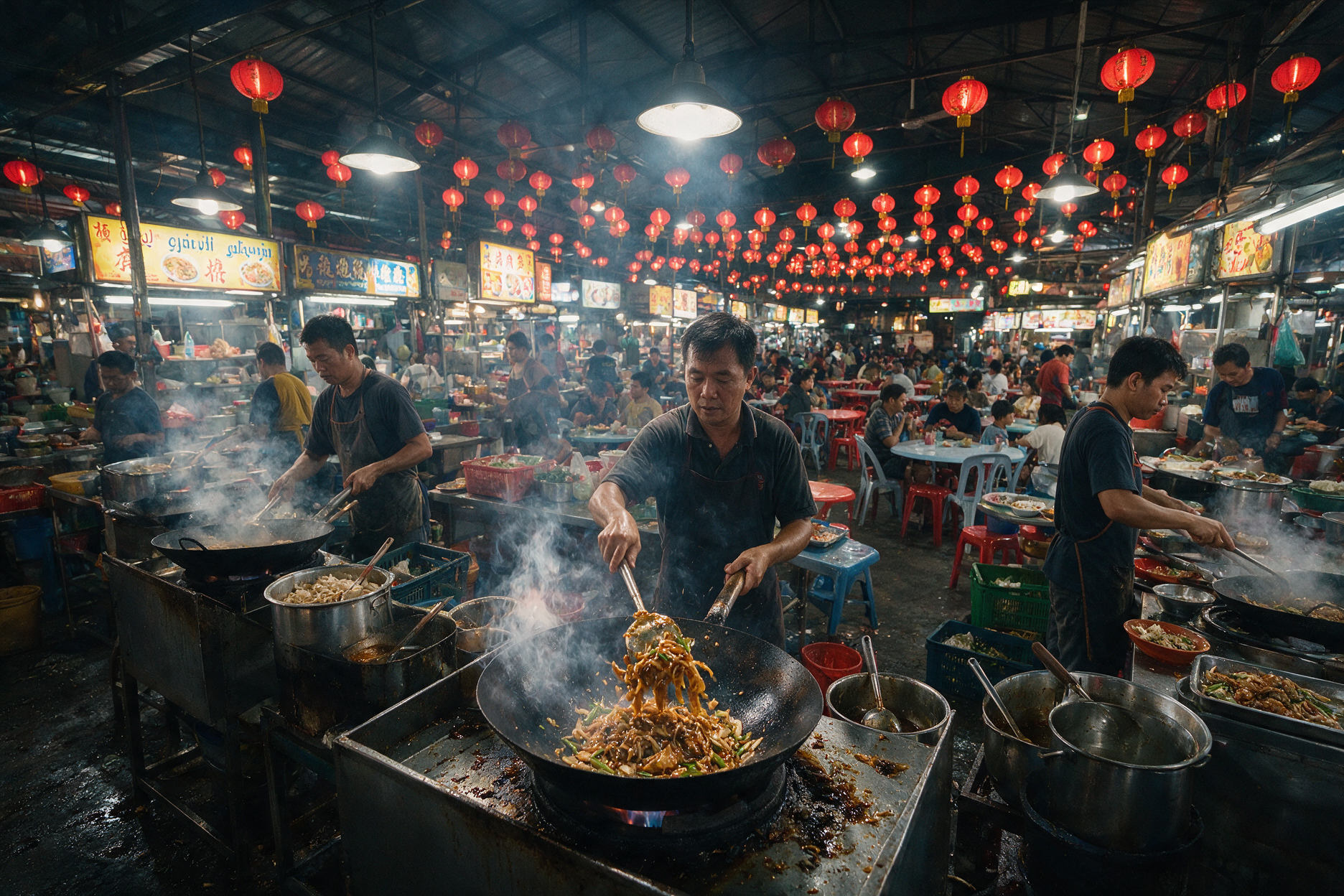
For Chinese hawker food, Jalan Alor in Bukit Bintang is the tourist answer — it’s noisy and a little chaotic, but the grilled seafood (especially the butter prawns), wonton mee, and oyster omelette are genuinely good. For a less-touristed version of the same food, head to Pudu or Kepong, where the same dishes cost 30% less and the clientele is mainly locals. The downside is you’ll need a Grab, which is fine.
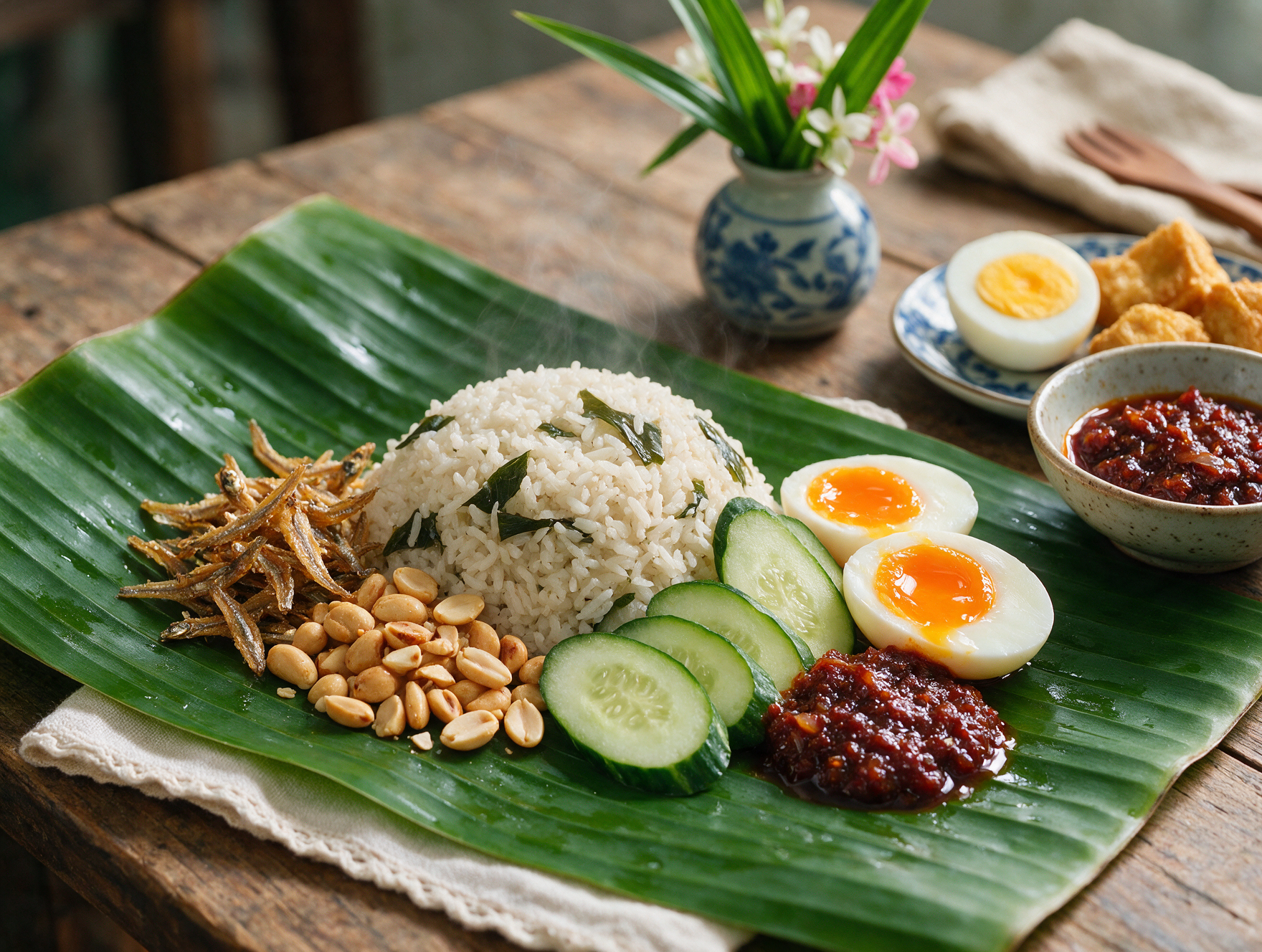
KL’s definitive must-eat: Nasi Lemak. It’s sold everywhere from roadside stalls to hotel breakfast spreads, but the best version comes from the older family-run stalls in residential neighborhoods. Rice steamed in coconut milk, fried anchovies, peanuts, half a hard-boiled egg, fresh cucumber slices, and sambal. The sambal quality is the variable — some are deep and sweet-spiced, some are face-melting hot. Ask before you pour the whole sachet.
The mistake to avoid in KL: paying hotel prices for food when a 5-minute Grab ride in any direction puts you in front of better food for a quarter of the cost. The exception is rooftop bars — some are genuinely worth the premium for the city view with a drink at sunset.
Penang: The Best Argument for Eating Through a City
Penang’s food reputation is the result of geography and history stacking up over 200 years. George Town was a British trading port that attracted wave after wave of Hokkien Chinese, Tamil Indian, and Malay communities — and each brought their food, then started cooking it alongside and into each other’s. The result is a cuisine that exists almost nowhere else.
Asam Laksa is the one dish you have to eat in Penang. Not coconut-milk laksa — Penang’s version is built on a mackerel-and-tamarind broth that is sour, salty, and complex in a way that takes about three spoonfuls to recalibrate to. It’s served with thick rice noodles and topped with mint, pineapple, torch ginger, and a spoonful of shrimp paste. The hawker stall version at Air Itam market (near the Kek Lok Si Temple) is considered the standard. You’ll see tourists taking photos of it before eating; they’re right to.
Char Kway Teow in Penang is different from what you get in KL or Singapore. The flat rice noodles get fried over extremely high heat in a well-seasoned wok with eggs, beansprouts, Chinese sausage, cockles (clams), and prawns. The cockles are essential — don’t pick them out. The best versions have visible wok-hei (that slightly smoky flavor from the char) and take about 3 minutes to cook. Watch out for tourist-trap versions that stretch the noodles with too much water.
Nasi Kandar is Penang’s other distinct contribution — a Southern Indian dish (brought by Tamil Chettiars) of rice served with multiple curries ladled over it, almost cafeteria-style. Hameediyah Restaurant on Campbell Street claims to be the oldest Nasi Kandar restaurant in Malaysia, open since 1907. The wait at peak lunch hour is real but worth it.
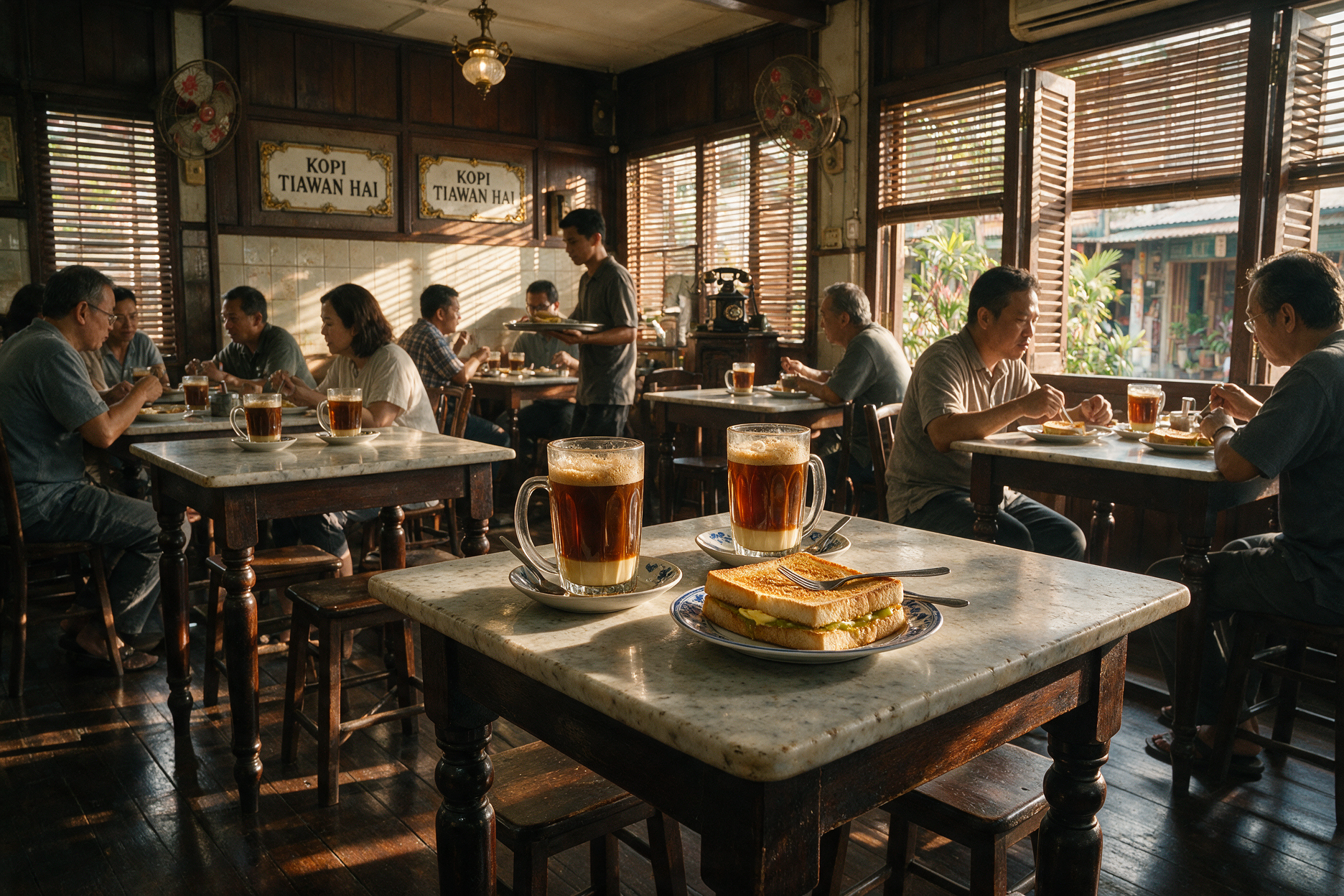
For coffee: Penang has a proper old-school kopitiam (coffee shop) culture. A glass of kopi C ais (iced coffee with evaporated milk) from a street-level kopitiam at 8 AM, with toast and half-boiled eggs, is one of the better breakfasts in Southeast Asia. The bread, locally called Roti Kahwin when spread with kaya (coconut jam) and butter, is as much a breakfast institution as the coffee.
Malacca: Nyonya Cuisine and the Flavors of 500 Years
Malacca’s Peranakan community — the Baba-Nyonya, descendants of Chinese traders who settled in the Malay peninsula centuries ago and married into local Malay culture — developed a cuisine that is neither Chinese nor Malay but something specifically their own. The flavors lean on lemongrass, pandan, galangal, belacan (shrimp paste), and coconut milk in combinations that will be unfamiliar even if you’ve eaten widely across Southeast Asia.
Chicken Pongteh: braised chicken and potatoes in a fermented soybean and palm sugar sauce that’s simultaneously savory and gently sweet. Usually served with rice. It’s the comfort food of Nyonya kitchens, and the version at a family-run restaurant in the heritage zone will always be better than the hotel interpretation.
Asam Pedas: a Malay-origin tamarind-sour fish stew that the Nyonya community absorbed and intensified. The fish (usually stingray or mackerel) cooks in a gravy of tamarind, torch ginger flower, and dried chilies. It’s spicier than it looks. Restoran Nyonya Makko on Jalan Tun Tan Cheng Lock is a reliable address for this.
Poh Piah: fresh spring rolls filled with julienned vegetables (jicama, carrots, French beans) and sometimes prawns, wrapped in a thin crepe with a sauce of fermented soybean paste and chili. Sold at carts near the main temple complex on Jonker Street — worth having as a snack while walking.
Jonker Street on weekend nights becomes a night market with food stalls, and while it’s crowded, the variety of snacks available (from durian puffs to coconut ice cream to cendol) makes it one of the better late-evening food streets in Malaysia.
Langkawi: Seafood on the Beach, Done Properly
Langkawi’s appeal as a food destination is mainly about context: fresh seafood, often caught that morning, grilled or steamed at a restaurant where you can see the Andaman Sea from your table. The quality is genuinely high, and the duty-free status means the cold beer that goes with the seafood is priced closer to what you’d pay in India than what you’d pay in Singapore.
The Pantai Cenang beach strip has a cluster of seafood restaurants. The ones on the inland side of the road (as opposed to beachfront) are often just as good but less aggressively priced. Ask to see the catch before ordering — good restaurants keep the fish in a tank or cooler and will show you. Tiger prawns, red snapper, and various crab preparations are the items to order.
Langkawi also has a decent night food market near the Cenang area that rotates locations by day of the week — check with your hotel. Standard hawker items (satay, mee goreng, fresh fruit) alongside some Malay kuih (sweet pastries) that make for a good evening snack.
For coffee: Langkawi’s beach cafes are hit-and-miss for food but generally fine for a kopi or smoothie mid-afternoon. The town of Kuah (less visited than Cenang) has older-style kopitiam with better coffee and less tourist markup.
Genting Highlands: Mountain Air and a Surprisingly Good Food Scene
Genting Highlands, at 1,800 metres above sea level, is Malaysia’s highland resort complex — casinos, theme parks, hotels, and a SkyAvenue shopping mall that houses a range of restaurants. The cooler air (around 20°C even in Malaysia’s summer) makes food taste better, or at least that’s the excuse you can use for eating a lot here.
The coffee scene at Genting is better than you’d expect from a casino resort. Several cafes in SkyAvenue serve specialty coffee from Malaysian roasters — the local single-origin coffees from Liberica beans (a variety you don’t find easily in India) are worth trying. Liberica has an earthier, woodsier flavor than Arabica; Malaysian kopi made with Liberica is what “Malaysian coffee” actually tastes like when it’s not been diluted for export.
The hawker-style food court on the lower floors of the complex does reliable Malaysian staples. For something more specific to the highlands experience, the steamboat (Asian hot pot) restaurants are popular for groups — they fit the cool mountain setting in a way they don’t quite manage to at sea level.
Taman Negara: River Lodge Food and What to Bring
Taman Negara — Malaysia’s oldest national park, 250 million years old, which the guides here will tell you makes it older than the Amazon — has accommodation at Mutiara Taman Negara Resort at the park entrance, plus a handful of floating chalets on the Tembeling River. The restaurants at these lodges do simple Malaysian dishes: nasi goreng, mee goreng, chicken rice, occasional jungle vegetables. The cooking is competent rather than memorable, but eating on a floating platform on a jungle river, listening to cicadas and the occasional hornbill, improves everything.
Indian travelers with specific dietary requirements (no pork, vegetarian, halal): the food at the main resort is generally fine across these categories since most Malaysian restaurants default to halal. Confirm with the kitchen at your lodge — they’re used to the question.
One practical note: bring snacks for the jungle treks. The park canopy walk and longer hikes don’t have food stops. Energy bars, dry fruit, or even packaged murukku (the kind that travels well) are useful to have. Taman Negara is not the place to discover halfway through a 3-hour jungle walk that you haven’t eaten since breakfast.
Malaysia’s Coffee Culture: Beyond Nescafé
Malaysian kopi has its own identity. The beans are traditionally roasted with butter and sometimes sugar, which gives them a slightly caramelized, thick quality that’s different from Western espresso or South Indian filter coffee. The terminology matters when ordering:
- Kopi — black coffee with sweetened condensed milk (served hot)
- Kopi O — black coffee with sugar, no milk
- Kopi C — coffee with evaporated milk (less sweet than condensed)
- Add “ais” — for iced: Kopi ais, Kopi O ais
- Teh Tarik — “pulled tea” (black tea with condensed milk, aerated by pouring between two containers from height). Malaysia’s national drink, effectively.
The specialty coffee scene in KL (Bukit Bintang, Bangsar, TTDI area) is now sophisticated enough that third-wave cafes — single-origin, precise brewing, the usual — are easy to find. But the best coffee experience is still a RM 1.80 kopi O ais in a marble-tabled kopitiam at 8 AM, with the morning paper visible and someone arguing about football at the next table.
Ice Cream Worth Actually Stopping For
Two ice cream traditions in Malaysia are worth the detour. First: ABC (Air Batu Campur, literally “mixed ice”), a shaved ice dessert with red beans, corn, grass jelly, and sweet syrup topped with condensed milk and sometimes ice cream. It’s served in a massive bowl and sounds like too many things at once — it works. Found at most hawker centres and roadside stalls; best in Penang and Malacca where the toppings quality is higher.
Second: Cendol — a bowl of shaved ice with green pandan jelly noodles, red azuki beans, coconut milk, and gula melaka (palm sugar syrup). The coconut milk cuts the sweetness, the pandan noodles add an herbal note, and the palm sugar brings a caramel depth that refined white sugar can’t replicate. The stall outside Penang’s Chowrasta Market has been serving the same version for decades; it’s the benchmark.
Late-Night Eats: What’s Open After 10 PM
Malaysia runs late. In KL, Jalan Alor and the hawker area around Chow Kit are both active well past midnight. Mamak stalls — the 24-hour Indian-Muslim restaurants serving roti canai, mee goreng mamak, and teh tarik — are the late-night option for much of Malaysia. They’re everywhere, open till 3 or 4 AM in most cities, and cheap. A plate of maggi goreng (spiced fried instant noodles, which sounds terrible and is actually very good at 1 AM) and a teh tarik at a mamak is a completely reasonable way to end an evening in KL.
In Penang, the streets around Gurney Drive stay busy late with food stalls. The beachfront strip at Langkawi winds down earlier (around 11 PM on weekdays) but extends to midnight on weekends.
FAQs: Eating in Malaysia as an Indian Traveler
Is Malaysian food spicy?
Some of it is, but it varies widely. Asam Laksa is more sour than spicy. Char Kway Teow is mild unless you add chili. Nasi Lemak’s sambal is where the heat lives — and it varies by restaurant from gentle to aggressive. Indian travelers accustomed to spicy food generally handle Malaysian spice levels well; just ask at the stall if you want the chili level adjusted.
Is it hard to find vegetarian food in Malaysia?
In KL and Penang, no — there are dedicated vegetarian restaurants, South Indian banana leaf rice options, and Buddhist vegetarian stalls in many areas. In Taman Negara, vegetarian options at the resort are limited but available. See our separate vegetarian and vegan food guide for restaurant specifics.
Is pork in everything?
Not everything — Malaysia has a majority Muslim population and a large halal food culture. Chinese hawker food may use pork (char siu, for instance); Malay and Mamak stalls are halal by default. When in doubt, ask — hawker stall operators are used to the question and will answer clearly.
Should I drink the tap water?
In KL and most cities, technically yes — the water meets WHO standards. Practically, most visitors and many locals drink filtered or bottled water. Bottled water (1.5L) costs RM 1–2 at any convenience store. Drink from ice served at established restaurants; the major hawker centres use food-grade ice supply.
Can I use Google Maps to find food in Malaysia?
Yes and no. Google Maps is reliable for finding restaurants and checking reviews. For hawker stalls, though, many of the best ones have no listing, no name, and no online presence — they’re just stalls that have been in the same spot for 30 years. The best food finds in Malaysia usually come from asking your hotel concierge or a local cab driver what they eat for lunch.
Eat Your Way Through Malaysia
The food alone is a reason to come to Malaysia. And a well-planned trip structures your time so you’re in each city when the best food is accessible — not rushing through Penang on a day trip, or reaching Malacca after Jonker Street’s night market has packed up. Get Tripped’s Malaysia packages include time in the cities that matter and accommodation in the neighborhoods where the actual eating happens. Explore Malaysia itineraries here.