Your Guide to Being a Local in Kuala Lumpur
The tourist version of Kuala Lumpur has the Petronas Twin Towers, a city bus tour, and dinner at a restaurant on the Bukit Bintang strip that looks good in photos but costs twice what it should. That version is fine. But the local version — the one KL residents actually live in — is more interesting, more honest, and frankly more fun to be part of, even if you’re only there for five days.
What separates them isn’t just cost. It’s knowing which kopitiam to walk into at 8am (the one where the uncle running the wonton mee has been making it the same way for 40 years), which part of the LRT to board so you don’t get stuck at the wrong exit, and which wet market vendors will wave you over because they recognize you from yesterday. As an Indian traveler, you have an advantage: KL has one of the largest Indian-Malaysian communities in Southeast Asia, and the transition from tourist to temporary resident is easier here than almost anywhere else in the region.
This guide is about that transition. Not the “secret local spots” listicle — but the actual texture of how people live in this city, and how to plug into it during your Malaysia trip.
Table of Contents
- The KL Morning Routine
- Getting Around Like a Local
- KL’s Food Culture: What Locals Actually Eat
- The Neighbourhoods Worth Your Time
- The Afternoon Rhythm
- Evening Out, Local Style
- Shopping Where KL Actually Shops
- Practical Details: Money, SIM Cards, Getting Here
- Mistakes to Avoid
- FAQs
The KL Morning Routine
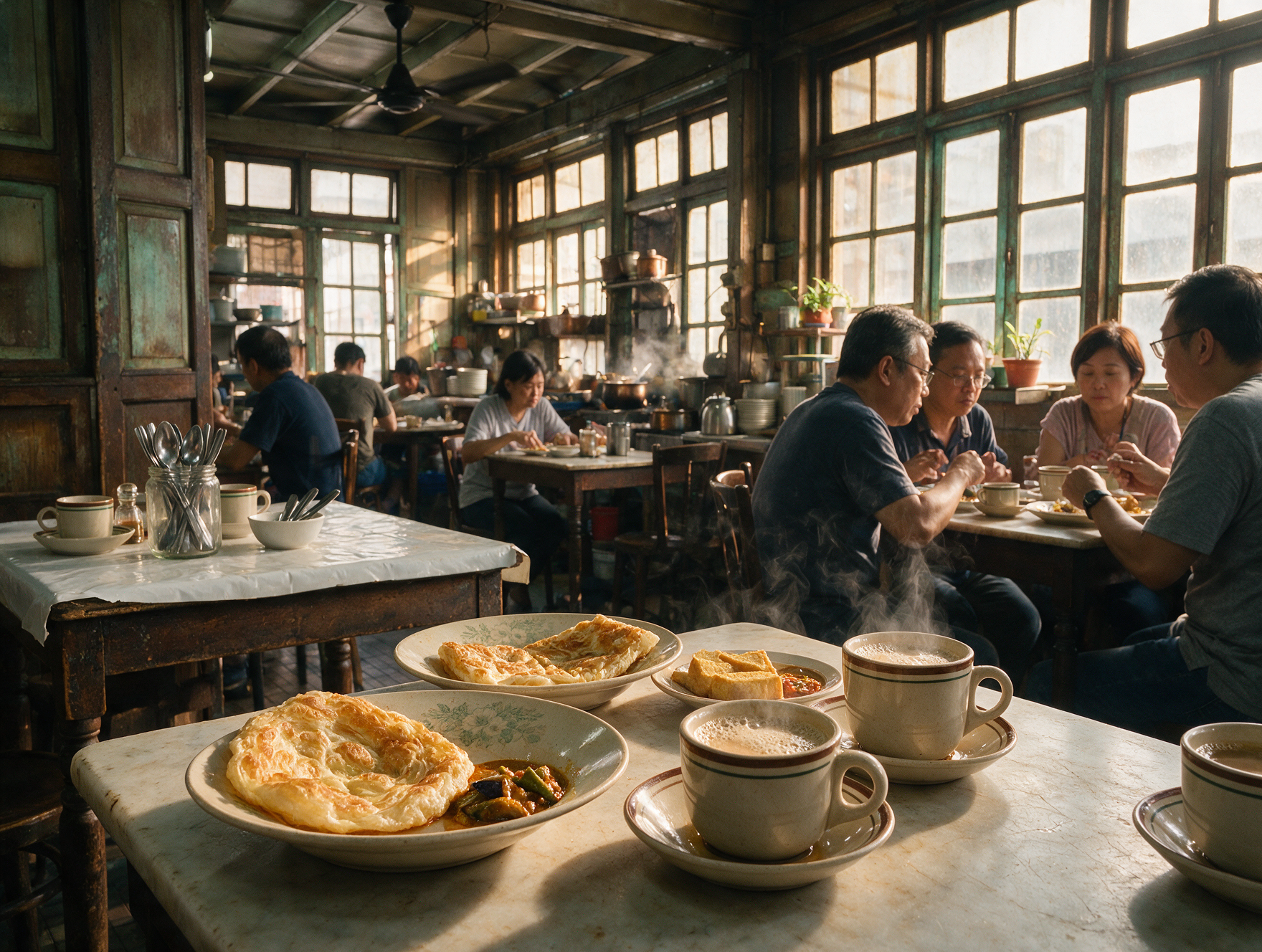
Locals start early because KL gets hot fast. By 7am, the kopitiams — traditional coffee shops, usually run by Chinese-Malaysian families — are already half-full. These are not cafés in the Instagram sense. There are no menus with fonts and acetate covers. You sit, a server comes over, and you either know what you want or you point at what the person next to you is having.
The default order for the uninitiated: kopi O (black coffee sweetened with sugar, no milk), toast with kaya (coconut egg jam) and butter, and soft-boiled eggs with white pepper and dark soy sauce. It costs between RM 6–8 (roughly ₹110–145) for all three. This is breakfast. It’s perfect.
If you want to try one kopitiam that’s been around long enough to be considered part of the city’s muscle memory, Old Town White Coffee in Brickfields (the area near KL Sentral) is reliable but already on every tourist’s radar. Better: wander into Chow Kit before 8:30am and find a shopfront with plastic chairs on the pavement. Don’t look for a sign in English. Sit down. Order.
For Indian breakfast specifically, Brickfields — which locals call “Little India” — is where KL’s Tamil community has been eating for generations. Banana-leaf thali, roti canai with fish curry, and teh tarik (pulled tea) that’s been perfected over decades. The stretch around Jalan Tun Sambanthan has a dozen small restaurants that open by 7am and are genuinely excellent.
Getting Around Like a Local
Kuala Lumpur’s public transit is better than most visitors give it credit for, and it’s also genuinely confusing until you understand the system. There are four main rail lines (LRT, MRT, KTM Commuter, and the Monorail), each run by different operators, and the integration isn’t seamless. Here’s the practical version:
The Rapid KL Touch ‘n Go card works across all lines and buses. Get one at KL Sentral when you arrive — it’s RM 10 for the card plus however much you top up. Fares are between RM 1–4 per ride depending on distance. Way cheaper and faster than Grab in most cases during peak hours.
For the main tourist corridor — KLCC, Bukit Bintang, KL Sentral, Chow Kit — the Monorail and LRT Kelana Jaya line cover most of what you need. For Chinatown (Pasar Seni station) and Brickfields (KL Sentral), you’re set with the same card.
The bus system is genuinely useful in a way most tourists miss. RapidKL buses run throughout the city for RM 1 flat fare, and Go KL City Bus (the green-and-white buses) are free on designated routes in the city centre. Locals use these constantly. The free route connects KLCC, Bukit Bintang, Masjid India, and Chow Kit — exactly the loop you’d want.
One thing: avoid Grab (the regional Uber equivalent) during evening rush hour, roughly 5:30–7:30pm on weekdays. Surge pricing is real, traffic is worse than you expect, and the journey from KLCC to Bukit Bintang that takes 8 minutes on foot or 10 minutes on the Monorail can take 45 minutes in a car during that window.
KL’s Food Culture: What Locals Actually Eat
The most important thing to understand about food in Kuala Lumpur is that it’s genuinely one of the best eating cities in Asia — not in the Michelin-starred sense (though there are a few of those now too), but in the sense that people here are serious about their food at every price point. A hawker stall selling wonton noodles might have a family recipe that’s 50 years old and a queue that forms by 11:30am before lunch service even properly begins.
The food in KL divides roughly into three categories based on how locals think about mealtimes:
Hawker Food at the Markets and Kopitiams
This is where most locals eat most meals. Jalan Alor in Bukit Bintang is the most famous food street and also, by evening, one of the most tourist-saturated. It’s still good — the grilled stingrays and BBQ pork ribs are worth it — but go early (before 7pm) or the vibe tips toward performance rather than food.
Better for the actual experience: Taman Connaught Night Market, held on Wednesdays, is one of the longest night markets in Malaysia (about 2km of stalls). Mostly locals, mostly in Cantonese and Malay, and the variety is extraordinary. It’s about 20 minutes from the city centre by MRT.
For Indian food specifically — and this is useful context for Indian travelers — KL’s Tamil, North Indian, and Mamak (Muslim Indian-Malaysian) food cultures are all present and excellent. Mamak restaurants are an institution: open 24 hours, cheap, and serving roti canai, mee goreng, and teh tarik that the entire country agrees are the best version available anywhere. The phrase “mamak run at midnight” is genuinely part of Malaysian vernacular.
Restaurant Dining (Mid-Range to Fine)
For a step up, the dining corridors to know are: Damansara (upscale-casual, lots of Korean and Japanese options alongside excellent Malaysian-Chinese), Mont Kiara (expat neighbourhood with good wine lists and cocktail bars), and the stretch around Telawi Street in Bangsar (independent restaurants, slightly younger crowd, good vegetarian options).
One recommendation that doesn’t appear on most lists: Dewakan in Merdeka 118 does modern Malaysian fine dining that uses native ingredients and techniques in ways you won’t see elsewhere. It’s earned international recognition and the tasting menu runs around RM 380–450 per person. Book ahead — seriously, weeks ahead.
The Vegetarian and Indian Food Landscape
Indian travelers generally find KL comfortable because vegetarian food is genuinely available and good across the city. Tamil vegetarian restaurants are concentrated in Brickfields and Masjid India. For North Indian food, the Bangsar and Hartamas areas have reliable restaurants. And because Malaysians of all backgrounds eat at mamak restaurants, the vegetarian roti canai and dhal here might be the best version you’ll ever have.
The Neighbourhoods Worth Your Time
KL is not walkable in the way European cities are — the sun and the sprawl conspire against it. But each neighbourhood has its own texture, and understanding them makes the city navigable.
KLCC / Bukit Bintang: The tourist and expat centre. The Petronas Twin Towers are genuinely impressive, especially at night, and KLCC Park underneath them is a pleasant way to spend an evening (free fountain show at 8pm and 9pm). Bukit Bintang is where you shop and eat if you want English menus and air conditioning. Locals come here too, especially on weekends.
Chow Kit: A market neighbourhood that most tourists skip and most expats are mildly nervous about, which means it’s interesting. The wet market in the morning — one of the biggest in the city — has durian vendors, tropical fish, dried goods, and an energy that’s chaotic and entirely alive. Nobody’s performing for tourists here. Come before 9am.
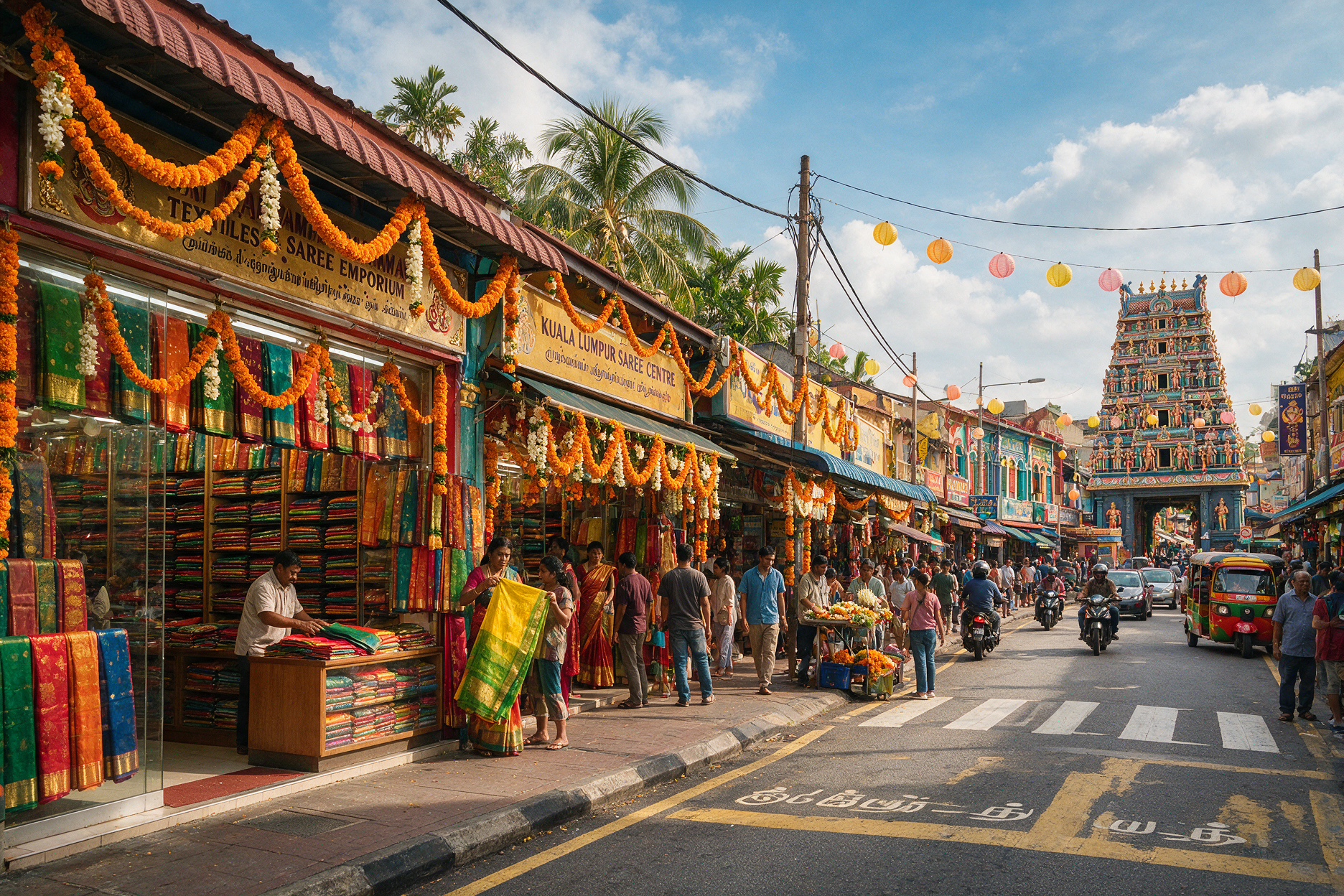
Masjid India: The historical Muslim Indian neighbourhood, good for fabric shopping, sari stalls, and the Coliseum Café — a colonial-era bar and restaurant that’s been serving sizzling steaks and Hainanese chicken rice since 1921. It’s a bit of a time warp and worth a visit even if you just have a beer and look at the photos on the walls.
Petaling Street / Chinatown: The original trading district, now tourist-heavy but still worth a morning for the wet market on Jalan Sultan and the excellent dim sum restaurants that open early. Pasar Seni station puts you right at the edge of it.
Bangsar: Where KL’s professional class lives and eats. Good independent coffee shops, weekend brunch spots, and one of the best farmers’ markets in the city on Sunday mornings at Bangsar Village II.
The Afternoon Rhythm
The honest answer is: locals avoid being outside between about noon and 3pm unless they have to. It’s hot and often humid to the point of being uncomfortable. This isn’t a failure of nerve — it’s sensible. The afternoon slot is for air-conditioned space: a mall, a café, a museum.
The malls in KL are, by most measures, genuinely good. Not just shopping — they’re cultural and social spaces. Pavilion KL in Bukit Bintang has an entire floor dedicated to Japanese products and food. Mid Valley Megamall is where KL residents actually shop rather than tourists (better prices, more variety). Suria KLCC has the advantage of being directly under the Petronas Towers.
For museums, the National Museum (Museum Negara) is underrated — a well-curated collection covering Malaysian history from the Majapahit period through independence. Entry is RM 5. The Islamic Arts Museum near Masjid Negara is genuinely one of the finest collections of Islamic art in Southeast Asia and costs RM 20 for adults.
Evening Out, Local Style
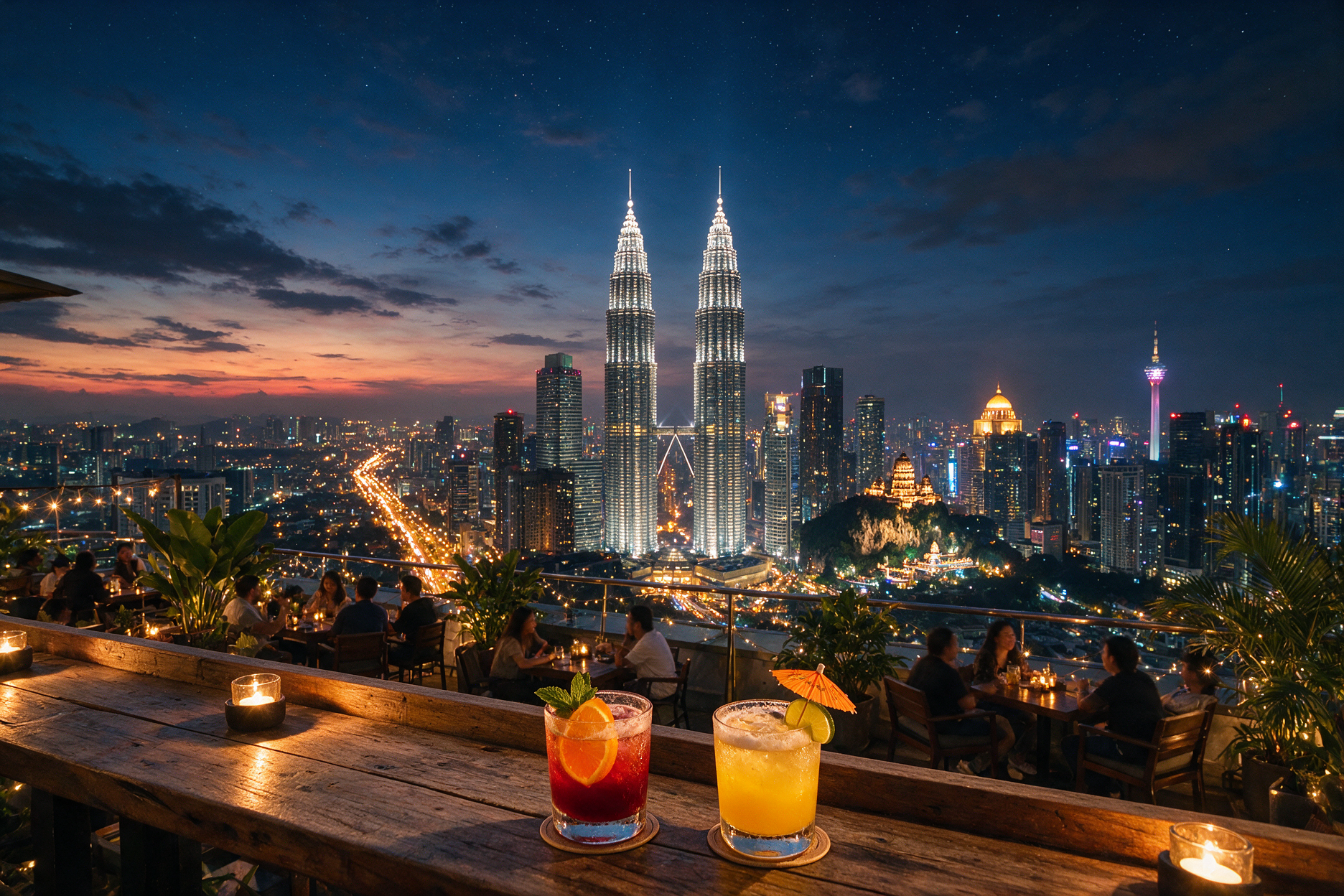
KL after 6pm is a different city. The temperature drops slightly, the streets fill back up, and the food stalls reopen or shift into evening mode. The rooftop bar scene is real and worth one evening — Heli Lounge Bar at the top of a building in Bukit Bintang has panoramic city views and a helipad you’re standing on, which is an experience. It gets crowded after 8pm. Drinks run RM 30–45.
For a more local evening: find a spot on the stretch of bars along Changkat Bukit Bintang (the backstreets off the main drag). These are small, independently run, and much quieter than the main strip. Prices are normal. The crowd is mixed — locals, long-term expats, the occasional traveler who’s done their research.
Live music exists, more than most visitors realise. No Black Tie in Bukit Bintang has been hosting jazz, classical, and world music performances for over 20 years. It’s small (40-50 seats), consistently excellent, and very much how actual KL residents spend a good Friday evening. Check their programme before you visit — shows sell out.
Shopping Where KL Actually Shops
Masjid India market for fabrics, batik, and Indian textiles — prices are negotiable and the quality is genuinely good. Petaling Street for souvenirs, though the “replicas” culture is openly acknowledged and you know what you’re buying. Mydin hypermarket if you want Malaysian pantry staples and snacks to bring home at actual local prices rather than airport markup.
Batik is worth buying in KL if you buy it at a reputable shop rather than a souvenir stall. Jakel in Masjid India is a large fabric shop that locals use for wedding shopping — prices are honest, selection is extraordinary. The ready-to-wear batik pieces start around RM 80.
Practical Details: Money, SIM Cards, Getting Here
Currency: Malaysian Ringgit (MYR). As of late 2026, roughly 1 MYR = ₹18. ATMs are everywhere, and most branded shops accept cards. Hawker stalls and smaller koptiams are cash-only. Carry small bills.
SIM Card: Pick up a tourist SIM at KLIA on arrival. Maxis, Digi, and Celcom all have tourist packages — about RM 30–50 for 15–30 days with data. eSIM options are also available if your phone supports it. Internet quality in KL city centre is generally excellent.
Getting There: Kuala Lumpur International Airport (KLIA) has direct flights from Mumbai, Delhi, Chennai, Hyderabad, Kolkata, Bengaluru, and Kochi. Flight times range from 4.5–6 hours depending on city. AirAsia X, Malaysia Airlines, and IndiGo (via code-share) all operate this route. Typical round-trip fares from Mumbai hover between ₹18,000–35,000.
Airport to City: KLIA Ekspres is the fastest option — 28 minutes to KL Sentral, RM 55 one way. The Airport Bus is slower (90 minutes) but costs RM 12–18. Grab from KLIA to city centre runs RM 90–130 but takes 45–70 minutes depending on traffic.
Visa: Indian passport holders currently do not need a visa for Malaysia for stays up to 30 days (as of 2026 under the eNTRI/VoA-free arrangement — verify current policy at imi.gov.my before travel as rules can change).
Mistakes to Avoid
Taking Grab everywhere: It’s convenient but expensive at peak hours. The LRT is faster on the main corridors and costs a fraction of the price. Get the Touch ‘n Go card on day one.
Eating only at Jalan Alor: It’s fine but it’s not representative. KL’s food is better at the less-photographed spots. Ask your hotel reception staff where they eat lunch. That answer is almost always more useful than any food app listing.
Underestimating the heat: KL sits at 3° latitude north of the equator and has over 2,500mm of annual rainfall. There’s no good season and bad season — there’s hot and slightly less hot, with sudden heavy rain that clears in 20 minutes. Bring an umbrella even if the morning looks clear.
Assuming tipping is expected: It isn’t, at most non-hotel restaurants. Service charges are often included (look for “service charge” on the bill — it’s usually 10%). At mamak restaurants and hawker stalls, no tip is expected.
FAQs About Being a Local in Kuala Lumpur
Is Kuala Lumpur safe for Indian tourists?
Generally yes. KL is a major cosmopolitan city with well-developed tourist infrastructure. The usual urban precautions apply — watch your belongings in crowded markets, be alert on public transit, and don’t flash expensive items. The city has CCTV coverage throughout the central district. Overall, Indian travelers tend to feel comfortable here because of the large Indian-Malaysian community and cultural familiarity.
What’s the best area to stay in KL as a first-time visitor?
Bukit Bintang puts you within walking distance of the food streets, shopping malls, and the Monorail. KLCC is good if budget isn’t the primary constraint — you’re closer to the Petronas Towers and the park. For a more local feel, Bangsar or Damansara are where KL professionals actually live and eat, though they’re slightly less central.
Can I get good vegetarian food throughout KL?
Yes, and not just at Indian restaurants. Malaysian Chinese food has a strong vegetarian tradition, and the many Buddhist-influenced restaurants in Chinatown and Brickfields cater specifically to vegetarians. Mamak restaurants universally have vegetarian roti canai and curries. It’s one of the easier Southeast Asian cities for vegetarian Indian travelers.
What’s the best time to visit Kuala Lumpur?
KL is honestly fine year-round. The wetter months are April and October–November (southwest and northeast monsoon edges hit the region), though the rain is usually short and intense rather than all-day. March to mid-June and mid-June to September are drier and slightly cooler. Festive seasons — Chinese New Year (Jan/Feb), Deepavali (Oct/Nov), and Eid — are excellent times to be in the city if you want to see it at its most alive.
How much does a day in KL cost for a mid-range traveler?
Budget around RM 200–350 per day (₹3,600–6,300) covering accommodation (mid-range hotel), three meals (mix of hawker and one proper restaurant), public transit, and a couple of paid attractions. A genuinely luxurious day — fine dining, hotel with a view, spa — pushes to RM 800–1,200 (₹14,400–21,600). KL rewards smart spending: you can eat exceptionally well at low cost if you go where locals go.
Do I need cash or can I use cards?
Both. Card acceptance is excellent in malls, hotels, and modern restaurants. Hawker stalls, koptiams, and smaller market vendors are cash-only. Carry RM 100–200 in small bills for the day and you’ll be fine.
Is the Touch ‘n Go card worth it for a short trip?
Absolutely. The card is RM 10 (refundable) plus your top-up amount, and it works across all rail lines and buses. If you’re spending 4+ days in the city and using public transit daily, it pays for itself in savings and convenience within the first day.
Go Deeper Than the Itinerary
Kuala Lumpur gives back more the longer you’re willing to wander without a specific destination. The city was built by waves of migration — Tamil workers, Hakka miners, Malay traders, colonial administrators — and all of that history is still visible in the food, the architecture, and the way different neighbourhoods feel different from each other even today.
The places to visit in Malaysia extend well beyond KL — Langkawi, Penang, Taman Negara, and Malacca are all different enough to make a Malaysia tour genuinely varied rather than repetitive. But KL as a base, understood from the inside rather than the tourist brochure, is its own reward.
Planning a Malaysia trip from India? Get Tripped’s custom Malaysia itineraries build in the time you need to actually experience KL — not just photograph it. Talk to us about your Malaysia trip.