5 Hidden Gems of Langkawi to Explore Beyond the Cable Car and Cenang
Langkawi has done an impressive job of becoming a package-holiday island without losing the things that made it worth visiting in the first place. It’s one of the few places in Malaysia where you can arrive on a direct flight from India, clear immigration in 20 minutes, and be on a beach before the jet lag has even made up its mind.
The version most people see — Pantai Cenang, the Sky Bridge cable car, eagle feeding at Dataran Lang, Underwater World — is fine. It’s efficient tourism. You get a good holiday with minimal planning. But Langkawi also has a different version, one that takes a bit more intention to access, and that’s the island’s actual personality: a duty-free archipelago of 99 islands where fishing villages still launch boats at 4am, where mangrove rivers run into limestone caves that most tour boats miss entirely, and where a handful of restaurants serve Malay food so specific to the island it’s effectively untranslatable elsewhere.
This is that version. Five hidden gems worth hunting down on your next Malaysia trip.
Table of Contents
- 1. Teluk Datai — The Beach the Developers Missed
- 2. Kampung Tok Senik — A Malay Village That’s Still Itself
- 3. Sungai Kisap — The Mangrove River Nobody Mentions
- 4. Pulau Tuba — The Island That Actually Has Residents
- 5. The Kuah Fish Market at Dawn
- Getting Around Langkawi
- Practical Information
- Mistakes to Avoid
- FAQs
1. Teluk Datai — The Beach the Developers Missed
The northwest coast of Langkawi is where the money went when luxury hotels arrived in the 1990s. The Datai Bay area has two of Asia’s most respected ultra-luxury properties, and their presence has effectively kept most of the surrounding coast pristine — nobody builds budget bungalows next to The Datai.
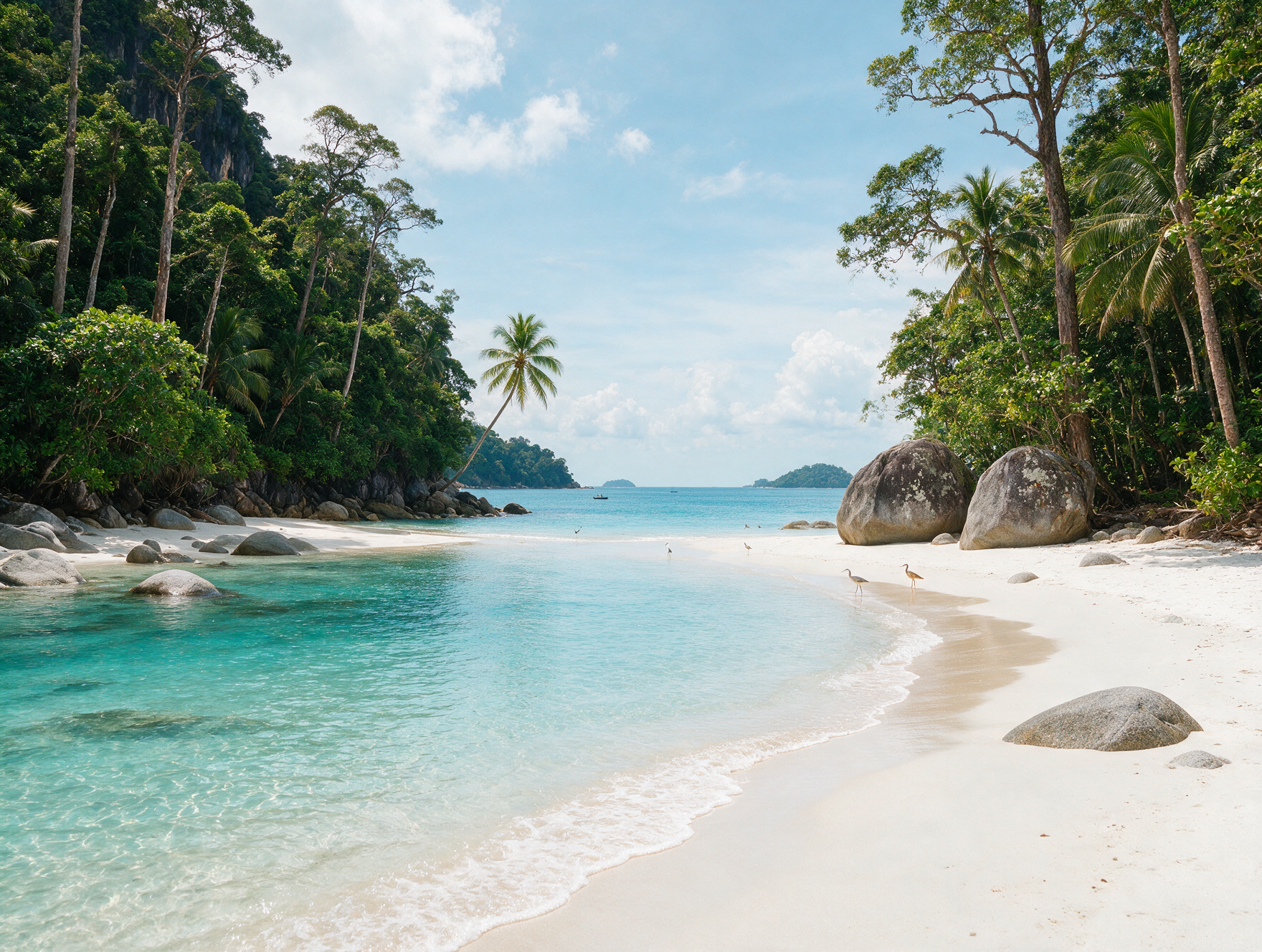
But the beach at Teluk Datai, at the far end of the bay, is accessible without a hotel stay. A 45-minute drive from Pantai Cenang (you’ll need to rent a scooter or car — nothing goes here on public transit) takes you to a cove backed by primary rainforest that drops almost to the waterline. The sand is white-grey, fine, and on most weekday mornings genuinely empty except for the monitor lizards that patrol the tree line.
The water is calm enough for swimming most of the year, and the snorkelling on the left side of the bay is better than anything you’ll find off the main tourist beaches. Bring your own gear — there’s no rental operation here. And bring food. There’s exactly one café in the area, and it keeps its own hours.
One honest caveat: the road to Teluk Datai is narrow, steep in places, and crosses through secondary jungle. If you’re driving a scooter and it rains — and it does rain suddenly here — pull over and wait it out. The road gets genuinely slippery.
2. Kampung Tok Senik — A Malay Village That’s Still Itself
Most visitors to Langkawi see the version of Malay culture that’s been packaged for tourism: a cultural performance at a resort, a batik demonstration in a gift shop, a “traditional village experience” that lasts 45 minutes and ends at a souvenir stall.
Kampung Tok Senik is different. It’s a working village in the interior of the island, accessible via a network of small roads that a GPS will take you down confidently even though they’re technically single-track. The village itself is a collection of stilted wooden houses, a mosque, rice fields, and fruit orchards. People live here. It’s not a museum.
The best approach is unhurried: park the bike, walk slowly, let the village come to you. There’s a small traditional craft cooperative where older women still weave mengkuang leaf baskets and mats — a skill that’s genuinely dying out. The pieces they sell are not cheap (RM 50–120 for baskets) but they’re the real thing made by the person selling them.
Nearby, the Galeria Perdana museum (about 3km from the village) houses a collection of official gifts given to Malaysia’s former Prime Minister Mahathir — it sounds like it should be boring and it’s actually fascinating in the way that collections of received objects always are. Giant crystal bears from Eastern European presidents. Hand-carved ivory from African states. The scale of international diplomacy rendered in tchotchkes.
3. Sungai Kisap — The Mangrove River Nobody Mentions
The Kilim Karst Geoforest Park gets the mangrove tourists. Eagle feeding shows, bat caves, floating fish farms — it’s on every day-tour itinerary and the boat processions through the mangroves can feel more like a convoy than an excursion. It’s still beautiful, but it’s the popular version.
Sungai Kisap is a smaller mangrove river system on the eastern side of Langkawi that most tour operators don’t run trips to, largely because it hasn’t been developed enough to support the standard eagle-feeding routine. What it has instead is genuine mangrove forest, kingfishers in numbers that feel implausible, otters if you’re early and quiet, and the particular quality of light that comes through dense mangrove canopy at about 7am — greenish, diffuse, otherworldly.
To get here, you’ll need to hire a private boat — a fisherman’s longboat rather than a tourist speedboat. The cleanest way to arrange this is through the small fishing community at the Kisap jetty area. Plan on RM 150–200 for a two-hour private trip for a group of four. The boats are basic (life jackets, no shade) and the experience is worth every ringgit above what you’d pay on a group mangrove tour.
Early morning or late afternoon only. Midday in a mangrove canal is unpleasantly hot, the wildlife retreats, and the light is flat. If you can manage a 6:30am start, the first hour is extraordinary.
4. Pulau Tuba — The Island That Actually Has Residents
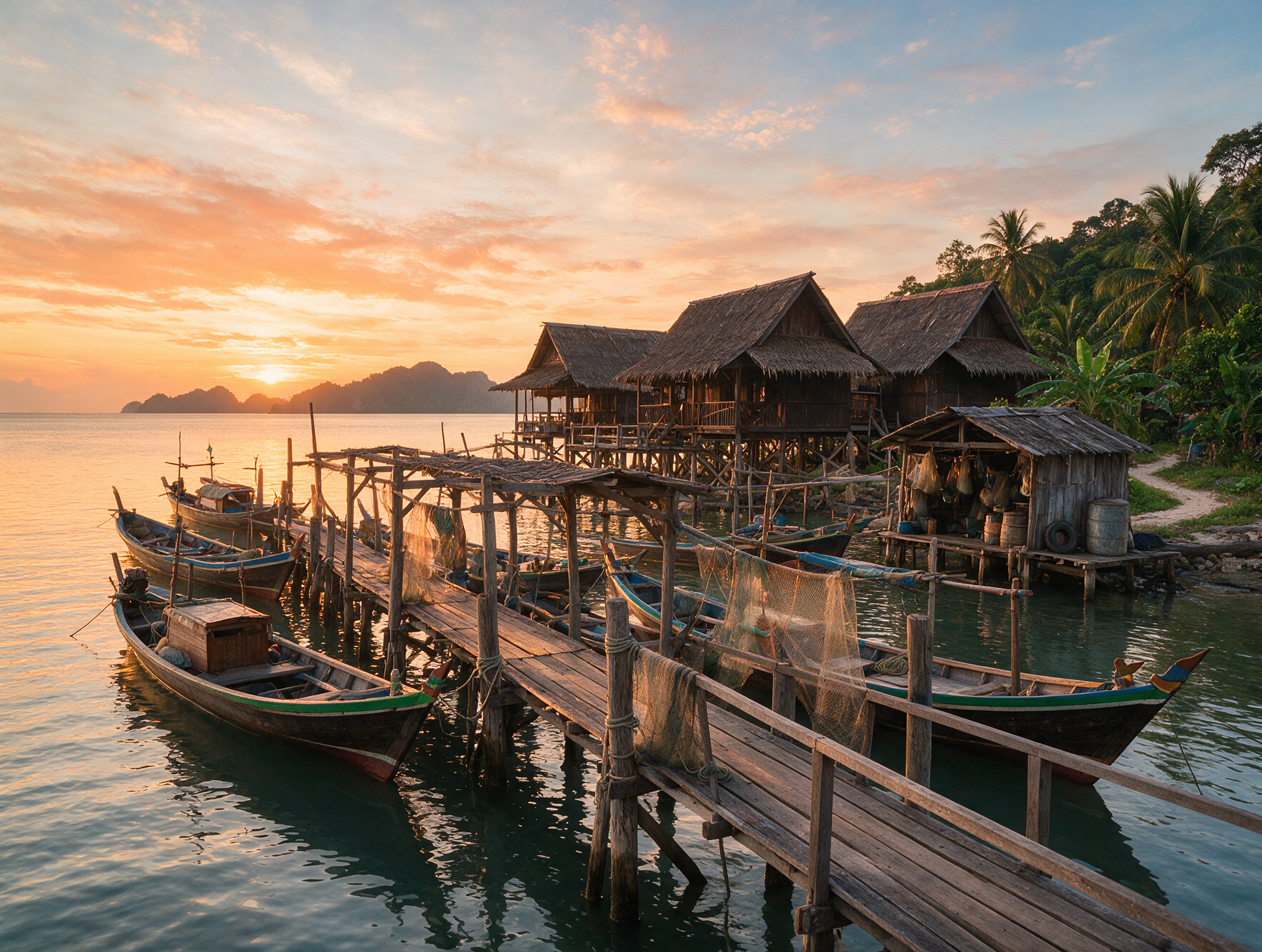
The 99 islands of the Langkawi archipelago include some that are tourist playgrounds (Pulau Dayang Bunting for the freshwater lake), some that are military-controlled, and some that nobody visits at all. Pulau Tuba sits in the middle category that’s fast disappearing: an island with a small permanent community of fishing families who live their actual lives there, mostly unmolested by tourism.
Getting to Pulau Tuba requires a 15-minute speedboat ride from Kuah jetty, and you’ll need to arrange the boat directly with the jetty operators rather than through a tour agency. The crossing is RM 20–30 per person depending on how full the boat gets, and boats depart when they have enough passengers — roughly twice a day in each direction.
What you’ll find: a fishing village with a seahorse breeding programme (sustainable fisheries initiative, and yes, you can see the seahorses), a small beach that requires a short walk through the village, and Malay home cooking at a handful of small restaurants that open without a clear schedule. The nasi lemak here — cooked in the morning by local women and sold out by 10am — is some of the best you’ll eat in Malaysia.
Come with no agenda. Pulau Tuba is an island where life proceeds slowly and the charm is entirely in that slowness. Don’t expect attractions. Do expect to leave wishing you’d come for longer.
5. The Kuah Fish Market at Dawn
The town of Kuah is Langkawi’s administrative capital and the place most visitors experience only as the location of the ferry terminal and the duty-free liquor shops. Both of these impressions are fair but incomplete.
The fish market behind the jetty area operates from about 4:30am to 7am, and it’s a proper commercial operation — not a tourist experience, not a curated version of a fish market with good light and manageable smells. Fishing boats come in from overnight runs, buyers are waiting, and the transactions happen quickly. You’ll see species you’ve never seen before: giant grouper, pomfret the size of serving platters, squid still changing colour, mantis shrimp that look like something from a science-fiction film.
The fun fact: Langkawi’s fishing industry focuses partly on deep-water species that don’t appear in most Southeast Asian fish markets because they’re too far from shore to bring in fresh. The market at Kuah gets some of these because the boats here go further out.
You will not be the only person there, but the others will be restaurant buyers and local cooks, not tourists. Go around 5am. Dress for the smell. Don’t bring a bag you care about.
After the market: the early-opening kopitiam around the corner from the jetty area serves the best breakfast in Kuah — roti canai with a rich fish curry that’s cooked from last night’s catch. It’s open from about 5:30am and has no English signage whatsoever. Look for the crowd outside and join it.
Getting Around Langkawi
This is the single most important logistical thing to understand about Langkawi: public transport essentially doesn’t exist. There are a handful of shared taxis and one tourist bus route that covers the main beach, but outside of those corridors you’re on your own.
Rent a scooter (RM 35–45 per day) or a car (RM 80–120 per day). Driving licence from India is accepted for car rentals at the main agencies. For a scooter you’ll rarely be asked for anything. Roads are generally good, the island is small enough that you can’t get meaningfully lost, and riding after dark is fine as long as the roads are dry. The full circuit of the island by scooter takes about 3 hours at a comfortable pace.
Grab operates on Langkawi but with limited drivers — surge pricing is common and wait times can be long. Don’t rely on it for anything time-sensitive.
Practical Information
Getting to Langkawi: Direct flights from major Indian cities (Chennai, Bangalore, Hyderabad) via AirAsia X, often with a short connection in KL. Alternatively, fly into Penang or KL and take a ferry (2 hours from Penang by fast boat). Langkawi International Airport is small and pleasant — arrival takes about 15 minutes from touchdown to exit.
Best time to visit: November to April is the dry season on the west coast (where Langkawi sits). May to October brings heavier rain, though not constant — mornings are often clear. Peak season is December–January when prices spike 30–50%. March and April offer the best combination of weather, reasonable prices, and manageable crowds.
Money: Langkawi is a duty-free zone, which means alcohol, chocolate, and cigarettes are notably cheaper than on the mainland. ATMs are available in Kuah and near Pantai Cenang. Card acceptance is patchy at smaller restaurants and market stalls — carry cash. Malaysian Ringgit (1 MYR ≈ ₹18).
Where to stay: Pantai Cenang for easy access to restaurants and the beach. Datai Bay area for quiet luxury (The Datai and Andaman are in a different category of resort experience). Kuah town if you genuinely want to avoid tourist prices and are comfortable with no nearby beach — there are some excellent value business hotels here.
Mistakes to Avoid in Langkawi
Booking only group tours: The standard day-tour circuit (mangroves, eagle feeding, island hopping) is fine but formulaic. The most interesting things about Langkawi require private transport and no agenda. Don’t fill every day with organised tours.
Swimming at Pantai Cenang in April or May: Jellyfish season. Not dangerous but genuinely unpleasant — the beaches can have substantial numbers. The northern beaches (Datai Bay, Tanjung Rhu) are generally clearer. Check with your accommodation before swimming.
Renting a scooter without checking for rain: The hills in the interior of Langkawi are steep and the tropical rain arrives suddenly. Check the sky before you go into the hills and build in buffer time to wait out storms. This is a minor inconvenience if planned for, a real problem if not.
FAQs About Langkawi
Is Langkawi worth visiting for Indian travelers?
Yes, particularly for families and couples wanting a beach holiday within easy reach of India. The duty-free status means shopping for alcohol, chocolate, and electronics at Malaysian-retail prices. The island combines beach time with access to nature in a way that’s genuinely unusual for a developed tourism destination.
How many days do you need in Langkawi?
Three to four days is ideal if you’re going beyond the standard cable car and Cenang routine. Two days is fine if you’re keeping it beach-focused. Five days starts to feel like you’ve seen the island thoroughly — it’s not a huge place.
Is Langkawi good for families with children?
Very. The beaches at Pantai Cenang and Pantai Tengah have calm water, there are several wildlife attractions (Langkawi Wildlife Park, the bird park), and the duty-free shopping is practical for family travel. The roads are scooter-friendly but narrow — a car is more practical with small children.
Do I need a visa to visit Langkawi from India?
Indian passport holders currently have visa-free access to Malaysia for up to 30 days (verify at imi.gov.my as this policy may change). The entry through Langkawi International Airport is the same as the main KLIA entry — no special requirements.
Is Langkawi expensive?
The local food and transport are genuinely cheap (meals at hawker stalls for RM 8–15, scooter rental for RM 35–45/day). The luxury hotels are regional-luxury-tier expensive. You can do Langkawi across a very wide budget range by controlling where you eat — even mid-range travelers eating mostly at local restaurants will spend far less on food here than in equivalent beachside destinations in Thailand or Bali.
Go Beyond the Cable Car
Langkawi rewards the traveler who turns off the main road. The island has been selling itself as a beach destination for 30 years, and it’s good at it — but the version of Langkawi that stays with people after they leave is usually not the Sky Bridge selfie. It’s the empty bay at 6am, the fishing village with excellent nasi lemak, the mangrove river where the kingfishers outnumber the tourist boats.
That version requires a scooter, an early alarm, and a willingness to skip some things on the tourist checklist. Worth it every time.
Planning your Malaysia trip to include Langkawi? Get Tripped builds custom Malaysia itineraries that combine KL with Langkawi, Penang, and other destinations — designed for Indian travelers who want the real experience. Get in touch.