Malaysia Packing Guide by Season: What to Actually Bring for Every Month
Malaysia is a tropical country with two distinct monsoon patterns — one affecting the west coast (where most tourists spend their time) and one affecting the east coast. Understanding which is active when you travel makes the difference between packing a waterproof jacket that earns its weight and one that sits at the bottom of your bag the entire trip. This guide cuts through the generic “pack light, breathable clothing” advice and gets specific about what you need, when, and for which combination of Malaysian cities.
Quick orientation: peninsular Malaysia’s west coast (Kuala Lumpur, Penang, Langkawi, Malacca) has its rainiest months between October and March. The east coast (where Taman Negara is more accessible from) gets hit hardest October through February. Upland destinations like the Cameron Highlands and Genting Highlands require a warmer layer year-round — they sit at 1,500–1,800 metres, and 20°C at altitude feels genuinely cool after days in 32°C KL.
Contents
Malaysia’s Climate: What the Months Actually Mean
Malaysia doesn’t have four seasons. It has hot, hotter, and rainy — and the rainy periods are not month-long downpours but afternoon showers that last 30–90 minutes, clear, and leave the city smelling of damp earth and rain-washed street food. The exception is during the full monsoon months, when rain events are longer and more frequent.
West coast (KL, Penang, Langkawi, Malacca):
- March–September: Driest months. Hot (32–35°C daily), sunny, with occasional afternoon thunderstorms but generally good weather for outdoor activities. May–August is the ideal window for Langkawi beaches.
- October–November: Transition season. Increasing rainfall; Penang and KL see more afternoon rain events. Langkawi’s beach weather becomes less reliable.
- December–February: Northeast monsoon. More consistent rain on the west coast, especially in December and January. Langkawi is wetter; Penang and KL are manageable but expect rain. Langkawi’s beaches have rougher conditions from November through March.
East coast / interior (Taman Negara from the east entrance, east coast islands):
- October–February: Full monsoon season. East coast islands (Perhentian, Tioman) close entirely. Taman Negara’s jungle is accessible but wetter and muggier than usual.
- March–September: Dry season for the east coast. Best time for east coast islands and jungle access.
Highlands (Cameron Highlands, Genting Highlands): Temperature is 15–25°C year-round. Rain can fall at any time. Pack one warm layer regardless of when you visit.
The Core Packing List: What Works Year-Round
Clothing
- 5–7 lightweight cotton or linen tops: Short-sleeve, breathable. Dark colours are practical in the heat (hides sweat better than light colours, paradoxically). Avoid synthetic fabrics if you run warm — they trap sweat in tropical humidity in a way cotton doesn’t.
- 2 pairs of comfortable trousers or full-length pants: For temple visits, mosques, and evenings at better restaurants. Linen trousers are ideal; the thinner weave matters. Bring one dark pair and one neutral.
- 3–4 pairs of shorts or skirts (to the knee): For beach, casual walks, and indoor settings where modesty standards are relaxed. Malaysia’s temples and mosques require covered knees — shorts that work in the hotel room may not work at Batu Caves.
- 1 sarong or light scarf: The most versatile item in a Malaysia-specific packing list. It covers shoulders and knees at temples, acts as a beach wrap, provides shade, and doubles as a light blanket on cold buses (and Malaysia’s bus and train interiors are cold — the AC is always set to an unreasonable level).
- 1 breathable sports/travel dress or casual jumpsuit (for women): These compress well, work in multiple settings from market to dinner, and are practical in heat and light rain.
- 1 lightweight cardigan or long-sleeve layer: For cold malls, cold buses, and cold trains. Not for warmth against outdoor temperatures — for the indoor refrigeration that Malaysia’s air conditioning provides.
- Swimwear (1–2): If you’re doing beaches or pools. Quick-dry is worth the marginal extra cost.
Footwear
- Comfortable walking sandals: Something with a proper sole — Birkenstocks, Tevas, or similar. You’ll remove and replace shoes multiple times daily at temples. Flip-flops are fine at the beach but are murder on cobblestone heritage streets after 5 hours.
- 1 pair of enclosed walking shoes or lightweight trainers: For Taman Negara jungle trails, Cameron Highlands tea estate walks, and any extended hiking. They’ll also get wet in heavy rain — keep that in mind for packing.
- Optional: rubber beach shoes or water sandals: If you’re planning mangrove kayaking or rocky beach exploration. Not essential for standard Langkawi beach.
Toiletries and Health
- High-SPF sunscreen (50+): Malaysia’s UV index routinely hits 10–11 — the maximum. Sunscreen is available in Malaysia (often Korean or Japanese brands, which are excellent) but pricier than in India. Bring enough for the trip or plan to buy locally.
- Insect repellent with DEET (30%+): Essential for Taman Negara and any time you’re near standing water or in wooded areas. Less critical in KL and beach resorts. Dengue fever is present in Malaysia — this is not optional.
- Oral rehydration salts or electrolyte powder: Dehydration is the most common tourist complaint in tropical Malaysia. Indian travelers transitioning from a drier climate underestimate how much fluid you lose in 35°C humidity. Coconut water (available everywhere, RM 3–5) is the local solution.
- Standard medicines: Antihistamines, antidiarrheals, motion sickness medication (for the Taman Negara boat), and your regular prescriptions. Branded medication in Malaysia is available at pharmacies (Watson, Guardian), but having your preferred formulations saves a trip.
Tech and Connectivity
- eSIM or physical SIM: Malaysian SIM cards are cheap and widely available at KLIA on arrival — Maxis, Celcom, and Digi all offer tourist SIMs with 10–20GB of data for RM 20–50 per week. An international eSIM (Airalo, Holafly) purchased before departure is equally convenient if your phone supports dual SIM. Do not rely on roaming — it’s expensive and slower.
- Power bank: Malaysia uses Type G (British square-pin) and Type A (US two-pin flat) sockets. Type G adapters are available everywhere; most modern hotels have universal ports. A 10,000 mAh power bank handles a full day of maps, Grab, and photos without anxiety.
- Malaysia plug adapter: Type G (three square pins, British standard). If your Indian round-pin chargers include a Type G converter (many travel kits do), you’re covered. Most hotel rooms have one universal socket alongside the standard — ask if you can’t find it.
Seasonal Additions by Month
March–May (Shoulder Season, West Coast)
Best general travel window. Pack the core list. Add a light waterproof jacket or packable rain poncho — afternoon showers are short but can be sudden. The Langkawi beaches are good from April onward.
June–August (Dry Season, West Coast)
The height of the clear-weather window. Highest heat and humidity. Maximise light, breathable fabrics. Sunscreen is the most important item. If you’re doing outdoor activities in Taman Negara, add a hat with a wide brim — the rainforest canopy provides shade on trails but less so on the river.
September–October (Shoulder Season, Transition)
Increasing rain frequency. Waterproof layer becomes more useful. Good time for KL and Penang; Langkawi’s weather starts to soften. Pack a packable rain jacket (not just a poncho) — you’ll wear it on and off rather than just during downpours.
November–January (Monsoon, West Coast)
KL and Penang are still very much worth visiting — the rain doesn’t cancel city travel, it’s just more frequent. Pack a proper compact umbrella rather than a poncho (easier to use in a city). For Langkawi, consider shifting beach time to the Cameron Highlands or indoor attractions. Waterproof phone pouch or dry bag for camera equipment is worth adding.
Genting Highlands in December is particularly atmospheric — Christmas decorations, cooler air, and low cloud at the summit that creates a genuinely eerie, beautiful setting. Pack one warm layer: a light fleece or down jacket for the evenings.
February (Northeast Monsoon Tail-End)
Chinese New Year falls here (exact dates vary) — excellent for seeing George Town and Malacca’s celebrations, but plan transport and accommodation well in advance as Chinese Malaysian families travel heavily. Weather is still transitional; rain gear remains useful.
Dressing for Temples, Mosques, and Religious Sites
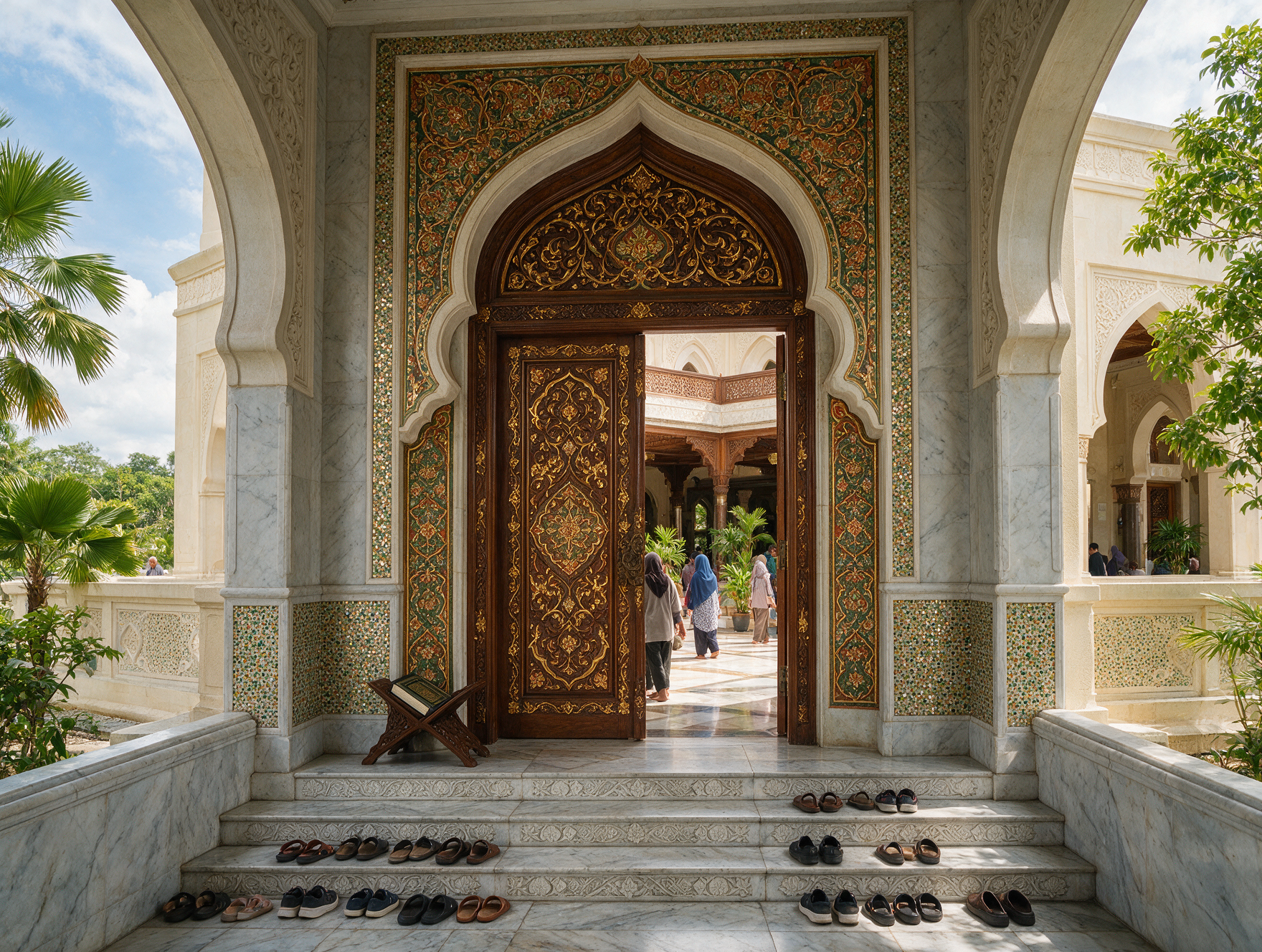
Malaysia has a high density of religious sites, and different ones have different requirements. Covering knees and shoulders is the minimum standard for all of them. For mosques, women additionally cover their hair.
The most practical system: pack full-length pants or a sarong as your baseline. If you’re wearing shorts and decide spontaneously to visit Batu Caves, a sarong tied at the waist covers you without a costume change. Most major temples lend or sell sarongs at the entrance — but having your own means you’re never locked out of somewhere based on what you packed that morning.
For the National Mosque (Masjid Negara) in KL and the Putra Mosque in Putrajaya, robes are available at the entrance for all visitors needing coverage. They’re clean and free; use them. Don’t skip a mosque visit because you’re not dressed for it.
Activity-Specific Packing
Taman Negara Jungle Trekking
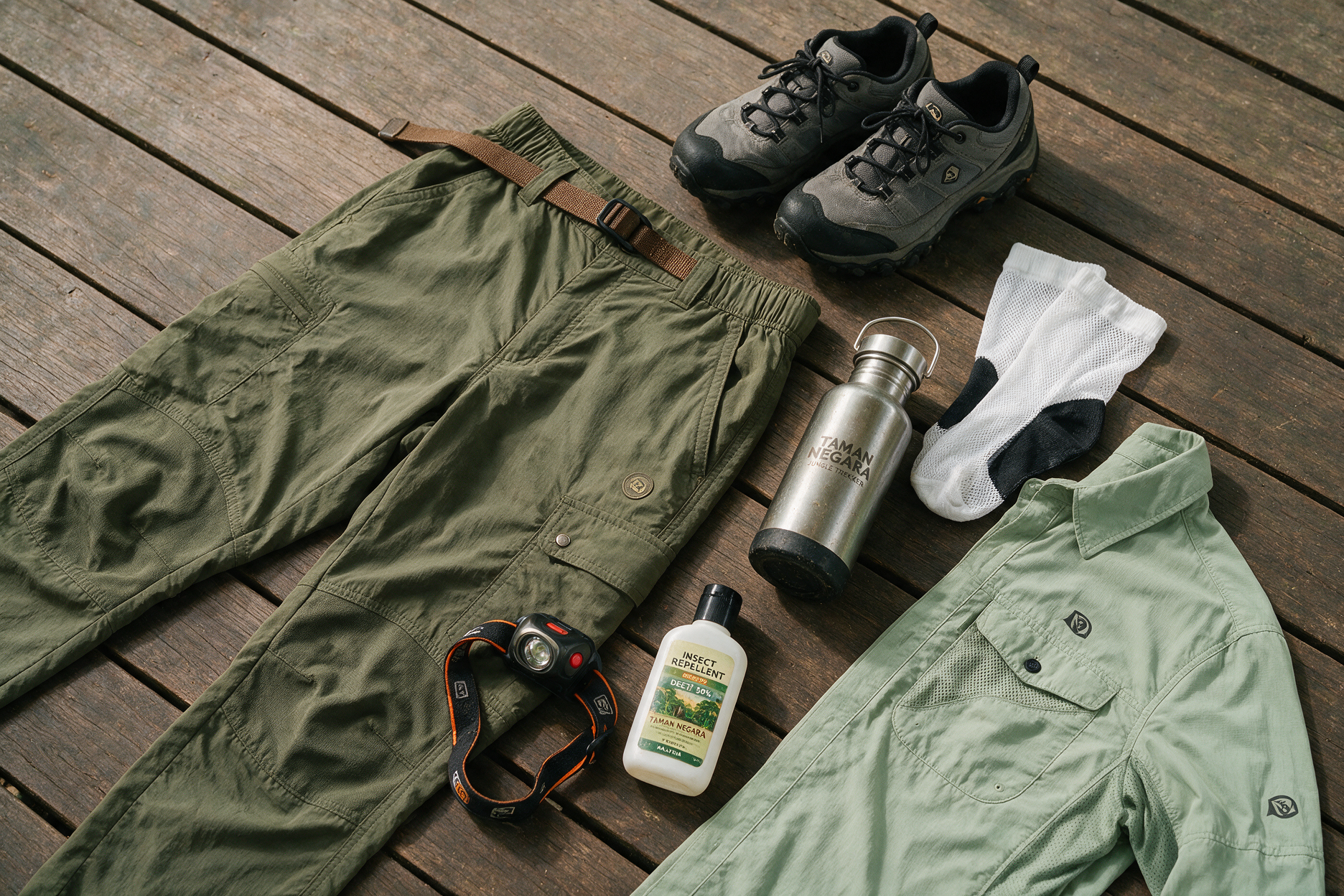
Quick-dry hiking trousers (full-length, to protect from leech bites on trail); a lightweight long-sleeve top for leech and mosquito protection; waterproof trail shoes or rubber boots (the resort provides rubber boots for wetlander trails); a headlamp for cave tours and night walks; 2L of water per person for any half-day or longer hike; high-DEET insect repellent.
Leeches are present on most jungle trails, particularly after rain. They’re harmless (the bite is painless and not disease-transmitting at Taman Negara’s common species) but disconcerting if you’re not expecting them. Salt or insect repellent causes them to detach. Don’t yank — you’ll leave the jaw behind.
Langkawi Beach and Water Activities
Rashguard or long-sleeve swim top for sun protection during extended water time. Quick-dry towel if you’re doing multiple beach days (hotel towels aren’t always available poolside and beachside). Waterproof bag for valuables during boat tours. Reef-safe sunscreen specifically — Langkawi’s marine park areas request it.
Penang Heritage Walking
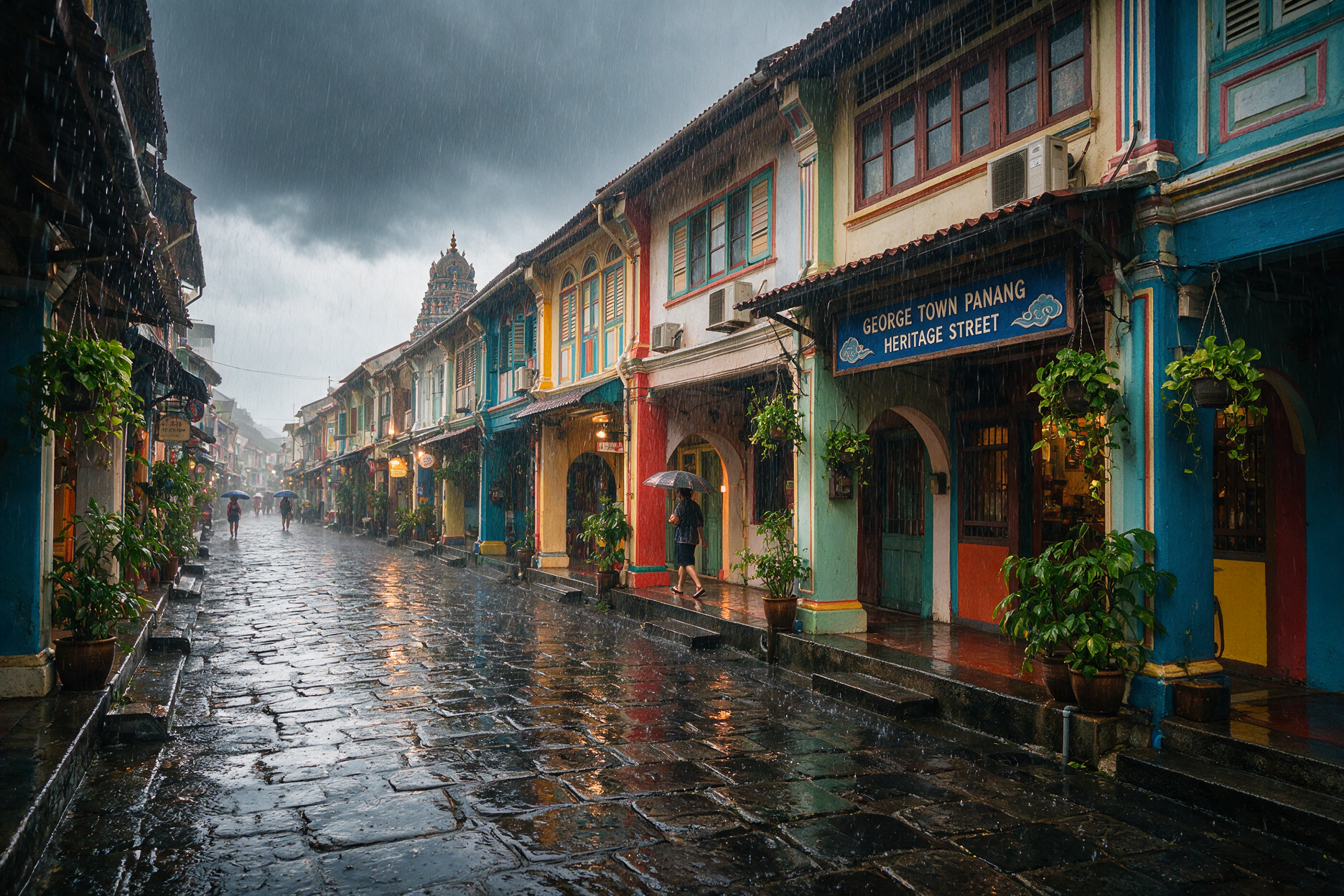
Comfortable walking sandals that handle 4–6 hours of cobblestones. A light daypack with water and snacks — George Town’s street art is spread across a wide area and the hawker stalls are clustered. Portable phone charger; you’ll use a lot of battery on photos and Google Maps navigation.
Notes for Indian Travelers Specifically
A few items that Indian travelers either bring unnecessarily or leave behind when they’d be useful:
Don’t overpack formal wear. Malaysia’s restaurant dress code is “smart casual” at most mid-range venues and “whatever you want” at hawker stalls. The rare exception is a rooftop bar or casino at Genting — those may enforce a no-shorts, no-slippers policy. A single pair of clean trousers handles this.
Do bring a handheld fan or neck fan. These have become genuinely useful travel items in tropical climates. Walking George Town’s heritage lanes at 2 PM in May is more tolerable with one. Inexpensive; takes almost no bag space.
Indian medicines work differently here. The humidity affects how quickly tablets absorb and how medications affect you in some cases. Keep your prescription medication in its original packaging; Malaysian customs occasionally questions loose tablets.
Currency note: Indian rupees are not accepted anywhere in Malaysia and cannot be exchanged at most banks or airport counters. Exchange to Malaysian Ringgit (MYR) before leaving India (Thomas Cook, BookMyForex, or your bank) or at the KLIA forex counter on arrival. Forex in Malaysia is easy to find but rates at airports are higher than city centers.
What to Leave at Home
- Heavy jeans: The weight and drying time in tropical humidity make them impractical. Pack one pair if you genuinely can’t travel without them; leave the rest.
- Multiple pairs of formal shoes: One clean pair of enclosed shoes covers everything you need. Heels are not practical on heritage cobblestones anywhere in this itinerary.
- Full-size shampoo and toiletries: Malaysian pharmacies (Watson, Guardian) are well-stocked. Buy what you need on arrival. Exception: if you use specific products not widely available.
- Travel guide books: Google Maps offline and GetYourGuide do everything a Lonely Planet does, more currently. Save the weight.
FAQs
Is Malaysia hotter than India in general?
KL and coastal Malaysia are more consistently hot and humid than most Indian cities — there’s less temperature variation between morning and night (maybe 4–5°C range versus India’s larger swing in most seasons). Mumbai in May/June is comparable. North Indian travelers accustomed to 40°C dry heat sometimes find tropical humidity harder to manage than expected, despite the lower peak temperature.
What kind of bag is best for Malaysia?
A 40–50L backpack or a rolling carry-on work equally well for the KL–Penang–Langkawi circuit. For Taman Negara, a backpack is significantly easier than a roller on the forest trails and boat jetties. If you’re doing both city and jungle, consider a 55L backpack with organizational pockets as a single-bag solution.
Do I need a rain jacket or is an umbrella enough?
For KL and Penang: a compact umbrella is sufficient and lighter. For Taman Negara and highland walks: a packable waterproof jacket is better — you need both hands free on uneven terrain.
What should I not bring to Malaysia?
Anything you’d be upset to lose to a pickpocket, monsoon rain, or an enthusiastic macaque at Batu Caves. Malaysia’s malls and pharmacies supply most things — travel lighter than you think you need to.
Pack Right, Travel Better
The right gear is a foundation; the itinerary it supports is the actual trip. Get Tripped’s Malaysia packages are built around the reality of Malaysian travel — cities in the right order, the right amount of time at each stop, and accommodation in the neighborhoods where the experience actually lives. Explore Malaysia itineraries here and let us know what you’re planning; we’ll match it to the right trip.