Malaysia Public Transit Guide: How Indian Travelers Get Around by Train, Bus, and Ferry
Malaysia’s public transport is better than its reputation suggests — at least in Kuala Lumpur. The capital has a network of MRT, LRT, and monorail lines that connect most tourist areas without requiring taxis or ride-shares for every move. Outside KL, the picture is more variable: Penang has a decent bus system, Langkawi runs on taxis and motorcycles, Malacca is small enough that a trishaw and your feet cover most of it, and Taman Negara is reached by boat. This guide covers what actually works, what requires planning, and what’s better replaced with Grab.
One thing to know upfront: KL’s multiple rail systems look confusing on a map because they are multiple systems — MRT, LRT, Monorail, KTM, KLIA Ekspres — run by different operators. In practice, they connect at major interchange stations and a single Touch ‘n Go card works across almost all of them.
Contents
- Touch ‘n Go: The Card That Runs Malaysia
- KL Rail Network: MRT, LRT, Monorail
- KL Sentral: Your Transit Hub
- Getting from KLIA/KLIA2 to the City
- Grab: When Rail Doesn’t Reach
- Getting Around Penang
- Getting Around Malacca
- Getting Around Langkawi
- Getting to Genting Highlands
- Getting to Taman Negara
- Between Cities: Buses, Trains, Ferries
- FAQs
Touch ‘n Go: The One Card You Need
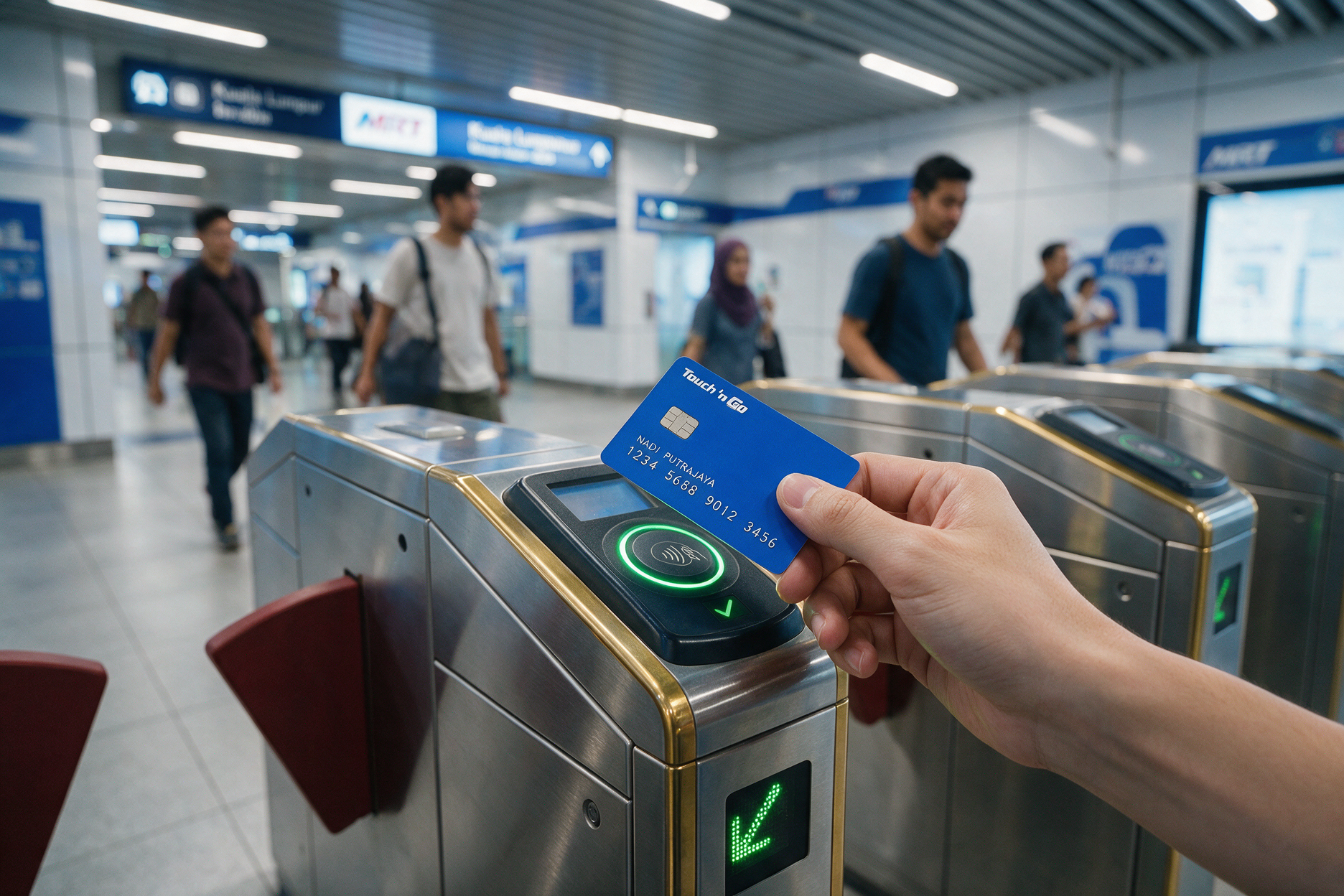
The Touch ‘n Go card is Malaysia’s unified transit payment card — it works on the MRT, LRT, Monorail, KTM Komuter, Rapid Penang buses, and most highway tolls. Think of it like Delhi’s Metro card or Mumbai’s local train pass, but covering a wider network.
Get one at any KL rail station, 7-Eleven, or major convenience store. The card itself costs RM 10 (non-refundable), and you load credit separately — RM 50 is a reasonable starting load for a week in Malaysia. The TNG Digital app allows you to reload using international credit/debit cards, which is convenient. RFID-capable cards also work on expressways if you rent a car, though that’s a separate consideration.
For Indian travelers used to UPI payments: Touch ‘n Go is still predominantly a physical card system for transit. Some stations have QR payment options but physical card is the reliable method. Load the card with cash at the station top-up machines — they accept RM 5, RM 10, and RM 50 notes.
KL Rail Network: What Goes Where
KL’s rail map looks intimidating but reduces to a few key lines for tourists:
MRT (Mass Rapid Transit)
Two operational lines plus a third in progress. The Putrajaya Line (blue on maps) runs from Kwasa Sentral in the northwest through the city center and down to Putrajaya in the south — it passes through Semantan (connection to Damansara area), Muzium Negara, and Merdeka stations. The Kajang Line (pink) connects Sungai Buloh in the northwest to Kajang in the southeast, passing through key stations like Semantan, Pasar Seni (Chinatown area), and Maluri. MRT is the newest and most comfortable rail option in KL — air-conditioned, signage in English, reliable schedules.
LRT (Light Rapid Transit)
Two lines: Kelana Jaya Line and Ampang/Sri Petaling Line. The Kelana Jaya Line (red) is the one most visitors use — it connects Kuala Lumpur station (near Chinatown) through Masjid Jamek and KLCC (Petronas Towers station) to Kelana Jaya. The Ampang Line serves more residential areas. Both use Touch ‘n Go.
KL Monorail
The single elevated loop line that cuts through Bukit Bintang (the hotel and shopping district), KL Sentral, and points between. Only 11 stations, but it’s the quickest way to move between the tourist and hotel belt. Slightly older trains than the MRT; still fine for a short hop.
KTM Komuter
Surface rail connecting KL Sentral to Pelabuhan Klang and northward to Rawang. Less relevant for standard tourist routes but useful for reaching some suburban areas. Also uses Touch ‘n Go.
The best single reference is Google Maps — it integrates all KL rail lines accurately, shows real-time departures, and gives transit options with walking directions between stations. Download offline maps of KL before you arrive.
KL Sentral: The Hub That Everything Runs Through
KL Sentral is the main interchange station in the capital — all rail lines except the KLIA Ekspres either stop here or connect within a 5-minute walk. The station mall has convenience stores, ATMs, forex bureaus, food options, and the Grab pickup zone for the central city.
Connections from KL Sentral include: the KLIA Ekspres to both airport terminals; the ETS train to Penang (Butterworth) and other north-south destinations; the Monorail into Bukit Bintang; the Kelana Jaya LRT into the KLCC/Petronas Towers area; and multiple bus lines.
If you’re staying in the Bukit Bintang hotel belt, the Monorail from Bukit Bintang station to KL Sentral is about 10 minutes and RM 2.50 — easier than any taxi at rush hour.
Getting from KLIA/KLIA2 to the City
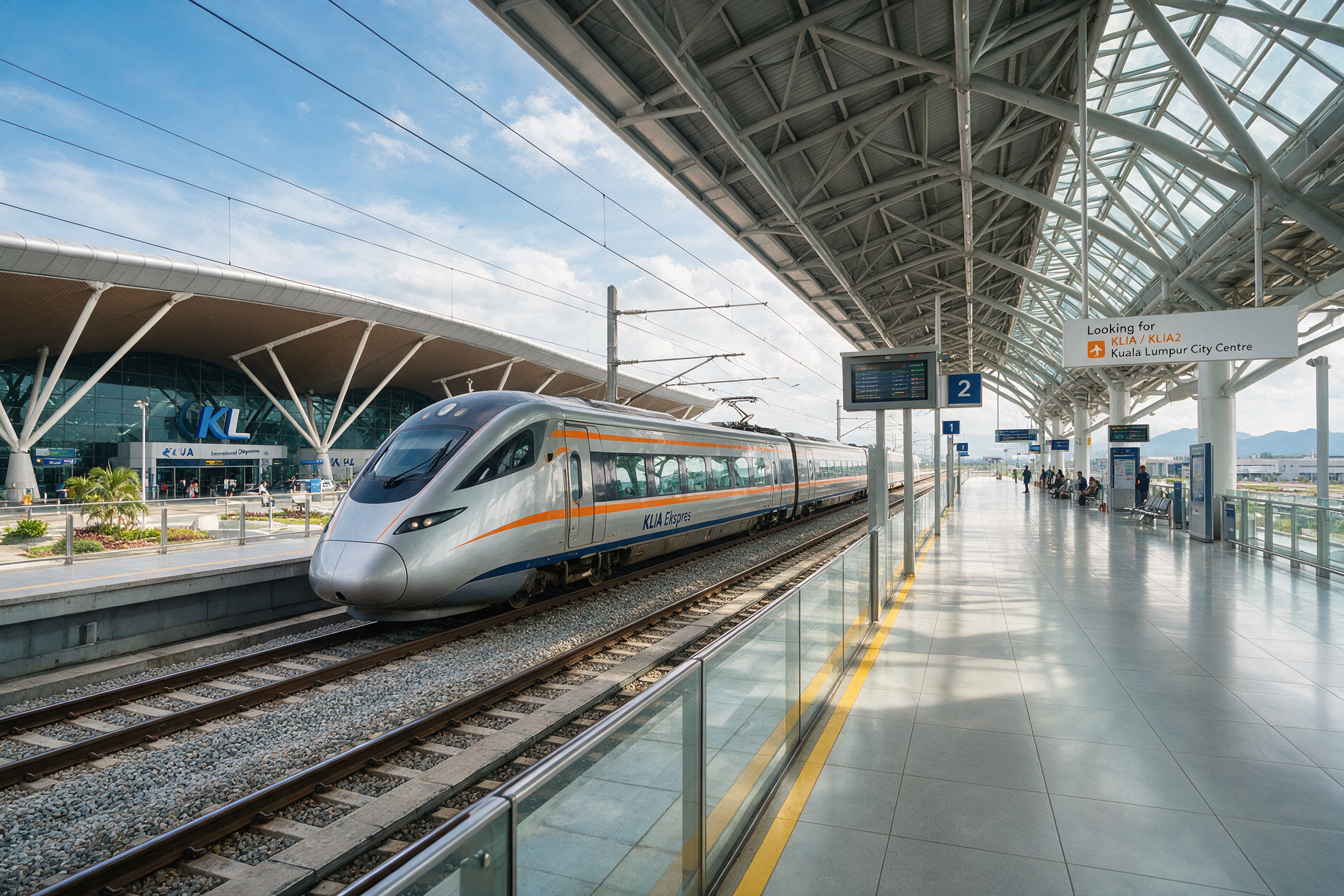
KLIA Ekspres (recommended): the dedicated airport rail link from KLIA and KLIA2 terminals to KL Sentral. 28 minutes, runs every 15–30 minutes, costs RM 55 from KLIA or RM 35 from KLIA2. It doesn’t stop anywhere between the airport and KL Sentral, which makes it faster than any road option during traffic hours. Buy tickets at the station counter or online in advance at kliaekspres.com.
Taxi/Grab: Official taxis from KLIA use a prepaid coupon system purchased at the taxi counter in the arrivals hall. Budget RM 70–100 depending on destination. Grab is available from the rideshare zone — usually cheaper than a taxi and you know the price upfront. However, during peak hours or late night, the KLIA Ekspres is consistently faster because it bypasses highway traffic.
Mistake to avoid: taking an “airport taxi” offered by someone in the arrivals hall rather than the official prepaid counter. These unlicensed taxis charge what they can get; the official counter is 3 minutes further into the building and significantly cheaper.
Grab: Malaysia’s Default Ride-Share App
Grab works across all Malaysian cities covered in this guide. Download it before you arrive and set up payment with your Indian debit/credit card — it accepts Visa, Mastercard, and some wallets. Pricing is upfront, drivers are rated, and in KL the waiting time is typically 3–8 minutes.
In Penang, Langkawi, and Malacca, Grab is often the most practical option for any trip that doesn’t fit the local bus network. It’s not as cheap as KL (fewer drivers means slightly higher prices), but it’s reliable. The one area it occasionally struggles is Taman Negara and remote jungle areas — there, you’re working with the resort’s transport options or negotiating with local taxi drivers.
Getting Around Penang
George Town — Penang’s main tourist area — is compact enough that most of it is walkable in the good-weather hours (before 11 AM and after 4 PM). A half-day on foot from Lebuh Farquhar through the heritage lanes to Komtar covers the main sights.
Rapid Penang buses: the island’s public bus network, operated by Rapid Penang. Route 101 connects the ferry terminal, Komtar, and Gurney Drive — the main tourist artery. Fare is RM 1.50–4 depending on distance. The buses are air-conditioned and reliable on the main routes; less frequent on secondary routes. You can use Touch ‘n Go on Rapid Penang buses.
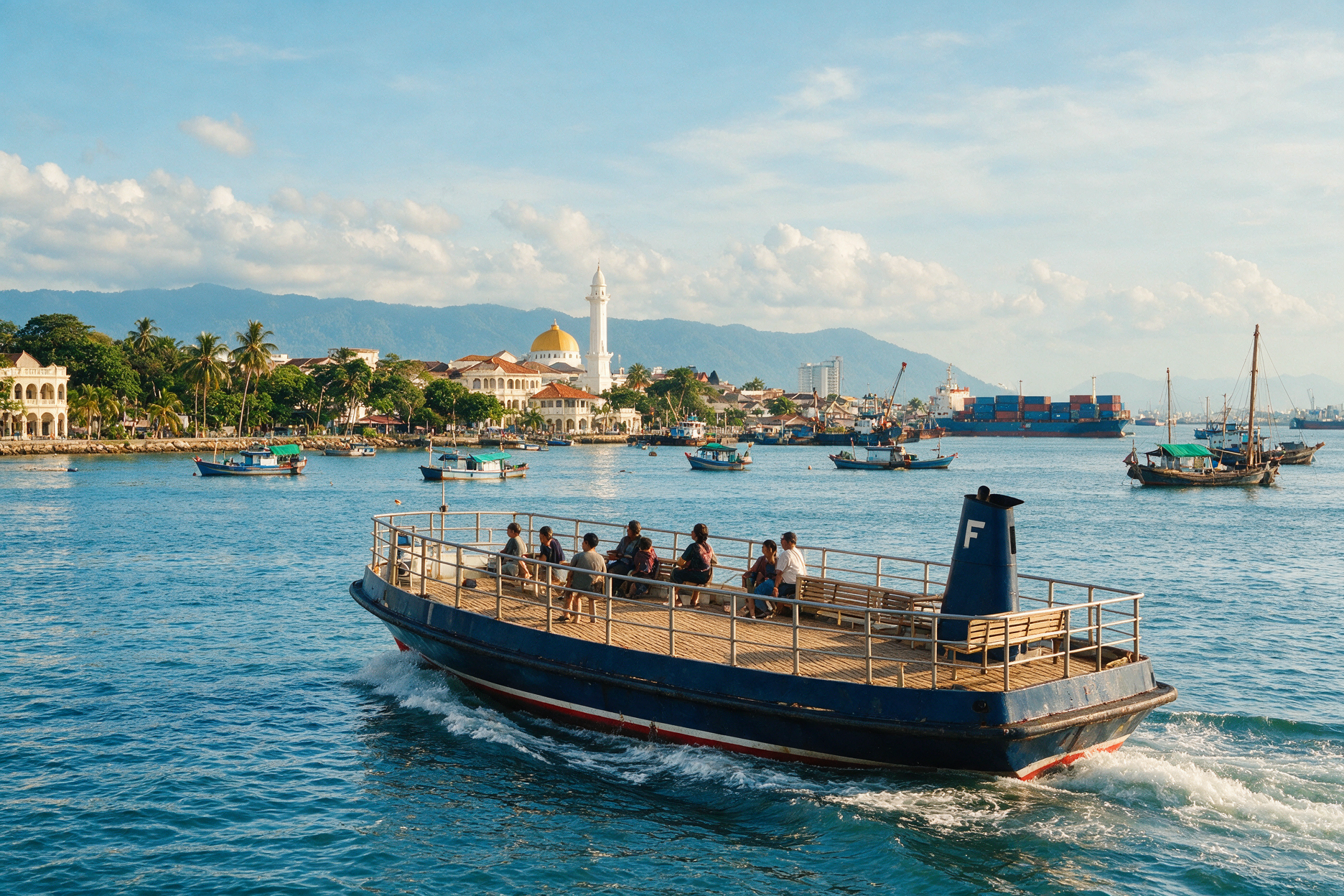
Penang Ferry: the car and passenger ferry between Butterworth on the mainland and George Town runs frequently and costs RM 1.20 for pedestrians. It’s the cheapest way to arrive from the mainland (via train to Butterworth, then ferry) and the crossing itself — 15 minutes with views of the port and the George Town skyline — is one of the low-key pleasures of the city.
Grab: works well in Penang for anywhere outside the walkable heritage core. For Penang Hill (Air Itam) or Batu Ferringhi (the northern beach), Grab is faster and more convenient than the bus.
Getting Around Malacca
Malacca’s historic center is small. From the Dutch Stadthuys square to Jonker Street is a 5-minute walk; to Jalan Bendahara and the Indian quarter, another 10 minutes. Most visitors cover the entire heritage zone on foot in half a day.
Trishaw (Beca): Malacca’s decorated cycle rickshaws are a tourist experience in themselves — the drivers customize their trishaws with elaborate flower arrangements, LED lights, and audio systems playing pop music at considerable volume. A short trishaw ride is RM 40–60 and covers the main historical sites. It’s not the cheapest transport, but it’s the most Malacca-specific way to see the heritage streets.
Red Town Bus: Malacca’s free shuttle bus loops through the town center and connects some of the further sites. Limited in scope but useful for reaching Jonker Street from the bus terminal if you arrive by intercity bus.
Getting Around Langkawi
Langkawi is where the integrated public transport network largely stops. The island has no train and limited bus service. Most visitors rent a car (international driving license required), hire a taxi, or use Grab.
Car rental: available at the airport and in Kuah town. Rates are RM 80–150 per day for a basic automatic. Roads are good and traffic is light outside of Kuah. Recommended if you want to explore the island at your own pace.
Motorcycle rental: RM 30–50 per day for a scooter. Popular with younger travelers; requires familiarity with left-hand traffic and awareness of road conditions on secondary roads.
Taxi: the fixed-rate taxis at Langkawi airport serve the main tourist areas. Rates are posted; stick to them. The taxi drivers know the island well and can be hired for island tours at a negotiated daily rate of RM 150–200 — this is actually good value if you want to cover Tanjung Rhu, the mangrove area, and a few viewpoints in a single day without driving yourself.
Grab: available in Langkawi but less reliable than in KL — fewer drivers means longer wait times, and some areas (particularly the northern end of the island) have spotty coverage. Don’t rely on it as your only plan for getting back from a remote beach.
Getting to Genting Highlands
The standard route from KL is by coach from the KL Sentral bus terminal — First Coach operates frequent services for around RM 10–15 each way, taking about an hour. The coaches drop you at the Genting Skyway cable car terminal in Gohtong Jaya, and from there the SkyCable (gondola) takes you up the mountain to the resort (RM 10 each way, runs regularly).
An alternative: the Awana SkyWay gondola, which runs from a station accessible from the resort’s lower levels and has better views of the forested hillside. Worth considering for the descent if you want a different perspective.
Getting to Taman Negara
Taman Negara requires the most planning of any destination on the Malaysia tourist trail. The standard route:
- Bus from KL’s Hentian Duta terminal or Puduraya to Kuala Tembeling (3–4 hours, around RM 30)
- Boat from Kuala Tembeling jetty to Kuala Tahan (the park entrance village), 3 hours upstream on the Tembeling River (around RM 45 each way)
The boat journey is part of the experience — you’re moving through primary jungle the entire way, the river narrows as you go upstream, and the sound of the jungle replaces the sound of traffic. It departs at fixed times (typically 9 AM and 2 PM from Kuala Tembeling); check current schedules with Mutiara Taman Negara Resort when you book.
Alternative: some tour operators offer a faster van-and-boat combination that cuts the boat section to about 1 hour. This is faster but sacrifices the river approach, which is genuinely beautiful. The full 3-hour boat is worth it if you have the time.
Between Cities: The Best Connections
- KL to Penang: ETS train from KL Sentral to Butterworth (3.5–4 hours, RM 80–120 in Premier class) or AirAsia/Malaysia Airlines flight (50 min, from RM 80). The train arrives in Butterworth and requires a 15-minute ferry to George Town. If flying, Penang International Airport is walkable to the ferry terminal for the harbor crossing. The train is scenic; the plane is faster.
- KL to Malacca: Express bus from Puduraya or Hentian Duta (RM 10–15, 2–2.5 hours). No train to Malacca city center. Catch buses from Malacca Sentral terminal.
- Penang to Langkawi: Ferry from Swettenham Pier Georgetown (RM 60–70 one way, 2.5–3 hours) or AirAsia flight (50 min). Ferry schedules are seasonal — check with Langkawi Ferry Service.
FAQs
Can I use UPI or Indian mobile wallets in Malaysia?
Not directly. Some merchants in tourist areas accept PayNow (Singapore’s equivalent) which has limited UPI interoperability, but this isn’t reliable. Load a Touch ‘n Go card with cash for transit, use international Visa/Mastercard for hotels and restaurants, and carry some MYR cash for hawker stalls and smaller shops.
Are KL taxis metered?
Official taxis are metered, but not all drivers use the meter — some prefer to negotiate a fixed price, which is almost always higher than the meter would show. Grab eliminates this problem entirely: the price is fixed and visible before you confirm the ride. Use Grab in KL and the taxi/Grab hybrid approach in smaller cities.
Is the KLIA Ekspres worth the cost compared to a taxi?
Yes. At RM 55 versus a taxi’s RM 70–100+, the train is comparable in cost and significantly faster during traffic hours. It’s also a more comfortable start to a trip than sitting in highway traffic. The only case for a taxi over the Ekspres is if you’re traveling with a lot of luggage to a hotel not near a rail station — in that case, Grab from KL Sentral is still usually better than a taxi directly from the airport.
Do Grab drivers speak English in Malaysia?
Generally yes — enough to navigate the trip. All major cities have drivers comfortable with English-speaking passengers. In Taman Negara and very rural areas, the common language is Malay; your resort can help arrange transport if needed.
Get Around Malaysia the Smart Way
Knowing the transit system before you arrive saves you the first-day confusion of figuring out which rail line goes where and what card to buy. The KL rail network is genuinely efficient — use it, save on Grab, and you’ll have more MYR left for the food and the experiences that actually matter.
Get Tripped’s Malaysia itineraries are built with real transit logistics in mind — we don’t plan trips that require three connections to reach a hotel. See what we have ready for your Malaysia trip here.