A Day in Taman Negara: Hour-by-Hour in Malaysia’s 130-Million-Year-Old Rainforest
Taman Negara is older than almost everything you can name. At 130 million years old, it was here when dinosaurs were still active and the Indian subcontinent was still drifting north toward Asia. The claim appears on every piece of Taman Negara marketing and it’s worth sitting with for a moment — not because it makes the trees taller or the jungle quieter, but because it reframes your relationship to the place. You’re not visiting a nature reserve. You’re walking through one of the few pieces of the original world that remained intact.
The national park covers 4,343 square kilometres of Pahang state, about 3.5 hours from Kuala Lumpur by road. It’s big enough that even during peak season — school holidays, December–January — you can find trail sections where you’re entirely alone with the sound of the forest. The catch is that most day-trippers do exactly one circuit: canopy walkway, Bukit Teresek viewpoint, maybe a boat ride. Which is fine, but it leaves the better parts untouched.
If you have one day — either as a standalone excursion from KL or as part of a longer Malaysia itinerary — here’s how to use it.
Table of Contents
- Getting There
- 6:30am – 10:00am: The Forest at Dawn
- 10:00am – 12:30pm: Canopy Walkway and Bukit Teresek
- 12:30pm – 2:30pm: Lunch and the River
- 2:30pm – 5:00pm: Short Jungle Trekking
- 7:00pm – 9:00pm: Night Safari
- Practical Information
- Mistakes to Avoid
- FAQs
Getting There
Most visitors arrive at the main park entrance at Kuala Tahan village, either by private vehicle or through a tour. From KL, the drive is roughly 250km (3–3.5 hours via the Karak Highway). The road through Pahang winds through palm oil plantation and secondary jungle before the entrance, and the last 20km is narrow enough to keep speeds honest.
The alternative is the river: a bus from KL to Jerantut, then a riverboat from Jerantut to Kuala Tahan — about 5–6 hours total, but the river section (2.5 hours) is its own experience. If you have two days and aren’t in a rush, this is the better arrival.
For most Indian travelers doing Taman Negara as a day trip from KL: a private hire or guided day tour is the most practical option. Tours typically run RM 200–350 per person including transport, entrance fees, and a guided jungle walk. Individual arrangement (rent a car, pay entrance separately) works out similar cost-wise but gives you more flexibility.
Entry: Park permit (RM 1), camera permit (RM 5), and separate fees for specific activities (canopy walkway RM 5, boat hire etc.). The total fees are modest — the cost of a Taman Negara day is mainly transport.
6:30am – 10:00am: The Forest at Dawn
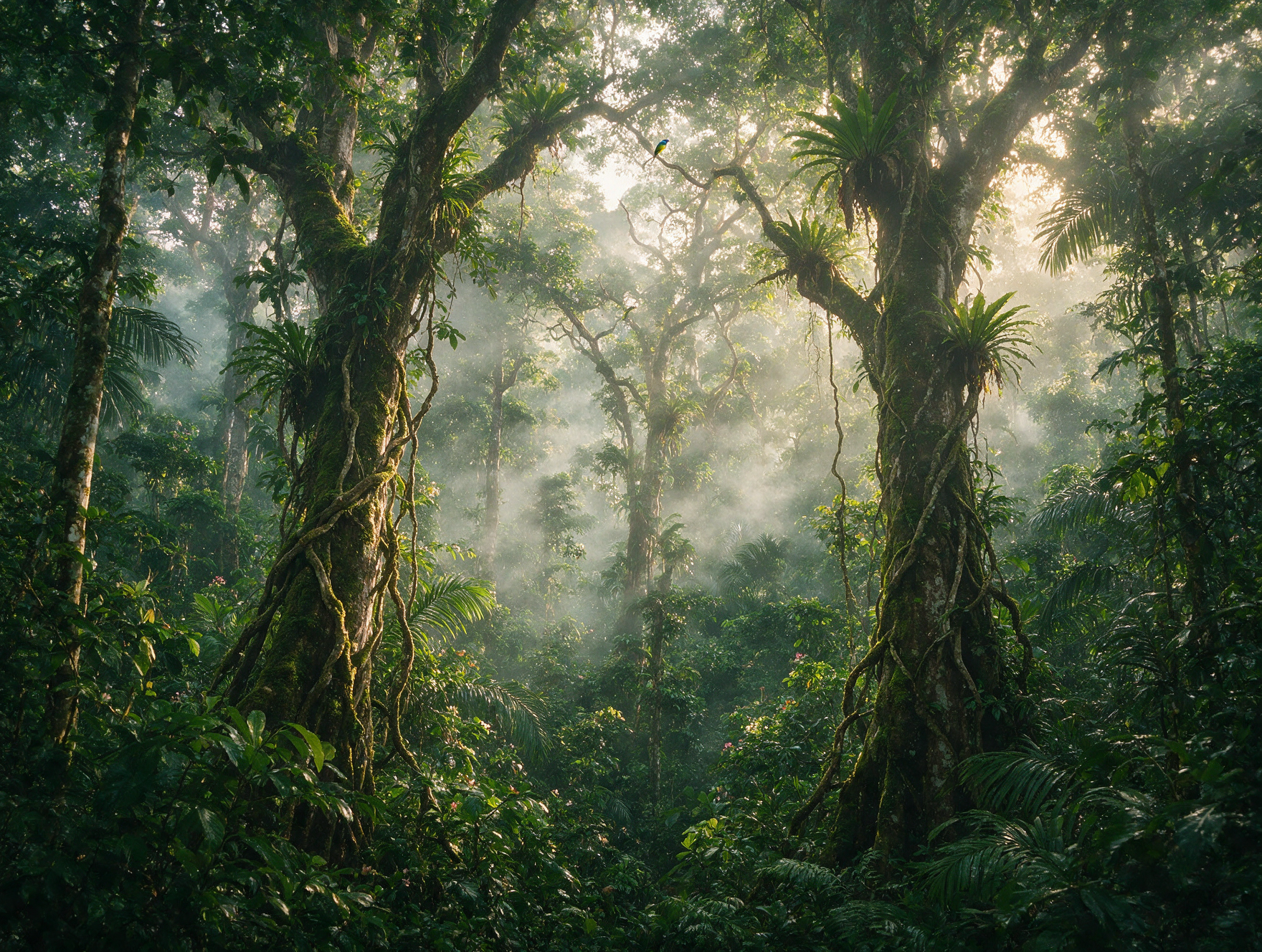
The forest at dawn is a different place from the forest at 10am. By midday, Taman Negara’s humidity and the noise of other visitors layer over the experience. At dawn, neither of these has arrived yet.
The first-light activity that earns its early alarm: birdwatching on the trail toward Bumbun Cegar Anjing (one of the hides built for wildlife observation). This is a flat, well-maintained path of about 1.7km from the park headquarters. You don’t need a guide for this section. Bring binoculars if you have them. The birds that move at dawn include hornbills (often audible before they’re visible — the wingbeat is unmistakable), kingfishers along the Tembeling River, and a rotating cast of bulbuls and sunbirds in the understorey.
Wildlife encounters outside birdwatching are possible but not reliably scheduled. Taman Negara has wild tigers, elephants, and tapirs — this fact appears in all the brochures. In practice, seeing any of these on a day visit requires a combination of luck, patience, and being in the right part of the park (usually deeper sections that day-trippers don’t reach). Don’t build your itinerary around a large mammal sighting. Be genuinely surprised if it happens.
By 8am, have breakfast at Kuala Tahan village — there are several small restaurants serving nasi lemak, roti canai, and coffee. Prices are higher than in KL (this is a tourist area in a remote location) but not unreasonable. RM 15–20 for a solid breakfast.
10:00am – 12:30pm: Canopy Walkway and Bukit Teresek
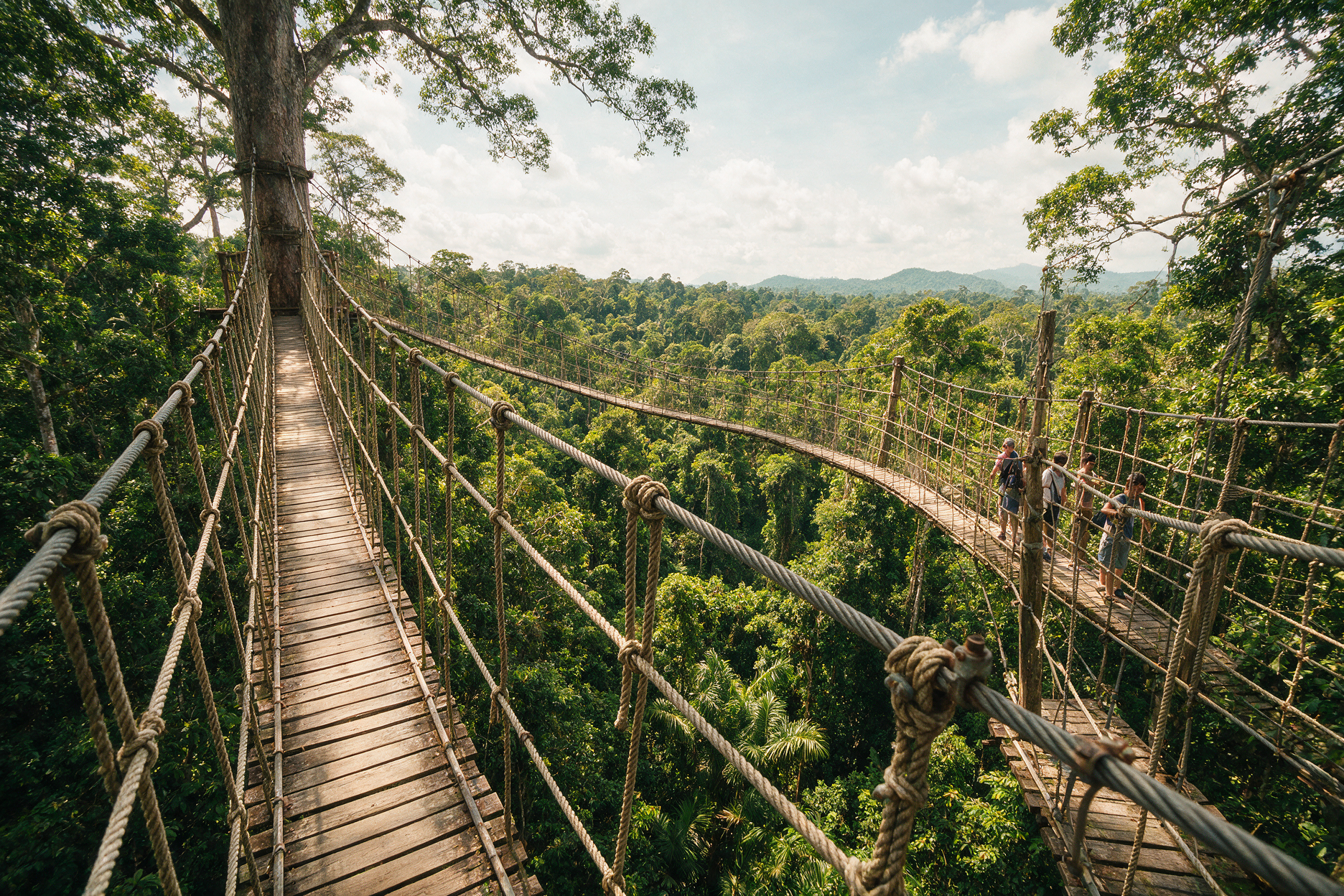
The canopy walkway is the most famous attraction in Taman Negara and is genuinely worth doing. It’s one of the longest suspension bridge canopy walks in the world — 530 metres of connected rope bridges suspended up to 40 metres above the forest floor. Mornings have lighter crowds. The walkway can get uncomfortably narrow and crowded later in the day.
What to expect: the bridges sway slightly with movement, which unsettles some people more than expected. They’re safe (weight-tested, regularly maintained) but if you have a significant fear of heights, this is worth thinking through before you’re standing at the entrance. The view from the canopy level is genuinely unlike anything you see from the ground — the forest floor is hidden beneath layers of upper-storey and mid-storey canopy, and the scale of the trees only becomes apparent when you’re alongside them rather than under them.
After the walkway, the trail to Bukit Teresek adds about 1 hour of moderate climbing (344 metres elevation, though the trail gains height in sections rather than continuously). The viewpoint at the top gives you a panorama over the Tembeling River valley and, on clear mornings, visibility across kilometres of unbroken primary forest. The hike back down to park headquarters takes about 45 minutes.
Combined, this section — walkway plus Bukit Teresek and back — is 2.5 to 3 hours of activity. Wear proper shoes. The path after rain is muddy in several sections. A light rain jacket is more useful than an umbrella in the jungle.
12:30pm – 2:30pm: Lunch and the River
After a morning of forest walking, a river boat is the correct midday activity. The Tembeling River runs along the edge of the park, and boat rides are available at the jetty near park headquarters for RM 20–30 per person for a 30–45 minute circuit. The boats are motorised longboats — noisy, fast, and with a clear view of the river banks where monitor lizards sun themselves on rocks and the occasional otter shows up where rivers meet.
Lunch first, though. The village restaurants at Kuala Tahan all serve similar Malay and Chinese staples. The standout (according to local guides and not any particular guide book) is the noodle soup at the small restaurant near the boat jetty — simple, properly made, and exactly what you want after a jungle morning. Expect to pay RM 12–18 for a meal with a drink.
One more thing about the river: the crossing to Kuala Tahan village is itself by small motorised boat (the park headquarters and the main village are on opposite sides of the river). The crossing takes 3 minutes and costs RM 1. You will take this crossing multiple times in a day. It’s one of those tiny functional things that accumulates into part of the texture of the place.
2:30pm – 5:00pm: Short Jungle Trekking
The afternoon slot, after the canopy walkway crowds have largely moved on, is when the short jungle trails are at their best. The marked trail network around park headquarters is well-maintained and suitable for independent trekking without a guide. The Lubok Simpon trail (about 2.5km) reaches a swimming hole on the Tahan River — popular with locals and staff, almost always clear water in the dry season.
For a guided experience, Orang Asli cultural demonstrations are organised by some operators and involve meeting members of the Batek people — the indigenous inhabitants of this forest who have lived here for tens of thousands of years. The demonstrations are what they are (formal, somewhat staged), but the underlying knowledge these communities carry — plant medicine, animal tracking, fire-making — is genuinely remarkable and not reducible to a 45-minute session. If you’re doing this, go in with respectful curiosity rather than a tick-box tourism mentality.
The afternoon jungle also produces interesting photography. The light through forest canopy in the afternoon has more contrast than morning — shafts through gaps, deep shadows, the green that only exists in primary tropical forest. A phone camera handles it well if you understand exposure compensation.
7:00pm – 9:00pm: Night Safari
This is the part most day-trippers skip because it extends the visit into the evening — and it’s also the best part. The forest at night in Taman Negara is categorically different from the daytime experience. The large mammals that don’t move during the day are active. The soundscape shifts completely. Insects and frogs produce noise levels that are almost comical after the relative quiet of the afternoon.
Night safaris run from Kuala Tahan by boat along the river bank, spotlighting the undergrowth for nocturnal animals. You’re likely to see deer, civets, flying squirrels, possibly an elephant if you’re in the right river section (upstream from the main dock). The guides who run these know the river well and know which bends are productive at what times of year.
Cost: RM 35–50 per person for a 2-hour guided boat safari. Book through your accommodation or at the jetty — they fill up in season (December–January) and are easy to walk onto otherwise.
A fun fact worth knowing: Taman Negara has the largest cave passage in the world — Gua Tebu, accessible from the park but requiring an overnight stay and ranger escort. The 11-kilometre underground river passage is not on the day-trip circuit. It’s mentioned here because it illustrates how much of this forest remains effectively unreachable on a single day. One day in Taman Negara is an introduction, not a conclusion.
Practical Information
Best time to visit: March to October is the dry season in Pahang (where Taman Negara sits). November to February is wetter, with some trails becoming muddy and river levels higher — the jungle is still accessible but the experience changes. School holiday peaks (June and December) bring Malaysian domestic tourists in large numbers. March–May and August–September have the best combination of weather and manageable crowd levels.
Accommodation: If doing more than a day trip, Mutiara Taman Negara (the main park resort) offers chalets from RM 250–450/night. Budget dorm accommodation is available in Kuala Tahan village for RM 40–80/night. For overnight visitors, the experience of the night forest from a deck outside your chalet justifies staying at the park proper rather than the village.
Health: Taman Negara is in a malarial zone — anti-malarial precautions are recommended for stays of more than a few hours (malaria prophylaxis for overnight; DEET-based insect repellent for day trips). Bring water purification tablets if you’re planning longer trails. Leeches are common after rain — not dangerous but persistently annoying. Locals recommend long socks tucked into shoes. Saltwater on the leech is the removal method of choice.
What to bring: Water (at least 2 litres per person), insect repellent, hat, sunscreen for the river boat portion, lightweight rain jacket, proper walking shoes (not sandals). Leave everything non-essential at your accommodation — you don’t want to be carrying a heavy pack on forest trails.
Mistakes to Avoid
Underestimating the heat and humidity: Even in the dry season, Taman Negara’s interior is hot and humid in a way that outdoor activity in Indian cities doesn’t entirely prepare you for. Pace yourself, hydrate consistently, and don’t plan the most demanding hikes for the middle of the day.
Skipping the night safari to catch the early drive back to KL: The night safari is the most distinctive thing Taman Negara offers that you can’t replicate at other parks. If you’re there for a day, stay until 9:30pm and drive back at night. The extra three hours change the whole impression of the place.
Expecting wildlife like a safari: Taman Negara is a tropical rainforest, not a savannah game park. Dense vegetation means most wildlife is heard rather than seen, and sightings are genuinely unpredictable. The forest is the experience, not just the animals in it.
FAQs About Taman Negara
How far is Taman Negara from Kuala Lumpur?
About 250km by road, typically 3–3.5 hours depending on traffic. Most tour operators from KL leave early (6am–7am) to maximise time in the park. By public transport, it’s a bus to Jerantut followed by a riverboat — about 5–6 hours each way, which makes it more practical as an overnight trip.
Is Taman Negara safe for solo Indian travelers?
Yes. The park is well-managed, the main trails are clearly marked, and there are park rangers throughout. Trail safety is not a concern for the main circuits around park headquarters. For more remote trails and overnight camping, a licensed guide is required — the park enforces this reasonably strictly.
What should I expect from the canopy walkway?
Height (up to 40 metres), some sway, and potentially crowds if you go at peak time. The walkway is not challenging in a physical sense — it’s slow walking on a narrow suspended bridge. One section of the crossing has more pronounced sway than others. If your group includes people who are nervous about heights, note that there’s no intermediate exit — you commit to the full crossing when you start.
Can children do Taman Negara?
Yes, with the right preparation. The main circuit (canopy walkway and Bukit Teresek) is manageable for children aged 8 and above with good walking shoes. The night safari is suitable for children of any age (it’s on a boat). Younger children may struggle with the heat and the longer jungle walks. If you’re visiting with very young children, keep the day shorter and focus on the river activities.
Is Taman Negara part of a Malaysia 5-day itinerary?
It can be. A typical Malaysia 5-day itinerary for Indian travelers often includes 2 nights in KL, 1 day in Taman Negara (with overnight there or drive back), and 1–2 days in another destination like Penang or Langkawi. The Taman Negara day requires an early start and a full day — it doesn’t combine well with other activities on the same calendar day.
The 130-Million-Year Footnote
You can do Taman Negara in a day and leave satisfied. You can also go back for three days and still feel like you barely dented it. What the place offers is proportional to how much time you give it — which is true of most genuinely good destinations, but feels more true here because the scale is geological rather than architectural.
The hour-by-hour structure above is a starting point, not a template. If the morning bird watch turns into three hours because you found a productive spot, skip Bukit Teresek. If the rain comes in at noon and the river goes brown with runoff, the afternoon trail might be better than the boat. Read the forest rather than the itinerary.
Interested in building Taman Negara into your Malaysia trip? Get Tripped designs custom Malaysia itineraries for Indian travelers, including overnight stays at the park with the right level of guided versus independent time. Let’s plan it together.