Malaysia Visa Guide for Indian Travelers: Everything You Need in 2026
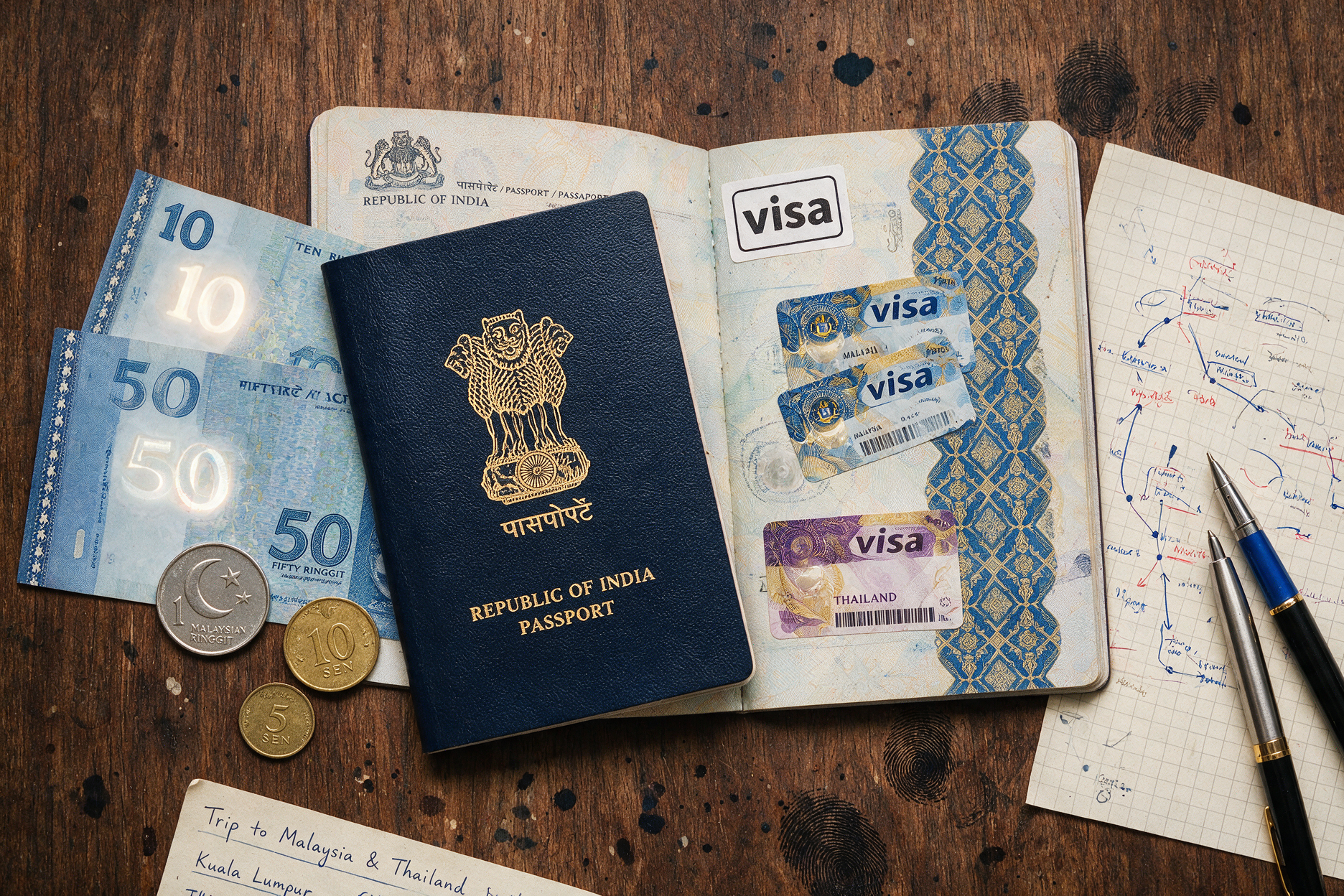
Good news first: as of 2026, Indian passport holders can enter Malaysia without a visa for stays of up to 30 days. That said, “visa-free” doesn’t mean “nothing to do before you fly.” There’s a mandatory digital arrival card, a few conditions to meet at immigration, and some fine print worth knowing before you book flights. This guide covers all of it — what’s required, what’s optional, and the one step most Indian travelers miss until the day before departure.
Malaysia has been one of the more India-friendly destinations in Southeast Asia for a while, and the current visa-free arrangement, extended through December 31, 2026, makes planning much simpler. Here’s what that actually means for your trip.
Contents
Current Visa Status for Indians: Visa-Free Until December 31, 2026
Indian nationals can enter Malaysia for tourism, business meetings, and social visits without a prior visa. The allowed stay is up to 30 days per entry. This exemption runs through December 31, 2026, at which point it may be renewed, converted to a permanent policy, or revised — check the Malaysian Immigration Department (JIM) website closer to your travel date if you’re planning a trip in late 2026 or beyond.
The transit without visa (TWOV) facility is currently suspended, so if you’re stopping in KL en route to another destination, factor that into your planning — you’ll still need to clear immigration and meet the standard entry requirements.
The MDAC: The Step Most Travelers Forget
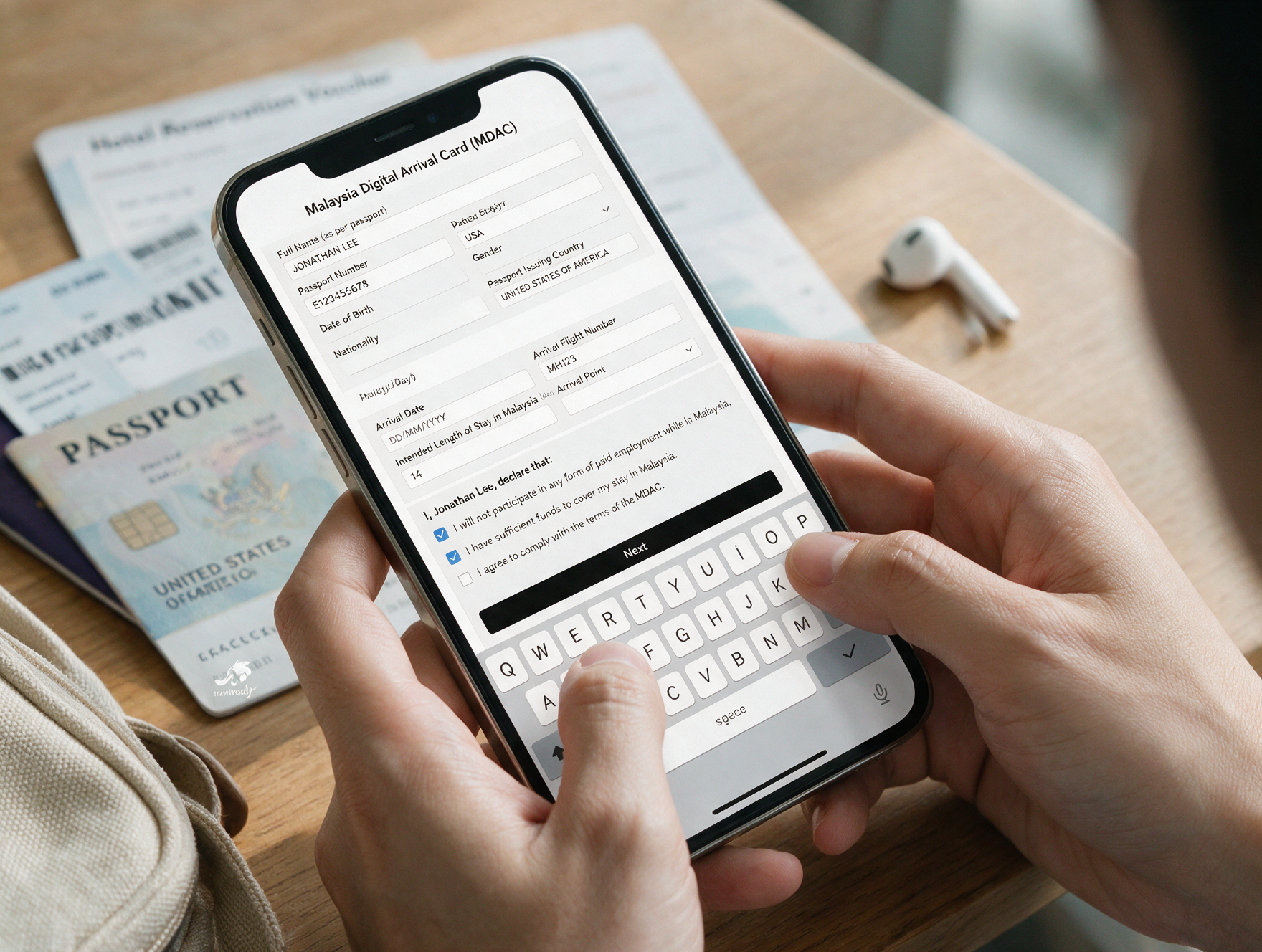
Even though you don’t need a visa, you do need to complete the Malaysia Digital Arrival Card (MDAC) before you fly. This is mandatory for all foreign nationals entering Malaysia, and the submission window is 72 hours before arrival — not 72 hours before departure, 72 hours before you land.
The MDAC is free. You submit it at the official portal linked from the Immigration Department’s website. You’ll fill in your passport details, flight information, and Malaysian address (hotel name is fine). Once submitted, you’ll get a QR code — screenshot it or download it, because immigration officers sometimes ask to see it on arrival, especially at KLIA.
Not completing the MDAC doesn’t automatically mean you get turned away — but it does mean you’ll fill out a paper form at immigration and slow yourself down when you could be getting to your hotel. Just do it before you leave.
What You Need at Immigration
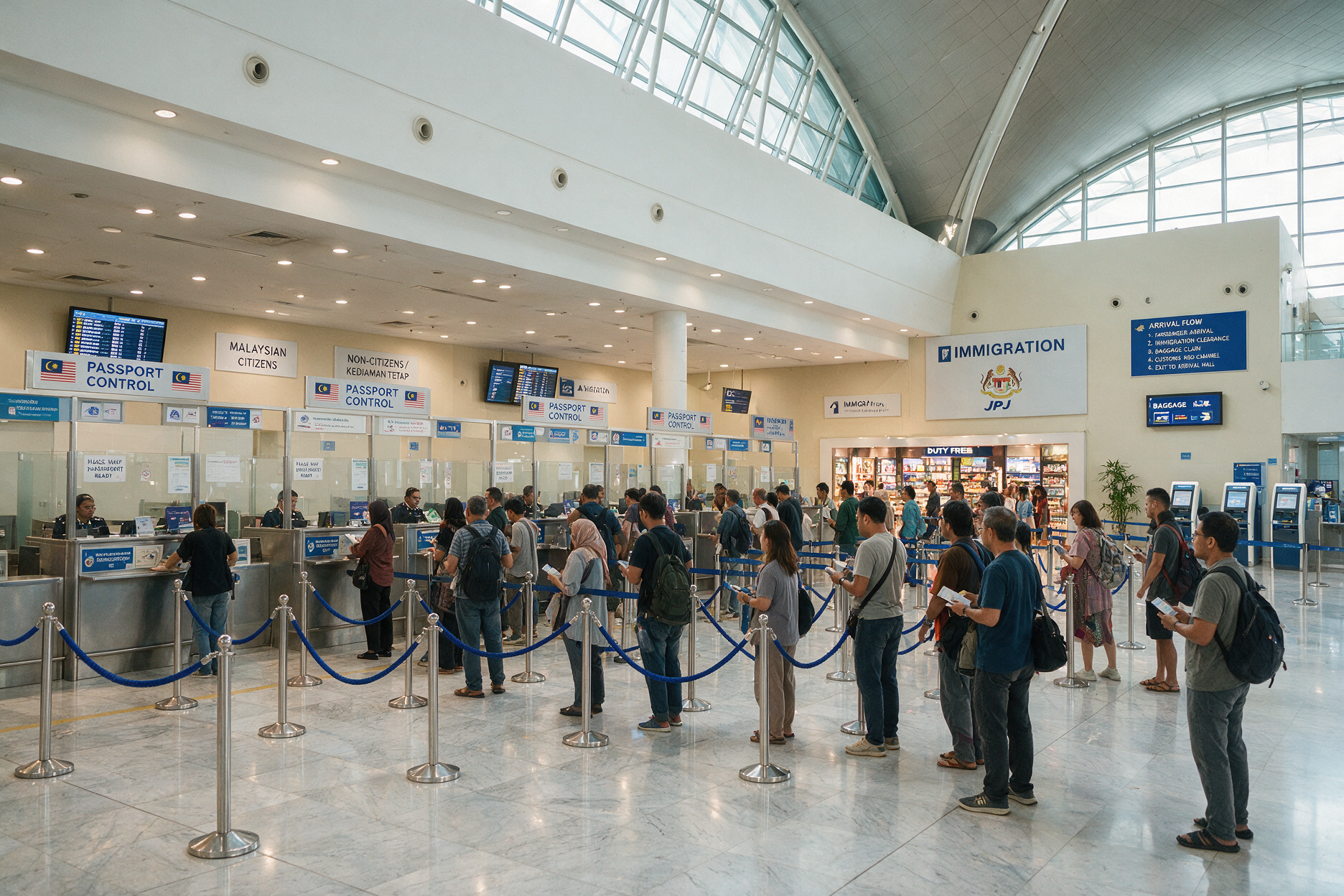
At the immigration counter in Kuala Lumpur International Airport (KLIA or KLIA2), or at any other entry point, have the following ready:
- Passport valid for at least 6 months from your planned departure date from Malaysia
- Return or onward flight ticket — this is checked. A one-way ticket to Malaysia raises questions, so have your departure ticket confirmed
- Proof of accommodation — a hotel booking confirmation works; a printed or screenshot copy is fine
- Evidence of sufficient funds — immigration guidelines suggest around MYR 1,000–1,500 (approximately ₹18,000–27,000). A bank statement or showing your travel card balance works if asked
- MDAC confirmation — the QR code you received after completing the digital arrival card
Most travelers move through immigration in 5–15 minutes. Busy weekends and festival periods (especially Chinese New Year and Deepavali, when a lot of regional travel happens) can stretch this to 30–45 minutes, so don’t schedule a tight connection.
eVISA and eNTRI: When They Make Sense
Two alternative options exist for Indian travelers who prefer something more formal than visa-free entry, or who don’t qualify (for example, passport validity under 6 months, or a complex travel history that might prompt questions).
eNTRI (Electronic Travel Registration & Information)
The eNTRI is a quick electronic registration, not a full visa. It allows stays of up to 15 days and costs approximately USD 20 (around ₹1,700). Processing is fast — typically instant to 24 hours. The catch: eNTRI holders can only enter through KLIA or KLIA2 in Kuala Lumpur. If you’re planning to enter via Penang International Airport, Langkawi, or any land border, eNTRI won’t work for you.
eVISA (Single Entry)
The eVISA single entry allows up to 30 days (same as visa-free) and costs around USD 30 (₹2,500). Processing takes 48–72 hours and is valid at all Malaysian entry points, including airports, sea ports, and land crossings. Apply through the official eVISA portal.
eVISA (Multiple Entry)
For frequent travelers to Malaysia, the multiple-entry eVISA allows up to 30 days per visit across multiple entries. Cost is around USD 50 (₹4,200). This makes sense if you’re combining Malaysia with Singapore and Batam, doing a split trip, or planning a return visit within 6 months.
For most Indian travelers on a standard holiday, visa-free entry with the MDAC is the simplest route. The eVISA options are mainly useful when you want a formal paper trail, have a passport issue that might complicate visa-free entry, or are entering through a less common point.
Entry Points and Airport Notes
Malaysia has several international entry points. The main ones Indian travelers use:
- KLIA (Kuala Lumpur International Airport) — served by Malaysia Airlines, Air India, IndiGo (codeshare routes), and several other carriers. Linked to KL Sentral via the KLIA Ekspres train (28 minutes, RM 55 one way)
- KLIA2 — the low-cost terminal, primarily served by AirAsia. Same KLIA Ekspres line, same travel time to KL Sentral
- Penang International Airport — direct flights from Chennai, Kolkata, and some charter routes. Great entry point if you’re starting in northern Malaysia
- Langkawi International Airport — connections via KL; some direct AirAsia flights from Indian cities seasonally
What Immigration Officers Actually Check
Malaysia’s immigration process is generally smooth for Indian passport holders. A few practical notes from the experience of regular travelers:
If you’re visiting for a short stay and it’s your first time in Malaysia, having your hotel booking and return ticket ready to show (on your phone is fine) speeds things along. If you’ve visited frequently or have recent stamps from countries that occasionally trigger secondary screening (a generic caution, not specific to any destination), keep your accommodation and onward travel proof accessible rather than buried in your bag.
The MDAC QR code is increasingly being scanned at dedicated automated kiosks at KLIA before you reach the human officer — make sure your phone has enough battery and your QR code screenshot is saved offline, since airport WiFi can be slow right after landing.
Extending Your Stay Beyond 30 Days
If you need to stay longer than 30 days, you’ll need a social visit pass extension. Apply at an Immigration Department office before your current authorization expires. Extensions are granted at the discretion of the officer and are not guaranteed — Malaysia’s immigration authority expects tourism stays to be, in fact, tourism stays. If you’re planning a longer stay for work, study, or digital nomad purposes, a social visit extension isn’t the right route; look into the appropriate long-stay pass category instead.
Indian Embassy in Malaysia
The High Commission of India in Kuala Lumpur is at No. 2, Jalan Taman Duta, Off Jalan Duta, 50480 Kuala Lumpur. For emergencies, the consular helpline is reachable at +603-2600 0100. There are also Indian Consulates in Penang and in Johor Bahru for travelers in those regions. Save these contacts before you travel — not because anything is likely to go wrong, but because hunting for an embassy number on roaming data in a stressful moment is not the trip memory anyone wants.
Frequently Asked Questions
Do I need travel insurance for Malaysia?
Malaysia doesn’t require travel insurance for visa-free entry. That said, Malaysia’s private hospitals — which you’d use for anything beyond a minor issue — can be expensive without coverage. Standard international travel insurance is worth having for medical, trip cancellation, and baggage protection.
Can I work remotely in Malaysia on a tourist entry?
Legally, no — the visa-free entry is for tourism, business meetings, and social visits, not employment. Malaysia introduced a Digital Nomad Pass (DE Rantau) for remote workers and freelancers who want a legitimate long-stay option; that’s the correct route if you’re planning to work while in Malaysia.
What’s the difference between MDAC and eNTRI?
The MDAC is a mandatory digital arrival card for all foreign travelers, regardless of whether they enter visa-free, on an eNTRI, or with an eVISA. eNTRI is an alternative entry mechanism for those who prefer it over visa-free entry. Most Indian travelers using the visa-free arrangement only need the MDAC, not the eNTRI.
Can I enter Malaysia via train from Thailand or Singapore?
Yes — land borders with Thailand (via the KTM or road crossings at Rantau Panjang/Sungai Golok, Padang Besar) and Singapore (Johor Bahru/Woodlands crossing) are open to Indian passport holders on visa-free entry. The MDAC still applies.
How early should I complete the MDAC?
Complete it 24–48 hours before arrival. The window allows up to 72 hours in advance, but doing it too early (say, a week before) isn’t possible. If you forget and are already at the airport, completing it at the gate or on the plane using the airline’s WiFi (if available) is technically possible — but don’t rely on it.
Is the eNTRI still useful in 2026 given the visa-free arrangement?
For most travelers, no — the visa-free option with MDAC is simpler and cheaper. eNTRI makes more sense if you specifically prefer having an official document in hand, or if some element of your situation (passport validity close to the 6-month mark, for instance) might complicate visa-free entry.
Can my parents (senior citizens) apply for the eVISA easily?
Yes. The eVISA application is online and relatively straightforward. For senior travelers unfamiliar with digital applications, a travel agent can complete it on their behalf with their documents. The eVISA may provide more reassurance at immigration than relying on visa-free entry if your parents haven’t traveled internationally recently.
Ready to Plan Your Malaysia Trip?
Now that the visa side is sorted, the easier part begins — figuring out where to actually go. Malaysia’s range is wider than most people expect: the gleaming towers and street-food chaos of Kuala Lumpur, the colonial heritage and murals of Penang, the island ease of Langkawi, the highland cool of the Cameron Highlands, and the ancient rainforest of Taman Negara. A week can cover two or three of these properly without rushing.
Get Tripped’s Malaysia destination page has curated itineraries, recommended experiences, and package options designed for Indian travelers who want the premium version of the trip — without spending hours piecing it together from scratch. If you’re ready to start planning, that’s where to go next.