Netherlands Packing Guide by Season: What to Pack for Every Month
The Netherlands has famously changeable weather — there’s a Dutch saying, “Als ‘t niet regent, is het ook mooi” (If it’s not raining, that’s nice too), which tells you what the baseline expectation is. A sunny morning in Amsterdam can become a sideways-rain afternoon within two hours, in any season. This matters for packing because you can’t pack for weather that’s reliably either cold or warm — you need layers that work across a 10-degree temperature swing and rain gear that you’ll actually carry and use. This guide covers what to pack for each of the four seasons, plus the year-round essentials that should be on your list regardless of when you visit.
Table of Contents
- Year-Round Essentials: Never Leave These Out
- Spring (March–May): Tulip Season Packing
- Summer (June–August): The Warmest Months
- Autumn (September–November): The Best Season to Visit
- Winter (December–February): Cold, Dark, Worth It
- The Shoe Question: Cobblestones and Cycling
- Electronics & Adapters
- Carry-On vs Checked Bag Strategy
- FAQs
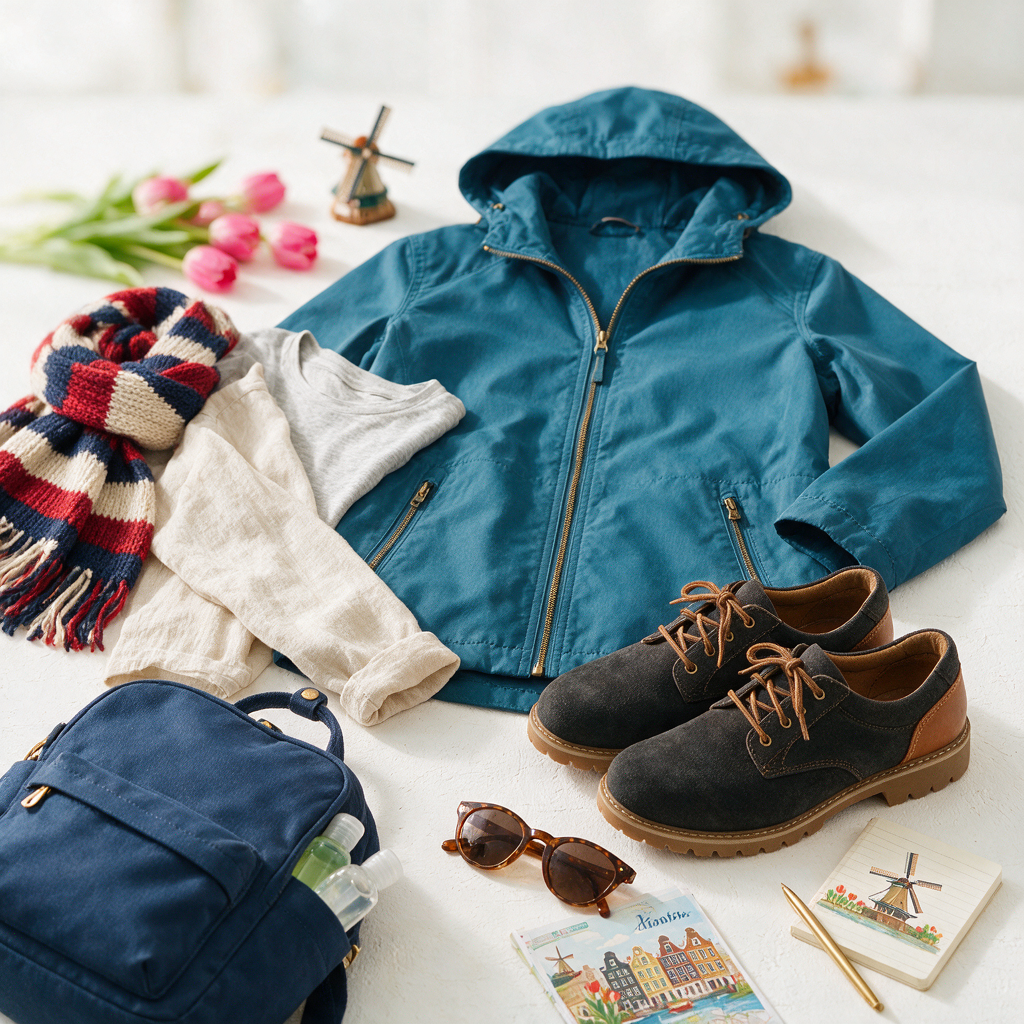
Year-Round Essentials: Never Leave These Out
Certain items belong on every Netherlands packing list regardless of the season. These are non-negotiable.
Waterproof Outer Layer
Not a “water-resistant” shell — a genuinely waterproof jacket. The Netherlands has roughly 140 rain days per year spread fairly evenly across all months. Dutch people carry compact umbrellas and wear waterproof cycling jackets as standard. A packable rain jacket that compresses into its own pocket is ideal: the rain is often brief, and you’ll want something that goes from your bag to your back in 30 seconds. Brands like Patagonia Torrentshell, Columbia Watertight, or similar waterproof-breathable jackets work well. Avoid umbrella-only strategies — cobblestone streets are uneven and canal winds make umbrellas impractical.
Comfortable Walking Shoes (Waterproof Preferred)
Amsterdam’s canal ring, Utrecht’s medieval centre, and most Dutch historic districts are cobblestone. After a day of walking, the wrong footwear becomes genuinely painful. Waterproof leather walking shoes or trail runners with some ankle support work better than fashion sneakers or sandals. The waterproofing matters because puddles on cobblestones are constant after rain. See the shoes section below for more detail.
Universal Travel Adapter (Type C/F)
The Netherlands uses Type C and Type F sockets at 220V/50Hz. Most modern electronics (phones, laptops, cameras) accept 100–240V automatically — check the fine print on your adapter brick. Indian plugs (Type D, three round pins) don’t fit Dutch sockets directly. A universal adapter with Type C output covers you; if you’re bringing a laptop and phone charger, consider a multi-port USB charger that runs off a single socket rather than monopolising both outlets in a hotel room. Albert Heijn supermarkets carry basic adapters if you forget one — more expensive than buying before travel, but available.
Small Day Bag or Packable Backpack
For museum days, market mornings, and day trips by train. Something that holds a water bottle, a jacket, your camera, and a snack. A packable daypack that folds into itself takes almost no suitcase space and is used daily in the Netherlands. Avoid loose bags in busy tourist areas — Amsterdam’s Centraal area and the major museums attract pickpockets; a zip-close backpack worn on your front is safer than a shoulder tote in crowds.
Reusable Water Bottle
Dutch tap water is excellent — among the cleanest in Europe. A refillable bottle saves money (restaurant water is rarely free) and is the most sustainable option. Most Dutch public buildings and many museums have refill points.
OV-Chipkaart (Not a Packing Item, But Pack to Acquire It)
You’ll need €7.50 cash or card to buy the anonymous OV-chipkaart at Schiphol airport when you land. This single card works on trains, trams, metros, and buses across the entire country. Have the plan to buy it immediately at the airport — don’t land and try to figure out public transport without it.
Spring (March–May): Tulip Season Packing
Spring is the most popular time to visit the Netherlands, primarily because Keukenhof and the Bollenstreek bulb fields are in bloom. It’s also the most unpredictable weather season. March can feel like winter. May can deliver genuine warmth. April is usually somewhere in between — often beautiful, occasionally cold, reliably photogenic. Average temperatures range from 8°C in March to 16°C in May.
Clothing
The layering approach works best: a thermal base layer you can add or remove, a mid-weight sweater or fleece, and a waterproof outer layer. T-shirts become useful from late April. Jeans or lightweight trousers are versatile — avoid linen or summer fabrics in March and April, which will leave you uncomfortable on colder days. A light scarf doubles as both warmth and a photo prop in flower fields. Bring one pair of slightly smarter clothes for nicer dinners — Amsterdam restaurants aren’t formally dressy but the better ones appreciate something other than hiking gear.
For Keukenhof Specifically
Keukenhof’s paths are paved and well-maintained, but the surrounding bulb fields (if you’re cycling through them) involve grass paths and damp ground. Waterproof shoes are more useful here than a hotel in the centre of Amsterdam. The gardens are busy in April weekends — go early (gates open at 8am) or on a weekday.
Camera Gear
Spring tulip fields are genuinely spectacular to photograph and the light in April mornings is excellent. A mirrorless camera with a versatile zoom lens (24-70mm equivalent) handles most situations. Phone cameras are fine but the tulip field shots benefit from the bokeh of a wider aperture lens. Bring extra batteries — cold weather drains them faster, and you’ll be shooting a lot.
Summer (June–August): The Warmest Months
Dutch summers are mild rather than hot — average temperatures of 18–22°C, occasionally reaching 28–30°C during heatwaves (which are becoming more frequent). June is often the most pleasant: long daylight hours (sunset after 10pm), manageable crowds, green parks. July and August bring more tourists to Amsterdam, and the canal boat queues and museum entrance lines lengthen accordingly.
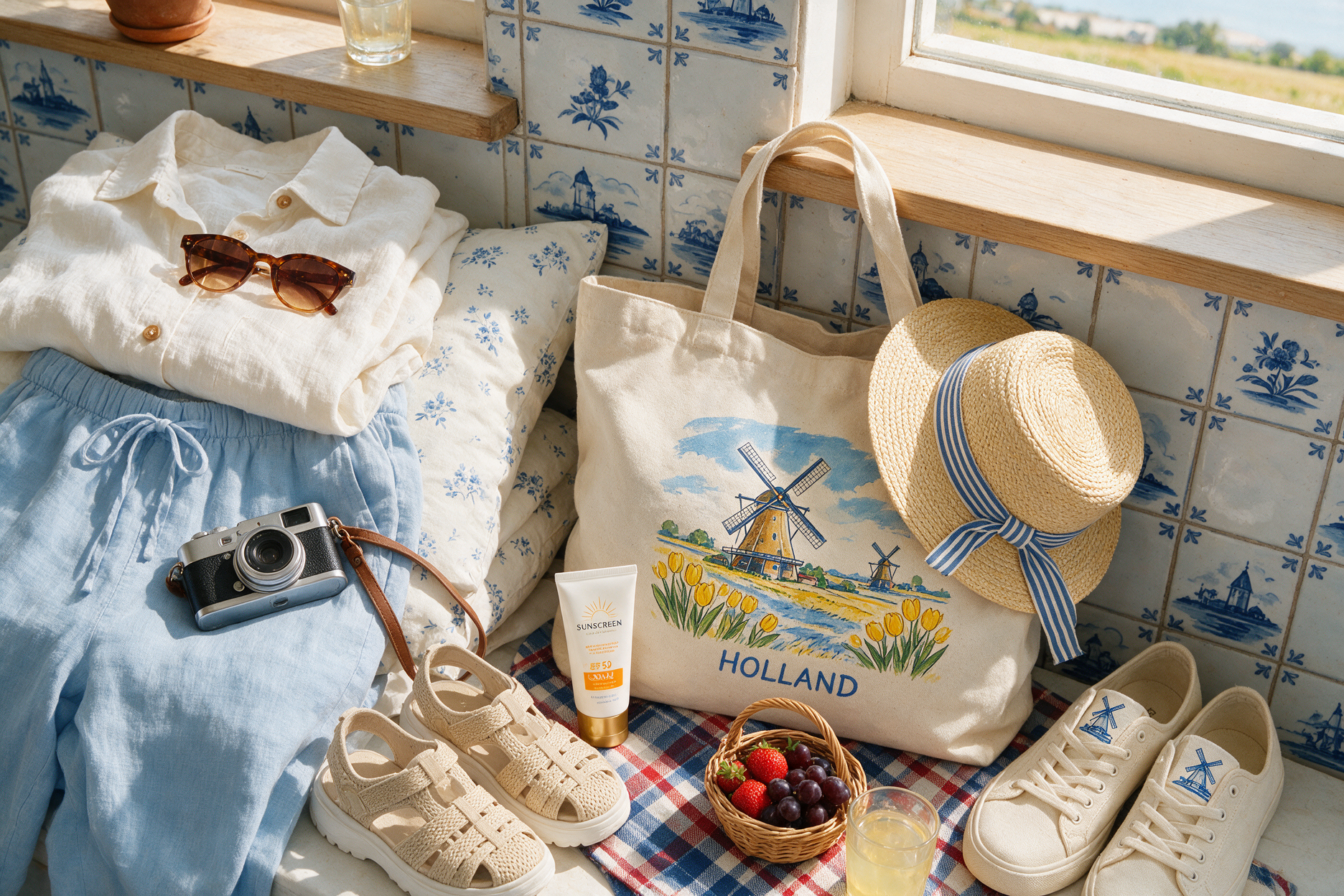
Clothing
T-shirts and light trousers or dresses work well for most of June–August. Evenings still cool down, particularly near the canals — a light cardigan or thin fleece is worth having for outdoor dining. Sunscreen is necessary but not a given that most Indian travelers carry for European travel — the Dutch summer sun is real, especially in open spaces like Vondelpark or Keukenhof. Keep the rain jacket: Dutch summer showers are brief but can be heavy.
Footwear
Summer is the season where lighter walking shoes make sense — a good pair of supportive sneakers or leather walking shoes in breathable materials. Sandals are fine for casual days but tend to become uncomfortable on longer walks (8,000–15,000 steps per Amsterdam sightseeing day is normal).
Crowds and Planning
This isn’t packing advice per se, but summer requires booking. Van Gogh Museum tickets sell out weeks in advance in July. Anne Frank House tickets require timed entry booking. Don’t arrive at attractions expecting to buy on the day in peak summer.
Autumn (September–November): The Best Season to Visit
Many regular Netherlands visitors consider September–October the best time: the tulips are gone but the canal-side trees are turning, the tourist pressure eases, and the light in autumn mornings has a quality that makes Amsterdam particularly photogenic. Temperatures range from 18°C in September to 8°C in November. Rain is present throughout but so is the occasional week of golden weather.
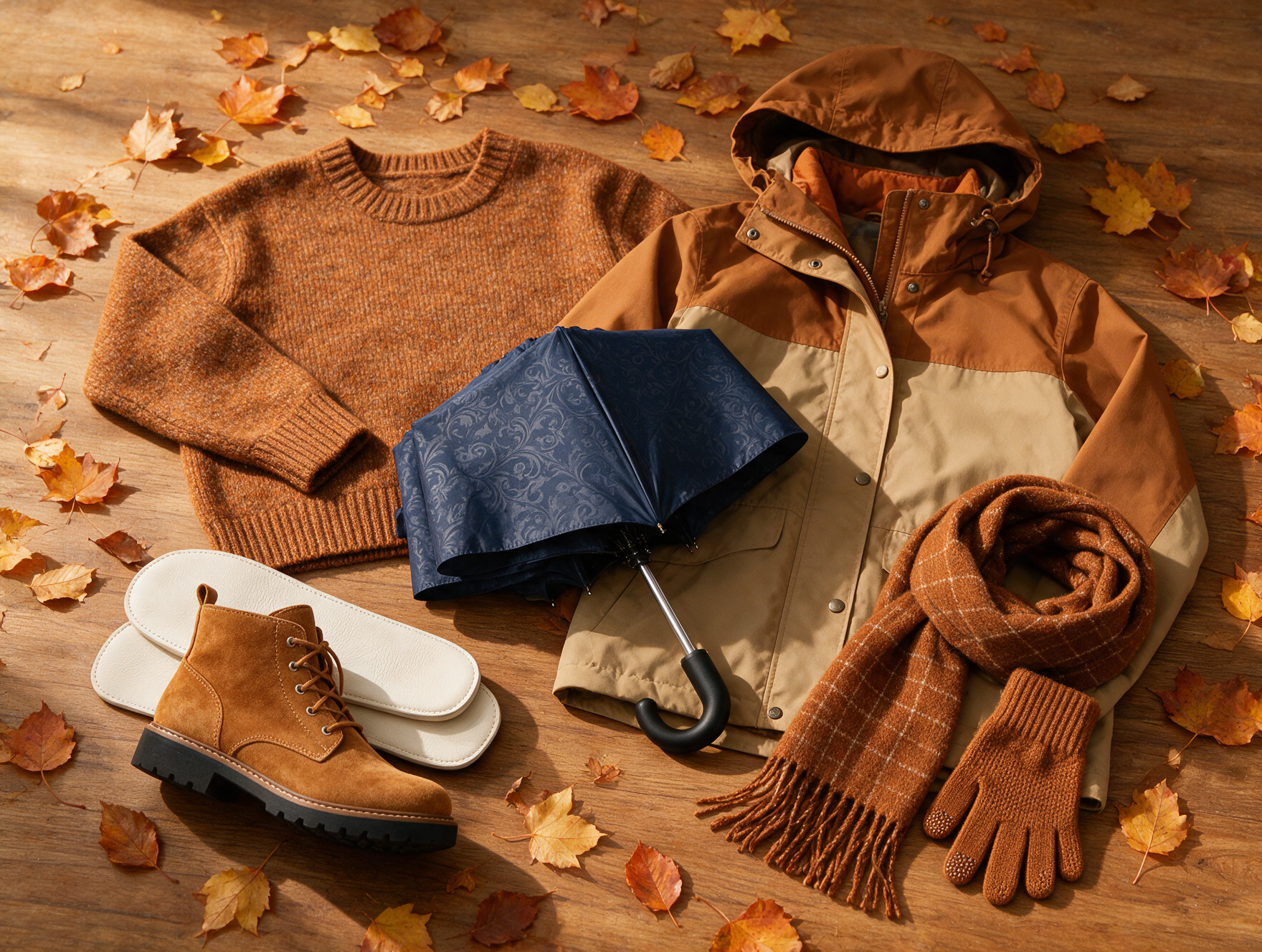
Clothing
Autumn is the peak layering season. The temperature difference between a warm September afternoon and a grey November morning is about 15 degrees. Plan for: a base layer that can work as a standalone in September warmth, a mid-layer sweater or fleece for cooler evenings and November days, and a heavier waterproof jacket than spring (something insulated or with a liner). Boots make more sense than sneakers from late October onward — wet cobblestones in November benefit from ankle support and waterproofing.
What to Watch For
Autumn brings the Amsterdam Light Festival (from late November) — a free outdoor light art trail along the canals that’s one of the better reasons to visit in the colder months. Pack accordingly for evening walking: warm layers, gloves, a good hat, waterproof footwear. Evening temperatures in late November can be around 4°C.
Winter (December–February): Cold, Dark, Worth It
Dutch winters are grey, damp, and occasionally icy — average temperatures of 2–7°C, with wind chill making it feel colder. But winter Amsterdam has real compensations: the Christmas markets, near-empty canal streets in the early morning, ice skating on outdoor rinks when conditions allow, and museum visits that don’t involve queuing in the cold for 45 minutes. Fewer tourists mean better service, lower prices, and the city at a more authentic pace.
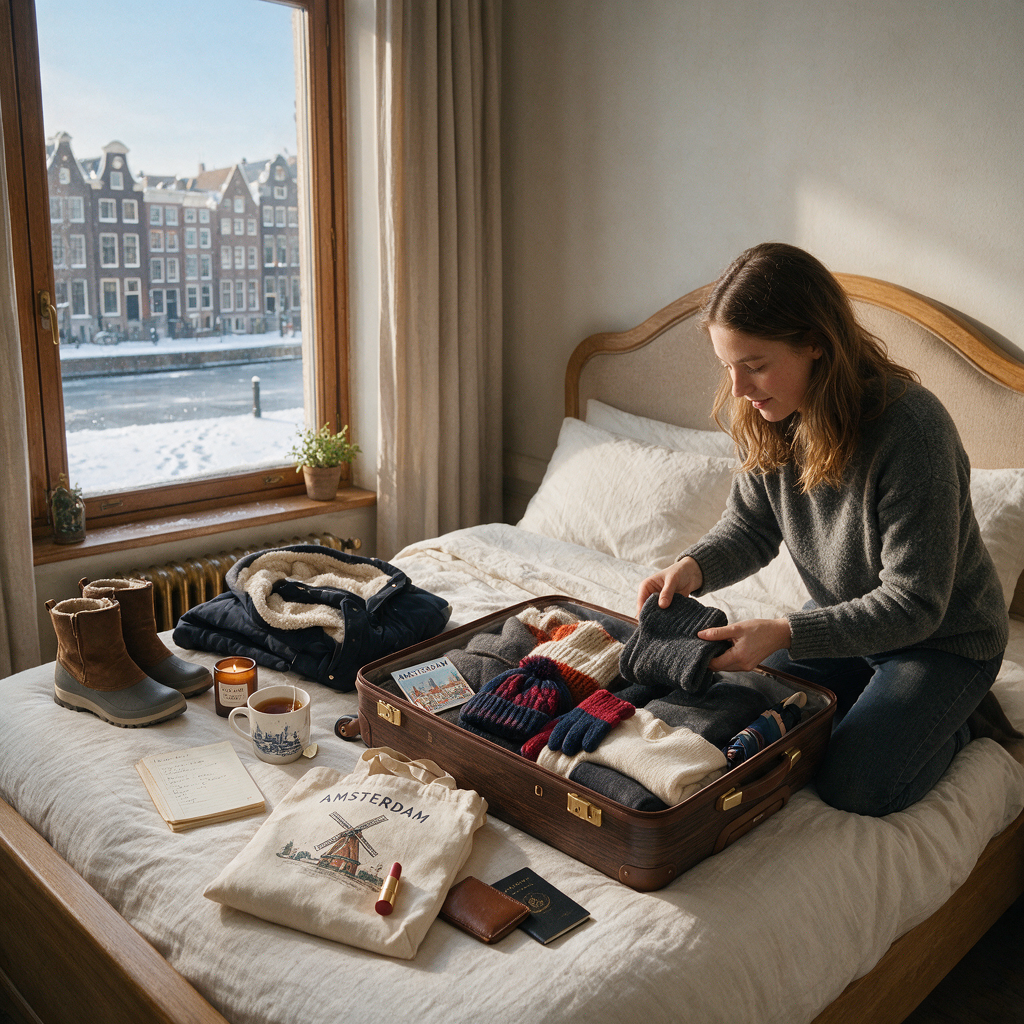
Clothing
A proper winter coat is essential — not a fleece, not a light shell, but an insulated waterproof winter coat that handles sustained cold and rain. Indian winters in most cities don’t prepare you for Amsterdam in January: the cold is wet, the wind comes off the North Sea, and you’ll be outside more than expected. Thermal underlayers (long-sleeve base layers, thermal leggings under jeans) make a significant difference. Wool socks, a warm hat that covers your ears, gloves, and a scarf complete the picture. Don’t rely on a single heavy layer — cold Dutch wind penetrates single layers quickly; the multiple-layer approach with a windproof outer shell is more effective.
Waterproof Winter Boots
This matters more in winter than any other season. Cobblestones collect ice and water. A boot with ankle support, waterproofing, and a grippy sole prevents both wet feet and slipping. Sorel, Timberland waterproof boots, or similar — anything that’s been genuinely waterproofed and has a proper sole. Fashion boots with thin soles will leave you cold and potentially injured on icy Dutch streets.
What Works Well in Winter
Museum visits are excellent in winter: shorter queues, better availability of timed tickets, and the ability to spend a full day inside without feeling like you’re missing good weather. The Rijksmuseum, Van Gogh Museum, and Amsterdam Museum are all worth longer visits than you’d give them in summer. Book tickets in advance online.
The Shoe Question: Cobblestones and Cycling
This section gets its own heading because it’s the most common mistake Indian travelers make when packing for Europe. Amsterdam’s canal ring district, Utrecht’s medieval centre, Haarlem’s old town, and Delft are primarily cobblestone. Not occasional cobblestones — continuous, centuries-old stone roads that become slippery when wet and are uneven enough to catch heels and thin soles.
What to bring: one pair of waterproof, cushioned walking shoes with a flat or very slightly raised sole. Leather walking shoes (Ecco, Clarks, Merrell) or waterproofed trail runners. If you plan to rent a bicycle (which you should), flat shoes are better than heeled ones for cycling — Dutch bicycles are upright and pedal with the full foot. One pair of smarter shoes is fine to bring for restaurant evenings, but keep the walking shoes on for sightseeing days.
What to avoid: fashion sneakers with no cushioning (you’ll feel every cobblestone after hour four), heels of any height (unsafe on wet stones), sandals for walking days, and anything that’s not waterproofed for spring, autumn, and winter visits.
Electronics & Adapters
Adapter: Type C/F, as noted above. Bring two if you have many devices. Power bank: Museums and outdoor days leave limited opportunities to charge. A 10,000mAh power bank handles a full day of phone usage comfortably. Noise-cancelling headphones: Trains between Dutch cities take 20–40 minutes. Good headphones make the journey. Camera: The Netherlands is genuinely photogenic — canal reflections, flower fields, Golden Age architecture. A mirrorless camera with a 28-85mm zoom handles most situations. SIM card: Buy a Dutch/European SIM on arrival at Schiphol (Lebara, Ben, and KPN all have airport kiosks) or use an eSIM from home before you land. Data in Europe is inexpensive; using your Indian number for data roaming is expensive. Portable charger for OV-chipkaart: The OV-chipkaart doesn’t need charging — it’s a contactless card. But your phone does, for real-time train information via the NS and 9292 apps.
Carry-On vs Checked Bag Strategy
For trips of 7–10 days in the Netherlands only, a single carry-on suitcase (55x40x23cm) and a personal item handles most trips in spring, summer, and early autumn. Winter and late autumn add bulk — the heavy coat and waterproof boots take space. Options: check one bag for winter trips (the Netherlands has good left-luggage facilities at Schiphol and Amsterdam Centraal if you’re arriving before hotel check-in), or use packing cubes aggressively to compress winter layers. The Dutch weather means you’ll often be wearing your heaviest layer, which saves suitcase space.
What not to bring: Dutch supermarkets (Albert Heijn, Jumbo) carry most toiletries, pharmaceuticals, and basic needs. Don’t pack shampoo, conditioner, or heavy cosmetics when you can buy travel sizes on arrival and save the suitcase space. The exception is specific Indian skincare brands or medications that won’t be available in Dutch pharmacies — bring those from home.
Frequently Asked Questions
What should I pack for Netherlands in April?
April is the peak tulip season but weather is unpredictable. Pack light-to-mid-weight layers (thermal base, sweater, waterproof outer), comfortable walking shoes (waterproof preferred), a compact umbrella as backup to your rain jacket, and neutral colours that work in any weather. Average April temperature is 10–14°C during the day, dropping to 5°C at night.
Do I need a heavy winter coat for Netherlands in December?
Yes. A proper insulated and waterproof winter coat is essential for December–February. The combination of cold, damp, and North Sea wind makes Amsterdam winter significantly harsher than indoor temperatures suggest. A fleece alone is insufficient. Pack thermal underlayers and waterproof boots as well.
Can I rent rain jackets or umbrellas in Amsterdam?
Compact travel umbrellas are widely available in Amsterdam shops (Action, Hema, and convenience stores). Rain jackets in your size may be harder to find on arrival, particularly if you need a specific waterproof standard. Bring your own rain gear; buy a backup umbrella locally if needed.
What adapter do I need for Netherlands?
Type C (two round pins, European standard) or Type F (same but with grounding clips). Most modern universal adapters cover this. Indian plugs (Type D) don’t fit Dutch sockets without an adapter. Check that your electronics accept 220–240V input (most do — look for “100-240V” on the adapter brick).
Should I pack formal clothes for Netherlands?
Smart casual covers virtually every situation — good restaurants, museums, evening drinks. The Dutch dress code leans toward functional rather than formal. A nice pair of dark jeans, a clean shirt or blouse, and decent shoes will get you into any restaurant without a problem. Formal suits and gowns are unnecessary unless you have a specific event.
Is it cold in Netherlands in July?
July averages 20–22°C during the day, cooler in the evenings. Pack for warm days and layers for cooler nights. Sunscreen is worth bringing — the Dutch summer sun is real, especially during outdoor activities. Keep a light jacket for evenings along the canals, which stay cool even in warm summers.
How many days of clothing should I pack?
For a 7–8 day trip, 4–5 days of clothing with in-trip laundry is realistic. Dutch laundromats are available in major cities; many hotels have laundry service. Packing fewer, versatile pieces that layer and wash easily beats overpacking items you’ll carry but not wear.
Pack Right, Spend Time on What Matters
The Netherlands rewards packing well rather than packing heavily. The country’s infrastructure — reliable trains, city bikes, walkable historic centres — means you’re moving more than most destinations. Overpacking creates friction. A focused suitcase with the right rain gear, comfortable shoes, and appropriate layers for your season lets you spend energy on actually exploring the country rather than managing what you’re carrying.
If you’d like a Netherlands trip where the logistics are sorted — hotels in the right locations, day trips planned and routed, activities booked — Get Tripped’s Netherlands packages take care of the planning so you arrive knowing what you’re doing, not figuring it out. Explore Netherlands tour packages from India and tell us when you’re planning to go.