Free Things to Do in Netherlands: Amsterdam, Rotterdam, Utrecht & Beyond
The Netherlands has a reputation for being an expensive country, and hotel rates in Amsterdam during peak season do nothing to dispel that. But the things that make the Netherlands worth visiting — the canal belt, the cycling infrastructure, the open-air architecture, the free ferry across the IJ, the Tuesday markets where Rotterdam’s immigrant communities sell food that would cost four times as much in a restaurant — none of those cost anything. A well-planned day in Amsterdam can be genuinely excellent on very little spend, with the money going toward a good meal and a museum ticket rather than entry fees for things that don’t need one.
This guide covers the best free experiences across the six destinations on Get Tripped’s Netherlands page: Amsterdam, Rotterdam, Giethoorn, Zaanse Schans, Utrecht, and Keukenhof area.
Table of Contents
- Amsterdam: Free Attractions and Hidden Gems
- Rotterdam: Free Architecture and Market Days
- Utrecht: Free Canal Culture and Markets
- Giethoorn: The Village Itself
- Zaanse Schans: What’s Free at the Open-Air Museum
- Keukenhof Area: Free Alternatives to the Garden
- FAQs
Amsterdam: Free Attractions and Hidden Gems
The Canal Belt (UNESCO World Heritage Site)
The most visited thing in Amsterdam is free. The 17th-century canal ring — Herengracht, Keizersgracht, Prinsengracht — is a UNESCO World Heritage Site and you walk it at no cost. The evening light on the canal houses, the houseboats moored along the banks, the cyclists crossing the stone bridges — this is the Amsterdam experience and it requires only a good pair of shoes. Start at Centraal Station, walk west into the Jordaan, and follow the canals south toward the Jordaan’s quieter side streets.
Vondelpark
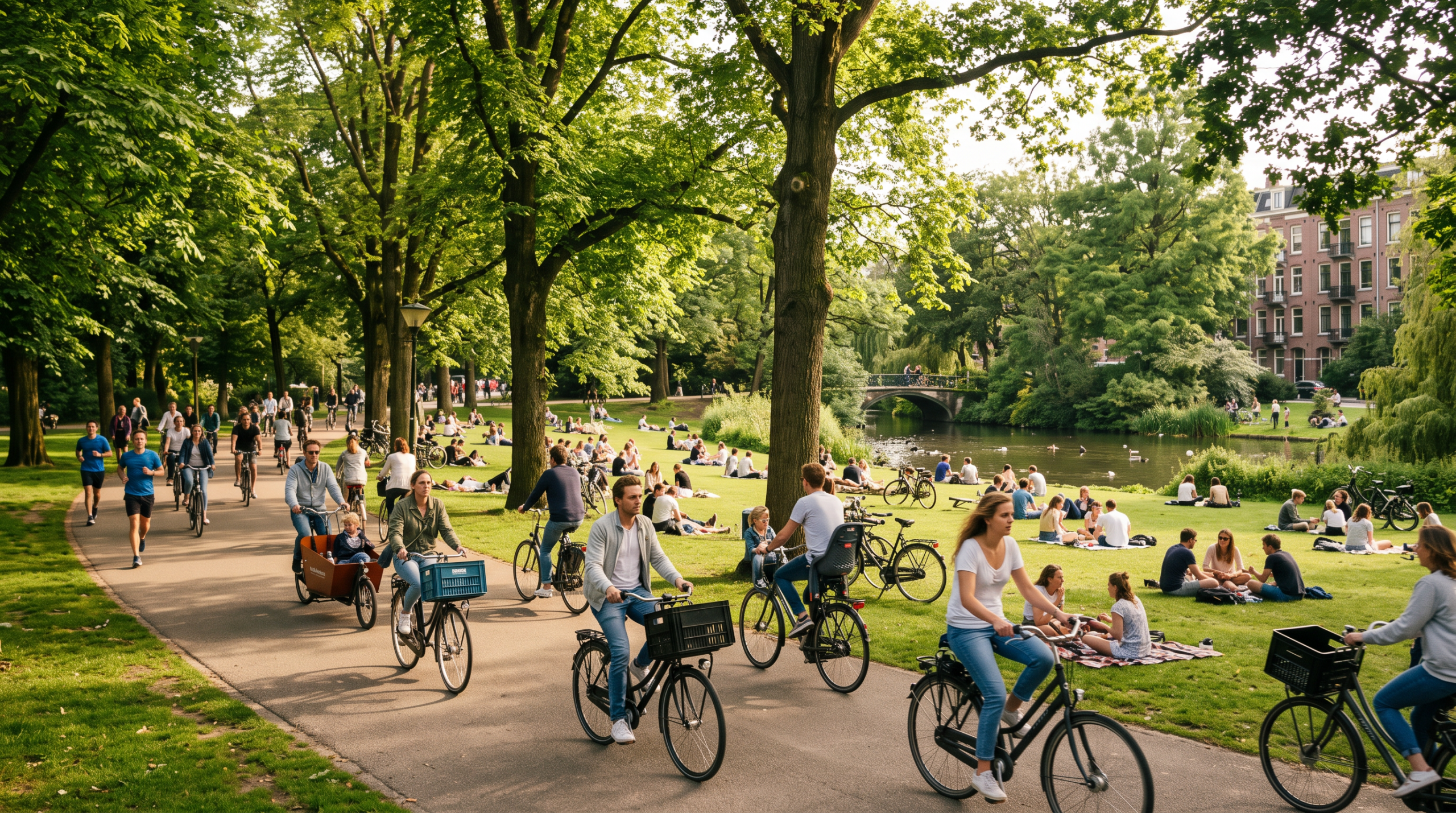
Amsterdam’s main park is 47 hectares of lawns, ponds, cycling paths, and open-air theater space. On any sunny afternoon — and Dutch summers have plenty — the park fills with locals: picnicking families, inline skaters, teenagers with speakers, couples on bikes. The open-air theater (Openluchttheater) runs free performances from June through August — classical concerts, theater, and children’s shows on a rotating schedule. Check the program at openluchttheater.nl before your visit.
Begijnhof
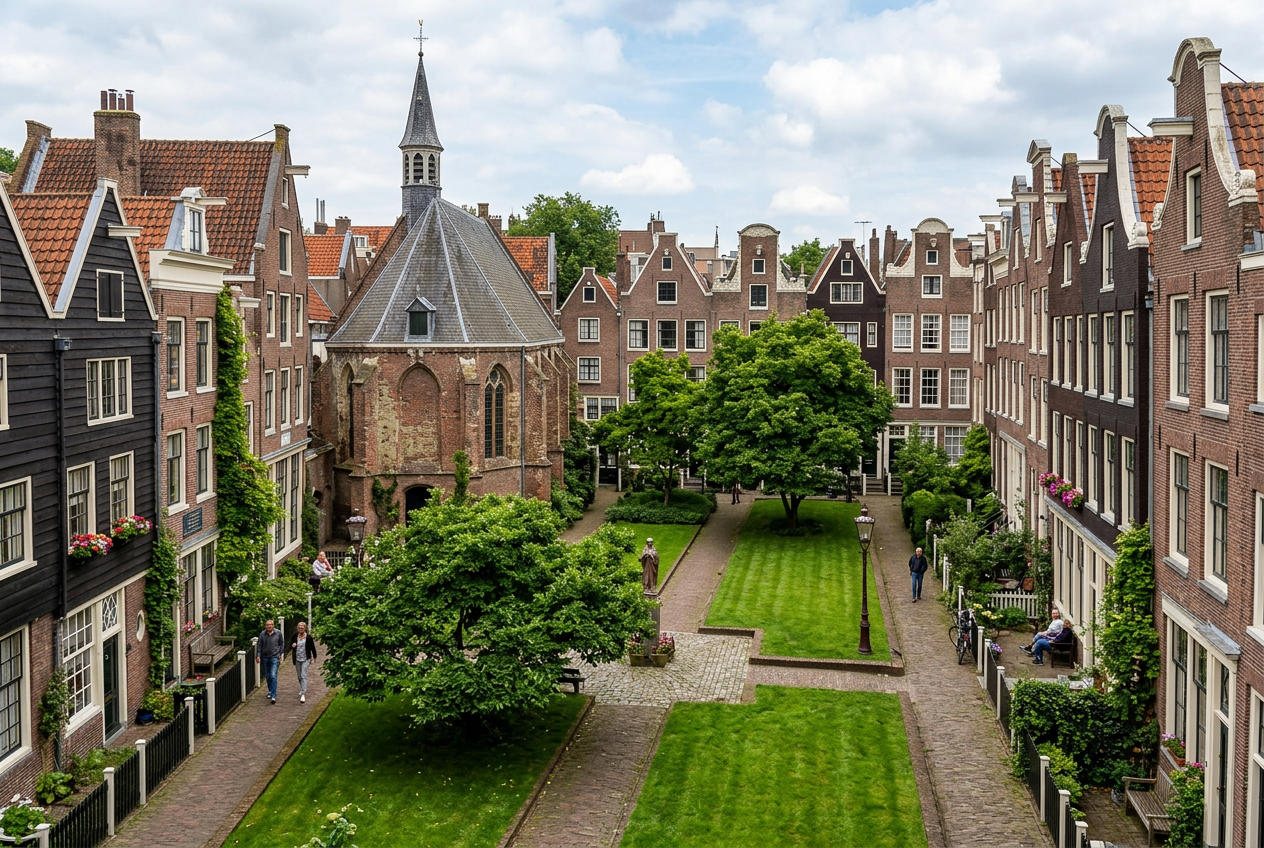
A hidden courtyard off Spui Square — a 14th-century enclosed community built for the Beguines, a religious sisterhood, with small houses arranged around a central garden. People still live here. It’s one of the quietest spots in central Amsterdam and entirely free to enter. The entrance is an unmarked wooden door on Gedempte Begijnensloot — easy to miss, worth finding.
Free IJ Ferries
Four free ferry lines run across the IJ river from behind Amsterdam Centraal Station to Amsterdam Noord. The crossing takes 5–12 minutes and is free for pedestrians and cyclists. The ferries run 24 hours a day on the main Buiksloterweg line. Amsterdam Noord has become a creative quarter over the past decade — the NDSM Wharf (a former shipyard) has street art, a flea market on alternate weekends, and a summer food market. The ferry view of the Amsterdam skyline from the water is also one of the better free photographs in the city.
NDSM Wharf
The NDSM Wharf in Amsterdam Noord is a post-industrial creative space that’s essentially always worth a wander. The main building houses art studios, food trucks, and events. The exterior is covered in large-scale murals. The surrounding area has some of Amsterdam’s best street art. Take ferry F2 or F5 from behind Centraal Station — NDSM is a 15-minute ride on the F5 line.
Rijksmuseum Gardens and Architecture
The Rijksmuseum building and its gardens (Museumtuin) are free to enter — only the galleries require a ticket. The gardens behind the museum are a quiet spot in the busy museum quarter. The museum building itself (designed by Pierre Cuypers, 1885) is worth the walk through the archway even without a ticket: the passage through the building’s ground floor is public and the painted ceiling of the Nightwatch archway is visible from the street.
Free Museums and Galleries
Several galleries in Amsterdam are free or donation-based:
- EYE Film Museum (Amsterdam Noord, 10 minutes by ferry from Centraal): the film archive exhibitions are ticketed, but the building’s ground floor café area and the view over the IJ are free. The building itself — a geometric white canopy over the riverbank — is worth the ferry ride.
- Stedelijk Museum Gift Shop and Ground Floor: the ground floor of the Stedelijk (contemporary art museum) has free rotating displays near the entrance.
- Art galleries in the Jordaan: The Jordaan neighborhood has dozens of small commercial galleries that are free to browse. Particularly concentrated on Elandsgracht and Keizersgracht.
Street Markets
Markets are free to browse and the atmosphere at a good Dutch market justifies the visit even if you don’t buy anything. The Albert Cuyp Market (De Pijp, Tuesday–Saturday) is one of the best in Europe. The Noordermarkt (Saturday, Jordaan) is an organic produce and antiques market that fills the square around an old church. The Waterlooplein flea market (daily except Sunday) sells second-hand clothing, bikes, and the random accumulation of a port city.
Cycling Amsterdam Noord
Rent a bike, take the free IJ ferry, and cycle the Noord ring road that follows the waterfront and connects the city’s former industrial sites. The route passes the EYE Film Museum, the NDSM Wharf, and the Buiksloterham area of independent food shops and urban farms. It’s flat, well-signed, and away from tourist traffic.
Rotterdam: Free Architecture and Market Days
The Architecture Walk
Rotterdam was rebuilt after WWII with radical architecture, and most of the famous buildings are free to walk around and photograph. The route from Rotterdam Centraal Station covers: the station’s own canopy roof (significant 2014 architecture by Benthem Crouwel), the Cube Houses (Kubuswoningen) exterior — one unit is a paid museum, but the cluster is free to walk through and photograph — the Erasmus Bridge, and the Depot Boijmans Van Beuningen’s mirrored dome exterior (the building interior requires a ticket). The full walk takes 1–1.5 hours and costs nothing.
Fenix Food Factory (free entry)
The Fenix Food Factory on the Katendrecht peninsula is a free-to-enter food hall with a brewery, artisan coffee roaster, and cheese shop. You pay for what you eat or drink, but there’s no entry charge and it’s a good indoor space to explore regardless of whether you’re buying.
Markthal Exterior and Free Browse
The Markthal food market (a horseshoe-shaped hall with a massive painted ceiling mural) is free to enter and walk through. The ceiling artwork by Arno Coenen — a massive 11,000m² fresco of giant flowers, fruit, and insects — is visible from anywhere in the market and entirely free to see. You’re not required to buy anything to enter.
Witte de Withstraat Street Art
Rotterdam’s main arts street has both galleries (some free entry) and a significant concentration of building-scale murals and street art. A walk from Witte de Withstraat through the surrounding Witte Village neighborhood covers some of the best large-format urban art in the Netherlands, with pieces by international artists who’ve come to Rotterdam specifically because the city commissions work at that scale.
Utrecht: Free Canal Culture and Markets
The Oudegracht Canal Wharves
Utrecht’s distinctive canal system — with its lower-level stone wharves built into the bank — is free to walk. The wharf level runs for about a kilometer along the main canal, passing café terraces, small workshops, and storage arches that have been converted into businesses. You can walk the wharf path regardless of whether you’re eating at the café tables; the canal view from below street level is the thing to see.
Dom Tower Square
The Dom Square — where the main body of the Cathedral of Utrecht once stood before it collapsed in a storm in 1674, leaving the tower standing alone — is free to walk and photograph. The open square is architecturally unusual: you can see where the nave connected to the tower by the outline in the paving. The tower itself requires a paid guided tour to climb, but standing in the square is free.
Vredenburg Saturday Market
The Saturday outdoor market on Vredenburg Square is the largest outdoor market in the Netherlands and free to browse. Good cheese section, seasonal produce, and a range of vendors from across the Utrecht region. Arrive by 10am for the best selection.
Rietveld Schröder House Area Walk
The Rietveld Schröder House (1924 UNESCO World Heritage Site, Gerrit Rietveld’s De Stijl masterwork) requires a paid ticket to enter. However, the exterior can be viewed from the street for free, and the walk through the residential streets of Oud-Wijk that approaches it is pleasant in its own right. The neighborhood has several houses that show the influence of De Stijl movement on Utrecht’s interwar architecture.
Giethoorn: The Village Itself
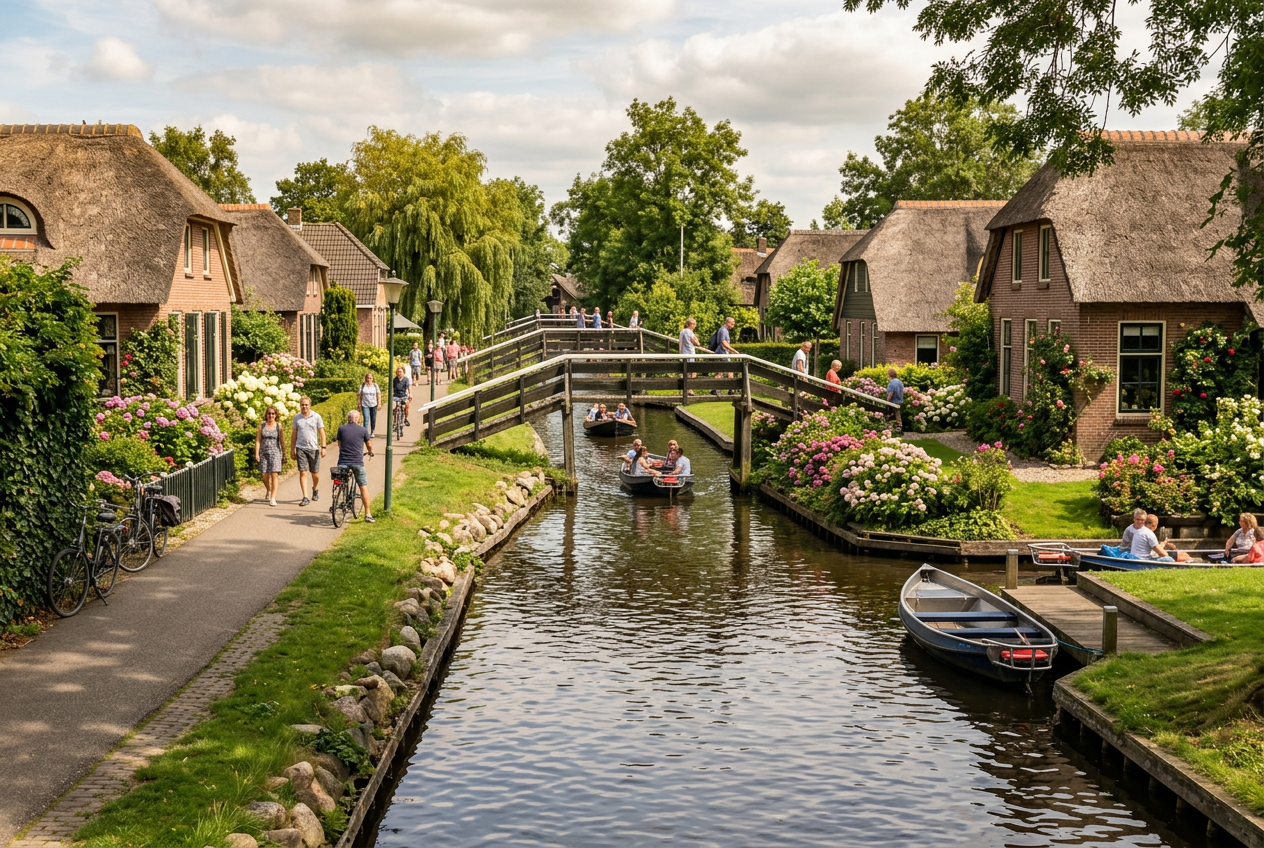
Walking through Giethoorn is free. The village’s footpath network connects the farmhouses and thatched buildings along the waterways, and you don’t need a boat ticket to experience the village — walking the main path along the canals takes about 45 minutes end-to-end and gives a full sense of the place. The perimeter walking path that circles the village through the Weerribben-Wieden wetlands is also free and passes through reed marshes and waterways that few tourists reach.
What costs money: renting a whisper boat (electric rental, typically €15–20/hour), guided water tours, and restaurant meals. What’s free: walking the village, crossing the village bridges, visiting the farm shop exteriors, and sitting by the water. The free version of Giethoorn is still the experience people come for.
Zaanse Schans: What’s Free at the Open-Air Museum
Zaanse Schans is partly free and partly paid. The open-air village area — walking between the windmills, visiting the clock museum exterior, seeing the traditional green-grey wooden houses — is free. What costs money: entering the working windmills (the De Kat windmill charges ~€4–5 to enter and see the machinery), the clog workshop’s interactive tour, and some of the specialty shops’ ticketed demos.
Free at Zaanse Schans: Walking the riverbank path, the cheese farm exterior and free tastings (De Catharina Hoeve), the mustard mill shop (entry free, tastings free), the views of working windmills from outside, and the walk to the far end of the Zaan River path beyond the main cluster — the best viewpoint and the least crowded spot.
Keukenhof Area: Free Alternatives to the Garden
Keukenhof Garden itself is ticketed (€22–25 per adult). But the Bollenstreek (bulb fields) that surround it are entirely free to walk or cycle through during tulip season (late March–late April). The fields outside Lisse and along the route between Haarlem and Leiden show the same rows of tulips in single colors that make the photographs recognizable worldwide — and you can stand in them, photograph them, and cycle through them at no cost. Rent a bike in Lisse and cycle the Bollenstreek route for the full experience without the garden entry fee.
The Keukenhof tulip fields walk (not the garden) follows public footpaths through working bulb farms north of Lisse. Signposted in season and free to walk.
Frequently Asked Questions
Is Amsterdam expensive compared to other European cities?
Amsterdam hotel rates and restaurant prices are at the high end of Western Europe. A mid-range dinner for two typically costs €60–80. However, transport (OV-chipkaart), markets, parks, and canal walks are reasonable or free. The main budget categories to manage are accommodation and meals — activities often aren’t the expensive part.
Are there free concerts or events in the Netherlands?
Yes, particularly in summer. Amsterdam’s Vondelpark open-air theater (June–August) runs free classical, theater, and children’s performances. The Grachtenfestival (Canal Festival, August) has free outdoor classical concerts on canal boats and stages around the city. Rotterdam and Utrecht have summer concert series in their parks. Check local event listings at iamsterdam.com and rotterdammakeithappen.nl closer to your travel dates.
Can I see the tulip fields without buying a Keukenhof ticket?
Yes. The bulb fields in the Bollenstreek region (the area between Haarlem and Leiden) are working farms that line public roads and cycling paths. During the bloom season (late March to late April), cycling through the region gives you the tulip field experience without the garden entry fee. The Keukenhof garden offers a more curated experience with indoor display halls, but the fields outside are genuinely beautiful.
What free things are there specifically for Indian travelers?
The Dappermarkt in Amsterdam Oost (open weekday mornings, free to browse) has Surinamese and Indonesian vendors with food connected to South and Southeast Asian cooking traditions. The Indonesian community food stalls and the Surinamese roti shops in Amsterdam Oost are inexpensive rather than free, but they offer food much closer to an Indian palate than most European alternatives. The walking tour of Amsterdam’s canal neighborhoods is genuinely free and takes half a day.
Want these free experiences woven into a curated Netherlands itinerary that also covers the best of the paid attractions? Get Tripped’s Netherlands packages are built around what’s actually worth your time and money. Message us on WhatsApp to start planning.