Most people who visit Rotterdam see three things: the Cube Houses, the Markthal, and maybe the Erasmus Bridge from a boat tour window, then get back on the train to Amsterdam an hour later. I get why — Rotterdam markets itself hard on those three landmarks, and they are genuinely worth seeing. But Rotterdam’s actual character, the thing that makes it feel like a different country from the postcard Netherlands of canals and gabled houses, is in the parts of the city nobody photographs for the brochure.
This is the city the Luftwaffe flattened in 1940 and that the Dutch rebuilt, deliberately, as a laboratory for modern architecture rather than a reconstruction of what was lost. That choice is why Rotterdam looks the way it does, and why the interesting version of a Rotterdam visit happens once you walk fifteen minutes past the landmarks everyone already knows.
Table of Contents
- Why Rotterdam Rewards Going Further
- The Depot Boijmans Van Beuningen
- Delfshaven: The Neighbourhood the War Missed
- Witte de Withstraat
- Kop van Zuid and Hotel New York
- Fenix Food Factory
- Getting Around
- A Mistake to Avoid
- FAQs
Why Rotterdam Rewards Going Further
Amsterdam is the Netherlands most Indian travellers picture before they arrive — canals, bicycles, gabled houses leaning into each other over the water. Rotterdam is almost a rebuttal to that image, and once you’ve spent a day in Amsterdam, the contrast is worth the 40-minute direct train down. Where Amsterdam preserves, Rotterdam experiments; the skyline mixes Brutalist concrete from the 1960s against glass towers finished within the last five years, often on the same block.
Most Get Tripped itineraries that include Rotterdam treat it as a day trip from Amsterdam or a stopover en route to Belgium — and that’s a reasonable way to see it, but it does mean you have to be selective. These five spots are where I’d spend that one day, in roughly the order that makes sense geographically.
The Depot Boijmans Van Beuningen
Billed as the world’s first publicly accessible art storage facility, the Depot is a bowl-shaped, mirror-clad building by MVRDV that sits behind the Museum Park and genuinely changes appearance depending on the light and weather — overcast days give it a dull pewter sheen, and a clear afternoon turns it into a genuine double of the sky and trees around it. Inside, instead of a curated exhibition, you walk through the museum’s actual working storage: tens of thousands of artworks on visible shelving, a different experience from a traditional gallery and a far more honest one about how museums actually hold their collections.
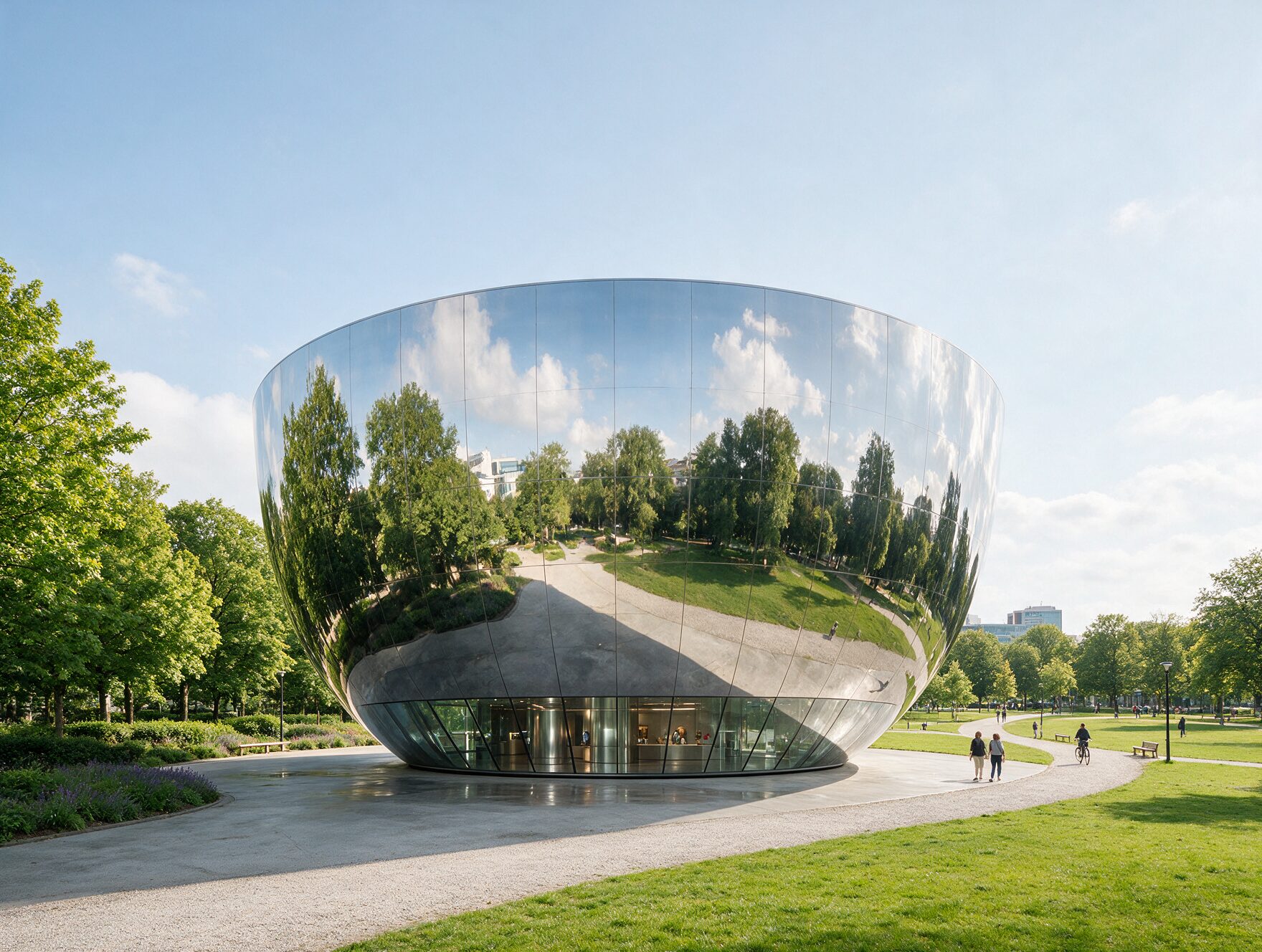
Budget 90 minutes here, more if you want to sit with the rooftop garden, which has its own small forest planted above the galleries.
Delfshaven: The Neighbourhood the War Missed
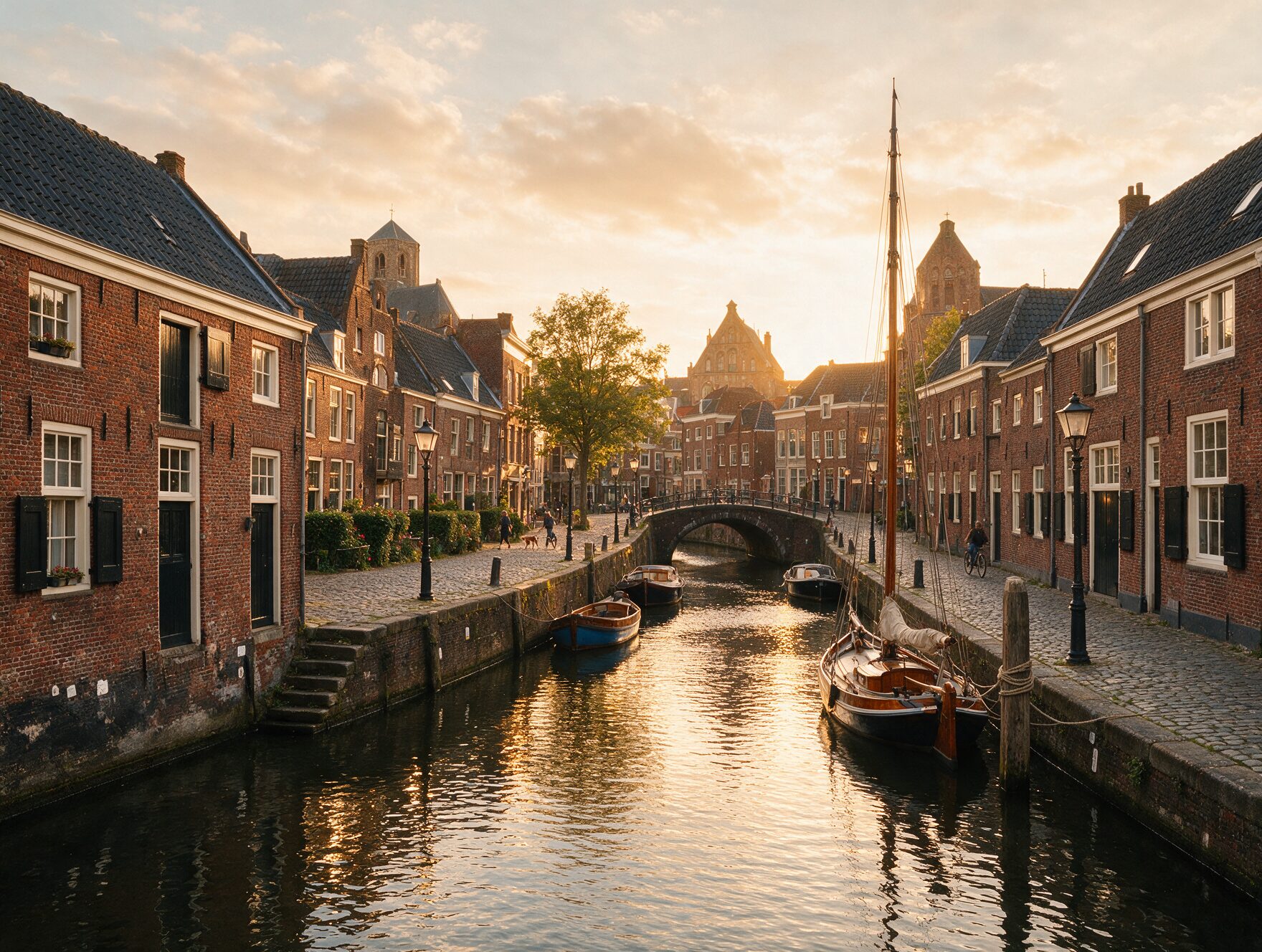
Here’s the thing almost nobody tells you about Rotterdam: because the 1940 bombing targeted the city centre, a handful of outlying neighbourhoods survived intact, and Delfshaven is the best of them. Narrow brick streets, a working canal lined with old warehouses, small craft breweries operating out of former grain stores, and the genuine historical weight of being the harbour the Pilgrim Fathers actually sailed from in 1620, on their way to what eventually became Plymouth and then Massachusetts.
It’s a 15-minute tram ride from the centre and gets a fraction of the foot traffic of the Cube Houses, which is exactly the point. Go in the late afternoon when the light comes in low along the canal.
Witte de Withstraat
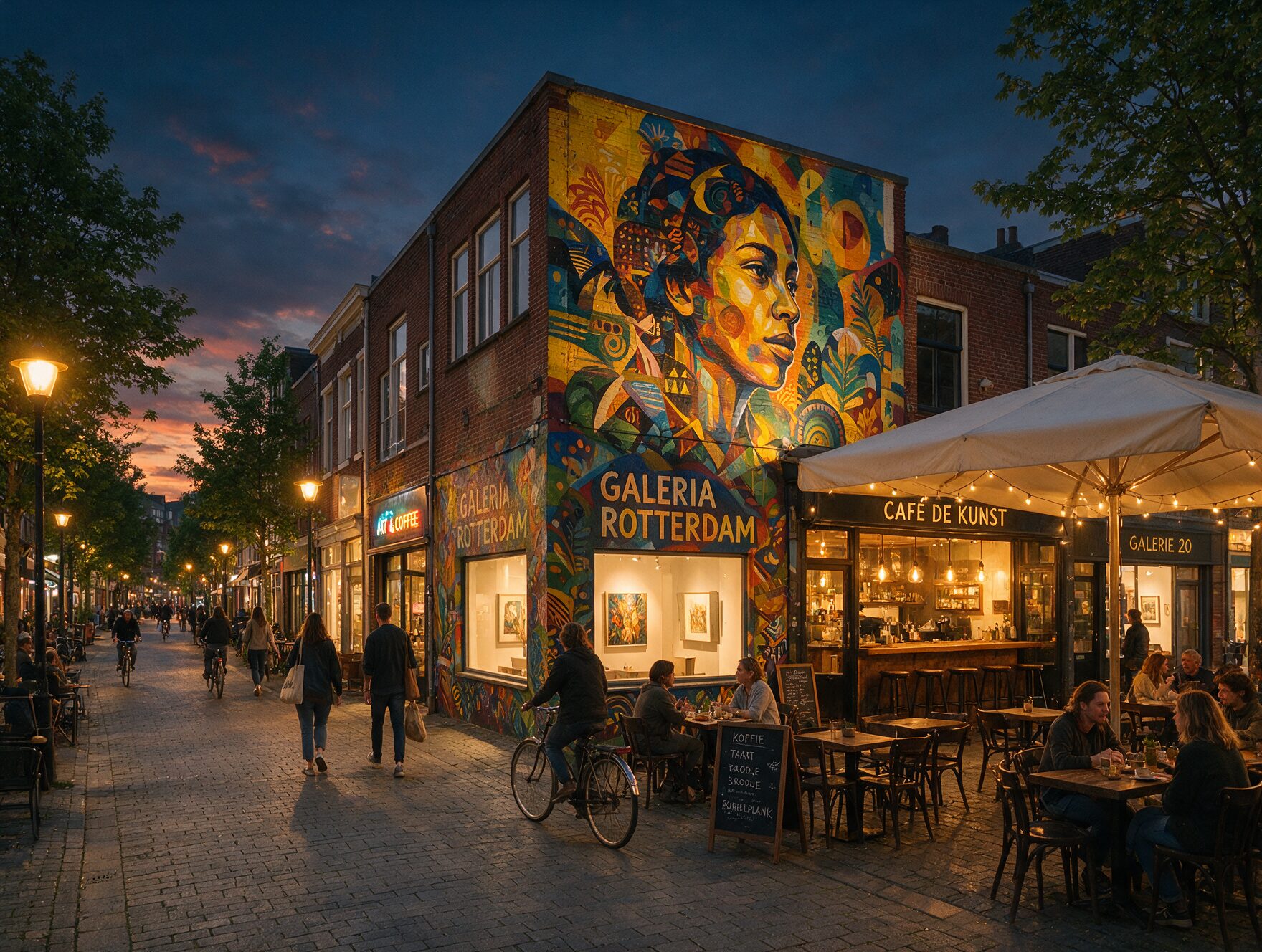
This is Rotterdam’s answer to a gallery district — one street, lined with independent art spaces, vintage clothing shops, and bars that take their cocktail programme seriously rather than as an afterthought. It reads less like a tourist strip and more like the kind of street a resident would actually walk down on a Tuesday evening, which is the honest difference between this and the main shopping drag near Markthal.
A genuine opinion: skip the chain restaurants closer to the Markthal and eat on this street instead. You’ll pay a similar amount and get food that isn’t built for a tour-bus turnover schedule.
Kop van Zuid and Hotel New York
Cross the Erasmus Bridge to the southern bank and you land in Kop van Zuid, a former dockland turned into a mixed district of apartments, offices, and waterside parks. The building worth the detour is Hotel New York, the former Holland-America Line headquarters, built in Art Deco style for a shipping company that once sent hundreds of thousands of European emigrants toward Ellis Island. You don’t need to be a guest to have a coffee or a drink in its historic lobby, and the building’s own small, slightly melancholic museum corner about the emigration years is free and worth ten minutes.
Fenix Food Factory
A converted warehouse on the Katendrecht peninsula, a short walk or water-taxi ride from Kop van Zuid, Fenix houses a cluster of small producers — a smokehouse, a cheese counter, a chocolatier, a coffee roaster — under one roof, built around communal seating rather than individual restaurant tables. It’s the single best lunch stop on this list if you want something that isn’t a sit-down restaurant but is considerably better than a quick bite grabbed near the Markthal crowds.
One More, If You Have a Second Day
Het Nieuwe Instituut, near the Museum Park, is a design and architecture institute most visitors skip entirely, but it’s worth it if you want to understand why Rotterdam rebuilt itself the way it did — exhibitions on urban planning and design history that give real context to everything else on this list. Pair it with a walk through the Museumpark itself, designed by the same landscape architecture studio (OMA/West 8) responsible for several of the city’s public spaces.
A Fun Fact Worth Knowing
Rotterdam is home to Europe’s largest port, and for most of the 20th century it was the busiest port in the world by cargo volume — it’s only been overtaken in recent decades by ports in Shanghai and Singapore. That maritime identity is exactly why Kop van Zuid and Hotel New York exist in the form they do: this was the departure point for one of Europe’s largest emigration waves to the Americas, and the city’s relationship with the water runs through almost every neighbourhood on this list.
Where to Actually Eat
Beyond Fenix, Rotterdam’s food scene rewards wandering rather than booking a famous name. Markthal itself is worth ten minutes to see the ceiling art (a sweeping fruit-and-flower mural, genuinely striking) but the food stalls inside skew tourist-priced; walk two streets further into Witte de Withstraat or the Nieuwe Binnenweg area for the same quality at local prices. A rough daily food budget for a mid-range traveller here runs €40-60 per person across three meals, slightly less than Amsterdam.
A Smart-Spending Tip
The Rotterdam Welcome Card (available for 24, 48, or 72 hours) bundles free public transport with discounted or free entry to a long list of attractions, including some water taxi routes. It’s worth doing the maths against your specific plan rather than buying it reflexively — for a one-day visit hitting three or four paid sights, it usually pays for itself; for a lighter day focused on Delfshaven and Witte de Withstraat, which cost nothing to walk through, you may not need it at all.
Getting Around
Rotterdam’s metro and tram network is genuinely easy to use with an OVpay card or contactless bank card — tap in, tap out, and the fare caps automatically for the day. The water taxi between Kop van Zuid, Fenix, and the city centre is a legitimately good way to see the river and skyline from the water without paying for a dedicated canal cruise, and it runs on the same OVpay system.
A Mistake to Avoid
Don’t do Rotterdam as a rushed half-day squeezed between an Amsterdam morning and an evening flight. I’ve seen itineraries try this, and it collapses into photographing the Cube Houses from the outside and leaving — which tells you nothing about why Rotterdam is actually interesting. Give it a full day if you can, or accept that you’re only doing the highlight reel and plan to come back. The second mistake, almost as common: booking an Amsterdam hotel and treating Rotterdam purely as a day trip when a one-night stopover on the way to or from Belgium would let you see the city properly lit at both dusk and dawn, which is when the Depot and the Erasmus Bridge look their best.
Safety and Practical Notes
Rotterdam is a genuinely safe city to walk through during the day and evening, including as a solo traveller. The main things worth knowing: card payments are accepted almost everywhere, including small food stalls, so you don’t need to carry much cash; a Dutch SIM or eSIM (available at Schiphol or any Rotterdam phone shop) is worth it even for a single day trip, since the OVpay and water taxi apps both work far more smoothly with data; and like most Dutch cities, bike lanes are physically separate from pedestrian paths and treated seriously — step into one without looking and you will hear about it from a passing cyclist.
Who This Itinerary Suits
Design and architecture fans: this is obviously built for you, and you could easily extend Depot and Witte de Withstraat into a full extra day.
Families: Fenix and the water taxi ride are easy wins with kids; the Depot’s rooftop garden gives them somewhere to run around that isn’t a formal gallery floor.
Couples: Delfshaven at golden hour, followed by dinner on Witte de Withstraat, is a quietly good date-day structure that most visitors never think to build.
Frequently Asked Questions
Is Rotterdam worth visiting if I only have time for Amsterdam or Rotterdam, not both?
If this is a first trip to the Netherlands and you want the classic canal-and-windmill imagery, stay in Amsterdam and do day trips to Zaanse Schans or Giethoorn instead. Rotterdam is the better pick for a second visit, or for travellers who’ve already seen “typical” Netherlands and want something architecturally distinct.
How far is Rotterdam from Amsterdam?
About 40 minutes by direct intercity train, with departures roughly every 10-15 minutes from Amsterdam Centraal. It’s an easy day trip or one-night stopover.
Is the Depot Boijmans worth the entry fee?
Yes, for anyone with even a casual interest in art or architecture — it’s a genuinely different museum experience from a standard gallery, and the building itself is the main event as much as the art inside it.
Is Delfshaven safe to walk around in the evening?
Yes, it’s a quiet residential-leaning neighbourhood rather than a nightlife district, which is part of its appeal. It’s well-lit and calm, though as with anywhere, stick to the main canal-side streets after dark rather than wandering into unlit side alleys.
What’s the best time of year to see Rotterdam’s architecture at its best?
Late spring through early autumn gives you the longest daylight for photographing the Depot’s mirrored surface and the Erasmus Bridge, but Rotterdam’s buildings read interestingly in grey winter light too — the city doesn’t rely on blue skies the way canal-town photography usually does.
Plan the Rest of Your Trip
Rotterdam pairs naturally with an Amsterdam base and makes a strong one- or two-day addition to a broader Netherlands itinerary. If you’re building out the full trip, check our 7 nights / 8 days itinerary for where Rotterdam fits best, and our public transit guide for how the OVpay system works across cities.