Netherlands Food Trail: What to Eat in Amsterdam, Rotterdam, Utrecht, Giethoorn, Zaanse Schans & Keukenhof
Dutch cuisine doesn’t get its due. The country that built the global spice trade has one of the most interesting food cultures in Europe — you just have to know where to look past the tourist-facing waffle stalls. Amsterdam alone has more Michelin-starred restaurants per square kilometer than most European cities, plus an Indonesian food heritage that runs so deep it’s considered practically national. Rotterdam has become one of Europe’s better food cities through its immigrant communities and a generation of chefs who rebuilt the place. Even Giethoorn, with its whisper boats and thatched rooftops, has farms that sell cheese and smoked eel pulled straight from the surrounding lakes.
This food trail covers all six cities on Get Tripped’s Netherlands destinations page — from Amsterdam’s morning coffee culture to the late-night seafood bars of Rotterdam, the canal-side lunch spots in Utrecht, the traditional crafts of Zaanse Schans, the village kitchens of Giethoorn, and the seasonal food stalls near Keukenhof.
Table of Contents
- Amsterdam: Coffee Runs, Late-Night Eats & Must-Try Dishes
- Rotterdam: Indonesia on a Plate and Market Feasts
- Utrecht: Canal-side Cafes and the Best Dutch Cheese
- Giethoorn: Farm Produce and Village Kitchens
- Zaanse Schans: The Taste of Traditional Netherlands
- Keukenhof Area: Seasonal Eats Near the Tulip Fields
- 10 Dutch Foods Worth Going Out of Your Way For
- FAQs
Amsterdam: Coffee Runs, Late-Night Eats & Must-Try Dishes
Morning Coffee Runs
Amsterdam’s café culture runs on single-origin espresso and a relaxed approach to mornings. A few places worth knowing:
Lot Sixty One Coffee Roasters (Kinkerstraat, Oud-West) is one of the city’s most respected roasters — the flat whites here convert filter-coffee holdouts. Arrive before 9am if you want a table. White Label Coffee near Amsterdam Centraal is a good option for a coffee before catching a train. Espressofabriek in the Jordaan does brunch on weekends and has outdoor tables on a quiet canal-side street.
Ice Cream
Dutch ice cream tradition is built on schepijs (scooped ice cream) rather than gelato, but the quality varies enormously. IJs Meeuw & Zn on the Admiralengracht canal makes small-batch ice cream in flavors like sea-buckthorn and Dutch stroopwafel. Pesca near the Waterlooplein market does fish and seafood, but the ice cream counter at the entrance is worth a stop even if you’re not eating the full menu.
Good Food (Beyond Tourists)
Rijsttafel (“rice table”) — an Indonesian feast of 20–30 small dishes served together — is the quintessential Amsterdam dinner experience. Tempo Doeloe on Utrechtsestraat has been the benchmark since 1980. It’s not cheap, but it’s the real version. For something more casual, the Indonesian food stalls at Dappermarkt (Amsterdam Oost, open weekday mornings) offer the same flavors at street-food prices.
Must-Try Dishes in Amsterdam
Raw herring (haring): From any proper haringhandel (herring cart). The protocol is to hold it by the tail and lower it into your mouth, though asking for it chopped up and served with bread is also standard. The best season is May–June when new-catch herring (Hollandse Nieuwe) first arrives. Albert Cuypmarkt has several good stands.
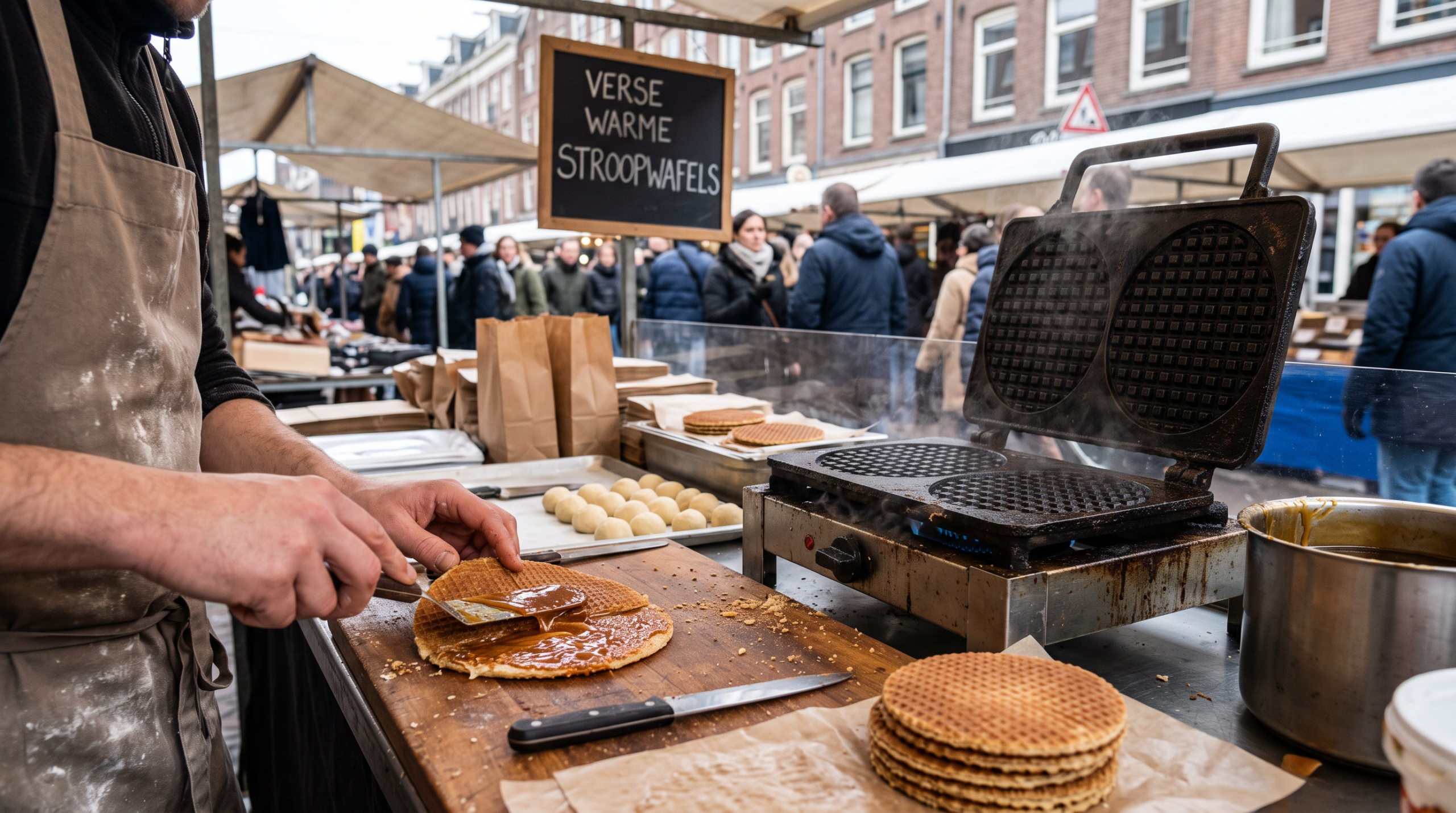
Stroopwafel: Buy from a stall making them fresh — the griddle version with runny caramel is a different product from the shelf version. The Haarlemmerplein Wednesday market has a reliable fresh-waffle vendor.
Bitterballen: Deep-fried Dutch beef croquettes served with mustard. A pub staple — order them at any traditional bruin (brown café). Café de Reiger in the Jordaan does good ones.
Late-Night Eats
FEBO — the Dutch automat chain — deserves one curious visit. It’s a wall of heated glass boxes containing deep-fried snacks (kroket, frikandel) that you buy by putting money in a slot and opening the door. Not fine dining. Entirely worth the experience at midnight. Surinamese roti shops in Amsterdam Oost and Amsterdam Zuid-Oost stay open late and offer excellent value — roti with dhal, chicken, and egg is filling, inexpensive, and genuinely good. Warung Spang-Makandra near Weteringschans is a standout.
Rotterdam: Indonesia on a Plate and Market Feasts
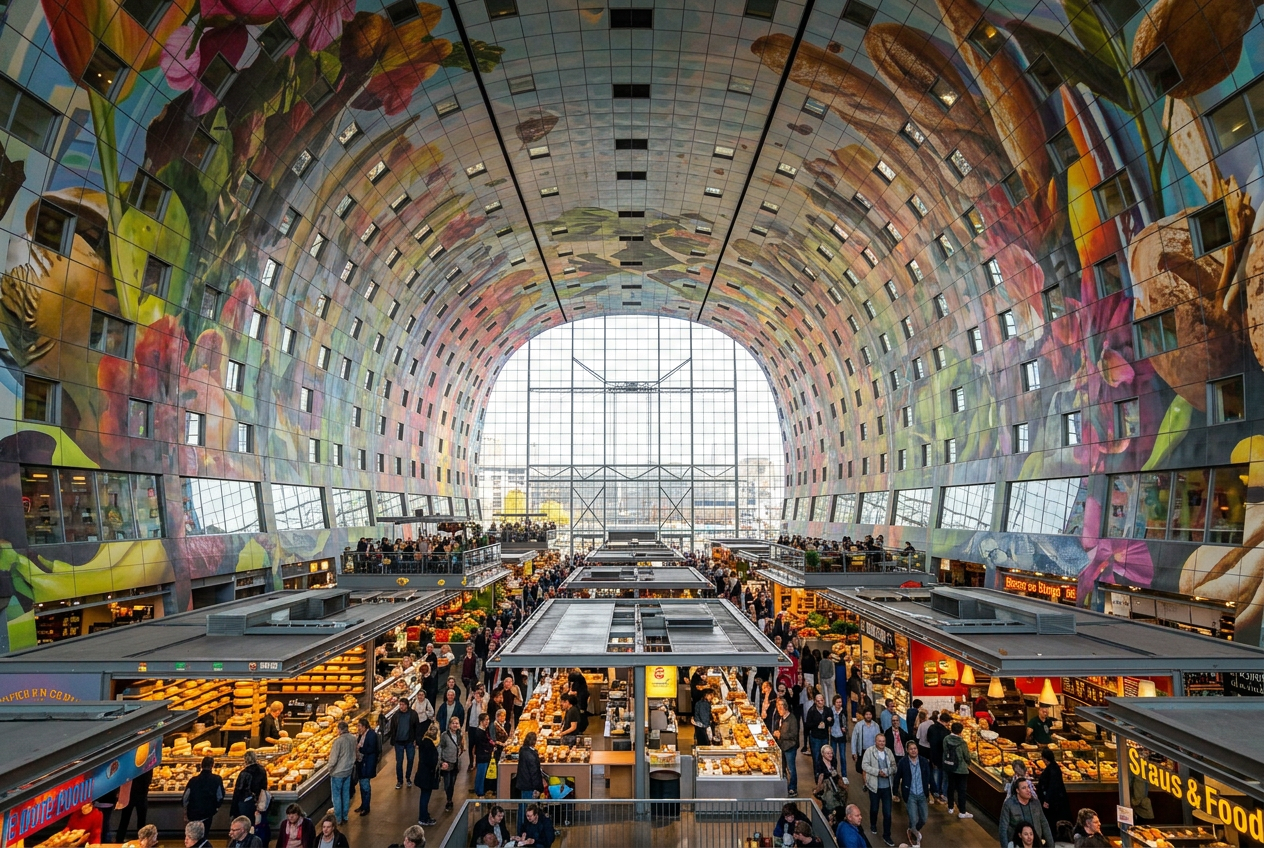
Rotterdam’s food identity was rebuilt as the city itself was — deliberately, from multiple cultural inputs. The Markthal (opened 2014) is the first covered food market in the Netherlands and one of the better ones in Europe: 100 stalls under a rainbow-painted ceiling arch, selling Dutch cheese, fresh fish, Indonesian street food, Dutch stroopwafels, and everything in between. Go for lunch — the stalls are freshest and the crowd is more locals-and-workers than full tourist traffic.
Must-Try in Rotterdam
Surinamese-Javanese food: Rotterdam has a large Surinamese-Indonesian community and some excellent warung (Indonesian home-cooking restaurants) and loempia (spring roll) shops. Dewi Sri near the city center is a local institution for Indonesian food that hasn’t been adjusted for tourist palates. Smit & Dorlas coffee bar at the Markthal does a serious kopi tubruk (Indonesian thick coffee) for something different. New Marché near the Witte de Withstraat art district has West African and Caribbean food stalls.
Stroopwafel Bakery van den Berg, a Markthal stall, makes fresh waffles to order. Melief Bender near the Markthal is one of the city’s best cheesemongers — the aged Gouda (extra belegen, 12+ months) bears no resemblance to the rubbery supermarket version.
Good Food Neighborhoods
The Witte de Withstraat and surrounding streets are Rotterdam’s restaurant corridor — a concentrated stretch of bars, cafes, and restaurants that ranges from Dutch pub food to Korean-Dutch fusion. It’s the area for dinner if you’re unsure where to go. Fenix Food Factory on the Katendrecht peninsula (a former red-light district, now a creative quarter) is a food hall with a brewery, an artisan coffee roaster, a cheese shop, and a cocktail bar — worth the 15-minute walk from the Erasmus Bridge.
Utrecht: Canal-side Cafes and the Best Dutch Cheese
Utrecht’s food scene punches above its size. The canal wharves — the sunken terrace that runs along the main canals — are lined with cafes and restaurants at water level, which creates one of the better lunch atmospheres in the Netherlands. Café Orloff on the Oudegracht wharf has outdoor tables right at the water; order a cheese board and a coffee and watch boats navigate the narrow channel above.
What to Eat in Utrecht
Utrechtse spritsen: A crispy butter biscuit unique to Utrecht, typically served with coffee. Available at most bakeries in the old center. De Broodtrommel (The Bread Tin) on the Oudegracht is a good spot for lunch — their soups and fresh bread boards are made daily.
The Saturday market on Vredenburg Square is the largest outdoor market in the Netherlands. The cheese section is worth arriving early for — wheels of aged Gouda, smoked cheese, and herb varieties from regional farms. The market vendors give free samples without hesitation.
Coffee: Koffie Leute on Twijnstraat is an Amsterdam-quality coffee bar in a quieter setting. The neighborhood around Twijnstraat has become Utrecht’s independent café and boutique corridor over the past decade.
Giethoorn: Farm Produce and Village Kitchens
Giethoorn’s food story is entirely local. The surrounding Weerribben-Wieden wetlands produce smoked eel (gerookte paling), which appears on menus at the village’s handful of traditional restaurants. ‘t Fanfare on the main waterway is the most established of these — good Dutch lunch plates (soup, open-faced sandwiches with local cheese and eel) in a building that has occupied the same spot since the 1930s.
The village also has several farm shops along the walking path that sell local dairy, honey, and preserves. If you’re visiting in the morning and plan to spend the afternoon on the boat, buying cheese, bread, and smoked fish from a farm shop and eating on the water is genuinely a better option than most of the tourist-facing restaurants. The honey at Imkerij de Weide (Giethoorn beekeeper) is worth taking home if you can find it — the wetland wildflowers give it an unusual flavor.
Zaanse Schans: The Taste of Traditional Netherlands
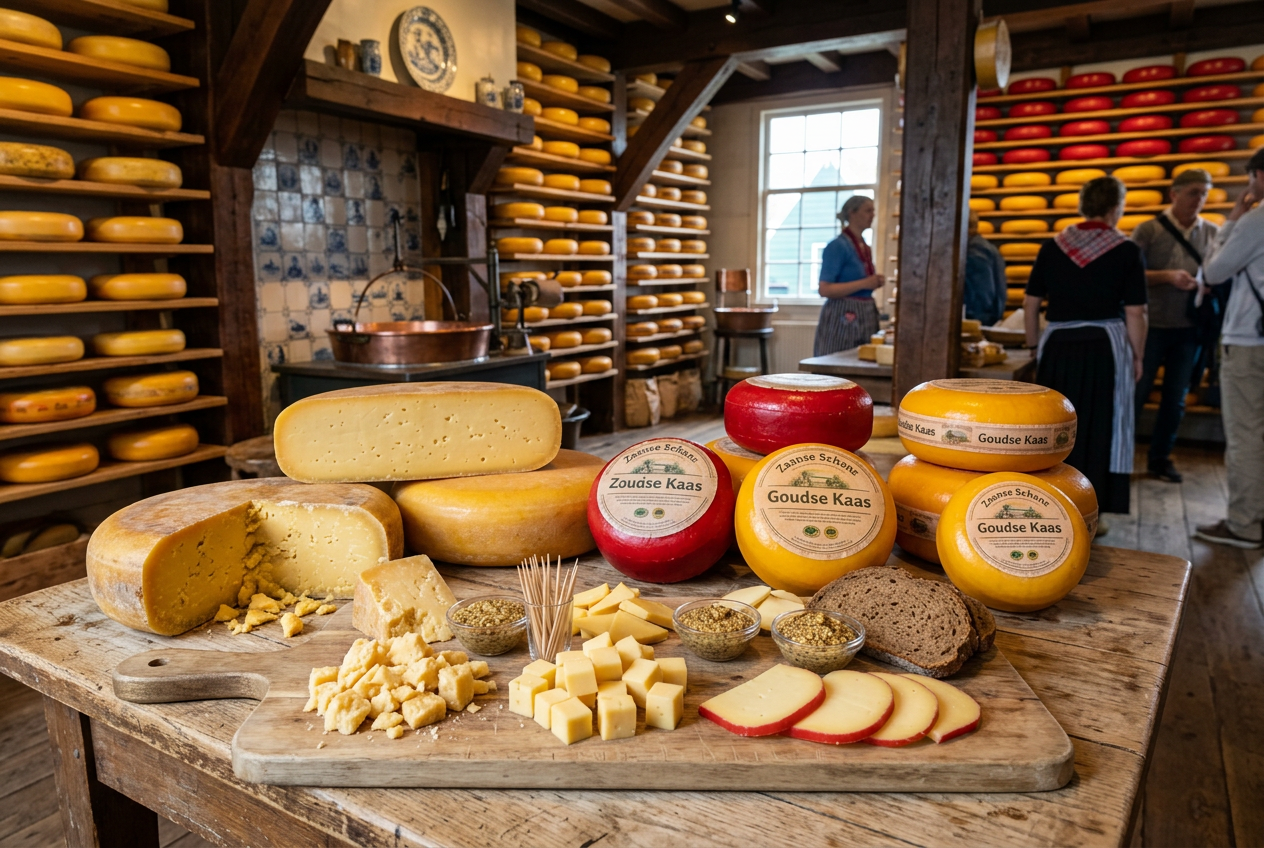
Zaanse Schans exists partially as a living food museum — several of the working buildings are food producers. The De Catharina Hoeve cheese farm offers free tastings of young and aged Gouda and Edam, and sells wheels to take home. The clog workshop is adjacent and free to visit. The mustard mill De Huisman grinds mustard seeds and sells traditional Dutch mustard (quite mild compared to French — the Dutch version is used for dipping bitterballen and saucing braised meats).
Lunch at Zaanse Schans is typically done at the central restaurant area, which ranges from passable to mediocre. A better option: buy cheese, mustard, and bread from the producer shops and eat on the riverbank with a view of the windmills. It’s both better food and better scenery.
Keukenhof Area: Seasonal Eats Near the Tulip Fields
Keukenhof itself has three restaurants inside the garden — they’re functional, not exceptional, and they fill up completely by noon. The better strategy is to eat in Lisse (the nearest town) before entering the garden in the morning, or to head into Haarlem (20 minutes) for lunch after visiting.
Pancake House De Smulpot in Lisse does thick Dutch pannenkoeken (pancakes) in both sweet and savory versions — the Dutch pancake is larger and thinner than a French crêpe but thicker than a full French pancake; the bacon and apple version with powdered sugar is the local way to eat it.
The area around the Bollenstreek (bulb fields) has several farm shops open during tulip season that sell seasonal produce, tulip bulbs (it’s legal and straightforward to bring dried bulbs back to India — declare them at customs), and local preserves. The Bloemencorso Bollenstreek flower parade (typically the last weekend of April) passes through Lisse and several nearby towns — if you’re timing your trip to April, this is worth building into the plan.
10 Dutch Foods Worth Going Out of Your Way For
- Haring (raw herring): New-catch season May–June is the best time; ask for Hollandse Nieuwe
- Fresh stroopwafel: Only from a market stall with a griddle, not a shop
- Rijsttafel: Indonesian rice table — Amsterdam or Rotterdam has the best versions
- Aged Gouda (extra belegen): From a market vendor or a quality cheesemonger, not a supermarket
- Bitterballen: Deep-fried beef croquette, ordered with mustard at a brown café
- Poffertjes: Small fluffy buckwheat pancakes served with butter and powdered sugar
- Smoked eel (gerookte paling): From Giethoorn area restaurants; a Dutch specialty that’s hard to find elsewhere
- Kroketten: Elongated croquette served in a soft bread roll (kroketbroodje); Dutch fast food done right
- Appelgebak: Dutch apple pie, served at room temperature with a thick slice and cream; every café has a version, but quality varies — look for homemade signs
- Dutch mustard: Mild, coarse-ground, excellent with aged cheese — take a jar from Zaanse Schans home
Frequently Asked Questions
Is Dutch food vegetarian-friendly?
Better than its reputation suggests. Amsterdam and Utrecht have strong vegetarian and vegan café scenes. Traditional Dutch cooking is meat-heavy (stamppot, smoked meats, herring), but most restaurants offer solid vegetarian options. Indonesian food — so central to Dutch culture — has many naturally vegetarian dishes. See our Netherlands vegetarian and vegan guide for specific restaurant recommendations.
What’s the difference between Dutch and Belgian stroopwafels?
The stroopwafel is distinctly Dutch — invented in Gouda in the early 1800s. The Belgian connection is with Belgian waffles (gaufres), which are lighter, larger, and completely different. Dutch stroopwafels are thin, crispy, and bound by a layer of caramel syrup; the fresh market version has a runny center that the packaged version doesn’t replicate.
Where are the best markets for food in Netherlands?
Albert Cuyp Market (Amsterdam) for daily open-air variety. Dappermarkt (Amsterdam) for multicultural street food. Markthal (Rotterdam) for quality covered-market experience. Vredenburg Market (Utrecht, Saturdays) for cheese and regional produce. Haarlemmerplein Wednesday market (Amsterdam) for fresh stroopwafels and local dairy.
Can I find Indian food in the Netherlands?
Yes — Amsterdam, Rotterdam, and Utrecht all have Indian restaurants. Quality varies; the better ones are in Amsterdam’s Jordaan and Amsterdam Oost areas. That said, the Indonesian food culture in the Netherlands is so well-developed that it satisfies a similar craving in a different direction — the spicing and fragrance has clear South/Southeast Asian roots.
Want curated food experiences built into your Netherlands itinerary? Get Tripped creates customized Netherlands trips that include the market mornings, the rijsttafel dinners, and the farm-to-table stops that don’t show up in generic tour packages. Talk to us on WhatsApp to start building your food-focused Netherlands trip.