Utrecht gets described, constantly, as “what Amsterdam used to be before it got crowded” — canals, old streets, bikes everywhere, fewer tour groups. That comparison undersells it. Utrecht isn’t a quieter Amsterdam; it’s a genuinely different kind of Dutch city, built around one of the country’s largest universities, with a distinct wharf-cellar canal architecture — bars and cafés built directly into the old boat-loading cellars below street level, right at the water — that Amsterdam simply doesn’t have in the same form.
This is a guide to actually living like a local for a day or two: where the students drink, which canal-level cellar bars are worth the trip, and the neighbourhood rhythms that don’t show up on a standard sightseeing list.
Table of Contents
- Why Utrecht Feels Different
- The Oudegracht and Wharf Cellars
- ‘t Oude Pothuys — The Classic Wharf Cellar
- Café Flater and the Student Crowd
- Domplein’s Three Neighbours
- How Locals Actually Get Around
- The Dom Tower, Done Right
- A Mistake to Avoid
- FAQs
Why Utrecht Feels Different
Utrecht University is one of the oldest and largest in the Netherlands, and the city’s entire rhythm bends around it — term-time weekday evenings have a buzz that completely changes during university holidays, something worth knowing if you’re trying to catch the city at its liveliest. The old centre holds something like 88 pubs and cafés by one local count, packed into a compact historic core, which gives Utrecht a bar-to-square-metre density that feels closer to a European capital than a mid-sized Dutch city.
The Oudegracht and Wharf Cellars
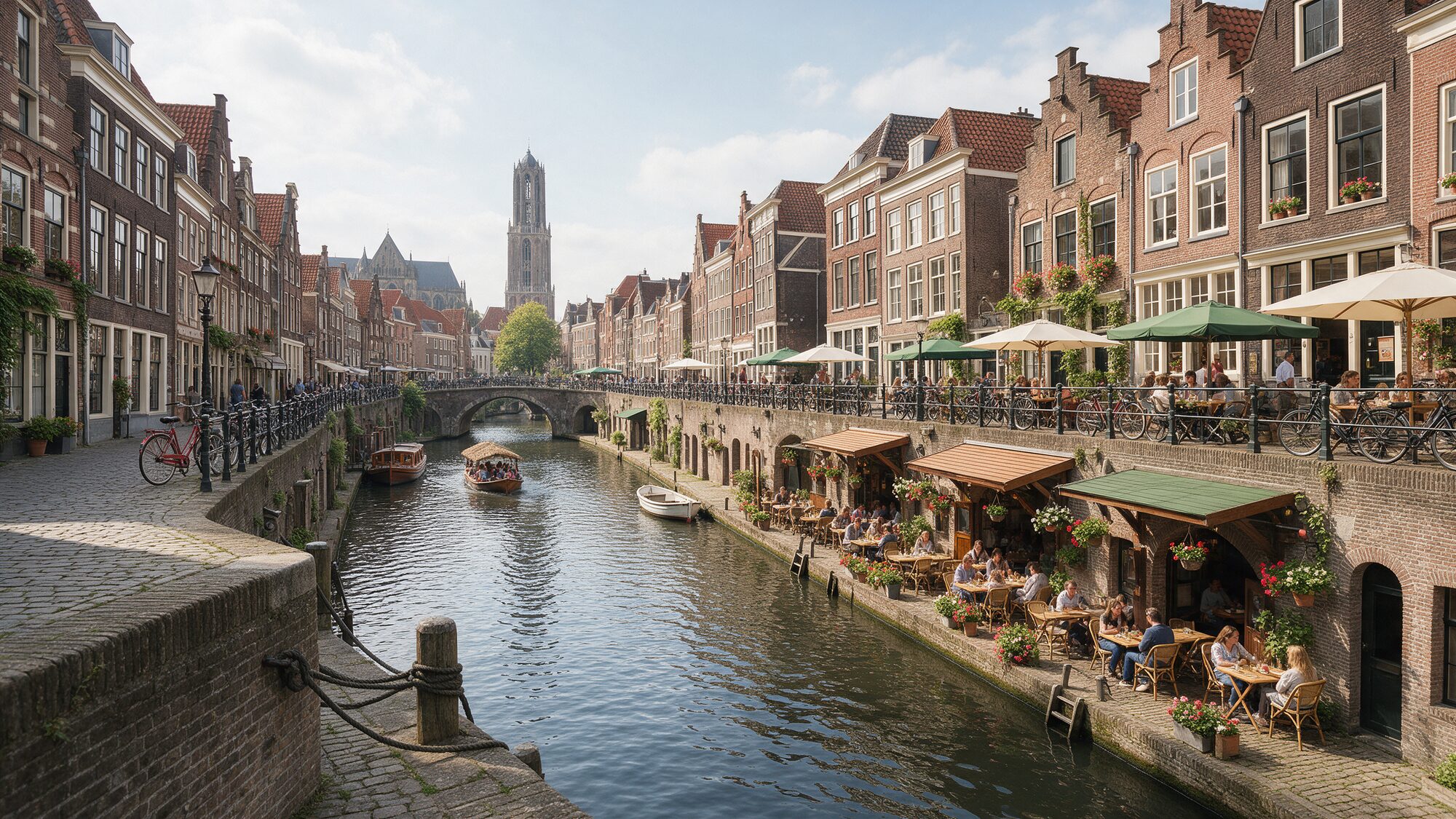
The Oudegracht is Utrecht’s defining feature and the reason the “local culture” angle on this city works at all: it’s a canal with two levels of quay, the upper one for regular street traffic and the lower one, right at the water, lined with cellars that were originally built for loading and unloading boats directly into storage. Those cellars are now bars, cafés, and restaurants, which means you can sit literally at water level, inside what used to be a warehouse, in a way that has no real Amsterdam equivalent — Amsterdam’s canal houses don’t have this double-quay structure.
‘t Oude Pothuys — The Classic Wharf Cellar
At Oudegracht 279, ‘t Oude Pothuys is the wharf-cellar bar locals point to first — live music most nights, often jazz, a canal-side terrace, and a crowd that’s leaned more artistic than strictly student since around the pandemic years, though it still fills up nightly. It’s not a quiet conversation bar; go here expecting music and a lively room, and you’ll have a better time than if you’re hoping for a calm chat over drinks.
Café Flater and the Student Crowd
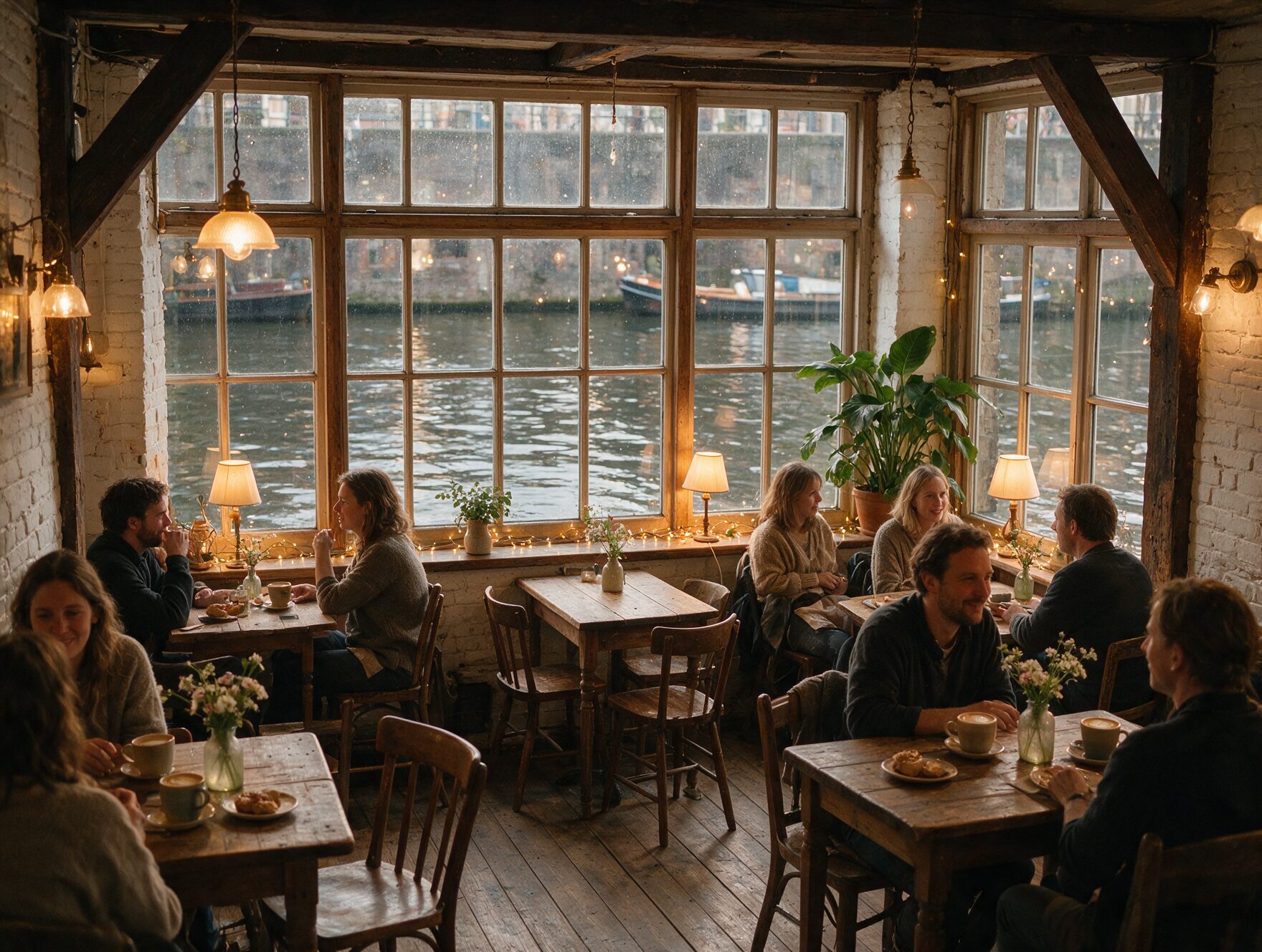
Café Flater, at Oudegracht 140, calls itself the city’s “favourite living room,” and the description holds up — it’s calm in the afternoon, a genuinely good spot to sit with a coffee and watch canal traffic go by, then shifts into louder music and disco lighting by evening. It draws a specific crowd tied to the Spin boardsports student association, but it’s welcoming to anyone, and the afternoon-to-evening shift in character is worth timing your visit around depending on what kind of experience you want.
Domplein’s Three Neighbours
On Domplein, three bars sit side by side, each with a distinct personality: Badabing is the loudest of the three and leans into dancing; Grand Café Lebowski has an extensive menu and a White Russian locals actually talk about; Walden is the quiet one, better suited to dinner and live music than a big night out. Having all three within a few metres of each other means you can genuinely sample the range of Utrecht’s evening scene — loud, social, or low-key — without moving more than a minute’s walk.
How Locals Actually Get Around
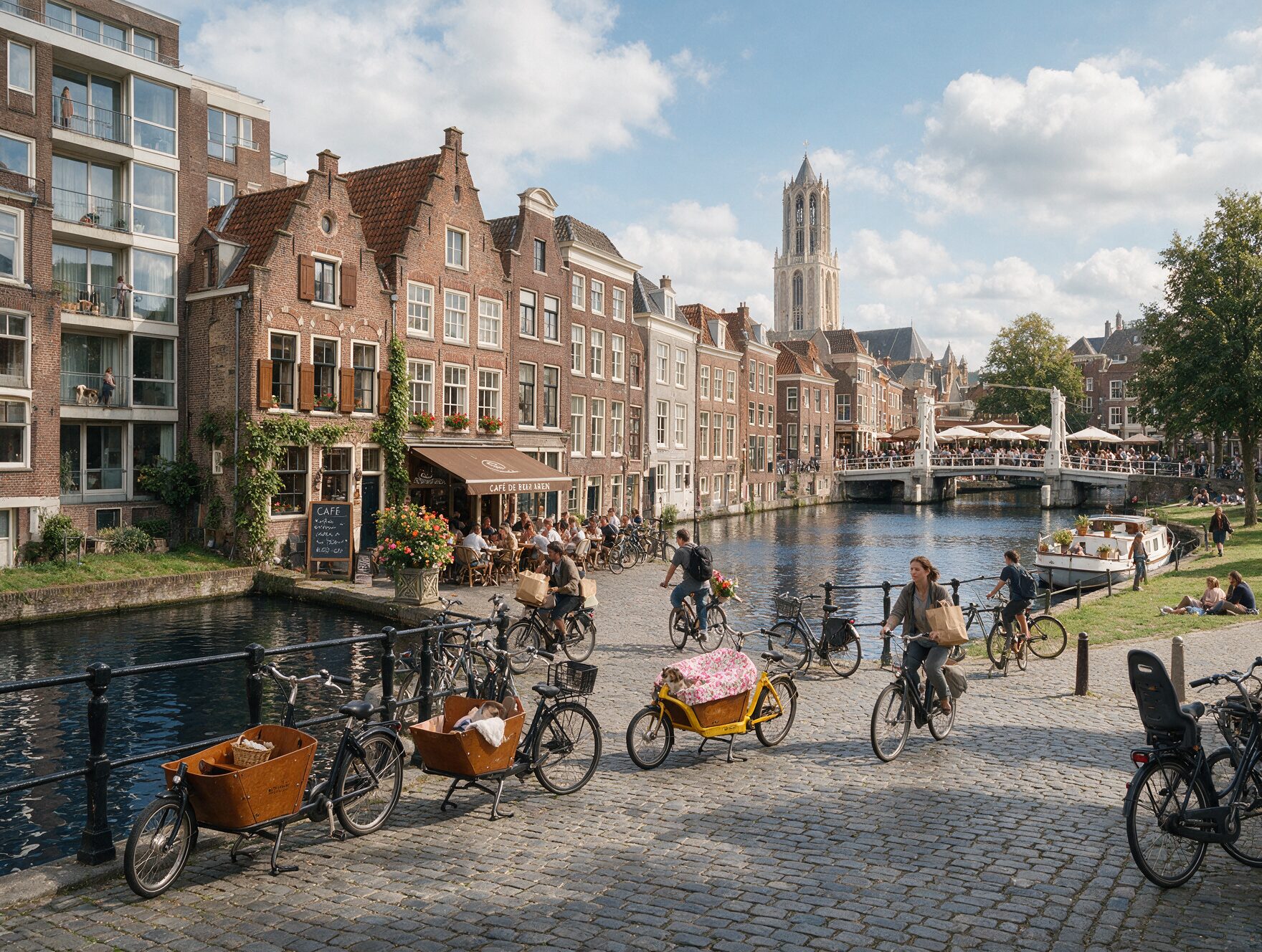
Utrecht has one of the highest bicycle-use rates of any Dutch city, which is a real claim given how high that bar already is nationally. Renting a bike for a day (widely available near Utrecht Centraal, typically €10-15/day) and using it the way locals do — as the default way to move between the centre and surrounding neighbourhoods, not as a novelty activity — is the single biggest thing you can do to actually experience the city the way residents do rather than as a visitor walking a fixed loop.
Hoog Catharijne, Honestly Assessed
Attached to Utrecht Centraal is Hoog Catharijne, one of the largest shopping centres in the Netherlands — not a hidden gem by any definition, but worth a mention because it’s genuinely useful if you need something practical (a charger, a missing toiletry, a quick bite) between trains, rather than a destination in its own right. Treat it as infrastructure, not a sightseeing stop, and you’ll use it the way locals actually do.
The Dom Tower, Done Right
The Dom Tower is the tallest church tower in the Netherlands and the obvious landmark, but most visitors just photograph it from the ground. Climbing it (guided tours only, roughly 465 steps, around €12.50) gives you the one elevated view of Utrecht’s rooftops and canal grid that makes sense of the whole city’s layout — book ahead, since tour slots fill up, especially on weekends.
De Stichtse Taveerne — The One for Board Games and Cheap Beer
At Twijnstraat 43, this dusty billiard café stretches back toward the Oudegracht and offers pool, darts, and a shelf of board and card games alongside genuinely cheap beer — it’s the spot locals describe when you ask where to go if you don’t want a scene, just a low-key evening with friends. It also hosts occasional themed “café” evenings run by university philosophy societies, which gives you a sense of just how embedded student life is in Utrecht’s bar culture compared to a more generic European city centre.
Payments and Practical Notes
Card and contactless payments are the norm everywhere in Utrecht, including small cafés and bike rental counters — carrying significant cash isn’t necessary. A Dutch SIM or eSIM is useful for navigating the one-way cycling infrastructure, which is more extensive and more strictly observed here than almost anywhere else in the country; stepping into a bike lane without checking both directions is a genuine hazard, not just an inconvenience to cyclists.
A Smart-Spending Tip
Skip the pricier chain cafés directly on Domplein and the main shopping streets, and head two streets over toward Twijnstraat or the stretch of Oudegracht past Pothuys — the price difference for a similar coffee or beer is real, and you’ll be sitting somewhere with more actual local character besides.
A Mistake to Avoid
Don’t visit Utrecht only during Dutch university holiday periods if the “local life” angle is why you’re coming — the city’s bar and café scene genuinely quiets down when students are away, and a visit timed during term time gives a noticeably different, livelier impression of the place. If you’re set on a specific travel window for other reasons, that’s fine, just adjust your expectations for how buzzy the student-focused spots will feel.
A Fun Fact Worth Knowing
Utrecht very nearly became the Netherlands’ capital instead of Amsterdam at several points in Dutch history — it was the most important city in the region through the medieval period, and the Union of Utrecht, signed here in 1579, laid the groundwork for Dutch independence from Spain. The city’s historical weight is genuinely disproportionate to how often it gets mentioned compared to Amsterdam today.
A Few Honest Notes by Traveller Type
Solo travellers: the Science Café HideOut near the university’s Science Park, and the volunteer-run Cambridgebar in the SSH student housing complex, are both genuinely easy to walk into alone, cheap, and built around casual conversation rather than a scene you need a group for.
Couples: an evening at ‘t Oude Pothuys followed by a slow walk along the upper Oudegracht quay, away from the busiest cellar bars, makes for a good low-key evening.
Families: the Dom Tower climb and a daytime bike rental along the canal paths work well; save the wharf-cellar bar scene for after kids are settled for the evening.
Frequently Asked Questions
Is Utrecht worth visiting as a day trip from Amsterdam, or does it need more time?
A day trip (it’s about 25-30 minutes by direct train from Amsterdam Centraal) covers the Dom Tower and a walk along the Oudegracht reasonably well, but the “local life” angle in this guide genuinely rewards an overnight stay, since the evening bar scene is where Utrecht’s character comes through most clearly.
Is Utrecht safe to walk around at night?
Yes, it’s a generally safe, well-lit city centre, and the canal-level wharf cellars are busy enough in the evening that you’re rarely walking alone along the water. Standard precautions apply, as anywhere.
Do I need to speak Dutch to fit in at these local spots?
No — English is spoken fluently and comfortably almost everywhere in Utrecht, including by bar and café staff at student-focused spots. You won’t be treated as an outsider for not speaking Dutch.
What’s the best time of year to experience Utrecht’s café and bar culture?
September through May, during the university’s term time, for the liveliest version. Summer (July-August) is quieter on the student-culture front but pleasant for canal walks and outdoor terraces during the day.
Is Utrecht expensive compared to Amsterdam?
Generally a little cheaper — drinks, food, and accommodation all run modestly lower than central Amsterdam, which is part of why it’s worth considering as a base for part of a Netherlands trip rather than only a day trip.
What should I eat in Utrecht that isn’t available everywhere in the Netherlands?
Look out for the city’s food-truck culture around the university’s Science Park — a cluster of small, specific operations (one serving broodje ben, a type of filled sandwich, is a long-running fixture) that cater to students on a budget but welcome anyone passing through, and give you a far more specific food experience than a generic café menu in the main square.
Is cycling really necessary, or can I see Utrecht on foot?
The old centre itself is compact enough to walk comfortably, but a bike genuinely opens up the surrounding neighbourhoods and the Science Park area, where a meaningful chunk of the “local life” angle in this guide actually happens. If you only have a single day, walking the centre is fine; with two days, renting a bike for at least one of them is worth it.
Plan the Rest of Your Trip
Utrecht works well as either a day trip or a one-to-two-night stop within a broader Netherlands itinerary. See our 7 nights / 8 days itinerary for where it fits, and our vegetarian and vegan food guide if you’re trying to navigate the café and restaurant scene with dietary restrictions.