Zaanse Schans is close enough to Amsterdam — 17 minutes by Sprinter train — that it’s become the default “windmill photo” stop for anyone with half a day free, and most visitors treat it exactly that way: step off the train, walk to the row of windmills by the river, take the photo everyone takes, maybe buy a wedge of cheese, and head back. That’s a perfectly fine half-day. But Zaanse Schans is an open-air museum built around actual working mills and craft workshops, not a static photo backdrop, and the five things most visitors skip are honestly better than the one thing everyone comes for.
Here are five hidden gems within Zaanse Schans itself worth deliberately seeking out, plus how to make the obvious windmill photo better than the one everyone else takes.
Table of Contents
- Getting There and the Lay of the Land
- 1. Het Jonge Schaap — The Working Sawmill
- 2. The Verkade Chocolate-and-Biscuit Line
- 3. The Original Albert Heijn Shop
- 4. The Boat Trip on the Zaan
- 5. The Bakkerijmuseum
- Hours, Prices, and Getting There
- A Mistake to Avoid
- FAQs
Getting There and the Lay of the Land
The Sprinter train from Amsterdam Centraal to Zaandijk-Zaanse Schans takes about 17 minutes, runs roughly every 15 minutes from platforms 13-15, and costs around €5 one-way or €10 for a day return using OVpay or the NS app. From the station, it’s a 10-minute walk over a wooden bridge to the village itself — genuinely one of the easiest, lowest-effort day trips from Amsterdam on this list of destinations.
The village is organised along the Zaan river, with the famous row of windmills on one bank and the workshops, museum, and shops clustered along the path. Most visitors walk the main strip once and leave; the five spots below sit just off that main path.
1. Het Jonge Schaap — The Working Sawmill
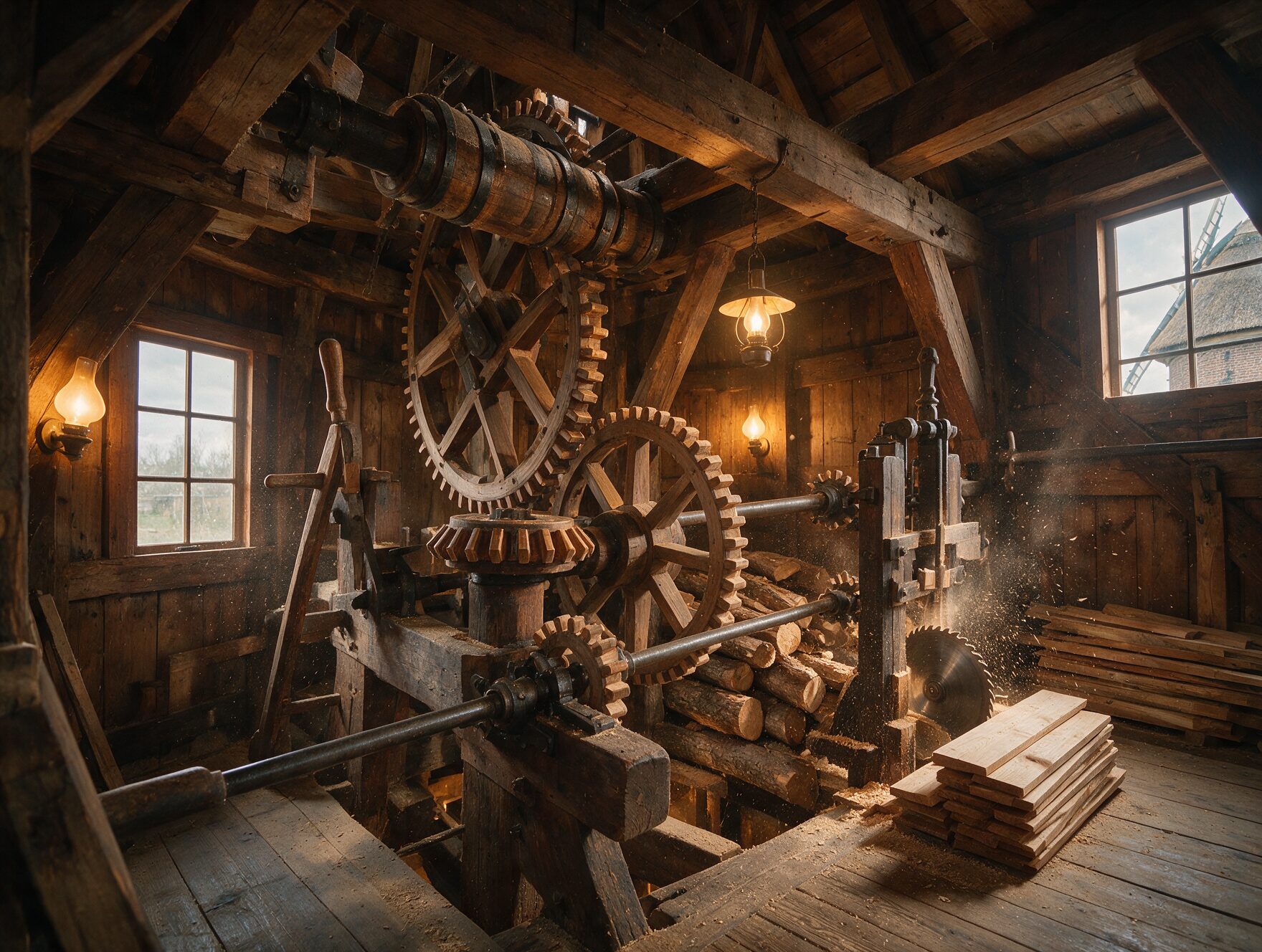
Of the handful of windmills you can actually enter (entry roughly €5-6 each, or bundled into the €29.50 Zaanse Schans Card covering the Zaans Museum, three mills, and an audio guide), Het Jonge Schaap is the one that actually demonstrates its original function in real time rather than just letting you climb for the view. It’s a working sawmill, and watching the mechanism cut logs — a genuinely loud, physical process — tells you more about why these buildings existed at all than any plaque could. It’s popular with kids for exactly that reason: it’s loud, it moves, and something visibly happens.
2. The Verkade Chocolate-and-Biscuit Line
Inside the Zaans Museum (€15 entry), the Verkade Pavilion runs a small working production line that replicates the chocolate-and-biscuit manufacturing the Verkade company was known for regionally for over a century. It’s a strange, slightly nostalgic corner of the museum that most day-trippers skip entirely because it’s indoors and doesn’t photograph as well as a windmill — but it’s one of the more tactile, memorable things in the whole complex, and it comes with samples.
3. The Original Albert Heijn Shop
Albert Heijn is the Netherlands’ biggest supermarket chain today, and almost nobody realises its very first shop, from 1887, still stands at Zaanse Schans, preserved as a small free museum. It’s a ten-minute stop, genuinely free, and gives you a strange, specific bit of Dutch retail history — a reminder that this whole area was an industrial and commercial engine for the country long before it became a tourist attraction.
4. The Boat Trip on the Zaan
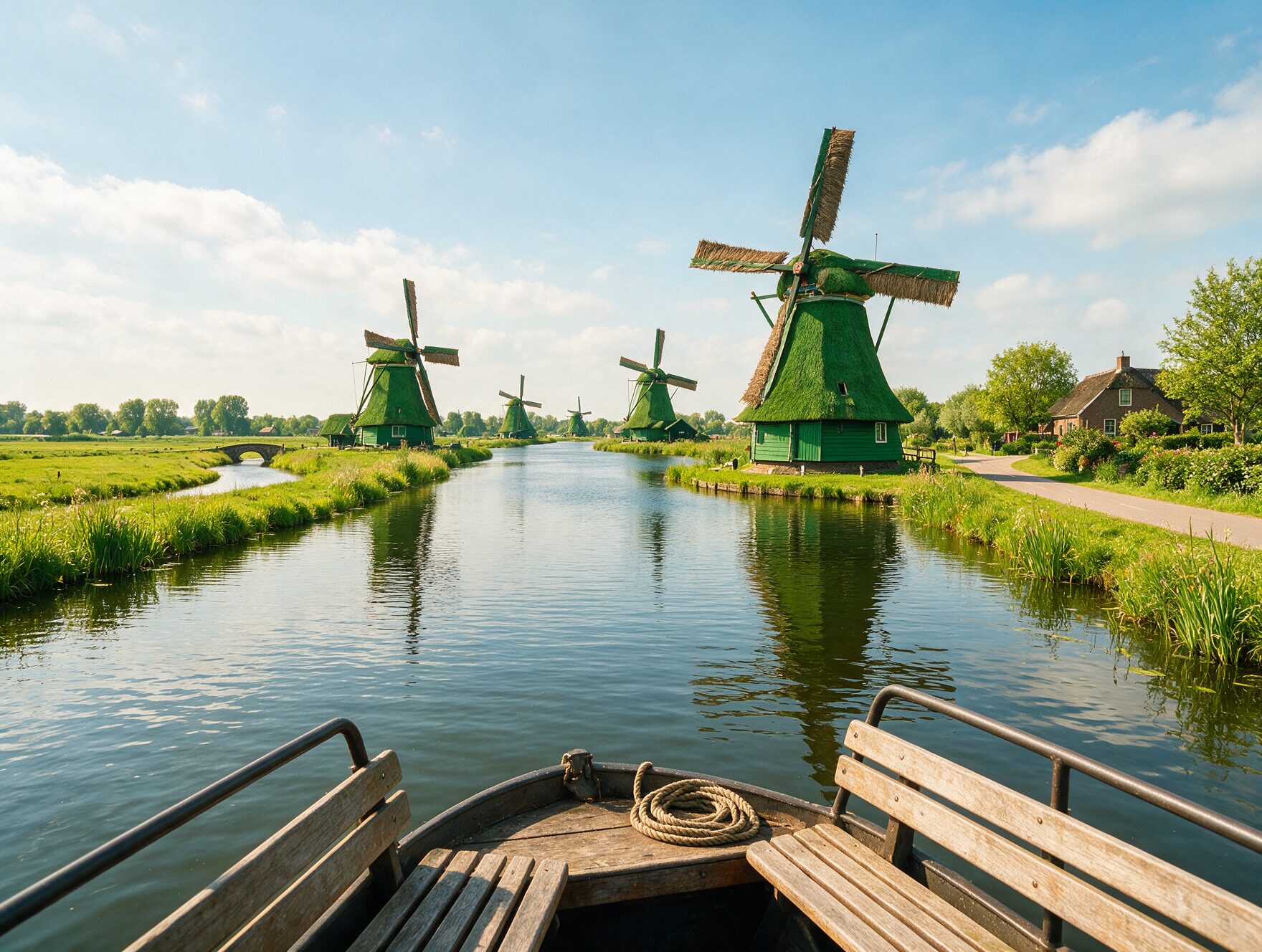
For about €11, a 50-minute boat trip on the Zaan river gives you the view of the windmills that almost nobody takes the time for — from the water, looking back at the row of mills rather than standing in front of them. It’s the single best photography upgrade available at Zaanse Schans, and most visitors don’t know it exists because it’s not as heavily promoted as the walking path photo spot.
5. The Bakkerijmuseum
A small bakery museum (€7 entry) dedicated to Zaanse koek, a regional spiced biscuit tradition, with demonstrations of the traditional carved wooden moulds used to press the designs into the dough. It’s easy to miss, tucked slightly away from the main strip, and it’s the kind of specific, regional food-history stop that tells you something real about the Zaan area rather than a generic “Dutch treats” shop.
Hours, Prices, and Getting There — the Practical Rundown
Opening hours shift seasonally, and some of the individual windmills only open for a few hours a day even within the main visiting season, so confirm specific mill hours before you plan around climbing one. The free attractions — the cheese farm (Catharina Hoeve, with Gouda-making demonstrations roughly every 30 minutes and free tastings), the clog workshop (Klompenmakerij, with painted decorative clogs at €10-30 and working wearable pairs at €40-80), and the Albert Heijn museum shop — don’t require tickets and can be done in any order. Budget a full day rather than a half-day if you want to do more than the windmill photo and the cheese farm.
A Fun Fact Worth Knowing
At its industrial peak in the 18th and 19th centuries, the Zaan region had roughly 600 windmills in operation — not for grinding grain into flour, as most people assume, but for an enormous range of industrial work: pressing oil from seeds, sawing timber, grinding pigments for paint, and processing mustard seed. Fewer than a thousand traditional windmills survive in the whole of the Netherlands today, and the eight preserved at Zaanse Schans are among the best-maintained working examples left from what was once a genuinely massive industrial landscape.
A Note on Food Beyond the Cheese Samples
Past the free cheese tastings at Catharina Hoeve, the village has a couple of small cafés serving simple Dutch lunches — pea soup, bitterballen, a sandwich with local cheese — reasonably priced at €8-14 for a main. It’s not destination dining, and you shouldn’t expect it to be; treat lunch here as fuel for the walking and save a proper meal for Amsterdam or wherever you’re staying.
Payments and Connectivity
Card payments, including contactless, work everywhere at Zaanse Schans — ticket counters, the cheese farm shop, cafés. Mobile data coverage is solid the entire way from Amsterdam Centraal, including on the train, so there’s no real connectivity concern here, unlike some of the more rural stretches of a Netherlands itinerary.
A Photography Tip
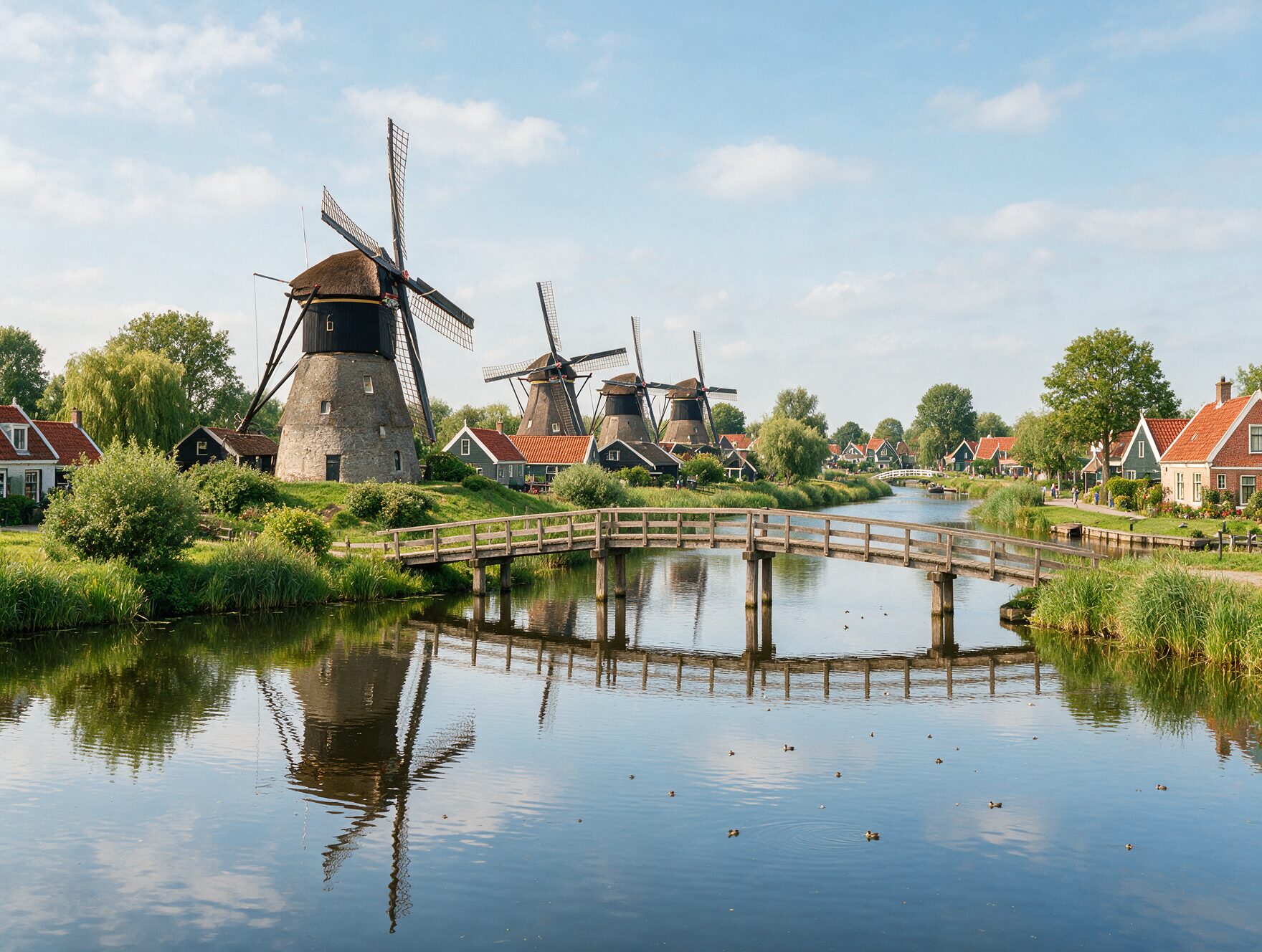
Everyone photographs the windmills from the wooden bridge at the village entrance. The better angle, and the one with far fewer people in frame, is from the riverfront path just past the bridge, looking back along the row at a slight diagonal rather than straight-on — it captures the depth of all the mills in a single frame instead of flattening them into a line.
A Smart-Spending Tip
Buy your cheese and Zaanse koek here rather than in central Amsterdam if you’re planning to bring food gifts home — the page I researched for this guide notes vacuum-packed cheese wheels at Zaanse Schans run 10-20% cheaper than equivalent products in Amsterdam’s touristy central shops, and it travels well in checked luggage if vacuum-sealed, which the shop will do for you on request.
A Mistake to Avoid
Don’t skip checking individual windmill opening windows and then show up expecting to climb Het Jonge Schaap or De Kat on a whim — several of the mills run limited daily hours, and arriving at 4pm hoping to climb one that closed at 3 is a common, avoidable disappointment. Check the specific mill schedule the morning you go, not the week before.
A Bit of Context on Why This Place Exists
Zaanse Schans isn’t an original village in the sense of having always stood exactly where it is — the buildings here were relocated from across the wider Zaan region starting in the 1960s, specifically to preserve a cluster of authentic 17th- and 18th-century windmills, houses, and warehouses that were otherwise being lost to industrialisation and urban expansion elsewhere in the area. Knowing this changes how you see the place: it’s less a village frozen in amber and more a deliberate, curated rescue of genuine buildings that would otherwise not have survived at all.
Who Should Prioritise What
Families: Het Jonge Schaap, the cheese farm, and the clog workshop are the three best stops for keeping kids genuinely engaged rather than just walking past buildings.
Food-focused travellers: the Bakkerijmuseum and Catharina Hoeve cheese farm, paired with a stop at the Albert Heijn museum shop for context on Dutch retail, make a surprisingly coherent food-history afternoon.
Photographers: the Zaan river boat trip is the one upgrade worth paying for above everything else on this list.
Frequently Asked Questions
How much time should I set aside for Zaanse Schans?
A rushed version is doable in 2-3 hours, but a proper visit covering even two or three of the gems above, plus the cheese farm and clog workshop, needs a full day — realistically 6-7 hours including travel from Amsterdam.
Is the Zaanse Schans Card worth buying?
At €29.50 for adults, it’s worth it if you plan to enter the Zaans Museum and climb at least two mills — paying individually for the same combination usually costs more. If you’re mainly interested in the free attractions (cheese farm, clog workshop, Albert Heijn shop), skip it.
Can I combine Zaanse Schans with another day trip in one day?
Given its proximity to Amsterdam, it pairs reasonably with a half-day Amsterdam city stop, but avoid combining it with Giethoorn or anything further afield — the travel time math doesn’t work in a single day.
Is Zaanse Schans touristy and crowded?
Yes, especially midday and on weekends during peak season — but it’s large enough, and these five less-visited spots specifically quiet enough, that you can still have a good, unhurried visit if you plan around the crowds rather than just walking the main strip.
Are the windmills still actually in use?
Several genuinely are — Het Jonge Schaap still saws, De Kat still grinds pigment for paint, and De Huisman still produces mustard on-site. They’re working buildings maintained as both heritage sites and small-scale functioning businesses, not purely decorative reconstructions.
Is Zaanse Schans accessible for travellers with limited mobility?
The main village paths are flat and well-maintained, and the cheese farm, clog workshop, and museum shop are all step-free at ground level. Climbing into the windmills themselves involves narrow, steep stairs and isn’t realistic for anyone with significant mobility limitations — the exterior views and the boat trip on the Zaan are the better alternative in that case.
Do I need to book tickets in advance?
For the free attractions, no. For the Zaans Museum and individual windmill climbs, booking a day or two ahead online is sensible during peak season (June-August and around Dutch school holidays), since on-site queues can eat into the time you’d rather spend actually seeing the village.
Plan the Rest of Your Trip
Zaanse Schans fits naturally into a Netherlands itinerary built around Amsterdam as a base. For the full picture, see our Netherlands travel guide, our Netherlands food trail for more on regional specialties like Zaanse koek, and our public transit guide for how the OVpay system works on the Sprinter trains.