Singapore’s food scene doesn’t need an introduction — it’s one of the main reasons people book the trip in the first place. What it does need is a plan, because the sheer volume of good options, spread across hawker centres, mall food courts, and beachfront seafood shacks, is enough to overwhelm a first-timer into just eating at the hotel. This Singapore food guide is built around the six areas most itineraries actually spend time in — Marina Bay, Gardens by the Bay, Sentosa Island, Orchard Road, Clarke Quay, and Jewel Changi Airport — so you’ve got a real plan for where to eat in each, not just a generic “top 10 dishes” list copied from a brochure.
Table of Contents
- Marina Bay: Lau Pa Sat and the satay street
- Gardens by the Bay: Satay by the Bay
- Sentosa Island: beach seafood and late-night eats
- Orchard Road: food court culture done right
- Clarke Quay and Chinatown’s hawker centres
- Jewel Changi Airport: an underrated food stop
- Must-try dishes, if you only remember six
- Practical eating tips
- FAQs
Marina Bay: Lau Pa Sat and the satay street
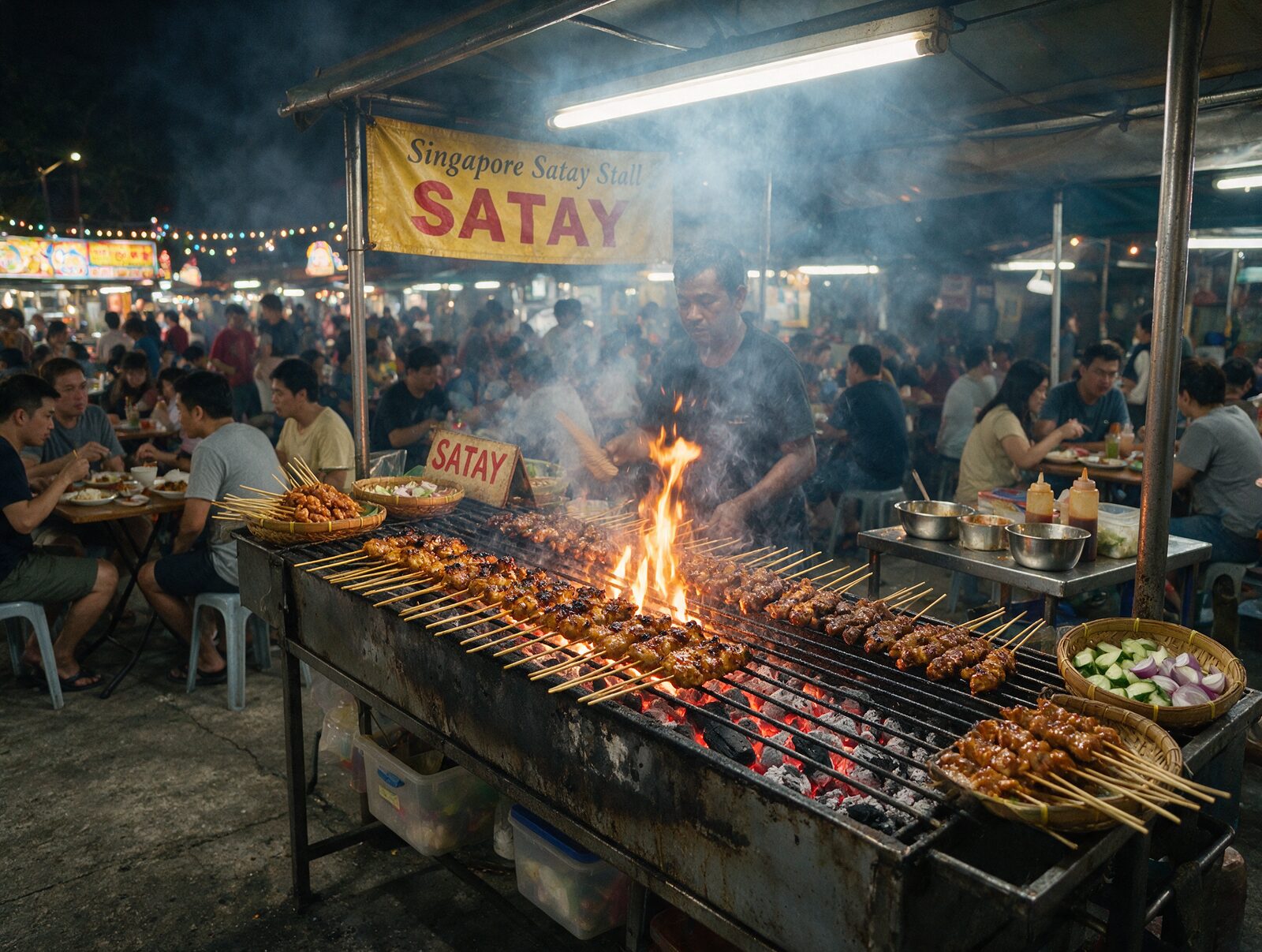
Lau Pa Sat is a restored Victorian cast-iron market right in the shadow of the financial district’s skyscrapers, and the contrast alone is worth the visit. After dark, the surrounding street — officially Boon Tat Street — closes to traffic and fills with satay stalls grilling beef, chicken, and mutton skewers over charcoal, smoke curling up between the office towers. Best Satay at Stall 8 on what locals call Satay Street has a reputation worth trusting; order in bundles of ten skewers, and don’t skip the peanut sauce even if you think you know what peanut sauce tastes like — this version has a depth to it that the bottled stuff doesn’t. For something calmer, Song Kee Fishball Noodles inside the main hall is a reliable, unfussy bowl if you’ve had a long day of sightseeing and want something familiar.
Gardens by the Bay: Satay by the Bay
Most visitors treat Gardens by the Bay purely as a sightseeing stop and miss that it has its own proper hawker-style food court, Satay by the Bay, tucked near the gardens’ edge with outdoor seating looking onto greenery rather than traffic. It’s a good lunch stop between the Cloud Forest and the evening light show, with a mix of local stalls doing laksa, char kway teow, and yes, more satay if you didn’t get enough the night before. It’s slightly more tourist-priced than a neighbourhood hawker centre, but the setting — eating outdoors with the Supertree Grove visible past the trees — earns it.
Sentosa Island: beach seafood and late-night eats
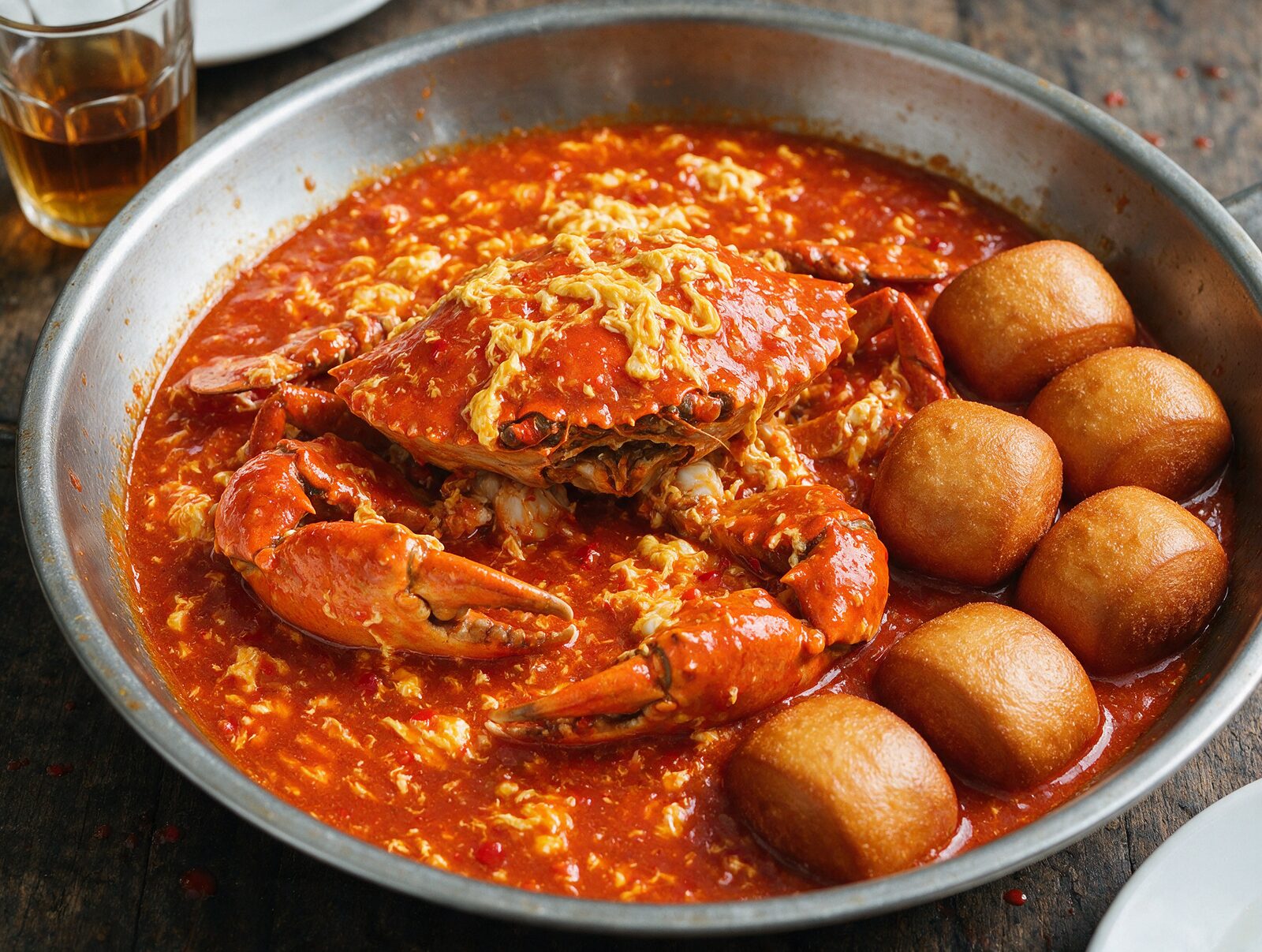
Sentosa’s food leans beachy and casual, which suits the island’s whole mood. Siloso Beach has a run of beach clubs and casual grill spots good for a lazy lunch between swims — don’t expect hawker-centre prices here, you’re paying partly for the sand between your toes. For something more substantial, the restaurants around Beach Station and the Quayside do solid seafood, with chilli crab and black pepper crab both well represented if you haven’t had your fill of crab dishes elsewhere on the trip yet. A mistake to avoid: don’t assume Sentosa’s food options are open as late as the mainland’s — several places wind down by 10-10:30pm once the day-trip crowd clears out, earlier than Clarke Quay or Marina Bay.
Orchard Road: food court culture done right
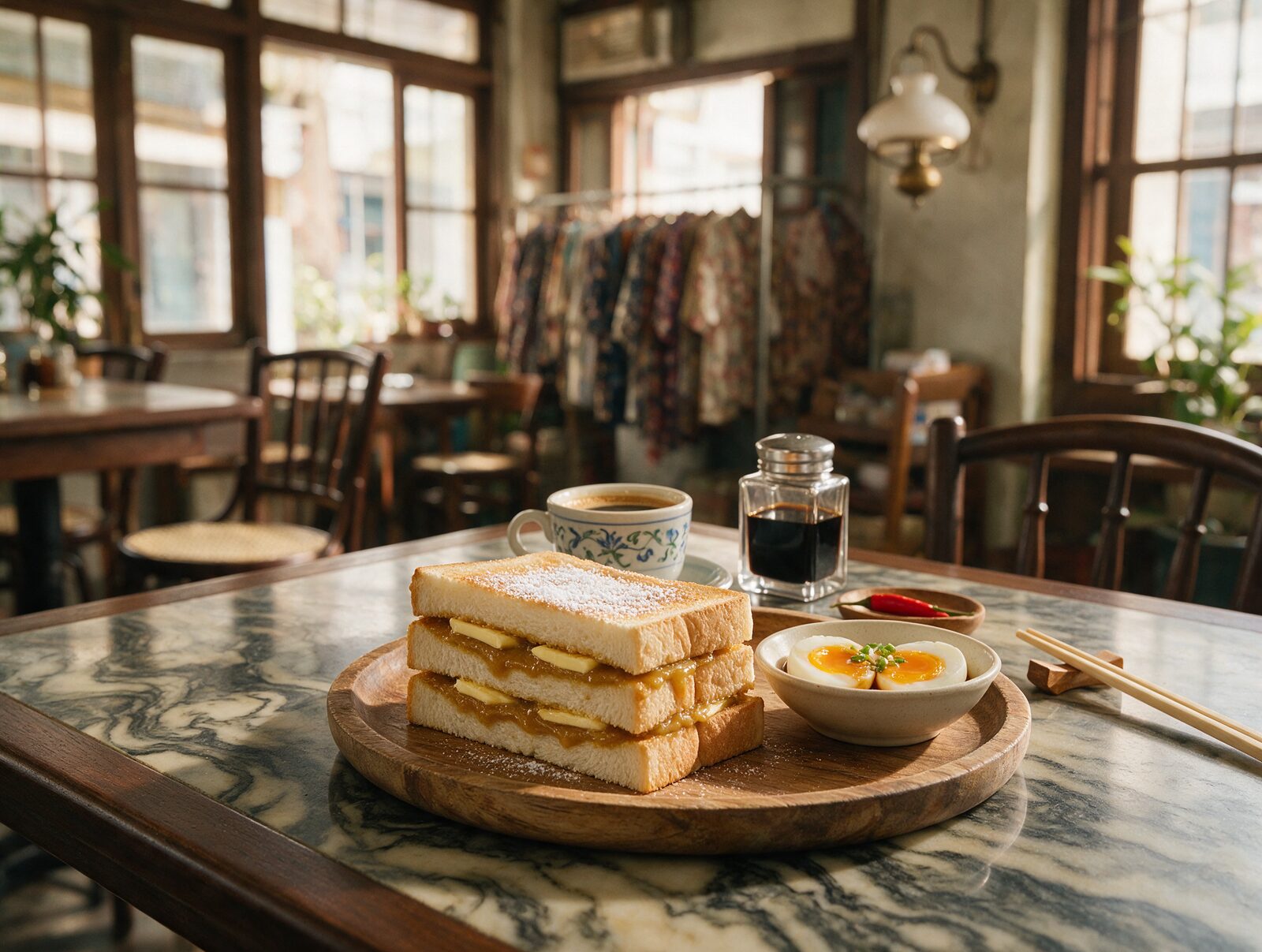
Orchard’s malls hide some genuinely excellent food courts above and below the luxury retail — Food Republic inside Wisma Atria and the basement food hall at Takashimaya are both strong options when you want air-conditioning, variety, and don’t want to commit to a sit-down restaurant between shopping stops. This is also a good area to try a proper kaya toast breakfast before the shops open — a few heritage coffee shops around the Orchard fringes do the classic soft-boiled egg, kaya toast, and kopi combination the way it’s meant to be, thick dark coffee with condensed milk, eggs with a dash of white pepper and soy sauce stirred in.
Clarke Quay and Chinatown’s hawker centres
Clarke Quay itself is more about riverside bars and restaurants than hawker food, but it sits a short walk from Chinatown, where the real food action is. Maxwell Food Centre is the one everyone’s heard of, and it earns the reputation — Tian Tian Hainanese Chicken Rice draws a queue most of the day, and it’s genuinely worth the fifteen-odd minutes if the line isn’t absurd. Hong Lim Market and Food Centre, a short walk further, is quieter and locals-heavy, with Outram Park Fried Kway Teow Mee doing one of the city’s better versions of that dish. Come here for lunch, then head back to Clarke Quay for dinner and drinks — it’s an easy loop on foot or a two-minute MRT hop.
Jewel Changi Airport: an underrated food stop
People treat Jewel as a photo-op for the Rain Vortex and forget it’s also one of the better food destinations in the city, not just an airport mall. The basement and upper floors have a genuine spread, from casual Singaporean stalls to international chains, and because it’s an airport mall rather than a pure tourist stop, pricing stays more reasonable than you’d expect. If your flight home gives you a few spare hours, it’s a legitimately good last meal in Singapore rather than a consolation prize for being stuck at the airport.
Coffee runs: kopi culture beyond the hotel breakfast buffet
Singapore’s coffee shop culture, locally called kopitiams, runs on its own vocabulary that’s worth learning before you order. “Kopi” is coffee with condensed milk and sugar; “kopi-o” drops the milk; “kopi-c” swaps condensed milk for evaporated milk and sugar; add “kosong” to any of these and you’ve removed the sugar entirely. It sounds like a lot to remember, but the stall uncle or auntie taking your order will usually work it out from context even if you fumble it, and getting it slightly wrong on your first try is a completely normal part of the experience, not an embarrassment. Tiong Bahru Market, a short detour from the Chinatown hawker loop, has a particularly good concentration of old-school kopi stalls alongside its food centre, and it’s quieter than Maxwell if you want the experience without the queue.
Dessert and street snacks worth the detour
Ice kachang — shaved ice piled with red beans, grass jelly, sweet corn, and a tangle of syrups that sounds chaotic and somehow isn’t — is the classic hot-weather dessert, and it earns its reputation on a 32-degree afternoon in a way that’s hard to appreciate from a description alone. Chendol, a close cousin built around coconut milk, palm sugar, and pandan-flavoured jelly noodles, is worth comparing side by side if you’re the type who likes to taste-test. For something less sweet, go looking for a proper durian stall if you’re curious — most Singaporeans have a strong opinion on it one way or the other, and trying a small portion from a reputable stall rather than a packaged version elsewhere gives you a fairer first impression of a fruit that genuinely divides people.
Late-night eats
Singapore’s food culture doesn’t fully shut down at 10pm the way some cities do. Chomp Chomp Food Centre, a bit further out near Serangoon but worth the trip if you’re staying up that way, stays lively well into the night with a strong seafood and barbecue lineup — the sambal stingray wrapped in banana leaf is a dish we’d actively steer you toward trying. Closer to the main tourist loop, Lau Pa Sat’s satay street keeps grilling past midnight on weekends, and Clarke Quay’s restaurant strip runs its kitchens late by Singapore standards, several past midnight on Fridays and Saturdays. A fun fact worth knowing: Singapore’s 24-hour coffee shops, a specific local institution, are where a surprising number of late arrivals end up for their first meal in the country, simply because they’re reliably open when a flight lands at an odd hour and nothing else nearby is.
Must-try dishes, if you only remember six
Hainanese chicken rice, chilli crab, char kway teow (the stir-fried flat noodle dish, smokier and heavier than it looks), laksa (the Singapore version, coconut-based and different from Malaysian laksa in ways that are worth tasting side by side if you visit both countries), satay, and kaya toast with kopi for breakfast. None of these need an adventurous palate, which is part of why Singapore works so well as a first serious food-travel destination for people who aren’t used to very spicy or very unfamiliar cuisines.
Practical eating tips
Most hawker stalls are cash or local QR-pay only, though a growing number now take SimplyGo or major e-wallets — carry some small Singapore dollar notes regardless, since a stall running a long queue doesn’t want to deal with your tap-to-pay card failing. Tipping isn’t expected anywhere, hawker or restaurant, and a 10% service charge is often already built into sit-down restaurant bills, so check before adding more. Peak lunch hours (12-1:30pm) at popular hawker centres mean real queues; if you can eat at 11:30am or 2pm instead, do it. Most hawker centres ask you to return your tray after eating — there are usually fines for not doing so, enforced more consistently than tourists expect, so look for the tray return station before you leave. And if you’re vegetarian or avoiding meat entirely, hawker centres are not where you’ll struggle in Singapore at all — we’ve covered that side of the food scene in a separate guide, since it deserves its own detail rather than a single paragraph here.
One more genuinely useful habit: most hawker centres have no air conditioning, being open-air by design, so plan your visit for a slightly cooler window if the midday heat is bothering you, and don’t be surprised to see locals “choping” a table with a packet of tissues before they go order food — it’s an unwritten but universally respected system for reserving a seat, and you’re welcome to use it the same way once you’ve seen it done a couple of times.
Frequently Asked Questions
What is the most famous food in Singapore?
Hainanese chicken rice is probably the single dish most associated with the city, closely followed by chilli crab for a bigger, shareable meal.
Are hawker centres safe and hygienic for tourists?
Yes — Singapore’s hawker centres are regulated and rated under a public hygiene grading system displayed at each stall, and food safety standards are genuinely high by any country’s benchmark.
Is Singapore food very spicy?
Less than you might expect compared to parts of India or Southeast Asia — most hawker dishes are mild to moderately spiced, with chilli sauces served on the side so you control the heat.
How much does a hawker centre meal cost?
A satisfying plate typically runs SGD 4-8, making hawker food one of the better-value parts of an otherwise mid-to-high-cost destination.
Can I find halal food easily in Singapore?
Yes, widely — many hawker stalls and most Malay and Indian-Muslim stalls are halal-certified, and Singapore’s food authority maintains visible certification standards.
Eat Your Way Through It
A food-focused trip through Singapore doesn’t need a special itinerary — it just needs you to build in enough unscheduled time between attractions to actually sit down and eat properly instead of grabbing something fast between stops. If you’d like a trip built with food as the priority rather than an afterthought, Get Tripped can tailor a custom Singapore itinerary around exactly that. Explore our Singapore trips to get started.