Singapore’s public transport is one of the few places where the guidebook cliché is actually true: the MRT really is clean, fast, and genuinely easy to navigate even on your first day with jet lag and a suitcase. That said, the card situation — EZ-Link, SimplyGo, the Tourist Pass, tapping a foreign bank card directly — has enough options that it’s worth sorting out before you land rather than figuring it out at a ticket machine with a queue building behind you. This Singapore public transport guide covers exactly that.
Table of Contents
- Your card options: EZ-Link, SimplyGo, Tourist Pass, or bank card
- Using the MRT
- Buses
- Fares and what things actually cost
- Taxis and ride-hailing
- Getting from Changi Airport into the city
- Practical tips
- FAQs
Your card options: EZ-Link, SimplyGo, Tourist Pass, or bank card
You have four realistic ways to pay for public transport, and the right one depends on trip length and whether you’d rather avoid foreign transaction fees.
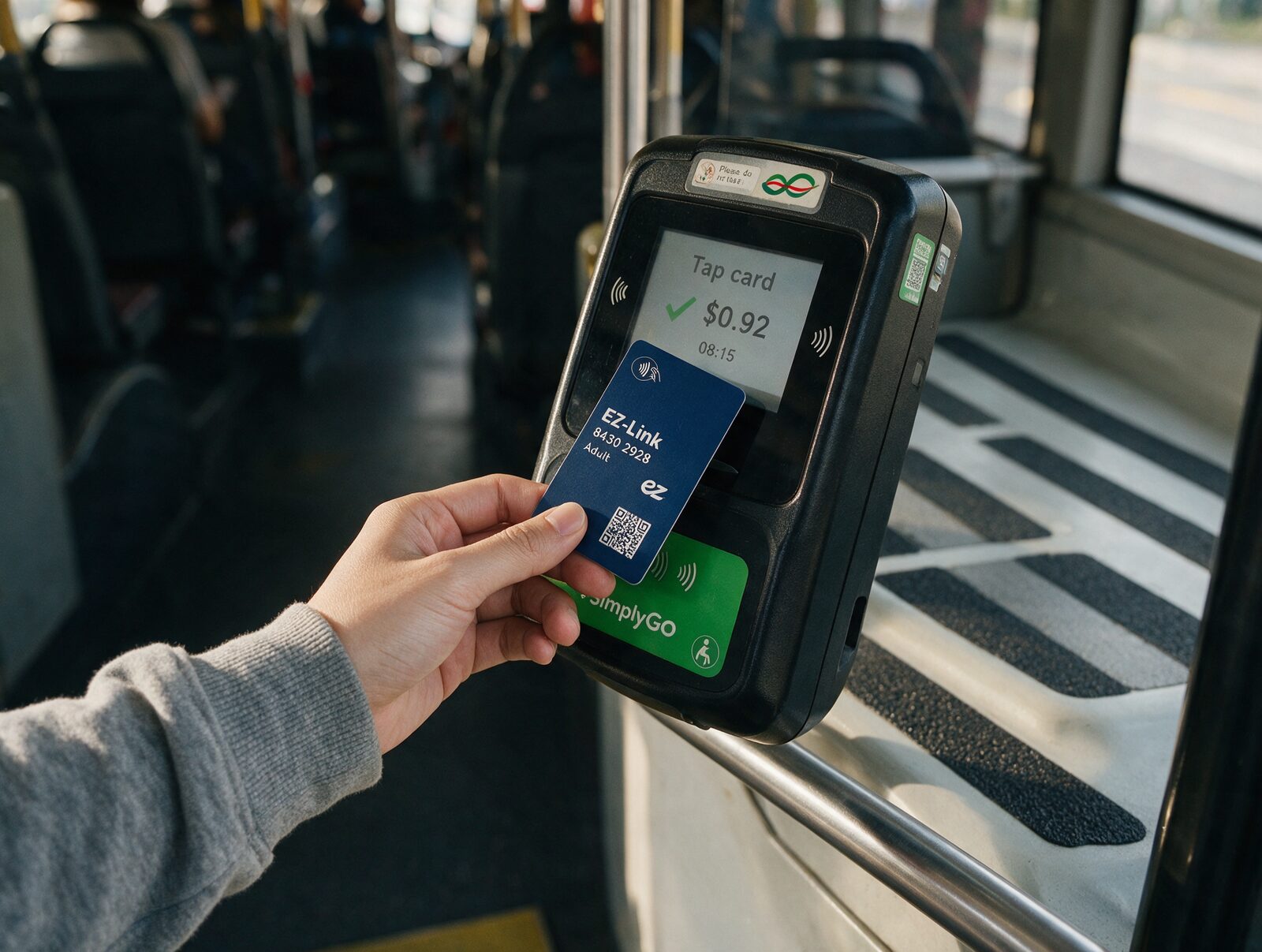
Tap your contactless bank card or phone wallet directly. Singapore’s SimplyGo system accepts supported foreign-issued Visa and Mastercard contactless cards directly on buses and at MRT gates, charged at standard adult fares. There’s a small daily administration fee (around SGD 0.60) for foreign-issued cards, and your own bank may add its own foreign transaction charge on top — check with your bank before relying on this as your only method, since the fee stacking can add up over a week of daily trips.
Buy a Singapore Tourist Pass. This is a specific EZ-Link card aimed at visitors, sold in 1, 2, and 3-day unlimited-ride versions covering basic bus, MRT, and LRT travel. It excludes a handful of premium services like the Sentosa Express, Night Rider buses, and a few express routes. For a trip where you’re moving around constantly — which, on the itinerary we’d recommend, you will be — this is usually the best value, and it comes with a small deposit that’s refundable when you return the card before leaving.
Buy a standard EZ-Link or NETS FlashPay card. These are the everyday stored-value cards locals use, sold at MRT stations and convenience stores, topped up as you go. Good if you want a physical card without the tourist-pass unlimited structure, particularly for a longer trip where you’re not using transport constantly every single day.
Use SimplyGo with your own linked card or wallet on the official app. This suits travelers who’d rather track everything digitally and don’t mind setting up an account before the trip.
Using the MRT
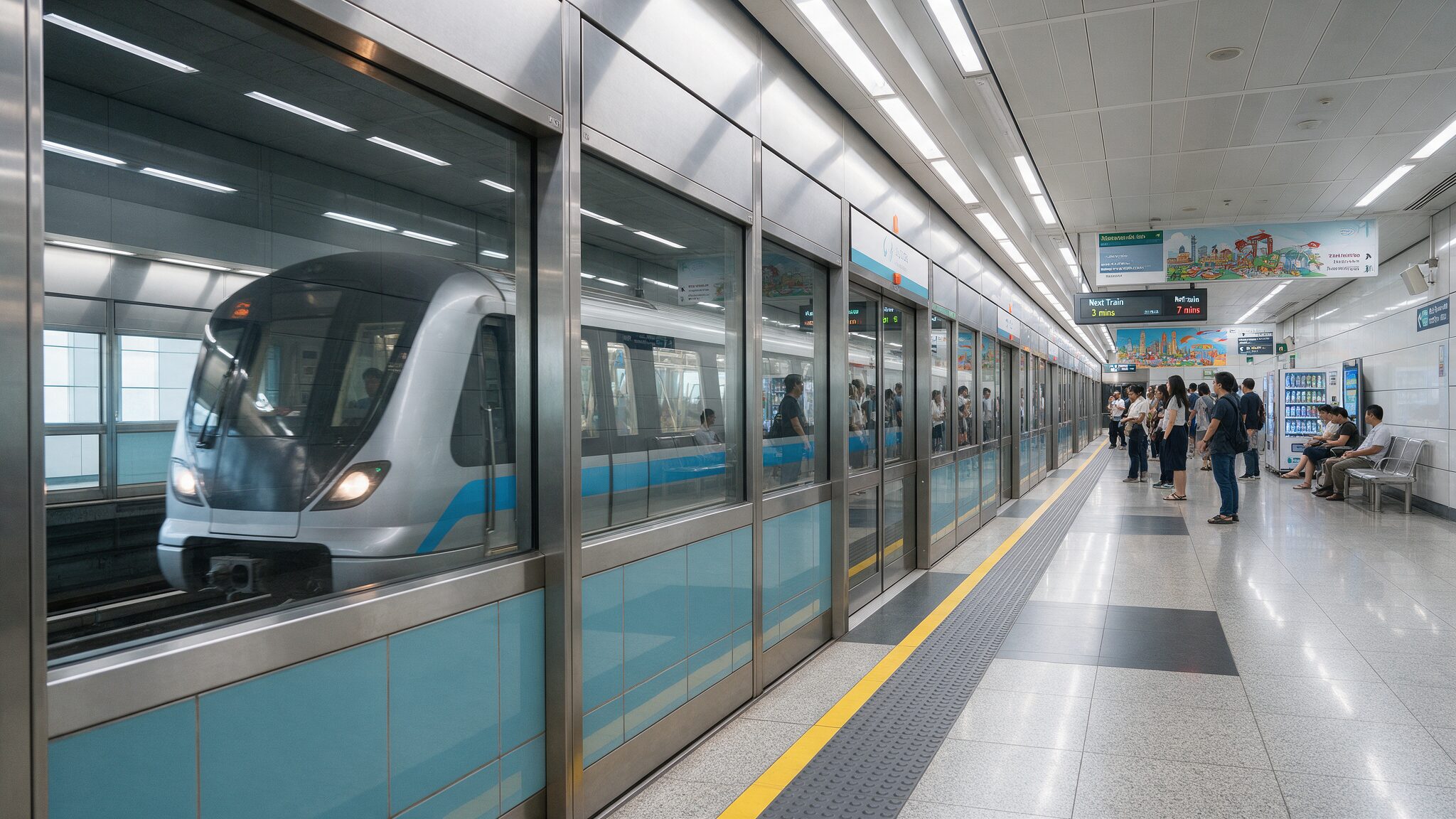
The MRT network covers almost everywhere a tourist itinerary goes — Marina Bay, Orchard, Chinatown, Little India, and Changi Airport all sit directly on a line, with Sentosa reachable via a short connecting monorail or the cable car if you want the scenic option instead. Trains run roughly every 2-7 minutes depending on time of day, from about 5:30am to around midnight, with slightly reduced frequency late at night and on specific lines during early mornings. Platforms have screen doors, clear English signage throughout (alongside Mandarin, Malay, and Tamil), and station staff who are generally happy to help a confused-looking tourist — don’t hesitate to ask if a transfer isn’t obvious from the map.
One honest tip: during the evening rush (roughly 6-7:30pm) on the lines running through the CBD, carriages do get genuinely packed. If you’re not in a hurry, it’s worth letting one or two trains pass rather than squeezing into the first one, especially if you’re traveling with kids or heavy bags.
Buses
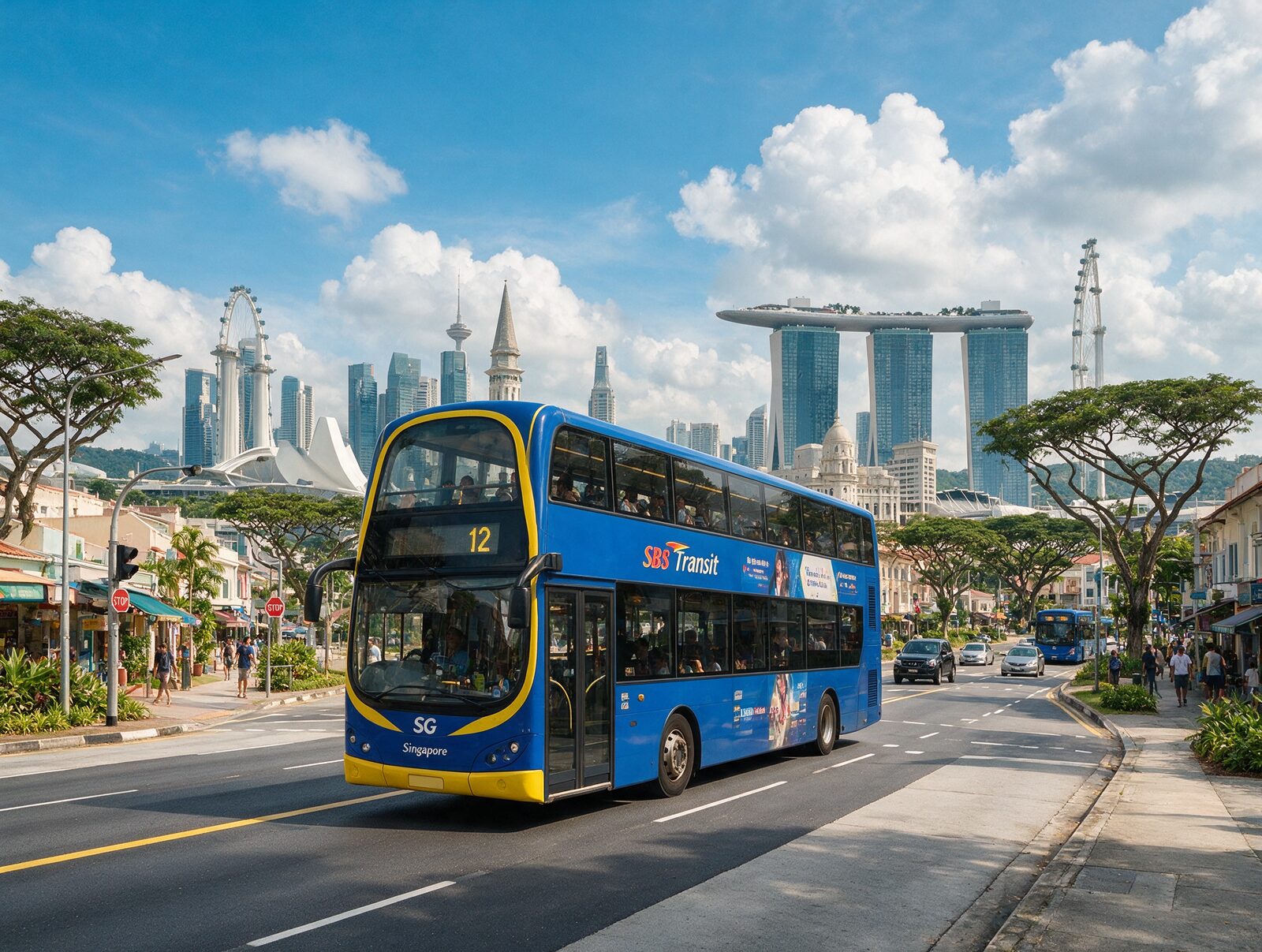
Buses fill in the gaps the MRT doesn’t reach directly, and they’re worth using more than most first-time visitors expect — routes along the Marina Bay waterfront and up through Orchard Road can be more scenic and just as fast as the equivalent MRT trip. The same card that works on the MRT works on buses; tap in when boarding and tap out when alighting, since bus fares (unlike some MRT segments) are always distance-based and the system needs both taps to calculate it correctly. Bus stops display real-time arrival information on digital boards, and the free MyTransport.SG or Google Maps both give accurate live bus timing if you’d rather check from your phone.
Fares and what things actually cost
Adult card fares on MRT, LRT, and basic buses run roughly SGD 1.28 to SGD 2.57 per trip depending on distance, under the fare structure in place through late 2026. A fare increase has been announced for late December 2026, so if you’re travelling right around that date, expect the figures to shift slightly — check current rates on the Land Transport Authority’s website or the SimplyGo app before you go. Cash fares on buses run a little higher than card fares, which is one more reason to sort a card out before you need one at the farebox. For a typical day covering three or four stops across the city, budget somewhere around SGD 6-10 in fares per person — genuinely cheap compared to most other costs on a Singapore trip.
Taxis and ride-hailing
Metered taxis are plentiful and reliable, with fares including a base charge plus distance and time, and surcharges for late-night trips, peak hours, and airport pickups that add up faster than first-time visitors expect — a short taxi ride that looks cheap on the meter can end up SGD 8-10 more once surcharges apply. Grab, the regional ride-hailing app, is widely used and often gives a clearer upfront price before you commit, which we’d generally recommend over hailing a street taxi unless one’s already right in front of you.
Getting from Changi Airport into the city
The MRT is the cheapest and often fastest option from Changi into the city centre, with trains connecting directly to the East-West line — expect roughly 30-45 minutes to Marina Bay or Orchard depending on your exact station, for a fare of just a few Singapore dollars. If you’re arriving with a lot of luggage or landing very late at night, a taxi or Grab (roughly SGD 25-40 to most central hotels, more with surcharges) is the more comfortable choice, and frankly worth it after a long flight even if it costs more than the MRT equivalent.
Which MRT lines actually matter for a tourist itinerary
You don’t need to memorise all six colour-coded lines, but knowing the main three saves a lot of map-squinting. The East-West Line (green) runs from Changi Airport through the city and out past Chinatown and beyond, making it your airport-to-hotel workhorse. The North-South Line (red) connects Orchard Road down to Marina Bay and the CBD, covering a good chunk of the shopping and sightseeing route. The Circle Line (orange) loops around the fringe of the city centre and is handy for cutting across without backtracking through the interchange stations downtown. Interchange stations like City Hall, Dhoby Ghaut, and Raffles Place are where these lines cross, and they’re also where the crowds concentrate at peak hours — build in a couple of extra minutes if you’re transferring through one during rush hour.
Accessibility and travelling with kids or elderly family
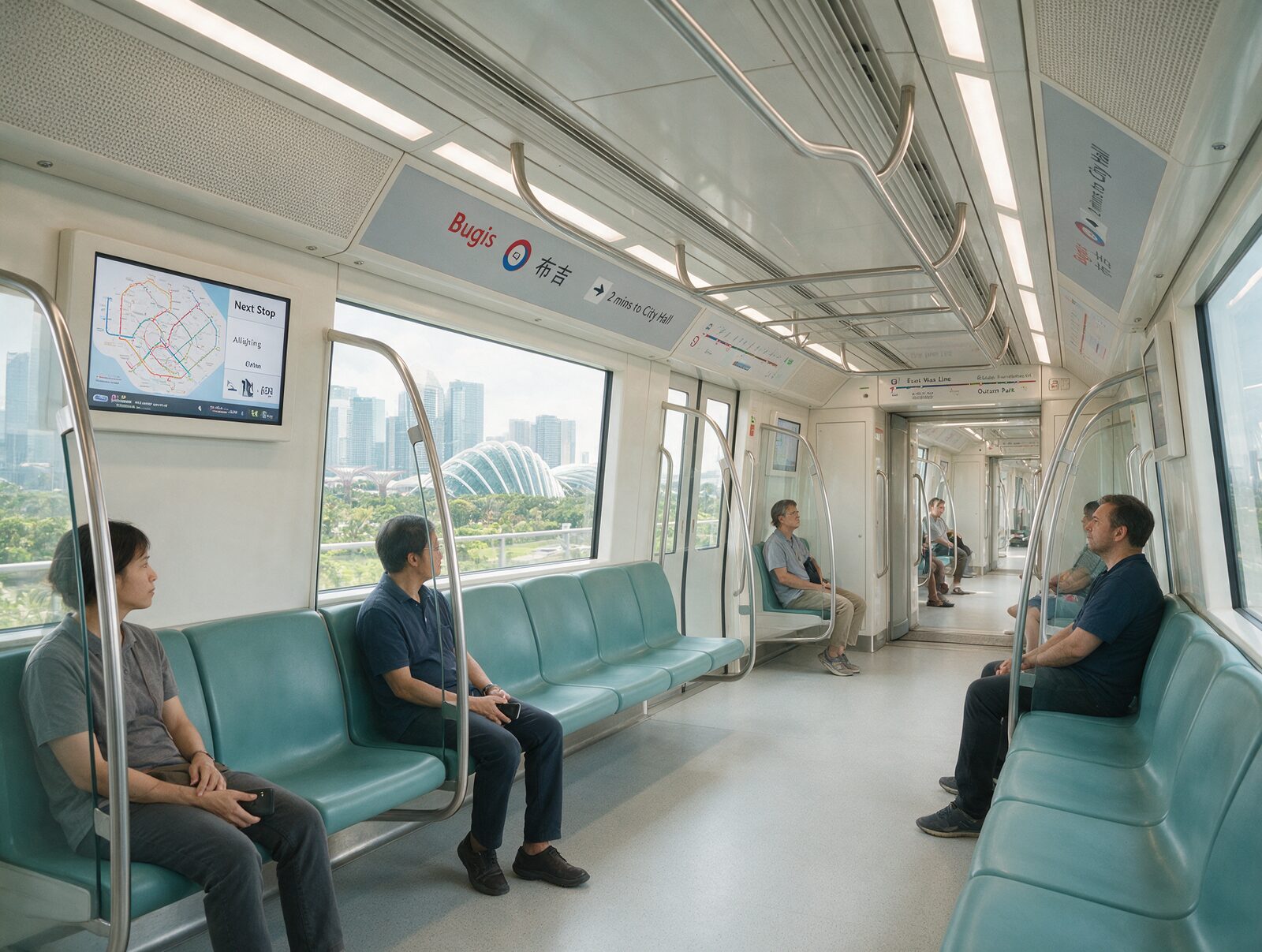
Singapore’s public transport is well set up for this. Every MRT station has lift access, and platforms are step-free from street level in all but a handful of older stations, which are being progressively upgraded. Priority seating is clearly marked on trains and buses and is generally respected by locals, though it never hurts to ask directly if every seat looks taken. Prams and wheelchairs move through the wider gates found at the end of each row of turnstiles — look for the dedicated wide gate rather than queuing at a standard one.
A mistake to avoid
Don’t assume every part of the network runs 24 hours — regular MRT service stops around midnight to half-past, and while there are a handful of night-service options, they don’t cover the whole map the way daytime service does. If you’re planning a late night out at Clarke Quay or anywhere else, check the last train time for your specific station before you commit to “just one more drink,” or budget for a Grab home instead.
Practical tips
Keep your card or phone wallet easily accessible rather than buried in a bag — Singapore’s gate transitions are fast, and fumbling for a card holds up the people behind you more than you’d think in a city this orderly. Eating or drinking on the MRT is against the rules and does get enforced with fines, so finish your bubble tea before you tap in. And if you’re using a tourist pass, remember to return it for your deposit refund at a station before you leave — it’s a small amount, but there’s no reason to leave it on the table.
A quick word on connectivity while you’re navigating
Having working data on your phone makes all of the above dramatically easier — Google Maps’ live bus and train arrival times are genuinely accurate here, which isn’t true in every country, so it’s worth having a working SIM or eSIM from the moment you land rather than waiting until your hotel’s WiFi. Changi Airport has telco counters in the arrival halls selling tourist SIMs on the spot, and most major Indian eSIM providers now offer Singapore data plans you can activate before you even board your flight. Either way, don’t rely on hotel WiFi alone for a trip where you’re moving around this much — you’ll want maps working on the street, not just in your room.
Frequently Asked Questions
Is the MRT easy for tourists to use?
Yes — clear English signage, frequent trains, and an intuitive network make it one of the easiest metro systems in Asia for a first-time visitor.
Should I buy a Singapore Tourist Pass or just tap my bank card?
If you’re moving around most days of your trip, the Tourist Pass usually works out better value and avoids foreign transaction fee stacking. For a lighter, shorter visit, tapping a contactless bank card directly is simpler.
Can I use Google Maps for Singapore public transport?
Yes, Google Maps gives accurate real-time MRT and bus directions throughout Singapore, including live arrival times.
How do I get to Sentosa Island?
By cable car (scenic, small fee), the Sentosa Express monorail connecting from VivoCity, or on foot/by bus across the Sentosa Boardwalk.
Is it better to take a taxi or the MRT from Changi Airport?
The MRT is cheaper and often comparably fast; a taxi or Grab is more comfortable, especially late at night or with heavy luggage.
Getting Around Sorted, So You Can Focus on the Trip
Once your transport card is sorted, the rest of a Singapore trip genuinely does run on autopilot — the city is built for this kind of movement. If you’d rather have the entire logistics side handled, from airport transfers to a day-by-day plan, Get Tripped builds custom Singapore itinerary plans that fold transport into the schedule from the start. See our Singapore trips to get going.