Free Things to Do in Thailand: Bangkok, Phuket, Krabi, Koh Samui, Koh Phi Phi & Pattaya
Thailand’s reputation as a budget-friendly destination is well-earned, but “cheap” and “free” are two different things. What surprises most Indian travelers isn’t that Thailand has affordable options — it’s that some of the genuinely best experiences the country offers cost nothing at all. The sunrise at Railay Beach. The evening chant at Wat Pho. The hour you spend watching Bangkok’s traffic from a canal bridge. You don’t pay admission for any of it.
This guide covers free (or effectively free, under 50 baht) activities across all six major destinations, sorted by city so you can build free experiences into your days alongside the paid ones.
Table of Contents
Bangkok
Bangkok is a city where the free-to-enter list is genuinely long and genuinely good. The paid attractions (Grand Palace: 500 baht entry, some of the floating market tours: 600-900 baht per person) are worth including, but they’re not the whole story.
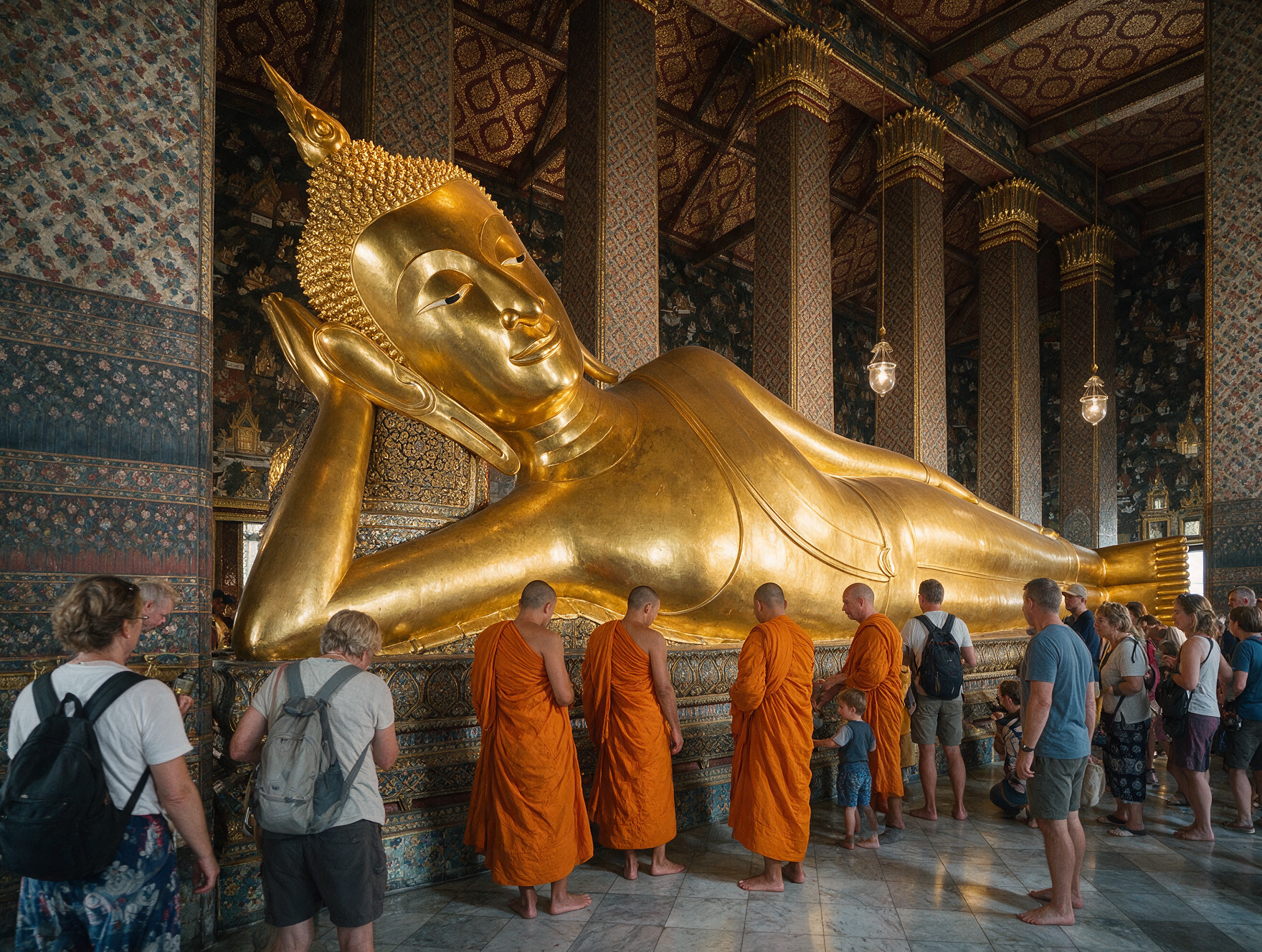
Wat Pho (Temple of the Reclining Buddha): Actually not free — entry is 200 baht — but worth the mention because many travelers assume it’s covered by the Grand Palace ticket. It isn’t. However, the grounds around Wat Pho and the external walking paths along the Chao Phraya riverfront are free to access, and the exterior of the temple compound is architecturally interesting even from outside.
Lumphini Park: Bangkok’s main park, free to enter, open from 4:30 AM to 9 PM. On weekend mornings it hosts aerobics classes that dozens of Bangkokians attend simultaneously — one of those genuinely Thai moments that happens to cost nothing. The park has a lake with rowing boats (for hire, not free), monitor lizards (large, genuinely alarming the first time, actually harmless), and regular taichi and yoga clusters throughout the day. The park is also meaningfully useful if you’ve been in Bangkok’s malls and temples for three days and need somewhere to be outside without another thing to look at.
Yaowarat (Chinatown) by Night: No entrance fee, and the area is at its best from 5-9 PM when the street vendors set up. Walk the lanes between Yaowarat Road and Charoen Krung, watch the cooking, eat at the stalls (the food isn’t free, but the experience of being there is). The large, lit Chinese gate at the entrance to Yaowarat is one of Bangkok’s most photographed spots, and the walk from the BTS to Chinatown through the temple district passes several ornate shrines and a flower market, all free to walk through.
Chao Phraya Riverfront: Walk the Chao Phraya riverfront from Saphan Taksin BTS station north toward the Grand Palace. The walk passes the Asiatique waterfront (free to enter, shops and restaurants inside), the Millennium Hilton’s public riverside path, and the embankment alongside Wat Pho’s outer wall. Cross to the Thonburi side on any of the free-with-boat-ticket ferries (orange flag, 15 baht — less than 40 rupees) and walk the quieter west bank path.
Chatuchak Weekend Market (JJ Market): The market itself is free to enter — it’s simply a very large outdoor market. Open Saturday and Sunday only. Over 15,000 stalls across dozens of sections covering antiques, plants, vintage clothing, live animals, ceramic ware, Thai art prints, and plenty of food. You’ll spend money inside if you want to buy anything, but the walking itself — through this enormous, slightly chaotic, genuinely interesting space — is a few hours well spent.
Wat Suthat and the Giant Swing: Wat Suthat itself has a small entry fee (100 baht), but the Giant Swing (the large red ceremonial structure outside the temple) is free to see and photograph from the street. It’s one of Bangkok’s most striking pieces of ceremonial architecture and the square around it is pleasant to walk through.
Bang Krachao — Bangkok’s Green Lung: Accessible by cross-river ferry (8 baht) from Klong Toei pier, this large loop of land in the Chao Phraya bend functions as an urban forest. Rent a bicycle on the other side (80-100 baht for the day), cycle through its shaded paths and canal networks, and stop at the small floating market if you’re there on a weekend morning. The rental isn’t free but the cycling through this genuinely green and quiet pocket of Bangkok — 20 minutes from the city center — is one of the better half-days in Thailand’s capital.
Phuket
Phuket’s beach reputation can obscure the fact that it has a historic old town worth considerable time. The beaches themselves are free.
Phuket Old Town (Phuket Town): Free to walk, free to explore. The Sino-Portuguese shophouses along Thalang Road, Dibuk Road, and Soi Romanee (a narrow lane of heritage buildings, some painted in vivid murals) form a genuinely atmospheric quarter that takes 2-3 hours to walk properly. Street art murals by the artist Cartel Bizard appear throughout — they’re Bangkok-style but the subject matter is specifically Phuket historical figures, which adds local context. The Thai Hua Museum (entry: 200 baht) is off this route and worth it for the history, but the streets themselves are free.
Patong Beach, Kata Beach, Karon Beach: Thailand’s beaches are public land. No entry fee for any of them. The sun loungers and umbrellas in the arranged rows on the beach belong to restaurant operators — you can rent them or not. Bring your own mat, sit on the dry sand above the lounger lines, and you’re on one of Thailand’s most famous beaches for nothing.
Big Buddha (Phra Phutta Ming Mongkol Akenakiri): The 45-meter white marble Buddha on Nakkerd Hill has no entry fee. Open daily 6 AM to 7:30 PM. The panoramic views over Phuket from the hilltop are excellent — you can see the island’s shape, both the Andaman west coast and the calmer east bays, from one vantage point. The walk from the parking area to the base of the Buddha is short. Dress code applies (shoulders and knees covered — sarongs available at the entrance for borrowing).
Khao Rang Viewpoint: A hilltop park with city views over Phuket Town. Free entry, open until early evening. Less dramatic than Big Buddha but quieter — local families come here in the evenings to sit on the lawns. A decent food stall operates near the top.
Rawai Beach Market: Not the usual tourist beaches, Rawai is where the local sea gypsy (Chao Leh) community lives. The beach itself is rocky and not great for swimming, but the seafood market is free to walk through — fishing boats unload here and the catch is sold at tables along the shore. Worth seeing as a working-life contrast to the resort beaches north of it.
Krabi
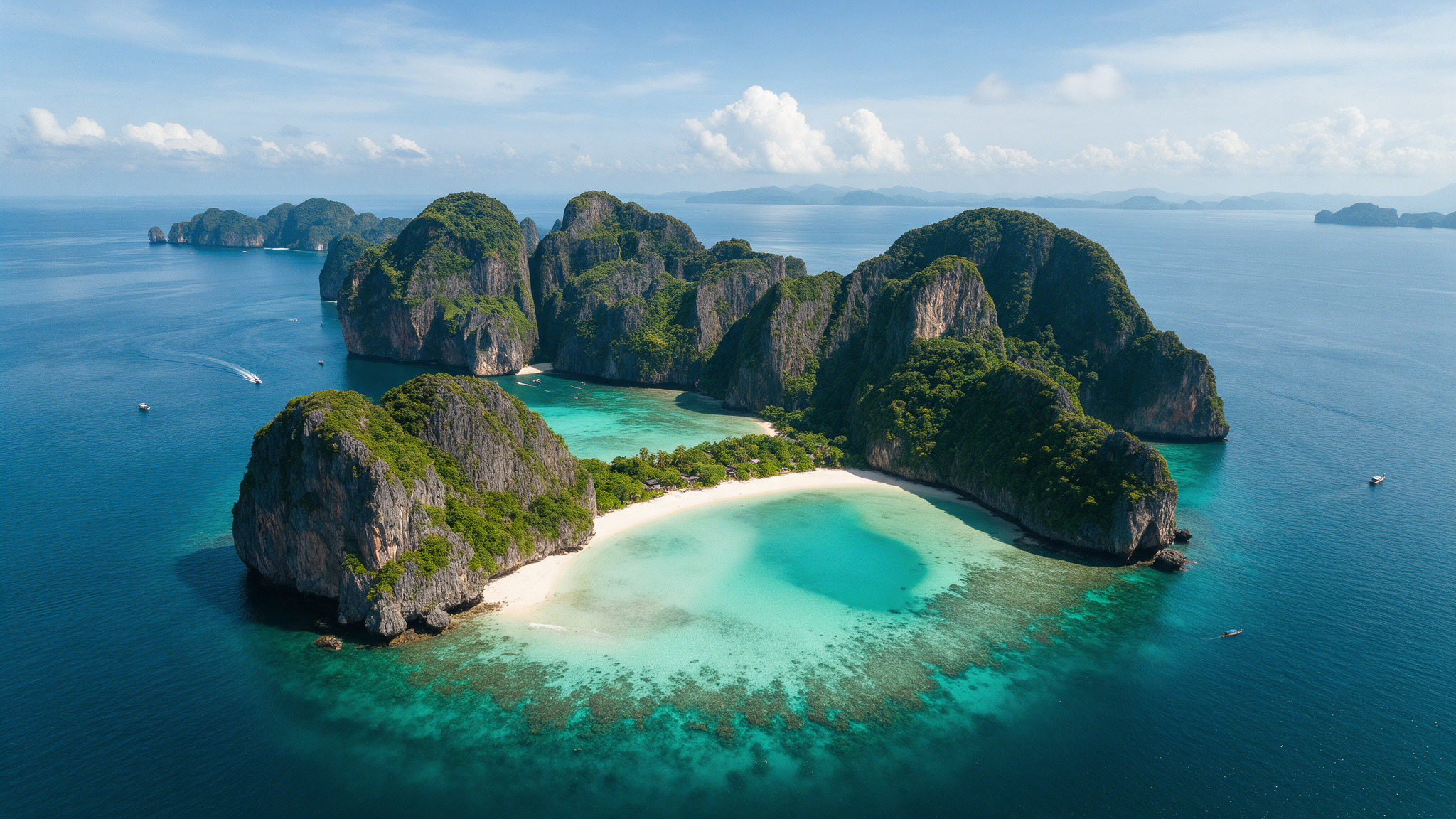
Krabi’s geography is its attraction. Most of the genuinely jaw-dropping scenery costs nothing to look at — it’s getting to it that costs money (boat hire, longtail fees).
Ao Nang Beach Walk: The main beach strip and the coastal walk north from it are free. The view from the beachfront toward the limestone karsts rising from the water is one of those images that justifies the flight to Thailand. It’s accessible at any hour; the early morning, before the beach lounger operators set up, gives you the view without the crowd.
Krabi Town Night Market (Thanon Khong Kha): Free to attend. Runs Tuesday, Friday, and Saturday evenings along the riverside road. Local food vendors, handicrafts, and live music. The market caters primarily to Thais and is considerably less expensive than anything at Ao Nang. Getting here from Ao Nang costs 30-50 baht by songthaew.
Tiger Cave Temple (Wat Tham Sua): The temple complex at the base of the main rock formation is free. The famous 1,237-step climb to the summit viewpoint is free — it’s just a steep, hot, 45-minute ascent that earns you a panoramic view over the Krabi river basin, limestone towers, and mangrove coast. Take water. Do it early morning or late afternoon. The tigers it’s named for are long gone — monk-painted concrete ones sit at the summit.
Krabi Mangrove Tour (self-guided): The mangrove forest along the Krabi River can be explored by renting a kayak (300-500 baht for 2 hours, which falls above the free threshold) or by walking the elevated mangrove boardwalk near Krabi Town, which is free. The boardwalk is a 20-minute walk from the town center. Less immersive than kayaking but genuinely worth doing for the bird life and the quiet.
Susan Hoi (Shell Cemetery): 40 million years old, free. A beach area about 17 km from Ao Nang where the shore is composed of compressed fossilized shells. One of only three such formations in the world. Not the most dramatic destination, but it’s a short songthaew ride from Ao Nang, genuinely interesting, and there’s no entrance fee.
Koh Samui
Bophut Beach and Fisherman’s Village: The northern coast of Koh Samui is calmer and less developed than Chaweng. Bophut Beach is free. The Fisherman’s Village — a row of wooden shop-houses converted into restaurants, cafés, and boutiques — is free to walk through. The Friday night walking market here is free to attend (food and drink not included, obviously).
Big Buddha (Wat Phra Yai): A 12-meter golden Buddha on a small island connected to Koh Samui’s north coast by a short causeway. No entry fee. Dress modestly. The surrounding complex includes smaller shrines and a market selling offerings and souvenirs. Best visited in early morning when the light is good and the tour groups haven’t arrived.
Secret Buddha Garden (Magic Garden): A notable exception to the free rule — 100 baht to enter, plus you need transport up the hill. But it’s mentioned here because it’s often overlooked and the combination of unusual statuary, forest, and waterfall makes it feel worth the 100 baht. An eccentric fruit farmer built it over 30 years on the jungle hillside, and the effect is genuinely charming rather than theme-park.
Namuang Waterfalls: Two waterfalls in the island’s interior. Namuang 1 is a 30-meter cascade with a plunge pool — free to enter, 15-minute walk from the car park. Namuang 2 is higher and requires either a steep trail hike (free) or an elephant experience that’s not recommended on ethical grounds. If you’re renting a scooter or hiring a Grab, the falls are worth an afternoon.
Sunset at Chaweng Lake: The lake at the center of the island is quiet and relatively unknown to tourists. Walk the perimeter path in the late afternoon. Free, a nice contrast to the beach-facing areas, and the birdlife is good.
Koh Phi Phi
Koh Phi Phi is a small island and the free activities are naturally limited — most things involve water, and water activities involve boats or equipment. But the island’s setting is so dramatic that simply being there and watching it is its own experience.
The Viewpoint (Phi Phi Viewpoint): 30 baht entry — essentially free. A 20-minute uphill climb through forest from Tonsai village to the twin-peaked viewpoint that looks down over both of Phi Phi Don’s bays simultaneously. This is the most photographed view in the Andaman islands: the two turquoise coves meeting at the narrow beach strip with the cliffs on either side. Do it at sunset or early morning to avoid the group tour traffic.
Walking Tonsai Village: The village on the main bay is small enough to walk end-to-end in 30 minutes. The main strip has restaurants and bars with the beach view; the back alleys have cheaper food, local internet cafés (almost unused now), and the small mosque serving the island’s Muslim fishing community. No entrance fee, clearly, and the contrast between the resort-facing front and the functional-life back is interesting.
Sunrise from the Eastern Beach: The east side of Phi Phi Don faces the calmer water and gets the sunrise. Walk from Tonsai over the narrow isthmus (5 minutes), sit on the less-visited Loh Dalam Bay side, and watch the light change. There’s a bar at the end of this beach that opens around 7 AM — coffee is 80 baht, the view is free.
Pattaya
Pattaya’s free activities are undersung. The city has a reputation that’s entirely about its nightlife, but it has a coastline, a temple circuit, and viewpoints that don’t require spending anything.
Pattaya Beach and Jomtien Beach: Both free. Pattaya Beach is the famous one — a 4 km crescent facing the Gulf of Thailand. It’s not Thailand’s best beach (the water is murky and the boat traffic is heavy), but it’s animated and free to use. Jomtien Beach, 3 km south, is quieter and the water is slightly cleaner. Best at dawn before the day’s activity starts.
Naklua Market: A covered fresh market north of Pattaya that’s primarily local. Free to walk through. The seafood section has fresh morning catch, the produce section is a good place to buy Thai fruits you won’t find conveniently packaged elsewhere. Much cheaper than tourist-area markets and genuinely useful for snacks and picnic supplies.
The Sanctuary of Truth (exterior): Entry to the Sanctuary of Truth is 500 baht and the interior is extraordinary — entirely constructed from wood with intricate carvings based on ancient mythology. If that’s in the budget, go. If not, the exterior is visible from the road outside and from the beachside path near its location in north Pattaya. The scale of the structure is legible even from outside.
Viewpoint Hill (Khao Phra Tamnak): The hill between central Pattaya and Jomtien has a viewpoint at the top accessible by a road. Drive or take a songthaew up, walk to the terrace, look out over Pattaya Bay. Free. Best at sunset. The large Buddha image on the hilltop is also free to visit and worth a look — it’s gilded and surrounded by smaller Buddha images in a compound that’s quiet and well-maintained.
Tips for Getting More Free Time in Thailand
A few strategic points for keeping the free-to-paid ratio healthy:
Walk before you ride. Bangkok’s Skytrain and MRT are cheap but not always the fastest option for short distances. The 15-minute walk from BTS Saphan Taksin to the Chao Phraya riverside shows you more Bangkok than the three-stop train does. Similarly, walking between Patong Beach and Kata Beach in Phuket (about an hour south along the coast road) reveals viewpoints and quieter beach sections that the songthaew skips.
Temples vary. Not every wat in Thailand charges entry. Wat Pho (200 baht) and the Grand Palace (500 baht) are the expensive ones, and they’re worth it. But Bangkok alone has hundreds of temples accessible with no entry fee — Wat Saket (Golden Mount), Wat Ratchanatdaram, Wat Yannawa — that are architecturally significant, not crowded, and genuinely interesting. The free ones aren’t inferior; they’re just not on the tour bus circuit.
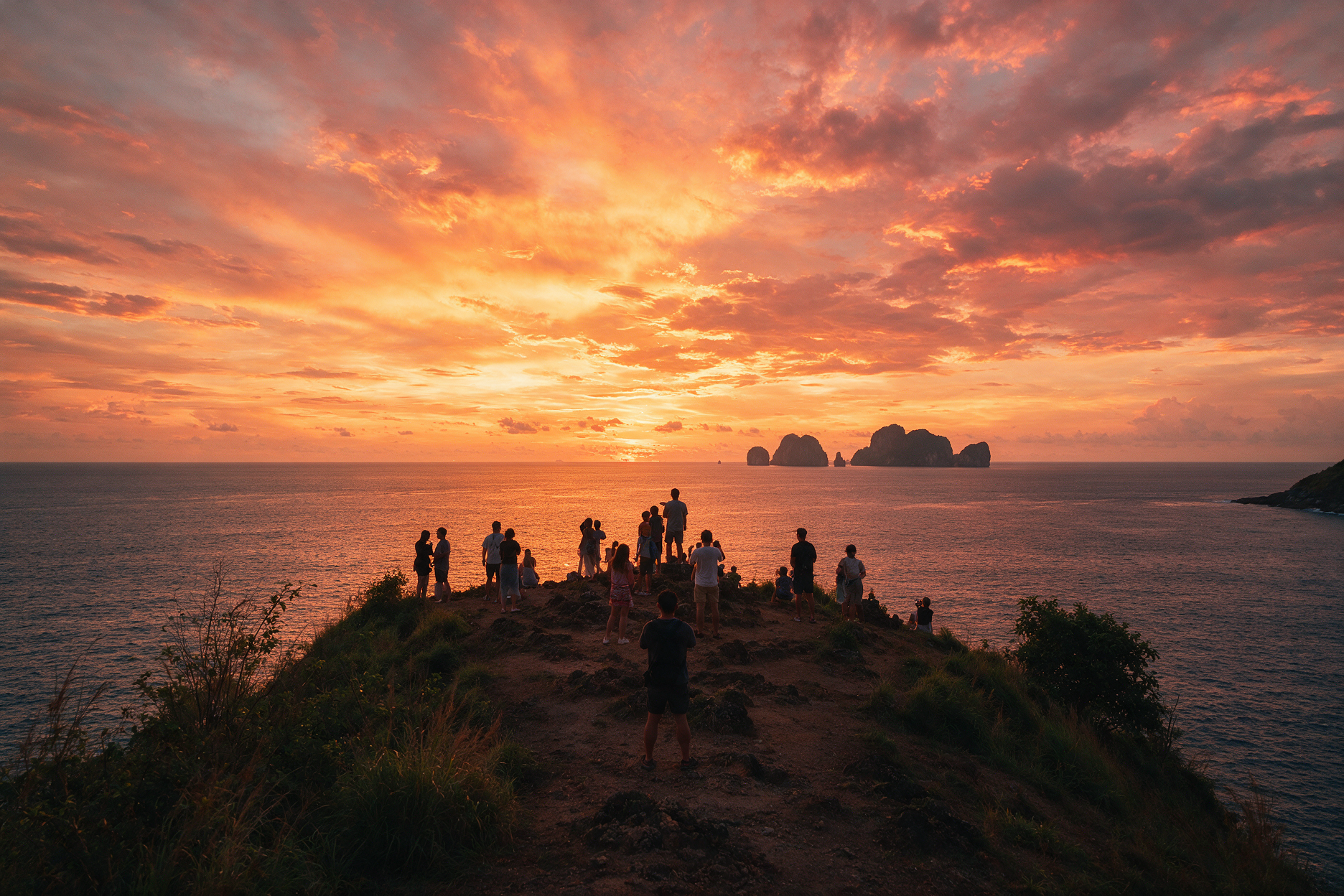
Sunsets are free everywhere. Thailand’s west-facing coasts (Patong, Kata, Ao Nang, Railay) get excellent sunsets. Every resort charges for a sunset dinner; the beach itself charges nothing. Bring your own drinks from 7-Eleven (Singha beer: 50 baht, coconut water: 20 baht), sit on the sand, and watch the same sunset that the hotel terrace diners paid 2,000 baht for.
Night markets beat tourist restaurants. The night markets in every Thai city are technically free to enter (food and drink cost money). An evening at Yaowarat in Bangkok or the Krabi Town riverside market gives you the city’s actual social life, better food than most tourist restaurants, and more spending flexibility. Budget 300-500 baht for a proper street food dinner versus 600-1,200 baht for a sit-down tourist restaurant.
FAQs
Are Thailand’s beaches actually free?
Yes. All beaches in Thailand are public land — the beach itself is free to access. The sun loungers and umbrellas you see on most beaches are rented from adjacent restaurants (typically 100-200 baht for two chairs and an umbrella). You can decline and sit on the dry sand above the lounger zone at no cost.
Is the Grand Palace in Bangkok free?
No. Entry is 500 baht per person (no Thai/foreign distinction for the main complex). This also includes Wat Phra Kaew inside the compound. Wat Pho next door is a separate 200 baht. Both are worth paying for. Free wat alternatives exist throughout Bangkok.
What free things can I do on a rainy day in Thailand?
Most of Thailand’s free activities are outdoors, which limits them in rain. Good rain-day free options: walking shopping malls (Siam Paragon, Terminal 21 in Bangkok; Central Festival in Phuket; Central Samui), visiting free-entry temples (which have roofed sections), or the covered sections of night markets that continue through light rain. The Phuket Old Town heritage walk can be done in light rain — the shophouses have awnings.
How much does it cost to visit Phi Phi Viewpoint?
30 baht. Essentially free. The climb takes about 20-30 minutes. Bring water — there’s no vendor at the top.
Is it worth doing the Tiger Cave Temple climb in Krabi?
Yes. 1,237 steps is a commitment — about 45 minutes up, 30 minutes down, physically demanding in the heat — but the summit view over Krabi is among the best in southern Thailand. Do it before 9 AM or after 4 PM to avoid the worst heat, and the steps themselves pass through forest with monkeys, carved Buddha niches, and views that improve progressively as you climb.
Make Free Time Part of the Plan
Thailand’s paid attractions are excellent, and several of them are unmissable. But the rhythm of a good trip here includes gaps — afternoons without a plan, a morning walk along the canal, the hour before dinner when you sit on the beach with nothing particular to do. Those moments are free and they’re often the ones you remember most clearly.
Explore Get Tripped’s Thailand packages for curated itineraries that build in this kind of breathing room — the paid experiences that genuinely deserve a spot in your days, and the free ones that make the whole trip feel more like Thailand and less like a checklist.