Eight days in Austria is enough to do this properly — not a rushed sprint through five cities, but a trip with room to actually stand in the Schönbrunn gardens without checking your watch. This is the itinerary we build most often for Get Tripped travelers heading to Austria for the first time: Vienna for the imperial grandeur, Salzburg for the old-world charm, a day trip to Hallstatt because photographs genuinely don’t do it justice, and Innsbruck for the mountains at the end, when you’ll actually want to slow down.
We’ve routed it to minimize backtracking — Austria’s rail network (ÖBB) makes this easier than it sounds, with scenic train rides that are honestly part of the trip rather than dead time between destinations.
Table of Contents
- The Route at a Glance
- Day 1: Arrival in Vienna
- Day 2: Vienna — Palaces and the Ringstrasse
- Day 3: Vienna — Opera, Naschmarkt & the Train to Salzburg
- Day 4: Salzburg Old Town & the Sound of Music Trail
- Day 5: Day Trip to Hallstatt
- Day 6: On to Innsbruck
- Day 7: Innsbruck & the Nordkette
- Day 8: Departure
- Where to Stay
- What This Trip Costs
- Practical Tips We Wish Someone Had Told Us
- FAQs
The Route at a Glance
Vienna (3 nights) → Salzburg (2 nights, with a Hallstatt day trip) → Innsbruck (2 nights). All three legs run on ÖBB’s Railjet or regional trains, so there’s no need to rent a car unless you specifically want the flexibility for the Salzkammergut lake region — and honestly, for this exact itinerary, the trains are more relaxing.
Day 1: Arrival in Vienna
Most flights from India land in Vienna in the late morning or early afternoon (via a Gulf or European hub — direct India–Vienna flights are limited, so budget a connection). Take the CAT (City Airport Train) into the city center in 16 minutes rather than fighting jet lag in a taxi queue. Spend the afternoon easing in: walk the Innere Stadt, see Stephansdom from the outside (the tower climb can wait for a clearer day), and have an early dinner near the Graben. Don’t plan anything that requires focus on day one — the flight catches up with people by evening.
Day 2: Vienna — Palaces and the Ringstrasse
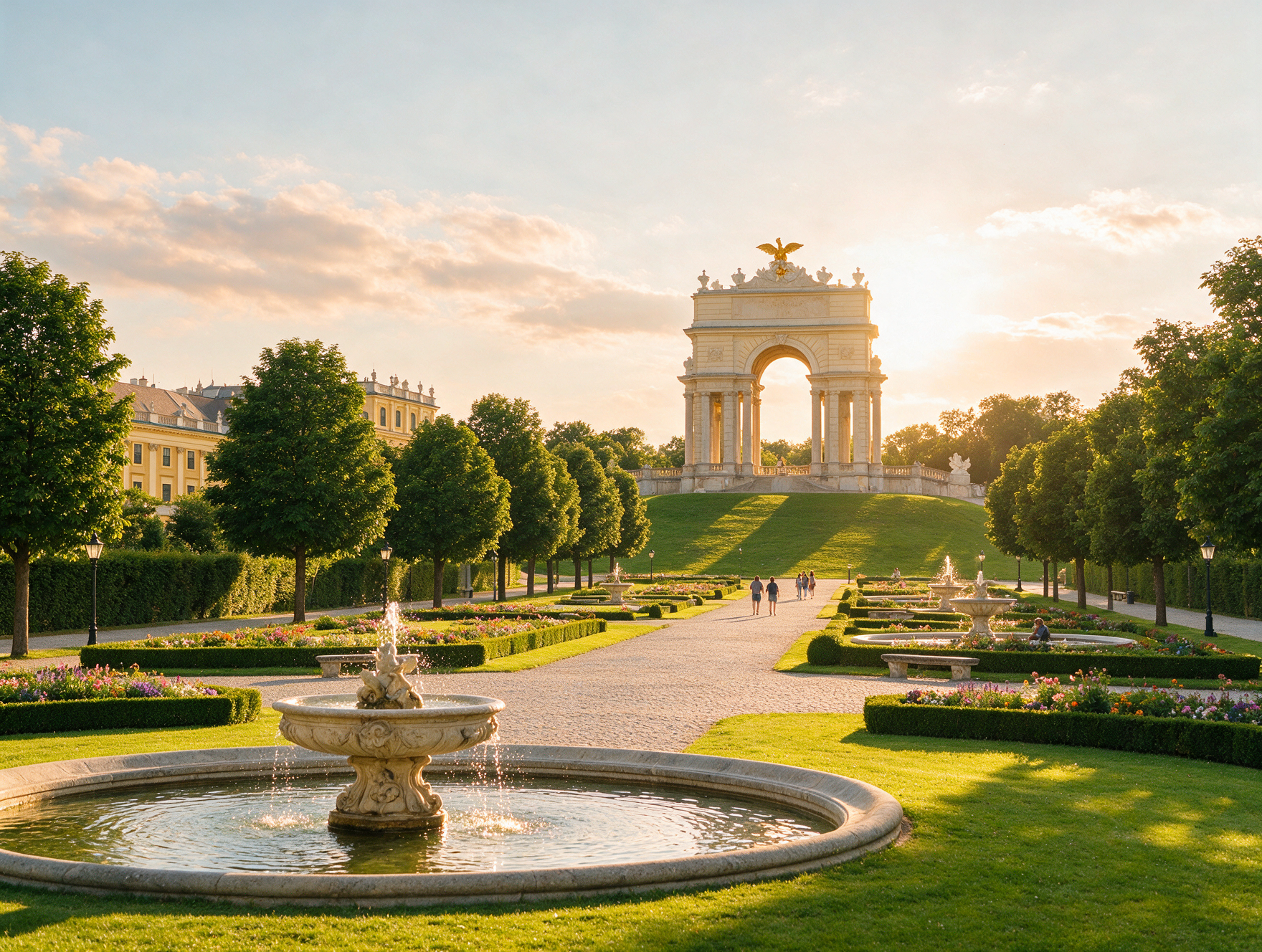
Start at Schönbrunn Palace early, before the tour buses arrive — the Grand Tour of the state rooms takes about 50 minutes, and the gardens behind it are worth another hour on their own, especially the walk up to the Gloriette for the view back over the palace. In the afternoon, ride the Ringstrasse tram loop (tram 1 or 2) past the Parliament, the Rathaus, and the Burgtheater — it’s one of the cheapest, best orientation tours in Europe at the cost of a single transit ticket. End at the Hofburg complex and the Spanish Riding School if the timing works out for a training session viewing.
Day 3: Vienna — Opera, Naschmarkt & the Train to Salzburg
Spend the morning at Naschmarkt, Vienna’s oldest market — it’s as much about the produce stalls as the little Turkish and Balkan lunch counters tucked between them. If you can time it, a standing-room ticket for the Vienna State Opera (as low as €10–15, bought same-day at the box office) is one of the best-value cultural experiences in Europe; check the schedule the moment you land, since it dictates which evening this works. Take an afternoon Railjet train to Salzburg — the journey is about 2.5 hours and genuinely scenic in the back half as the terrain starts rising toward the Alps.
Day 4: Salzburg Old Town & the Sound of Music Trail
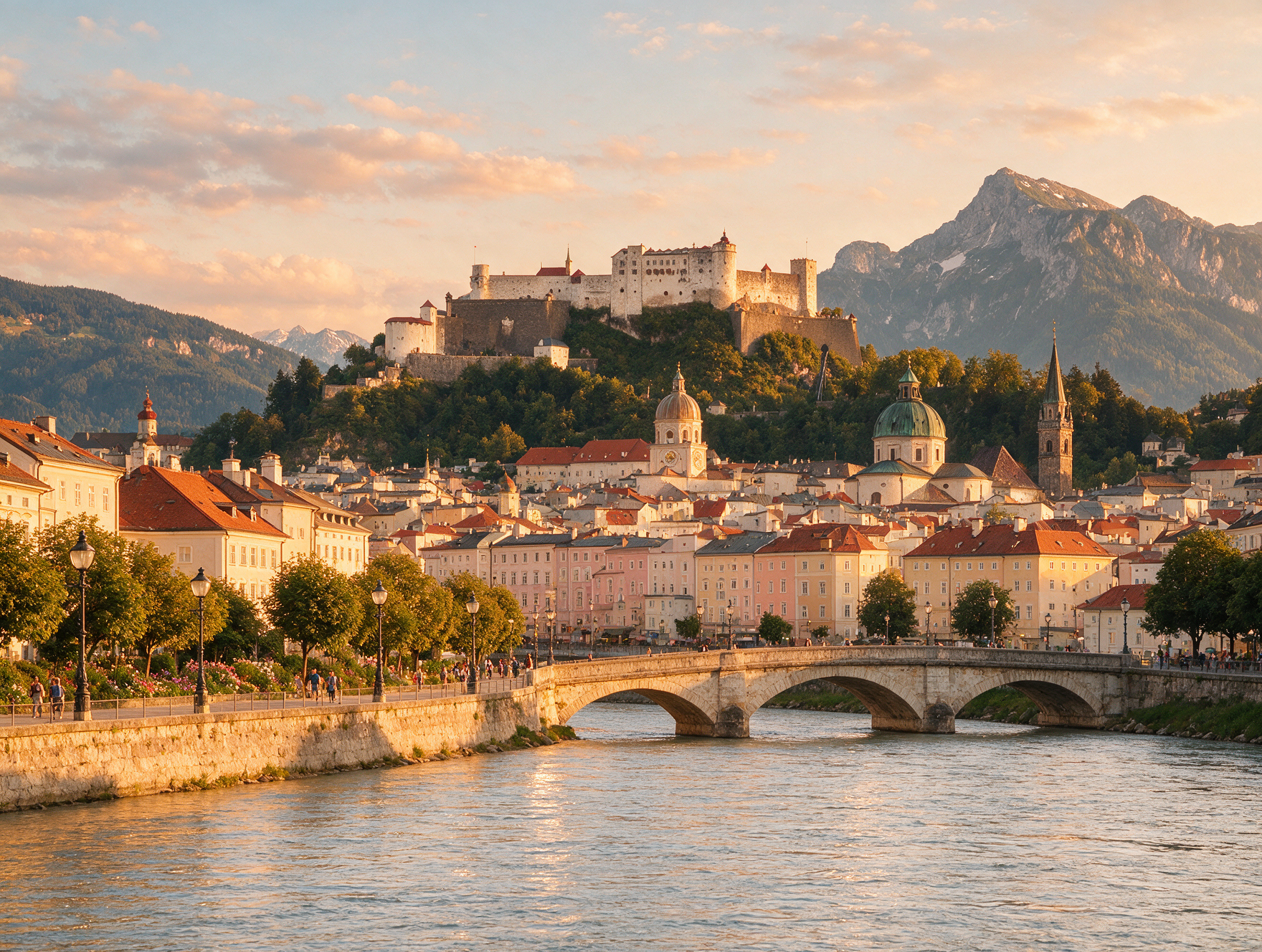
Salzburg’s old town is compact enough to cover on foot in a day: Mirabell Gardens (free, and the setting for the “Do-Re-Mi” steps if you know the film), the Getreidegasse’s wrought-iron shop signs, and the funicular up to Hohensalzburg Fortress for the best view over the city and the river below. If you’re a fan of the film, a half-day Sound of Music tour covers the actual filming locations around the Salzkammergut lakes — it’s a bit of a tourist-trap-adjacent experience if we’re honest, but people who book it rarely regret it.
Day 5: Day Trip to Hallstatt
Hallstatt is roughly an hour and a half from Salzburg by train plus a short ferry across the lake, and it’s worth the early start — this village gets swarmed with day-tripping tour groups by late morning, and the difference between arriving at 8am and 11am is the difference between a quiet lakeside walk and a queue for the photo spot everyone’s seen on Instagram. Walk the lakeside promenade, see the parish church and its unusual bone house (Beinhaus) if that kind of history interests you, and take the funicular up to the Skywalk viewpoint for the postcard shot from above. Head back to Salzburg by early evening.
Day 6: On to Innsbruck
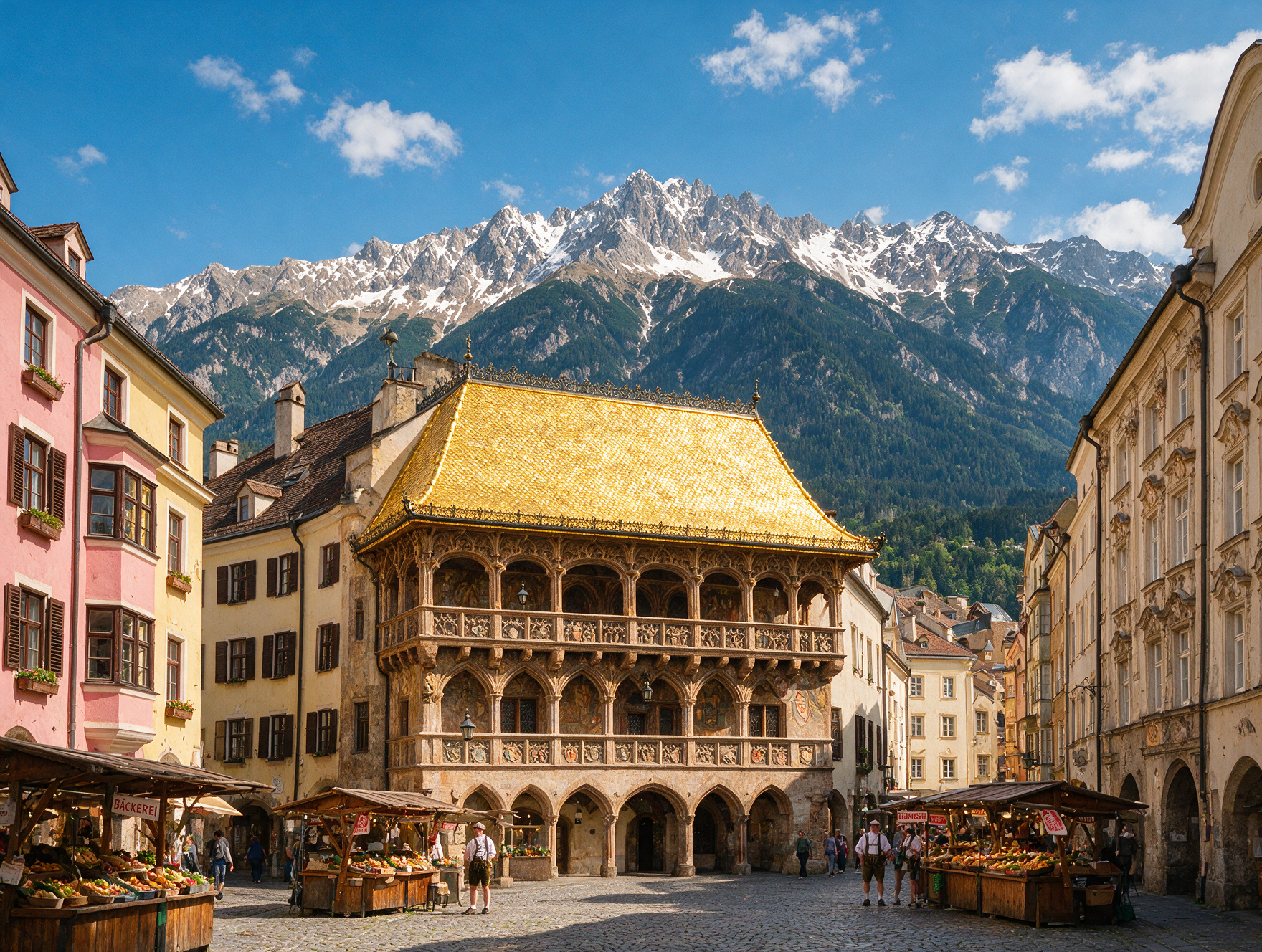
Train from Salzburg to Innsbruck takes about 2 hours, cutting through genuinely beautiful Alpine scenery that makes this one of the better legs of the whole trip to just watch out the window rather than nap through. Arrive by early afternoon and explore Innsbruck’s compact old town: the Golden Roof (Goldenes Dachl), the Baroque cathedral, and Maria-Theresien-Strasse with the mountains framing the far end of the street — a view you don’t get in Vienna or Salzburg, and part of why Innsbruck earns its spot on this itinerary even though it’s the smallest of the three cities.
Day 7: Innsbruck & the Nordkette
This is the day to go up. The Nordkette cable car leaves almost from the edge of the old town and gets you to over 2,300 meters in under 20 minutes — a genuinely startling transition from cobblestone streets to alpine rock and snow. Go on a clear morning if the forecast allows; cloud cover erases the entire point of the trip up. Back in town, spend the afternoon at leisure — the Hofgarten park, or, if it’s winter, exploring why Innsbruck has hosted two Winter Olympics.
Day 8: Departure
Innsbruck has limited direct international connections, so most travelers either fly out via Munich (a 1.5-hour train or transfer across the German border) or take an early train back to Vienna (about 4 hours) to connect with an international flight home. Check your specific routing when you book — this is the one part of the itinerary worth confirming before you finalize the rest of the trip, since it affects what time you need to leave Innsbruck.
Where to Stay
In Vienna, base yourself in or near the Innere Stadt (1st district) or Josefstadt (8th) for walkable access to the sights — both have a strong mix of boutique and upscale hotel options rather than the chain-hotel sprawl further out. In Salzburg, staying just across the river from the old town (Neustadt side) usually gets you a better rate for a five-minute walk to everything. In Innsbruck, the old town itself is small enough that almost any central hotel puts you within walking distance of both the historic core and the Nordkette cable car base station.
What This Trip Costs
For a comfortable mid-range to upscale 7-nights-8-days Austria trip, budget roughly ₹1,00,000–₹2,50,000+ per person depending on hotel category and how much of the trip is guided versus independent — flights from India are usually the single biggest line item, followed by hotels. This isn’t a shoestring itinerary, and it isn’t meant to be; it’s built around good mid-range stays, a private Hallstatt or Sound of Music tour rather than a packed group bus, and trains booked in advance for the better fares.
Practical Tips We Wish Someone Had Told Us
- Book ÖBB train tickets in advance where possible — the “Sparschiene” advance fares can be a third of the walk-up price on the same route.
- A mistake to avoid: don’t try to add a fourth city. We’ve seen itineraries squeeze in Graz or Zell am See on top of this route, and it turns every day into a transit day. Four nights spread across three cities, at this pace, is the sweet spot for a first Austria trip.
- Fun fact: Salzburg’s Getreidegasse shop signs use wrought-iron guild symbols instead of shop names or numbers — a holdover from a time when a large share of the population couldn’t read, and even McDonald’s has to use one there.
- Card is accepted almost everywhere in Austria’s cities, but carry some cash (€50-100) for smaller cafés, the Hallstatt ferry, and rural stops where card machines occasionally go down.
- For couples, the Hallstatt day trip and the Nordkette sunset are the two moments on this route worth the extra effort to catch at the right light. For families, Vienna’s Prater park (entry is free; you pay per ride) is a good half-day pressure valve between the museum-heavy stretches.
Staying Connected Along the Way
Pick up an Austrian or EU-wide eSIM before you land, or grab a prepaid SIM (A1, Magenta, or Drei) at the airport — coverage is reliable in all three cities and along the train routes, including most of the Salzburg–Innsbruck scenic stretch. Hotel WiFi in Austria is consistently good even at mid-range properties, so the SIM matters more for train-station navigation and booking last-minute restaurant tables than for staying in touch generally. One more thing worth knowing before you go: Austria runs on the euro, tipping is modest by Indian standards (rounding up or adding 5–10% at sit-down restaurants is normal, not the 15–20% expected in the US), and almost every till in Vienna, Salzburg, and Innsbruck takes contactless card or Apple/Google Pay without a second thought.
FAQs
Is 8 days enough for Austria?
For Vienna, Salzburg, Hallstatt, and Innsbruck at a comfortable pace, yes. Adding more cities to the same 8 days means less time in each, not more seen overall.
Do I need to rent a car for this itinerary?
No — the ÖBB train network covers this entire route comfortably, and trains are generally faster door-to-door than driving once you account for city parking.
What’s the best time of year for this itinerary?
May–June and September–October give you good weather without peak summer crowds. December has its own appeal for the Vienna and Salzburg Christmas markets, though pack for real cold.
Can this itinerary be done in reverse, starting in Innsbruck?
Yes, if your flights route better that way — the logic of the trip doesn’t depend on direction, though most Indian travelers find Vienna’s flight connectivity easier as an entry point.
Should I book the Hallstatt day trip as a guided tour or do it independently?
Both work well; independent travel by train and ferry is straightforward and cheaper, while a small-group guided day trip saves you the schedule-planning and usually includes a stop at Wolfgangsee or another lake on the way back.
Ready to Book This Route?
This itinerary is one of our most-requested Austria custom trips, and we adjust it constantly — more nights in Salzburg for travelers who want the lakes, a ski add-on around Innsbruck in winter, or a Vienna-only long weekend for a shorter trip. See Get Tripped’s Austria trip planning or reach out and we’ll build the exact version of this route around your dates and pace.