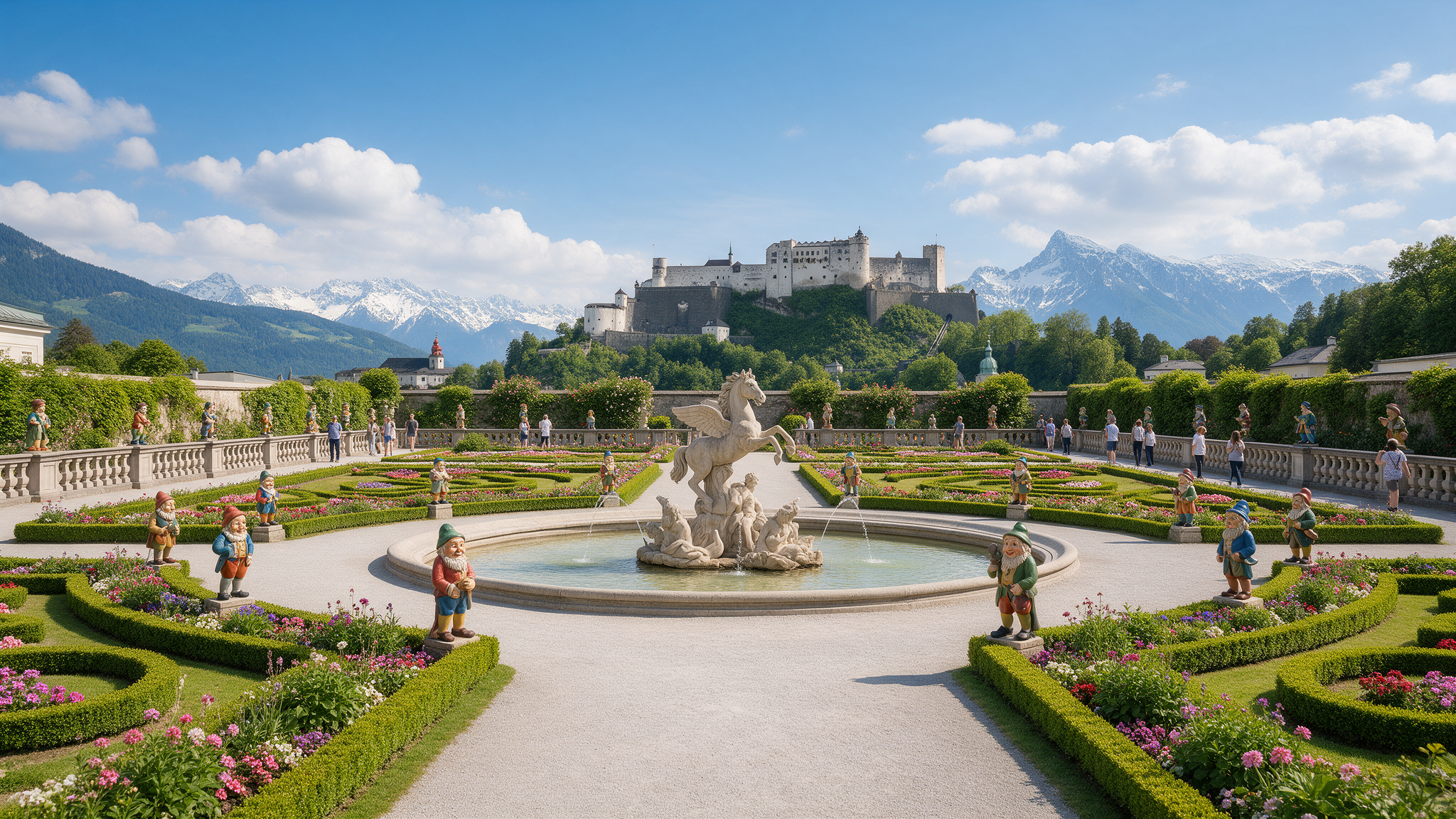
Every tour bus in Salzburg makes the same four stops, in roughly the same order, at roughly the same time of day. Stand at Mirabell Gardens’ Pegasus fountain around 10am and you’ll see three or four coaches idling on Makartplatz, disgorging groups who’ve been told this is “the Do-Re-Mi fountain.” It is, technically. It’s also the single most photographed square metre in Salzburg, which is exactly why it’s worth knowing what to do after the bus groups move on to their next stop.
Salzburg’s Sound of Music trail is genuinely worth doing — the 1965 film shaped how millions of people picture this city, and several of the filming locations are beautiful on their own merits, independent of the movie entirely. But the standard bus tour hits four or five sites in about two and a half hours, on a fixed schedule, with everyone else’s tour bus doing the same route at the same time. This guide covers the same trail at your own pace, plus the sites the standard tour either skips entirely or only shows you from the window, and it slots naturally into a broader Austria itinerary that also covers Vienna and Innsbruck.
What’s in this guide
- Why the film trail is worth doing properly
- Hidden gem: Leopoldskron Palace at the lake’s edge
- Hidden gem: Hellbrunn’s gazebo and its trick fountains
- Hidden gem: Mondsee’s actual wedding church
- Hidden gem: the Fuschlsee detour nobody takes
- Hidden gem: Nonnberg Abbey, still a working convent
- How to actually do this — self-guided vs. tour
- Costs, visas and getting to Salzburg
- Mistakes to avoid
- FAQs
Why the film trail is worth doing properly
Salzburg Panorama Tours runs the original, licensed Sound of Music bus tour, and it’s a genuinely well-produced few hours if you want the story alongside the sites — a good guide will tell you which scenes were shot on location versus on a Hollywood soundstage, and which of the von Trapp family’s actual history got flattened or invented for the film. That’s worth having once. What I’d push back on is treating it as the only way to see these places, because several of them reward a slower, self-directed visit far more than a bus window ever will.
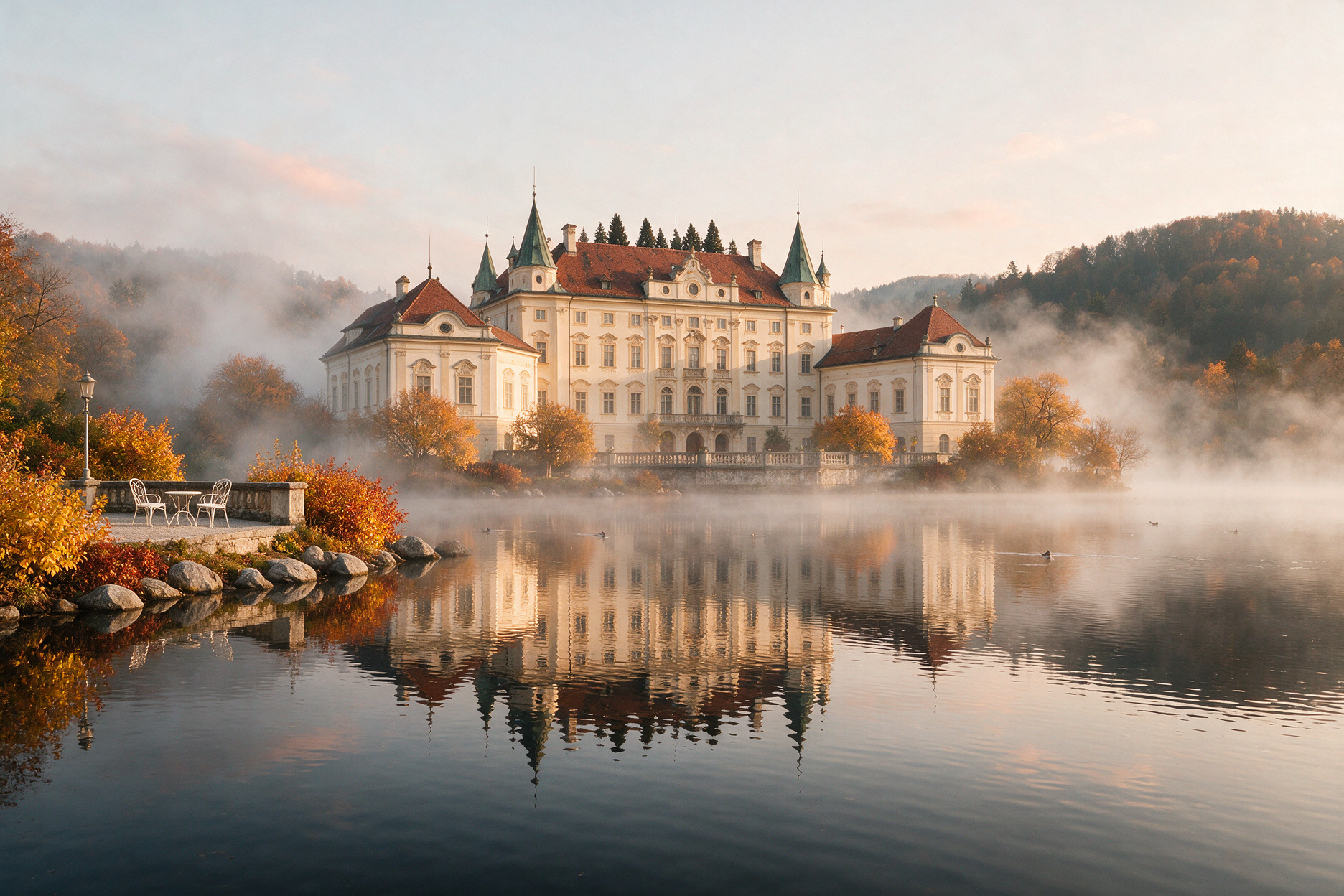
Hidden gem: Leopoldskron Palace at the lake’s edge
This is the one most visitors never actually reach, because the standard bus tour shows it to you from across the water, from a public access point about 400 metres away — you can see the palace, you can’t walk up to it. Leopoldskron is a private, functioning hotel and conference centre (it’s owned by the Salzburg Global Seminar), and its lakeside terrace was digitally used as the “back of the von Trapp house” for several exterior shots, most famously the scene where the children fall out of the boat into the lake.
You can book afternoon tea or a meal at Leopoldskron’s restaurant as a non-guest, which gets you onto the actual grounds and right up to that lakeshore view rather than looking at it from across the water. It’s not cheap, and you should book ahead, but if you want one genuinely quiet, unhurried half-hour on this entire trail, this is it — mid-week, mid-afternoon, there’s sometimes nobody else on the terrace at all.
Hidden gem: Hellbrunn’s gazebo and its trick fountains
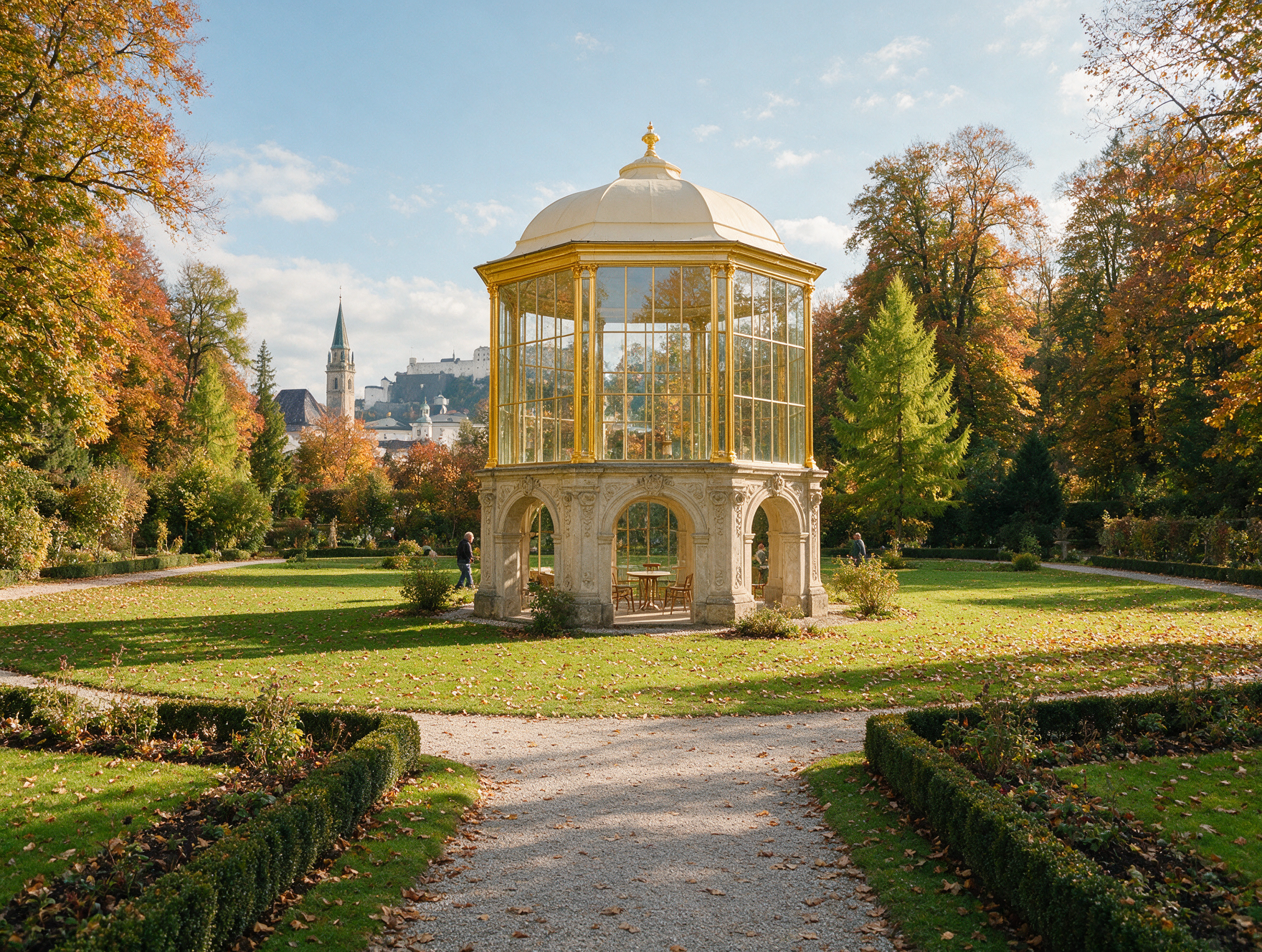
The glass gazebo where Liesl and Rolf sing “Sixteen Going on Seventeen” isn’t at its original filming location anymore — it was moved to the grounds of Hellbrunn Palace and is now open to walk into and photograph from inside, which the standard bus tour usually only allows a few minutes for. Give it more time than that, because Hellbrunn’s real draw is easy to miss if you’re only there for the gazebo: the Wasserspiele, a set of 400-year-old trick fountains built by Archbishop Markus Sittikus specifically to soak unsuspecting guests mid-tour. They still work exactly as designed, and the guided tour of them (in German with English translation, run on a schedule) is one of the more genuinely funny things you’ll do in Austria — assume you will get wet and dress accordingly.
Hidden gem: Mondsee’s actual wedding church
The wedding scene was filmed at the Basilika St. Michael in Mondsee, about 30 minutes from Salzburg by car, not in Salzburg itself — a detail the standard tour sometimes only mentions in passing since it’s outside the main city loop. Mondsee is a proper lakeside town in its own right, with a genuinely good Saturday market and a walkable centre, and pairing it with a slow lunch on the lake makes a half-day out of what’s otherwise a quick photo stop for most tour groups.
Hidden gem: the Fuschlsee detour nobody takes
Between Salzburg and Mondsee, most tours drive straight past Fuschlsee, a smaller, startlingly turquoise lake that doesn’t appear directly in the film but sits right on the route and gets a passing mention as “the lake district” in most tour narration. Ask your driver (or, if self-driving, just pull off) for ten minutes at the public swimming area on the western shore — it’s one of the more photogenic stops on the entire day and almost nobody stops there deliberately.
Hidden gem: Nonnberg Abbey, still a working convent
Nonnberg Abbey, where the real Maria Kutschera trained as a novice before marrying Georg von Trapp, is a functioning Benedictine convent today — not a museum, and the standard bus tour only stops for photos from outside the gate. You can attend the public Gregorian chant services if timing allows (check current schedules locally, as convent timings shift with the liturgical calendar), which is a genuinely different experience than a photo stop: standing in the actual chapel, hearing nuns sing the same style of chant Maria would have heard, is a lot more affecting than the film’s dramatized version of her departure.
How to actually do this — self-guided vs. tour
If you want the history and don’t mind a fixed schedule, book the official Panorama Tours bus (roughly half-day, with add-on options); it’s well run and the guides know their material. If you’d rather set your own pace, rent a car for the day or hire a private driver — Leopoldskron, Hellbrunn, Mondsee and Fuschlsee are all within a 45-minute radius of central Salzburg, and doing them self-guided lets you linger at the two or three that actually interest you instead of following someone else’s fifteen-minute-per-stop clock. Public transport covers Hellbrunn easily (bus 25 from the centre) but gets slower for Mondsee and Fuschlsee, where a car genuinely saves you an hour or more each way.
Costs, visas and getting to Salzburg
Salzburg connects to Vienna by a fast, frequent Railjet train — about 2 hours 20 minutes, no advance booking strictly required though earlier fares are cheaper. If you’re flying into Austria from India, Vienna is still the main gateway (Air India and Austrian Airlines both run the Delhi–Vienna route), so most Indian travellers see Salzburg as a rail add-on to a Vienna-based trip rather than a direct flight destination — Salzburg’s own airport handles mostly intra-European connections. For the visa side of this, the process is the same regardless of which Austrian city you’re visiting: a standard Austria Schengen visa covers the whole country and the wider Schengen area, currently costing €90 for an adult with processing generally taking up to 15 working days, so build in a comfortable buffer before you travel.
Budget roughly €80–150 per person for a self-guided day covering entry fees, a driver or car rental split across a small group, and lunch — more if you add the Leopoldskron terrace meal, which is worth it as an occasional splurge rather than something to do on every trip.
Mistakes to avoid
- Mistake to avoid: assuming the bus tour covers everything. It’s a good introduction, not the complete experience — several of the best stops on this list require either a separate booking or your own transport.
- Mistake to avoid: visiting Mirabell Gardens only at the obvious mid-morning tour-bus hour. Go before 9am or after 5pm and you’ll have the Pegasus fountain largely to yourself.
- Honest caveat: Hellbrunn’s Wasserspiele tour is genuinely fun, but it does get you wet — if you’re travelling with a nice camera and no dry bag, keep it away from the fountain zones the guide points out.
- Fun fact: the film’s actual von Trapp villa exterior was a composite — the front of the house was shot at one location, the lakeside terrace at Leopoldskron, and the interiors on a Hollywood soundstage, meaning no single Salzburg building actually matches the “von Trapp house” as seen on screen.
Who this trip actually suits
Couples tend to get the most out of Leopoldskron’s terrace and a slow Mondsee lunch — it’s the kind of day that photographs beautifully and doesn’t feel rushed. Families with kids do better prioritising Hellbrunn’s Wasserspiele, since getting theatrically soaked by a 400-year-old trick fountain is the sort of thing that turns a “cultural excursion” into something a nine-year-old will actually talk about afterward. Solo travellers have the easiest logistics here, since public transport and the official bus tour both work fine without needing to split a car rental three or four ways.
For photography, the light through Mirabell Gardens is best in the hour after opening (7am) with the fortress lit gold behind the fountain — by mid-morning the sun sits high and flat, and the composition loses most of its drama. Fuschlsee’s turquoise water photographs best under full midday sun rather than the golden-hour light that flatters most other stops on this route, which is a useful reason to visit it in the middle of your day rather than saving it for last.
Frequently asked questions
Is the Sound of Music tour worth it if I haven’t seen the movie recently?
Yes, though it helps to rewatch it beforehand — a lot of the narration assumes you remember specific scenes, and the payoff of seeing a location is bigger when you can picture the scene that was shot there.
How much time should I budget for the film locations?
A half-day (about 4 hours) covers the standard bus tour route. A full day, self-guided, lets you add Mondsee, Fuschlsee and a proper stop at Leopoldskron rather than a drive-by.
Can I visit Nonnberg Abbey inside, or only from outside the gate?
The abbey itself is a working convent and public access is limited mostly to the church for services; it’s not set up as a general tourist walk-through, so check current visiting times locally rather than assuming full access.
Do I need a car, or is Salzburg’s public transport enough for this trail?
Public transport comfortably covers Hellbrunn and central Salzburg sites. For Mondsee and Fuschlsee, a car or private driver saves significant time versus regional buses.
Is Hallstatt part of the Sound of Music trail?
No — that’s a common mix-up. Hallstatt wasn’t a filming location; it’s a separate Salzkammergut lake town about 90 minutes from Salzburg, well worth visiting on its own terms.
What’s the best season to do this trip?
Late spring through early autumn, matching the best time to visit Austria generally — the lake district around Mondsee and Fuschlsee is genuinely lovely from May through September and considerably colder and quieter outside that window.
Beyond the bus window
The Sound of Music trail earns its reputation — these are genuinely pretty places, film connection aside. The difference between doing it as a rushed bus tour and doing it properly is mostly about which four or five stops you choose to slow down at, and whether you’re willing to add a car or a booking to reach the ones the standard route only shows you from a distance.
If you’re planning Salzburg as part of a longer Vienna–Salzburg–Innsbruck loop, Get Tripped’s Austria itinerary builds in exactly this kind of self-paced day rather than a fixed group-tour schedule — worth a look if you want the flexibility without doing all the logistics yourself.