Around 9:45pm on a Tuesday, I watched roughly thirty people sprint — actually sprint, in coats and heels — across the Ringstrasse toward the Vienna State Opera’s side entrance. Standing-room tickets go on sale a few hours before curtain, and once the good spots near the rail are gone, you’re watching Verdi from behind a pillar. That mild chaos, thirty minutes before a world-class opera performance that costs less than a Vienna dinner, tells you most of what you need to know about how Vienna actually spends its evenings: some of the city’s best culture is available for the price of a cocktail, if you know when to show up.
Vienna doesn’t really do “nightlife” in the way Berlin or Barcelona do — this isn’t a clubbing city, and this guide isn’t going to pretend otherwise. What it does exceptionally well is evening culture: opera, wine taverns, late cafés, and a river that looks better lit up than it does at noon. If you’re building this into a wider Austria trip, Vienna’s evenings are where the city’s reputation as “world-class musical excellence” actually earns itself.
What’s in this guide
- The Vienna State Opera, properly explained
- Heuriger wine taverns in the hills
- Late-night coffeehouses that don’t rush you out
- The Danube Canal after dark
- Other genuinely good evening options
- Costs and getting around at night
- Mistakes to avoid
- FAQs
The Vienna State Opera, properly explained
The Wiener Staatsoper stages a different opera or ballet most nights of the season, and it’s genuinely one of the best opera houses on earth — not a “good for a tourist experience” opera house, an actually great one, with a resident ensemble and visiting soloists who perform at the top of the field. Full seats run anywhere from around €15 up to several hundred euros depending on the performance and position, which puts a proper seat within reach for most travellers on at least one night of a trip.
But the real move, and the one locals actually use, is the standing-room ticket. Around 435 Stehplatz spots go on sale on the day of the performance only, with sales opening at 10am, and prices start remarkably low — genuinely one of the best-value cultural experiences in Europe, each spot with its own subtitle screen in multiple languages. The catch is you need to queue, and the best rail positions near the front go to whoever gets there first. Arrive close to when sales open if you want a good spot, or accept a position further back if you’re happy just to be in the room.
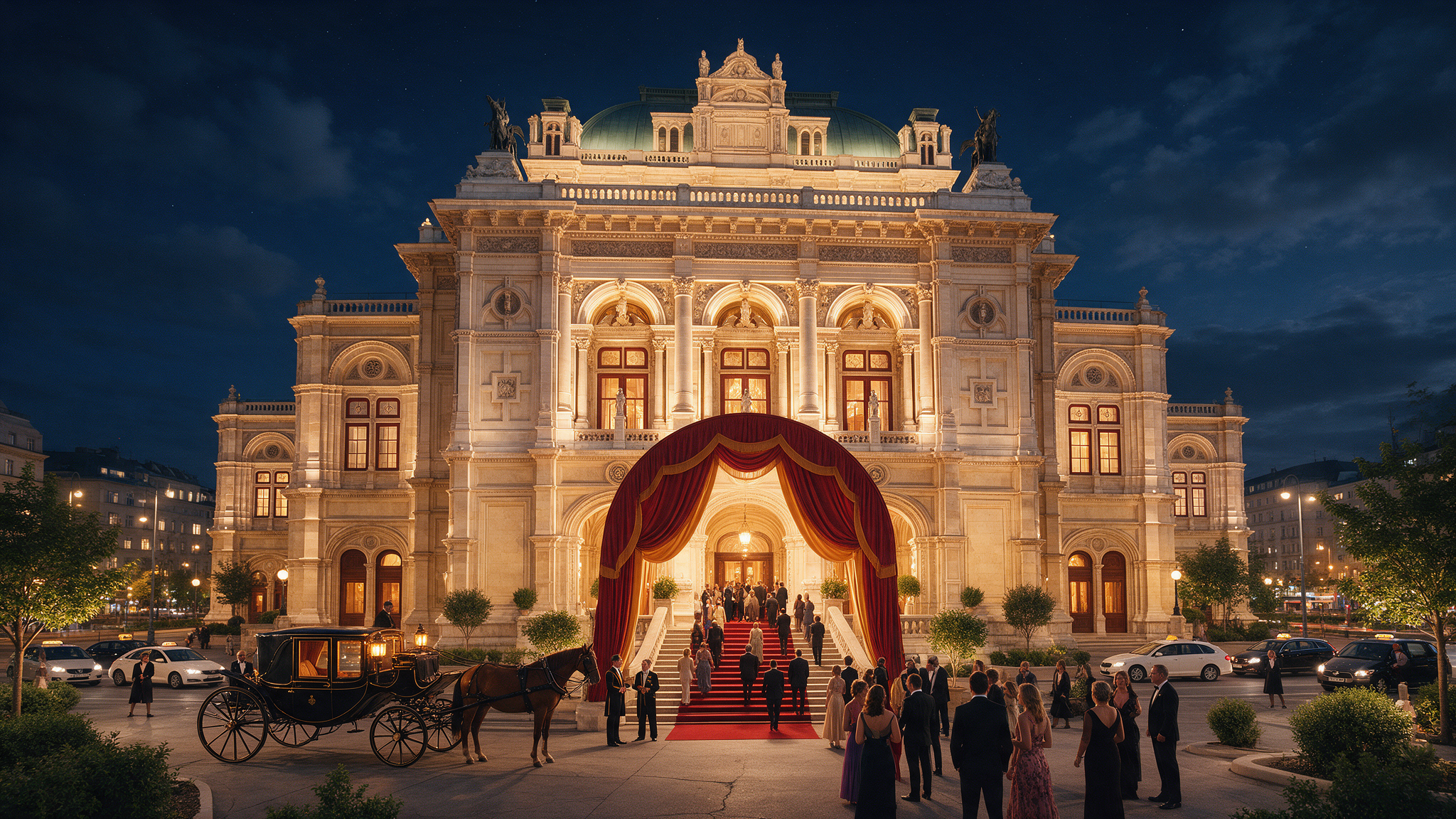
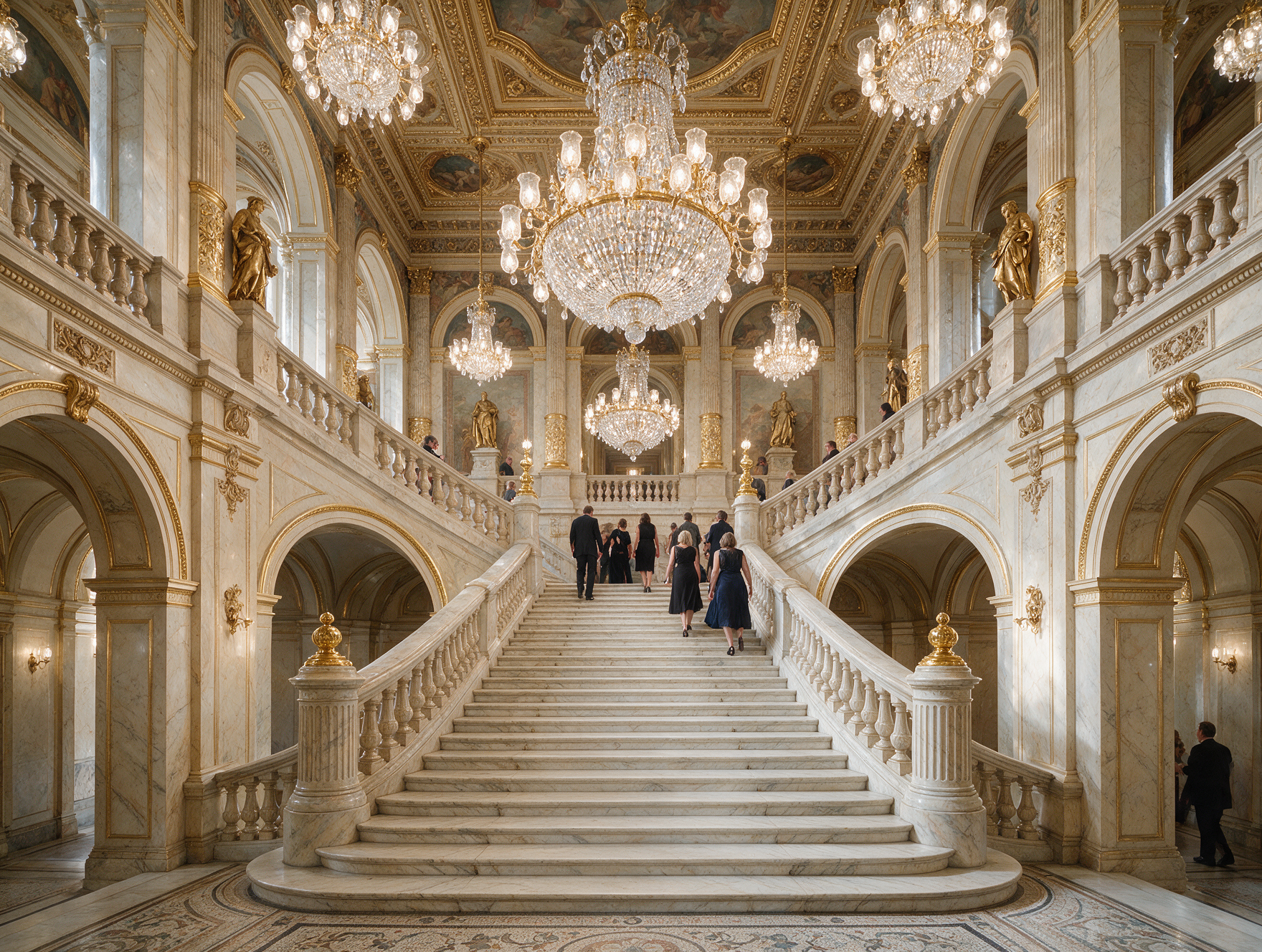
Dress code is more relaxed than people assume for standing room — smart casual is fine, you don’t need black tie unless you’re in a box seat on opening night. Performances typically run three hours or so with intervals, so plan your evening around that rather than squeezing it in before a late dinner reservation.
Heuriger wine taverns in the hills
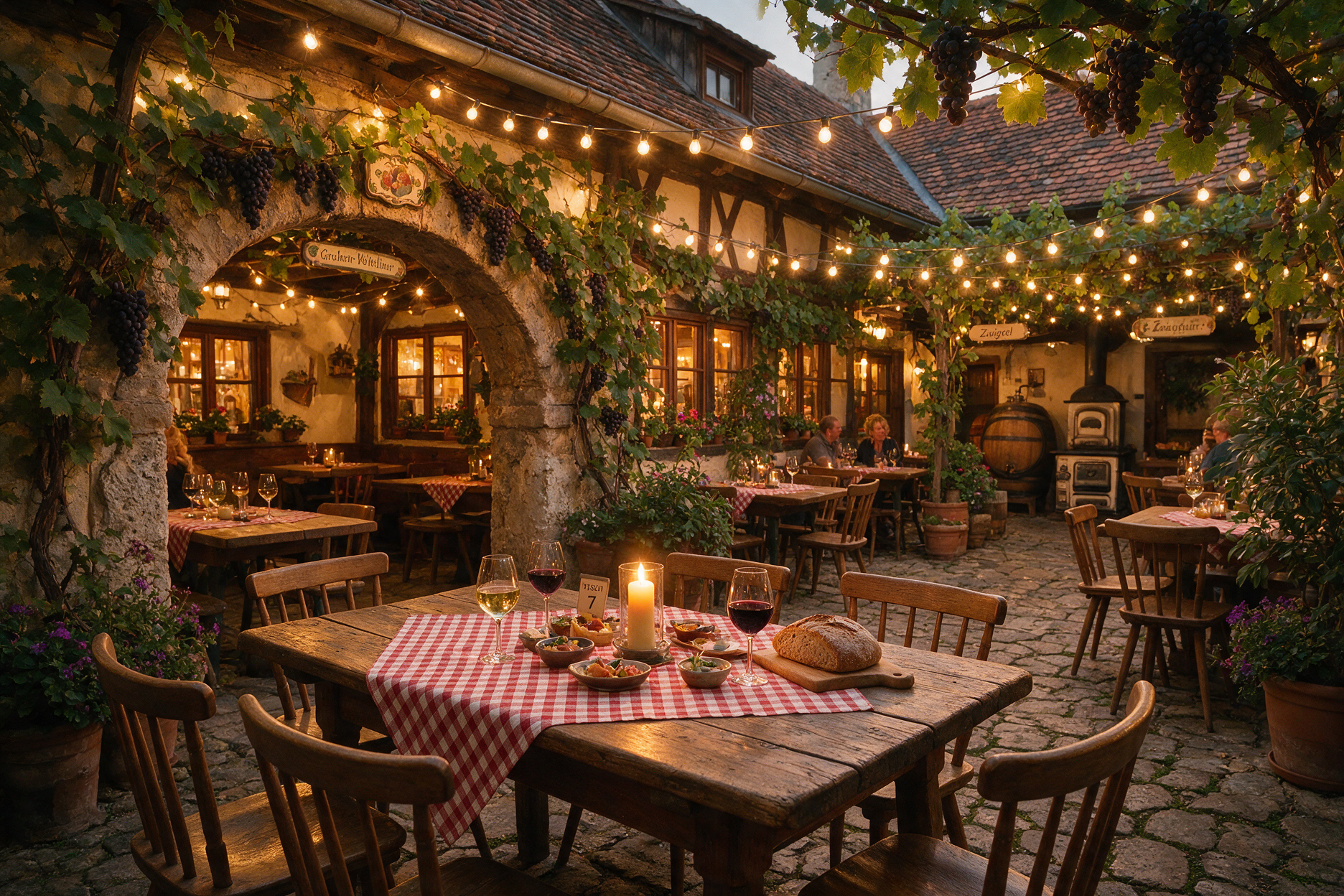
Vienna is one of the only major capital cities with working vineyards inside its own limits, mostly up in Grinzing, Nussdorf and Neustift am Walde in the hills above the city. A Heuriger is a wine tavern attached to an actual vineyard, traditionally only allowed to serve wine from its own harvest — the name literally means “this year’s,” referring to the young wine. The atmosphere is closer to a long, unhurried family dinner than a bar: communal tables, buffet-style Austrian cold cuts and roast meats, and a house Grüner Veltliner or Wiener Gemischter Satz poured by the glass or the Viertel (quarter-litre).
Take tram 38 out to Grinzing rather than a taxi — it’s part of the experience, and it’s a genuinely pretty ride once you’re past the inner districts. Go on a weeknight if you want a quieter, more local crowd; weekends pull in more tour groups and the bigger Heurigen lean into that with live accordion sets that are fun once and skippable after that.
Late-night coffeehouses that don’t rush you out
Viennese coffeehouse culture is UNESCO-listed as intangible cultural heritage for a reason, and the tradition genuinely does extend into the evening — a good Kaffeehaus will let you nurse a single Melange for two hours without so much as a raised eyebrow from the waiter. Café Hawelka and Café Sperl both stay open into the evening with their old-world atmosphere fully intact — wood panelling, marble tables, newspapers on wooden rods — and both do a small late menu if you want something more than cake. This is also, honestly, one of the better cheap evening options in a city that can get expensive fast: a coffee and a slice of Sachertorte, taken slowly, is a legitimate way to spend two hours here.
The Danube Canal after dark
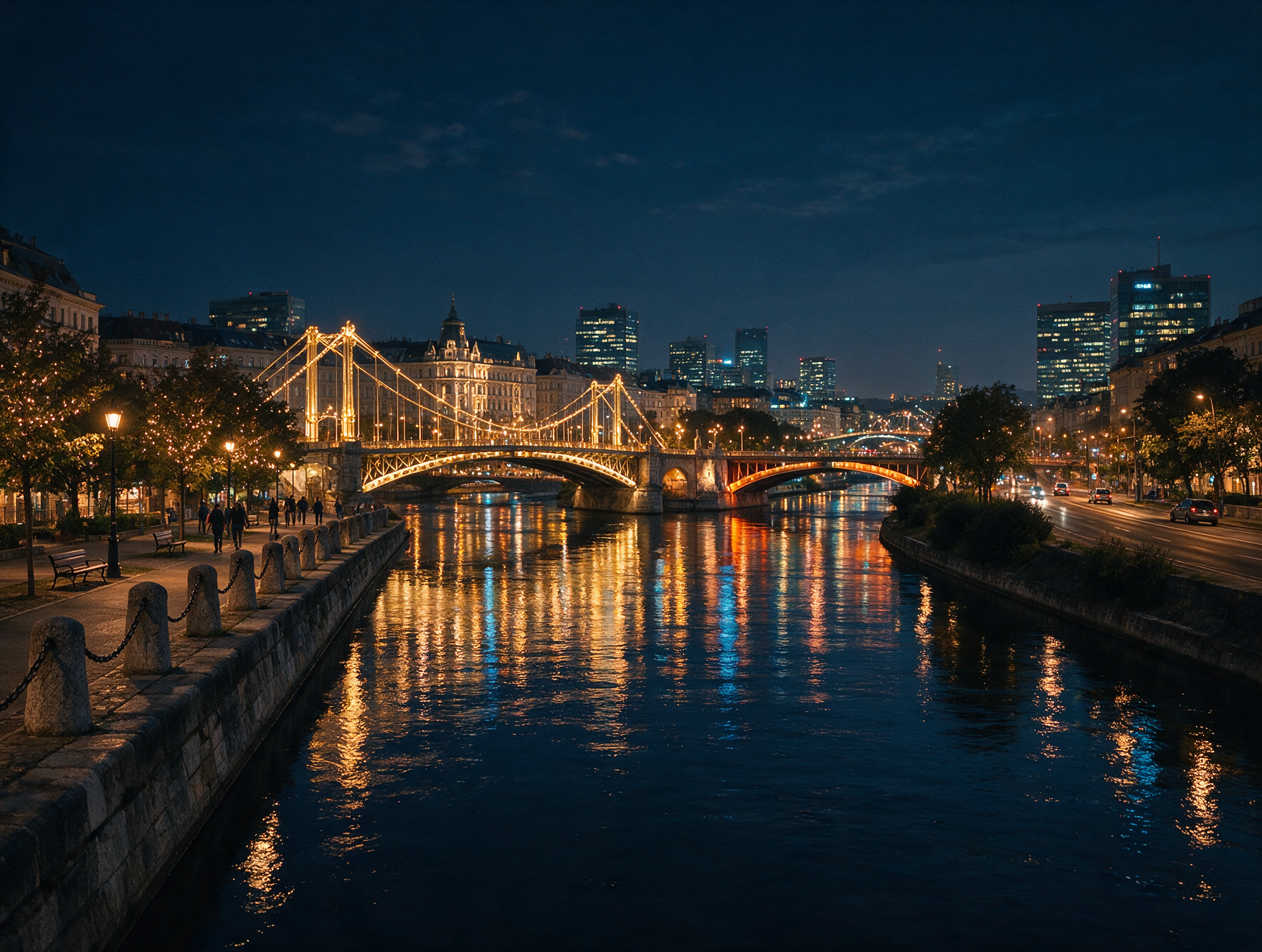
Not the Danube proper — the Donaukanal, the narrower channel that cuts through the city itself, is where Vienna’s younger crowd actually spends summer evenings. In the warmer months, temporary bars and food stalls set up along the concrete banks between the Schwedenplatz and Augartenbrücke stretch, and it’s a genuinely pleasant, unpretentious way to spend a warm evening — cheap drinks, no dress code, and the city’s illuminated bridges reflected in the water. It’s seasonal (roughly May through September) and disappears entirely in winter, so don’t plan a canal evening for a January trip.
Other genuinely good evening options
- Prater at night: the giant Ferris wheel (Wiener Riesenrad) is lit and running into the evening, and the surrounding funfair takes on a different, slightly nostalgic character after dark than it has during the day.
- Musikverein concerts: if opera isn’t your thing but orchestral music is, the Musikverein’s Golden Hall (home of the New Year’s Concert) hosts regular performances and is, if anything, an even more architecturally stunning room than the Opera House.
- Naschmarkt after dark: most stalls close by early evening, but a handful of the market’s attached restaurants and wine bars stay lively well past that, particularly toward the Kettenbrückengasse end.
Costs and getting around at night
Vienna’s U-Bahn and tram network runs later on weekends, and night buses cover the core gaps the rest of the week, so you’re rarely stuck relying on taxis — a genuine relief for a solo traveller or anyone budgeting carefully. Standing-room opera tickets keep a full evening of world-class culture affordable even on a mid-range trip; a Heuriger dinner with wine typically runs €25–40 per person, which is reasonable by Western European standards. If you’re weighing this against a full Austria itinerary covering Vienna, Salzburg and Innsbruck, an opera night and a Heuriger dinner are the two evening splurges worth prioritising over a generic “dinner cruise” or nightclub package aimed purely at tourists.
Who each evening suits best
Couples get the most romantic mileage out of a proper seated opera performance followed by a late dinner near the Ringstrasse — it’s a genuinely special night without requiring a special occasion to justify it. Solo travellers, oddly, are often better served by standing room than a seat: you’re shoulder to shoulder with regulars and other solo opera-goers at the rail, and it’s one of the easier places in Vienna to strike up a conversation with a local between acts. Families with older kids or teenagers tend to enjoy the Prater’s illuminated evening funfair more than a Heuriger, where the pace and the wine-forward atmosphere are better suited to adults. If you’re travelling on a honeymoon or anniversary trip through Austria, a private box or premium seat at the opera paired with a Heuriger dinner the following night is a strong, unforced way to build in two very different but equally memorable evenings.
For photography, the Opera House’s illuminated facade is best shot from across the Ringstrasse just after sunset, when there’s still enough ambient blue in the sky to balance the building’s warm floodlighting — pure darkness makes the shot flatter than it needs to be. The Donaukanal’s bridges photograph best from water level rather than from the road above, so take the stairs down to the canal path itself if you’re carrying a camera.
Mistakes to avoid
- Mistake to avoid: buying standing-room tickets from a resale site or a tout outside the opera house. They’re sold exclusively on the day, in person or via the official online shop — anyone offering them in advance from a third party is not a legitimate source.
- Mistake to avoid: assuming a Heuriger is a restaurant with a menu and table service throughout. Many are self-service, buffet-style — you queue at the counter for food, then find a table, which catches first-timers off guard.
- Honest opinion: skip any evening package that markets itself as “authentic Viennese nightlife” with a fixed folklore show and dinner — it’s aimed squarely at tour groups and feels exactly like what it is. A real Heuriger or the standing-room opera queue gives you something closer to how the city actually spends an evening.
- Fun fact: the Vienna State Opera was almost completely destroyed by Allied bombing in 1945 and wasn’t fully rebuilt and reopened until 1955 — the current auditorium, while faithful to the original design, is a postwar reconstruction rather than the untouched 19th-century building.
Frequently asked questions
How early should I queue for Vienna Opera standing-room tickets?
Check the Vienna State Opera’s official ticket page for the current schedule — sales open at 10am on performance day. For a popular production, arriving close to opening time gets you a better position near the rail; arriving an hour before curtain still gets you in, just further back.
Is a Heuriger the same as a regular wine bar?
Not quite — a true Heuriger is legally tied to serving its own vineyard’s wine and is often self-service and buffet-style, closer to a rustic family gathering than a curated wine bar experience.
Is Vienna safe to walk around at night?
Yes, broadly — Vienna consistently ranks among the safer major European capitals for evening walking, including around the Ringstrasse, the Opera House and the Donaukanal. Normal city precautions apply, but this isn’t a city that requires special after-dark caution.
What should I wear to the opera in standing room?
Smart casual is genuinely fine. You’ll see everything from suits to jeans in the standing sections — save formal wear for a proper seat if that’s the experience you want.
Is the Danube Canal scene open year-round?
No — the temporary bars and seasonal setup along the canal generally run from around May to September and close up for the colder months.
Do I need to book a Heuriger in advance?
Smaller, more traditional ones usually don’t take reservations and work on a first-come basis; larger, more tourist-oriented Heurigen in Grinzing sometimes do, especially on weekends, so it’s worth checking ahead if you have a specific one in mind.
One more genuinely local note: Vienna’s trams themselves are part of a good evening if you’re not in a rush. The 1 and 2 lines circle the entire Ringstrasse, and riding a loop of it after dark, past the Opera, the Rathaus and Parliament all lit up, costs the same €2.40 as any other tram ride in the city. It’s not a “must-do” in the way an opera ticket is, but it’s a low-effort, low-cost way to see the city’s grandest architecture without walking the full loop on foot after a long day of sightseeing.
An evening city, not a nightlife city
Vienna’s evenings reward slowing down rather than seeking out the loudest option in the room. An opera standing-room ticket, a Heuriger dinner in the hills, or two unhurried hours in a hundred-year-old coffeehouse — none of it is flashy, and that’s rather the point. This is a city that spent centuries refining how to spend an evening well, and it shows.
If you want an evening in the opera or a Heuriger dinner built directly into your Vienna stay without juggling the logistics yourself, Get Tripped’s Austria packages can slot these in alongside the daytime sightseeing rather than leaving you to figure it out after a long day of walking.