Austria isn’t a cheap country, and we’re not going to pretend it is — but a surprising amount of what makes Vienna, Salzburg, Hallstatt, and Innsbruck worth visiting costs nothing at all. This is a city-by-city rundown of the free things actually worth building into your itinerary, not padded out with “window shopping” and “people watching” the way a lot of these lists tend to be.
Table of Contents
- Vienna
- Salzburg
- Hallstatt
- Innsbruck
- Free Seasonal Events
- How to Build a Free Day Without It Feeling Like a Consolation Prize
- FAQs
Vienna
Schönbrunn Palace Gardens are free to enter even though the palace interior isn’t — and honestly, the gardens are the better half of the visit. Walk the main allée up to the Gloriette at the top of the hill for a view back over the palace and the city that costs nothing but the climb. Stephansdom’s main nave is free to enter (the tower climb and the catacombs cost extra), and it’s worth ten quiet minutes even if you’re not particularly drawn to churches — the scale of the space is different from photos.
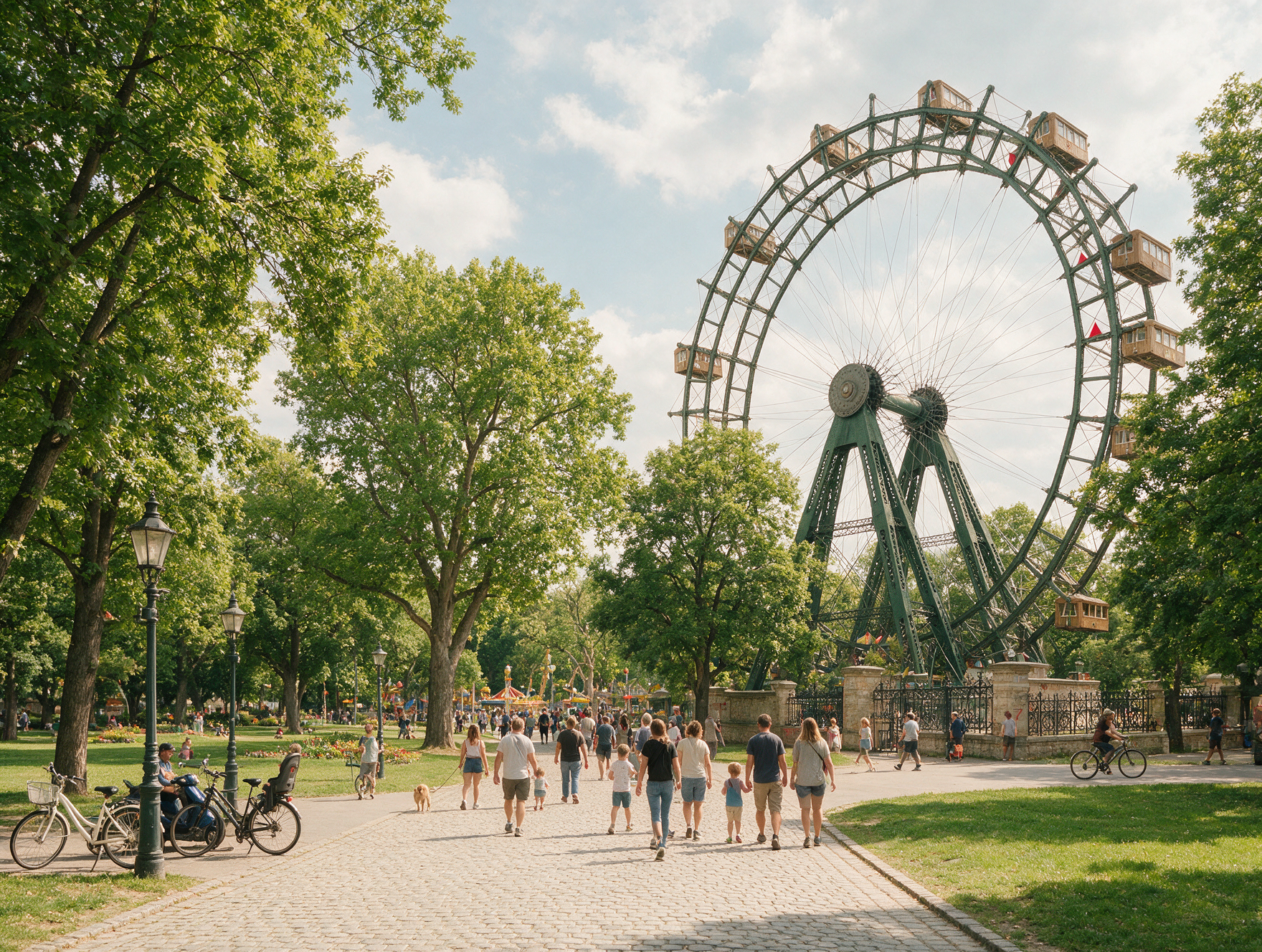
Prater park costs nothing to enter; you only pay per ride, including the famous Riesenrad Ferris wheel, so a walk through the park and a look at the wheel from below is a genuinely pleasant, free hour, especially with kids who’ll be happy just watching it turn. The MuseumsQuartier’s courtyard, between the actual paid museums, is a free public space that fills with loungers (giant orange beanbag-style seats) in summer — a good spot to sit and do nothing for a while, which is underrated as a travel activity. Families with children will find Prater’s free entry particularly useful for splitting a day into a paid morning attraction and a low-cost, low-pressure afternoon where nobody has to sit through another museum. The Naschmarkt costs nothing to walk through and browse, even if you don’t buy anything, and Rathausplatz in front of City Hall hosts free public events and film screenings through much of the year, worth checking the calendar for whatever’s on when you’re there.
For something less obvious, walk the Donaukanal (Danube Canal) — not the main Danube, but the narrower urban waterway running through the city, lined with street art, casual bars, and a genuinely local (rather than tourist-facing) atmosphere in the evening.
Salzburg
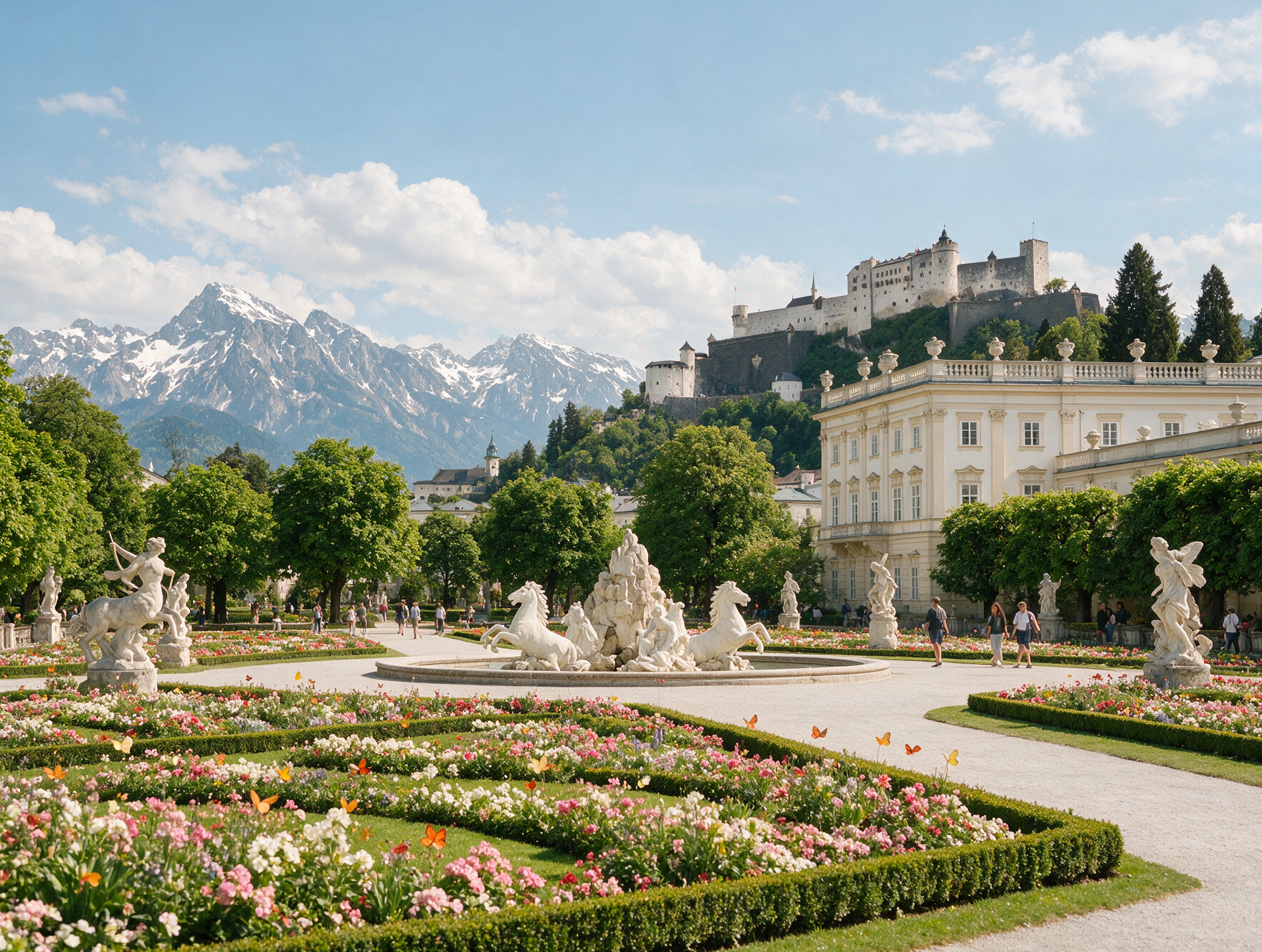
Mirabell Gardens, free and open year-round, are Salzburg’s answer to Schönbrunn on a smaller scale — formal flower beds, statuary, and a clean view up toward Hohensalzburg Fortress. If you know the “Do-Re-Mi” sequence from The Sound of Music, the steps here are the ones from the film, and it’s a nice, free bit of movie-location tourism even if that’s not usually your thing. Walking the old town itself — the Getreidegasse’s wrought-iron guild signs, the cathedral square, the narrow lanes toward the river — costs nothing and is genuinely the best way to see Salzburg regardless of budget.
The Kapuzinerberg, a hill on the opposite side of the river from the old town, is a free hike (about 20–30 minutes up) that rewards you with a quieter, less-photographed view over the city than the fortress side gets. And simply walking along the Salzach river at golden hour, with the old town and fortress lit up across the water, is free and might be the single best photo opportunity in the city.
Hallstatt
Hallstatt’s core appeal — walking the lakeside promenade, photographing the pastel houses reflected in the water, wandering the tiny market square — is entirely free. The parish church and its cemetery are free to visit (the Beinhaus/bone house inside has a small entry fee, if that history interests you). it’s a nicer, quieter alternative to the crowded main square if you want the same church without the tour groups clustered at the door. The one paid attraction most visitors do — the Skywalk viewpoint via funicular — has a free alternative: a hiking trail up to a similar vantage point exists for travelers who don’t mind the climb and want to skip the funicular fee, though budget real time and decent shoes for it.
Innsbruck
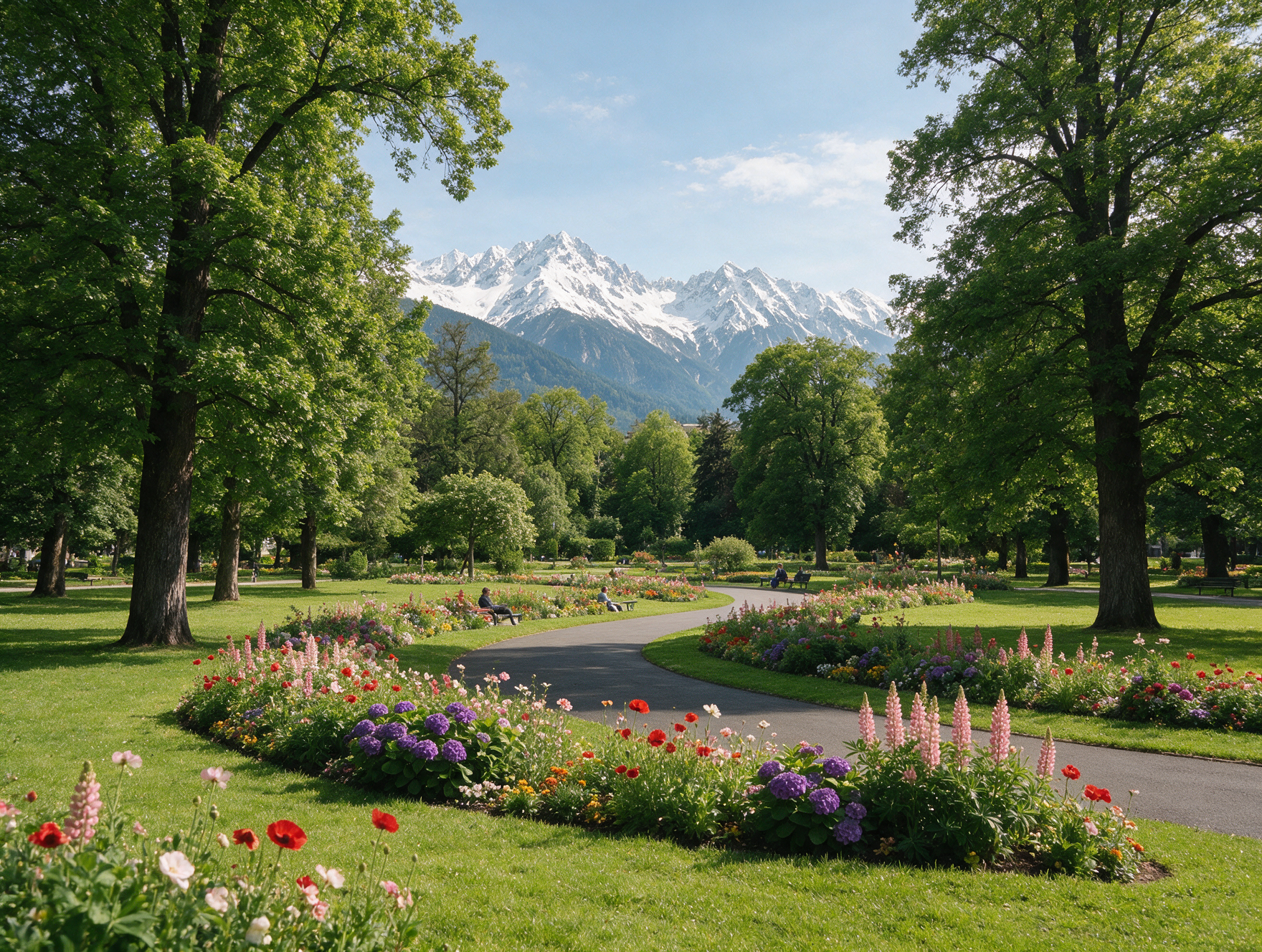
The old town itself, including the Golden Roof (Goldenes Dachl) and Maria-Theresien-Strasse with the mountains framing the far end, costs nothing to walk and photograph. The Hofgarten, a large public park near the old town, is free and a good spot to sit with the Nordkette peaks visible above the treeline. For a free viewpoint (as opposed to the paid Nordkette cable car), the walk up toward the Bergisel area gives a solid vantage over the city and surrounding mountains without a ticket.
Free Viewpoints Worth the Walk
Every city on this itinerary has at least one elevated view that doesn’t require a ticket, and they’re worth deliberately seeking out rather than stumbling into. In Vienna, the Gloriette at the top of Schönbrunn’s gardens gives you the palace, the gardens, and a wide slice of the city skyline in one frame, and it’s a fifteen-minute uphill walk from the palace entrance rather than a funicular or paid lift. In Salzburg, beyond the Kapuzinerberg already mentioned, the walk up to the base of the fortress walls (not inside the fortress itself, which does charge admission) still gives you a strong angle over the old town’s rooftops. In Innsbruck, the approach road toward Bergisel — the ski jump stadium built for the 1964 and 1976 Winter Olympics — gives you a genuinely dramatic mountain backdrop without paying to enter the stadium itself.
Market Browsing and Free Museum Hours
Beyond Vienna’s Naschmarkt, Salzburg runs a smaller farmers’ market on Universitätsplatz most weekday mornings — not a major attraction on its own, but a good, free way to see how locals actually shop, distinct from the souvenir-shop version of the old town most visitors only see. Several of Vienna’s city-run museums (as opposed to the major national ones) offer free entry on the first Sunday of the month or during specific evening hours; the exact list changes, so it’s worth a quick check of Vienna’s official tourism site a week or two before you travel rather than assuming last year’s schedule still holds.
Self-Guided Walking Routes
All four cities reward a slow, undirected walk more than a checklist of sights. In Vienna, the full Ringstrasse loop on foot (rather than by tram) takes about 2–3 hours and passes the Parliament, the Rathaus, the university, and the Burgtheater in one continuous, free route. In Salzburg, a loop from the old town across the Makartsteg pedestrian bridge (locals hang padlocks on it, in a smaller echo of Paris’s Pont des Arts) into the Neustadt side and back gives you both banks of the Salzach in under an hour. In Innsbruck, walking from the old town along the Inn river gives you a quieter, more residential view of the city than the tourist-focused Maria-Theresien-Strasse alone.
A fun fact tied to one of these routes: the Ringstrasse itself only exists because Vienna’s medieval city walls were demolished in the 1850s and 60s to make way for it, at the emperor’s own order — which is part of why the boulevard feels so deliberately grand, lined edge to edge with monumental buildings built in the following decades specifically to show off the new avenue.
Free Seasonal Events
Timing matters here. Vienna’s Christmas markets (Rathausplatz, and several smaller ones around the city) cost nothing to walk through, even though the mulled wine and snacks are, reasonably, not free — and the atmosphere alone, especially at Rathausplatz with the City Hall lit up behind the stalls, is worth planning a November or December trip around even without spending much. Vienna’s summer Filmfestival am Rathausplatz shows free open-air opera and concert screenings on a huge outdoor screen through much of July and August, with food stalls around the square — a genuinely great, free evening if your dates line up. Salzburg and Innsbruck both run smaller versions of Christmas markets and summer outdoor events on a similar seasonal logic, worth checking each city’s tourism site for exact dates closer to your trip.
How to Build a Free Day Without It Feeling Like a Consolation Prize
The honest caveat with any “free things to do” list is that it can read as a downgrade from the paid attractions, and that’s not really the spirit here. A day built around Schönbrunn’s gardens, a Naschmarkt graze, and an evening walk along the Donaukanal is a genuinely good day in Vienna on its own terms, not a cheaper substitute for a “real” day. A mistake we see travelers make is treating free activities as filler between paid ones rather than planning them with the same intention — the golden-hour walk along the Salzach or the Kapuzinerberg hike above Salzburg are, for a lot of travelers, the actual highlight of the trip, not the budget option.
A smart-spending tip that isn’t really about spending less: pairing one paid, must-do attraction (Schönbrunn’s interior, the Nordkette cable car) with a free half-day gives your trip better pacing than back-to-back paid sights, and your legs and your patience for queues will both thank you.
FAQs
Is Vienna expensive compared to other European capitals?
It’s mid-range by Western European standards — generally cheaper than London or Paris, comparable to or slightly less than Amsterdam, though flights from India and hotel category will affect your overall budget more than day-to-day costs in the city.
Are museums ever free in Vienna?
Some, including parts of the Museum of Natural History and various city museums, offer free entry on specific days or during specific hours — check each museum’s website for current schedules, since these change.
Is the Hallstatt Skywalk worth paying for, or is the free hike just as good?
They offer different vantage points rather than one being strictly better — the Skywalk is quicker and gives a wider panoramic view, while the free hike takes longer but rewards you with a quieter experience and a real sense of earning the view.
What’s the single best free thing to do across all four cities?
If we had to pick one: the golden-hour walk along Salzburg’s Salzach river with the old town and fortress lit up across the water. It costs nothing and doesn’t feel like a compromise next to anything paid on this itinerary.
Do I need to book anything in advance for these free attractions?
No, none of the free sights and walks in this guide require advance booking, though the Rathausplatz Christmas market and Filmfestival get genuinely crowded at peak times, so arriving earlier in the evening gets you a better spot.
Is it safe to walk in these cities in the evening?
Generally yes — Vienna, Salzburg, and Innsbruck are all comparatively low-crime European cities, and the walks mentioned here (Donaukanal, Salzach riverside) are well-lit and well-used in the evening rather than isolated. For solo travelers especially, an evening walk along the Salzach or the Donaukanal is a comfortable, well-populated way to spend a free hour without the self-consciousness a solo diner sometimes feels at a restaurant table.
We Build Free Time Into Every Itinerary
A good Austria itinerary isn’t wall-to-wall paid attractions — it’s a mix, paced so the free highlights get the same planning attention as the ticketed ones. That’s how we build every Get Tripped Austria trip, and it’s worth telling us up front if you want more unstructured, low-cost time built into your days rather than a packed sightseeing schedule.