Austrian food doesn’t get talked about the way Italian or Thai food does, and that’s a little unfair, because a country that invented both the coffeehouse as a social institution and a pancake dessert eaten as a main course deserves more attention. This is a city-by-city food trail across the places most Get Tripped travelers actually visit — Vienna, Salzburg, Hallstatt, Zell am See, and Innsbruck — built around the dishes, cafés, and market stalls worth planning a meal around, not a generic “top 10 foods to try” list.
Table of Contents
- Vienna: Coffeehouse Culture & the Naschmarkt
- Salzburg: Mozartkugel and Mountain Comfort Food
- Hallstatt: Small Village, Honest Lake Food
- Zell am See: Alpine Café Culture
- Innsbruck: Tyrolean Hearth Cooking
- Six Dishes Worth Building a Meal Around
- A Few Honest Tips
- FAQs
Vienna: Coffeehouse Culture & the Naschmarkt
Vienna’s coffeehouses aren’t cafés in the grab-and-go sense — they’re closer to a reading room with table service, and UNESCO agrees, having listed Viennese coffeehouse culture as intangible cultural heritage. Order a Melange (their version of a cappuccino, less foam-heavy) at Café Central or Café Sperl, and don’t feel rushed; a single coffee buys you the table for as long as you want it, which is the entire point.
For an actual meal, Wiener Schnitzel is the obvious order — veal, pounded thin, breaded, and fried until it’s genuinely larger than the plate at a good traditional Gasthaus like Figlmüller. Skip the lemon-drowning most tourists do; a light squeeze is plenty. For dessert, the rivalry between Café Sacher and Demel over the “original” Sachertorte recipe has been running since the 1830s, and honestly, both versions are good enough that you don’t need to pick a side to settle a century-old argument — just try one.
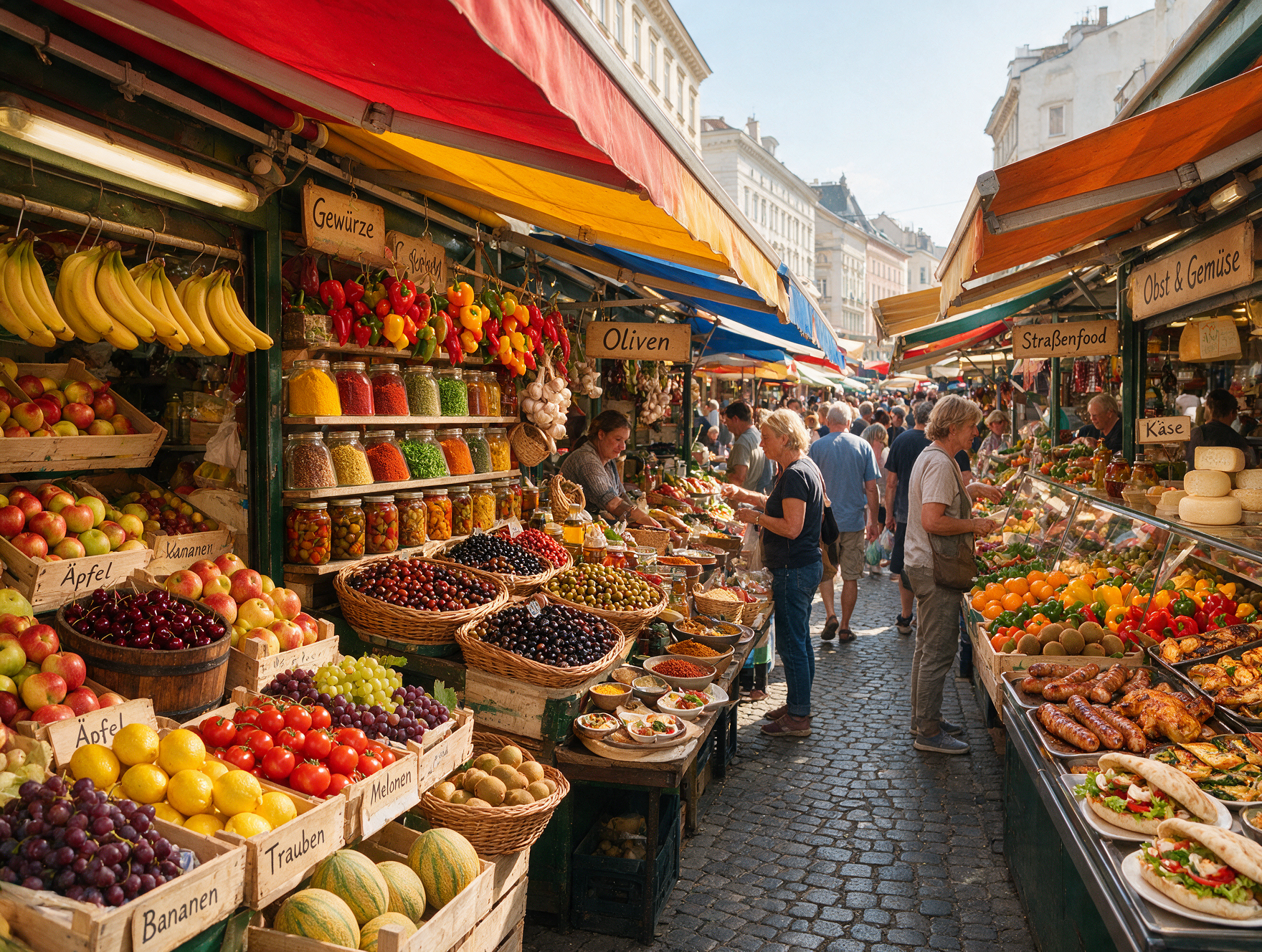
The Naschmarkt is where Vienna’s food gets less formal and more interesting: Balkan grill stalls, Turkish pastry counters, and produce vendors who’ve been there for decades, all within a ten-minute walk of the Ringstrasse. Go hungry and graze rather than sitting down for one big meal. For late-night eats, the Würstelstand (sausage stand) culture is real — a Käsekrainer (cheese-filled sausage) from a stand near Albertinaplatz at midnight is a genuinely Viennese experience, not a tourist gimmick.
Salzburg: Mozartkugel and Mountain Comfort Food
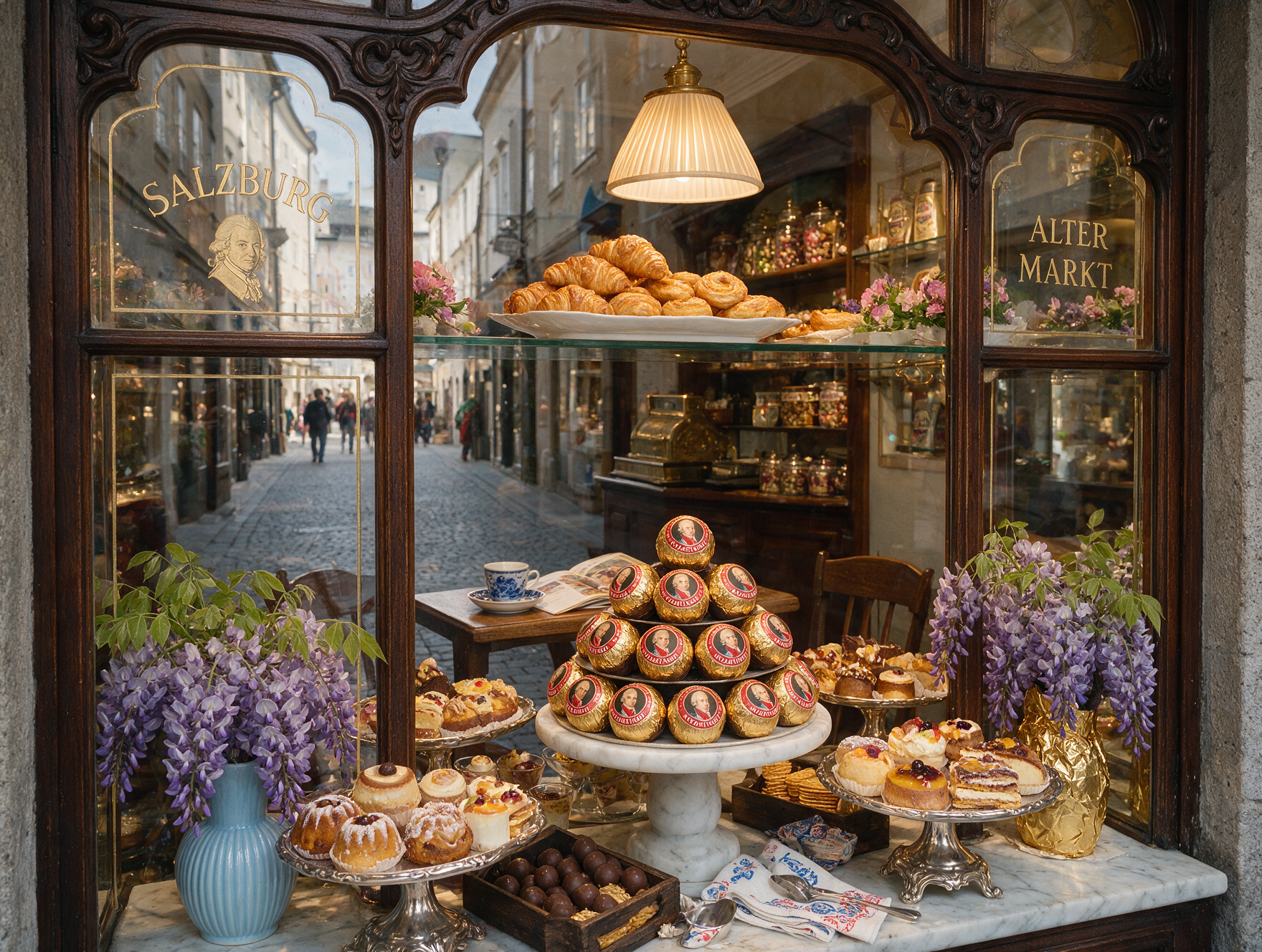
Every shop window on Getreidegasse seems to sell Mozartkugeln — the pistachio-marzipan-nougat chocolate balls named for the city’s most famous export — but the quality varies a lot between mass-produced tourist versions and the original hand-made recipe from Fürst, the confectioner that invented it in 1890. Fürst’s own shops still hand-wrap theirs in blue-and-silver foil, and it’s worth the small premium over the gold-foil supermarket version.
Beyond the chocolate, Salzburg leans into hearty mountain food: Kasnocken (a cheese-heavy dumpling dish similar to mac and cheese, but denser and better) and Salzburger Nockerl, a soufflé-like dessert shaped to resemble the three hills around the city, meant for sharing. A coffee-and-cake stop at one of the cafés along the Salzach river, watching Hohensalzburg Fortress catch the evening light, is worth building an hour of unstructured time into your day for.
Hallstatt: Small Village, Honest Lake Food
Hallstatt is tiny, and its food scene reflects that — a handful of lakeside restaurants serving fresh trout and char pulled straight from Lake Hallstatt, simply grilled or pan-fried with herb butter. This isn’t the place for an elaborate tasting menu; it’s the place for a lake-fish lunch with a view, ideally at a table facing the water rather than the street. Ice cream matters more here than you’d expect — a scoop from one of the small stands near the main square, eaten on a bench by the promenade, is a better use of twenty minutes than most of the souvenir shops.
Zell am See: Alpine Café Culture
Zell am See sits on its own lake at the foot of the Kitzsteinhorn, and its food culture is quieter and more local than Salzburg’s, an hour and a half away. Lakeside cafés serve strong coffee alongside Kaiserschmarrn (more on that below) with a view across the water to the mountains, and the town’s bakeries are a genuine draw in their own right — Austrian bakery culture runs deep even in a town this size, and a fresh Kipferl (crescent roll, the ancestor of the French croissant) from a local Bäckerei beats most hotel breakfast spreads.
Innsbruck: Tyrolean Hearth Cooking
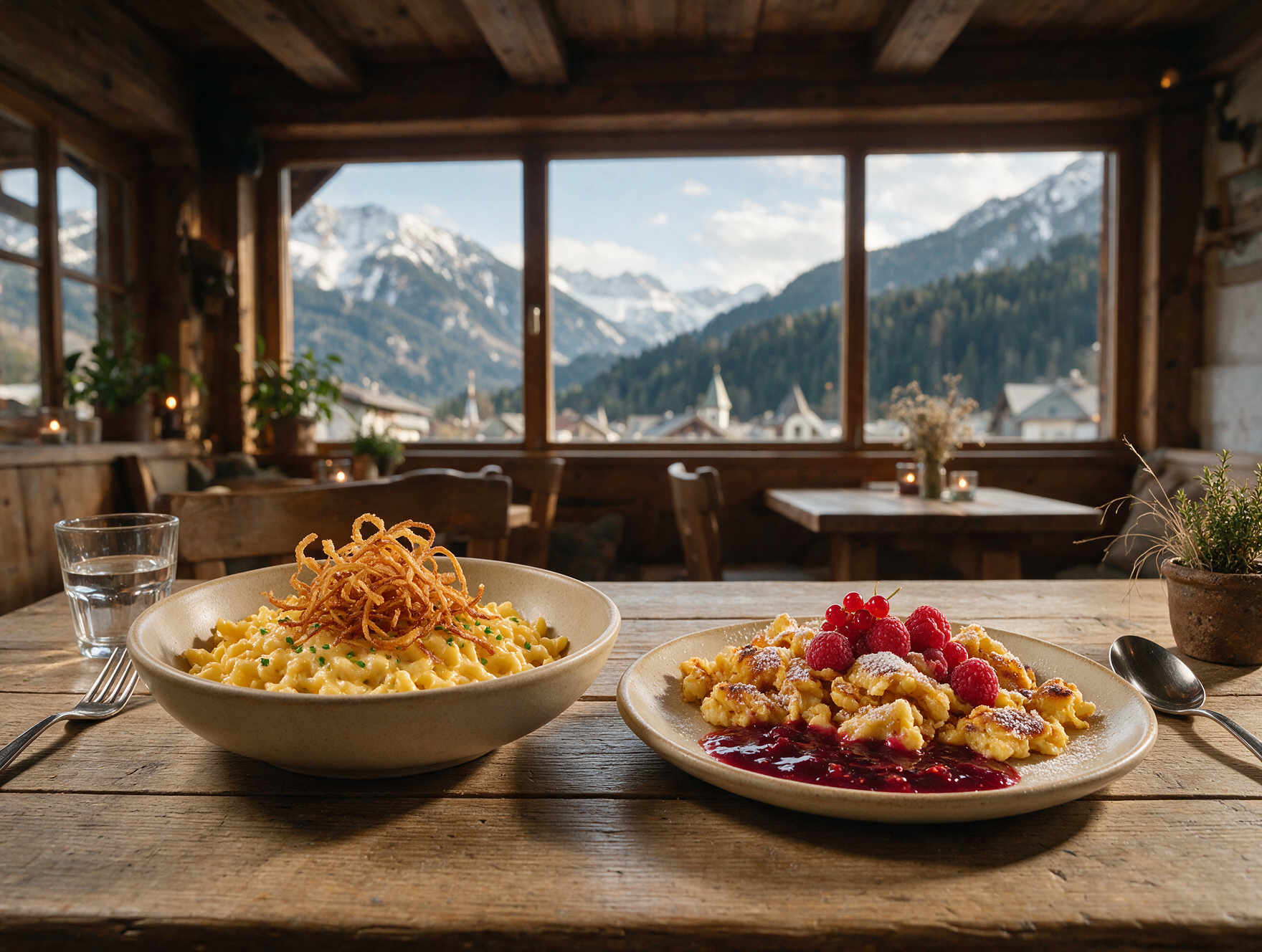
Innsbruck’s food is shaped by its mountains — heavier, cheesier, built for people who’ve just come down from skiing or hiking. Tiroler Gröstl (a fried hash of potatoes, onions, and leftover roast meat, topped with a fried egg) is the regional comfort dish, and a good Tyrolean Gasthaus in the old town will do it properly rather than as a tourist-menu afterthought. Kasspatzln, the local answer to spätzle smothered in cheese and topped with crispy fried onions, is the dish to order on a cold day, and there will be a cold day even in shoulder season, given the altitude.
Coffee Runs: More Than Just a Melange
Vienna’s coffee menu has a full vocabulary most visitors never learn, and it’s worth knowing before you order on autopilot. A Kleiner Brauner is a small black coffee with a touch of milk on the side; an Einspänner is strong black coffee topped with a tall dome of whipped cream, traditionally served in a glass with a handle so a coachman could hold it with gloves on; a Verlängerter is an espresso lengthened with hot water, closer to what most Indian travelers expect from an Americano. Order by name rather than pointing at a menu photo, and the server will treat you like someone who’s done this before — which, by the end of a few days in Vienna, you will have.
Outside Vienna, the coffee culture gets simpler but no less serious. Salzburg and Innsbruck cafés serve good espresso-based drinks without Vienna’s ceremony, and a quick stand-up coffee at a bakery counter in Zell am See, taken the way locals do — fast, strong, standing at the counter — is a different but equally legitimate version of the same culture.
Ice Cream, and Why It’s Worth Stopping For
Austria takes Eis (ice cream) more seriously than the climate might suggest. Vienna has a strong Italian-influenced gelato scene — look for a shop making it fresh on-site rather than scooping from a pre-made tub, which is usually obvious from the texture and the shorter, rotating flavor list. In Salzburg, a scoop from a stand along the Salzach promenade on a warm afternoon, eaten while walking rather than sitting, is as much a part of the old-town experience as the Getreidegasse shopfronts. Hallstatt’s lakeside ice cream stands are small and simple, but the setting does the work — there’s something about eating a cone on a bench facing the lake and the mountains that makes a two-euro scoop feel like a proper stop rather than a snack. Zell am See follows the same lakeside logic on a quieter scale.
Late-Night Eats
Vienna is the only city on this trail with a real late-night food scene, and it’s built around the Würstelstand rather than restaurants — most sit-down kitchens in Austria close earlier than Indian travelers might expect, often by 10pm even in the bigger cities. A Käsekrainer or a Bosna (a spiced sausage in a baguette-style roll, a Balkan-influenced Viennese invention) from a stand is genuinely how a lot of Viennese nightlife ends, not a fallback for tourists who missed dinner. In Salzburg, Innsbruck, Hallstatt, and Zell am See, plan your dinner earlier in the evening — a mistake we see often is assuming a mountain town will have the same late kitchen hours as a big European capital, and then going hungry at 10:30pm with nothing open but a hotel minibar.
Six Dishes Worth Building a Meal Around
- Wiener Schnitzel — veal, breaded, fried; Vienna’s signature dish, best at a traditional Gasthaus rather than a tourist-strip restaurant
- Kaiserschmarrn — a shredded, caramelized pancake dusted with powdered sugar and served with fruit compote, eaten as a dessert or even a light meal; legend has it Emperor Franz Joseph loved it, hence the name (“Emperor’s mess”)
- Sachertorte — dense chocolate cake with a thin apricot jam layer, best with unsweetened whipped cream (Schlagobers) on the side to cut the richness
- Tafelspitz — boiled beef in broth, served with apple-horseradish sauce and roast potatoes; understated but a genuine Viennese classic worth ordering once
- Kasspatzln — Tyrolean cheese-and-egg noodles, the alpine answer to mac and cheese
- Apfelstrudel — apple strudel, and worth comparing between a Vienna coffeehouse version and a simpler mountain-town bakery version; both are legitimate, and they taste noticeably different
A Few Honest Tips
A mistake we see often: treating every meal in Austria as an occasion for a sit-down, multi-course restaurant experience. Some of the best food on this trail — the Naschmarkt grazing, the Würstelstand sausage, the bakery Kipferl in Zell am See — is meant to be quick and unfussy. Save the sit-down meals for the dishes that deserve them (Tafelspitz, a proper Tiroler Gröstl) and let the rest be casual.
Photography tip: Austrian coffeehouses are genuinely photogenic in late-afternoon light through tall windows — Café Central’s interior in particular is worth the crowds for a photo, even if you eat elsewhere. And a smart-spending note: a shared Kaiserschmarrn or Salzburger Nockerl between two people is usually a generous portion at any of these cafés — you don’t need to each order your own to get a real taste of it.
For solo travelers, a coffeehouse table is one of the few places in Europe where sitting alone for an hour with a book feels completely normal rather than conspicuous — nobody at Café Central will hurry you along. For luxury seekers, Vienna’s fine-dining scene has quietly earned Michelin recognition over the last decade, and a tasting menu built around modern Austrian technique is a genuinely different experience from the Gasthaus classics, worth booking at least one evening for.
FAQs
Is Austrian food vegetarian-friendly?
Reasonably so in cities — cheese-and-dumpling dishes like Kasspatzln are naturally vegetarian, and most menus have at least one option. See our dedicated vegetarian and vegan food guide to Austria for specific restaurant recommendations by city.
What’s the difference between Kaiserschmarrn and a pancake?
Kaiserschmarrn is cooked as a pancake, then torn apart and caramelized in the pan, giving it a shredded, crispy-edged texture rather than a flat, whole disc.
Is tipping expected at Austrian restaurants?
Modest tipping is normal — rounding up the bill or adding roughly 5–10% at a sit-down restaurant, told to the server directly rather than left on the table.
Where’s the best Sachertorte, Café Sacher or Demel?
Both are excellent and the “authentic” debate has been going for nearly two centuries; Café Sacher’s version has the original trademarked recipe, Demel’s has its own loyal following for a slightly less sweet take.
Is it easy to eat well outside the big cities, like in Hallstatt or Zell am See?
Yes, though the range narrows — expect a handful of solid, unpretentious options built around local lake fish or bakery culture rather than a wide restaurant scene.
Plan the Trail Around Your Trip
This food trail slots naturally into our Austria 7 nights 8 days itinerary, city by city. If you’d rather have a local guide walk you through Vienna’s coffeehouses or Innsbruck’s Gasthäuser instead of hunting for the right spot yourself, that’s exactly the kind of detail Get Tripped builds into our Austria trips.