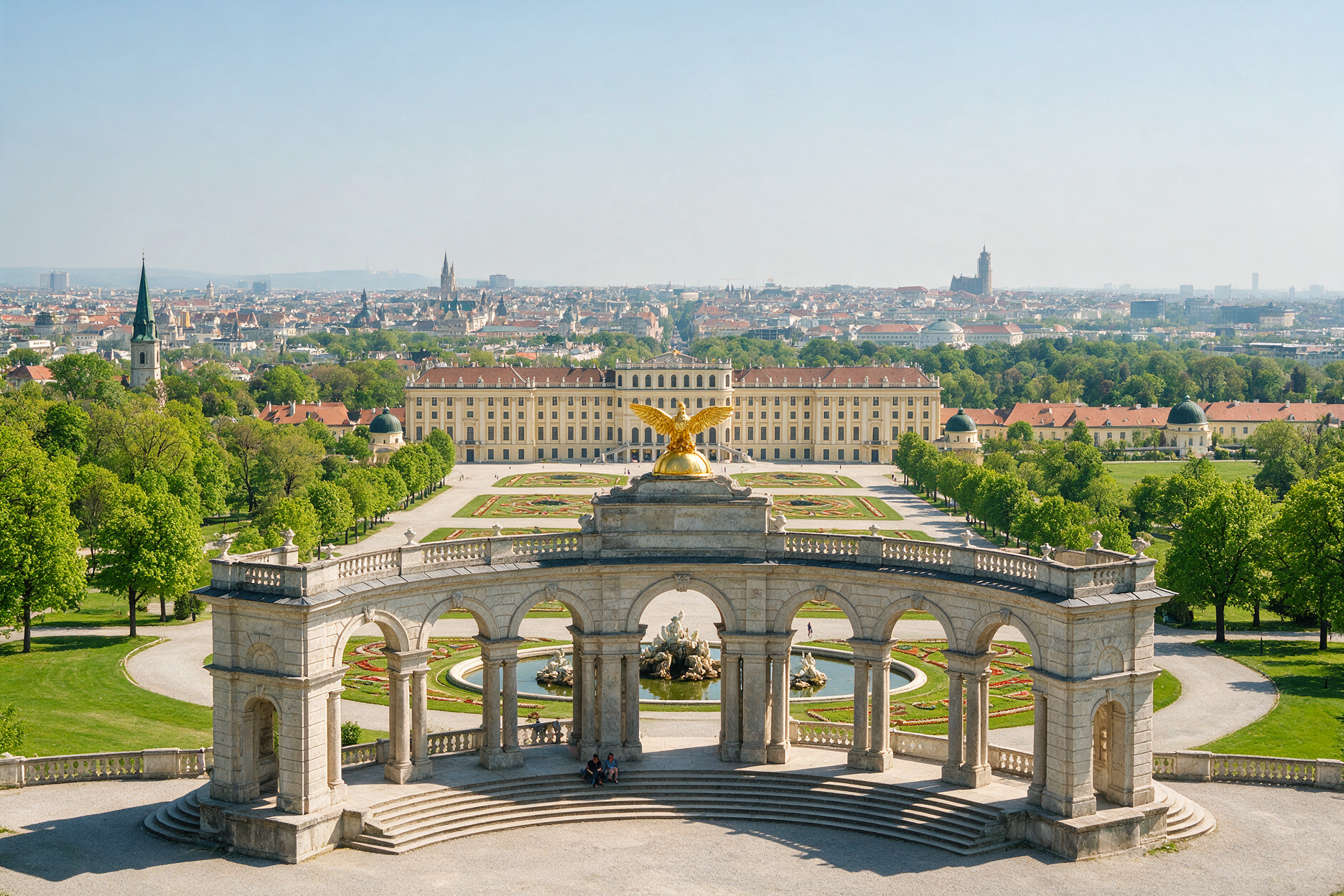
The first time I stood at the Gloriette looking back down at Schönbrunn’s parterre gardens, it was just past eight in the morning and I had the whole terrace to myself except for a groundskeeper trimming a hedge with hand shears. By eleven, the same spot was three deep in tour groups holding phones over each other’s shoulders. That’s the entire lesson of Schönbrunn Palace in one sentence: it rewards people who show up early and punishes people who don’t plan their hours. Everything else in this guide is really just working out from that one fact.
Schönbrunn isn’t a quick photo stop. It’s a 1,441-room former imperial summer palace with 160 hectares of formal gardens, a zoo older than the palace itself, a maze, a hilltop folly with a café inside it, and — several evenings a week — a full orchestra playing Mozart and Strauss under gilded ceilings. You could spend four hours here or you could spend the entire day, and this itinerary is built for the version where you actually do it justice: gardens at opening, palace interior mid-morning, a slow lunch, an afternoon in the grounds most visitors skip, and a concert to close the night. If you’re building a broader Austria trip around Vienna, Salzburg and the Alps, this single day slots in cleanly as your first or last full day in the capital.
What’s in this guide
- Why give Schönbrunn a full day
- Getting there and when to go
- Morning: the gardens before the crowds
- Mid-morning: inside the palace
- Lunch in the Meidling quarter
- Afternoon: the parts most visitors skip
- Evening: dinner and a concert
- Tickets, costs and the passes explained
- Mistakes to avoid and practical notes
- FAQs
Why give Schönbrunn a full day
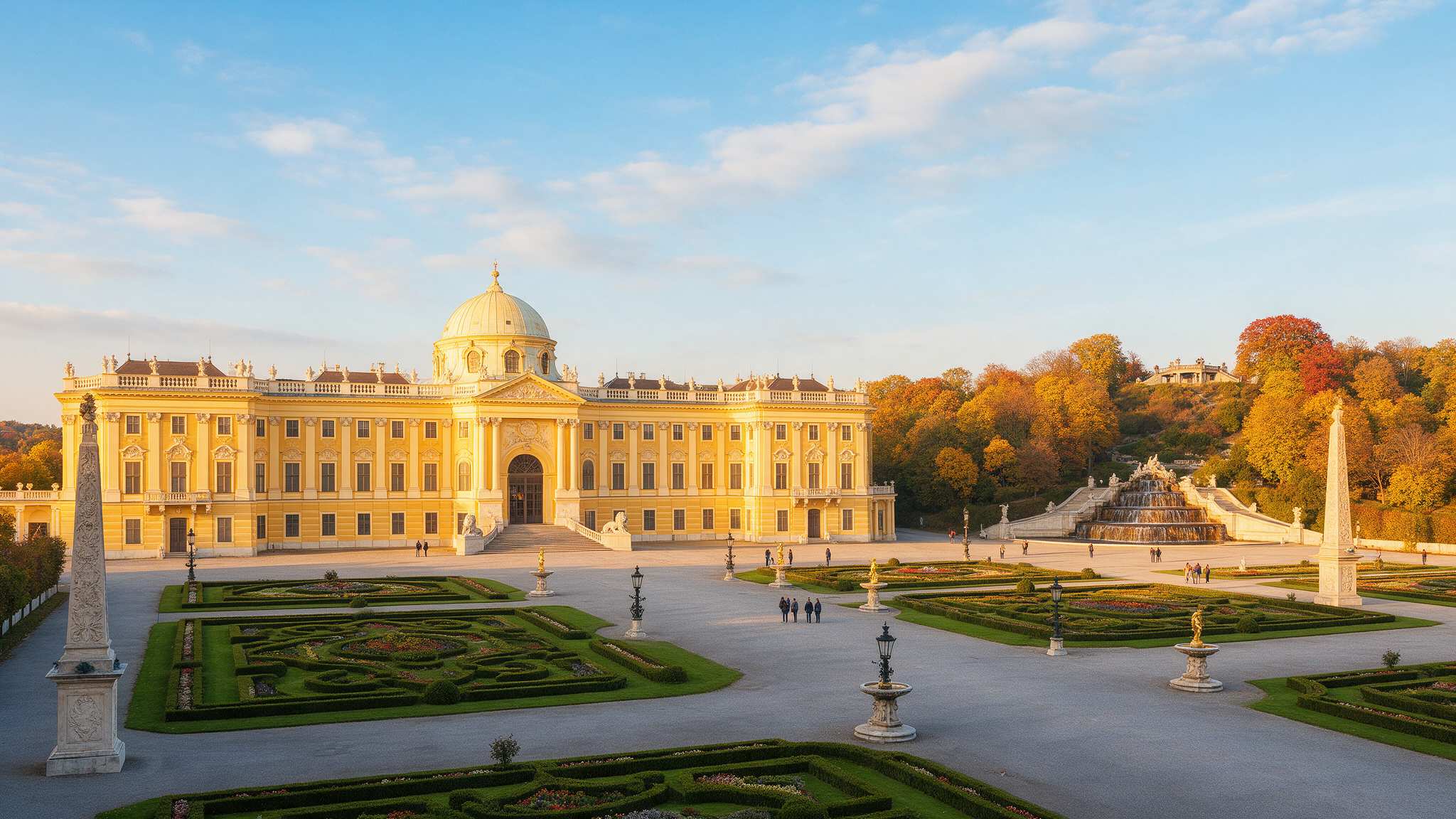
Most Vienna itineraries treat Schönbrunn as a two-hour detour — palace tour, quick garden photo, back on the tram. That undersells it badly. The Habsburgs used this as their summer residence for over 250 years, and Maria Theresia in particular built it to impress: the gardens alone were laid out to be walked, not just viewed, with sightlines engineered so the Gloriette appears to float above the palace from certain angles on the main lawn. Rushing through it is a bit like flying through Rome in an afternoon — technically possible, genuinely a waste.
This is best time to visit Austria territory generally applies here too: late April through June and September into early October give you long daylight, blooming parterres, and thinner crowds than peak July–August. If your Austria itinerary has any flexibility, shoulder season is when Schönbrunn actually looks the way the postcards promise.
Getting there and when to go
Schönbrunn sits in Hietzing, Vienna’s 13th district, about twenty minutes by U-Bahn from the city centre. Take the U4 (green line) to Schönbrunn or Hietzing station — Schönbrunn puts you right at the main gate, Hietzing drops you a few minutes’ walk away near a quieter side entrance most tour groups don’t use. A single U-Bahn ride costs €2.40, or it’s covered on a 24/48/72-hour Vienna City Card if you’re already using one for the rest of your trip.
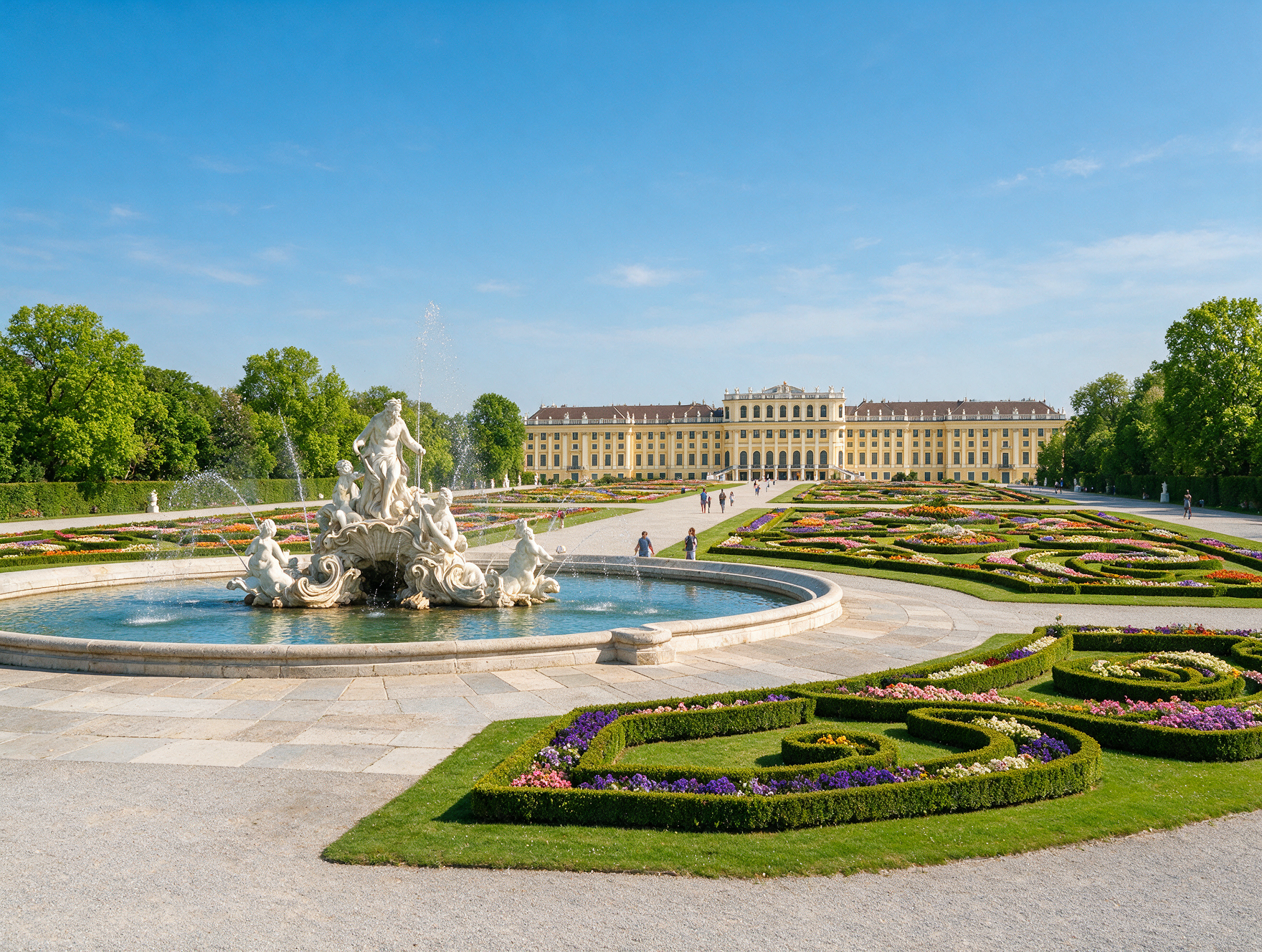
Arrive by 8am if you can. The palace and ticket offices open at 8:30am, but the gardens themselves open at 6:30am and cost nothing to enter — that half-hour window before the palace opens is genuinely the best light of the day for photos, and you’ll share the Neptune Fountain with maybe a dozen joggers and dog walkers instead of four tour buses.
Morning: the gardens before the crowds
Start at the Neptune Fountain directly behind the palace and walk the central gravel avenue uphill toward the Gloriette. It’s a genuinely pretty ten-minute walk past clipped hedges and a handful of Roman-style statues, and at this hour the whole thing is quiet enough that you can hear the fountain from a hundred metres away. The climb to the Gloriette itself is short but has some incline — wear shoes you don’t mind walking a few kilometres in, because you’ll cover more ground than you expect over the day.
The Gloriette’s viewing terrace is the actual payoff: you get Vienna’s rooftops and the Danube Tower laid out below you, with the palace itself framed by the gardens in the foreground. There’s a small café built into the glazed centre section if you want a coffee up here rather than down at the palace, and it’s usually the last part of the grounds to fill up with people, since most visitors head straight for the palace ticket queue instead.
On your way back down, detour into the maze and labyrinth (included on the Classic Pass, covered below) — it’s not going to challenge an adult for more than fifteen minutes, but there’s an elevated viewing platform in the middle that gives you a genuinely fun overhead look at the hedge pattern, and kids tend to love it more than the palace interior itself.
Mid-morning: inside the palace
Book your palace ticket for a specific time slot online before you travel — Schönbrunn uses timed entry and walk-up slots on weekends in high season can run two hours out. The Grand Tour (40 rooms) covers the state apartments used by Franz Joseph and Empress Elisabeth, including the Great Gallery where the 1961 Kennedy–Khrushchev summit was held, and the Hall of Mirrors, where a six-year-old Mozart reportedly performed for the imperial family in 1762. The audioguide is genuinely good here — better than most palace audioguides I’ve used in Europe — and the standard visit runs about 40 minutes to an hour depending on how much you linger.
Photography isn’t allowed inside the state rooms, which catches a lot of visitors off guard, so don’t plan your whole Instagram strategy around the interior. Save that for the gardens and the Gloriette instead.
Lunch in the Meidling quarter
Skip the cafés directly outside the palace gates — they’re priced for tour groups and the food is forgettable. Instead walk five minutes to Hietzinger Hauptstraße, where you’ll find genuine neighbourhood Beisln (small Viennese taverns) serving Wiener schnitzel and Tafelspitz at local prices rather than tourist markup. It’s not glamorous, but it’s the kind of lunch that makes you feel like you’re actually in Vienna rather than in a theme park version of it. If you’d rather stay inside the grounds, the Tirolergarten café near the zoo does a solid Kaiserschmarrn (shredded caramelised pancake) that’s worth the short walk.
Afternoon: the parts most visitors skip
This is where a full-day visit earns its keep. Most people leave after the palace tour and the Gloriette. If you have the afternoon, three things are worth your time:
- Tiergarten Schönbrunn — the world’s oldest continuously operating zoo, founded in 1752, with a genuinely well-designed rainforest house and panda enclosure. It’s on the Classic Pass Plus and easy to underrate; give it 90 minutes minimum.
- The Palm House and Desert House — Habsburg-era glasshouses that most day-trippers walk straight past. The Palm House in particular is enormous and worth ten minutes just for the architecture.
- The Obelisk and Roman Ruin — a deliberately “fake” Roman ruin built as a folly in the 1770s, tucked into a quieter corner of the gardens. Almost nobody makes it out here, which is exactly why it’s pleasant.
Evening: dinner and a concert
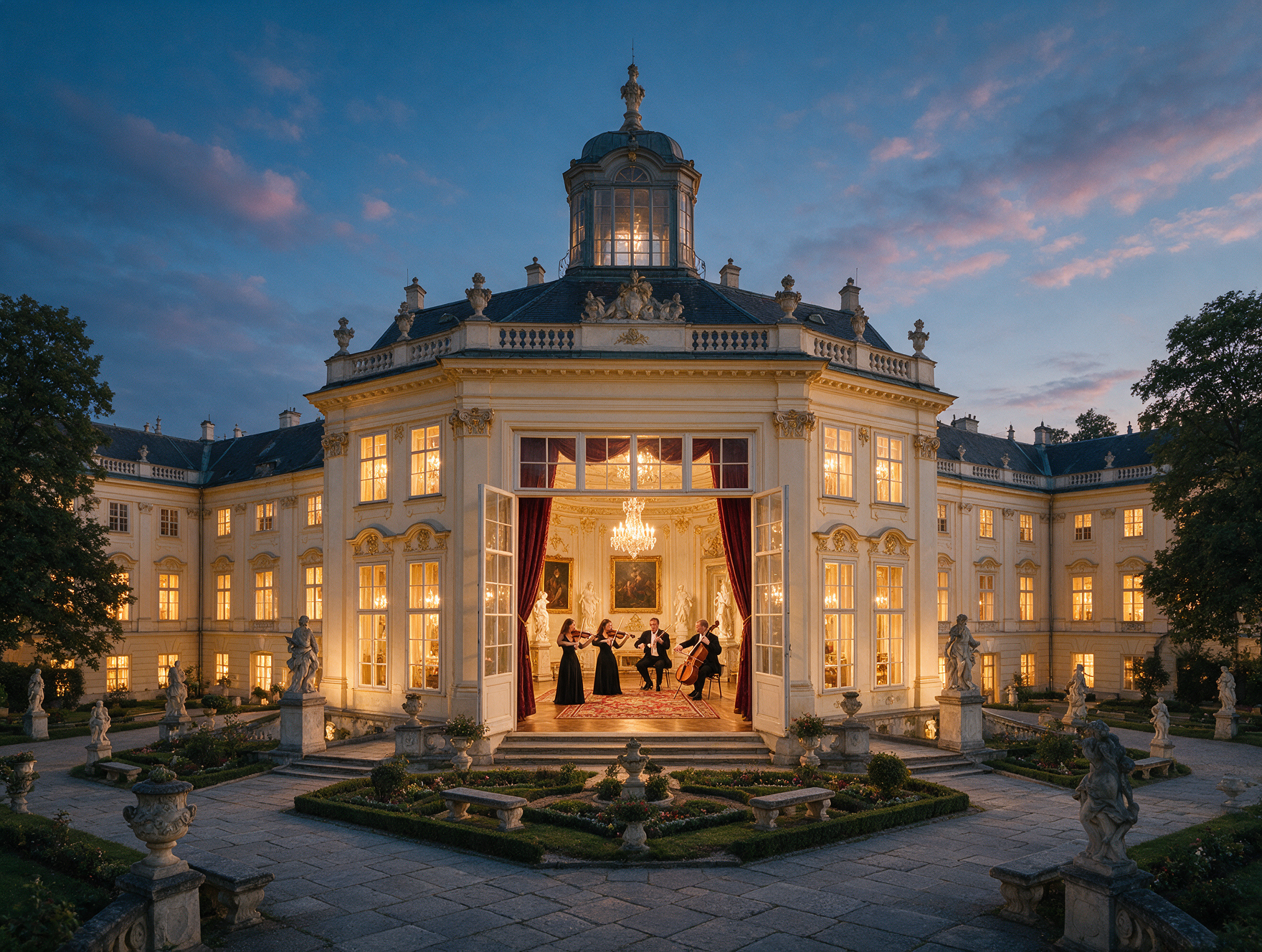
This is the detail that makes Schönbrunn worth the “evenings” framing rather than just a daytime palace visit: on select evenings, the Orangery and the palace’s own concert hall host performances of Mozart and Strauss by musicians in period dress, sometimes paired with a pre-concert dinner package. It’s unapologetically aimed at visitors rather than locals, and I won’t pretend it’s an intimate, undiscovered experience — but the setting genuinely is beautiful, and hearing a waltz in the same building where the Habsburgs actually danced to one is a different feeling than hearing it in a modern concert hall. Book the concert-only ticket rather than the dinner package unless you specifically want a formal three-course meal beforehand; the food is fine but not the reason you’re there.
Walk back through the gardens after dark if the concert lets out before closing — the palace floodlit against a night sky, with almost nobody else around, is a genuinely different building than the one you saw at 9am.
Tickets, costs and the passes explained
Schönbrunn’s ticketing is genuinely confusing on first look, so here’s the short version. Check Schönbrunn’s official ticket page before you travel, since prices and pass options do get revised. A standalone Palace Ticket with audioguide runs roughly €30–42 depending on tour length. If you also want the gardens, maze and Gloriette, the Classic Pass (around €49 adult) bundles all three with the palace tour and is the better value for most visitors. Add the zoo and you’re looking at the Classic Pass Plus (around €81 adult). Children’s pricing runs meaningfully lower across the board, and family combination tickets exist if you’re travelling with kids.
For context against the rest of your trip: this is a reasonable single splurge day if you’re already working with Austria’s visa costs and travel insurance baked into your budget — Get Tripped’s Austria packages typically build a Schönbrunn half-day or full-day directly into the Vienna leg, with the concert as an optional evening add-on rather than a forced inclusion, which is the right way to do it since not everyone wants a formal concert evening on a family trip.
Mistakes to avoid and practical notes
- Mistake to avoid: booking the last entry slot of the day expecting a quiet visit. Weekday early mornings are quiet; late afternoons in high season are not, because that’s when day-tour buses from other parts of Austria and Central Europe schedule their Schönbrunn stop.
- Fun fact: Schönbrunn’s exterior colour, that particular pale ochre-yellow, became so associated with imperial buildings that it’s informally called “Schönbrunn Yellow” and shows up on other Habsburg-era buildings across the former empire, including in Budapest and Prague.
- Payment: cards are accepted everywhere on-site, including at the garden cafés, but keep some cash for the smaller Meidling Beisln outside the grounds — a few still run cash-preferred.
- For photographers: the best exterior shot of the palace facade, with nobody in frame, is from the Neptune Fountain looking back before 8am. By 10am you’re fighting tour-group sightlines all day.
- Honest opinion: the Classic Pass Plus with the zoo is worth it if you have kids or genuinely love zoos; if neither applies, skip it and put that money toward a proper Beisl dinner instead. The zoo is good but it’s still “a good zoo,” not a reason to visit Vienna.
Frequently asked questions
How many hours do you actually need at Schönbrunn?
Two hours covers the palace tour and a fast walk through the main gardens. A proper visit, including the Gloriette, maze, and some of the quieter grounds, is closer to five or six hours. A full day with an evening concert is easily eight.
Is Schönbrunn worth it if I’ve already seen Hofburg Palace in central Vienna?
Yes — they’re different experiences. Hofburg is the working winter palace in the city centre; Schönbrunn is the summer residence built for leisure, with gardens that are arguably the bigger draw than the building itself.
Can I skip the line at Schönbrunn?
Book a timed-entry ticket online in advance. There’s no separate paid skip-the-line product beyond that, but a pre-booked time slot avoids the walk-up queue entirely.
Is the Schönbrunn concert worth it, or is it a tourist trap?
It’s aimed squarely at visitors, and the musicians play a greatest-hits programme rather than anything adventurous — that’s a fair criticism. But the room itself, and hearing a waltz in a Habsburg concert hall, is worth one evening if classical music or the setting genuinely appeals to you. Skip it if it doesn’t; nobody needs to force this in.
What’s the best month to see the gardens in bloom?
Late April through June, when the parterre beds are freshly planted and the horse chestnut avenues are in leaf. September is a close second, with fewer crowds and still-decent colour before autumn strips the trees.
Is Schönbrunn suitable for a half-day if I’m short on time in Vienna?
Yes — do the Grand Tour, the Gloriette climb, and the maze, and skip the zoo and evening concert. That’s a solid three-hour version that still covers the highlights.
Getting the timing right
Schönbrunn is one of those places where the difference between “nice palace, glad we saw it” and “one of the best days of the trip” comes down almost entirely to when you show up and how much time you give it. Early gardens, mid-morning interior, an afternoon in the quieter corners, and — if it’s your kind of evening — a concert to close it out. That’s the version that actually matches what the Habsburgs built this place to be.
If you’re mapping this into a wider Vienna and Austria trip, Get Tripped’s Austria itineraries build Schönbrunn in as a proper half-to-full day rather than a rushed stop between other sights — worth a look if you’d rather have someone else handle the timed tickets, transfers and concert bookings while you focus on actually enjoying the gardens.