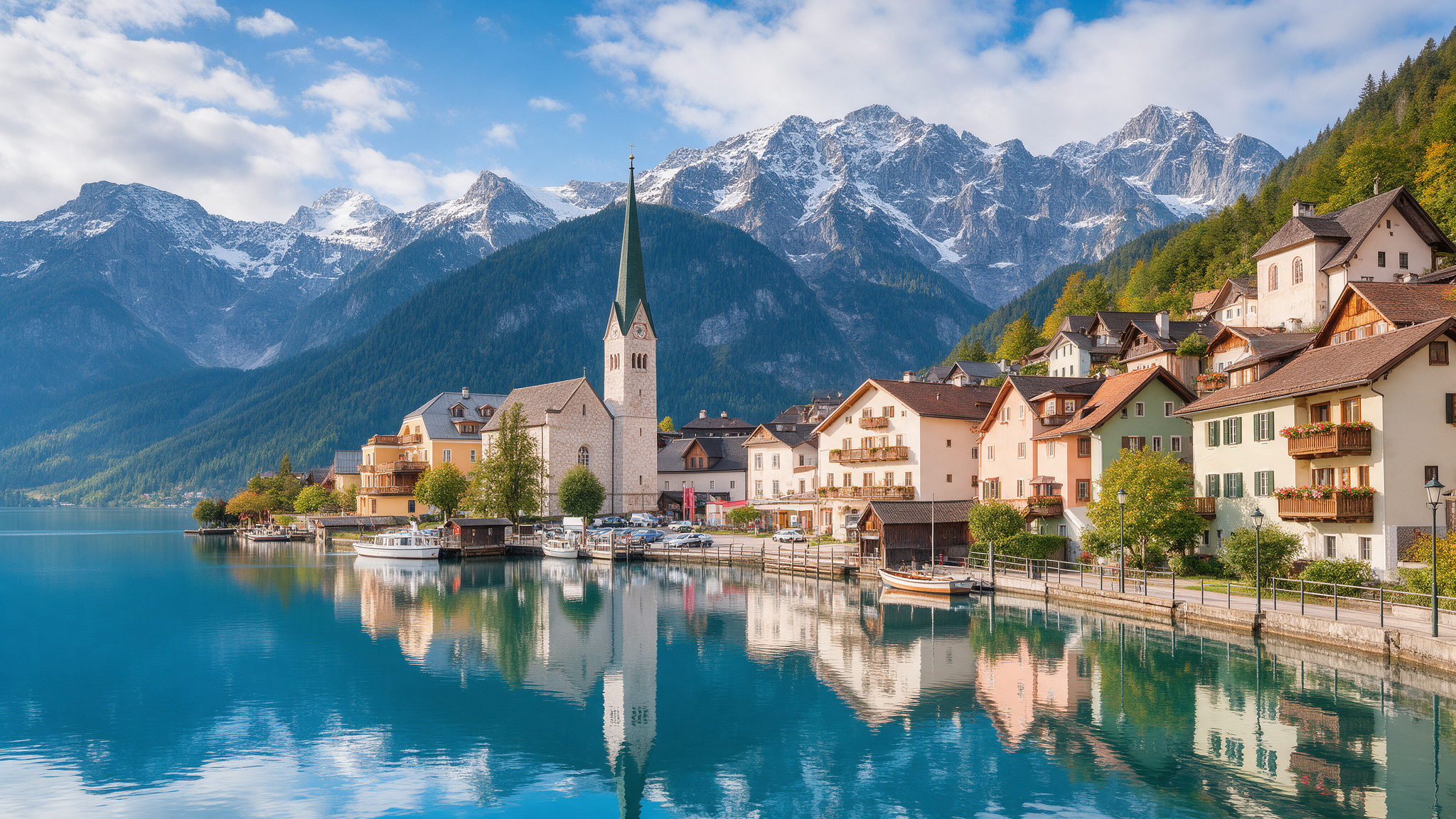
There’s one exact spot in Hallstatt — a small viewing platform above the lakeshore promenade — where every postcard, every Instagram grid, and reportedly a huge share of South Korean tourism to Austria over the past decade all converge. On a summer morning you’ll find a genuine queue for it, timed selfies, and a village of roughly 800 residents absorbing day-trip crowds that can run into the thousands. Hallstatt has become something of a case study in overtourism, and the village itself has pushed back — testing visitor caps on tour buses and even briefly experimenting with barriers to block the famous viewpoint a few years back. None of that means skip Hallstatt. It means see it properly, at the times and from the places that don’t turn it into a queue.
Hallstatt sits on the Hallstättersee in the Salzkammergut, a lake district that’s also a UNESCO World Heritage Cultural Landscape, and the reason it’s worth the detour from a Vienna–Salzburg route isn’t just the postcard view — it’s the Salzwelten salt mine underneath the village, one of the oldest in the world, with 7,000 years of continuous mining history. This guide covers how to see both the famous view and the quieter version of Hallstatt most day-trippers never find, as one stop on a wider Austria trip.
What’s in this guide
- Understanding Hallstatt’s overtourism problem first
- The famous viewpoint — see it, but at the right hour
- The Salzwelten salt mine — the actual reason to come
- The Skywalk — a genuine alternative view
- Where to find quiet Hallstatt
- Why staying overnight changes everything
- Getting there, costs and the funicular closure
- Mistakes to avoid
- FAQs
Understanding Hallstatt’s overtourism problem first
It’s worth being upfront about this rather than pretending it doesn’t exist: Hallstatt genuinely struggles with day-trip crowds, particularly a wave of tour buses arriving mid-morning and departing by mid-afternoon. The village has experimented with limiting bus numbers and, at one point, physically obstructing the most-photographed viewpoint to discourage the sheer volume of people showing up purely for one photo. None of this is a reason to skip Hallstatt — it’s genuinely one of the most beautiful lake villages in Europe — but it is a reason to time your visit deliberately rather than arriving with the same bus crowd everyone else does.
The famous viewpoint — see it, but at the right hour
The classic postcard shot, taken from a small platform above the lakeshore looking back at the village with the church spires and mountains behind it, is worth doing once — it’s a genuinely stunning composition and there’s no shame in wanting the photo everyone else has. The trick is timing: day-trip buses typically arrive from Salzburg or Vienna between 10am and 2pm, so a 7 or 8am visit, or an evening one after 5pm when the buses have mostly departed, gets you something close to a private version of the same view. If you’re staying overnight in Hallstatt (worth doing, and covered below), this is trivially easy. If you’re on a day trip yourself, it’s worth structuring your whole day around arriving before the bus crowds do.
The Salzwelten salt mine — the actual reason to come
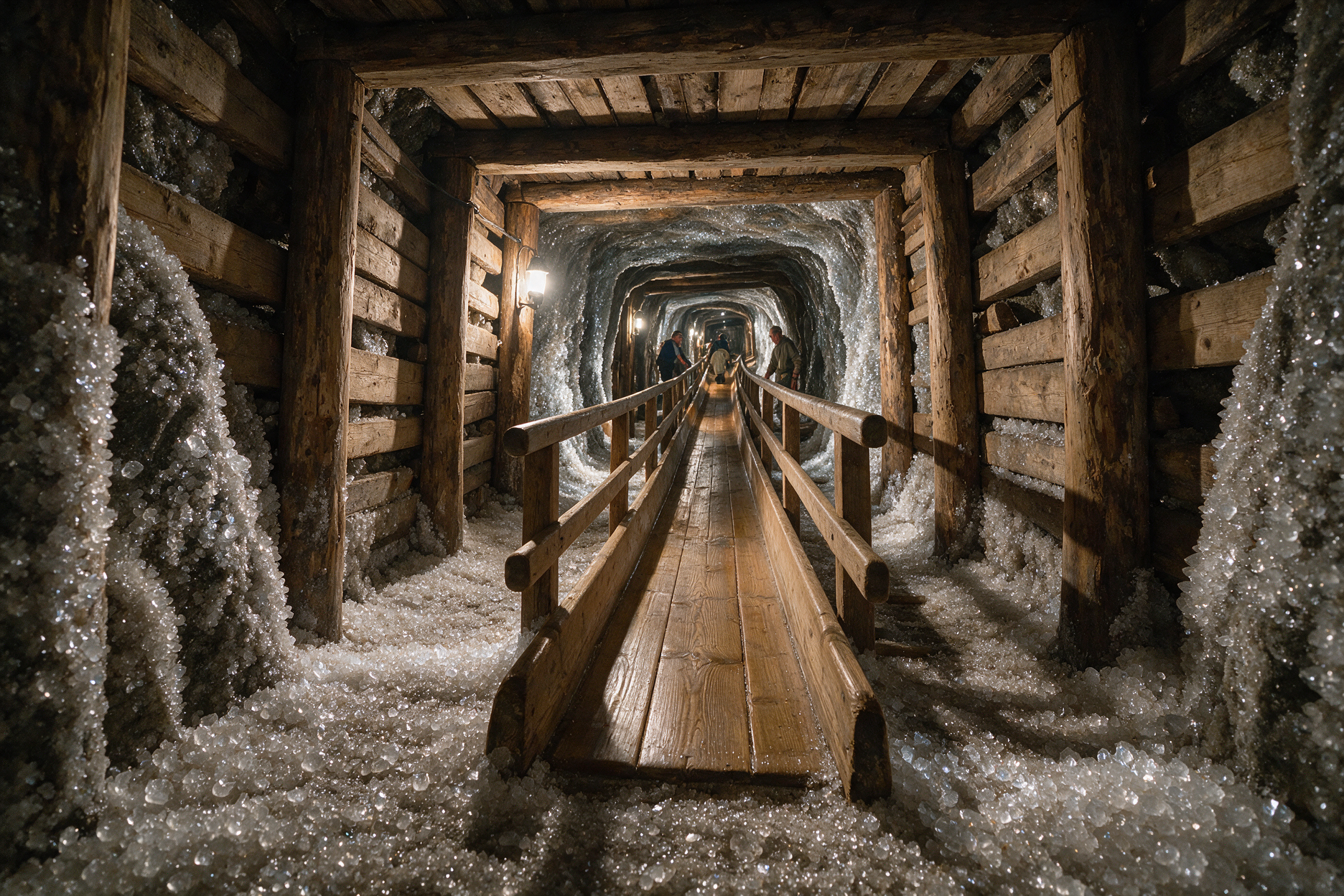
This is genuinely the more interesting part of Hallstatt, and a lot of day-trippers skip it entirely in favour of the photo and lunch. Salzwelten Hallstatt is the world’s oldest salt mine, with archaeological evidence of mining here stretching back roughly 7,000 years, and the tour takes you through underground tunnels, past a genuinely eerie subterranean salt lake, and includes two wooden miners’ slides that are more fun than a heritage site has any right to be. It’s a proper hands-on experience rather than a museum you walk past — expect to get slightly dusty and to come out grinning a bit despite yourself.
Honest, important caveat: the funicular railway that normally carries visitors up to the mine and its famous viewing platform has been under construction, with reopening currently scheduled for late August 2026. If you’re visiting before that reopens, check current status directly with Salzwelten before you travel, since the mine tour access and the alternative Salzburg or Altaussee Salzwelten locations may be your actual options in the interim — this is exactly the kind of detail that goes stale fast, so verify it close to your travel dates rather than trusting any date you read here or elsewhere as final.
The Skywalk — a genuine alternative view
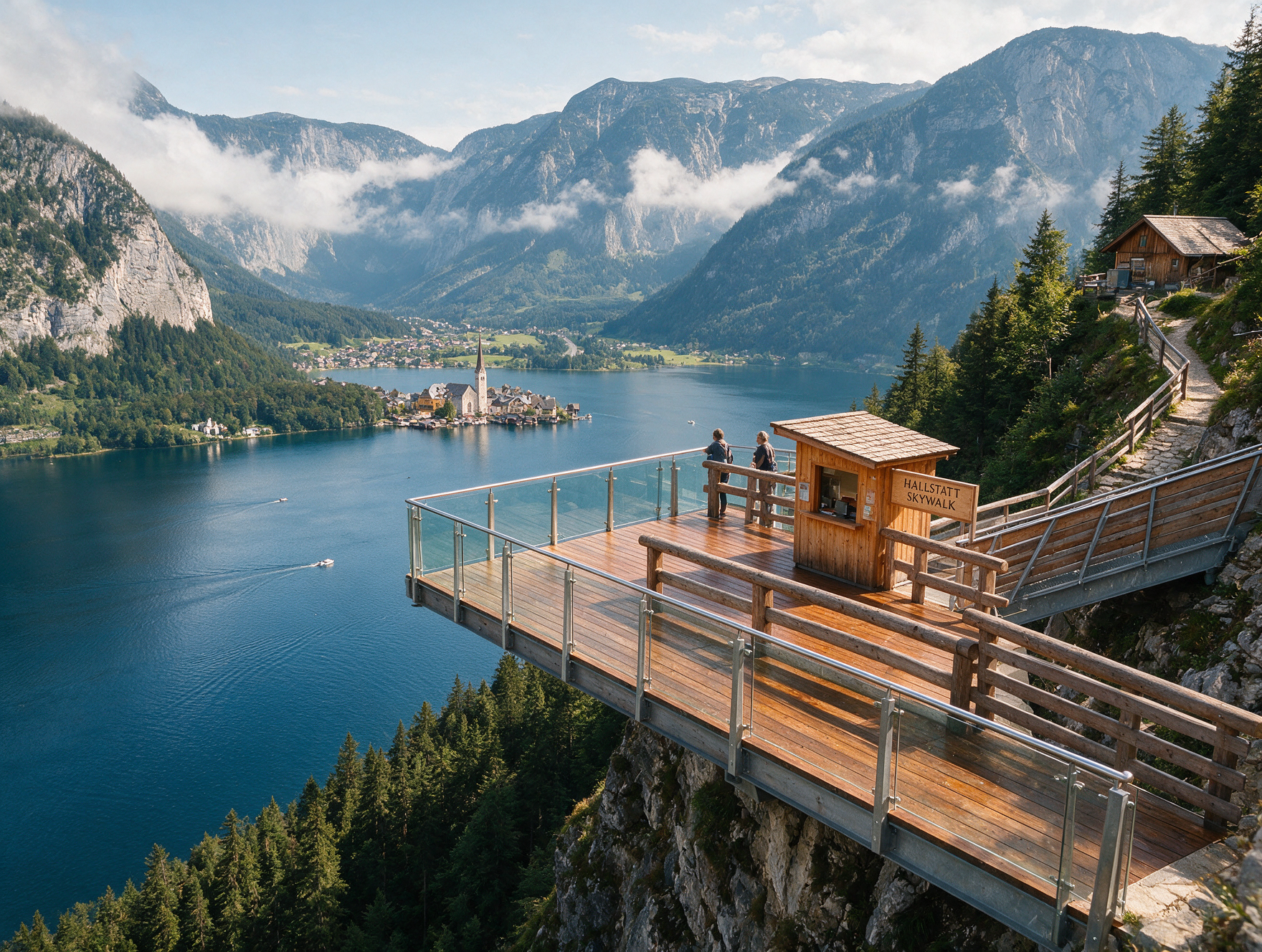
The Hallstatt Skywalk, a viewing platform jutting out from the cliffside near the salt mine, gives you a completely different angle on the village and lake than the famous lakeside shot — looking down over the rooftops and the water from height, rather than across the water at the village silhouette. It’s considerably less crowded than the lakeside viewpoint simply because it requires more effort to reach, and it’s arguably the more dramatic of the two views once you’re up there.
Where to find quiet Hallstatt
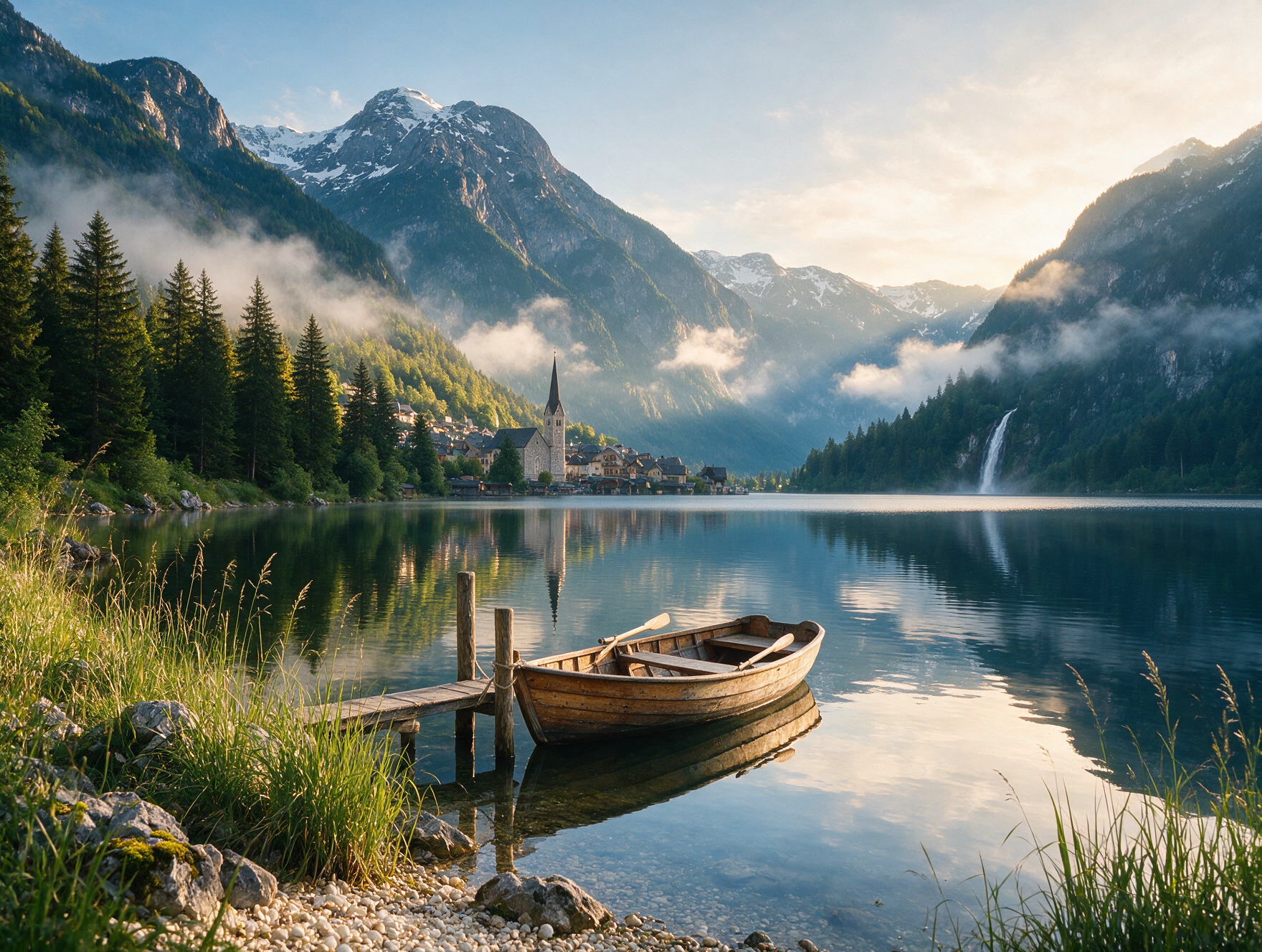
Walk south along the lakeshore path away from the village centre, past the point where most day-trippers turn back, and you’ll find quiet benches and small docks with essentially nobody around — a genuinely peaceful spot to sit with the same mountain backdrop and none of the crowd. The village’s upper streets, away from the main lakefront promenade, are also considerably quieter, with small guesthouses and gardens that most visitors never wander up to see. Renting a rowboat from one of the small operators on the lakeshore is another good option — twenty minutes out on the water puts real distance between you and the crowd, and the view of the village from the lake itself is arguably better than any land-based viewpoint.
Why staying overnight changes everything
Nearly all of Hallstatt’s overtourism problem is a day-trip problem specifically — the buses arrive mid-morning and leave by mid-afternoon, and staying even one night means you get the village to yourself for the entire early morning and evening. Accommodation options here run smaller and more guesthouse-style than a big city hotel, and rooms with a lake view book up well in advance in peak season (May–September), so plan ahead if this matters to you. It’s genuinely worth the extra logistics of an overnight stop between Salzburg and your next destination, rather than treating Hallstatt purely as a day-trip box to tick.
Getting there, costs and the funicular closure
Hallstatt is roughly 90 minutes from Salzburg by a combination of train and boat (the train station sits across the lake, with a short ferry connecting to the village itself) or about the same by car via a more direct road route. There’s no direct rail line straight into the village, which is part of why day-trip tour buses dominate the visitor mix — driving or a private transfer gives you more flexible timing than the train-and-boat combination, though the boat crossing itself is a genuinely pleasant part of the journey.
Entry to the Salzwelten mine tour runs into the mid-€30s for adults including the funicular when it’s operating (check current pricing directly given the ongoing construction), and a rowboat rental is a modest, worthwhile add-on. As with the rest of an Austria itinerary, the same Schengen visa and travel insurance requirements apply here as anywhere else in the country — nothing Hallstatt-specific to worry about on that front.
Who should build in extra time here
Couples and honeymooners get the most out of an overnight stay specifically — a lakeside guesthouse room, dinner as the buses clear out, and the famous view to yourselves at sunrise is a genuinely different trip than a rushed midday visit. Photographers should prioritise the Skywalk and the quiet southern lakeshore over the main viewpoint, since both offer compositions that aren’t already saturated across everyone else’s social media. Families with younger kids will likely get the most enjoyment from the salt mine’s miners’ slides specifically — it’s a rare heritage site that’s genuinely, unpretentiously fun for children rather than something they have to be dragged through.
A smart-spending note: skip the pricier lakeside restaurants directly on the main square, which charge a visible premium for the view, and walk two minutes to the quieter streets just behind the promenade — the food quality is comparable and the price gap is real — a schnitzel with a lake glimpse from a side street costs meaningfully less than the same plate with a full lakefront table.
Mistakes to avoid
- Mistake to avoid: arriving as a day trip between 10am and 2pm expecting a peaceful visit. That’s precisely the window every tour bus in the region targets, and the lakeside viewpoint and main square will be genuinely crowded.
- Mistake to avoid: planning your whole visit around the funicular and mine tour without checking current status first, given the construction and scheduled August 2026 reopening — confirm directly with Salzwelten before you build your day around it.
- Honest opinion: the famous viewpoint is worth ten minutes, not an hour. Get the photo and move on to the salt mine, the Skywalk, or the quiet lakeshore south of the village — that’s where Hallstatt actually earns the trip.
- Fun fact: archaeological finds from the Hallstatt salt mines were significant enough that “Hallstatt culture” is now the standard archaeological term for an entire early Iron Age period across Central Europe, roughly 800–450 BC.
Frequently asked questions
Is Hallstatt worth visiting given the overtourism?
Yes — the crowding is real but concentrated in a specific midday window and at one specific viewpoint. Visiting early, late, or overnight, and prioritising the salt mine and Skywalk over the single famous photo spot, gives you a genuinely different, far calmer experience.
Is the Hallstatt salt mine funicular currently operating?
As of this writing it’s under construction, with reopening scheduled for late August 2026 — confirm current status directly with Salzwelten before travelling, since this kind of detail changes.
How long do I need in Hallstatt?
A rushed day trip covers the viewpoint and a walk through the village in a few hours. A proper visit, including the salt mine tour and an overnight stay, is closer to a day and a half.
Is Hallstatt part of the Sound of Music trail?
No — that’s a common mix-up with Salzburg’s film locations. Hallstatt is a separate Salzkammergut lake village and wasn’t used in the 1965 film.
What’s the best way to get from Salzburg to Hallstatt without a car?
Train to Hallstatt station across the lake, followed by a short public ferry into the village — a scenic if slightly longer route than driving directly.
Is Hallstatt suitable for a honeymoon or couples trip?
Very much so, particularly with an overnight stay — the early-morning and evening version of the village, with the crowds gone, is one of the more romantic settings in Austria.
The version most people don’t see
Hallstatt’s reputation runs slightly ahead of the typical visitor’s actual experience of it — most people get the famous view, a rushed lunch, and a slightly frazzled afternoon dodging tour groups. The better version is available to anyone willing to shift their timing: early mornings, an overnight stay, and priority on the salt mine and Skywalk over the single viewpoint everyone photographs. It’s still one of the most beautiful stops on any Austria trip. It just rewards a bit of planning to actually feel that way.
If you want Hallstatt built into your Austria route with the timing worked out for you — arriving ahead of the day-trip crowds rather than alongside them — Get Tripped’s Austria itineraries handle exactly that kind of scheduling as part of the wider Salzkammergut and Salzburg leg of the trip.