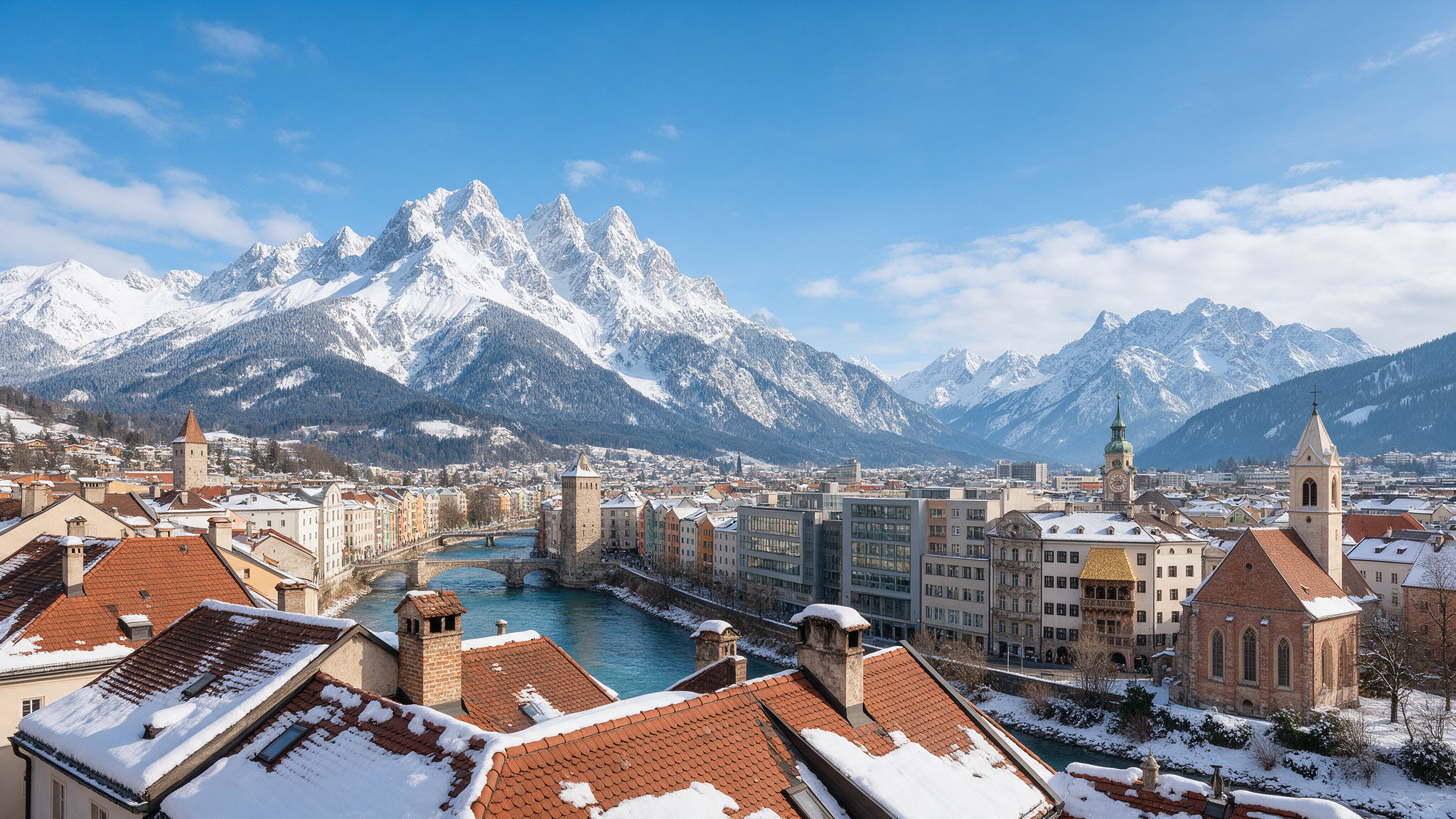
By 4pm the last lift down from the Nordkette is packed with people in full ski gear, boots unclipped, already talking about where they’re headed for a drink. That’s the thing about Innsbruck that surprises a lot of first-time visitors: it’s a genuine city — a university town with roughly 30,000 students — that happens to have a cable car running from its own downtown up to a 2,300-metre ski slope. Nowhere else in the Alps do you get “on the mountain by 9am, back at a proper city bar by 5pm” quite this cleanly, and the evening scene here reflects that hybrid identity — part alpine apres-ski, part actual university nightlife.
This isn’t a guide to getting wrecked in a ski-resort bar built for tour groups. Innsbruck’s evening scene is a genuine mix of traditional Tyrolean taverns, a solid cocktail scene, and a handful of spots locals and students actually use, and it’s worth treating it that way rather than as an afterthought to a day on the slopes. If you’re building a broader Austria trip around Vienna and Salzburg, Innsbruck is where the itinerary switches from “cultural capital” to “alpine adventure town,” and its evenings switch tone accordingly.
What’s in this guide
- Skiing the Nordkette, then heading down for the evening
- Stiftskeller — the traditional Tyrolean anchor
- M+M Cocktailbar — Innsbruck’s cocktail scene
- Bierfabrik — the beer-under-the-arches scene
- Bar Plateau and Café Moustache — the student crowd
- Old Town after dark — the Golden Roof at night
- Costs, getting there and visa basics
- Mistakes to avoid
- FAQs
Skiing the Nordkette, then heading down for the evening
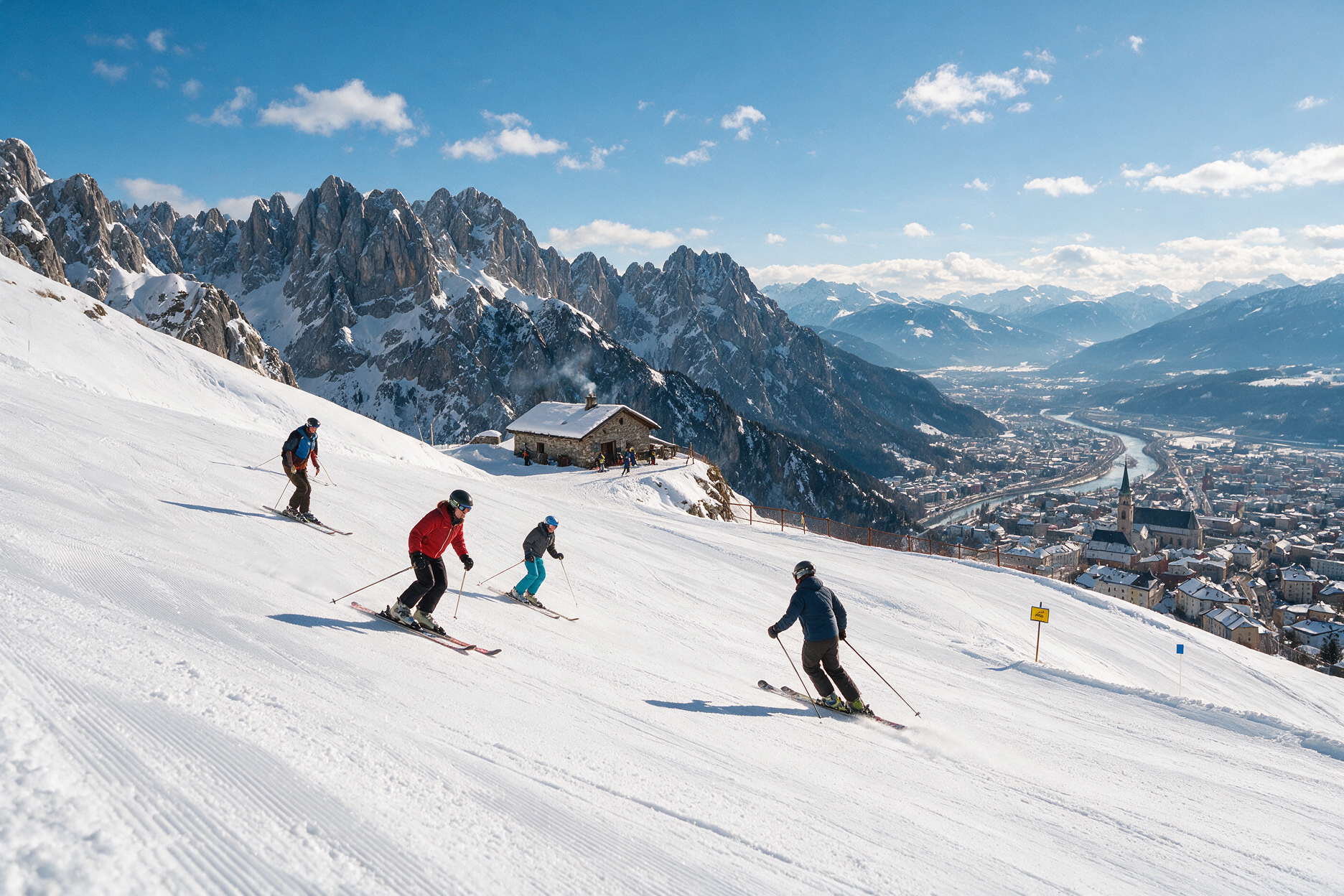
The Nordkette is the reason Innsbruck’s evening scene has the particular energy it does — you can genuinely ski or snowboard in the morning and be showered and at a bar by early evening, because the Hungerburgbahn funicular and cable car system connects central Innsbruck directly to the slopes in about 20 minutes door to door. Innsbruck’s wider ski network, branded Olympia SkiWorld, spans six areas including the Stubai Glacier (reliable snow well into summer), Axamer Lizum and Kühtai, so the “day on snow” part of this itinerary has real range depending on how far you want to travel from the city centre.
What that means practically: most of Innsbruck’s evening spots see a genuine influx of people straight off the slopes between 4pm and 6pm, still slightly wind-burned, before the crowd shifts toward a later dinner-and-drinks crowd after 8pm. If you want the ski-crowd energy specifically, go early; if you want a calmer evening, arrive after the aprés rush has moved on to dinner.
Stiftskeller — the traditional Tyrolean anchor
Tucked into Innsbruck’s old town, Stiftskeller is the kind of dark-wood, vaulted-ceiling tavern that makes you feel like you’ve stepped into a much older version of the city. It’s the right first stop of the evening if you want proper Tyrolean atmosphere before moving somewhere livelier — think hearty local food, a solid beer list, and a crowd that skews toward a mix of locals and travellers rather than an exclusively tourist room.
M+M Cocktailbar — Innsbruck’s cocktail scene
If Stiftskeller is the traditional anchor, M+M Cocktailbar is the proof Innsbruck has a genuinely current bar scene too — chic without being pretentious, with a proper cocktail list and a happy hour that runs 7 to 9pm most nights, which is worth timing your arrival around if you’re watching your budget. It draws a slightly older, more dressed-up crowd than the student bars nearby, and it’s a solid choice if you want a proper drink without the loud, ski-lodge energy of some of the more obviously tourist-facing spots.
Bierfabrik — the beer-under-the-arches scene
Set under Innsbruck’s old railway arches, Bierfabrik has the kind of industrial-meets-cosy atmosphere that works equally well for a casual first stop or a longer session — a genuinely good rotating selection of local and craft beers, and enough space that it doesn’t feel like you’re fighting for a table on a busy night. It’s a solid middle-ground option between the formality of a cocktail bar and the full rowdiness of a dedicated aprés-ski lodge.
Bar Plateau and Café Moustache — the student crowd
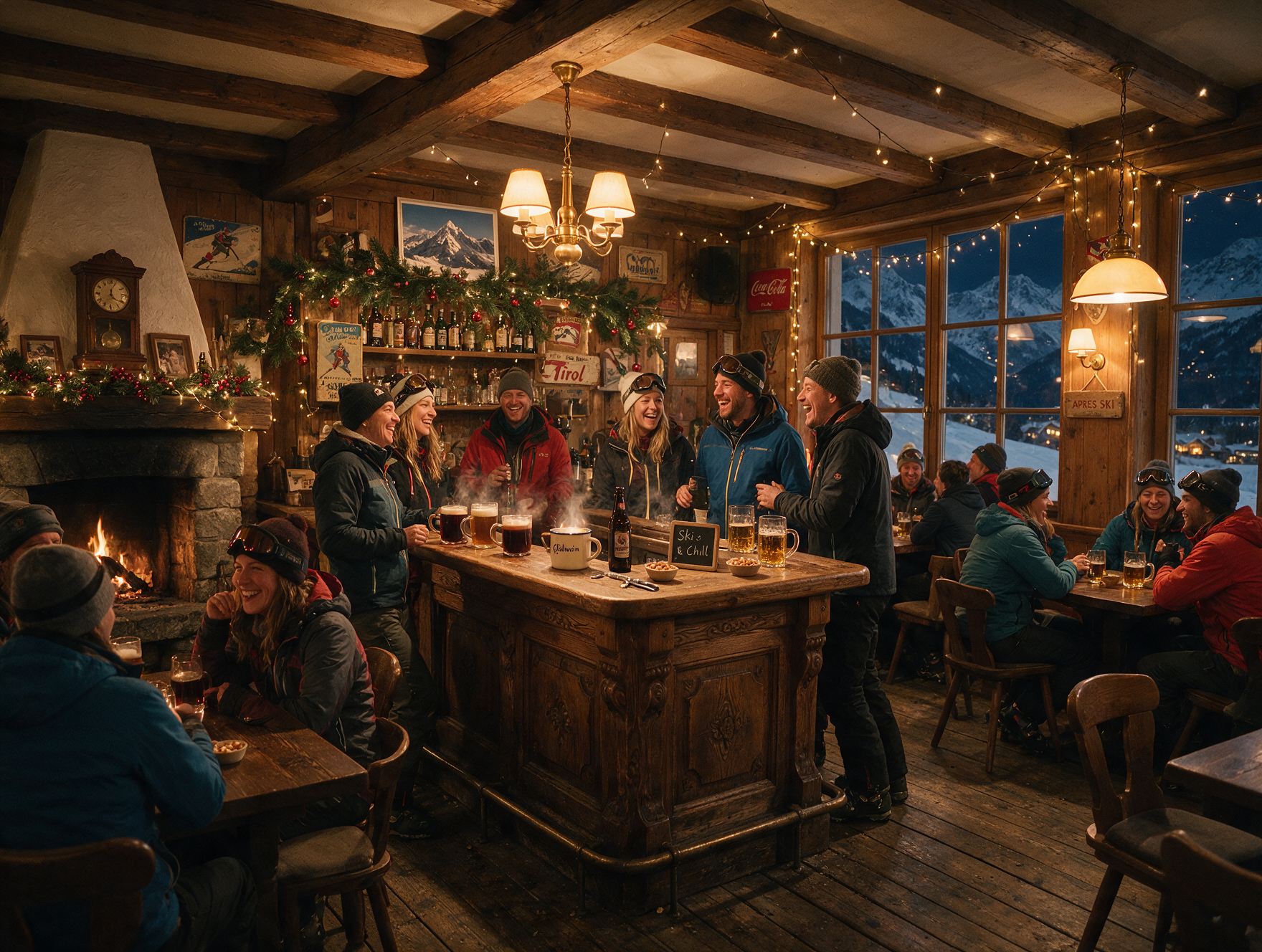
With roughly 30,000 students in a city of under 200,000 people, Innsbruck’s university crowd shapes a real chunk of its evening scene, and Bar Plateau and Café Moustache are two of the places that reflects that most clearly — later hours (Café Moustache runs until around 2am), younger crowd, and prices that sit noticeably below the more polished cocktail bars. This is where you’ll get the closest thing Innsbruck has to a genuine “night out” rather than a curated tourist evening, and it’s worth an hour even if you’re not staying out that late, just to see a different side of the city than the postcard version.
Old Town after dark — the Golden Roof at night
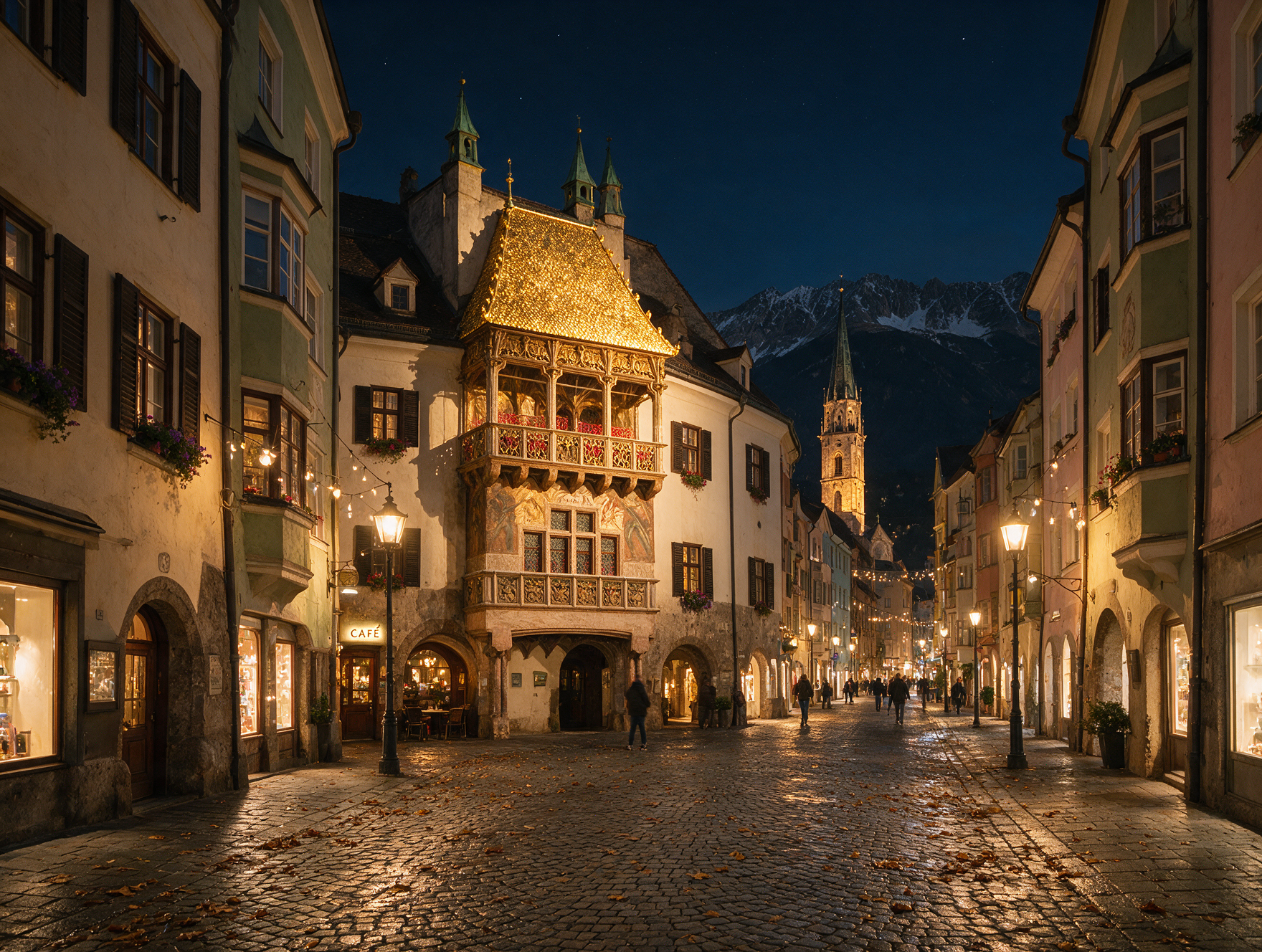
Whatever else you do, walk through Innsbruck’s old town after dinner. The Golden Roof (Goldenes Dachl) — 2,657 gilded copper tiles built for Emperor Maximilian I in 1500 — is genuinely beautiful lit up at night, and the surrounding medieval streets are quiet enough after the day-trip crowds clear out that it feels like a private version of a very well-known landmark. This is also, honestly, the best free evening activity in the city if you’ve spent your budget on lift passes and dinner already.
Costs, getting there and visa basics
Innsbruck doesn’t have direct flights from India — most Indian travellers arrive via Vienna (Air India and Austrian Airlines both fly Delhi–Vienna) and take the roughly 4.5-hour Railjet train onward, or fly into Munich and take a shorter train or transfer across the border. The same Austria Schengen visa covers your whole trip regardless of which city you enter through, currently around €90 for an adult with standard processing of up to 15 working days — worth applying for at least a month ahead if winter sports are part of your plan, since travel insurance for a ski trip specifically needs to include winter sports coverage, a detail the Austria visa guide covers in more depth.
A day lift pass on the Nordkette runs into the €50s for adults, and a night out covering a couple of drinks at two or three of the spots above is a reasonable €40–60 per person — noticeably cheaper than an equivalent night in a major Western European capital, which is one of the underrated arguments for building Innsbruck into an Austria itinerary rather than treating it as optional.
Who this evening scene suits
Solo travellers and groups of friends get the most out of Innsbruck’s bar scene — the student population makes it genuinely easy to fall into conversation at Bierfabrik or Café Moustache, in a way that’s harder to replicate in a more formal city like Vienna. Couples looking for a quieter evening are better served by Stiftskeller or M+M Cocktailbar earlier in the night, before the later crowd arrives. Families with teenagers will likely get more out of the daytime Nordkette experience and a relaxed dinner than any of the evening bar scene specifically — this chapter of Innsbruck is aimed at adults travelling without kids, and it’s worth being upfront about that rather than forcing a fit.
A smart-spending note: happy hour at M+M Cocktailbar (7–9pm) is genuinely worth timing around if you want a proper cocktail without a proper cocktail price, and it’s a better use of a tight evening budget than a mediocre drink at one of the more obviously tourist-facing aprés lodges directly at the base of the Nordkette lift, where prices run higher for a much less interesting room.
For photography, shoot the Golden Roof between about 7 and 8:30pm, once it’s properly dark but before the old town empties out entirely — a few passersby in frame actually help the shot feel lived-in rather than staged. Up on the Nordkette itself, the best light for the city-and-mountains shot is in the last hour before the lifts close, when the valley below starts picking up its evening lights while there’s still enough daylight left to see the peaks clearly.
Mistakes to avoid
- Mistake to avoid: assuming Innsbruck’s evening scene is all rowdy ski-resort aprés. Some of it is, but the city’s student population and old-town taverns give it a genuinely different, more varied character than a purpose-built resort like St. Anton or Ischgl.
- Mistake to avoid: skipping travel insurance with winter sports cover if you’re skiing. Standard travel policies frequently exclude skiing injuries, and this is one of the more expensive mistakes to discover after the fact.
- Honest opinion: the ski-in, city-out combination is genuinely Innsbruck’s best feature and most visitors under-plan for it — give yourself at least two full days here rather than treating it as a one-night stop between Salzburg and Italy.
- Fun fact: Innsbruck has hosted the Winter Olympics twice (1964 and 1976), and several of the original bobsled and ski-jump venues are still operational and open to visitors, including a bobsled experience ride for the public.
Frequently asked questions
Is Innsbruck a good base for skiing without a car?
Yes — the Nordkette is reachable by cable car directly from the city centre, and regional ski buses connect Innsbruck to Stubai, Axamer Lizum and Kühtai, so a car isn’t essential for a multi-day ski trip based in the city.
What’s the best time of year for Innsbruck’s aprés-ski scene?
December through March for reliable snow and the fullest aprés atmosphere; the Stubai Glacier extends skiable months further into spring and even summer for glacier skiing specifically.
Is Innsbruck’s nightlife suitable for a solo traveller?
Yes, and arguably it’s one of the easier Austrian cities for it — the student-heavy bar scene around Café Moustache and Bar Plateau makes striking up conversation easy, and the city is compact enough to walk between spots safely at night.
Do I need to book aprés-ski bars in advance?
Generally no for a casual evening, though larger groups on a Friday or Saturday in peak ski season should call ahead, particularly for M+M Cocktailbar at prime happy-hour times.
How does Innsbruck compare to Vienna for a night out?
Different entirely — Vienna’s evenings centre on opera, wine taverns and coffeehouses; Innsbruck’s are built around its ski culture and student population, with a livelier, more casual bar scene overall.
Can I do Innsbruck as a day trip from Salzburg or Vienna?
Technically yes by train, but it wastes the point of the city — skiing plus a proper evening out needs at least one overnight stay to be worth the trip.
One more practical note worth knowing before you go: Innsbruck’s old town and most of the bars listed here sit within about a 15-minute walk of each other, so you don’t need to plan taxis between stops the way you might in a more spread-out city. That compactness is a big part of why an Innsbruck evening feels easy to improvise rather than needing a fixed plan — start at Stiftskeller for dinner, drift toward Bierfabrik or M+M depending on the mood, and end the night wherever the crowd is best, all on foot.
A different kind of Austrian evening
Innsbruck’s evenings work because the city doesn’t try to be Vienna in the mountains — it leans into what it actually is: a university town that happens to share a cable car line with a genuine ski resort. Traditional Tyrolean taverns, a real cocktail scene, and a student crowd that keeps things loose rather than polished — that combination is hard to find anywhere else in the Alps.
If you’re planning a ski-and-city combination through Austria, Get Tripped’s Austria itineraries build Innsbruck in with the lift passes, transfers and winter-sports insurance sorted in advance, so the only real decision left is which bar to start the evening at.