I got the WhatsApp forward three separate times in the same week — the one about EgyptAir adding flights out of Mumbai. My cousin sent it because she’s been “meaning to do Egypt” since 2019. A colleague sent it asking if it’s finally worth booking. And a friend who did the trip in 2023, back when it meant a layover in Doha or Dubai and a full day lost to connections, sent it with just: “lol, wish this existed when I went.”
It’s a fair question. Cairo flights from India have quietly gotten a lot easier in 2026, and the timing lines up with a few other things — a visa fee change that mostly doesn’t touch Indian travellers, a museum that finally has all its galleries open, and a shoulder season that’s about to start. None of that is dramatic on its own. Together, it’s enough that I’d stop calling Egypt a “someday” trip and start calling it a “this winter” trip.
Here’s what’s actually changed, what it means for planning, and where the real research fell short of the hype (because some of it did).
Table of Contents
- What’s actually new with flights to Cairo
- Why this is the moment to book, not just note it
- Egypt visa for Indian passport holders in 2026
- When to go: weather, crowds, and the shoulder-season window
- How many days you actually need
- The Grand Egyptian Museum: worth the hype, with caveats
- Where to stay in Cairo
- Beyond Cairo: Luxor, Aswan, and the Red Sea
- What it actually costs
- Food, money, and SIM cards
- Mistakes worth avoiding
- FAQs
What’s actually new with flights to Cairo
EgyptAir has been quietly building out its India network through 2026, and by the time it showed up at SATTE (the big travel trade show in New Delhi) this year with an “Explore Egypt” campaign and giveaway tickets, it had something to show for it: five weekly flights out of Mumbai and four out of Delhi, non-stop, with the airline talking openly about pushing both routes toward daily service. That’s not a rumour or an announcement of intent — those are the current schedules.
What that means in practice: you’re no longer restricting your travel dates to whatever a twice-weekly flight allows, and you’re not automatically routing through a Gulf hub and losing five or six hours to a layover. A Mumbai-Cairo non-stop currently runs a little over four and a half hours, which puts Cairo closer to India, time-wise, than most of Western Europe.
Cairo also isn’t the endpoint for a lot of these itineraries — it’s a hub. EgyptAir connects onward to Luxor, Aswan, and the Red Sea resort towns of Hurghada and Sharm El Sheikh, plus more than 80 international destinations, which is relevant if you’re the kind of traveller who likes to tack a few days in Rome or Athens onto an Egypt trip rather than flying home and back out again.
Why this is the moment to book, not just note it
Egypt had almost 19 million international visitors in 2025, and Indian arrivals specifically were up close to 19% in the first half of that year. That’s not a huge secret anymore — it means Cairo in peak season (think late December through February) is already busier than it was a few years ago, with hotel rates near the Pyramids climbing accordingly.
The honest read: the new flight frequency doesn’t make Egypt cheaper, exactly. What it does is give you more flexibility on dates, which means you can chase the shoulder season instead of getting boxed into whatever the twice-weekly schedule used to allow. That’s the actual value here, and it’s worth more than it sounds.
Egypt visa for Indian passport holders in 2026
There was a visa-on-arrival fee increase that made headlines in early 2026 — from USD 25 to USD 30, effective March 1, issued as an odd dual-sticker (a USD 25 sticker plus a USD 5 surcharge sticker, which is exactly as bureaucratic as it sounds). It mostly doesn’t apply to you. Indian passport holders are expected to arrange their travel authorisation before departure, not on arrival, so this fee bump is really a story about travellers from countries where visa-on-arrival is the norm.
What you actually need is the e-visa, applied for online through Egypt’s official portal before you fly:
- Single-entry e-visa: USD 25 official fee (expect to pay somewhat more, around ₹3,000–4,200 all-in, if you go through a visa assistance service that adds a processing charge)
- Multiple-entry e-visa: USD 60, useful if Egypt is one stop on a wider trip and you’re re-entering
- Stay allowed: up to 30 days, with the visa itself valid for use within 90–180 days of issue
- Processing time: officially 5–7 working days, so apply at least two weeks out rather than the week before you fly
- What you’ll need: a passport valid at least six months from your travel date, a clear colour scan of your passport bio page, a passport-style photo on a white background, and an international card for payment
No embassy visit required for the standard tourist e-visa. Do the application yourself directly on the official portal if you’re comfortable with it — the fees above are the government rate, and third-party visa sites will mark it up for handling it for you, which is a fair trade if you’d rather not deal with the form.
When to go: weather, crowds, and the shoulder-season window
Cairo in July is genuinely rough — dry desert heat that sits in the mid-to-high 30s°C and doesn’t let up after dark. It’s not dangerous if you plan around it, but it’s not a good time to be walking the Giza plateau at noon either.
October through April is the window most guides point to, and for good reason: temperatures ease into the low-to-mid 20s°C, which makes a full day outdoors at the Pyramids or wandering Islamic Cairo actually pleasant rather than an endurance exercise. The trade-off is that this is also peak tourist season, especially December and January, when Cairo’s hotels near the major sites fill up and prices follow.
If I were booking around the new flight frequency, I’d aim for late October or March. You get the cooler weather without the full holiday-season crowd crush, and airfares tend to ease slightly outside the December-January peak. If beach time at the Red Sea is part of the plan, summer actually works in your favour there — Hurghada and Sharm El Sheikh see better hotel rates precisely because Cairo-based tourism drops off in the heat.
How many days you actually need
Five to seven days is the realistic minimum for Cairo plus one add-on (Luxor, or a few nights on the Red Sea) without feeling like you’re sprinting through it. Four days in Cairo alone is enough to do the Pyramids and Sphinx properly, spend a full day at the Grand Egyptian Museum, wander Islamic Cairo and the Khan el-Khalili bazaar, and still have a slow morning or two. Try to compress it into a long weekend and you’ll spend more time being tired in a car than actually looking at anything.
The Grand Egyptian Museum: worth the hype, with caveats
This is the thing that’s actually changed the Cairo itinerary calculus. The Grand Egyptian Museum, sitting about two kilometres from the Pyramids and roughly 17 minutes from the city centre, is now the full showcase for Tutankhamun’s collection and a huge amount of material that used to be crammed into the old Tahrir Square museum.
Tickets have to be booked online in advance through the official site — there’s no walk-up ticket counter anymore, which trips people up. Foreign adult admission runs around EGP 1,590 (roughly USD 30), or about EGP 2,090 with a guided tour; students aged 13–25 pay roughly half that with valid ID. Regular hours are 8:30am to 7pm, with galleries open 9am to 6pm and last entry at 5pm; Wednesdays and Saturdays run later, until 10pm, if you’d rather see it lit up in the evening.
My honest opinion: budget a full six hours, not the two you’d give a typical city museum. The building is vast — you will walk more than you expect — and the eight daily entry time slots mean you can’t just wander back in later if you rush the first pass. Wear shoes you’ve actually broken in. And go on a weekday if you can; the extended Wednesday/Saturday evening hours sound appealing but they also draw the biggest crowds of the week.

Where to stay in Cairo
Split your nights by what you’re doing each day rather than picking one base for the whole trip. Near the Giza Plateau, mid-range and boutique hotels with pyramid-view rooftops are worth the small premium for the first morning — watching the site wake up before the tour buses arrive is a genuinely different experience from arriving at 10am with everyone else. Downtown Cairo and Zamalek, the leafy island neighbourhood on the Nile, work better for the Egyptian Museum, Islamic Cairo, and evening river views, with a good spread of four- and five-star options along the Corniche. If Zamalek’s calm, tree-lined streets and small art galleries are your pace, build in an extra evening there rather than treating it as a stopover.

Beyond Cairo: Luxor, Aswan, and the Red Sea
With EgyptAir’s Cairo hub now easier to reach from India, the onward hop to Luxor or Aswan (both under an hour by air) or a Nile cruise between the two makes more sense as an add-on than it used to when the whole trip felt like a logistical project. Luxor and Aswan are where the temple complexes and Valley of the Kings live — genuinely different from Cairo’s city-and-pyramids experience, and better done as a 3–4 day extension than a rushed day trip. If beach time is the priority instead, Hurghada or Sharm El Sheikh on the Red Sea give you reef diving and resort downtime, and connect back to Cairo or directly to some international routes.
What it actually costs
Round-trip economy fares on the Mumbai or Delhi to Cairo route have been showing up in the roughly ₹24,000–35,000 range depending on season and how far ahead you book, which is genuinely competitive against routing through a Gulf carrier once you factor in the time saved. On the ground, a comfortable mid-range trip — four-star hotels, private day tours or a small-group Egyptologist-led guide rather than a bare-bones group bus, proper restaurant meals — runs somewhere in the USD 100–180 per person per day range outside flights, climbing well past that if you want five-star Nile-view stays or a private Nile cruise cabin. Entry fees add up fast, too: the Grand Egyptian Museum, Giza Plateau access, and the Egyptian Museum in Tahrir together can run USD 60–80 per person before you’ve added the Pyramid interior or Solar Boat Museum tickets, which are separate.
Food, money, and SIM cards
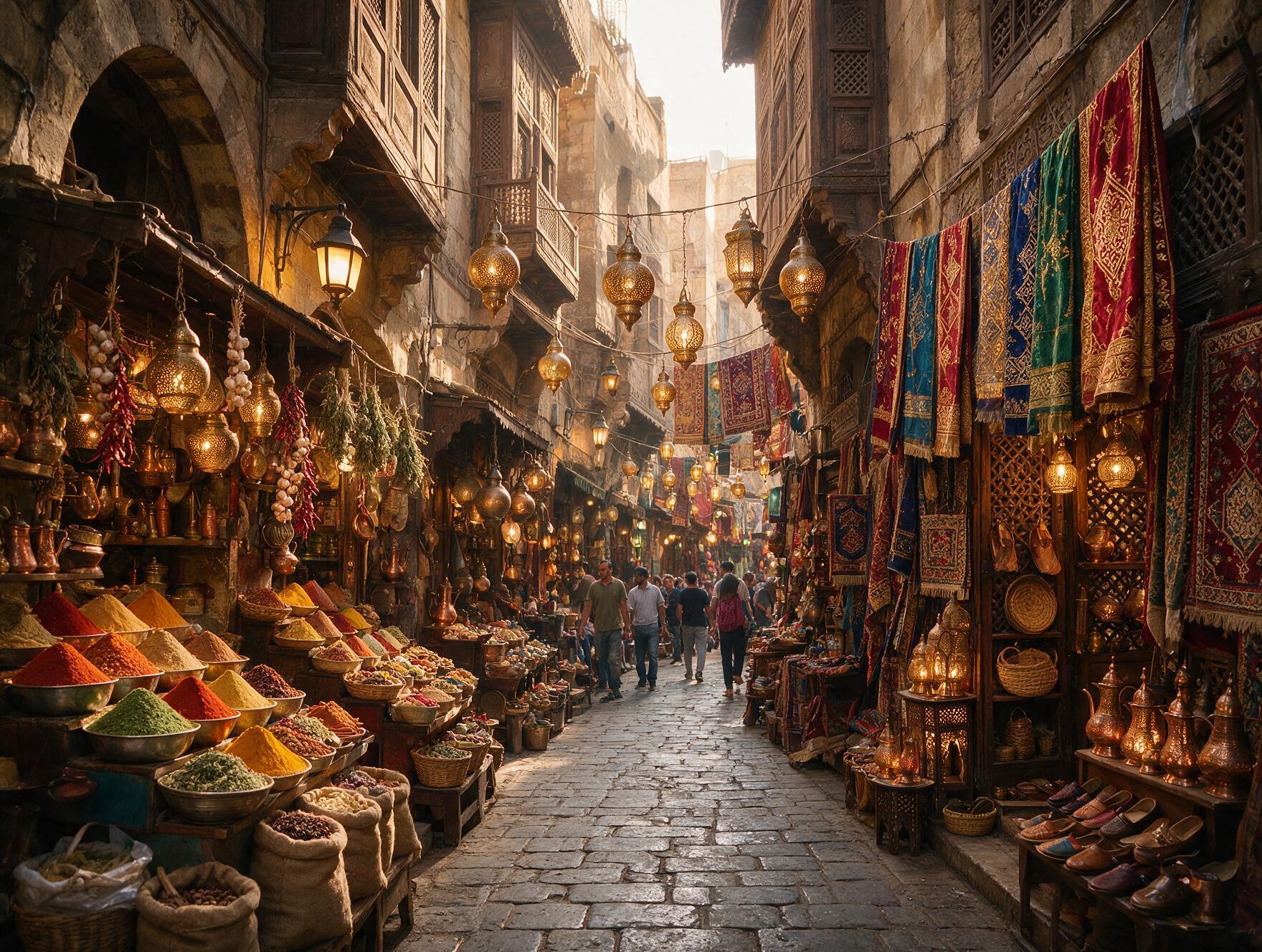
Cash still rules outside hotels and the bigger restaurants — carry Egyptian pounds for tips, small vendors, and the Khan el-Khalili bazaar, where haggling is expected and card machines are rare. Cards work fine at hotels, malls, and most sit-down restaurants in Zamalek and Downtown. An eSIM (Egypt has decent eSIM coverage through a couple of international providers) is the easiest way to get data from the airport onward rather than hunting for a physical SIM counter after a long flight.
On food: skip the hotel buffet on at least one night and eat where the traffic is. Koshary — a carb-heavy mix of rice, lentils, macaroni, and a spiced tomato sauce, sold from tiny stalls all over Downtown Cairo for the equivalent of a couple of dollars — is the dish locals actually eat for lunch, and it’s a better introduction to Egyptian food than most tasting menus aimed at tourists.
Mistakes worth avoiding
The one I’d flag hardest: don’t try to see the Pyramids and the Grand Egyptian Museum on the same day thinking you’ll “combine” the trip out west. Both deserve unhurried time, and doing both in one day means rushing one of them, usually the museum, since it closes earlier and needs the longer visit. Split them across two mornings instead.
Second one: unofficial “guides” who approach you at the Giza gate before you’ve even bought a ticket. Book your Egyptologist or guide in advance through your hotel or tour operator, and politely decline anyone who offers on the spot — it’s a well-worn setup that tends to end with an inflated “tip” demand partway through.
FAQs
Do Indians need a visa for Egypt in 2026?
Yes. Indian passport holders need to arrange an e-visa online before departure — there’s no visa-on-arrival option in practice for Indian nationals, even though that’s a route some other nationalities use.
How long is the flight from Mumbai to Cairo?
The current EgyptAir non-stop is a little over four and a half hours, with five weekly departures from Mumbai and four from Delhi as of 2026, and the airline has said it’s working toward daily frequency on both routes.
Is Cairo safe for Indian tourists?
Cairo’s major tourist areas — Giza, Zamalek, Downtown, Islamic Cairo — see heavy tourism and a visible police presence around key sites. Usual city-travel sense applies: agree on taxi fares or use a ride app before you get in, keep valuables close in crowded markets, and book guides through your hotel or a known operator rather than off the street.
What’s the best time of year to visit Egypt from India?
October to April for comfortable sightseeing weather, with late October or March as a sweet spot that avoids both the summer heat and the December–January crowd peak. Summer works if a Red Sea beach stay is your main goal, since resort rates there tend to be lower exactly when Cairo is too hot for heavy sightseeing.
Do I need to book Grand Egyptian Museum tickets in advance?
Yes — tickets are online-only through the official GEM site, with entry organised into eight daily time slots. There’s no on-site ticket counter, so this isn’t something you can decide on the morning of.
Can I use cash or cards in Egypt?
Both, but keep Egyptian pounds on hand for tips, bazaar shopping, and smaller vendors. Cards are fine at hotels and larger restaurants, but plenty of the best small food stalls are cash-only.
Should I add Luxor or the Red Sea to a Cairo trip?
If you have more than five days, yes — both are under an hour’s flight from Cairo and offer a genuinely different side of Egypt, whether that’s temple complexes and the Valley of the Kings in Luxor/Aswan or reef diving and resort time on the Red Sea coast.
The takeaway
None of this is a reason to book blindly — Egypt in December still means crowds and higher prices, and the visa and museum-ticket logistics reward planning ahead rather than winging it. But the flight math has genuinely gotten easier this year, and that changes the trip from “someday, when I have two weeks to burn on connections” to something you can plan properly around a shoulder-season week. If you’ve been putting off Egypt the way my cousin has, this is a reasonable year to stop.
If you’d rather have someone else handle the e-visa timing, the Cairo-to-Luxor logistics, and getting the Grand Egyptian Museum slot booked before you land, that’s exactly the kind of trip Get Tripped puts together — reach out and we’ll build the itinerary around the flight schedule, not the other way around.