Getting around Egypt is really three different logistics problems stacked on top of each other: getting around Cairo itself (a sprawling, traffic-heavy megacity), getting between Cairo, Luxor and Aswan (long distances, handled by flights, trains or your Nile cruise), and getting around once you’re actually in Luxor or Aswan (small enough to walk, but the river crossing to the West Bank changes the equation). Most guides lump all of this into one vague “transportation in Egypt” article. Here’s how it actually breaks down city by city.
Table of Contents
Cairo: The Metro
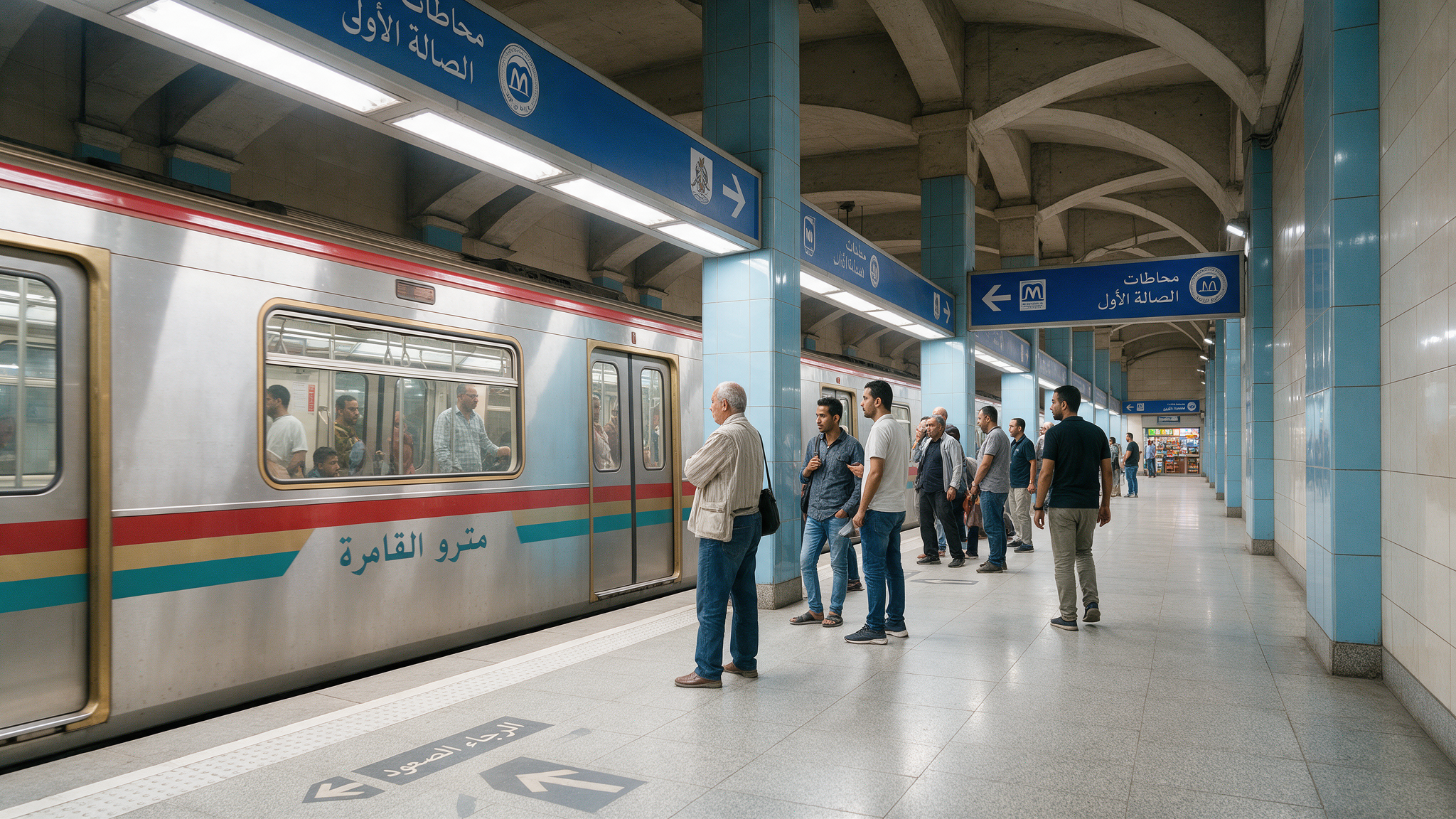
The Cairo Metro is Africa’s first underground rail system and, once you understand the three lines, genuinely one of the easiest ways to skip the city’s infamous traffic. It covers roughly 93 km across 80 stations. Line 1 (red) runs Helwan to New El-Marg, Line 2 (blue) runs El-Mounib to Shubra El-Kheima and is the one most useful for tourists — it stops at Sadat station, which puts you right at Tahrir Square and the Egyptian Museum, and at Mar Girgis, which is the stop for Coptic Cairo. Line 3 (green) is the newest and connects to some of the recent monorail developments.
Fares are distance-based: EGP 8 for up to 9 stations, EGP 10 for 10-16 stations, EGP 15 for 17-23 stations, and EGP 20 beyond that. Ticket machines at major stations now take both cash and card, which has cut down the old cash-only queue frustration considerably. One genuinely useful detail for women traveling solo or in groups: the first carriage on every train is reserved for women only, clearly marked, and a good option if you’d rather avoid the general crowding during rush hour.
Cairo: Uber, Careem and Taxis
Uber operates throughout Cairo and is genuinely the easiest way to get around for visitors, since fares are fixed in the app (no negotiation) and the driver already has your destination via GPS, sidestepping the language barrier entirely. Typical UberX pricing runs around EGP 7 base fare plus roughly EGP 0.3 per minute and EGP 2.3 per km, with a minimum fare around EGP 10 — in practice, most short city rides land somewhere in the EGP 40-80 range. Careem, a regional rival to Uber, operates on similar terms and is worth having as a backup app in case surge pricing hits one platform harder than the other at a given moment.
Traditional metered taxis exist and are cheaper on paper (roughly EGP 2.80/km with an ~EGP 8.50 flag fall), but meters aren’t always used consistently with tourists, and negotiating a fare upfront in a language you may not speak is more friction than it’s worth for the modest savings. Unless you’re specifically trying to have that experience, stick to app-based rides.
Mistake to avoid: don’t hail a taxi directly outside major tourist sites like the pyramids or the Egyptian Museum — drivers stationed there specifically for tourist traffic tend to quote inflated flat rates. Walk a block or two away, or just order an Uber/Careem to your exact location instead.
Cairo: The New Monorail
As of this year, Cairo’s new monorail system is running two lines totaling about 100 km — an East Nile line connecting the New Administrative Capital to East Cairo, and a West Nile line linking 6th of October City to Giza. It’s air-conditioned and runs above street level, avoiding traffic entirely, which makes it a genuinely useful option if your hotel or itinerary touches the newer parts of Greater Cairo near Giza rather than the older downtown core, where the Metro still covers things better.
Between Cairo, Luxor and Aswan
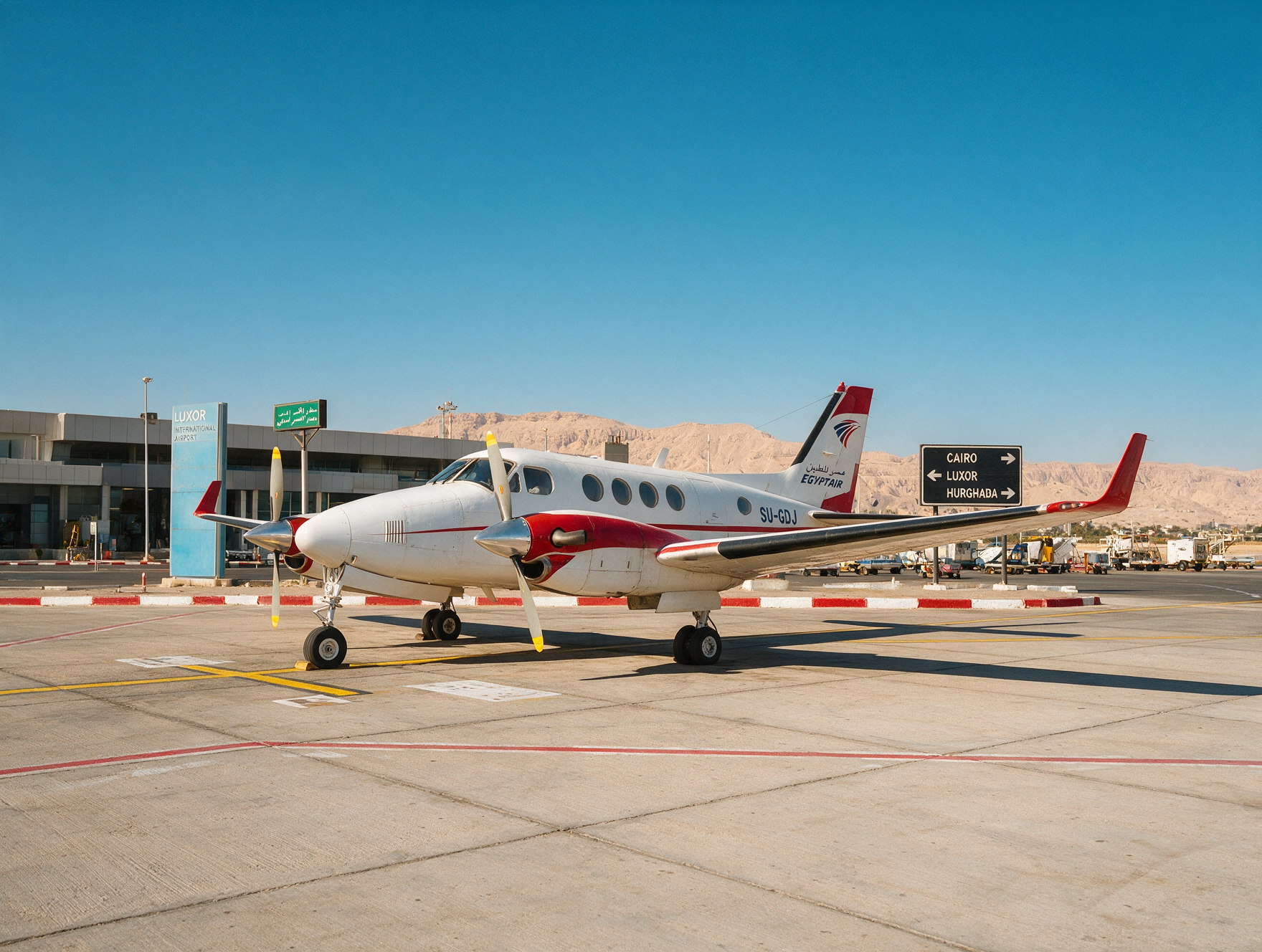
For the long haul between Cairo and Upper Egypt, you have three realistic options: domestic flights (roughly 90 minutes to Luxor, multiple daily departures, the fastest and most comfortable option and what most well-planned itineraries use), overnight sleeper trains (a genuinely atmospheric option if you have the extra time and enjoy train travel, running roughly 9-10 hours), and, if you’re doing the classic route, simply letting your Nile cruise handle the Luxor-to-Aswan leg entirely, since the ship itself is your transport for that portion.
We’d recommend flights for anyone on a 7-8 day itinerary — the time saved lets you spend an extra half-day actually at the sites rather than in transit, and domestic flight costs from Cairo to Luxor are modest enough that the time saved is usually worth more than the money saved on a sleeper train.
Getting Around Luxor
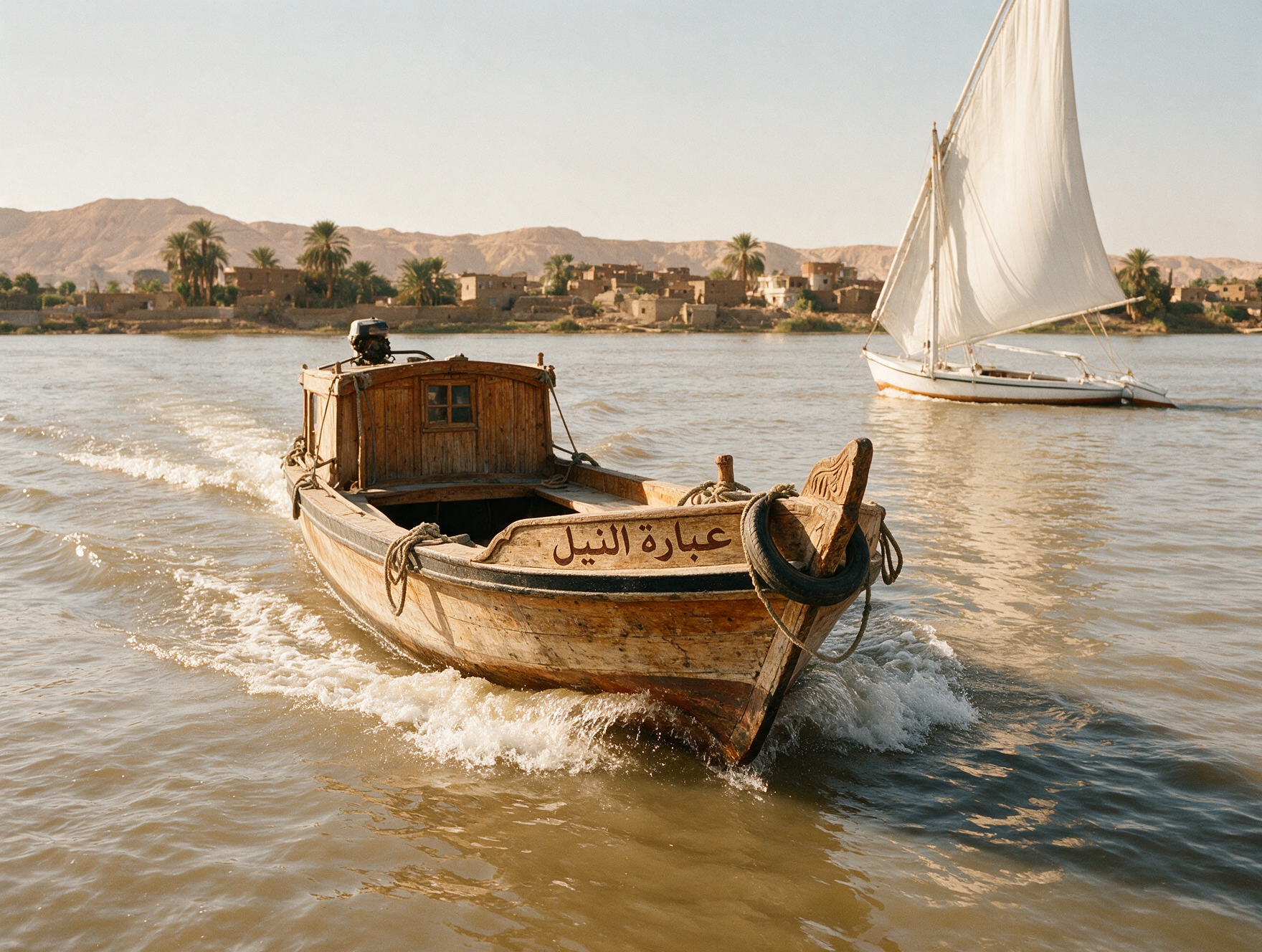
Luxor’s East Bank (hotels, Karnak Temple, the main town) is walkable in parts but spread out enough that short taxi or tuk-tuk rides between sites make sense in the heat. The West Bank, where the Valley of the Kings, Hatshepsut’s Temple and the Colossi of Memnon sit, requires crossing the Nile — a local ferry does this cheaply for a few Egyptian pounds, or your hotel/tour operator can arrange a private boat crossing. Once on the West Bank, sites are spread across a wider area than they look on a map, so a hired taxi or minivan for a half-day (easily arranged through your hotel) is the practical way to see multiple tombs and temples without walking in open desert heat between them.
Getting Around Aswan
Aswan is compact and calmer than Cairo or even Luxor, and a lot of the experience here is boat-based anyway — feluccas for the Nile and Nubian village visits, and small motorboats to reach Philae Temple on its island. In town, walking covers most of what you need along the Corniche, with taxis or tuk-tuks for anything further, like the High Dam or the Unfinished Obelisk quarry.
Getting to and Around Alexandria
If you add Alexandria to your itinerary, the trip from Cairo takes roughly 2.5 hours by train from Ramses Station (several daily departures, a comfortable and popular option) or about 3 hours by car/private transfer. Once in Alexandria, the city’s layout along the Mediterranean coast makes taxis and rideshare apps the practical choice for covering the distance between the Bibliotheca Alexandrina, the Qaitbay Citadel, and the Corniche, since these sights are more spread out than Luxor’s or Aswan’s compact centers.

SIM Cards and Staying Connected for Navigation
Since Uber, Careem and Google Maps all depend on a working data connection, getting a local SIM or eSIM sorted on arrival matters more here than in destinations where you might get away without one. Vodafone Egypt and Orange both sell tourist SIM packages at Cairo International Airport arrivals — expect to pay roughly EGP 300-500 for a package with several GB of data valid for a couple of weeks, which comfortably covers navigation, ride-hailing apps and basic browsing for a standard trip length. eSIM options from international providers are increasingly popular too, since they let you activate connectivity before you even land, which is useful if you want Uber ready to go the moment you clear immigration rather than hunting for a SIM counter first. Coverage is generally reliable in Cairo, Luxor and Aswan city centers; it thins out somewhat in the open desert areas around sites like Abu Simbel or on stretches of the West Bank in Luxor, so don’t rely on real-time navigation apps completely once you’re away from town centers.
A smart tip: download an offline map of Cairo, Luxor and Aswan before you land, through Google Maps’ offline area feature, as a backup for the inevitable dead zone or slow-network moment.
Practical Tips That Actually Matter
- Download Uber and Careem before you land so both are ready to go, since app-store access and account setup can be slower on unfamiliar mobile networks.
- Keep small EGP notes handy for the Metro, tuk-tuks, ferry crossings and tipping — a lot of these small transactions are cash-only even where bigger purchases take cards.
- Airport transfers are worth pre-booking through your hotel or travel agency, particularly for late-night arrivals into Cairo, rather than negotiating with drivers in the arrivals hall.
- Traffic in Cairo is genuinely unpredictable — budget significantly more time than Google Maps estimates for any car journey during weekday daytime hours.
Cash vs. Card for Getting Around
Egypt still runs largely on cash for everyday transport — Metro ticket machines increasingly take cards, but tuk-tuks, ferry crossings, small taxis and tipping drivers all expect Egyptian pounds. Uber and Careem let you pay by card within the app, which is genuinely convenient since it removes the need to have exact change for every ride, but keep a stock of smaller EGP notes (10s, 20s, 50s) for everything else, since breaking a large note for a small fare is a common source of friction, especially with tuk-tuk drivers who often claim not to have change. UPI is not used in Egypt, so plan around cash and international cards rather than expecting any India-specific payment method to work.
A mistake we’ve seen more than once: travelers arriving with only large denomination notes exchanged at the airport, then struggling to pay for a EGP 15 tuk-tuk ride. Break a larger note at your hotel reception or a proper shop early on, rather than trying to do it with a transport driver who has every incentive not to have change handy.
FAQs
Is Uber available in Cairo and other Egyptian cities?
Yes, Uber and Careem both operate in Cairo and are the easiest, most reliable way for tourists to get around without negotiating fares. Coverage in Luxor and Aswan is more limited, where taxis and hotel-arranged transport are more common.
Should I take the train or fly between Cairo and Luxor?
Flying is faster (about 90 minutes versus 9-10 hours by overnight train) and recommended for shorter itineraries. The sleeper train is a valid choice if you have extra time and want the experience itself.
Is the Cairo Metro safe and easy to use for tourists?
Yes — it’s well-signed, affordable, and often faster than road transport during peak traffic hours. The women-only carriage (the first car on each train) is a useful option for solo female travelers.
How do I get to the West Bank in Luxor?
By local ferry across the Nile (a few Egyptian pounds) or a private boat arranged through your hotel. Once across, a hired taxi or minivan covers the spread-out tomb and temple sites.
How far is Alexandria from Cairo and how do I get there?
About 2.5 hours by train from Ramses Station or roughly 3 hours by car. Both options run multiple times daily.
Getting Around Without the Stress
Egypt’s transport options are more organized than they first appear — the trick is matching the right method to the right leg of the journey rather than defaulting to one option for the whole trip. If coordinating flights, cruise transfers and airport pickups across three cities feels like a lot to manage solo, Get Tripped’s Egypt packages build all of this transport logistics in from the start.