For six years, if you wanted to fly non-stop from India to Rome, you couldn’t. Every itinerary ran you through Istanbul, or Doha, or Frankfurt, adding three to five hours and a second security line to an already long day. Air India shut the direct Delhi-Rome route down in early 2020, right before the world stopped traveling anyway, and it never came back — until this March.
On March 25, 2026, Air India restarted non-stop Delhi to Rome service on a Boeing 787-8, flying four times a week — Mondays, Wednesdays, Fridays, and Sundays. It’s a small scheduling detail with a bigger effect: Italy just got meaningfully easier to reach from India, and if you’ve been putting off a Rome trip because the routing was a headache, that excuse is gone.
This isn’t a full Italy guide (we’ll get into specific Rome experiences and lesser-known corners in future posts). It’s the practical brief: what the new flight actually offers, what it costs, what visa and timing questions you need answered, and how to think about building a trip around it.
Table of Contents
- The Flight: What Actually Changed
- What It Costs
- Visa Requirements for Indian Passport Holders
- Best Time to Visit Rome
- How Many Days to Plan
- Where to Stay
- Food and Where to Eat
- Money, Cards, and Connectivity
- A Mistake to Avoid
- Who This Trip Suits
- FAQs
The Flight: What Actually Changed
Air India’s AI-137/AI-138 pairing connects Delhi and Rome non-stop on a Boeing 787-8 Dreamliner, configured with 18 lie-flat business class seats and 238 economy seats. Four weekly departures — enough to build a trip around, though not yet daily, so you’ll want to lock your dates before locking your leave application. Flight time runs a little over nine hours westbound, which puts an evening departure from Delhi into a Rome morning arrival, giving you a full first day rather than losing it to a layover.
It’s worth saying plainly why this matters more than it might sound: a one-stop routing through the Gulf or Turkey isn’t just slower, it’s a different kind of tiring — a second boarding pass, a second security check, the chance of a missed connection if the first leg runs late. For a 9-10 day Italy trip, getting both those travel days back matters. And Air India isn’t the only one paying attention to India-Europe demand this year — IndiGo has been expanding into Athens and London on similar logic. Rome’s resumption fits a broader pattern of Indian carriers re-committing to long-haul European routes they’d quietly let lapse.
What It Costs
Fares move constantly and any number we print here will be out of date within weeks, but as a planning benchmark: one-way economy fares on the Delhi-Rome route have been listed from roughly ₹22,000-27,000 depending on how far out you book, with round-trip promotional fares occasionally dipping toward ₹50,000 during sale periods. Business class — those 18 flat-bed seats — commands a real premium over economy, as you’d expect on a long-haul widebody, and is worth checking directly with Air India or a travel agent rather than relying on a fare aggregator’s cached number.
Two practical notes: fares are consistently cheaper on the shoulder-season months (more on that below) than in peak summer, and Tuesday/Wednesday departures tend to price lower than weekend ones on most long-haul routes out of Delhi. If your dates are flexible by even two or three days, it’s worth checking both.
Visa Requirements for Indian Passport Holders
Italy is part of the Schengen Area, so Indian passport holders need a Schengen visa before departure — there’s no visa-on-arrival or e-visa shortcut here. The short-term tourist visa costs €80 (roughly ₹7,280) for adults, with a reduced fee for children aged 6-12 and no fee for children under 6. Standard processing runs about 15 working days through VFS Global, though it’s sensible to apply 4-6 weeks out, since Italy is a popular enough post that appointment slots can fill up in peak months.
You’ll need the standard set: a passport valid at least three months past your return date, proof of your flight booking, hotel confirmations for the full stay, travel insurance with a minimum of €30,000 medical coverage, and bank statements showing you can fund the trip. The visa itself, once granted, allows up to 90 days within any 180-day period across the whole Schengen Area — so if you’re planning to hop from Rome into France or Switzerland on the same trip, one Italy-issued visa covers the whole loop, provided Italy is your main destination or first point of entry.
(Get Tripped’s visa desk handles the VFS appointment and documentation end to end if you’d rather not manage it yourself — see our Schengen visa guide for the full cascade-regime rules on which country’s consulate you should actually be applying through.)
Best Time to Visit Rome
September and October are, honestly, the sweet spot, and the new flight schedule lines up well with both. September runs warm — daytime highs of 28°C tapering to a more comfortable 18°C by evening — and the city is genuinely lively: the Roma Jazz Festival, European Heritage Days, and Notte Bianca di Roma (a citywide all-night culture event) all land in the first half of the month. The trade-off is that September crowds stay high, since locals are back from their own August holidays and hotel rates run 20-35% above the winter baseline.
October cools further — 14-23°C, softer light, quieter evenings — and by the back half of the month the crowds thin out noticeably while the major sights stay fully open (no shoulder-season closures to worry about, unlike some smaller Italian hill towns). If we had to pick one window for a first Rome trip with fewer elbows in your photos, it’s the last two weeks of October.
Skip high summer if you can help it. July and August in Rome mean 35°C+ afternoons, marble piazzas that turn into reflector ovens, and half the city’s independent restaurants closed for the owners’ own vacation — a detail visiting friends have been caught out by more than once.
How Many Days to Plan
Rome itself rewards four full days — enough for the ancient core (Colosseum, Forum, Palatine), the Vatican Museums and St. Peter’s, and at least two days with no fixed itinerary at all, because Rome is a city that punishes over-scheduling. Build in a fifth or sixth day if you want a train day trip to Orvieto or the Alban Hills. Most of our clients extend into a 9-11 day Italy loop — Rome, then a rail leg north to Florence and Tuscany, or south toward the Amalfi Coast — which the new direct flight makes far less punishing to bookend, since you’re not burning two of those days on connections.
Where to Stay
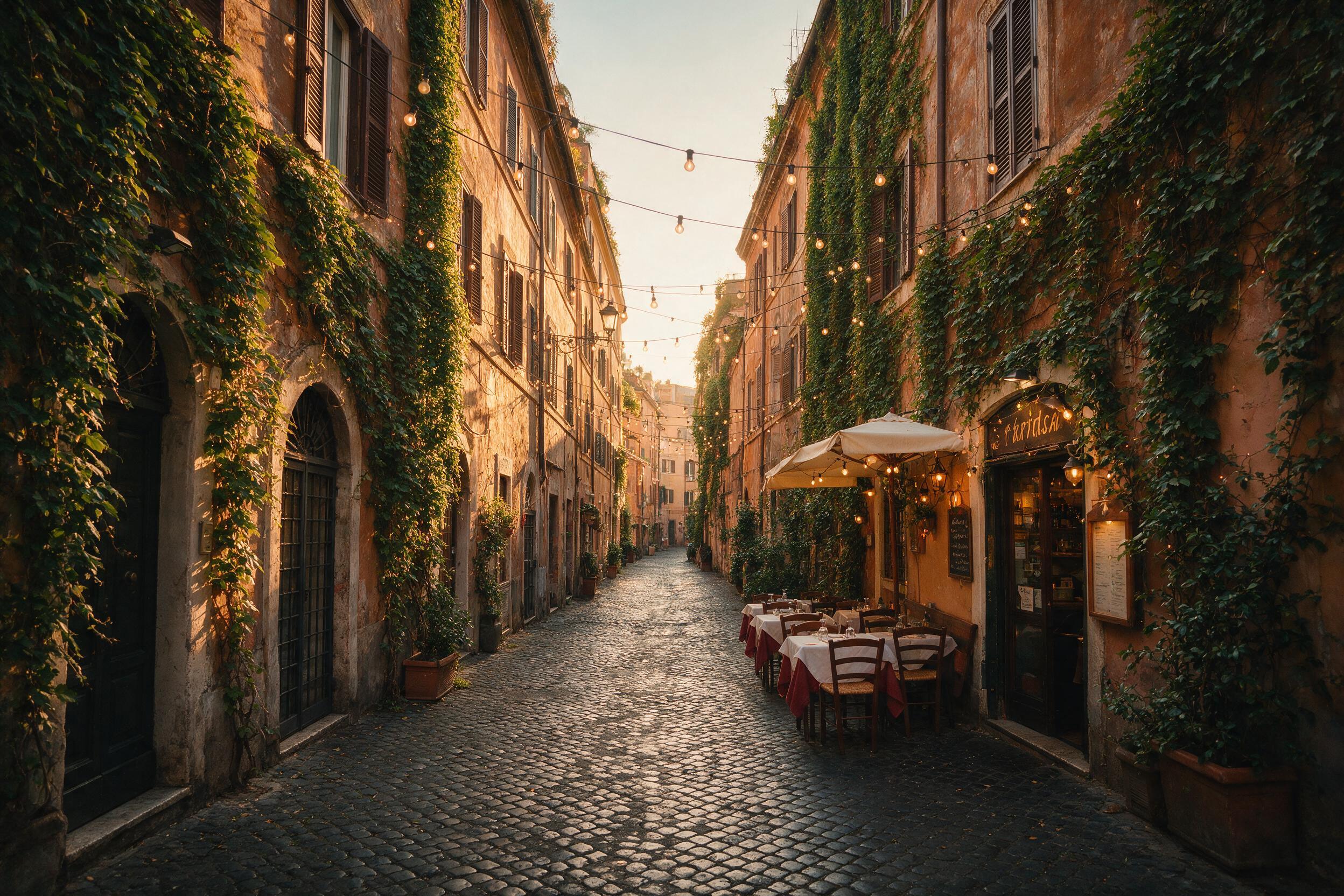
Skip the hotels directly on Piazza Navona or wedged against the Trevi Fountain — you pay a location premium for a room that will still hear tour groups until 11pm. Monti, just behind the Colosseum, gives you cobbled quiet and genuinely good small restaurants within a 10-minute walk of the ancient core, and works well across mid-range and boutique budgets. Trastevere, across the river, is the classic pick for a livelier evening scene and leans slightly more upscale in its better properties. If you want quiet, tree-lined luxury and don’t mind a short taxi into the centro storico each day, Parioli is where a lot of well-heeled Romans themselves live — a handful of five-star boutique hotels there feel more residential than resort, which some travelers specifically want on a second or third Italy trip.
Food and Where to Eat
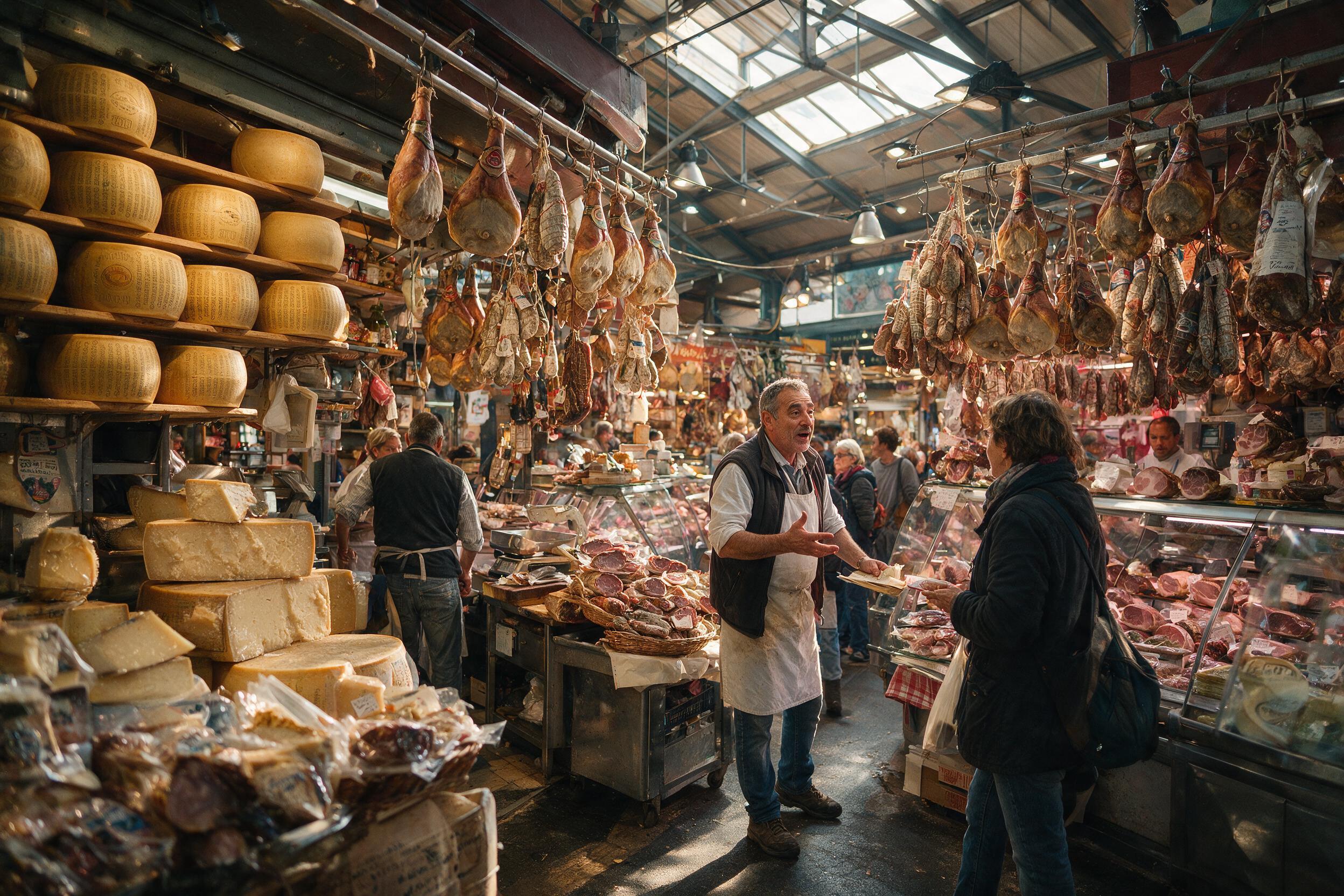
Rome’s food culture runs on four pasta dishes done extremely well — cacio e pepe, carbonara, amatriciana, and gricia — and the difference between a good version and a mediocre one is stark enough that it’s worth doing five minutes of research before picking a restaurant near any major sight. Testaccio, a neighborhood built around Rome’s old slaughterhouse district, is where a lot of these dishes actually originated, and its covered market (Mercato di Testaccio) is a genuinely good lunch stop that most first-time visitors never find, since it’s a fifteen-minute metro ride from the tourist center and doesn’t show up on the standard Colosseum-Vatican-Trevi loop.
One honest caveat: restaurants directly on Piazza Navona or within sight of the Trevi Fountain will double their prices for the location, and the quality rarely justifies it. Walk two streets in any direction and you’ll find the same dishes, made properly, at close to half the price — a pattern that holds in most heavily-touristed European city centers, not just Rome.
Money, Cards, and Connectivity
Italy runs on the euro, and cards are accepted almost everywhere in Rome now, including most small trattorias and market stalls — carrying large amounts of cash isn’t necessary the way it might have been a decade ago, though it’s still smart to keep €50-100 on hand for smaller vendors, tips, or the odd place that’s card-down for the day. An eSIM (Airalo and similar providers both cover Italy well) is the easiest way to land with data already working, rather than hunting for an airport SIM counter at 8am after an overnight flight.
A Mistake to Avoid
Don’t try to walk into the Vatican Museums without a pre-booked, timed-entry ticket. The walk-up line on a normal day can run two to three hours, and on a bad day it wraps around the wall. Book online at least a few days ahead — a week if you’re traveling in September — and you’ll walk past that entire queue.
Who This Trip Suits
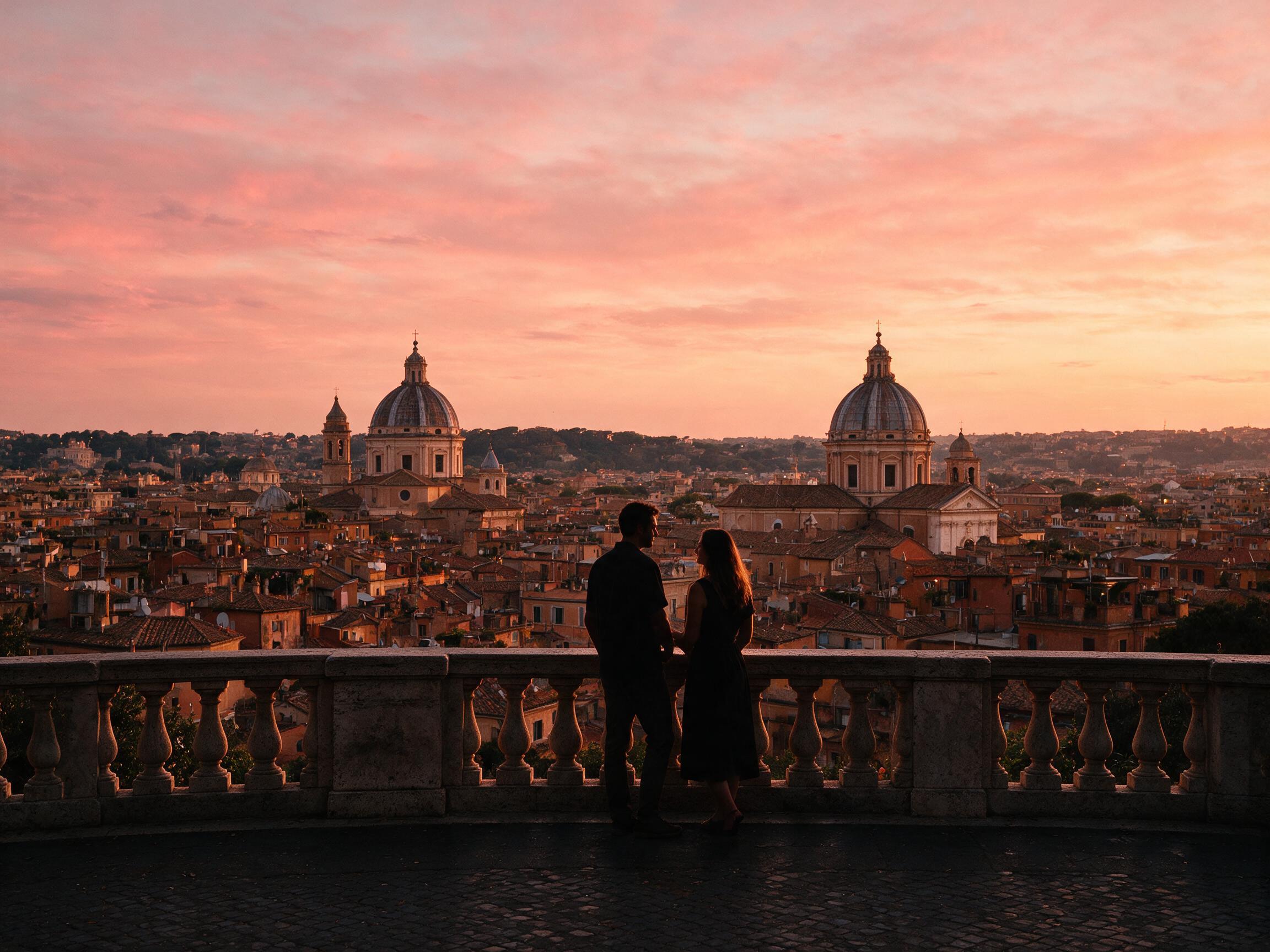
For couples, Rome at golden hour from the Gianicolo Hill terrace — free, uncrowded compared to the more famous viewpoints, and arguably the best sunset view in the city — is worth building an evening around. For families, the ancient sites hold kids’ attention better than most European capitals do, since there’s an actual gladiator-and-empire story to tell as you walk through them, but pace the museum days shorter than you would for adults alone. For travelers who’ve done the highlights before and want something quieter this time, a Testaccio food walk or a day trip to the Alban Hills’ lakeside towns is a better use of a Rome return visit than doing the Colosseum a second time.
A Fun Fact
The Pantheon’s dome, poured in the 2nd century AD, is still the world’s largest unreinforced concrete dome — no steel rebar, nothing. Roman engineers pulled it off using a concrete mix that got progressively lighter as it rose, denser volcanic rock near the base and lightweight pumice near the oculus at the top. Nearly 1,900 years later, structural engineers still study it.
FAQs
When did Air India resume direct Delhi-Rome flights?
Air India relaunched non-stop Delhi to Rome service on March 25, 2026, flying four times a week on a Boeing 787-8, after the route had been suspended since early 2020.
Do Indians need a visa to visit Italy?
Yes. Italy is a Schengen country, so Indian passport holders need a Schengen visa before travel — there’s no visa-on-arrival or e-visa. The fee is €80 for adults, with about 15 working days of standard processing through VFS Global.
How long is the flight from Delhi to Rome?
The non-stop Air India flight runs a little over nine hours, compared to 12-14+ hours on typical one-stop routings via the Gulf or Istanbul.
What is the best time to visit Rome?
Late September through October offers the best balance of pleasant weather (18-28°C in September, cooling to 14-23°C in October) and manageable crowds, especially in the back half of October. Avoid July-August, when temperatures regularly exceed 35°C and many independent restaurants close for the owners’ own holidays.
How many days do I need in Rome?
Four full days covers the essential sights at a reasonable pace. Most travelers extend into a broader 9-11 day Italy trip that adds Florence, Tuscany, or the Amalfi Coast.
Is Rome safe for tourists?
Yes, in the sense that violent crime against tourists is rare. Petty theft and pickpocketing around crowded sights (the metro, the area around Termini station, packed viewpoints) is the real risk to manage — keep bags zipped and in front of you in crowds, the same precaution you’d take in any major world capital.
Can I combine Rome with other Italian cities on this trip?
Yes, and most of our clients do. Italy’s high-speed rail network (Trenitalia and Italo) connects Rome to Florence in about 1.5 hours and to Naples (for the Amalfi Coast) in just over an hour, making a multi-city loop straightforward once you’ve landed.
Getting There With Get Tripped
A direct flight removes the most annoying part of an Italy trip — the routing — but the actual planning (which neighborhood, which day trips are worth the train fare, where the good version of carbonara actually is) still takes real local knowledge. Get Tripped’s Italy itineraries are built around exactly this new Delhi-Rome connection, with a curated mix of city time and countryside extensions for travelers who want the trip planned properly rather than assembled from twelve open browser tabs. If Rome’s been on the list for a while, this is a genuinely good year to finally book it — reach out and we’ll build the itinerary around your dates.