A Day in Florence: From the Duomo to Sunset Over the Arno
Florence is a city you can genuinely see the highlights of in a single well-planned day — not comfortably, not without tired feet by evening, but genuinely. The historic center is small enough to walk end to end in under half an hour, which means the limiting factor isn’t distance, it’s crowds and timing. Get those two things right and one day in Florence can feel surprisingly complete rather than like a highlight reel rushed through at a jog.
Here’s how we’d route it, hour by hour, if you only had today.
Table of Contents
- 8:00 AM — The Duomo before the crowds
- 10:00 AM — The Uffizi Gallery
- 1:00 PM — Lunch and Ponte Vecchio
- 2:30 PM — Crossing into Oltrarno
- 5:30 PM — Piazzale Michelangelo at golden hour
- 7:30 PM — Dinner back across the river
- Booking, tickets, and other practical notes
- A mistake worth avoiding
- FAQs
8:00 AM — The Duomo before the crowds
Start early. The Cattedrale di Santa Maria del Fiore — the Duomo — dominates the skyline and the square around it fills fast once tour groups arrive by mid-morning. Arriving right at opening gets you photos of the striped marble facade without three hundred people in the frame, and a genuine shot at climbing Brunelleschi’s dome if you’ve booked the timed slot in advance (walk-up access isn’t an option any more; it has to be reserved).
The climb itself is worth the 463 steps and the mild claustrophobia of the narrow stone stairwell — the view from the top, with the terracotta rooftops of Florence spread out and the hills of Tuscany beyond, is one of the best in the city and a genuinely different vantage point from the more famous sunset spot later in this itinerary.
10:00 AM — The Uffizi Gallery
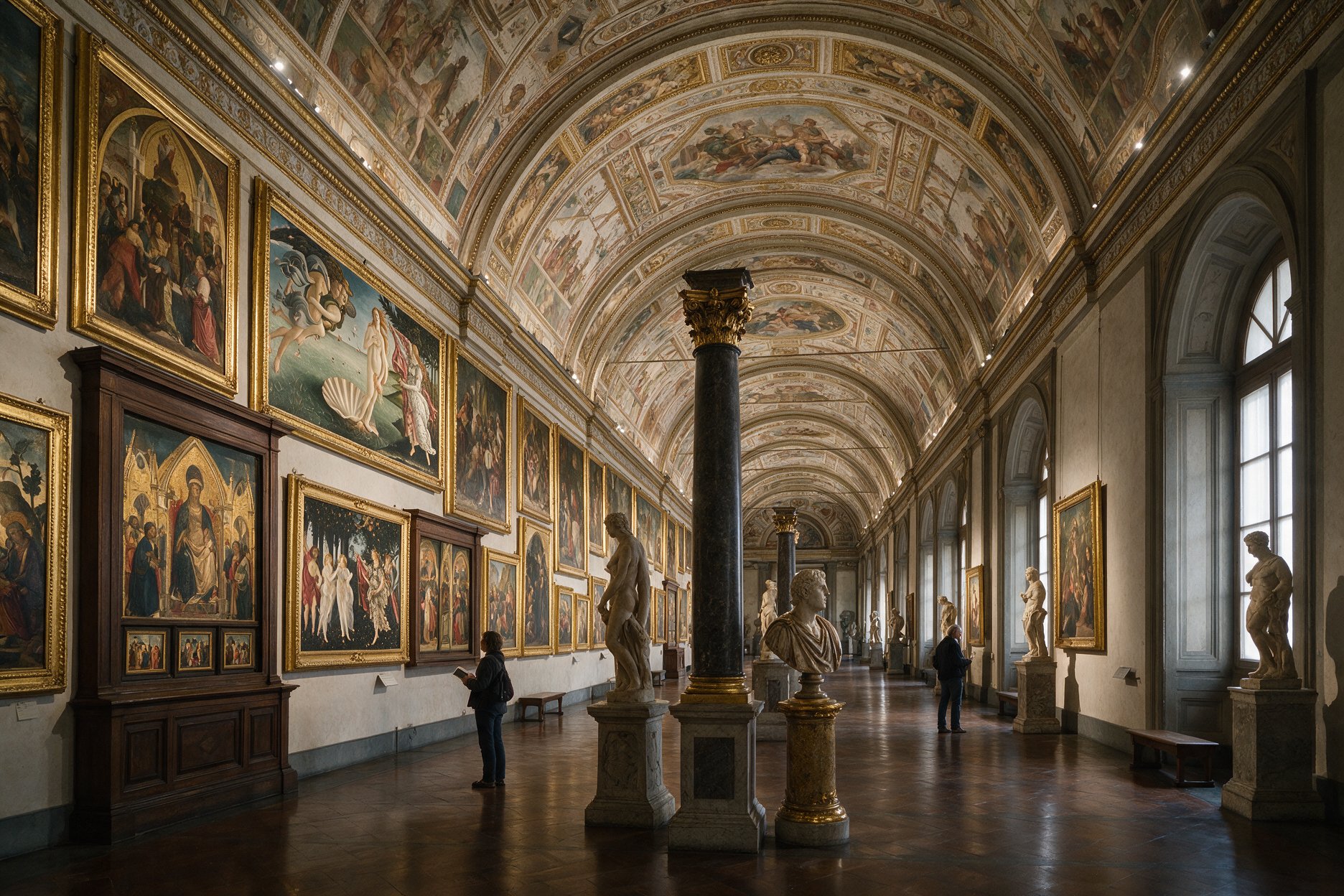
Book your Uffizi slot for mid-morning, ideally pre-purchased online. The gallery holds Botticelli’s Birth of Venus and Primavera, along with major works by Michelangelo, Leonardo, and Titian, and even with a timed entry ticket you’ll want a solid ninety minutes to two hours to do it justice without rushing through the later rooms.
An honest tip on the ticketing: online booking carries a small reservation fee on top of the roughly €25 full-price entry, and it’s worth every cent during peak season — walk-up queues can run well over an hour by mid-morning, and the fee buys you a guaranteed slot instead of a gamble.
1:00 PM — Lunch and Ponte Vecchio
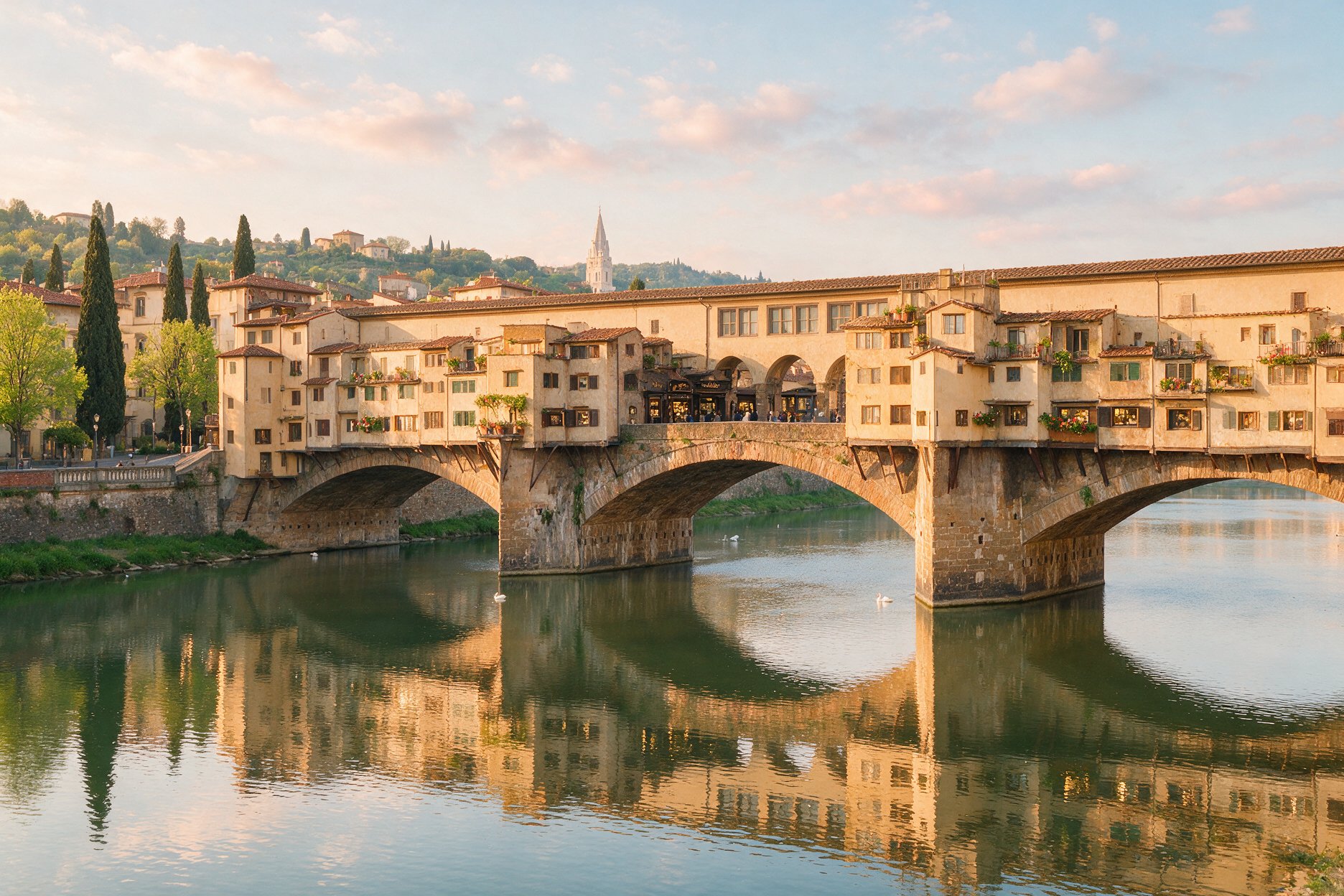
Walk from the Uffizi toward the river and you’ll hit the Ponte Vecchio, the medieval bridge lined with jewelry shops that’s survived since the 1300s (it’s the one bridge in Florence the retreating German army didn’t destroy in 1944). It’s genuinely worth seeing, but it’s also genuinely crowded at midday — if you can loop back for photos in early morning light on a future visit, it photographs far better with fewer people in frame.
For lunch, skip the restaurants with English-language menus taped to the window directly on the bridge approach and walk two minutes into the surrounding streets instead; a plate of pappa al pomodoro or a simple Florentine panino from a local spot will cost less and taste better than anything positioned to catch bridge foot traffic.
2:30 PM — Crossing into Oltrarno
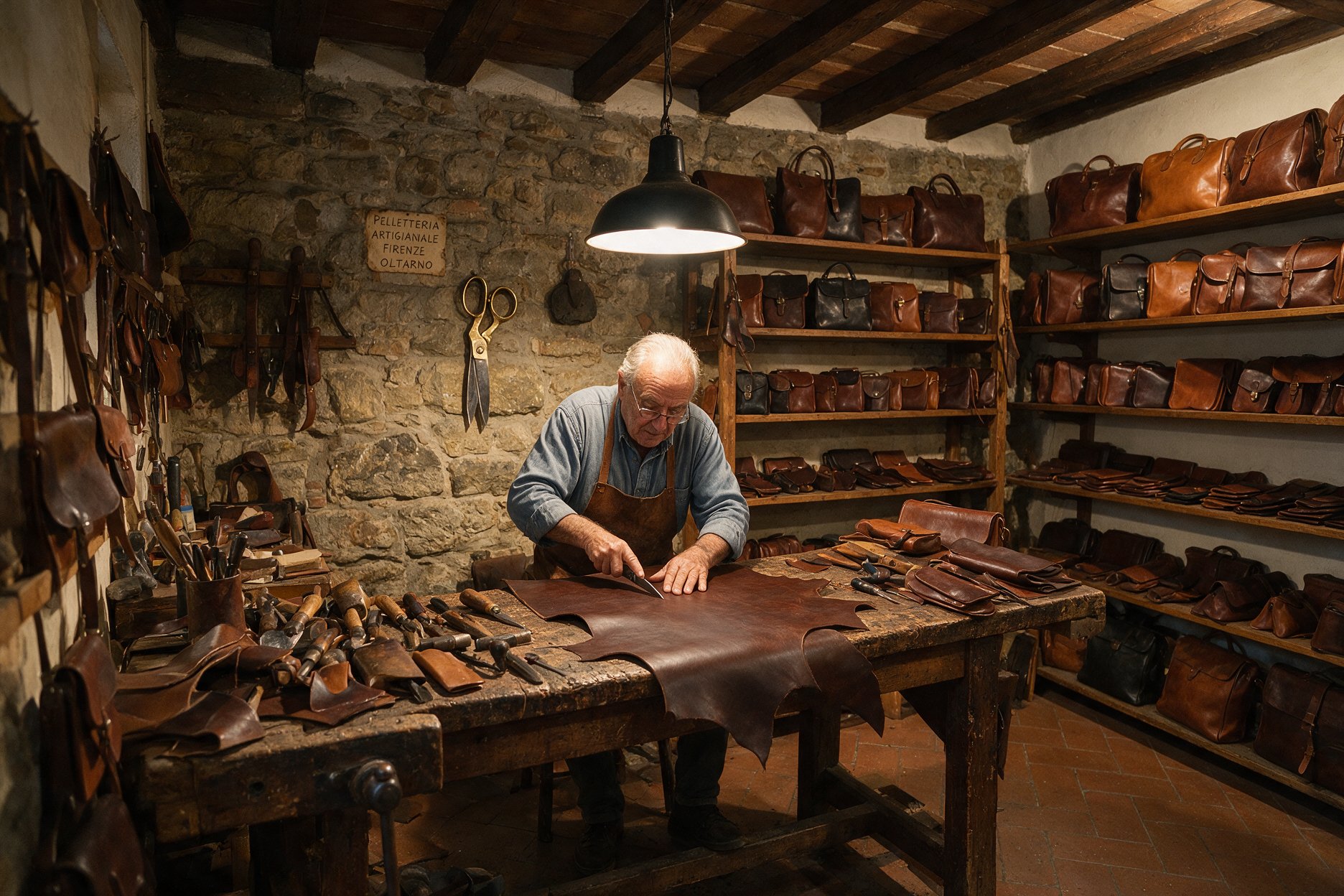
Cross the Ponte Vecchio into Oltrarno, literally “the other side of the Arno,” and the character of the city shifts noticeably. This is Florence’s traditional artisan quarter, still home to working leather workshops, furniture restorers, and picture framers rather than souvenir shops. Peek into open doorways along Via di Santo Spirito and Via Maggio and you’ll often see craftsmen at their benches, happy to have visitors watch for a few minutes even if you’re not buying.
Piazza Santo Spirito, the neighborhood’s main square, is a good spot to sit for twenty minutes with a coffee or a gelato and just watch Florentine life move at its actual pace, rather than the tourist-district pace of the streets you just left.
5:30 PM — Piazzale Michelangelo at golden hour
This is the appointment you build the whole day around. Piazzale Michelangelo sits on a hillside above the Oltrarno district, roughly a twenty-five to thirty minute uphill walk from Ponte Vecchio (or a short taxi if your legs are done by this point), and delivers the single best panoramic view of Florence — the Duomo, the Palazzo Vecchio tower, the whole terracotta skyline with the hills of Tuscany behind it, best photographed in the hour before sunset when the light turns the rooftops gold.
Arrive by 5:30 in summer or earlier in winter to claim a spot on the wall before the crowd thickens; it does get busy, but there’s enough space along the terrace that it rarely feels as crushing as the Duomo square does at midday.
7:30 PM — Dinner back across the river
Walk back down into Oltrarno for dinner rather than crossing back to the tourist-heavy streets near the Duomo. A proper bistecca alla fiorentina — the enormous, simply grilled T-bone steak Florence is famous for, usually served rare and meant for sharing — is worth building an evening around if you haven’t had one yet; it’s typically priced by weight, so ask before ordering if you’re budget-conscious.
Where to stay for this itinerary to work smoothly
Staying within or just outside the historic center matters more in Florence than in most Italian cities, since the whole point of this day is being able to walk everything rather than budget transit time between stops. A hotel near Santa Maria Novella station or in the San Lorenzo area puts you within a ten-to-fifteen-minute walk of both the Duomo and the Uffizi, while still being an easy walk to Ponte Vecchio and across into Oltrarno. Staying in Oltrarno itself is a good alternative if you’d rather end each day already on the quieter side of the river, close to dinner, with just the one bridge crossing back and forth for the major sights.
Booking, tickets, and other practical notes
Book both the Duomo dome climb and Uffizi tickets several days ahead if you’re visiting between April and October; same-week availability gets tight in peak season. The Firenze Card, if you’re planning to see multiple paid museums beyond just the Uffizi, can be worth the upfront cost for a 72-hour window of skip-the-line entry, but do the math against your actual planned stops first — it’s not automatically the cheaper option for a one-day visit focused mainly on the Uffizi and Duomo.
Florence’s historic center is compact enough to walk entirely, and cars are restricted in much of it (a ZTL, or limited traffic zone, that carries real fines for driving through unknowingly) — which works in your favor as a pedestrian, since the streets stay relatively calm.
A mistake worth avoiding
Don’t try to add the Accademia (home to Michelangelo’s David) into this same single day alongside the Uffizi and the dome climb. It’s tempting since it’s nearby, but stacking three major, separately-ticketed sights in one day usually means rushing at least one of them, and the Accademia deserves an unhurried thirty to forty minutes in front of David rather than a glance on the way to somewhere else. If David matters to you, it earns a second day.
Adjusting this day for how you travel
For couples, swap the 7:30 p.m. dinner recommendation for a table with a view — a handful of restaurants on the Oltrarno side of the river offer Ponte Vecchio views at dinner that are worth the modest premium, especially if you’re marking an anniversary or honeymoon stop on a longer Italy trip. For families, the dome climb’s 463 narrow spiral steps aren’t ideal for young children or anyone with mobility concerns — consider swapping it for the more manageable Giotto’s Campanile climb nearby, which offers a comparable view of the Duomo itself (something you don’t get from inside the dome) for a shorter, less claustrophobic climb. Solo travelers have the easiest version of this itinerary, since none of it requires coordination with anyone else’s pace — take the extra time at Piazzale Michelangelo that a group might rush through. For luxury travelers, a private early-access Uffizi tour before public opening hours is worth the splurge if the budget allows; having the Botticelli room to yourself for even fifteen minutes is a genuinely different experience than the standard timed entry.
A fun fact worth mentioning at dinner: the Duomo’s dome, completed in 1436, was built without any external wooden scaffolding supporting the whole structure — a construction technique so innovative for its time that Brunelleschi’s own contemporaries reportedly didn’t fully understand how he’d pulled it off.
Frequently Asked Questions
Is one day really enough to see Florence properly?
For the essential highlights, yes — this itinerary covers the Duomo, the Uffizi, Ponte Vecchio, Oltrarno, and sunset at Piazzale Michelangelo. If you want the Accademia, the Boboli Gardens, or a day trip to Fiesole or the Tuscan countryside, plan for two to three days instead.
Do I need to book Uffizi and Duomo tickets before arriving in Italy?
During peak season (roughly April through October), yes, ideally at least a week ahead. Shoulder season and winter are more forgiving, but booking a few days out is still safer than counting on walk-up availability.
Is Piazzale Michelangelo walkable, or should I take transport?
It’s walkable for most travelers — about 25-30 minutes uphill from the city center — but it is a genuine incline. Bus line 12 or 13 from near Ponte Vecchio, or a short taxi, are easy alternatives if you’d rather save your legs after a full day of walking.
What’s the best time of year to visit Florence for fewer crowds?
Late October through March is noticeably quieter, with the trade-off of shorter days and cooler weather. If you want a middle ground, late September or early April gives you decent weather with meaningfully smaller crowds than peak summer.
Is Florentine steak (bistecca alla fiorentina) worth the price?
For most travelers, yes, at least once — it’s a genuinely different cut and preparation than what most people are used to, served notably rare by default. It’s usually priced per kilogram and meant to be shared between two or more people, so ask about portion size before ordering solo.
Can I fit a day trip to Pisa or Siena into this same visit?
Not alongside this particular day — both are roughly an hour or more from Florence and deserve a separate day of their own. If you have a second day available, Siena is the stronger pick for most travelers over Pisa, trading the single famous leaning tower for a genuinely well-preserved medieval city center.
Conclusion
A single day in Florence forces you to prioritize, and that’s not entirely a bad thing — it strips the itinerary down to the Duomo, the Uffizi, a wander through Oltrarno’s workshops, and a sunset that genuinely earns its reputation. Do those four things well, without rushing any of them, and you’ll leave with a real feel for the city rather than a checklist of photos.
Plan Your Florence Trip with Get Tripped
If one day in Florence leaves you wanting more, Get Tripped can extend it into a proper Tuscany itinerary — Siena, Chianti wine country, or a slower multi-day Florence stay with room for the Accademia and beyond. Reach out about a custom Florence or Tuscany itinerary and we’ll build the timing around real ticket availability, not guesswork.