Top 5 Party Spots in Milan: An Honest Nightlife Guide
Milan doesn’t perform its nightlife the way Rome performs its history or Venice performs its canals — it just quietly has one of the best drinking cultures in Italy, built around aperitivo rather than clubs, and built for people who actually live and work there rather than for tourists passing through. If Rome and Florence are where you go for art and ruins, Milan is where Italy’s fashion, design, and finance crowd actually goes out, and the city’s bar scene reflects that: polished, a little expensive, and genuinely good.
This isn’t a club-hopping guide — Milan’s real nightlife strength is the aperitivo bar, not the dance floor, and we’ve built this list around where that culture actually happens rather than where a Google search sends first-timers.
Table of Contents
- 1. Navigli canal district
- 2. Brera’s Via Fiori Chiari
- 3. Bar Basso
- 4. Duomo rooftop bars
- 5. Naviglio della Martesana
- Understanding aperitivo culture
- Practical notes for a night out in Milan
- A mistake worth avoiding
- FAQs
1. Navigli canal district
Navigli is Milan’s most obvious answer to “where does everyone go out,” and it earns the reputation. This is a network of historic canals lined bar after bar, with tables spilling out onto the towpaths along Ripa di Porta Ticinese on warm evenings. It gets genuinely lively from early evening through late night, especially on weekends, with a crowd that’s a mix of locals in their twenties and thirties and a fair number of visitors who’ve done the same research you’re doing now.
The honest caveat: Navigli’s popularity means prices run €8–20 per drink depending on how close you are to the water and how polished the bar is, and on a Saturday night finding a table without a wait can take patience. Go on a weeknight if you want the atmosphere with more breathing room.
2. Brera’s Via Fiori Chiari
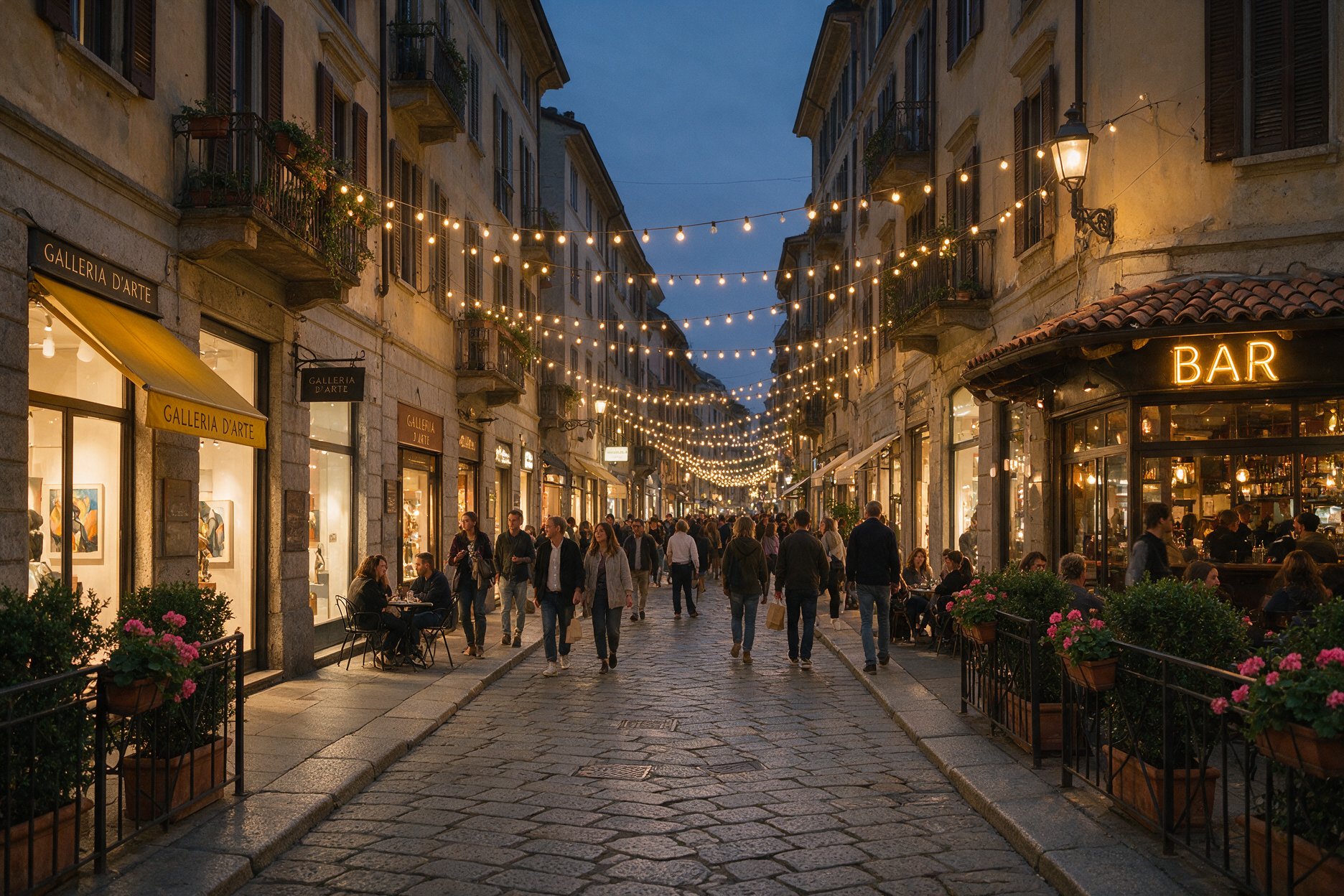
If Navigli is Milan’s loud, canal-side night out, Brera is the elegant, unhurried alternative. This former artists’ quarter, now full of small galleries and boutiques, has cobbled lanes lined with polished little bars that are genuinely built for conversation rather than a scene. Via Fiori Chiari specifically has a concentration of atmospheric spots for a refined evening drink — it’s pricier than Navigli on average, and noticeably calmer, which makes it the better choice for couples or anyone who wants Milan’s nightlife without the crush.
3. Bar Basso
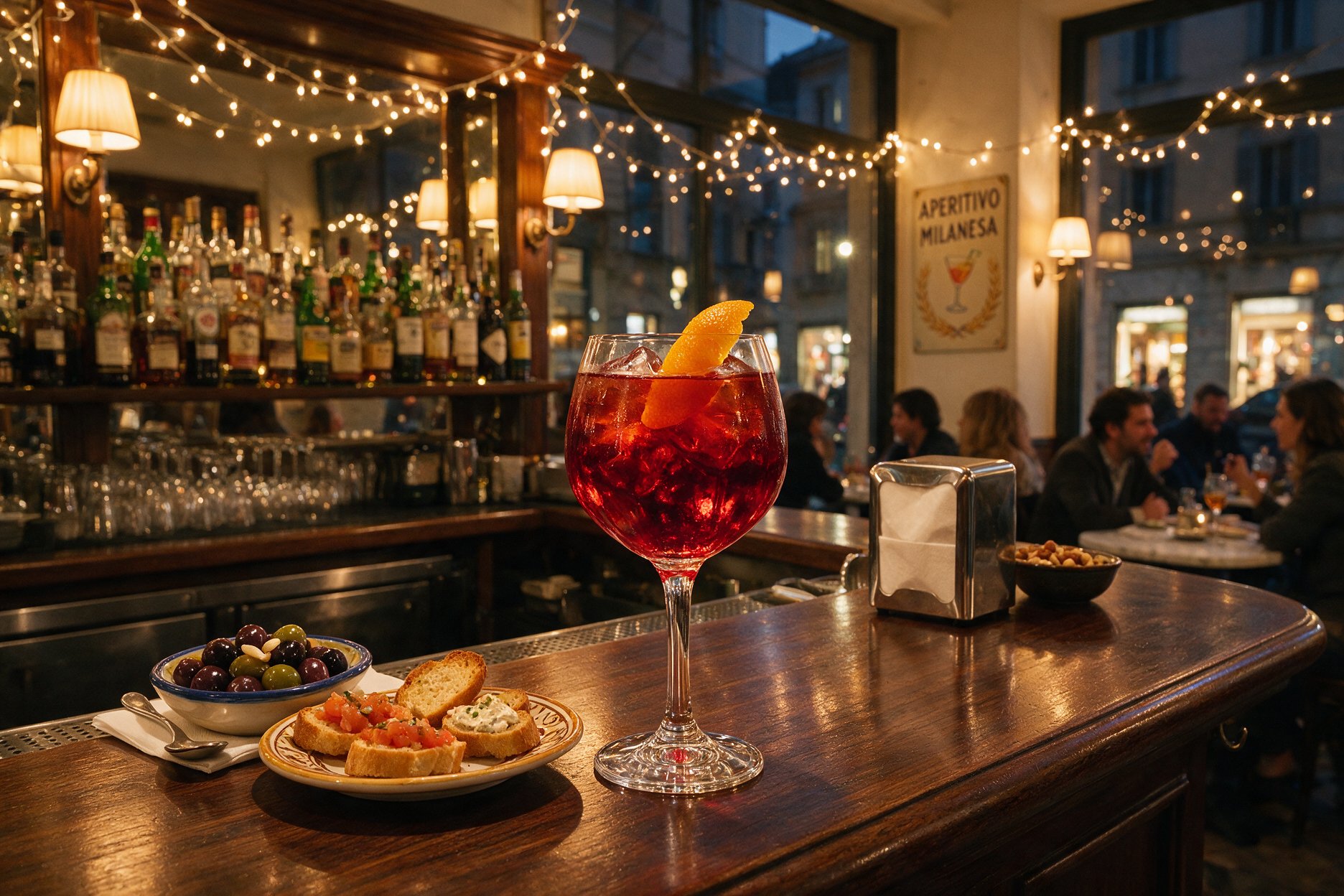
Tucked away in the Lambrate/Città Studi area, well outside the usual nightlife circuit, Bar Basso is a genuine pilgrimage stop for cocktail lovers — it’s widely credited as the birthplace of the Negroni Sbagliato, and its signature move is serving classic cocktails in oversized glasses, a house quirk that’s become part of its identity. It’s less about the neighborhood scene and more about the specific bar itself, so it’s worth a dedicated trip rather than a stop on a longer crawl. A fun fact for the cocktail-curious: the “sbagliato,” meaning “mistaken” in Italian, was supposedly born here from a bartender accidentally grabbing sparkling wine instead of gin.
4. Duomo rooftop bars
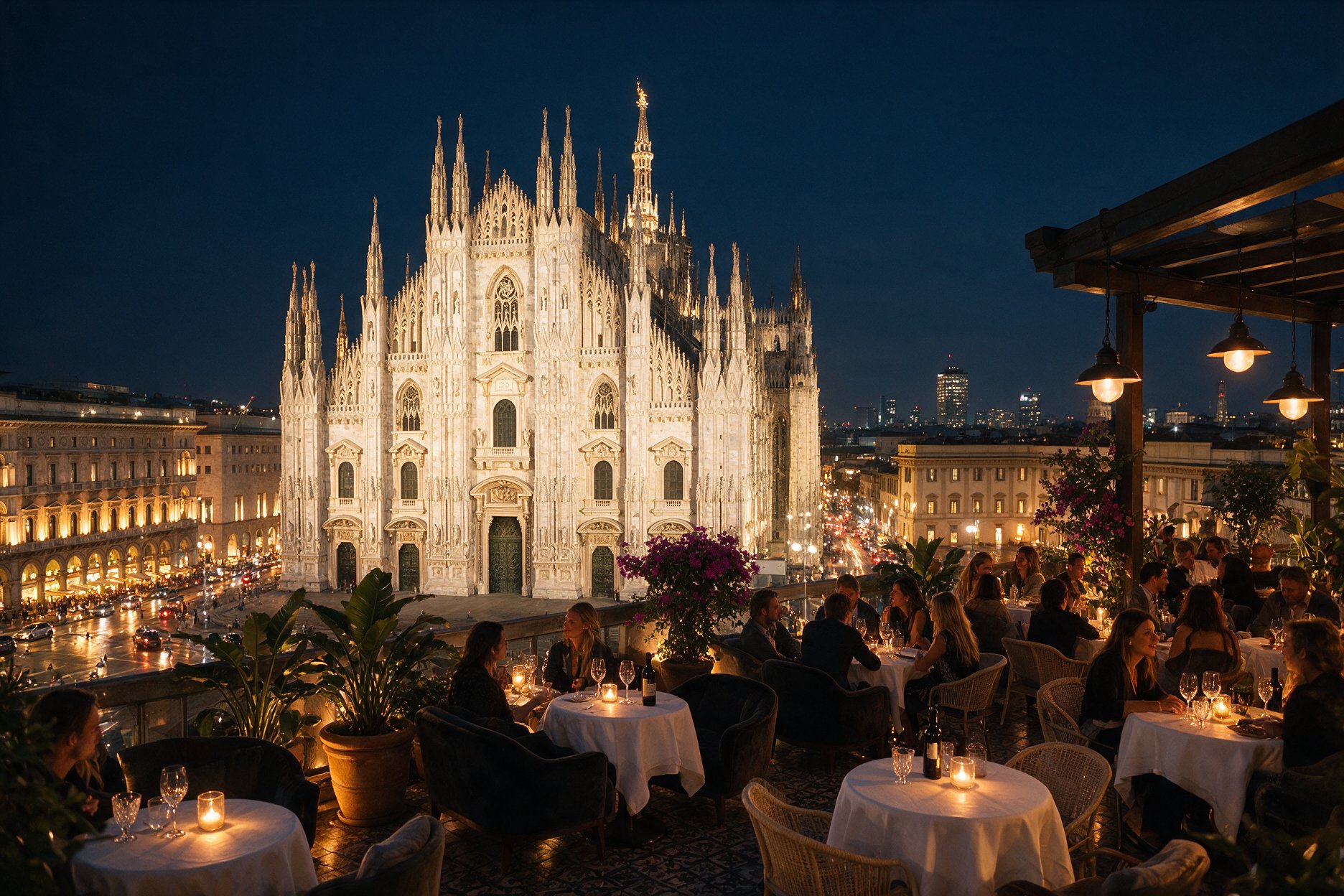
For a different kind of night out entirely, Milan has a handful of rooftop bars with direct views of the Duomo’s illuminated spires — a genuinely striking sight after dark, all white marble and gothic detail lit up against the night sky. These spots trade neighborhood atmosphere for a view, and they’re the ones to pick for a special-occasion evening or if you want a single memorable photo of the city rather than a full night of bar-hopping. Expect to pay a premium for the location, and consider booking a table ahead on weekends.
5. Naviglio della Martesana
If Navigli proper feels too crowded, the Naviglio della Martesana — a quieter canal on Milan’s northeast side, and specifically the corner near Vicolo dei Lavandai — gives you the same canal-side drinking atmosphere with a fraction of the foot traffic. It’s more of a locals’ alternative than a headline destination, which is exactly its appeal if you’ve already done a Navigli evening and want round two without the repeat crowd.
Understanding aperitivo culture
Aperitivo is arguably Milan’s single biggest contribution to how Italians socialize, and it’s worth understanding rather than just ordering a drink and moving on. Roughly 6:30 to 9 p.m., bars across the city serve a cocktail or glass of wine alongside a spread of snacks — sometimes a small plate, sometimes a genuinely substantial buffet you could make a light dinner from — often included in the price of the drink itself. It’s Milan’s answer to happy hour, but built around food and lingering conversation rather than discount pricing alone.
For solo travelers, aperitivo is genuinely one of the easier ways to strike up conversation in Milan — standing at a shared buffet table naturally puts you next to other people doing the same thing. For couples, it’s a lower-key, lower-cost way to spend an evening than a formal dinner, and a good warm-up before choosing where to actually eat later.
Getting to Milan and connecting onward
Milan is served by two main airports, Malpensa and Linate, both connected to the city center by direct train or bus in roughly 45 minutes to an hour. It’s also Italy’s best-connected hub for onward high-speed rail, with frequent trains to Venice, Florence, and Rome in a few hours each, which makes Milan a genuinely sensible first or last stop on a broader Italy itinerary rather than a city that requires a dedicated separate trip.
Practical notes for a night out in Milan
Milan’s metro runs until around midnight on weeknights and slightly later on weekends, which comfortably covers an aperitivo evening but not necessarily a late night out — budget for a taxi or rideshare home if you’re staying out past 1 a.m. Cards are accepted virtually everywhere, including small bars, though it’s still worth carrying some cash for smaller, more traditional spots.
A transit tip worth knowing: a single metro/tram/bus ticket costs a couple of euros and covers 90 minutes with transfers, and day passes are available if you’re moving between neighborhoods multiple times in an evening.
A mistake worth avoiding
Don’t assume Milan’s nightlife means clubbing in the way you might picture from other European capitals. If you arrive expecting a Berlin- or Ibiza-style club scene, you’ll be looking for something Milan isn’t really built around — the city’s real strength is the bar and aperitivo culture described here. There are clubs, mostly in the Navigli and Isola areas, but they’re a smaller and later-night piece of the picture, not the main event.
Where to stay for easy access to the nightlife
Staying near the Navigli district itself is the obvious choice if a canal-side night out is the priority, and it puts you within a short walk of the Martesana alternative too. Brera is the better base for travelers who’d rather have Milan’s more polished, design-district energy right outside their hotel, with the Duomo and its rooftop bars a fifteen-minute walk away. Either neighborhood is well connected by metro to the rest of the city, so the choice comes down more to atmosphere than practicality — Navigli if you want to be in the middle of it, Brera if you’d rather step into it and step back out again.
Who each spot suits
For couples, Brera’s Via Fiori Chiari is the clear pick — quieter, more intimate, and built for actual conversation rather than shouting over a crowd. For solo travelers, Navigli’s communal canal-side tables and Bar Basso’s counter seating both make it easy to strike up conversation, especially early in the evening before the crowds peak. Families with older teens can comfortably do an early aperitivo in Navigli before the later-night crowd arrives, since the 6:30-8 p.m. window is still very much a food-and-conversation scene rather than a party one. For luxury travelers, a Duomo rooftop table booked well ahead is worth the splurge for at least one evening — it’s the single most photogenic vantage point for a night out anywhere in the city.
A fun fact for the visit: Milan’s aperitivo tradition is generally traced back to the late 1800s, when the Campari brand’s founder began serving free snacks alongside drinks at his bar near the Galleria Vittorio Emanuele II, right by the Duomo — a habit that eventually spread into the citywide ritual it is today.
Frequently Asked Questions
Is Milan’s nightlife safe for solo travelers, including women traveling alone?
Generally yes, particularly in the areas covered here — Navigli, Brera, and around the Duomo are all well-trafficked and well-lit into the night. The usual city-travel sense applies: stick to busier streets late at night and keep an eye on your drink, as anywhere.
What’s the dress code for Milan’s bars?
Milan is a fashion capital and it shows, even at casual bars — smart-casual is the safer default over shorts and sneakers, especially in Brera or at a rooftop venue. Navigli is a touch more relaxed than Brera, but “effortlessly put together” is still the general local vibe.
Do I need reservations for these bars?
Not typically for a casual Navigli or Martesana evening, but rooftop bars and Bar Basso on a weekend are worth booking ahead if you have your heart set on a specific evening, since both can fill up.
What should I order at an aperitivo if I don’t drink alcohol?
Most bars offer an analcolico (non-alcoholic) spritz or a simple soda, and you’ll still get access to the same food spread — the social ritual doesn’t actually require alcohol, even though the classic Aperol or Campari spritz is the traditional order.
Is Milan more expensive than Rome or Florence for a night out?
Generally yes, especially in Navigli and Brera during peak hours — Milan’s cosmopolitan, business-and-fashion identity carries through to its pricing. It’s not dramatically more expensive, but budget slightly higher than you would in Rome for a comparable evening.
What night of the week is best for Navigli?
Thursday and Friday evenings tend to hit a sweet spot — lively enough to feel like a proper night out, without the peak crush of a Saturday, when tables become genuinely hard to find without a reservation. Sunday is notably quieter, closer to a relaxed local crowd than a big night out.
Conclusion
Milan’s nightlife rewards understanding the aperitivo ritual more than it rewards chasing a big club scene. Whether it’s a canal-side spritz in Navigli, an elegant cocktail on Via Fiori Chiari, or a Negroni Sbagliato in its oversized-glass birthplace at Bar Basso, the city’s real strength after dark is unhurried, food-forward, and built for actual conversation — which, for most travelers, ends up being more memorable than a loud club would have been anyway.
Plan Your Milan Trip with Get Tripped
Get Tripped’s Italy itineraries can build in a proper Milan evening — or a full Milan stay — alongside the fashion, design, and food experiences the city is genuinely known for. Get in touch about a custom Milan or Italy itinerary, and we’ll match it to the kind of evening you actually want.