Everyone plans Egypt as “Cairo plus a Nile cruise” and then panics at the booking stage because that phrase covers about six wildly different itineraries depending on how you sequence it. Fly to Luxor first or end there? Four-night cruise or a shorter one plus more time in Cairo? After building and rebuilding this route more times than I can count, here’s the one that actually works for a first Egypt trip in 7 nights and 8 days — enough time to see the big three (Giza, Luxor’s temples, Aswan’s Nile) without the rushed, exhausted-by-day-4 feeling that a lot of compressed Egypt itineraries produce.
This isn’t the only way to do it, but it’s the version that respects how far apart these places actually are, how brutal midday heat gets outside Cairo, and how much a Nile cruise genuinely adds versus how much time it eats.
Table of Contents
- The Route at a Glance
- Day 1: Arrival in Cairo
- Day 2: Giza and Saqqara
- Day 3: Islamic and Coptic Cairo, Fly to Luxor
- Day 4: Luxor’s East and West Banks
- Day 5: Sail to Edfu and Kom Ombo
- Day 6: Aswan
- Day 7: Fly Back to Cairo, Optional Alexandria Day Trip
- Day 8: Departure
- Booking Logistics That Actually Matter
- What This Costs
- FAQs
The Route at a Glance
Cairo (3 nights) → fly to Luxor → 4-night Nile cruise Luxor to Aswan → fly back to Cairo for departure, with Alexandria as an optional add if your flight timing allows a full extra day. This is the shape most good Egypt tour packages from India follow for a reason — it minimizes backtracking and lets the cruise do the heavy lifting of moving you between Luxor and Aswan overnight instead of burning daylight hours on a bus or train.
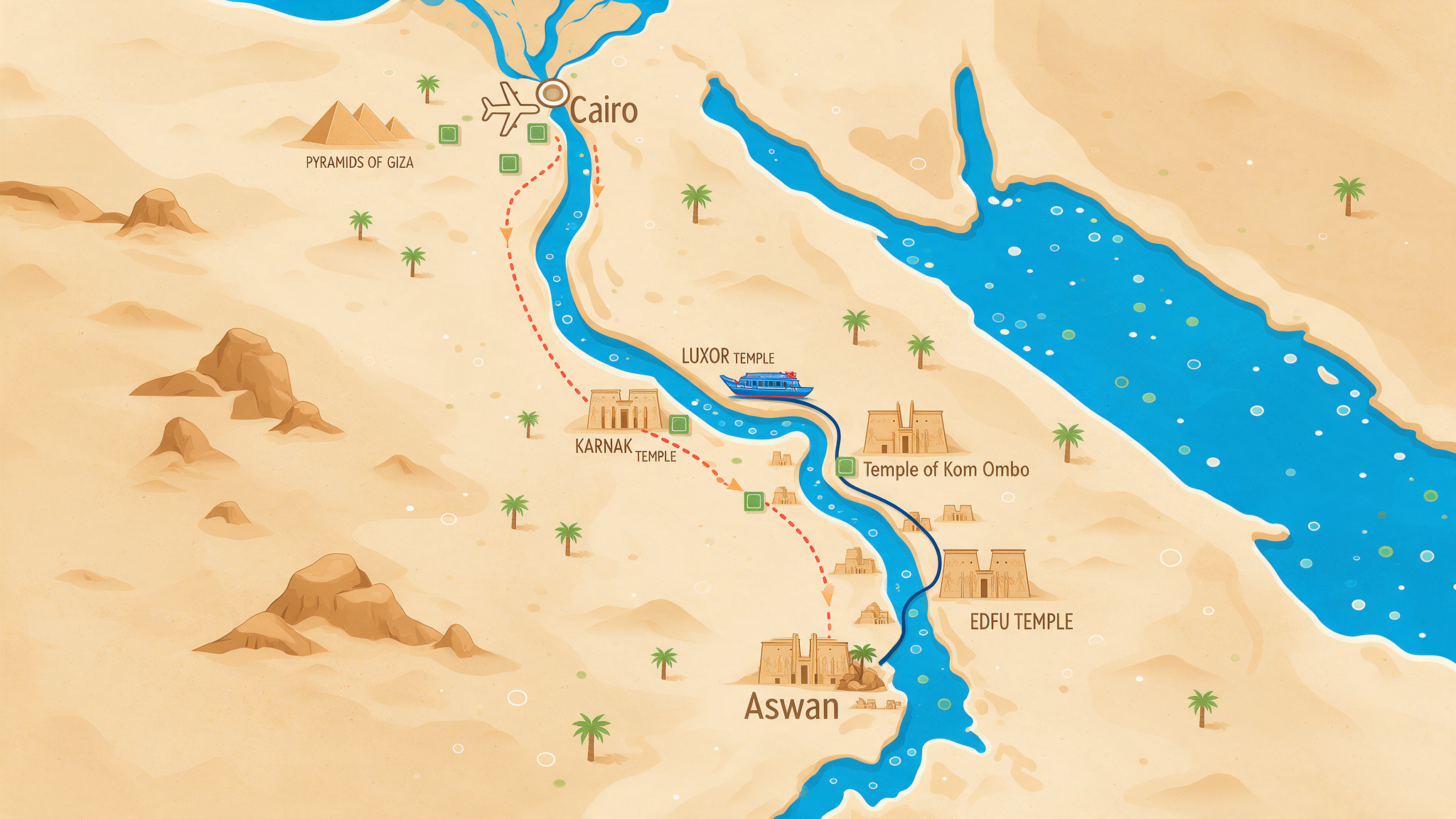
Day 1: Arrival in Cairo
Most flights from India land in Cairo in the evening or overnight, so treat day one as a soft landing. Check into a hotel near Tahrir Square or Zamalek — Zamalek is the quieter, more residential island in the Nile and a good base if you want walkable cafés in the evening rather than traffic noise. If your flight lands early enough, a slow first evening walking along the Corniche as the city cools down is a better use of jet-lagged energy than trying to cram in a museum visit you won’t absorb properly.
Day 2: Giza and Saqqara
Start early — genuinely early, as in leaving your hotel by 7:30am — because the Giza plateau gets both hot and crowded by mid-morning, and the light for photos is dramatically better in the first two hours after opening. Spend the morning at the Pyramids of Khufu, Khafre and Menkaure and the Sphinx, then head to Saqqara in the early afternoon to see the Step Pyramid of Djoser, which is older than Giza’s pyramids and draws a fraction of the crowd. Most people skip Saqqara entirely on a first trip, which is a mistake — it’s one of the best hidden-gem stops in the entire itinerary precisely because it isn’t mobbed.
Mistake to avoid: don’t schedule the Egyptian Museum (or the new Grand Egyptian Museum near Giza) for the same afternoon as the pyramids. You’ll be too heat-exhausted to actually take in the exhibits properly. Give the museum its own half-day, ideally on day 3 morning before your flight.
Day 3: Islamic and Coptic Cairo, Fly to Luxor
Spend the morning in Islamic Cairo around Khan el-Khalili bazaar and the Al-Azhar Mosque, or in Coptic Cairo visiting the Hanging Church and the Ben Ezra Synagogue if you’re interested in the layered religious history that doesn’t make it into most “top things to do in Cairo” lists. Take an early evening flight to Luxor — the flight is roughly 90 minutes and there are multiple daily departures, so this isn’t a logistics headache, just budget airport transfer time given Cairo traffic.
Day 4: Luxor’s East and West Banks
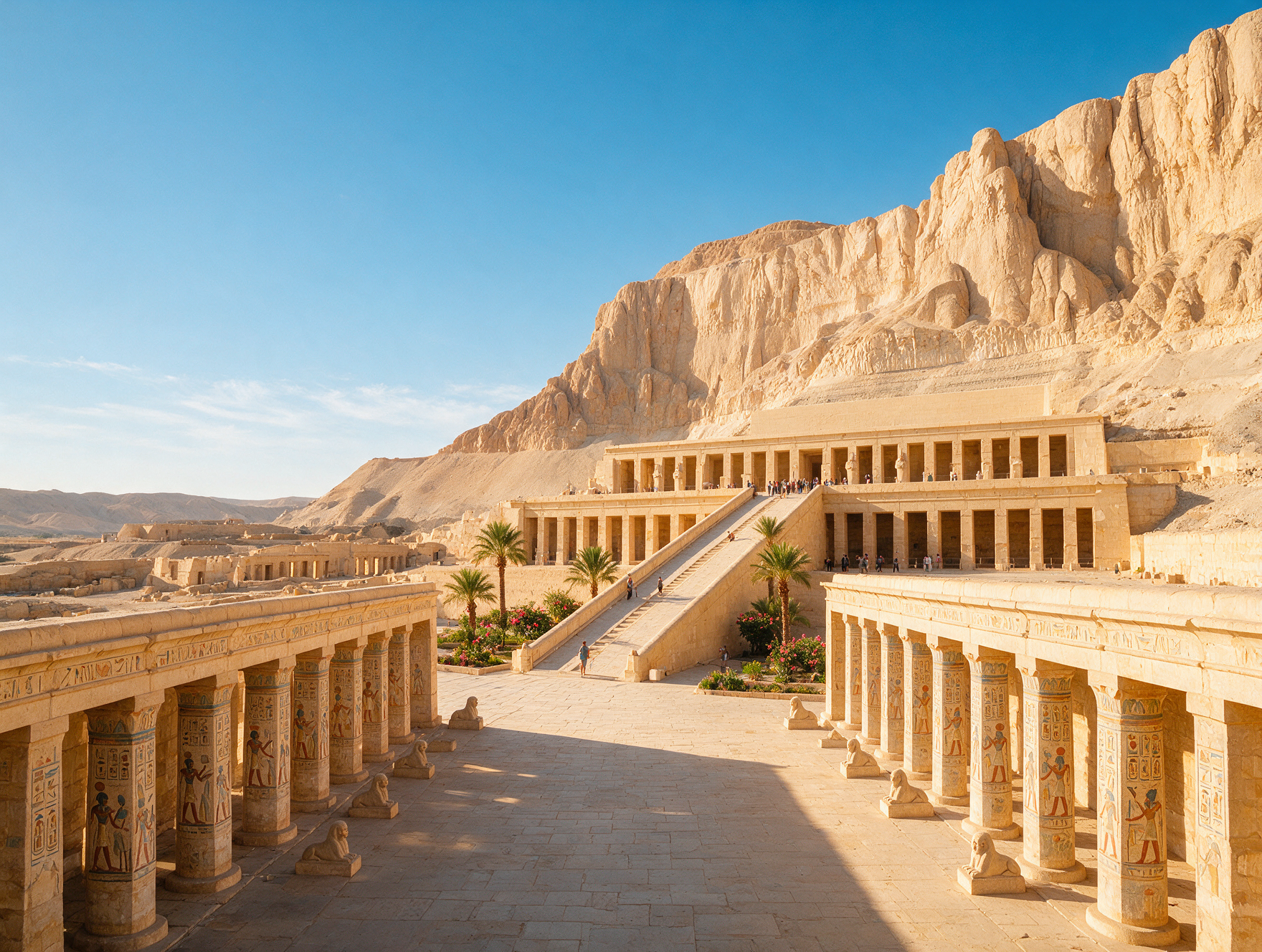
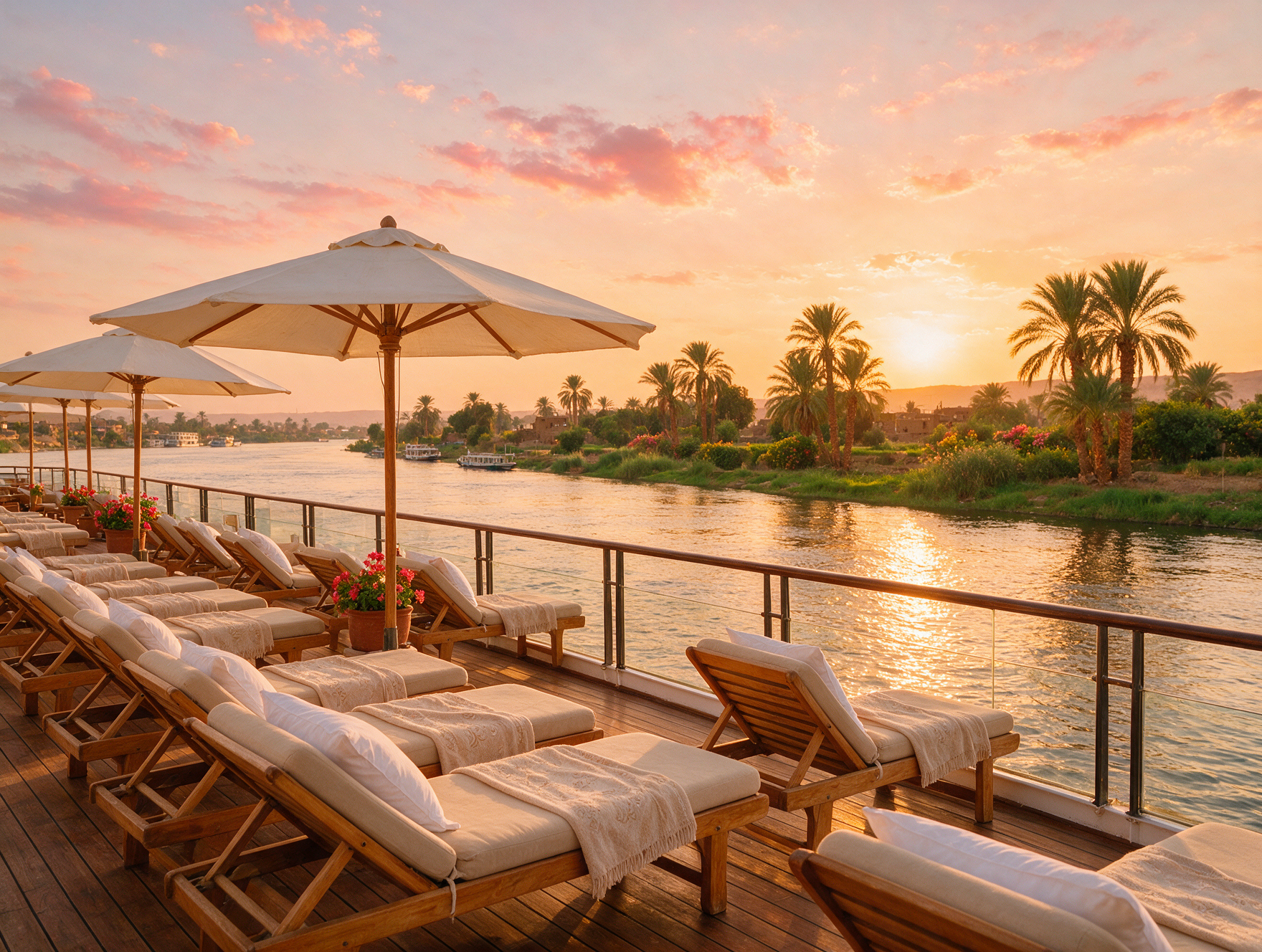
This is genuinely one of the best single days in Egypt. Morning: cross to the West Bank for the Valley of the Kings, where you can go inside several pharaohs’ tombs, then the Temple of Hatshepsut carved into the cliffside, and the Colossi of Memnon. Afternoon, once the heat breaks slightly: Karnak Temple on the East Bank, which is enormous enough that rushing it defeats the point — budget at least two hours. If you board your Nile cruise ship today, this is also when you’ll have your first sail-away sunset from the deck, which is worth having a drink in hand for.
Day 5: Sail to Edfu and Kom Ombo
The cruise ship sails overnight or through the morning, and you’ll wake up moored near Edfu for a visit to the Temple of Horus, one of the best-preserved temples in Egypt precisely because it was buried in sand for centuries and protected from weathering. In the afternoon, the ship continues to Kom Ombo, an unusual double temple dedicated to two gods, Sobek and Horus, best visited around sunset when the light hits the columns. This day requires almost no independent planning — it’s built into any standard cruise itinerary — which makes it a good lower-effort day to have mid-trip.
Day 6: Aswan
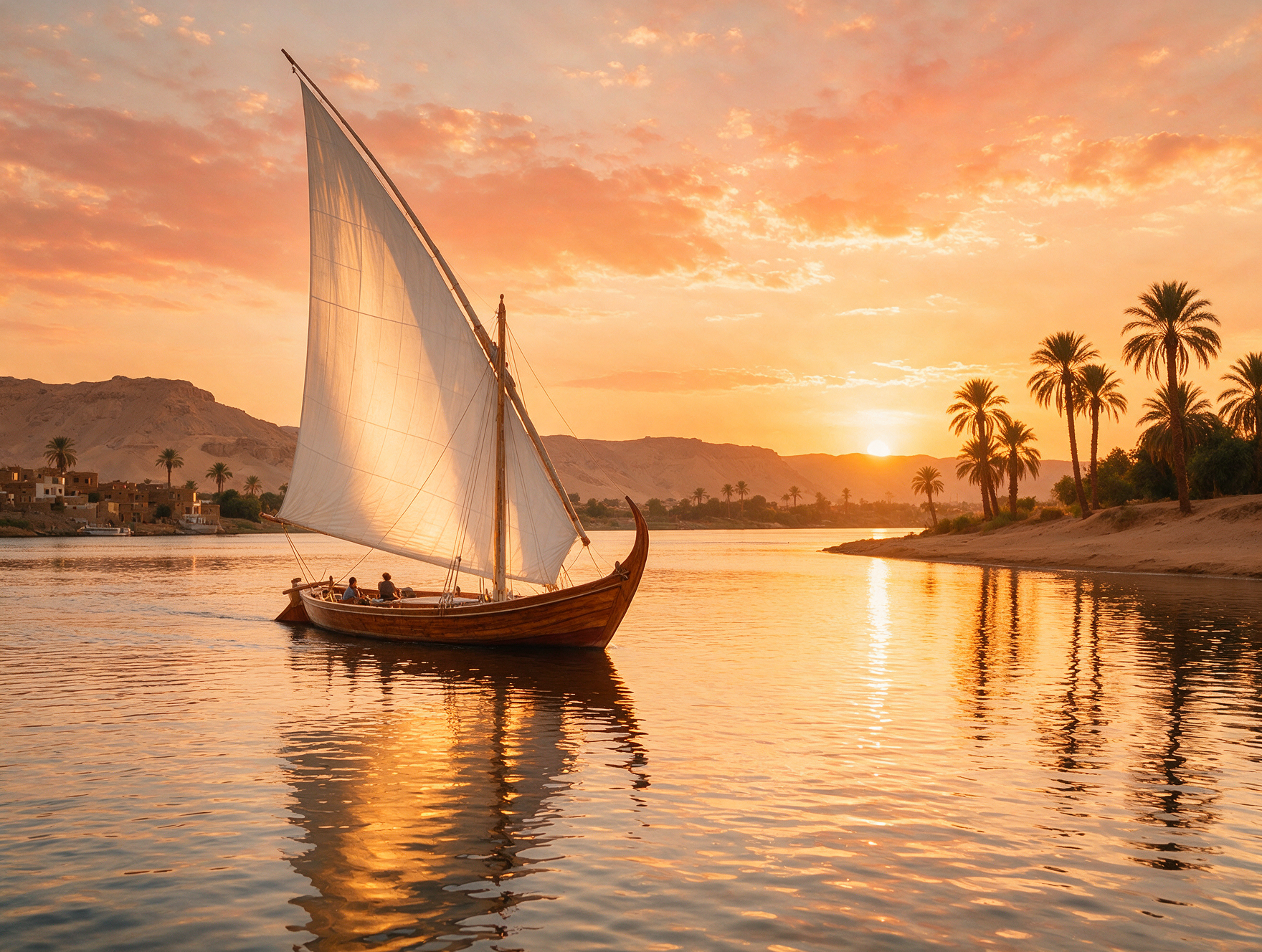
Aswan is the calmest of the three main stops, and deliberately so — this is where you slow down. Visit the Philae Temple, relocated to Agilkia Island when the Aswan Dam was built, reachable only by a short boat ride that’s part of the experience. In the afternoon, take a felucca (traditional wooden sailboat) ride around Elephantine Island and the Nubian villages — this is the single most photographed hour of most people’s Egypt trip, and for good reason, since the light and the pace both slow right down. If you have the stamina, a sunrise add-on to Abu Simbel (a roughly 3-hour drive each way, or a short flight) is worth considering, though it does mean a genuinely early start on top of an already full itinerary — we’d only build this in if Ramses II’s temples are a must-see for you specifically, since it adds a demanding half-day.
Day 7: Fly Back to Cairo, Optional Alexandria Day Trip
Disembark the cruise in the morning and fly back to Cairo. If your flight home isn’t until day 8, this is where a lot of itineraries waste a half-day on nothing in particular. Better use of it: either a relaxed Cairo souvenir-shopping afternoon in Khan el-Khalili, or, if you’re an early riser, a genuinely long day trip to Alexandria (about 3 hours each way by car, or roughly 2.5 hours by train from Ramses Station) to see the Mediterranean coastline, the Bibliotheca Alexandrina, and the Qaitbay Citadel. Only do the Alexandria add-on if you’re comfortable with a long travel day — it’s not a relaxing afternoon out, it’s a full day.
Day 8: Departure
Keep this day light. International flights from Cairo often depart at odd hours, so build in a proper buffer for airport transfer and immigration rather than scheduling anything ambitious this morning.
Booking Logistics That Actually Matter
A few things that make or break this itinerary in practice:
- Book the Luxor-Aswan flight leg, not the reverse. Sailing downstream (south to north, Aswan back toward Luxor/Cairo) is the more common direction for river current reasons on some cruise lines, but flying into Luxor and starting the cruise there, then flying out of Aswan or back from Cairo after, tends to line up better with international flight schedules from India.
- 4-night cruises beat 3-night ones for this specific route — the extra night gives you an unhurried Aswan stop instead of a rushed one.
- Domestic flights fill up in peak season (November through February) — book these before you finalize hotel dates, not after.
What This Costs
For an Egypt trip cost from India on this exact 7-night route, mid-range travelers should budget roughly ₹1.3-1.8 lakh per person including international flights, domestic flights, a 4-night Nile cruise in a standard cabin, mid-range hotels in Cairo, guided entries to the major sites, and meals. Push into a luxury cruise cabin, five-star Cairo stays and private guiding throughout, and that climbs to ₹2.5 lakh-plus per person. Either way, this is not a destination where cutting corners on the guide is a good place to save — unguided visits to sites like Karnak or the Valley of the Kings mean you’re looking at extraordinary carvings with zero context, which is most of the value of being there in the first place.
If juggling flight timings, cruise cabin categories and entry tickets across three cities sounds like more coordination than you want to manage, this is exactly what a custom Egypt itinerary through a travel agency handles — and it’s worth asking specifically whether Nile cruise pricing is all-inclusive of shore excursions, since some quotes exclude them and the difference is significant.
Where to Stay Along the Route
In Cairo, Zamalek and Garden City give you walkable evening options and a bit of distance from Tahrir Square’s traffic, while a Nile-view room in Giza itself (several mid-range and luxury properties look directly at the pyramids from the rooftop pool) is worth the splurge for at least one night purely for the view at sunset. In Luxor, if you’re not doing the cruise the whole way, East Bank hotels near the Corniche put you closest to Karnak and the ferry crossing to the West Bank sites. In Aswan, a handful of properties sit right on the Nile with felucca access from their own jetty, which is a nicer way to end the day than getting a taxi down to the public dock.
On the cruise itself, cabin category matters more than boat brand — a standard cabin with a Nile-facing window is genuinely fine for 4 nights, and the money is better spent upgrading shore excursion guiding quality than upgrading the cabin to a suite you’ll barely be in during daylight hours.
FAQs
Is 7 nights enough for Egypt?
Yes, for the core route of Cairo, Luxor and Aswan — this is actually the most common length for a well-paced first trip. You’d want longer only if you’re adding Alexandria properly, the Red Sea coast (Hurghada or Sharm El Sheikh), or Abu Simbel as more than a rushed add-on.
Should I do the Nile cruise from Luxor to Aswan or Aswan to Luxor?
Both directions run regularly and see the same sites. Luxor to Aswan tends to align better with international flight connections through Cairo for travelers arriving from India.
How many days should I spend in Cairo before the cruise?
Three days covers Giza, Saqqara, the Egyptian Museum or Grand Egyptian Museum, and Islamic/Coptic Cairo without feeling rushed. Two days is workable if you’re tight on time but skip Saqqara.
Is a 4-night or 3-night Nile cruise better?
4 nights, if your schedule allows it — it adds a more relaxed Aswan stop and one extra temple stop (usually Edfu or Kom Ombo gets more time) without meaningfully extending your total trip length.
Can I add Alexandria to a 7-night Egypt itinerary?
Only comfortably as a long day trip on day 7 if your departure isn’t until day 8, or by extending the trip by a full extra day — it’s roughly 3 hours from Cairo each way and deserves more than a rushed half-day.
What’s the best time of year for this itinerary?
October through April, when Luxor and Aswan daytime temperatures are manageable. Avoid May through September in Upper Egypt specifically — temperatures regularly exceed 40-45°C.
Ready to Book This Route?
This itinerary works because it respects the geography instead of fighting it — Cairo for the ancient-meets-modern chaos, the Nile cruise for the temples that are genuinely better seen by boat than by bus. Get in touch with Get Tripped for a custom Egypt itinerary built around this route, with cruise cabin and hotel options across mid-range to luxury.