Aswan moves at a different speed than the rest of Egypt. There’s no equivalent of Cairo’s honking traffic or Luxor’s temple-ticket queues here — just the Nile, noticeably clearer and bluer this far south, granite boulders breaking the water’s surface, and feluccas drifting past with their triangular sails barely catching the breeze. If Cairo is where you understand Egypt’s scale and Luxor is where you understand its history, Aswan is where you finally slow down enough to actually enjoy the trip.
This is what one full, well-paced day in Aswan actually looks like — not a rushed checklist, but a real hour-by-hour plan that a Get Tripped guest could follow start to finish, with the honest trade-offs at each stop.
In This Guide
- A full hour-by-hour day plan
- What each stop costs and how long it actually takes
- Where to eat along the way
- What to skip if you’re short on time
- FAQs
7:00–8:30am — Philae Temple, Before the Heat and the Crowds
Start early. Philae sits on its own island, Agilkia, and reaching it means a short motorboat ride (about 10 minutes) from the mainland marina, so there’s a natural cap on how many people can be there at once — but that cap fills up fast once the big tour groups arrive around 9:30–10am. Entrance runs roughly 550 EGP per adult. The temple itself, dedicated to Isis and relocated stone by stone in the 1960s and 70s as part of the UNESCO-backed rescue of the Nubian Monuments from Abu Simbel to Philae to save it from the rising waters of Lake Nasser after the High Dam was built, is one of the best-preserved temple complexes in all of Egypt — the hieroglyphs and reliefs here have a crispness that Karnak, thousands of years older and far more weathered, simply can’t match.
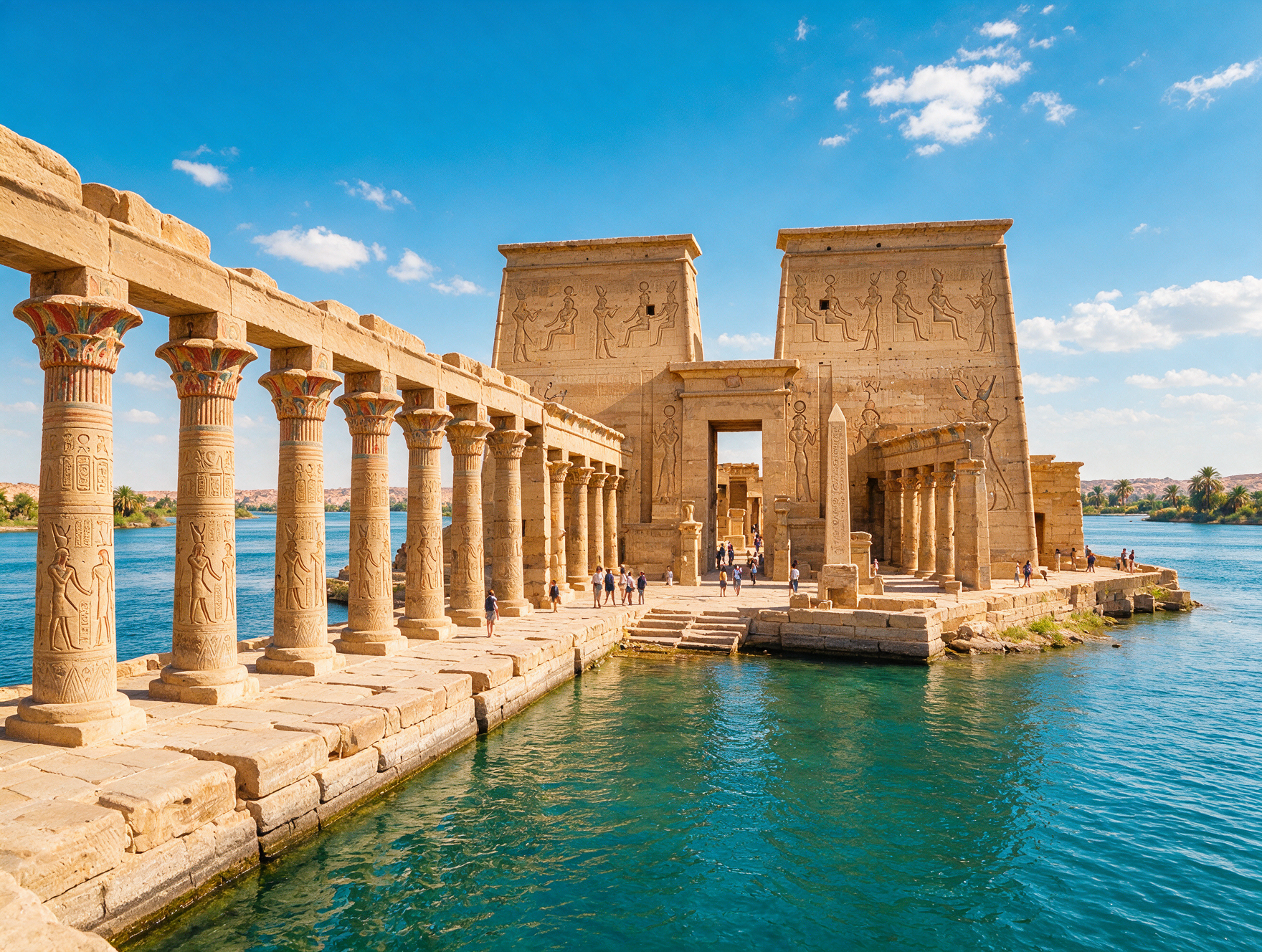
A genuinely worthwhile add-on: ask about the Pylon Panorama ticket (roughly 200 EGP extra) when you buy your main entrance ticket on the mainland. It lets you climb the temple’s main pylon for a sweeping view over the whole complex and the Nile beyond, and because most visitors don’t know it exists, you’ll likely have the top mostly to yourself.
8:45–10:00am — Back to the Mainland, On to the Unfinished Obelisk
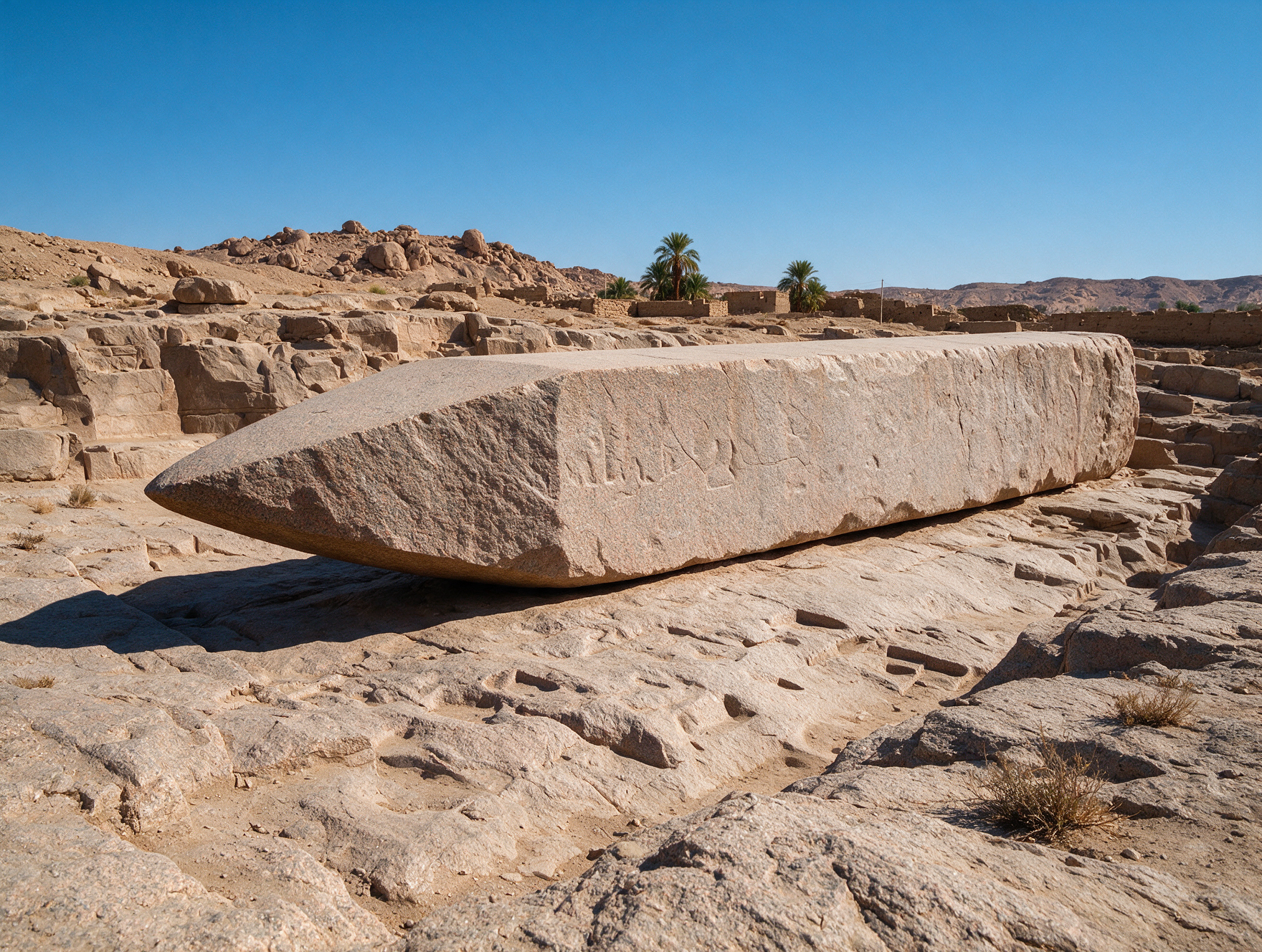
A short drive from the Philae marina takes you to the ancient granite quarry where an enormous obelisk — it would have been the largest ever raised in Egypt, over 40 meters tall — sits exactly where it cracked during carving roughly 3,500 years ago and was abandoned. Entry is about 220 EGP. It sounds like a minor stop on paper, but standing next to a piece of stone that size, still attached to the bedrock, with the tool marks of the original workers still visible in the rock around it, makes the scale of ancient Egyptian engineering land in a way that a finished, standing obelisk somewhere else in the world never quite does.
10:15–11:30am — Breathing Room
Resist the urge to over-schedule this stretch. Head back toward the Corniche — Aswan’s riverside promenade — and just walk it for half an hour. The pace here is genuinely different from Cairo or Luxor: fewer touts, more locals going about an ordinary morning, tea stalls rather than tour buses. This is also a good window to pick up any souvenirs from the spice and textile stalls that line the souk just off the Corniche, before the midday heat sets in and before the felucca captains start actively soliciting on the water’s edge.
11:45am–1:00pm — Lunch With a View
Two solid options, depending on your mood. The Old Cataract Hotel’s terrace restaurant — the same hotel Agatha Christie stayed in while writing part of Death on the Nile — delivers a genuinely grand colonial-era view over the river and Elephantine Island, though it comes at a price that matches the setting. For something more relaxed and local, take a motorboat over to Elephantine Island itself and eat at Al Dokka, where the Nubian-influenced menu and unhurried riverside seating make for a quieter, less staged version of the same view.
Honest opinion: the Old Cataract is worth doing once for the history and the room itself, but Al Dokka is the better actual meal for the price, and it puts you exactly where you want to be for the afternoon’s felucca sailing.
1:30–3:00pm — Felucca Sailing Around Elephantine Island
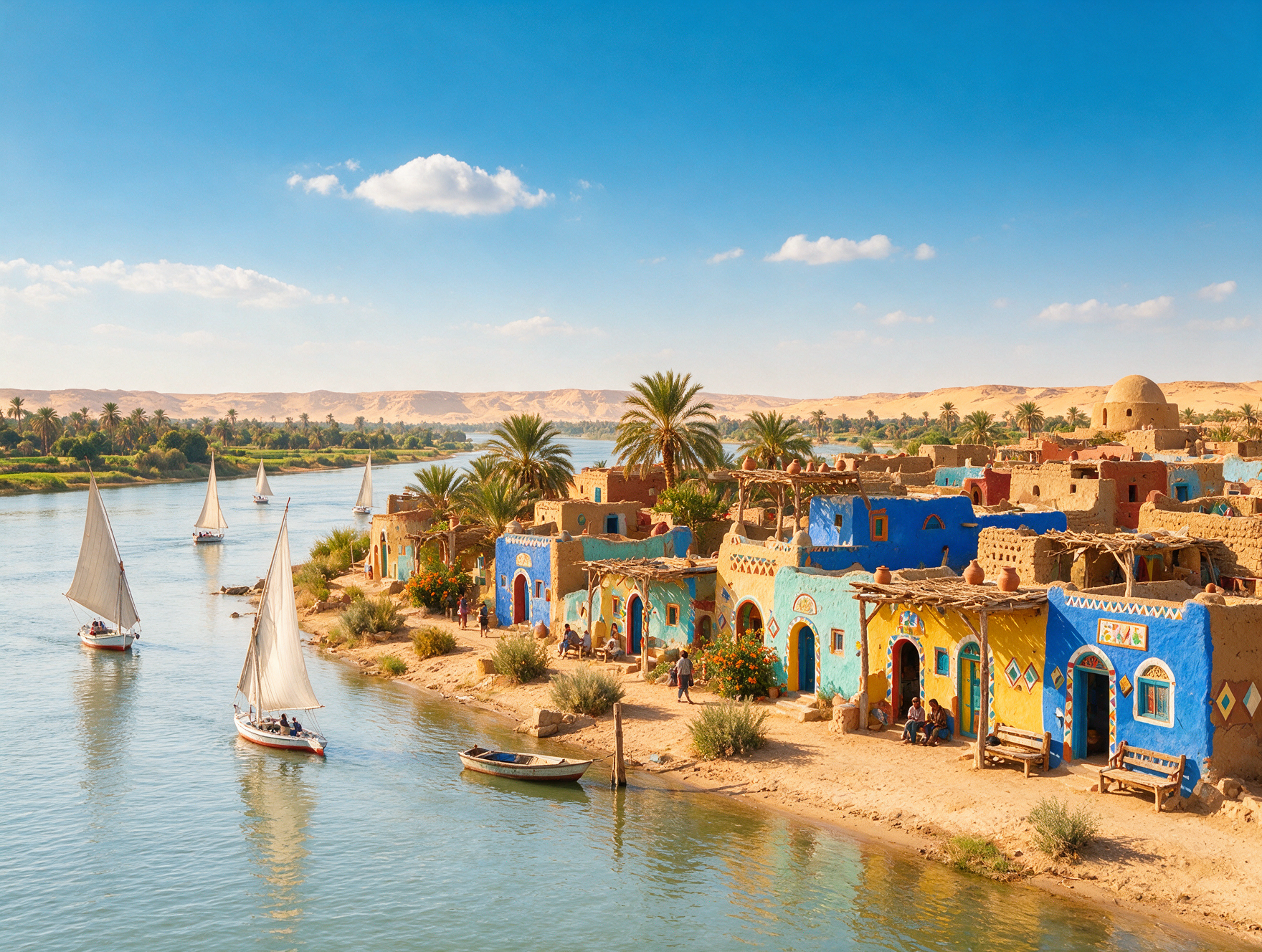
This is the Aswan experience most people picture before they arrive — a traditional wooden sailboat, no engine, drifting with the wind around the islands while the captain works the rigging. Expect to pay somewhere around $70 for a one-hour private ride, though this is genuinely negotiable, especially if you’re not going through a hotel desk. There’s very little to “do” here beyond sit, watch the riverbanks change from granite boulders to Nubian houses painted in bright blues and yellows, and let an hour pass slower than an hour usually does. It’s the single best value-for-relaxation activity in the entire Egypt itinerary.
A mistake to avoid: booking a felucca ride during the hottest stretch of midday sun without shade. Early afternoon works, but if you have flexibility, the golden hour before sunset (see below) is genuinely the better time to sail, so consider swapping this slot with the Nubian village visit if your schedule allows.
3:15–4:30pm — A Nubian Village
A short motorboat transfer takes you to one of the Nubian villages on the west bank or on Heisa Island, where houses are painted in the region’s distinctive bright colors and doorways are often left open in welcome. Nubian culture here predates the pharaonic dynasties most tourists come to Egypt for, and it survived the massive displacement caused by the High Dam’s construction and the flooding of Lake Nasser in the 1960s, when tens of thousands of Nubians were relocated from their ancestral land. A village visit usually includes tea with a local family, a look at handicrafts for sale, and sometimes a chance to hold or photograph one of the small crocodiles some households keep as a traditional good-luck charm (a Nubian custom, not a roadside gimmick).
Honest caveat: some village visits can feel a little staged if you’re on a large group tour moving through on a tight schedule. It’s a noticeably better experience with a smaller group or private guide who can actually facilitate a real conversation rather than a five-minute photo stop.
4:45–6:15pm — Aswan High Dam
About a 30-minute drive south of the city. The dam itself is, honestly, not much to look at — a wide, flat concrete structure that doesn’t photograph particularly well. What makes the stop worthwhile is the context: this 1960s engineering project reshaped Egypt’s entire relationship with the Nile’s annual flood, created Lake Nasser (one of the largest artificial lakes in the world), and directly caused the international rescue effort that relocated Philae and Abu Simbel to save them from submersion. If you’ve got extra time and energy, the nearby New Kalabsha temple complex — itself relocated for the same reason — is worth a quick stop and gets a fraction of Philae’s visitor numbers.
6:30pm Onward — Sunset and Dinner
Head back toward the Corniche for sunset over the Nile — Aswan’s river, dotted with granite islands and feluccas silhouetted against the orange sky, is arguably a better sunset setting than anywhere else in Egypt. Dinner options range from hotel restaurants to simple riverside spots serving grilled fish and Nubian-style stews; whichever you choose, ask for a table facing the water.
What to Skip If You’re Short on Time
If you only have half a day rather than a full one, prioritize Philae Temple and the felucca sail — those two capture Aswan’s essential character (ancient monument, unhurried Nile time) better than anything else on this list. The Unfinished Obelisk and the High Dam are genuinely interesting but skippable on a tight schedule; the Nubian village visit is worth keeping if you can, since it’s the one stop that connects you to a living culture rather than an ancient one.
Photography Tip
Save your camera battery for two windows: the Pylon Panorama at Philae in the soft early-morning light, and the last half hour before sunset back on the Corniche, when the granite boulders in the river turn deep orange and the feluccas moving past make for a far more interesting silhouette than a static shot of the water alone. Midday light on the Nile here is flat and a little washed out by comparison — if you’re choosing where to prioritize photos across the day, skip the noon hours and lean into the two golden-light windows instead.
A Fun Fact Worth Knowing Before You Go
Aswan sits almost exactly on the Tropic of Cancer, which is part of why its light and climate feel noticeably different from Cairo just a few hundred kilometers north — drier, sharper, and with a sun that sits nearly directly overhead around the summer solstice. Ancient Egyptian astronomers reportedly used this fact to calculate the Earth’s circumference with startling accuracy over two thousand years ago, using little more than the angle of shadows here versus in Alexandria. It’s the kind of detail that makes the Unfinished Obelisk stop land differently once you realize the ancient world in this exact spot wasn’t just building monuments — it was doing real science.
Daily Budget
Expect roughly 1,500–2,000 EGP per person for the day’s tickets and boat transfers described above, before meals and any souvenir shopping. That’s modest by international standards and reflects Egypt’s overall position as one of the better value Egypt trip cost from India destinations relative to what you actually see and do. For a full breakdown across the rest of the country, see Get Tripped’s 7 nights, 8 days Egypt itinerary.
Who This Day Suits
This pacing works well for couples and honeymooners — the felucca sail in particular is one of the more romantic hours you’ll spend anywhere in Egypt — and for families, since there’s more open-air movement and less standing-in-queues time than a typical Cairo or Luxor day. Solo travelers will find the Nubian village stop especially rewarding, since it’s an easy, low-pressure way to have a genuine conversation with locals. Luxury travelers should book the Old Cataract for lunch and arrange a private felucca and guide rather than a shared group boat.
FAQs
How many days should I actually spend in Aswan?
One full day, as laid out here, covers Aswan’s core experiences well. Two days lets you add a day trip to Abu Simbel (a roughly 3-hour drive or a short flight each way), which is worth it if you have the time but isn’t essential to feeling like you’ve properly experienced Aswan.
Is Aswan worth visiting if I’ve already seen Luxor?
Yes — the two complement rather than repeat each other. Luxor is temple-and-tomb dense and history-forward; Aswan is slower, more scenic, and centered on the river and Nubian culture rather than back-to-back monuments.
Do I need a guide for this day, or can I do it independently?
A guide or driver makes the logistics (boat transfers, ticket queues, negotiating felucca fares) considerably smoother, and it’s how Get Tripped structures this day for guests. It’s possible independently if you’re comfortable negotiating in a mix of English and basic Arabic, but the time saved with a guide is significant given how many separate boat and vehicle transfers this day involves.
What should I wear for the Nubian village visit?
Modest, breathable clothing — shoulders covered is a respectful choice, and you’ll be sitting on the ground or on low seating for tea, so comfortable, loose clothing works better than anything restrictive.
Is the felucca ride safe?
Yes, and it’s genuinely one of the calmest activities on any Egypt itinerary — feluccas move slowly and captains who work this stretch of the Nile professionally do this dozens of times a week. Wear a hat and sunscreen; there’s little shade on board.
Booking This Into Your Egypt Itinerary
Aswan is almost always the southernmost stop on a Nile-focused Egypt trip, reached either by an overnight train from Cairo, a short domestic flight, or as part of a multi-day Nile cruise that continues north to Luxor. Get Tripped builds this exact day — Philae, felucca, Nubian village, and the High Dam — into most of our Egypt itineraries as a deliberate change of pace after Cairo’s intensity, and we’re happy to extend it into a two-day stop with Abu Simbel if your schedule allows.