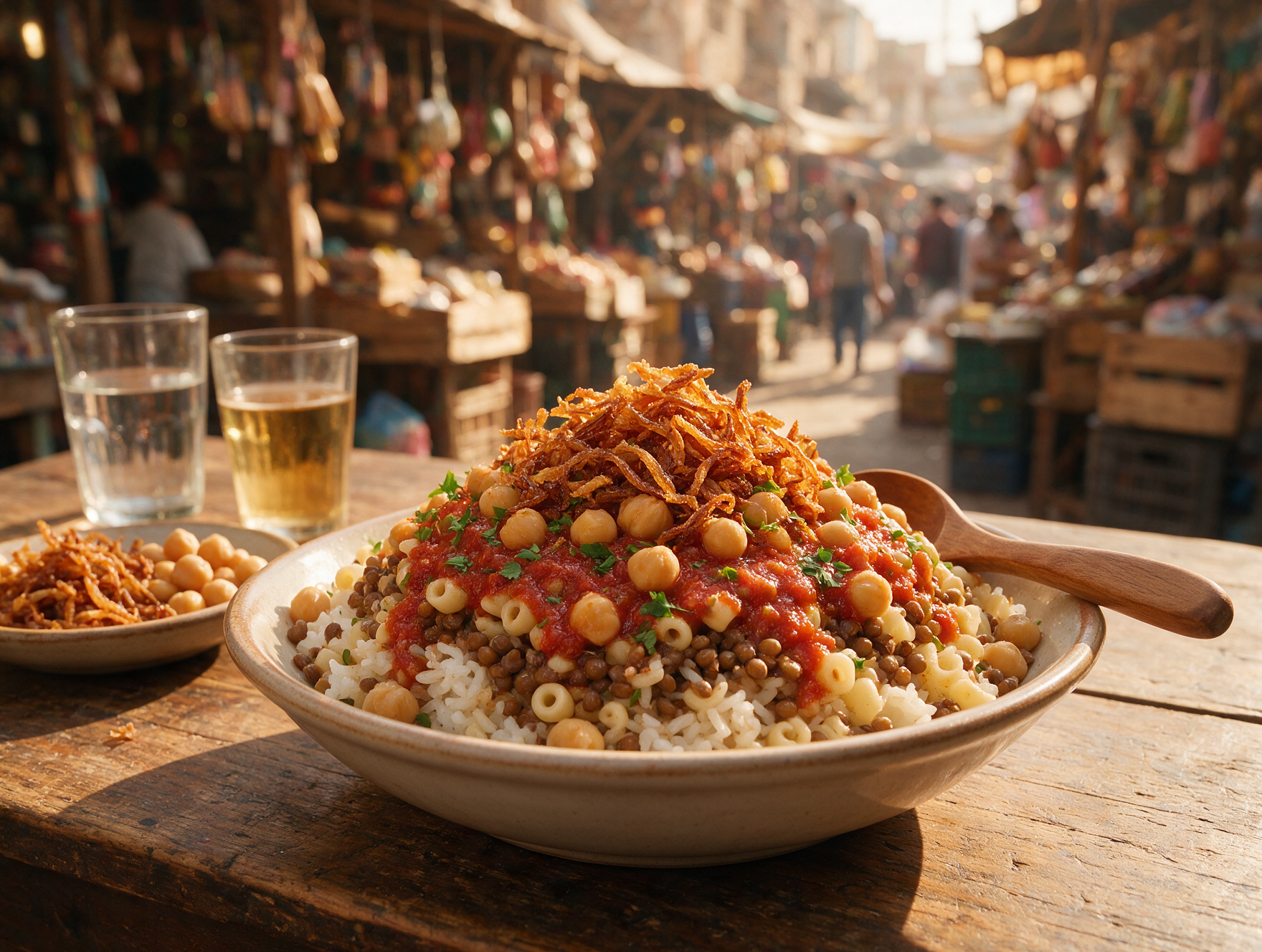
The best meal I had on my last Egypt trip wasn’t at any restaurant with a view of a temple. It was a plate of koshary — rice, lentils, macaroni, chickpeas, crispy fried onions and a tangy tomato-vinegar sauce all piled together — eaten standing at a counter in Cairo that’s been serving the same dish since before most of the people in line were born. Egyptian food doesn’t get talked about the way, say, Vietnamese or Thai food does among Indian travelers, and that’s honestly a gap, because there’s a whole layered food culture here that most itineraries skip in favor of temple-hopping.
This is a city-by-city food trail across the destinations most Egypt itineraries actually hit — Cairo, Giza, Alexandria, Luxor (including the Valley of the Kings side), and Aswan — built around what to actually order, not just where to sit down.
Table of Contents
- The Egyptian Food Basics Worth Knowing First
- Cairo: Koshary, Street Carts, and Late-Night Eats
- Giza: Pyramid-View Dining Without the Tourist Trap Feel
- Alexandria: Seafood and Mediterranean Influence
- Luxor and the West Bank: Nile-Side Grills and Nubian Flavors
- Aswan: Nubian Cuisine and Riverside Cafés
- What to Drink
- Food Etiquette Notes
- FAQs
The Egyptian Food Basics Worth Knowing First
A few dishes show up on almost every menu across the country, so it’s worth knowing them before you land: koshary (the rice-lentil-pasta combo mentioned above, Egypt’s unofficial national dish and genuinely vegetarian by default), ful medames (slow-cooked fava beans, usually breakfast, mashed with olive oil, lemon and cumin), ta’ameya (Egyptian falafel, made with fava beans instead of chickpeas, which gives it a greener color and a different texture from the Levantine version most Indians have had before), and molokhia (a garlicky, slightly slippery green soup made from jute leaves, usually served over rice with chicken or rabbit, though it’s easy to ask for a vegetable version).
A fun fact worth knowing: koshary as a dish is thought to have Indian and Italian influence baked into its DNA — the lentil-and-rice base likely traces back to Indian khichdi brought by traders and workers in the 19th century, which makes it a strangely fitting first meal for an Indian traveler in Cairo.
Cairo: Koshary, Street Carts, and Late-Night Eats
Start with koshary at one of the long-running local chains — Abou Tarek near Tahrir Square is the most famous, multiple floors, always busy, and worth the wait once for the experience even if the crowd makes it feel more like a tourist checkpoint than a hidden gem these days. For a quieter version of the same dish, the Zööba chain (several branches, including Zamalek) does a cleaner, slightly upscale take on Egyptian street food — koshary, ta’ameya sandwiches, and a good introduction if you want street-food flavors without actually eating off a cart your first night in the country.
For genuinely late-night eating — and Cairo does eat late, with dinner reservations at 9 or 10pm being completely normal — head toward Downtown Cairo or Mohandiseen, where grilled meat spots stay busy well past midnight. If you want a coffee-run stop, Cairo’s café culture runs on ahwas (traditional coffee houses) serving Turkish-style coffee and shisha, mostly a male-dominated social space traditionally but increasingly mixed in central neighborhoods — worth a sit-down for the people-watching alone, even if you don’t smoke shisha.
Honest caveat: a lot of the restaurants immediately around Khan el-Khalili bazaar are priced for tour groups and taste like it. Walk two streets back from the main bazaar lanes for better food at more honest prices.
Giza: Pyramid-View Dining Without the Tourist Trap Feel
Giza’s food scene lives mostly in the shadow — literally — of the pyramids, and a lot of it is exactly what you’d expect from a heavily touristed strip: overpriced, mediocre, banking on the view alone. The trick here is to treat the view and the food as two separate decisions. Have a proper sit-down meal with a rooftop or terrace pyramid view for the experience once (worth doing for the sunset alone), but do your actual best eating in the older part of Giza town near the Grand Egyptian Museum, where local grill houses serve kofta, grilled chicken and fresh bread away from the tour-bus circuit at a fraction of the price.
Mistake to avoid: don’t judge Giza’s food by whatever’s closest to the ticket entrance — that strip is built for one-time tourist traffic, not for people who actually live there, and it shows in both quality and pricing.
Alexandria: Seafood and Mediterranean Influence
Alexandria eats differently from the rest of Egypt, and it’s obvious the moment you sit down — this is a Mediterranean port city, and the food leans into fresh grilled and fried fish, calamari, and shrimp rather than the meat-and-grain-forward food you’ll find in Cairo or Upper Egypt. Fish markets along the Corniche let you pick your own catch and have it grilled to order at an attached restaurant, which is as fresh as seafood gets and a genuinely different experience from anywhere else on this trail.
For a local specialty, look for sardines prepared Alexandria-style (usually fried whole and simply seasoned) and koshary Alexandria-style, which some argue has a slightly different sauce balance from the Cairo version — a small rivalry Alexandrians will happily explain to you unprompted if you ask which city does it better.
Luxor and the West Bank (Valley of the Kings): Nile-Side Grills and Nubian Flavors
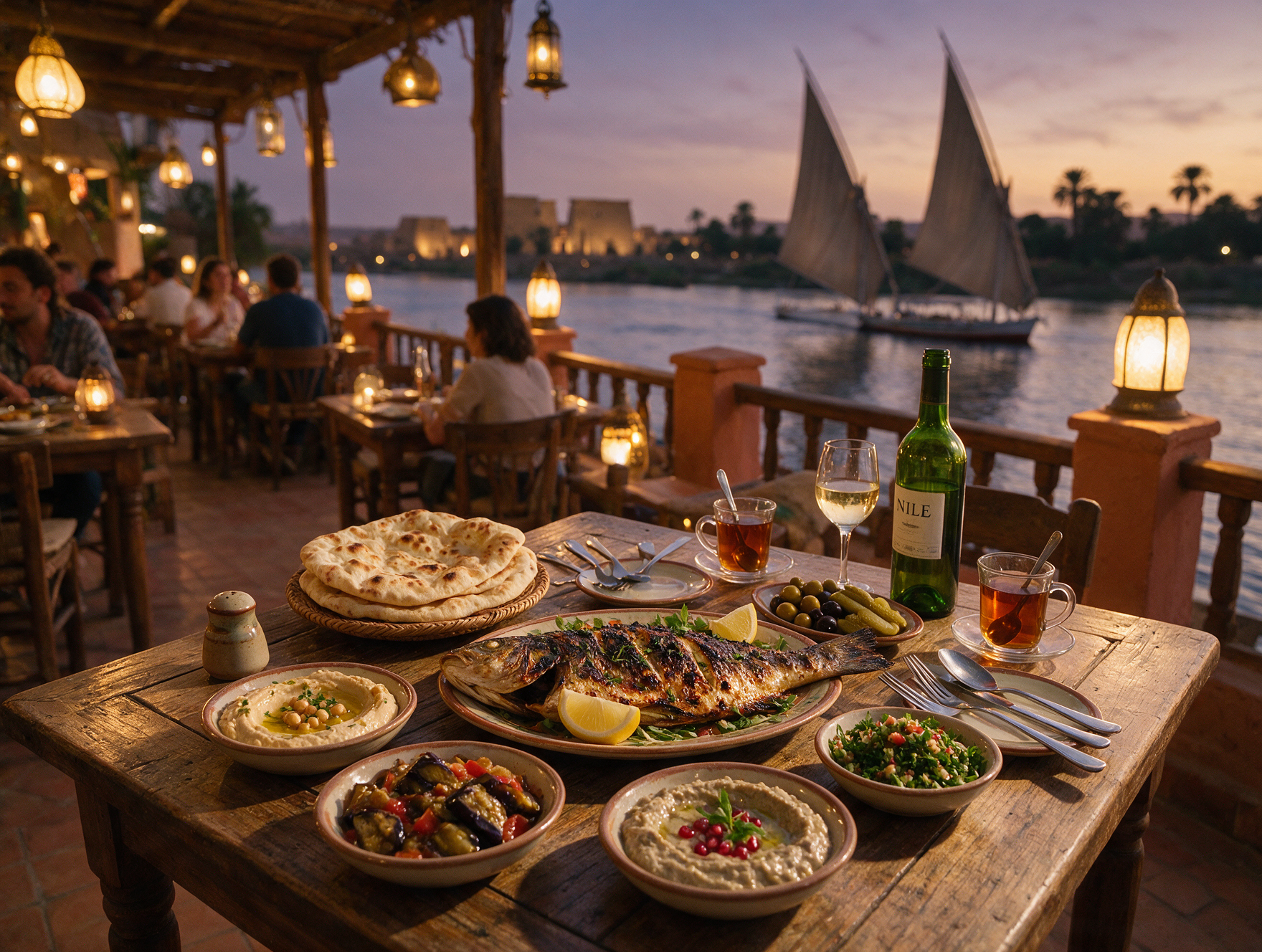
Luxor’s East Bank, where most hotels sit, has a run of restaurants along the Corniche with Nile views that range from genuinely good to purely scenic. The better ones do a strong grilled fish (Nile perch and tilapia both show up regularly) alongside the standard mezze spread of hummus, baba ghanoush and fresh flatbread. On the West Bank, near the Valley of the Kings, options thin out considerably since this side of the river is built around the tombs and temples rather than tourist infrastructure — plan to eat a proper meal back on the East Bank rather than expecting much beyond simple tea stalls and snack vendors near the ticket offices at the Valley of the Kings itself.
Local tip that isn’t in the top-10 lists: ask your West Bank guide (most groups have one for the tomb visits) where they’d actually eat lunch — several small family-run spots near the ferry landing serve simple, excellent grilled chicken and rice that never make it onto tourist restaurant lists because they don’t have English menus or online listings at all.
Aswan: Nubian Cuisine and Riverside Cafés
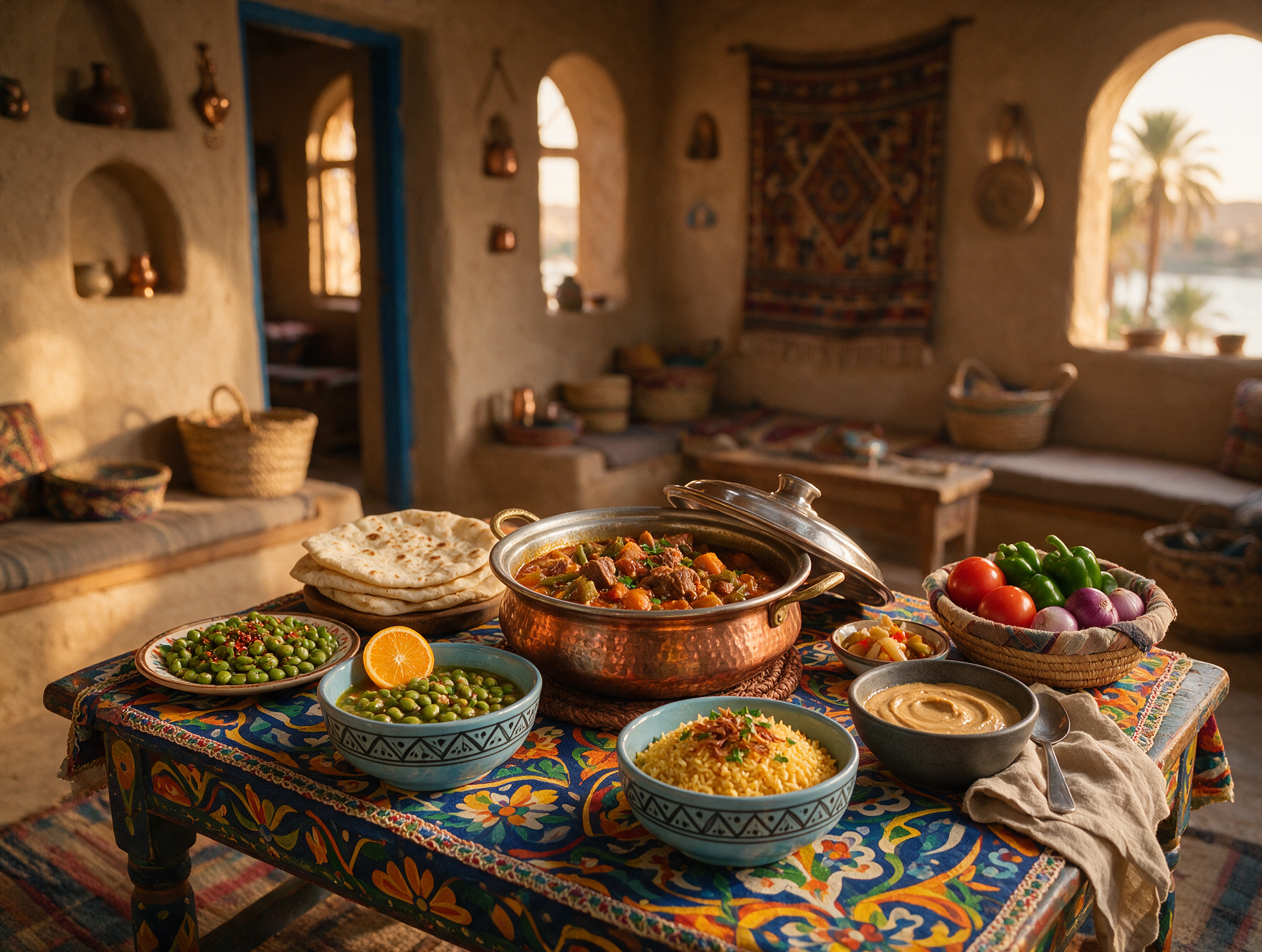
Aswan is where Egyptian food starts picking up genuinely distinct Nubian influence — expect more use of okra, dried hibiscus (karkade, which is also the name of the deep red hibiscus tea served both hot and cold across the country, but especially associated with Aswan and Nubian hospitality), and a stew-forward style of cooking that’s noticeably different from Cairo’s grill-and-rice default. A boat ride to a Nubian village on Elephantine Island or nearby islands often includes a home-cooked meal as part of the visit, and this is honestly one of the most memorable food experiences on the whole trip — simple, unhurried, and served by people who grew up eating exactly this.
For a sit-down option back in town, riverside cafés along the Aswan Corniche serve karkade alongside light meals and are a good spot to sit out the hottest part of the afternoon with a view of feluccas on the water.
What to Drink
Beyond karkade, try sahlab (a warm, thick milk drink with cinnamon and nuts, mostly a cooler-weather thing), fresh sugarcane juice sold from street carts with visible presses (popular and genuinely refreshing in the heat, though stick to carts that look busy and turn over juice quickly), and Egyptian mint tea, served sweet by default — ask for “sukar shwaya” (a little sugar) or “min ghair sukar” (without sugar) if you want it adjusted.
Food Etiquette Notes
Meals are social and often shared from common plates, particularly mezze spreads — don’t be surprised if a table order arrives as a collection of small dishes for everyone rather than individual plates. Ramadan, if your trip overlaps with it, changes daytime dining significantly — many local restaurants outside tourist zones close or reduce hours during fasting hours and reopen after sunset (iftar) for what’s often the liveliest, busiest meal service of the year. Tipping (baksheesh) is customary and expected at restaurants, generally 10% where service isn’t already included on the bill.
Markets Worth Wandering For Food Alone
If you like shopping for food as much as eating it, a few markets are worth building into the itinerary specifically for that. Cairo’s spice stalls around Khan el-Khalili sell dried karkade, cumin, sumac and saffron at prices that make it worth bringing an empty bag from India — just confirm what’s allowed through customs before you buy in bulk. In Aswan, the Nubian market sells the same hibiscus flowers used for karkade tea loose by weight, along with dates and spice blends specific to Upper Egypt that you won’t find as easily in Cairo. Alexandria’s fish market, mentioned above, doubles as a genuinely interesting wander even if you’re not planning to eat there, just to see the range of what comes out of the Mediterranean daily.
One smart-spending tip: buying spices and karkade at these markets rather than airport duty-free shops on the way out saves a meaningful amount, and the quality at a market that turns over stock daily is usually better than a tourist-facing airport stand.
FAQs
Is Egyptian food spicy?
Generally no — most Egyptian food is more about warm spices (cumin, coriander, garlic) than heat. If you like spice, ask for shatta, a chili condiment served on the side at most local restaurants.
What’s the one dish I should try in Egypt?
Koshary, without question — it’s cheap, filling, naturally vegetarian, and different enough from Indian food to feel new while still being comforting to an Indian palate used to rice and lentils.
Is street food in Egypt safe for Indian travelers?
Generally yes at busy, high-turnover stalls where you can see food being cooked fresh in front of you — the same rule that applies to street food anywhere. Stick to bottled water and be a little more cautious with raw salads and unpeeled fruit from carts in your first few days.
What’s different about Alexandria’s food compared to Cairo?
Alexandria leans heavily into fresh seafood and Mediterranean influence, given its position as a port city, while Cairo’s food culture is more grill-and-grain focused.
Do restaurants in Egypt take cards or only cash?
Larger restaurants in Cairo, Luxor and tourist areas generally accept cards, but smaller local spots — including some of the best koshary and grill places — are cash-only. Carry Egyptian pounds in smaller denominations for these.
A Trail Worth Following
Egypt’s food doesn’t get the attention its history does, but it earns a place on the itinerary in its own right — koshary in Cairo, seafood in Alexandria, a home-cooked Nubian meal in Aswan, none of which show up if your trip is entirely temple-to-temple. Explore Get Tripped’s Egypt packages for itineraries that build in time for meals like these, not just monument visits.