Everyone photographs the pyramids at 7am, in that flat morning light with fifty other tour groups jostling for the same angle. Almost nobody plans for evening — and that’s the mistake, because Giza after 4pm turns into something closer to what you imagined before you ever booked the trip. The crowds thin, the light goes gold and then rose and then a deep blue, and the plateau that felt like a theme park at noon starts to feel, briefly, like the ancient site it actually is.
This guide covers the specific evening spots worth building into your Giza afternoon — where to watch the sunset, where to eat with the pyramids in frame, and how the Sound and Light Show fits into all of it. None of this requires an early alarm, which after a jet-lagged first day or two in Egypt is its own kind of luxury.
In This Guide
- Why evening beats morning at Giza (a genuine, testable claim)
- 5 specific evening spots and viewpoints
- The Sound and Light Show: what it actually is
- Getting the light right for photos
- FAQs
Why Evening Actually Beats Morning Here
Most Egypt travel guide content pushes early-morning pyramid visits to beat the heat, and for July and August that’s genuinely good advice — the plateau, part of the UNESCO World Heritage-listed Memphis and its Necropolis site, has almost no shade and midday sun there is brutal. But for the shoulder seasons (October through April), evening has real advantages morning doesn’t: the tour bus groups that dominate 8–11am have mostly cleared out by 4pm, the light is dramatically better for photos, and you get the sound and light show as a natural capstone to the day instead of a separate late-evening trip back out.
Honest caveat: if you want to go inside the Great Pyramid itself (extra ticket, limited daily entries, genuinely worth it for the claustrophobic thrill of the ascending passage), that’s a morning-only activity — entry closes well before sunset. Plan for both if you can spare a full day at Giza rather than a half-day.
1. The Panorama Point — Best Wide Shot of All Three Pyramids
A short walk or camel/horse ride south of the main complex, this is the spot where you get the classic postcard frame — all three pyramids lined up with the desert stretching behind them, no modern buildings in shot. Arrive by 4:30pm in winter (earlier sunset) or 5:30pm in summer, and you’ll have time to walk the ridge and find your own angle before the light gets properly dramatic around 30 minutes before actual sunset.
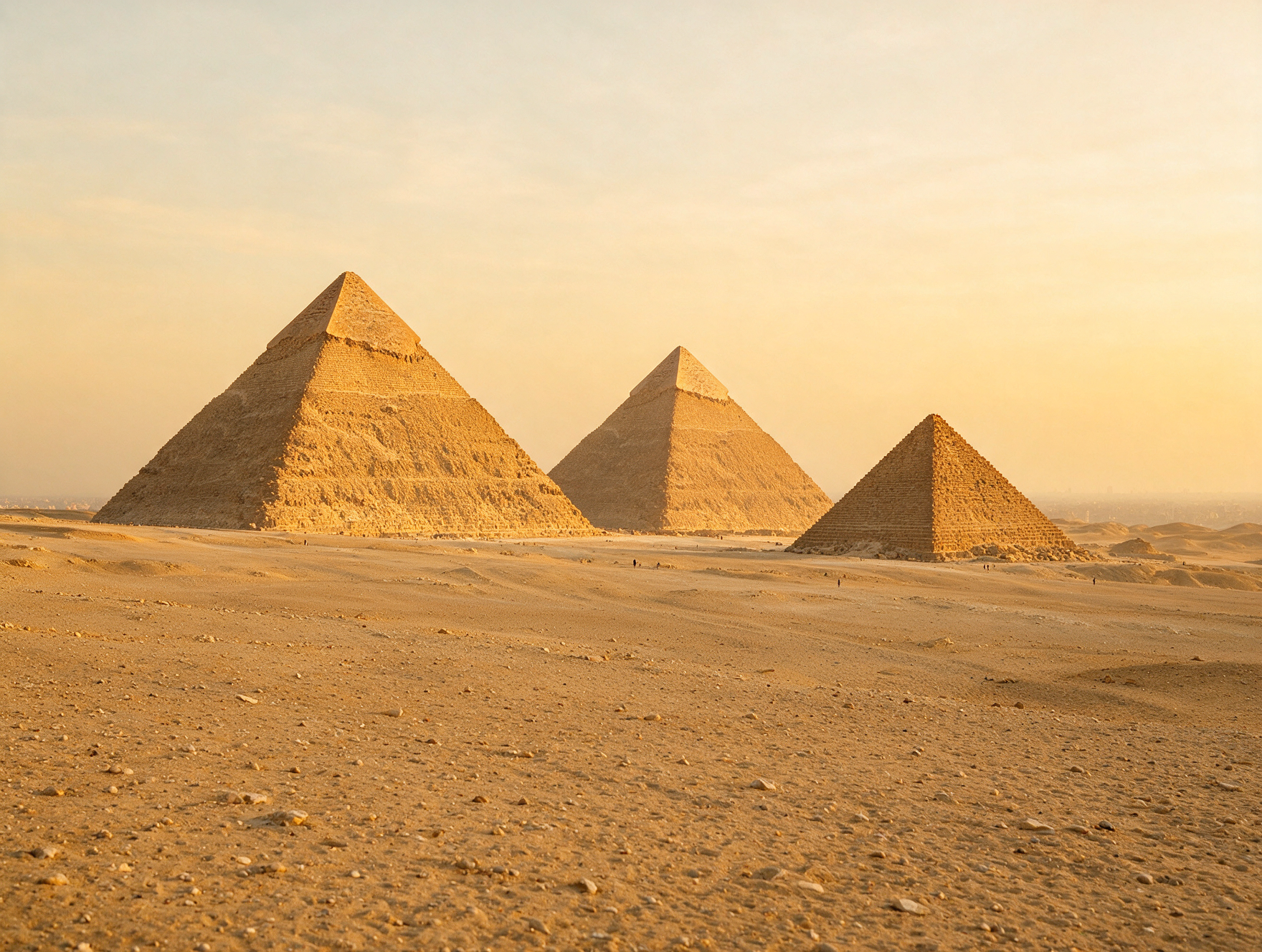
A mistake people make here: paying for a camel ride specifically to reach Panorama Point when it’s a perfectly manageable 10–15 minute walk. The camel and horse operators work this stretch hard on tourists who don’t realize walking is an option. If you want the camel photo, that’s a different (fine) reason to do it — just know it’s not required to reach the viewpoint.
2. Best View Pyramids Hotel Rooftop — Best for Dinner With a View
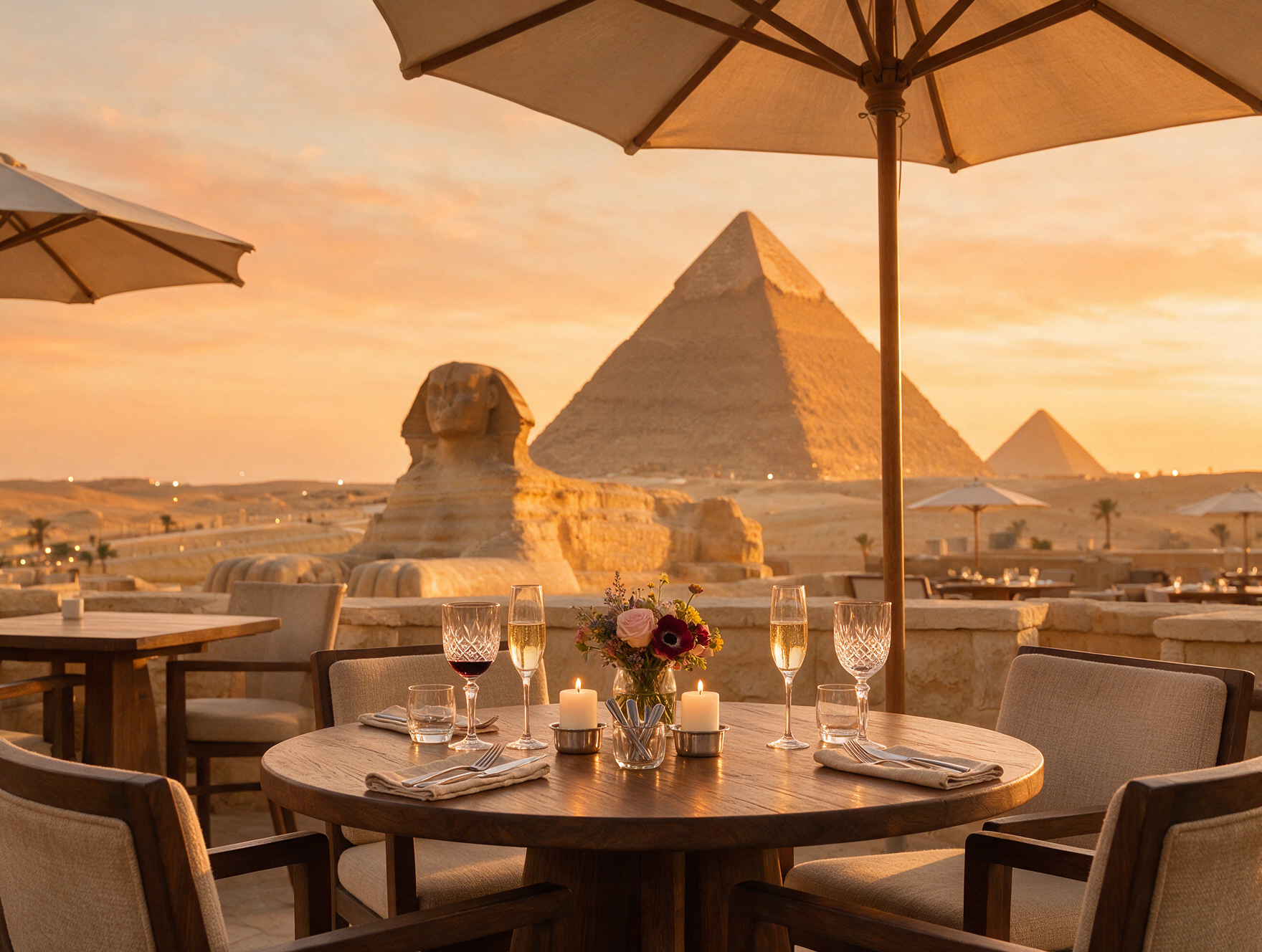
A rooftop restaurant and shisha lounge with an unobstructed line of sight to the Sphinx and the pyramids beyond, lit gold in the evening. The food is simple — grilled meats, mezze, the reliable Egyptian hotel-restaurant menu — but nobody’s coming for a culinary revelation. They’re coming for the view while they eat, which this spot delivers better than almost anywhere else on the plateau. Book a table for the hour before sunset and you’ll watch the whole transition from daylight gold to the illuminated evening show without moving.
3. 9 Pyramids Lounge — Best for a Quieter Café Break
A smaller, café-style spot near the Sphinx enclosure that’s popular with photographers because it sits at a genuinely unusual angle — close enough that the Sphinx feels enormous in frame rather than distant. Good for a mid-afternoon coffee or tea break between the pyramids and the evening show, when you need twenty minutes off your feet before the next stretch of walking.
4. The Sound and Light Show — Best for a Structured Evening
The nightly performance projects narrated history (in rotating languages, roughly ten of them including English, French, and Arabic) onto the pyramids themselves, paired with a laser and light display. Showtimes run seasonally: around 7pm and 8pm in winter (October–April), later — 8:30pm and 9:30pm — in summer. Expect to pay roughly 1,000 EGP ($20–25) as a foreign adult, card-only at the gate, with the show running 50–60 minutes. Package tours bundling transfers run $40–120 per person, which is worth it if you don’t want to arrange a driver for the return trip yourself.
Honest opinion: the show itself is more theatrical than educational — think dramatic narration and colored lights more than rigorous history — but the experience of sitting in the dark desert with the pyramids lit up in front of you is worth it regardless of how seriously you take the script. Go in expecting spectacle, not a lecture, and you’ll enjoy it more.
5. Al Khan Sabeel — Best for Egyptian Dinner After Dark
A traditional restaurant a short drive from the plateau serving proper Egyptian home-style dishes — molokhia, stuffed pigeon, fresh baladi bread — in a setting that leans local rather than tourist-buffet. A good option if you want dinner after the sound and light show without heading all the way back into central Cairo, and a nice contrast if you’ve spent the whole day eating at hotel restaurants. If you do head back into the city afterward, Get Tripped’s guide to Cairo’s evening spots covers where to go next.
Getting the Light Right for Photos
The ten minutes before official sunset and the twenty minutes after are two completely different photo opportunities. Before sunset, you get warm gold tones with strong shadows and definition on the stone blocks. After sunset, as the sky deepens to blue, the pyramids — especially once the evening illumination kicks on for the sound and light show — photograph almost like a painting, with none of the harsh contrast of daytime shots. If you only have one evening, plan to be at Panorama Point for the gold light, then move toward the Best View Pyramids Hotel rooftop or the show seating for the blue-hour shots.
Don’t Skip the Sphinx at Dusk
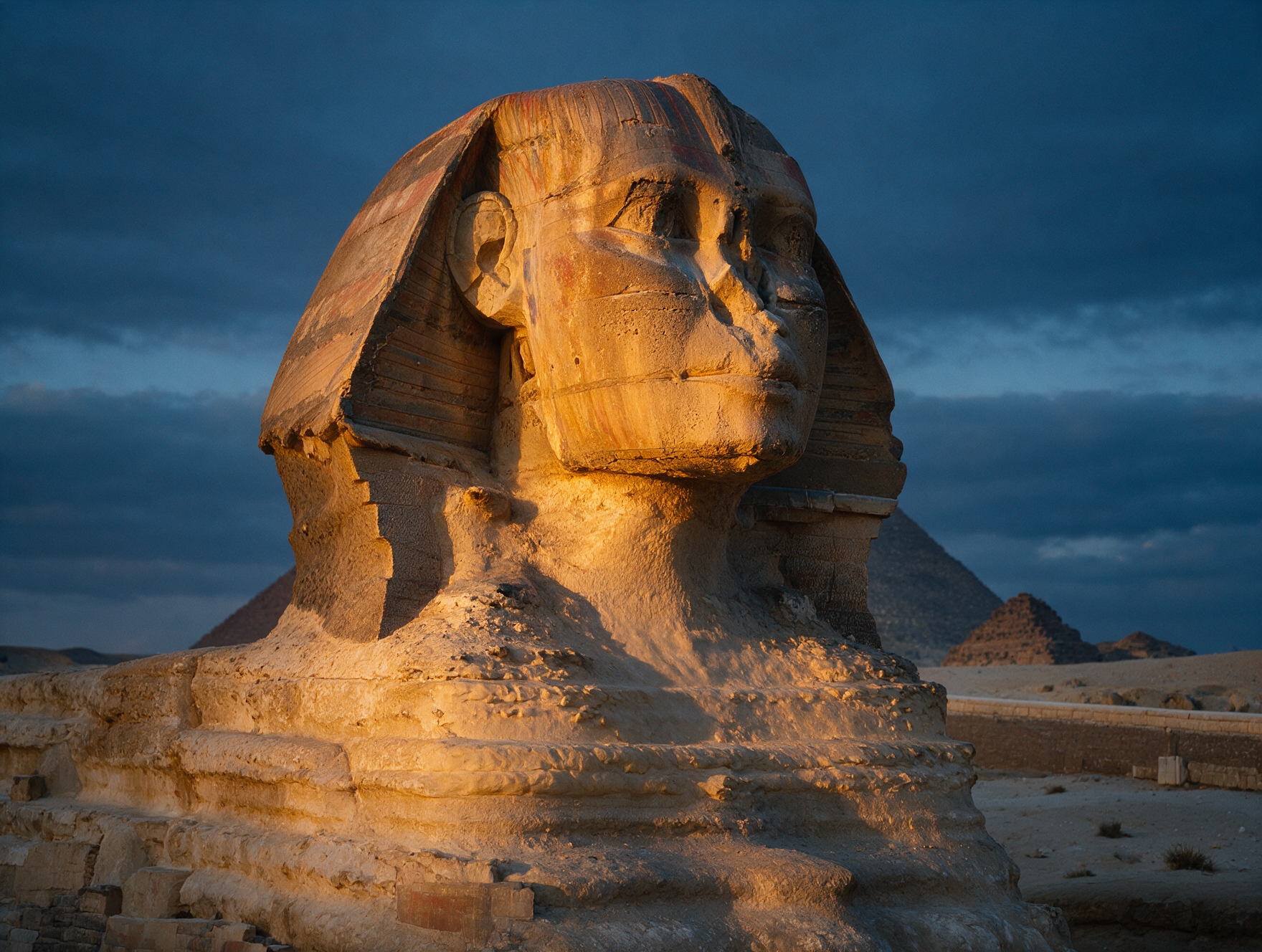
Most visitors treat the Sphinx as a five-minute photo stop on the way between the pyramids and the exit, which is a shame, because it’s genuinely one of the better dusk viewpoints on the whole plateau. The enclosure faces roughly east, so as the sun drops behind you in the west, the Sphinx catches warm light on its face while the sky behind it deepens — a completely different mood than the flat midday shot everyone has seen a thousand times. It also tends to be quieter in the last hour before closing than at any other point in the day, since most tour groups have already moved on to lunch or their next stop by then.
Smart Spending: Where the Money Actually Matters
The Sound and Light Show ticket (1,000 EGP / $20–25 for foreign adults) is the one Giza evening expense Get Tripped would call non-negotiable — it’s the single best-value evening activity on the entire plateau relative to what you get. Where you can save: skip the camel or horse ride to Panorama Point unless you specifically want the photo of yourself on a camel with the pyramids behind you, since the viewpoint itself is an easy 10–15 minute walk. Dinner is the other flexible line item — the Best View Pyramids Hotel rooftop costs meaningfully more than Al Khan Sabeel a short drive away, and the difference is really about paying for the view with your meal versus paying for the view separately and eating well elsewhere.
A Fun Fact for the Road
The Great Pyramid of Giza was the tallest man-made structure on Earth for roughly 3,800 years, only losing that title in the 14th century to Lincoln Cathedral in England — and even accounting for some erosion and the loss of its original smooth limestone casing, it’s still taller than most buildings that stood in London or Paris well into the 1800s. Standing at Panorama Point in the evening light, with the scale of the thing finally sinking in against the darkening sky, that fact lands very differently than it does reading it in a guidebook at home.
Practical Notes
Bring layers — the desert temperature drops fast once the sun’s down, even in summer, and it’s a genuine shock if you’ve spent the day in a t-shirt under full sun. Cash is still useful for tipping guides, camel handlers if you use one, and small vendors, even though the show tickets themselves are card-only. Sunset and show times shift with the seasons and during Ramadan, so confirm the exact schedule for your travel dates on the Ministry of Tourism and Antiquities’ site rather than working off a fixed time you read somewhere — Get Tripped can confirm this for you as part of your booking.
Who This Is For
This is genuinely universal — couples get a romantic, low-key evening; families with kids get a spectacle that holds attention better than a straight museum visit; solo travelers can comfortably join a group sound-and-light booking and won’t feel out of place at any of the dining spots listed here. Luxury travelers should specifically book a table at the Best View Pyramids Hotel rooftop in advance rather than walking in, since the best window-side tables go first.
FAQs
What time should I arrive at Giza for the best evening experience?
Aim to be on the plateau by 4–4:30pm in the October–April season, later (around 5:30pm) in summer. That gives you time to walk to Panorama Point, catch the golden-hour light, have dinner, and settle in for the evening show without rushing.
Do I need a separate ticket for the Sound and Light Show?
Yes — it’s separate from the general Giza plateau entry ticket. Book ahead where possible, especially in peak season (October–March), and bring a card since payment at the gate is card-only.
Is it safe to be at Giza after dark?
Yes. The plateau and surrounding hotel and restaurant strip are well-lit, well-patrolled, and heavily used by evening tour groups. The bigger practical concern isn’t safety, it’s logistics — arrange your return transport before dark rather than trying to find a taxi at 10pm from the show exit.
Can I combine the evening at Giza with a day trip from Cairo, or do I need to stay nearby?
Both work. Giza is roughly 30–45 minutes from central Cairo hotels depending on traffic, so a day trip with an evening return is completely manageable. Some travelers prefer staying at a pyramid-view hotel for one night specifically to avoid the drive back after the show — worth considering if you want to wake up to that view too.
Is the Sound and Light Show worth it if I’ve already seen the pyramids by day?
Yes, and Get Tripped would argue it’s a genuinely different experience rather than a repeat — the illuminated monuments against a night sky, with a narrated history track, is not something the daytime visit replicates at all.
What language should I choose for the show, and does it matter?
English shows run most nights, but the schedule rotates through roughly ten languages including French, Arabic, German, Spanish, and Italian, so double-check the specific night before you book. If your date only has a non-English show, headsets with English audio are usually available at the entrance for a small deposit or ID hold — ask at the ticket counter when you arrive rather than assuming.
Building This Into Your Egypt Trip
An evening at Giza pairs naturally with the rest of a Cairo stopover on a wider Egypt trip, and Get Tripped typically builds it into the first or second night of a longer Egypt tour package from India that continues on to Luxor and Aswan — see our 7 nights, 8 days Egypt itinerary for how the days stack up. If you’re planning independently, budget a full afternoon-into-evening block for this rather than squeezing it in after a rushed morning at the Egyptian Museum — it’s worth the dedicated time.