Luxor gets called “the world’s greatest open-air museum,” which is accurate and also slightly misleading — it makes the city sound like a static exhibit, all roped-off temple courtyards and ticket queues. Spend more than a day here, though, and a different Luxor shows up: felucca captains who’ve worked the same stretch of Nile their whole lives, a souk that runs on relationship and repeat business as much as tourist trade, and a rhythm of early mornings and long, shaded afternoons built entirely around the desert heat. Modern Luxor sits directly on ancient Thebes, part of the UNESCO World Heritage-listed Ancient Thebes with its Necropolis, which is part of why ordinary neighborhood life here runs so close to monuments most cities would fence off entirely. This is a guide to that Luxor — the one running alongside Karnak and the Valley of the Kings, not instead of them.
In This Guide
- How Luxor’s daily rhythm actually works
- The souk, and how bargaining really happens
- Where locals eat, drink tea, and spend an evening
- Nile-side life beyond the temples
- FAQs
Luxor Runs on the Heat, Not the Clock
Understand this first and everything else makes more sense: Luxor’s daily rhythm is built around avoiding the worst of the desert sun, not around a 9-to-5 schedule. Shops and the souk open early, slow down or close in the early afternoon heat, then come back to life in the evening once temperatures drop. Locals plan errands, temple visits, and social time around this pattern, and travelers who fight it — trying to shop at 2pm, wondering why half the souk looks half-asleep — end up frustrated for no good reason. Match the rhythm instead: mornings for temples and markets, a genuine rest in the early afternoon, then evenings for the souk, tea, and the Corniche.
The Luxor Souk: How It Actually Works
The souk sprawls through narrow covered and semi-covered lanes not far from the Nile, and it’s genuinely a sensory overload the first time — hand-carved wooden figurines, papyrus scrolls (ask whether it’s genuine papyrus or banana-leaf imitation; genuine papyrus costs more and feels different, drier and more brittle), turquoise and lapis lazuli jewelry, embroidered galabiyas, alabaster vases, carpets, and scarves, all threaded through with the smell of fresh baladi bread, roasted nuts, cumin and other spices, and sweet basbousa and baklava from the food stalls mixed in among the craft vendors.
Bargaining here isn’t an obstacle, it’s the actual culture — a vendor naming a high opening price and a buyer countering low isn’t rudeness on either side, it’s the expected opening move of a conversation that usually lands somewhere fair for both parties, often with tea offered along the way. Go in relaxed rather than adversarial; the vendors who do this every day can tell the difference between someone enjoying the exchange and someone trying to win an argument, and the first approach tends to get better prices and a better experience.
A mistake to avoid: agreeing to a price too quickly out of politeness or awkwardness. If a number feels too high, counter it — that’s expected, not offensive, and walking away is a completely normal and accepted part of the process if you can’t land somewhere fair.
Karnak at the Hour Most Visitors Miss
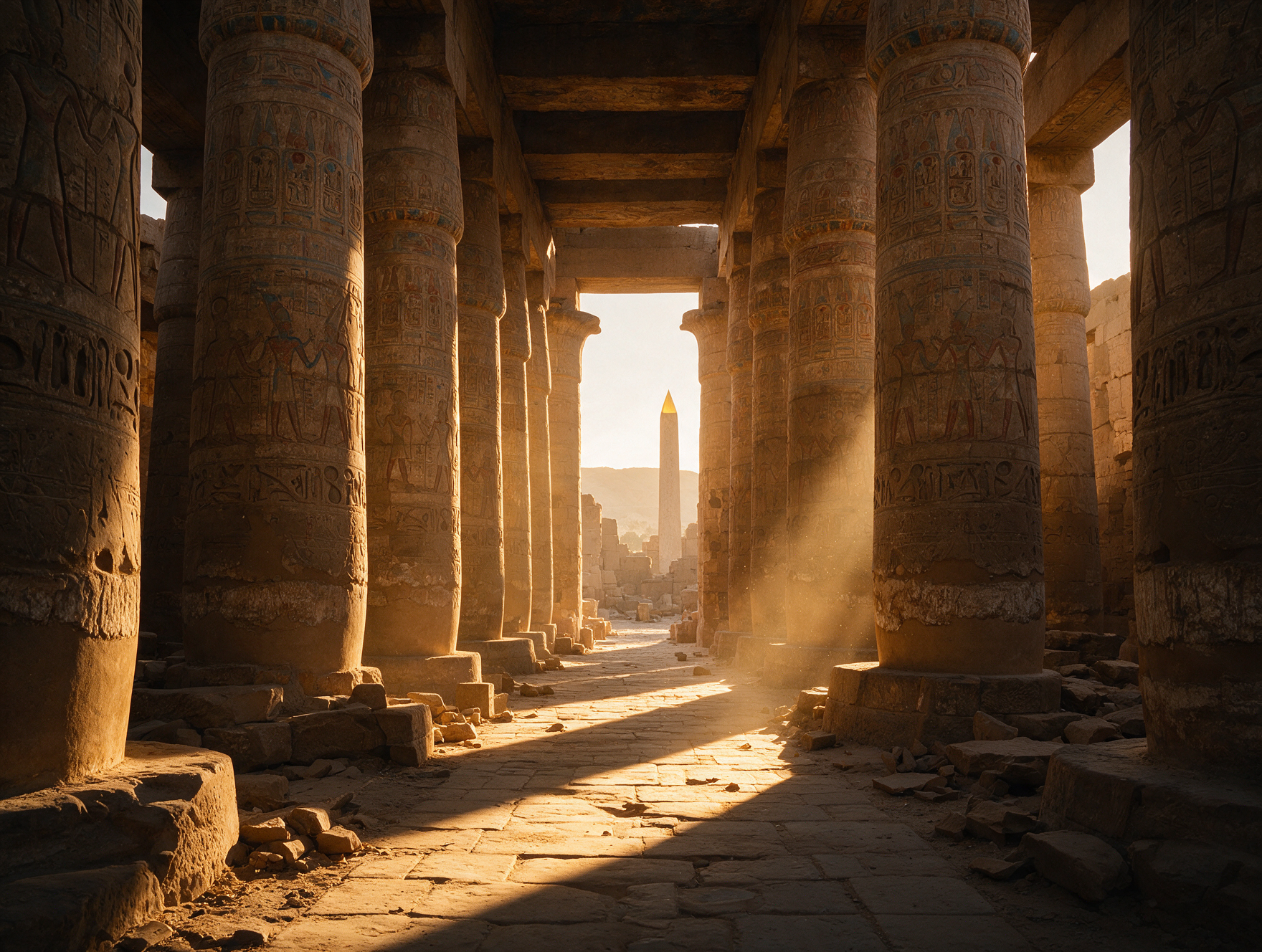
Most tour groups hit Karnak Temple mid-morning, after breakfast, which means the Hypostyle Hall’s 134 massive columns are photographed by everyone in roughly the same flat light with roughly the same crowd density. Go instead right at opening, when the temple staff are still setting up and the light comes in low and angled through the columns — it’s a genuinely different experience of the same space, quieter and more atmospheric, with the scale of the place landing harder without fifty other people’s voices echoing off the stone.
Where Locals Actually Eat
Skip the tourist-menu restaurants directly facing the temple entrances — predictable, overpriced, and rarely the best food in town. Head instead a few streets back from the main tourist strip, where small family-run spots serve koshari, grilled kofta, ful medames (stewed fava beans, often eaten for breakfast), and freshly baked bread from neighborhood ovens at a fraction of the price and, usually, noticeably better quality. Hibiscus tea (karkade), served both hot and cold depending on season, is the local go-to alongside meals and worth trying both ways. For a fuller rundown of what to eat across the whole country, including vegetarian options, see Get Tripped’s Egypt food trail and vegetarian & vegan food guide.
Evening Life Along the Nile
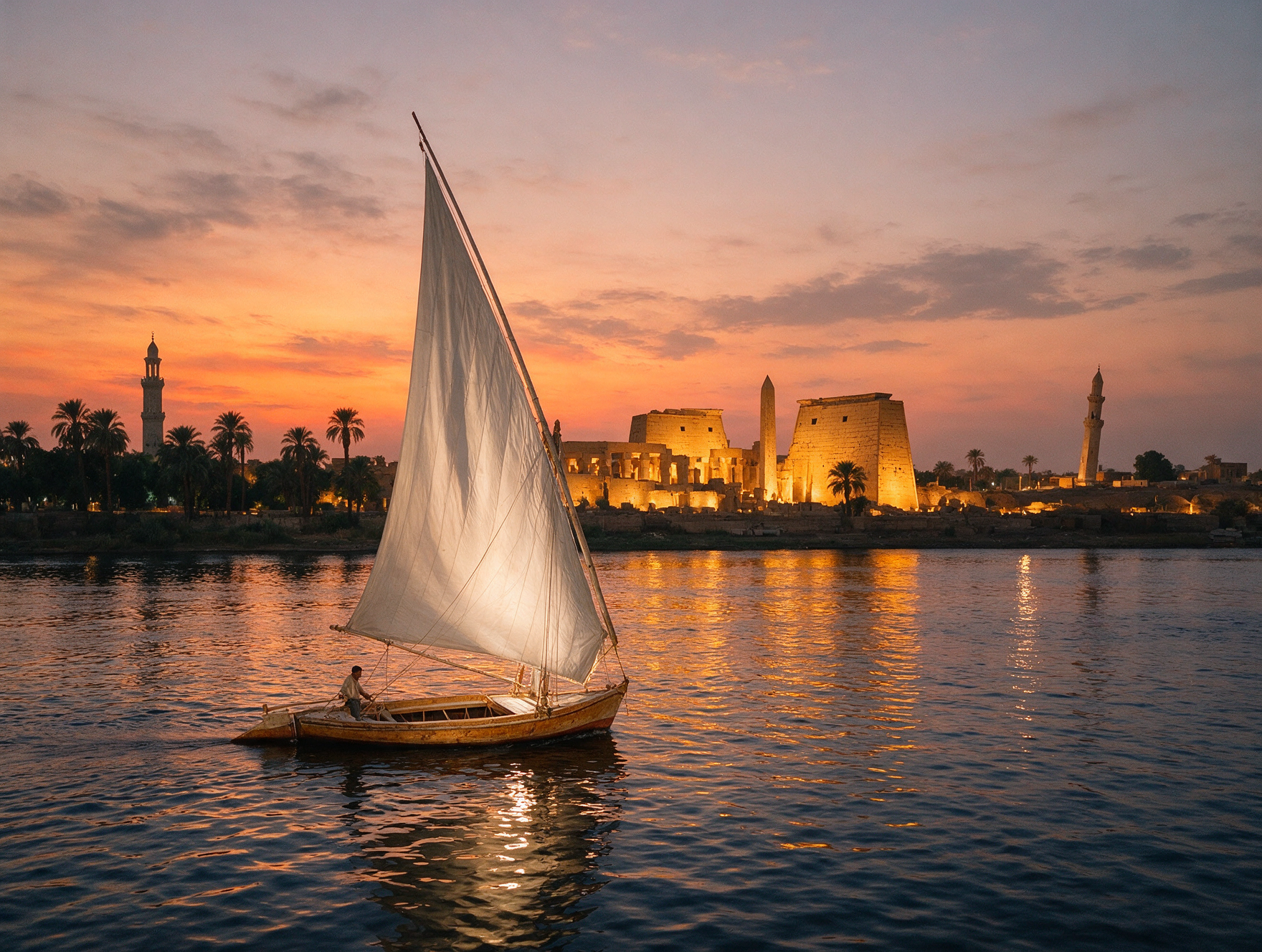
As the heat breaks in the evening, the Corniche — Luxor’s riverside promenade, with Karnak and Luxor Temple visible along its length — fills with families out walking, felucca captains calling out for evening sailing trips, and tea stalls doing steady business. A sunset felucca ride here, with Luxor Temple lit up gold along the bank, is one of the more purely relaxing hours available anywhere on an Egypt itinerary, and it’s an entirely different pace from the temple-hopping earlier in the day.
A Genuine Local Ritual: Tea and Backgammon
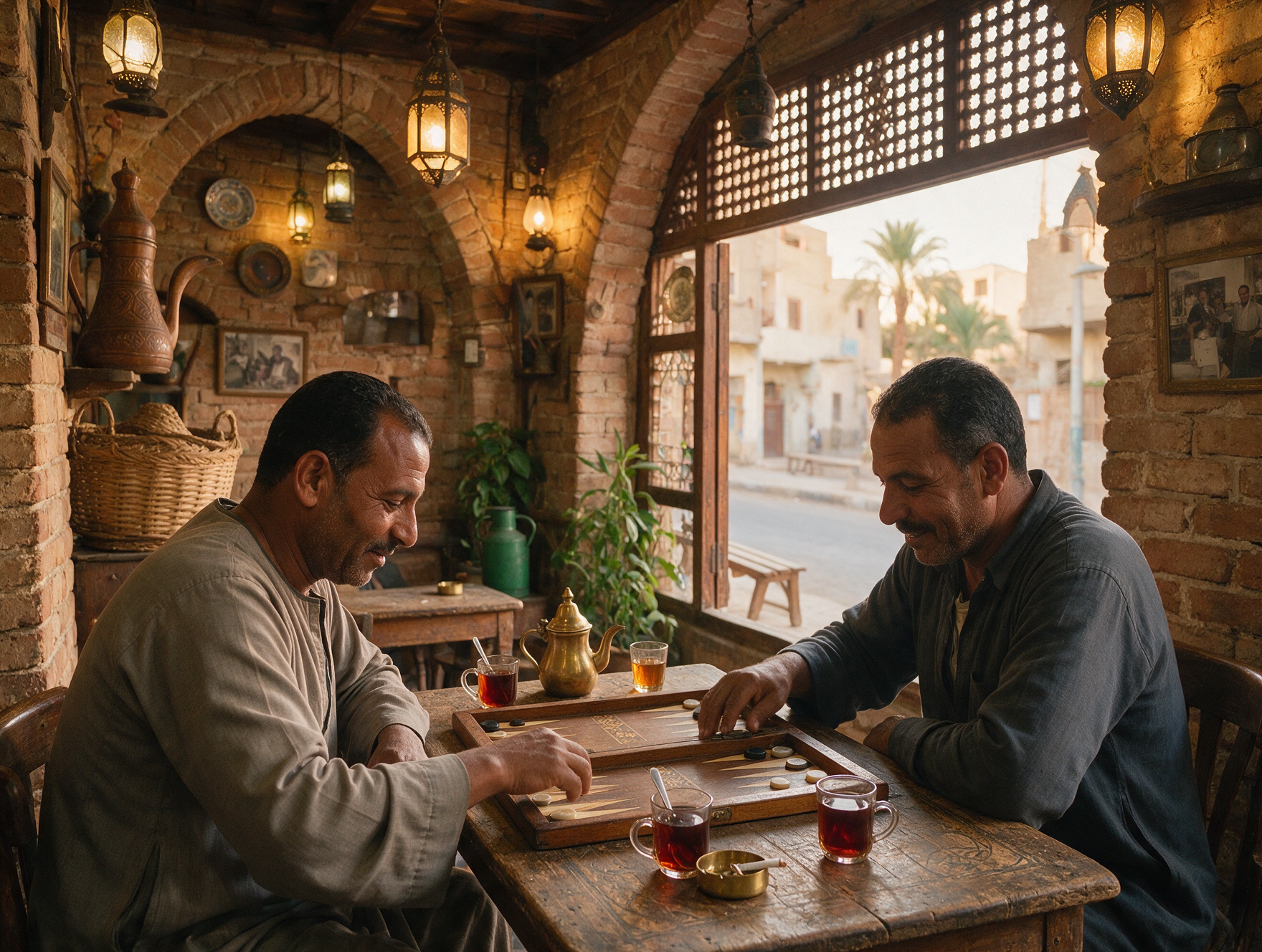
Much like Cairo’s ahwa culture, Luxor has its own network of local coffeehouses where men gather over tea, coffee, and backgammon or dominoes, often well into the evening. These aren’t tourist venues — they’re genuinely local, and a respectful visitor who orders a tea and settles in for twenty minutes, rather than snapping photos and leaving, tends to find people happy to chat, occasionally teach a game, or just share the space comfortably. It’s not a formal “experience” you book; it’s simply a matter of noticing one, going in, and ordering something.
Living Alongside the Monuments
What’s easy to forget on a rushed temple-hopping itinerary is that Luxor is a real, working city of roughly half a million people living directly alongside some of the most significant ancient monuments on Earth. Farmers still work fields near the West Bank tombs using irrigation methods not far removed from ancient techniques. Felucca-building and repair happens in small riverside workshops using skills passed down through families for generations. None of this is staged for visitors — it’s simply what ordinary life in Luxor looks like, and a traveler who notices it, rather than looking straight past it toward the next temple, gets a genuinely richer sense of the place.
A Fun Fact
Ancient Thebes — the city Luxor grew from — was, at its height around 1500–1000 BCE, likely the largest and wealthiest city in the world, described by Homer in the Iliad as “hundred-gated Thebes.” Modern Luxor’s population is a fraction of that ancient peak, which is part of why the temple complexes at Karnak feel so oversized relative to today’s town — they were built for a city many times Luxor’s current size.
Practical Notes for Getting Around
Luxor is genuinely walkable on the East Bank around the souk, Karnak, and Luxor Temple, but crossing to the West Bank for the Valley of the Kings and Hatshepsut’s temple requires either a local ferry (cheap, frequent, and an experience in itself) plus onward transport, or a pre-arranged driver, which is how Get Tripped typically structures West Bank days given how spread out the sites are and how much walking they already involve once you’re there.
Smart Spending Around Town
Luxor’s souk prices, once you’ve bargained fairly, are genuinely reasonable compared to what similar crafts cost in Cairo’s more tourist-saturated markets — alabaster vases and papyrus art in particular are often better value here, closer to where much of it is actually produced. Where it’s worth spending more deliberately: a private felucca for the sunset sail rather than a shared group boat, since the extra cost buys you a meaningfully quieter, more personal hour on the water. Where you can comfortably save: skip the temple-adjacent restaurants entirely and eat where locals do, a few streets back, for a fraction of the price and often better food.
Photography Tip
Karnak’s Hypostyle Hall photographs best in the first hour after opening, when low, angled morning light rakes across the columns and creates deep, dramatic shadows between them — by mid-morning, direct overhead sun flattens the same shot considerably. For the souk, ask before photographing individual vendors or their stalls directly; most are happy to say yes, and asking first tends to get a warmer, more natural photo than a candid shot taken without acknowledgment.
A Mistake Worth Avoiding
Don’t schedule your only souk visit for the middle of the day. Between roughly 1pm and 4pm in the hotter months, much of the souk noticeably quiets down as shopkeepers rest through the worst of the heat — you’ll get a far livelier, more interesting experience going either in the morning before 11am or in the evening after 5pm, when the lanes properly fill back up.
Who This Suits
Travelers who’ve done the major monuments before, or who simply want their Luxor days to include something beyond temple queues, will get the most from this slower, local-rhythm approach. It suits couples and solo travelers particularly well — an evening felucca ride or a quiet hour in a local coffeehouse doesn’t need a group, and both are genuinely easy for a solo traveler to do comfortably.
Segment Notes
Honeymooners tend to remember the sunset felucca ride and a quiet coffeehouse evening more vividly than any single temple, so build in unhurried time rather than packing every daylight hour with sightseeing. Luxury travelers should ask their hotel or guide to arrange a private felucca captain directly rather than hailing one from the Corniche, which secures a better boat and a more personal pace. Families traveling with older kids or teenagers will find the souk’s sensory chaos genuinely fun rather than overwhelming, and bargaining together over a small souvenir purchase makes for a good shared activity that a straightforward museum visit doesn’t offer.
FAQs
How many days should I spend in Luxor to experience it this way?
Three days lets you properly split East Bank temples, West Bank tombs, and a slower day with souk time, an evening felucca ride, and a genuine rest through the afternoon heat, rather than cramming everything into a rushed two-day sprint.
Is it rude to just sit at a local coffeehouse as a tourist?
No — ordering something and settling in respectfully is a completely normal way to experience these spaces. Being mindful (not photographing people without asking, not treating the space as a novelty exhibit) goes a long way toward a genuinely welcoming interaction rather than an awkward one.
What should I bargain for in the souk, and what’s fixed-price?
Most souk goods — crafts, textiles, jewelry, papyrus, souvenirs — are open to negotiation. Food stalls and basic staples like bread are typically fixed, everyday local prices rather than tourist-negotiable ones.
Is Luxor safe to walk around in the evening?
Yes, the main East Bank areas around the Corniche, souk, and central streets are well-used by locals in the evening and generally safe for tourists exercising normal city awareness — well-lit main routes, reasonable caution with belongings in crowded market lanes.
Do I need a guide to experience Luxor this way, or can I just wander?
Independent wandering works well for the souk, Corniche, and coffeehouse side of things — that’s exactly the kind of unstructured time that benefits from not having a schedule. A guide remains useful for the West Bank tomb sites themselves, given the ticketing complexity and spread-out logistics covered in Get Tripped’s Valley of the Kings guide.
Building This Into Your Egypt Trip
Get Tripped structures Luxor stops with genuine breathing room built in — not just a checklist of Karnak, Luxor Temple, and the West Bank tombs (see our companion guide to the Valley of the Kings’ best tombs), but time for exactly this slower, local side of the Egypt trip too. If a rushed one-day Luxor stop is all your schedule allows, we’ll prioritize accordingly, but if you can stretch to two or three days, this guide is the difference between seeing Luxor’s monuments and actually spending time in Luxor.