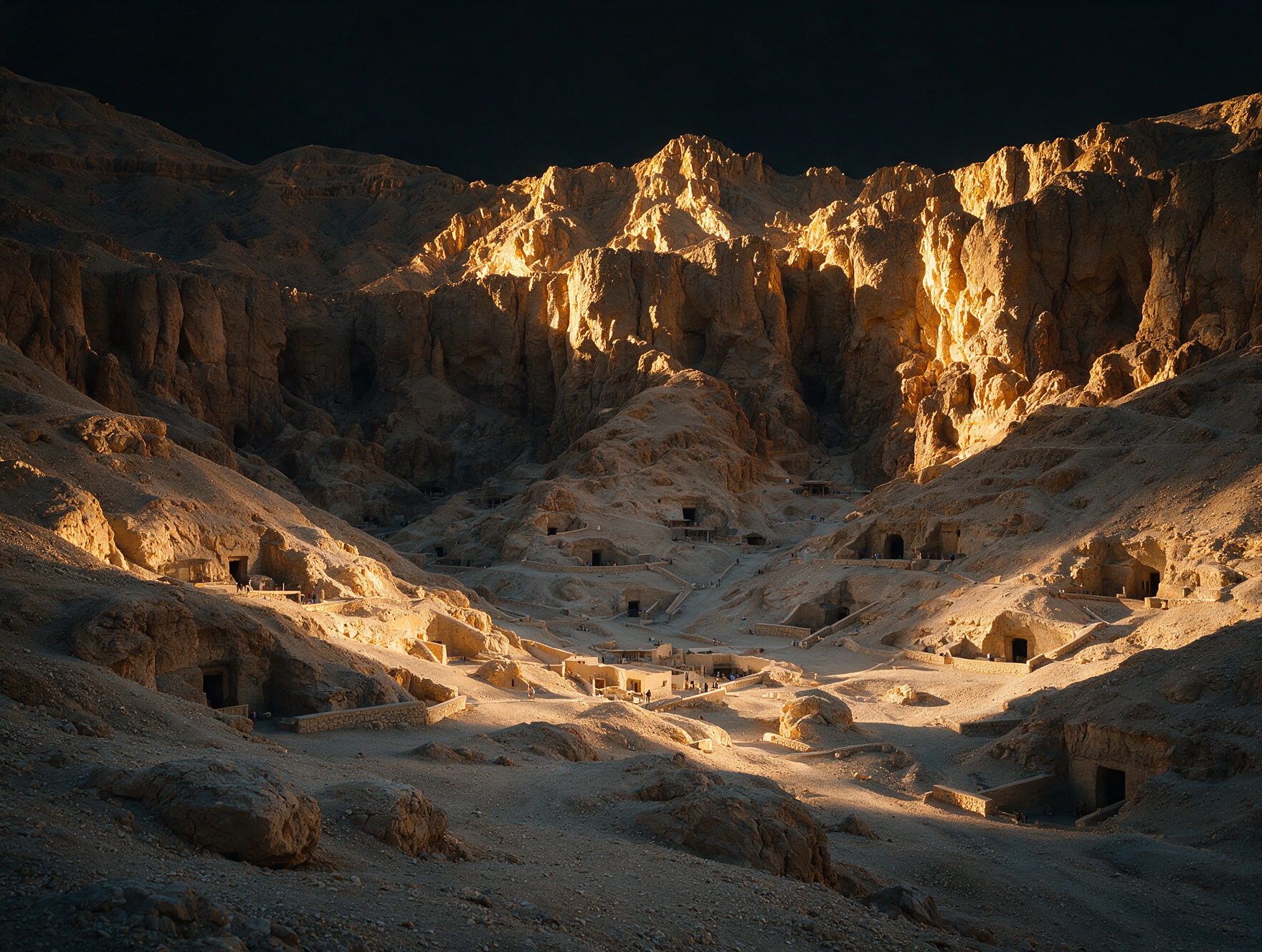
Tutankhamun’s tomb gets almost all the attention in the Valley of the Kings, and it’s genuinely the smallest, least visually impressive burial chamber in the entire necropolis — a fact that surprises most first-time visitors who paid the premium 700 EGP entry fee expecting the golden-mask spectacle they’ve seen in a hundred documentaries (the mask itself, along with most of the tomb’s treasures, now lives in the Grand Egyptian Museum, not in the tomb itself). Meanwhile, tombs with genuinely spectacular, full-color reliefs and soaring ceilings sit a short walk away, often with a fraction of the queue.
The Valley itself sits within the UNESCO World Heritage site of Ancient Thebes with its Necropolis. This guide covers five specific tombs worth prioritizing — some included in the standard ticket, some requiring an extra fee — and how to structure a visit so you’re not wasting your limited energy (and Luxor’s heat) standing in the wrong lines.
In This Guide
- How Valley of the Kings ticketing actually works
- 5 tombs worth your time, ranked by what you’ll actually see
- A smart order to visit them in
- What to skip and why
- FAQs
How the Ticketing Actually Works
The standard entrance ticket (roughly 750 EGP for foreign adults) grants access to three tombs, chosen from a rotating group that changes periodically to manage wear on the more fragile sites — this rotation is a genuine conservation measure, not a random inconvenience, since foot traffic and humidity from visitors’ breath damage the painted plaster over time. Several of the most famous tombs, including Tutankhamun’s (KV62) and Seti I’s (KV17), require an additional ticket bought separately, on top of the standard entry. Budget for this ahead of time rather than being surprised at the gate; the extra tickets are sold at the visitor center, not at each individual tomb. Current ticket categories and any schedule changes are posted by Egypt’s Ministry of Tourism and Antiquities.
1. Tomb of Seti I (KV17) — The One Actually Worth the Splurge
At 2,000 EGP extra, this is by far the priciest single add-on in the Valley, and it’s also, without much competition, the best tomb here. At 137 meters, it’s the longest and deepest tomb in the whole necropolis, with eleven chambers of reliefs so well-preserved and vividly colored that they look almost freshly painted rather than over 3,000 years old. The astronomical ceiling in the burial chamber, depicting constellations and celestial deities, is genuinely one of the most beautiful things in all of Egypt, tomb or temple.
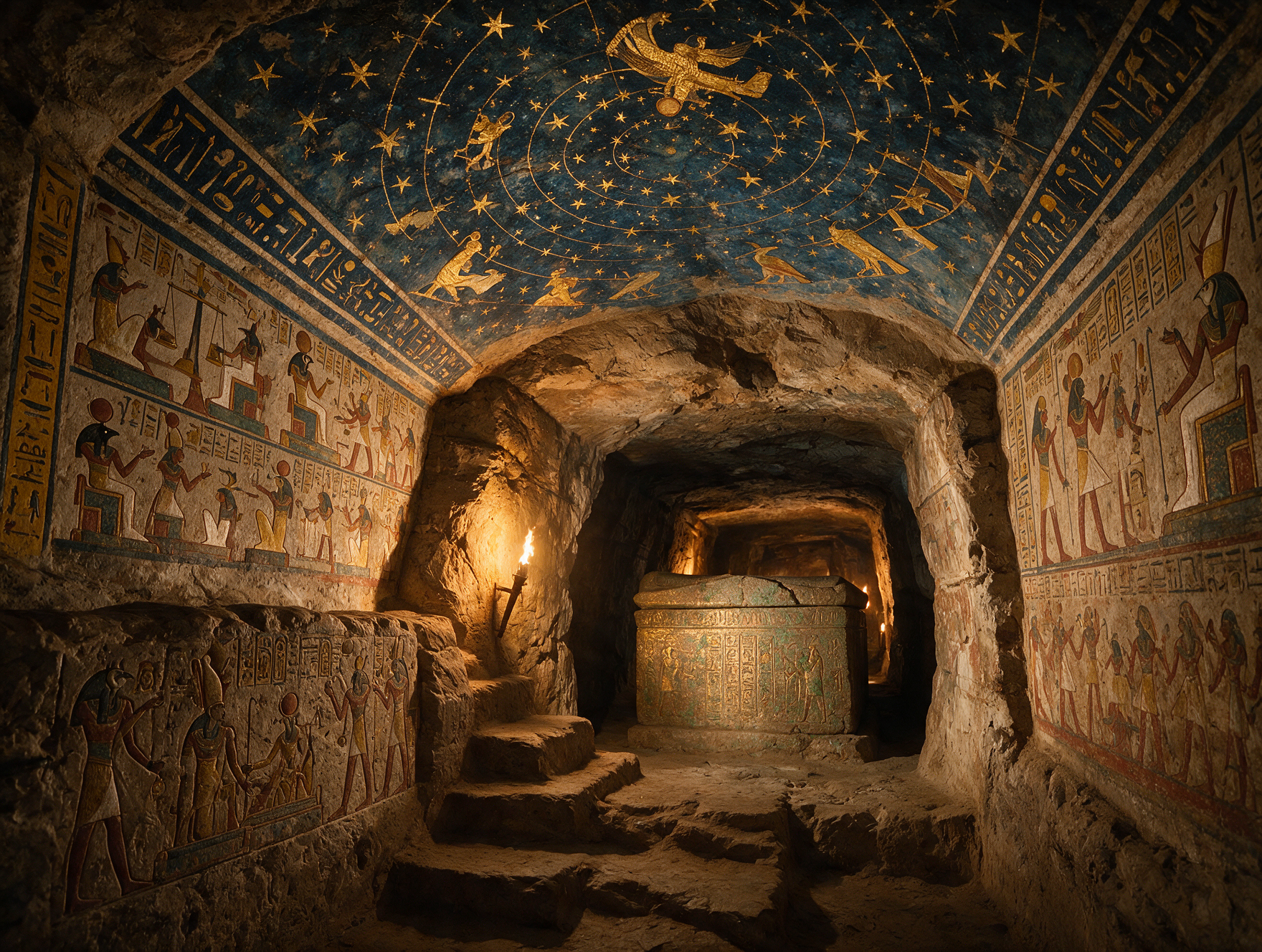
Honest opinion: if you’re only going to splurge on one extra ticket in the entire Valley, make it this one rather than Tutankhamun’s. It’s a more expensive ticket, but it’s not close in terms of what you actually get to see.
2. Tomb of Ramesses III (KV11) — Best Value in the Standard Rotation
One of the largest and most elaborate tombs typically included in the base ticket rotation, built over Ramesses III’s 31-year reign. A steep staircase descends past deeply carved reliefs into pillared halls covered in hieroglyphic decoration and vivid astronomical ceiling work. If this tomb is part of your standard three-tomb allocation on the day you visit, prioritize it — it delivers a scale and level of detail that some of the paid add-ons don’t match.
3. Tomb of Merenptah (KV8) — The Deep, Dramatic One
The second-largest tomb in the Valley, with a corridor stretching some 160 meters down into the hillside, decorated with scenes from the Book of Gates — an ancient funerary text describing the pharaoh’s journey through the underworld. Large stone sarcophagi sit in the burial chamber. It’s a physically dramatic tomb to walk through simply because of how far and how steeply it descends, which most first-time visitors don’t expect.
4. Tomb of Ramesses V & VI (KV9) — Good Value Add-On
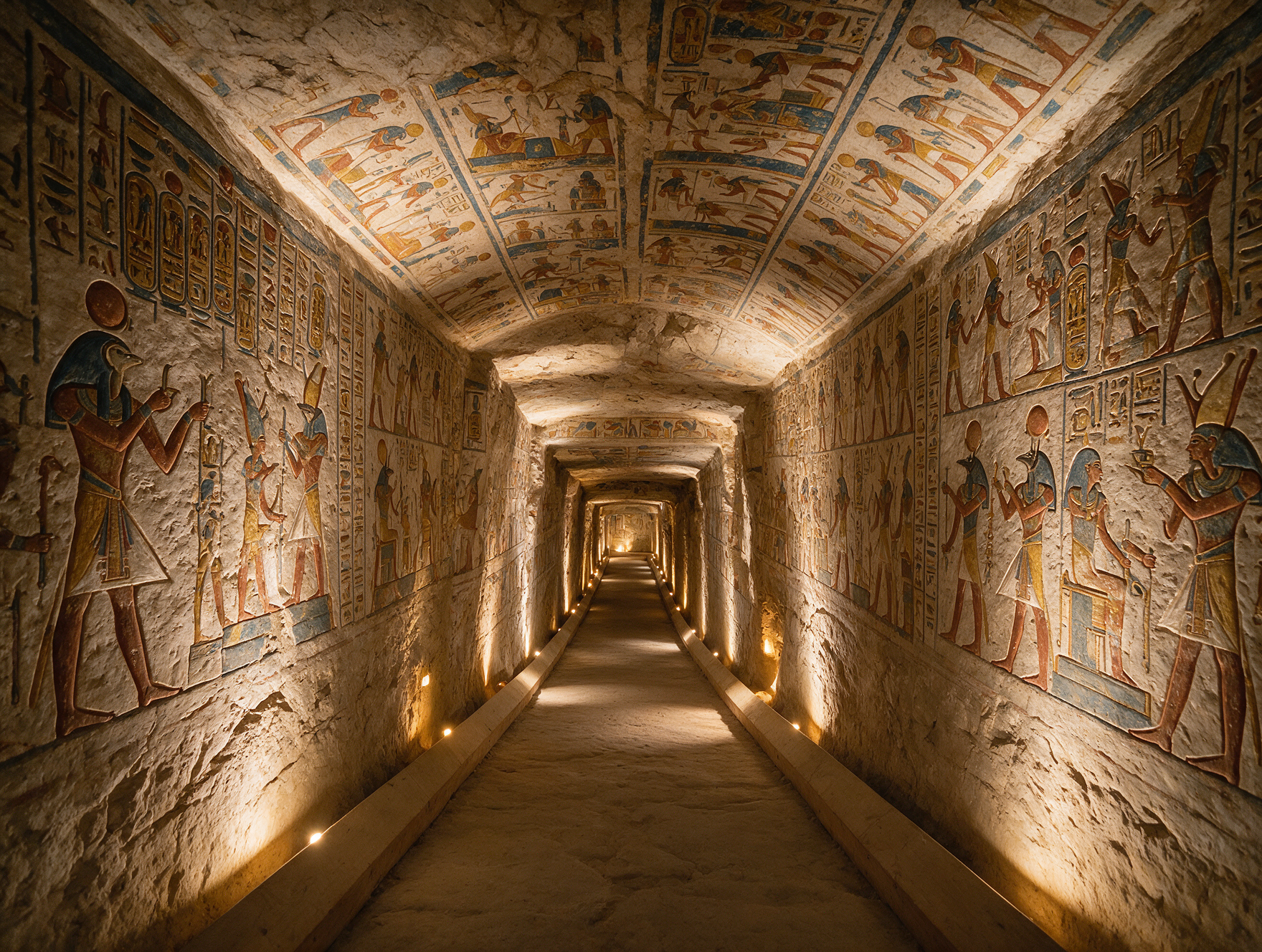
At a comparatively modest 220 EGP extra, this shared tomb (originally built for Ramesses V, later usurped and extended by Ramesses VI) offers strong ceiling astronomical scenes and well-preserved corridor decoration at a fraction of the Seti I price. A sensible middle-ground add-on if the Seti I ticket feels like too much but you still want more than the base three tombs.
5. Tomb of Ramesses IX (KV6) — The Accessible Standard
Often part of the standard rotation, this tomb features a well-preserved vaulted burial chamber with detailed imagery of Nut, the sky goddess, arched across the ceiling. It’s not as jaw-dropping as Seti I, but as a frequently-included standard-ticket option, it’s a genuinely solid, easy stop that doesn’t require an extra fee or a long queue.
What About Tutankhamun’s Tomb (KV62)?
Here’s the honest take: KV62 is historically the most significant tomb ever found in the Valley — it was discovered nearly intact in 1922, which is precisely why it’s famous, not because the tomb chamber itself is visually spectacular. It’s small, with limited wall decoration compared to the tombs above, because Tutankhamun died young and unexpectedly, and his tomb was rushed and modest by royal standards. Visit it for the historical significance and to see the young pharaoh’s actual mummy, still in situ (the only royal mummy left in its original tomb in the Valley) — but go in with the right expectations, and don’t let it be the only extra tomb you pay for.
A Smart Order to Visit In
Start with whichever of the standard three tombs (chosen on the ticketing day) is furthest from the entrance and work your way back, since the Valley gets progressively hotter and busier as the morning goes on and you’ll want your energy for the walking involved in the deeper tombs like Merenptah. Save Seti I, if you’ve bought the add-on, for when you’re not yet worn out — it rewards a slower, more attentive walk-through more than any other tomb here. Tutankhamun’s, being small, works well as a quick final stop since it takes only a few minutes to see properly.
What to Skip
Skip photography add-on permits unless you’re a serious hobbyist — most tombs’ details are hard to properly photograph in the dim lighting anyway, and paying extra for the privilege of a blurry, flash-less phone photo isn’t generally worth it. If your time or budget is genuinely limited, skip Tutankhamun’s tomb before you skip Seti I; the historical name-recognition isn’t matched by the in-person experience.
Photography Tip
Because flash is banned everywhere inside the tombs to protect the ancient pigments, the standard camera permit and a phone camera both struggle in the dimmer chambers — a phone with a good low-light mode will often outperform a basic point-and-shoot here. Focus your photo effort on the wider, better-lit corridors and entrance halls rather than the deepest burial chambers, where lighting is intentionally kept low for conservation and most shots come out grainy regardless of equipment.
Practical Notes
Bring water — there’s minimal shade in the Valley itself, and the walk between tombs adds up in the desert heat, especially April through September. Photography inside most tombs is now permitted with a phone (a change from stricter rules in past years), but flash photography is banned everywhere to protect the pigments, and a designated photography ticket is required for those wanting to use a proper camera. Wear closed shoes; some tomb entrances involve uneven steps and low overhead clearance.
A Mistake Worth Avoiding
Don’t buy every available add-on ticket on principle. Egyptologists and guides who work this site regularly will tell you that seeing four or five well-chosen tombs, unrushed and genuinely absorbed, beats rushing through eight tombs in the same amount of time just because the tickets were available. Pick two or three from this list beyond your standard three, and give them the attention they deserve.
A Fun Fact
The Valley of the Kings was used as the primary royal burial ground for roughly 500 years, from around the 16th to the 11th century BCE, and holds at least 63 known tombs — though numbering continues as new chambers are occasionally discovered even now. The most recent significant find, KV63, a chamber of storage jars and embalming materials rather than a full royal tomb, wasn’t discovered until 2005, a reminder that this site, excavated seriously for over two centuries, still isn’t considered fully mapped.
Who This Suits
History-focused travelers and anyone who found the Egyptian Museum’s Tutankhamun galleries in Cairo genuinely fascinating will get the most from splurging on Seti I here. Families with younger children may find the standard three-tomb ticket plenty — the deep, steep corridors of tombs like Merenptah can be a lot for smaller kids in the heat. Photography enthusiasts should budget extra time and the camera permit specifically for Seti I’s astronomical ceiling.
Getting There From Your Luxor Hotel
Almost all Luxor accommodation sits on the East Bank, so reaching the Valley of the Kings means crossing to the West Bank first — either via the local public ferry followed by a taxi or hired car for the final stretch, or through a driver arranged for the whole morning, which is how Get Tripped typically handles it given how spread out the West Bank sites are once you’re across the river. Most guests combine the Valley with Hatshepsut’s Temple and the Colossi of Memnon in a single morning, since all three sit within a reasonably short drive of each other on the same side of the Nile.
FAQs
How much does a full Valley of the Kings visit cost with add-ons?
Budget roughly 750 EGP for standard entry, plus whichever add-ons you choose — Seti I at 2,000 EGP is the priciest single option, while KV9 (Ramesses V & VI) at 220 EGP and Tutankhamun’s at 700 EGP are more modest additions. A well-chosen visit with one or two extras typically runs 1,000–3,000 EGP per person depending on choices.
How long should I plan for the Valley of the Kings?
Two to three hours covers a well-paced visit to five or six tombs, including walking time between them and reasonable breaks in the shade. Add extra time if you’re visiting Seti I, since it’s long enough that rushing through defeats the purpose.
Is the Valley of the Kings included in a Luxor day tour, or does it need its own day?
It’s typically combined with the West Bank’s other major sites — the Temple of Hatshepsut and the Colossi of Memnon — as a single morning or full-day West Bank itinerary, which is how Get Tripped structures most Luxor visits.
Can I take photos inside the tombs?
Phone photography without flash is generally permitted as of recent years, though rules can shift, so check current signage at the entrance on the day. A separate paid permit is required for proper cameras, and flash is banned everywhere to protect the ancient pigments.
Is the Valley of the Kings wheelchair or mobility accessible?
Limited. Several tombs, including some of the best ones covered here, involve steep ramps or steps with no alternative access, and the site overall involves a fair amount of walking in the heat between tomb entrances. Travelers with mobility concerns should discuss specific tomb accessibility with their guide in advance.
What’s the best time of day to beat the heat here?
Arrive as close to opening as your schedule allows, ideally before 8am in the warmer months. By late morning, both the temperature and the crowd density climb noticeably, and the valley itself offers almost no natural shade between tomb entrances, so an early start genuinely changes how comfortable the visit feels.
Planning Your Luxor Days Around This
The Valley of the Kings is one half of Luxor’s West Bank story, best paired with Hatshepsut’s temple and the Colossi of Memnon on the same morning, before crossing back to the East Bank for Karnak and Luxor Temple. This is exactly the kind of detail Get Tripped weaves into a full Egypt trip, alongside our 7 nights, 8 days Egypt itinerary — let us know if history and hieroglyphs are a priority and we’ll weight your itinerary toward Seti I and the other add-ons covered here rather than a generic standard-ticket visit.