Ask three different islands in Indonesia what a good cup of coffee looks like and you’ll get three different answers. In Ubud, it’s a slow pour-over made from beans grown an hour up the road in Kintamani. In Jakarta, it’s an ice-cold glass of sweetened coffee-and-milk that started a nationwide trend from one small shop in 2015. On Nusa Penida, it’s whatever the warung next to your homestay has, made strong, and you drink it because there isn’t a third option — and that’s not a complaint, it’s just how a young food scene works. This guide runs through six stops on Get Tripped’s Indonesia route — Bali, Jakarta, the Gili Islands, Nusa Penida, Komodo National Park and Flores — and for each one covers where to get a proper coffee, where to find something cold and sweet, the one dish worth planning a meal around, and what’s actually open once the sun goes down. Every restaurant, café and warung named here is a real, currently operating business, prices are in Indonesian Rupiah (IDR), and where a place is more hype than substance, we’ll say so plainly. Dry season (April to October) is generally the best time to visit Indonesia if you want night markets, beach barbecues and boat trips running at full capacity — worth keeping in mind whether you’re planning a Bali-only trip or combining Jakarta and Bali tour packages into one longer itinerary.
In This Guide
- Bali: Coffee Culture, Babi Guling and Kitchens That Never Close
- Jakarta: Food Halls, Roasteries and Street Food After Dark
- Gili Islands: Beach BBQ and Bamboo-Café Coffee
- Nusa Penida: Cliffside Coffee and Early Nights
- Komodo National Park: Labuan Bajo and Life on a Liveaboard
- Flores: Highland Coffee and Bamboo-Grilled Rice
- Frequently Asked Questions
Bali: Coffee Culture, Babi Guling and Kitchens That Never Close
Of all six stops on this trail, Bali is the only one with a food scene developed enough to have actual specialties within specialties — Ubud’s cafés cater to remote workers, Seminyak’s kitchens stay open till 4am, and Jimbaran built an entire evening ritual around one meal. If you’re weighing up things to do in Ubud beyond the rice terraces and the yoga studios, eating well is genuinely one of them, and it deserves more time than a single lunch stop.
Coffee in Bali
BGS Ubud does some of the more serious espresso on the island in a stripped-back, Scandinavian-style room, and it’s a reliable choice if you actually want to taste the coffee rather than the syrup. Suka Espresso, on Jalan Raya Pengosekan, runs a dual-level space with a proper food menu alongside the coffee, which makes it a good work-and-eat stop rather than a quick pass-through. Honest note: you’ll be offered kopi luwak — coffee made from beans a civet has eaten and passed — at almost every stop on the Kintamani coffee-plantation road. Skip the ones keeping civets in small cages to sell a $5 novelty shot; a well-brewed Kintamani Arabica from an actual roastery tastes just as good without it.
Ice Cream and Dessert
Tukies’ Coconut Shop in Ubud makes its coconut ice cream in-house and serves it as a Coconut Wafer Roll, layered with fresh coconut shavings — it tastes cleaner and less sugary than most tropical ice cream, which is exactly the point. In Seminyak, Gusto Gelato inside Bintang Supermarket Plaza does a genuinely good pistachio and a rich cheesecake flavour. Down in Jimbaran, Mixue sells soft-serve cones for around IDR 8,000 — less than a dollar — which is worth knowing if you’re travelling with kids and don’t want to pay Seminyak prices twice a day. Honest opinion: most “gelato” signage on the main tourist strips is soft-serve wearing a nicer word. Tukies and Gusto are the two names actually worth a detour for.
Must-Try Dish: Babi Guling
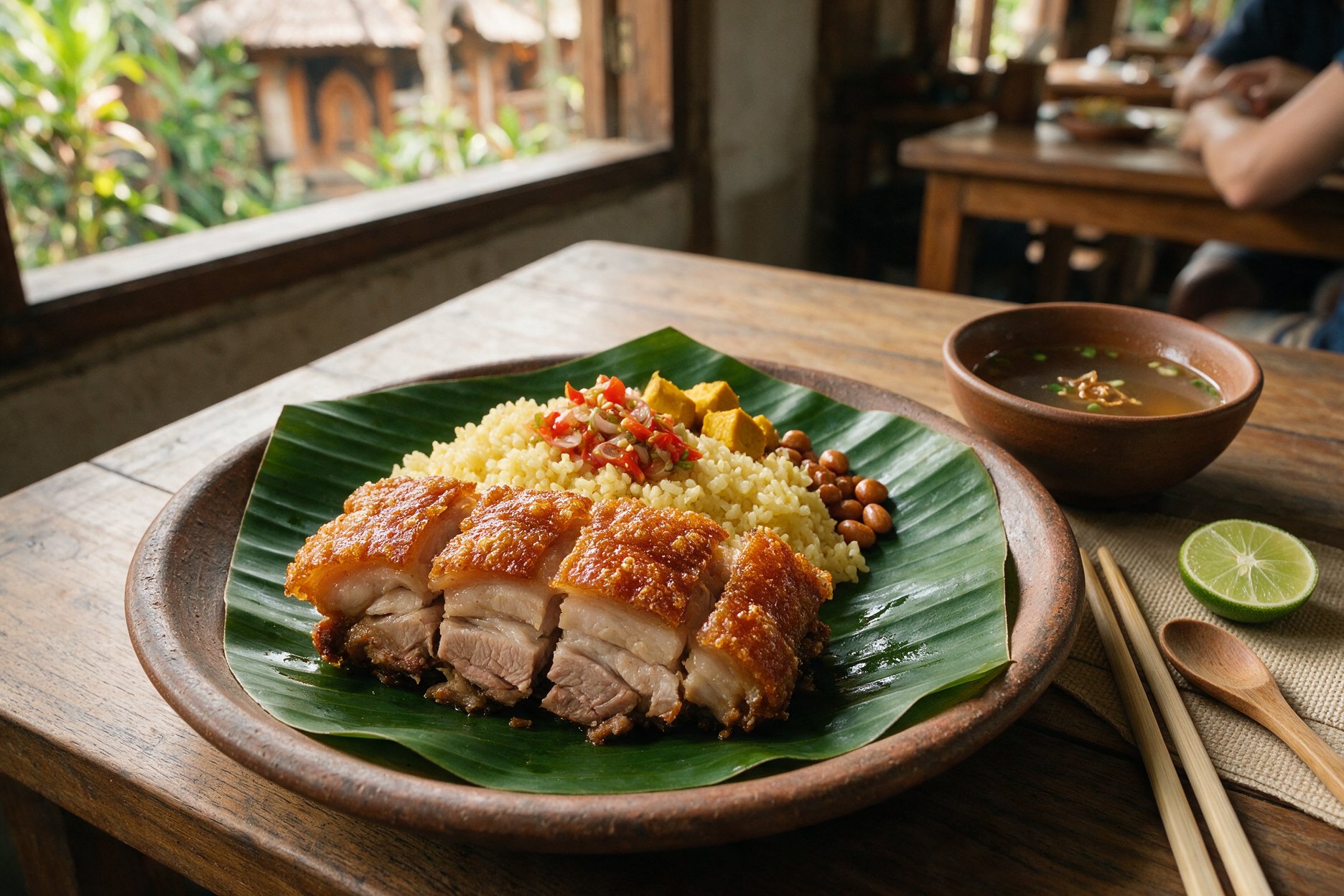
Warung Babi Guling Ibu Oka 3, tucked down a narrow residential lane near Ubud’s Puri Saren Royal Palace, is where most people go for this. The dish itself is a whole pig stuffed with turmeric, lemongrass, black pepper and garlic and roasted on a spit until the skin turns shatteringly crisp. The set meal (around IDR 75,000) comes with rice, the roasted meat, blood sausage, a broth with potato to cut the richness, and a scoop of sambal matah — a raw shallot-and-chili relish — on the side. The skin is the reason people queue for this dish, and it earns the reputation. The catch: by 11:30am there’s a genuine line and a fair number of tour buses parked outside, so go right at opening if you want to eat it without the crowd noise.
Late-Night Eats
Seminyak and Kerobokan run some of the only true 24-hour kitchens on this whole route. Baku Dapa in Kerobokan Kelod cooks an oxtail soup for almost six hours a day and serves it around the clock, alongside standard Indonesian plates. Warung Laota near the airport in Tuban does 24-hour fresh seafood and, oddly and wonderfully, a proper Hong Kong-style rice porridge menu. If you want something closer to a diner run, Bossman Bali Burgers in Seminyak serves grilled pork and beef burgers until 4am. A Jimbaran beachside seafood dinner is worth doing once too — pick your fish table-side while it’s still on ice, then eat it grilled with your feet in the sand at sunset. It’s touristy and the bill reflects the view as much as the food, but the ritual earns the one evening.
For more on where to actually stay and explore around the island, Get Tripped’s guides to Bali hidden gems beyond Ubud, Seminyak and Canggu and Bali’s hidden gems cover the places-to-visit-in-Bali side of the trip that this food guide leaves out.
Jakarta: Food Halls, Roasteries and Street Food After Dark
Jakarta is the one stop on this list that feels like a proper capital-city food scene — multi-storey food halls, a specialty coffee industry old enough to have real history, and street food markets that genuinely run past midnight. If Bali is Get Tripped’s most-booked destination, Jakarta is increasingly the add-on that turns a Bali trip into a fuller Jakarta and Bali tour package, and the food is a big reason why.
Coffee in Jakarta
Toko Kopi Tuku deserves the fun fact treatment: this small local chain is widely credited with starting the “es kopi susu” boom — iced coffee sweetened with condensed and fresh milk — that spread from Jakarta across the whole country from around 2015 onward. It’s still worth ordering here at the source. Tanamera Coffee is an award-winning Indonesian roastery with a proper flat white if you want something closer to a Melbourne-style café. Anomali Coffee, running since 2007 across Menteng, Senopati and Kemang, was one of the first places in the city pushing single-origin Indonesian beans instead of imported blends. And if you like your coffee with some history attached, Bakoel Koffie in Cikini traces its roots back to the 1870s, making it one of the oldest continuously running coffee houses in the city.
Ice Cream and Dessert
LōCARASA takes two of Indonesia’s most recognisable sweets — klepon (pandan rice balls filled with palm sugar) and martabak manis (sweet stuffed pancake) — and turns them into actual gelato flavours, which sounds gimmicky until you taste how well the palm-sugar sweetness translates. 21 Factory Premium Gelato goes further with a Rujak Aceh flavour, based on the sour-spicy fruit salad from Aceh, made fresh daily without artificial colouring.
Must-Try Dish: Nasi Goreng Kambing
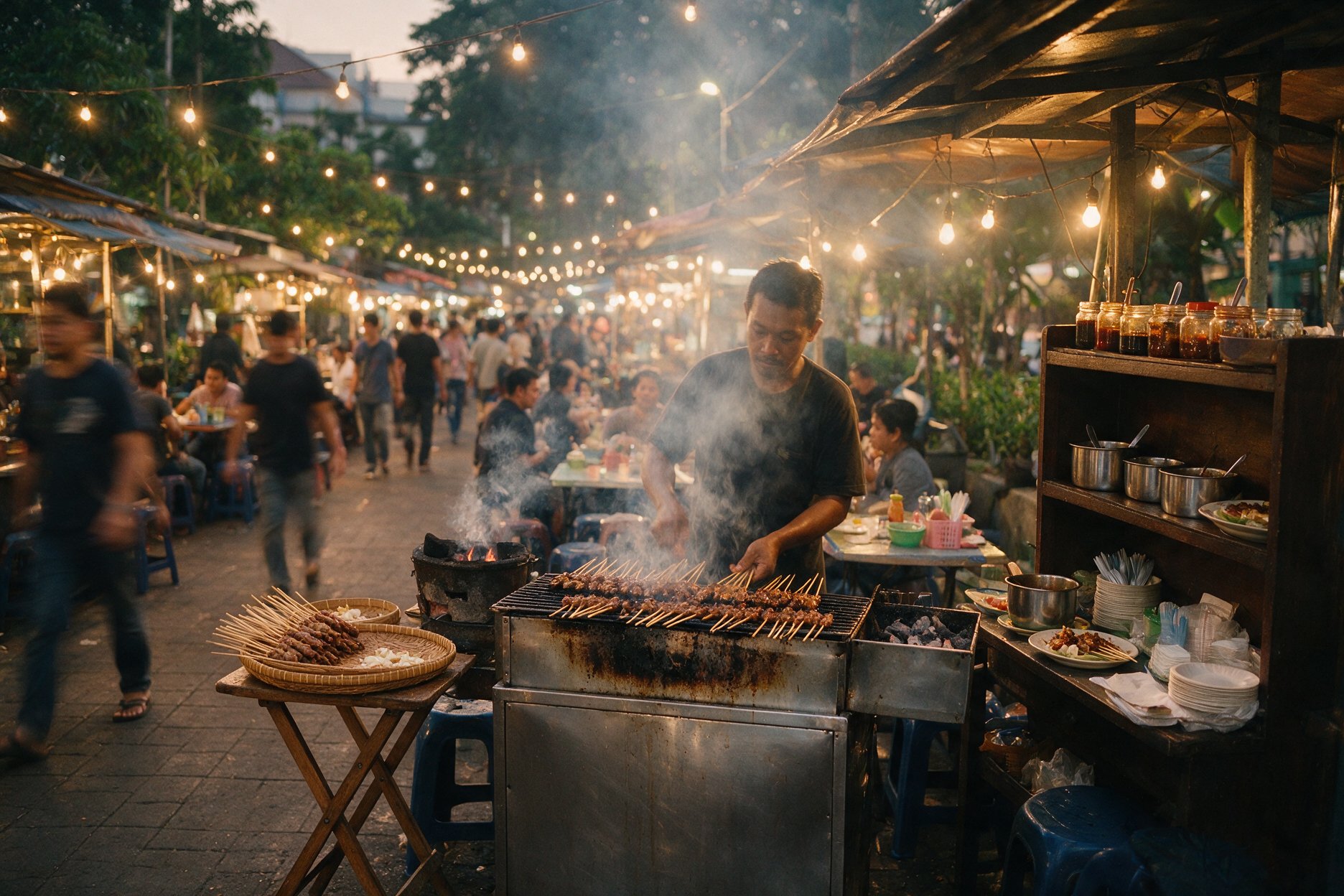
Head to Jalan Sabang in Central Jakarta, the city’s best-known street-food strip, and order the Nasi Goreng Kambing at the Kebon Sirih stall — a lamb fried rice regularly called one of Indonesia’s most famous versions of the dish, priced around IDR 50,000–80,000. A few stalls down, Sate Ayam Pak Kumis grills Madurese-style chicken satay with a proper peanut sauce for IDR 40,000–60,000. Both are the kind of stalls where the owner has been cooking the same dish, the same way, for years, and it shows.
Late-Night Eats
Jalan Sabang runs from around 5pm to 1am and is the easiest late-night option to reach. Pecenongan Night Market, also in Central Jakarta, stays open until 2am and specialises in grilled and Padang-style seafood (budget IDR 150,000–400,000 per person, shared) alongside thick martabak stalls (IDR 75,000–250,000). Mistake to avoid: don’t try to drive yourself into either street at peak dinner hour. Traffic and parking around both markets get genuinely difficult after 7pm — book a ride-hailing app and get dropped a block away instead.
Gili Islands: Beach BBQ and Bamboo-Café Coffee
A fact worth knowing before you land on any of the three Gilis — Trawangan, Air or Meno: there are no cars or motorbikes allowed on any of them. Everything moves by bicycle or horse-drawn cidomo cart, and every ingredient that isn’t fished locally arrives by boat from Lombok or Bali. That single fact shapes the whole food scene here — menus lean heavily on what actually gets caught, and produce costs a bit more than you’d expect for a small island, simply because the supply chain is genuinely longer.
Coffee
Gili Coffee Roasters on Gili Air roasts its own beans on-site and grows some of its own ingredients, which is unusual for an island this size, and the coffee is noticeably more balanced for it. Teras Bambu, a tiny bamboo café with terrace seating on beanbags, does a solid iced latte alongside a simple breakfast menu.
Dessert
Be honest with yourself here: dedicated ice cream and gelato shops are thin on the ground across the Gilis compared with Bali, and most of what you’ll find is imported and priced accordingly. Barefoot Blondie near the Gili Air jetty is the better bet — its Blondielicious brownie is rich, gooey and paired with genuinely good latte art coffee, and it beats hunting for a gelato cone that probably arrived by boat three days ago.
Must-Try: BBQ Seafood at Gili Trawangan Night Market
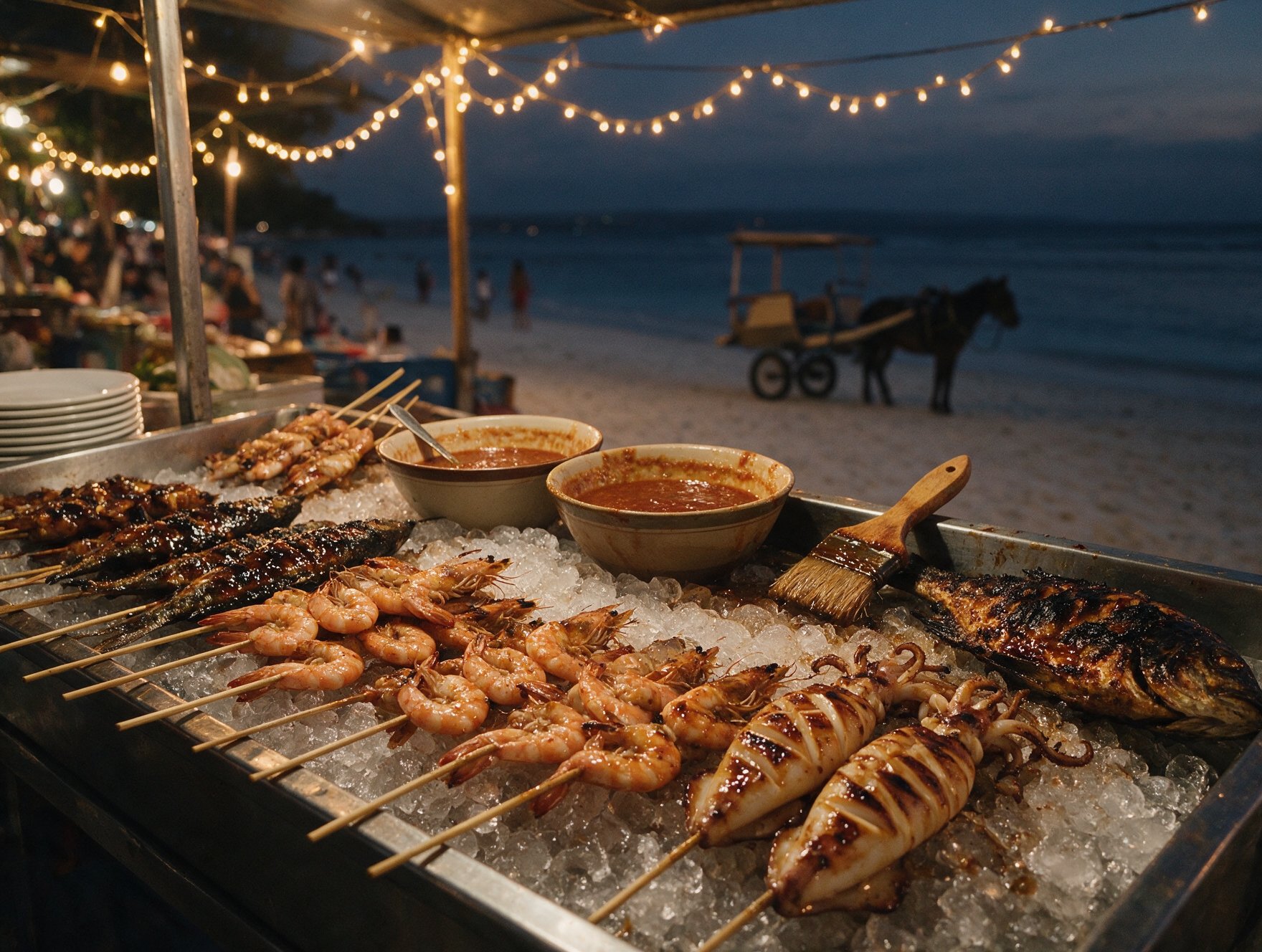
Running roughly 6pm to 11pm near the jetty, this is the single best food experience across the three islands. Skewers — tuna, squid, shrimp, snapper, even duck and beef — run about IDR 25,000 each, and two skewers usually come with complimentary rice and four sides. A medium whole fish costs IDR 150,000–300,000 depending on size, and a celebratory 2kg lobster runs around IDR 950,000. Mistake to avoid: agree on the price before they start grilling, since stallholders sell by weight and it’s easy to end up paying double what you expected.
Late-Night Eats
The night market itself wraps up by around 11pm. After that, Gili Trawangan’s bar strip keeps going loud and late, while Gili Air and Gili Meno go quiet fast. Honest opinion: if you want a calm, romantic dinner and an early night, base yourself on Air or Meno — Trawangan is genuinely the party island of the three, and it’s worth knowing that before you book accommodation, not after.
Nusa Penida: Cliffside Coffee and Early Nights
Nusa Penida gets visited almost entirely for its cliffside viewpoints — Kelingking Beach, Angel’s Billabong, Broken Beach — and the food scene is still catching up to the tourist numbers those Instagram shots bring in. Most dining here is warung-style, built around feeding day-trippers lunch between viewpoints rather than serving a long, lazy dinner.
Coffee
Penida Espresso in Sampalan does properly made specialty coffee alongside avocado toast and smoothie bowls, including vegan options — a small, welcome surprise on an island this rustic.
Dessert
Nusa Penida doesn’t really have a dessert scene yet, and there’s no point pretending otherwise. What comes closest is the tropical fruit platter at Secret Penida Restaurant overlooking Crystal Bay — fresh mango, snake fruit and dragon fruit served as the sun drops behind the water. It’s simple, but a plate of good, cold, ripe fruit at that view doesn’t really need dressing up.
Must-Try Dish
Warung Tu Pande in Ped village does Ayam Betutu (slow-cooked spiced chicken) and Babi Guling at prices well below what you’d pay for the same dishes in Ubud, plus grilled fish depending on the day’s catch. It’s a proper local warung, not a spot built for tour groups, and it shows in both the price and the pace of service — don’t go in a hurry.
Late-Night Eats
Here’s the honest gap: almost nothing on Nusa Penida stays open past 9 or 10pm. The island doesn’t have the electricity infrastructure or the tourist volume yet to support a late dining scene, and that’s genuinely fine — it’s not a flaw to route around, it’s just a different kind of island than Bali. Eat early at a cliffside warung, then find a dark stretch of coastline; Penida has some of the least light-polluted skies left near Bali, and stargazing is a better use of a Penida evening than hunting for a restaurant that isn’t there. Mistake to avoid: don’t book a remote stay near Atuh Beach expecting dinner delivery or a late kitchen — pack snacks for the evening.
Komodo National Park: Labuan Bajo and Life on a Liveaboard
Everyone flying into Labuan Bajo is here for Komodo National Park — the dragons, Padar Island’s viewpoint, Pink Beach, the diving. It’s worth being upfront about something before you plan meals around this stop: this is not a food destination the way Bali or Jakarta are, and it doesn’t need to be. You’re here for the landscape and the wildlife, not a tasting menu, and the food scene, while real, is a fraction of the size.
Coffee
Labuan Bajo cafés like La Bajo Flores Coffee serve beans grown in Flores’ own highlands rather than shipping in Bali or Java coffee, which is a nice detail if you want to taste the island you’re actually standing on. More on where that coffee comes from in the Flores section below.
Dessert
Be honest about this one too: dedicated ice cream and gelato shops are scarce in Labuan Bajo compared with Bali. The default cold treat here is es kelapa muda — a young coconut cracked open at a harbourside stall and served chilled with its own water and soft flesh — and after a hot day on the water, it’s genuinely better than a melting cone would be anyway.
Must-Try: The Liveaboard Catch
If you’re doing a multi-day boat trip through the park to see Komodo, Rinca and Padar, the food experience is the boat’s crew buying fish straight off local fishing boats each morning and grilling it on deck that evening with rice and sambal. Quality varies a lot by operator — a budget open-trip boat’s kitchen is a real step down from a mid-range or premium phinisi’s, so if food matters to you, it’s worth paying up for a boat with a dedicated cook rather than assuming they’re all the same. Back on land, Made In Italy Ristorante and Tree Top Restaurant do a solid grilled catch with garlic butter and harbour views if you’d rather eat on solid ground, while Kampung Ujung and Warung Mama are the cash-only, no-frills spots locals actually eat at.
Late-Night Eats
Labuan Bajo’s waterfront restaurants mostly close by 10 or 11pm, and there isn’t a late-night food scene here to speak of — it’s an early-to-bed town because everyone’s up before dawn for boat departures to catch the dragons before the heat sets in. Mistake to avoid: don’t count on finding dinner after 10pm here. Eat while the harbour restaurants are still serving.
Flores: Highland Coffee and Bamboo-Grilled Rice
Beyond Labuan Bajo, Flores stretches east through the Manggarai and Ngada highlands toward Kelimutu’s three-coloured crater lakes, and the food changes noticeably with the altitude and the distance from the tourist boats.
Coffee
The highlands around Bajawa, in the Ngada regency, grow Arabica at altitude using traditional processing methods, and both Flores coffee and the Manggarai coffee grown further west rarely get the recognition Bali’s does — but specialty roasters are increasingly seeking it out for its low acidity and heavier body. If you get the chance to try a cup made from beans grown within sight of where you’re drinking it, it’s worth the detour.
Dessert
Traditional Flores snacks stand in for dessert here: kompyang, a round, sesame-topped bread-like snack, and kue pisang, a banana cake made with cinnamon, kenari nuts and palm sugar. Neither is especially sweet by Western standards — think dense spiced tea cake rather than birthday cake, and that restraint is part of what makes them work with strong local coffee.
Must-Try Dish: Kolo
Kolo is rice packed into bamboo tubes with seasoned fish, then grilled over an open flame for about half an hour until the bamboo chars and the rice picks up a genuine smokiness you can’t replicate in a pot. It’s a proper Manggarai specialty, hard to find outside Flores, and one of the more distinctive dishes on this entire route. In Ngada villages further inland, jagung bose — a porridge of white corn, red beans and coconut milk — is the heartier, everyday alternative worth trying if you’re staying overnight rather than passing through.
Late-Night Eats
Small highland towns like Bajawa and Moni (the usual base for a pre-dawn Kelimutu sunrise hike) shut down by 8 or 9pm, no exceptions. If you’re chasing that sunrise, arrange breakfast or pack something the night before, because nothing will be open when you leave at 3 or 4am to make the climb in time.
Frequently Asked Questions
Is street food in Indonesia safe to eat?
Generally yes, using the same common-sense rules you’d apply anywhere: pick stalls with a steady stream of local customers, food that’s cooked fresh in front of you rather than sitting out, and bottled or boiled water. The busiest stalls at Jalan Sabang or Gili Trawangan’s night market are busy for a reason.
What’s the best Indonesian coffee to try in Bali?
A well-brewed Kintamani Arabica from an actual roastery beats the caged-civet kopi luwak tourist stops on taste, price and conscience. If you want something with real provenance, Flores highland coffee from Bajawa is worth seeking out too.
Do warungs and night markets take cards, or is it cash only?
Mostly cash, especially outside Bali’s main tourist strips. Nusa Penida, the Gili night market, and warungs across Komodo National Park and Flores are largely cash-only, so carry small IDR notes — big bills are often hard for small stalls to break.
Is Indonesia safe for tourists eating out late at night?
In Bali’s and Jakarta’s main tourist and food districts, yes, with normal city precautions. Elsewhere on this list — Nusa Penida, Komodo National Park, rural Flores — the question is almost moot, since there’s rarely anywhere open late enough to need to ask.
What’s the best time to visit Indonesia for fresh seafood and busy night markets?
Dry season, roughly April to October, is when boat trips to Komodo run most reliably, Gili Trawangan’s night market is at its busiest, and Bali’s beachside barbecue dinners are in full swing. Shoulder months either side still work well and come with smaller crowds.
How much should I budget per day for food in Indonesia?
For a comfortable, mid-range trip, figure roughly IDR 300,000–600,000 (about $20–40) per person per day covering warung meals, one nicer dinner and coffee — more in Jakarta for fine dining. It’s a small enough line item that when people work out Indonesia trip cost from India overall, food rarely moves the needle compared to flights and stays.
Can vegetarians eat well across all six of these places?
Bali and Jakarta, easily — both have dedicated vegetarian and vegan cafés. Nusa Penida and the Gilis have a handful of reliable options. Komodo National Park and rural Flores take more planning, since dishes default to fish or meat and menus aren’t always written down.
Can I combine Jakarta and Bali in one Indonesia trip?
Yes, and it’s one of the more popular ways to see contrasting sides of the country — Jakarta and Bali tour packages typically pair a couple of city days for food halls and culture with a longer Bali stretch for beaches and rice terraces.
Planning Your Indonesia Food Trail
What makes this Indonesia food trail work as one trip rather than six disconnected stops is the contrast: Bali’s kitchens run all night, Jakarta’s coffee scene has real depth, the Gilis and Nusa Penida hand you a simpler, more rustic version of Indonesian cooking, and Komodo and Flores remind you that some of the best food experiences come with almost no restaurant at all — just a fresh catch, a bamboo tube of rice, and a good reason to be there.
If you’re putting together an Indonesia trip and want an itinerary that actually accounts for where you’ll eat well without a second thought — and where you should plan ahead instead — Get Tripped can build a custom route across Bali, Jakarta, the Gili Islands, Nusa Penida, Komodo National Park and Flores around your pace, your budget and your appetite. Get in touch and let’s plan your Indonesia trip.