I once watched a guy at the Kintamani viewpoint parking lot try to layer a Bali Kuta Beach t-shirt over another t-shirt because nobody told him Mount Batur’s summit hits 12°C at 4:30am. He’d packed for a “tropical country.” Indonesia is tropical, technically, from the equator to the volcanoes — but a country spread across three time zones and more than 17,000 islands doesn’t pack like one climate. What you need for a week of temple-hopping in Bali is not what you need for a Komodo liveaboard or a pre-dawn hike up Kelimutu to watch its crater lakes change color.
This guide breaks Indonesia’s packing list down by season first (dry vs. wet, and where those actually fall depending on which islands you’re visiting), then by the specific experiences Get Tripped builds Indonesia itineraries around: temples, beaches, volcanoes, and boat trips. Skip to whichever section matches your trip.
What’s in This Guide
- Indonesia’s Seasons, Actually Explained
- Dry Season Packing List (April–October)
- Wet Season Packing List (November–March)
- Packing for Temples: Sarongs and Modest Dress
- Beach and Island Days: Gili Islands, Nusa Penida, Bali
- Volcano Treks: Mount Batur and Kelimutu
- Komodo Liveaboards and Boat Trips
- Jakarta and City Days
- Electronics, Plugs and Voltage
- The Complete Indonesia Packing Checklist
- What Not to Overpack
- FAQs
Indonesia’s Seasons, Actually Explained
The short version, and the one that matters for a best time to visit Indonesia question: Bali, Java, Lombok and the Komodo/Flores region generally run a dry season from around April to October and a wet season from November to March. That’s the version every guidebook gives you, and it’s directionally right for Bali. But it’s worth knowing the wet season isn’t a washout — it usually means an hour or two of hard, warm rain in the afternoon, then clear skies again, not grey drizzle for a week.
Where it gets more specific: the eastern islands behave a little differently from Bali. Komodo and Flores see their driest, calmest sea conditions roughly April through September, with July and August the busiest and priciest window because the weather is close to guaranteed. Sulawesi, Raja Ampat and the Moluccas further east actually flip somewhat, with June to September bringing more rain and March to May plus October as their better stretch. If your Get Tripped itinerary spans both Bali and eastern Indonesia, that mismatch is exactly why you pack for two mini-seasons in one suitcase, not one.
Temperature-wise, Indonesia doesn’t really have a “cold” or “hot” season the way India does — it hovers around 26–34°C most of the year at sea level, with humidity that sits in the 70–90% range depending on rainfall. The variable that actually changes your packing list isn’t temperature. It’s rain, wind at altitude, and sea swell. That’s the frame for every list below.
Two keyword-friendly notes worth flagging if you’re planning around specific months: Indonesia trips April to June catch the start of the dry season almost everywhere, with green landscapes still lingering from the wet months and fewer crowds than July–August. Indonesia holidays September to November sit right at the shoulder — September is often the single best month for Bali and Komodo both, while by November the wet season is creeping back into the west even though eastern islands are still decent.
Dry Season Packing List (April–October)
This is peak-condition Indonesia: low humidity by local standards, minimal rain, and the best visibility for diving and volcano views. It’s also when the sun does the most damage, so sun protection matters more here than almost anything else on this list.
- Lightweight, breathable clothing in natural fibers — linen and cotton beat synthetic blends in daytime heat, even though synthetics dry faster (bring a mix)
- A wide-brim hat or cap with a chin strap for boat rides
- Sunglasses with UV protection, plus a strap if you’ll be on water
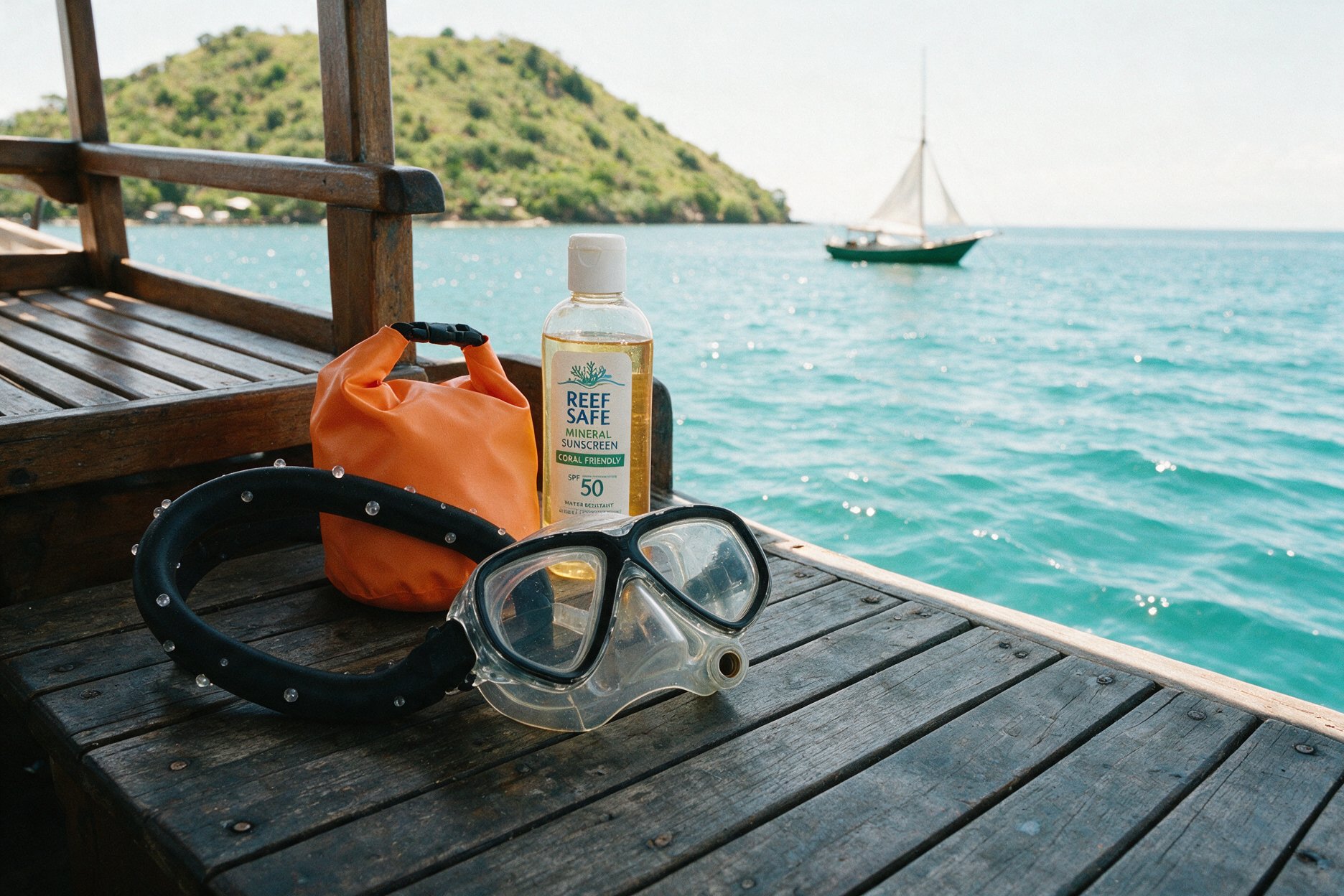
- Reef-safe, mineral-based sunscreen (SPF 30–50) — more on why this specific type matters in the boat trip section
- A light long-sleeve shirt for sun coverage during the hottest midday hours, not just for temples
- One warm layer even in dry season — see the volcano section, because this is the mistake almost everyone makes
- Comfortable walking sandals plus one pair of closed shoes
- A refillable water bottle; dry season heat means you’ll drink more than you expect
- Lip balm with SPF — dry season wind at altitude and on boats chaps lips fast
Wet Season Packing List (November–March)
Wet season Indonesia gets an unfair reputation. Yes, it rains, but the rain is usually short, intense, and predictable — late afternoon downpours rather than all-day grey. Rice terraces are greener, waterfalls run fuller, and hotel rates drop. Pack for humidity and sudden rain, not for cold.
- A packable, genuinely waterproof rain jacket — not water-resistant, waterproof, since the rain can be heavy
- A compact travel umbrella (many hotels and drivers hand these out, but don’t count on it for a hike)
- Quick-dry clothing — humidity means cotton stays damp for hours after washing or a downpour
- A dry bag or large ziplock bags for phones, passports and electronics whenever you’re out and about
- Water-resistant or quick-dry footwear; leather shoes and wet season don’t mix well
- An extra set of socks in your daypack — wet feet in humid heat is a fast route to blisters and fungal irritation
- A change of clothes packed in your daypack, not just your suitcase, for day trips
- Mosquito repellent with at least 20% DEET or picaridin — standing water after rain means more mosquitoes, and dengue is present in Indonesia year-round but ticks up in wet months
Packing for Temples: Sarongs and Modest Dress
Bali’s temples — Tanah Lot, Uluwatu, Besakih, the water temple at Tirta Empul — all require covered shoulders, back and knees before you’re allowed past the gate. This isn’t a soft suggestion enforced only at the famous ones; smaller village temples hold to it too.
Here’s the practical question everyone asks: do you need to bring your own sarong, or can you rent one there? Honestly, either works, and I’d pack light on this one. Most well-visited temples — Goa Lawah, Lempuyang, Tirta Empul — rent sarongs and sashes on-site for a small donation, so you don’t need to carry one across every leg of your trip. What I would pack is a single lightweight sarong of your own (they double as a beach cover-up, a picnic blanket, or an extra layer on an air-conditioned bus) plus a shirt with sleeves, since rented sarongs cover your legs but won’t fix a tank top.
A few other rules worth knowing before you go: shoes come off at some inner sanctums, not just the obvious ones, so slip-on footwear saves you time. Traditionally, temple grounds in Bali are considered off-limits to women who are menstruating, and signs at some temples note this directly — it’s a genuine local custom, not a tourist gimmick, so it’s worth planning your temple days around if it applies to you. And skip the “we’ll dress modestly at the entrance and change back after” approach some tour groups try — temple staff notice, and it reads as disrespectful rather than resourceful.
Beach and Island Days: Gili Islands, Nusa Penida, Bali Beaches
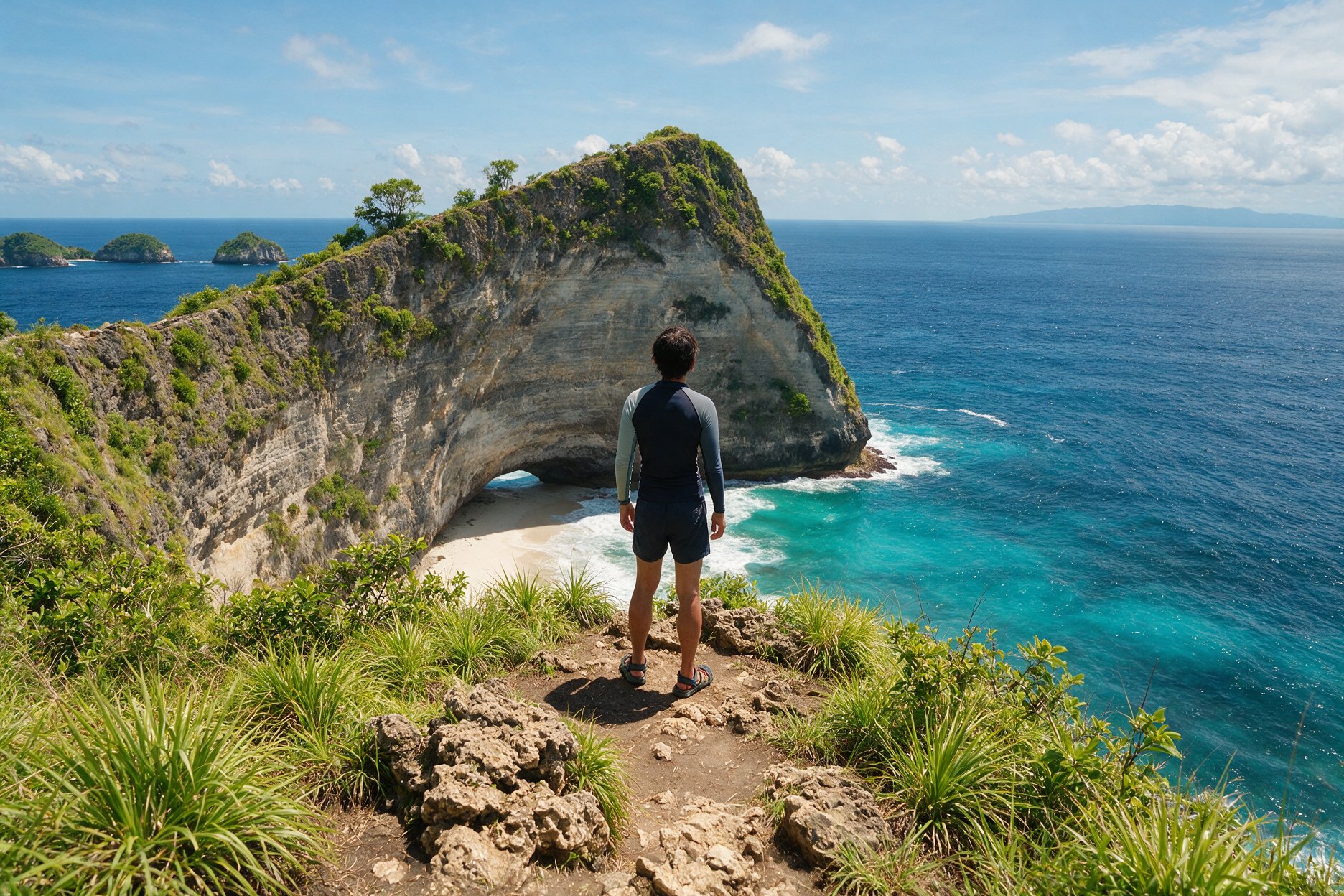
Bali’s beach clubs in Canggu and Uluwatu want resort-casual: swimwear is fine on the sand, but most beach clubs and beachfront restaurants ask for a cover-up or shirt once you’re at the tables. Nusa Penida is a different animal — the famous viewpoints (Kelingking, Broken Beach, Angel’s Billabong) involve steep, sometimes loose-gravel descents, and flip-flops are a genuinely bad idea there. Pack proper trainers or grippy sandals with a back strap for Nusa Penida specifically.
- A rash guard or swim shirt — sun at the equator is stronger than it feels, and a rash guard means less sunscreen reapplication mid-swim
- Reef-safe sunscreen (avoid oxybenzone and octinoxate; check the label, not just the marketing on the bottle)
- Snorkel mask if you have a favorite — rental gear at the Gilis is fine but not always well-fitted
- Aqua shoes or grippy sandals for Nusa Penida’s rocky trails and the Gili Islands’ sometimes coral-strewn shallows
- A dry bag for day trips between islands — the fast boats to Gili Trawangan and Gili Air throw spray
- A light cover-up or sarong for the walk from beach to café
- Cash in small denominations — a lot of beach warungs and boat operators on the Gilis and Nusa Penida don’t take cards
Honest opinion: skip the inflatable pool floats you see everywhere on Instagram. They’re a pain to pack, they don’t survive a fast boat ride, and every beach club on Bali’s south coast rents nicer ones for less than you’d pay to bring your own.
Volcano Treks: Mount Batur and Kelimutu
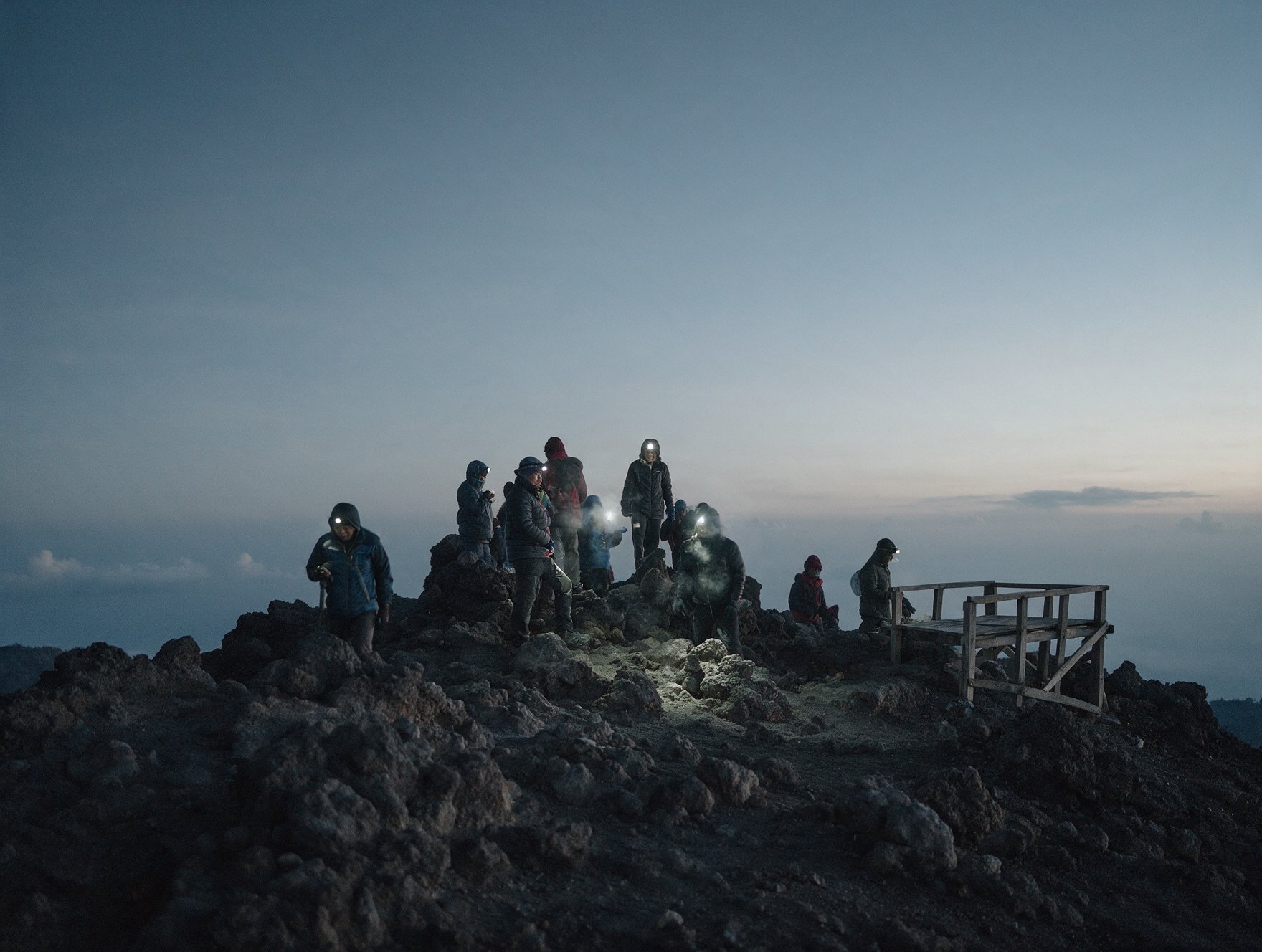
This is the section that trips people up most, and it’s the one honest mistake worth calling out directly: Indonesia is tropical, but its volcano summits are not. Mount Batur’s sunrise trek starts around 3–4am so you reach the crater rim before dawn, and summit temperatures typically sit between 12–18°C with wind chill that makes it feel colder. Kelimutu, on Flores, is the same story — its tri-colored crater lakes are the whole reason to go at sunrise, and the viewpoint gets genuinely cold before the sun comes up. People show up in t-shirts because they packed for “Indonesia” instead of “Indonesia at 1,700 meters before dawn,” and then shiver through what should be one of the best views of the trip.
- A proper warm layer — a fleece or light puffer jacket, not just a hoodie
- A headlamp or flashlight with spare batteries; trail lighting is minimal to nonexistent on both hikes
- Sturdy closed-toe hiking shoes with real tread — Batur’s volcanic scree is loose and slippery, and flip-flops or canvas sneakers genuinely aren’t enough
- Gloves and a light beanie if you run cold; pack-and-forget items that weigh almost nothing
- A small daypack for water, snacks and your camera
- Sun protection for the descent — by 8am you’ll want the hat and sunscreen you packed away for the cold ascent
- A portable charger; cold mornings and long exposure shots drain phone batteries faster than usual
Local tip: on Mount Batur, guides sometimes offer to carry a jacket up for a small fee if you show up underdressed. It works, but it costs more than just packing one yourself, and you lose ten minutes of sunrise light waiting for it. Bring your own.
Komodo Liveaboards and Boat Trips
A Komodo liveaboard is one of the best few days you can spend in Indonesia — dragons on Rinca or Komodo Island, pink sand at Pantai Merah, manta rays at Manta Point, snorkeling that rivals anywhere in Southeast Asia. It’s also genuinely different packing logic from a beach holiday, because you’re living out of a cabin and a dry bag for multiple days.
- Seasickness medication, taken before you feel queasy, not after — the crossing between islands can get choppy even in dry season, and once you’re seasick it’s hard to enjoy anything for the rest of the day
- A proper dry bag (10–20L is plenty) for your phone, camera and any electronics you bring on tenders and snorkel stops
- Quick-dry clothing — you’ll be wet more often than dry across a 2–3 day trip, and laundry isn’t happening onboard
- Reef-safe sunscreen is close to non-negotiable here: Komodo National Park is a UNESCO World Heritage Site built around fragile reef systems, and most operators actively ask guests to use mineral, reef-safe formulas rather than chemical sunscreens
- A reusable water bottle — most liveaboards run a zero-single-use-plastic policy onboard and provide refill stations rather than bottled water
- Flip-flops for the boat deck, closed shoes for any island landings with uneven volcanic ground
- A light long-sleeve for sun coverage during long deck hours between snorkel stops
- Basic toiletries in travel sizes — storage on liveaboard cabins is tight, and you won’t need a full skincare routine for three days at sea
- A printed or downloaded copy of your booking confirmation; signal is patchy to nonexistent once you’re out among the islands
Jakarta and City Days
If your Get Tripped itinerary routes through Jakarta — a stopover, a business add-on, or a city stay before flying onward — pack differently than for the islands. Jakarta’s heat is the sticky, traffic-jam kind rather than the beach kind: expect 27–33°C most of the year with humidity that makes even short walks between air-conditioned buildings feel like a workout. There isn’t really a dry-vs-wet distinction that changes what you wear here the way it does in Bali; it’s warm and humid essentially year-round, with heavier rain November through March.
- Breathable, smart-casual clothing — malls, rooftop bars and better restaurants in Jakarta lean more polished than beach-town Bali
- A light layer for indoor air conditioning, which in Jakarta’s malls and offices runs noticeably cold
- Comfortable closed shoes for walking; Jakarta’s pavements and street crossings aren’t especially flat or shaded
- An umbrella or light rain jacket if you’re there November through March
- A portable fan or cooling towel if you’re sensitive to humidity — it sounds excessive until you’re standing at a crosswalk at midday
Electronics, Plugs and Voltage
Indonesia runs on 230V at 50Hz and uses Type C and Type F plug sockets — the two-round-pin European style, with Type F adding grounding clips. If you’re travelling from India, note that while the voltage matches (India also runs 230V/50Hz), the plug shape doesn’t — Indian Type D plugs with three round pins in a triangle won’t fit Indonesian sockets, so bring a universal adapter or a Type C/F-specific one. Most phone chargers, laptop chargers and camera batteries are dual-voltage these days, so you generally don’t need a voltage converter, just the adapter itself. The one thing to double-check is any single-voltage appliance you might travel with, like a hair straightener bought in a 120V country; that genuinely needs a converter, not just an adapter, or it can damage the device.
- A universal travel adapter (covers Type C/F sockets)
- A portable power bank — useful on boat trips, volcano hikes, and long transfer days between islands where outlets aren’t always available
- A local SIM or eSIM; Indonesian carriers like Telkomsel offer solid coverage in Bali and Jakarta, though signal thins out fast once you’re on smaller islands or out on a liveaboard
The Complete Indonesia Packing Checklist
Pulling it all together, here’s a checklist that covers a typical Get Tripped Indonesia itinerary spanning Bali, a volcano sunrise and a Komodo boat trip.
- Passport (valid 6+ months) plus a printed copy, and your Indonesia entry documentation
- Lightweight breathable clothing (5–7 outfits for a 10-day trip, since you can get laundry done almost everywhere)
- One sarong and one long-sleeve shirt for temples
- Swimwear plus a rash guard
- One warm layer (fleece or light jacket) for volcano sunrise treks
- Sturdy closed-toe shoes for hiking and rocky trails
- Comfortable sandals for everyday wear
- Reef-safe sunscreen and a wide-brim hat
- Rain jacket or umbrella, especially November through March
- Dry bag for boat trips and snorkeling
- Seasickness medication
- Mosquito repellent
- Basic first-aid kit and any personal medication in original packaging
- Universal travel adapter and a power bank
- Reusable water bottle
- Cash (Indonesian Rupiah) for smaller islands, warungs and temple donations where cards aren’t accepted
What Not to Overpack
Indonesia has laundry services in almost every hotel and guesthouse, often same-day and inexpensive, so the instinct to pack ten days of outfits for a ten-day trip is wasted suitcase space. A few specific things to leave home:
- Single-use plastic sunscreen bottles you don’t intend to refill — several marine parks, including areas within Komodo National Park, actively discourage or restrict chemical, non-reef-safe sunscreens and single-use plastics. Bring one larger reef-safe bottle instead of several small ones
- Heavy cotton towels — most accommodations, liveaboards and even beach clubs provide towels; a compact microfiber travel towel covers any gap
- A hair dryer or straightener, unless it’s dual-voltage — most mid-range and luxury hotels provide one in-room
- A full-size first aid kit — pharmacies (apotek) are common in Bali and Jakarta; a small kit with the essentials plus any personal prescriptions is enough
- Formal wear, unless a specific dinner or event calls for it — Indonesia’s dress code, outside of temples and Jakarta’s business settings, runs relaxed even at nicer restaurants
The genuine mistake to avoid, worth repeating because it’s the one we see most often: skipping the warm layer because “it’s a tropical country.” Every Mount Batur and Kelimutu sunrise group has at least one person wrapped in a rented sarong at 5am because they didn’t believe it would be cold. Pack the fleece. It folds down to nothing and you’ll actually wear it.
Frequently Asked Questions
What is the best time to visit Indonesia overall?
For most itineraries covering Bali and eastern islands like Komodo and Flores, May through September is the safest bet — both regions are in their dry season, seas are calmer for boat trips, and volcano hikes have clearer sunrise views. September specifically tends to hit a sweet spot of good weather with slightly thinner crowds than the July–August peak.
Is Indonesia safe for tourists?
Yes, broadly — millions of tourists visit Bali, Java and the eastern islands every year without incident, and Indonesia’s tourism infrastructure in these areas is well established. The usual common-sense precautions apply: watch your belongings in crowded areas, use registered tour operators for volcano treks and boat trips, and check current government travel advisories closer to your departure date since conditions can shift, especially around seismic activity given Indonesia’s location on the Pacific Ring of Fire.
Do I need to bring my own sarong for Bali’s temples?
Not necessarily. Most well-visited temples rent sarongs and sashes on-site for a small donation. Packing one lightweight sarong of your own is still worth it since it doubles as a beach cover-up or an extra layer, but you won’t be turned away without one.
How cold does it actually get on the Mount Batur sunrise hike?
Summit temperatures typically run 12–18°C before sunrise, and wind chill can make it feel colder. That’s a big enough drop from Bali’s usual 28–30°C daytime heat that a proper warm layer, not just a light shirt, makes a real difference.
What should I pack differently for a Komodo liveaboard versus a Bali beach holiday?
A liveaboard means multiple days living out of a cabin with tight storage, so quick-dry clothing, a proper dry bag, seasickness medication and reef-safe sunscreen matter more than they would for a beach resort stay, where you have daily laundry and more space.
Does Indonesia use the same electrical plugs as India?
The voltage matches (both run 230V/50Hz), but the plug shape doesn’t. Indonesia uses Type C and Type F sockets with round pins, while India uses Type D with three round pins in a triangle. Pack a universal adapter.
Is it actually rainy the whole wet season, or can I still travel November through March?
You can absolutely still travel then. Wet season rain in Indonesia is usually a short, heavy downpour in the late afternoon rather than all-day drizzle, and hotel rates and crowd sizes both drop. Pack a proper rain jacket and quick-dry clothing and it’s a genuinely good time to go, especially for landscapes and waterfalls.
What’s one packing mistake most first-time Indonesia travelers make?
Assuming “tropical country” means no cold weather anywhere. Volcano sunrise treks on Mount Batur and Kelimutu both get cold enough to need a real jacket, and it’s the single most common thing people forget.
Planning Your Indonesia Trip
Once your suitcase is sorted, the bigger question is what your Indonesia itinerary should actually include — how many days between Bali, Komodo and the volcanoes, which islands are worth the extra flight, and when to book around the season that suits your travel style. That’s the part Get Tripped builds for you. Our Indonesia destination page has our full range of curated trips, and if you want to go beyond the obvious Bali stops, our guides to Bali’s hidden gems beyond Ubud, Seminyak and Canggu and other hidden corners of Bali are worth a read before you finalize your route.
Tell us your travel dates, the mix of beach, temple, volcano and boat time you want, and whether you’re after mid-range comfort or a full luxury liveaboard, and we’ll build a custom Indonesia itinerary around it — packing list included.