Our driver in Ubud once got turned away mid-fare by his own Grab app — not traffic, but because the family we were dropping off wanted a street in Pecatu where the local banjar has quietly blocked ride-hailing pickups. He parked two streets over and called a local ojek guy he knew instead. That’s the kind of detail no packing list mentions, and it’s exactly what you need before an Indonesia trip: getting around Indonesia isn’t one system, it’s six or seven stitched together by boats, apps and a lot of scooters. This guide walks through Indonesia public transit island by island — Bali, the Gili Islands, Nusa Penida, Komodo National Park and Flores, and Jakarta — with real 2026 prices, which apps work where, and the one document Indian tourists forget that can void a travel insurance claim.
Quick Navigation
- Quick Comparison: What Transport Costs Across Indonesia
- Getting Around Bali: Scooters, Grab/Gojek and Private Drivers
- Gili Islands: No Cars, Just Cidomo Carts and Bicycles
- Nusa Penida: Scooters, Private Drivers and Unforgiving Roads
- Komodo National Park and Flores: Boats Are the Whole Game
- Jakarta: TransJakarta, MRT, KRL and Real Traffic
- Getting Between the Islands
- International Driving Permits: What Indian Tourists Actually Need
- FAQs
Quick Comparison: What Transport Costs Across Indonesia
Before the island-by-island detail, here’s the cheat sheet. Prices are per-person unless noted, converted roughly at IDR 15,800 to USD 1, and they move around with fuel prices and season — treat them as a planning range, not a quote.
| Mode | Where | Typical Cost | Best For |
|---|---|---|---|
| Scooter rental (self-drive) | Bali, Nusa Penida | IDR 60,000–200,000/day (~$4–13) | Confident riders with a licence + IDP |
| Grab / Gojek app ride | Bali, Jakarta | IDR 15,000–80,000/ride (~$1–5) | Short hops, airport-to-hotel |
| Private driver, full day | Bali, Nusa Penida | IDR 620,000–1,250,000 (~$40–80) | Couples and families — the default we book |
| Cidomo (horse cart) | Gili Islands | IDR 50,000–150,000/trip (negotiated) | Luggage from harbour to hotel |
| Bicycle rental | Gili Islands | IDR 50,000–75,000/day | Exploring at your own pace |
| Speedboat day charter (private) | Komodo / Labuan Bajo | ~$800/boat/day | Families and small groups |
| Liveaboard open trip | Komodo / Flores | from $300pp for 3D2N | Komodo dragons, Pink Beach, diving |
| TransJakarta busway | Jakarta | IDR 3,500/ride flat | Cross-city hops on a budget |
| MRT Jakarta | Jakarta | IDR 3,000–14,000/ride | Fast north–south commute |
| KRL commuter rail | Greater Jakarta | from IDR 3,000, distance-based | Suburbs and airport-adjacent areas |
| Fast boat, inter-island | Bali–Nusa Penida–Gili | IDR 150,000–450,000 (~$10–30) | Island hopping without flying |
| Domestic flight | Bali/Jakarta–Labuan Bajo | from ~$90 one-way | Saving a day versus sea travel |
Getting Around Bali: Scooters, Grab/Gojek and Private Drivers
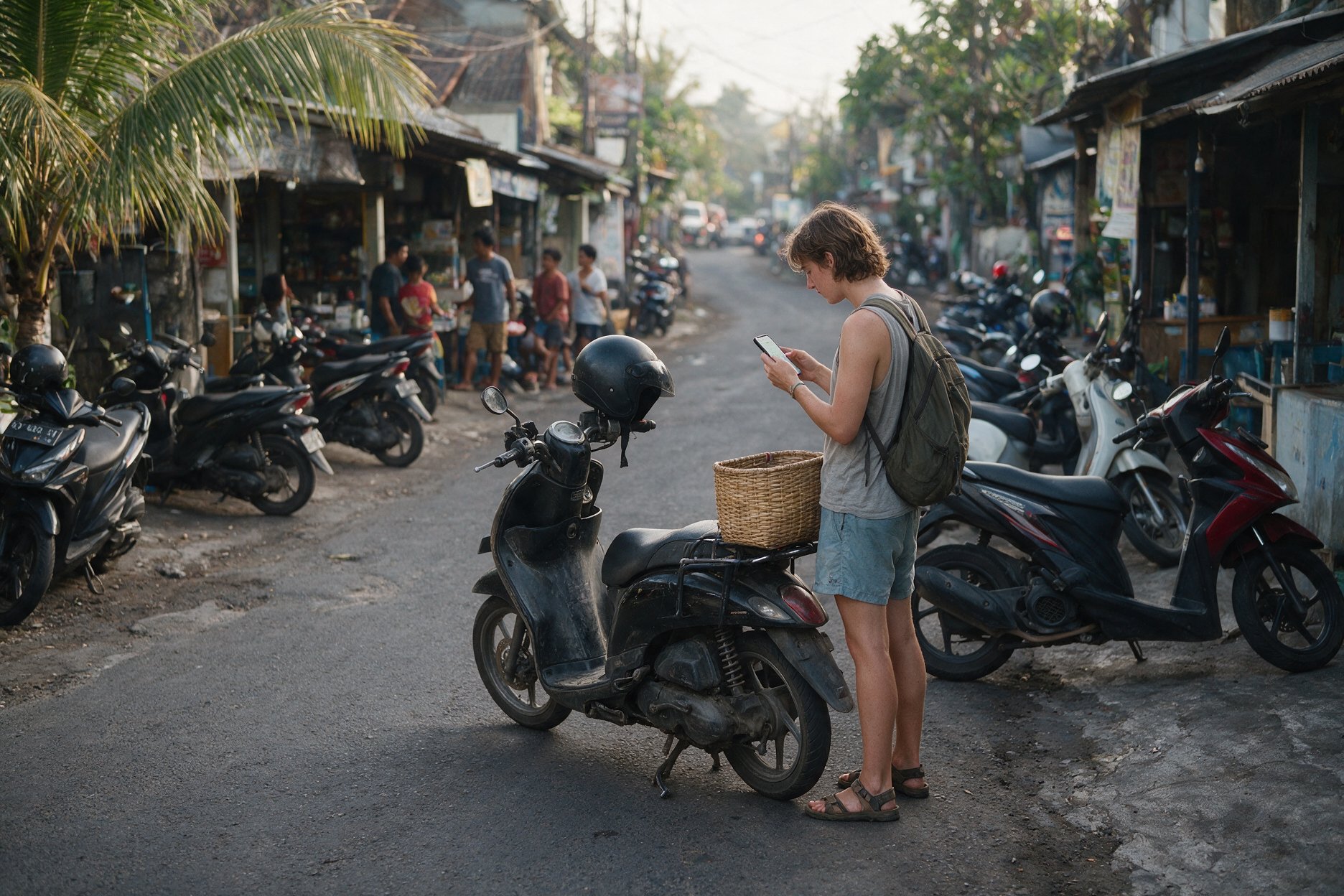
Bali runs on three transport options that don’t behave like each other, and knowing which one to reach for — and where it quietly stops working — saves a lot of standing on a curb refreshing an app.
Renting a Scooter: The Realities and the Risks
A Honda Scoopy or Beat automatic rents for roughly IDR 60,000–100,000 a day (about $4–6), with bigger bikes like an NMax or PCX running closer to IDR 100,000–150,000. Petrol is cheap, around IDR 10,000 a litre from the little roadside stalls selling it in old Absolut vodka bottles. It’s genuinely the fastest way to move through Canggu or Seminyak’s gang lanes when a car would sit gridlocked.
It’s also where most tourist injuries in Bali happen. In 2023, Bali’s governor announced he wanted to stop foreign tourists from renting motorbikes altogether, citing a run of accidents involving unlicensed riders. That blanket ban never actually became enforced law — you can still rent a scooter as a tourist in 2026 — but the intent stuck around as periodic police checkpoints (locally called razia), especially in Canggu, Seminyak and Kuta, targeting riders without a valid licence or international driving permit. We cover exactly what document you need in the IDP section below, because the consequences of skipping it are worse than a fine.
Our honest take: a scooter is genuinely fun if you’re staying a week or more in one area and you’ve ridden two-wheelers in dense Asian traffic before. It’s a bad idea for a first-time visitor riding from the airport on day one, jet-lagged, on the left side of a road that doesn’t always stay on the left. A mistake to avoid: some rental shops under-report existing scratches, then bill you for “damage” on return. Film a slow walk-around video of the bike before you ride off, timestamped, and you’ll never have that argument.
Grab and Gojek: Where They Work, and Where They Quietly Don’t
Grab and Gojek are Bali’s Uber-equivalents, and for short hops they’re hard to beat — a ride across Seminyak typically runs IDR 15,000–40,000, and even a longer Canggu-to-Ubud trip rarely tops IDR 150,000. Both apps also handle food delivery and, in Gojek’s case, small courier jobs, which is handy if you’ve left something at a villa.
What doesn’t show up in either app’s marketing: there are real “no-go zones” scattered across the island where ride-hailing pickups are informally blocked. It’s a long-running standoff between the platforms and local banjar (traditional village councils) and ojek/taxi cooperatives, who see app-based drivers as undercutting their fares. Parts of Canggu, the Ubud palace and market area, Sanur, Uluwatu and Pecatu have all had pickup restrictions at one point or another, so your app might show “no drivers available” repeatedly even with drivers visibly parked nearby. The workaround: walk a couple of hundred metres to a main road and try again, or ask your hotel or café to call a local driver — they’ll know the going rate.
Hiring a Private Driver: The Real Premium-Traveller Default
This is what we book for nearly every Get Tripped Bali itinerary, and once you’ve done a temple-and-waterfall day with one, it’s obvious why. A half-day charter (4–5 hours) runs roughly IDR 310,000–620,000 ($20–40), and a full day (8–10 hours) runs IDR 620,000–1,250,000 ($40–80) — that price covers an air-conditioned car, fuel, tolls, parking and the driver’s own meals, so the number you agree on in the morning is what you pay at night. Adding an English-speaking guide for temple etiquette and history runs around IDR 190,000 ($12) more per day. A tip of IDR 50,000–100,000 for a full day of good service is standard and appreciated, not obligatory.
The appeal isn’t just comfort. It removes Bali’s actual daily friction — parking at Tegalalang, Canggu’s one-way gang system, riding home after dark on unlit roads — and replaces it with someone who already knows which rice terrace viewpoint gets tour-bus crowds by 10am. One local tip: agree your day’s stops and finish time before you set off. A few drivers earn commission from handicraft or coffee-plantation stops and will steer a loose itinerary toward them; naming your must-sees up front keeps the day yours.
Gili Islands: No Cars, Just Cidomo Carts and Bicycles
Gili Trawangan, Gili Air and Gili Meno share one firm rule: no motorised vehicles, full stop. It isn’t a government law so much as a standing community agreement enforced by each island’s village council, originally meant to protect the reef-fringed coastline and keep the islands genuinely small-scale. The upside is real — no traffic noise, no exhaust, and beaches you can walk to from anywhere on the island in twenty minutes.
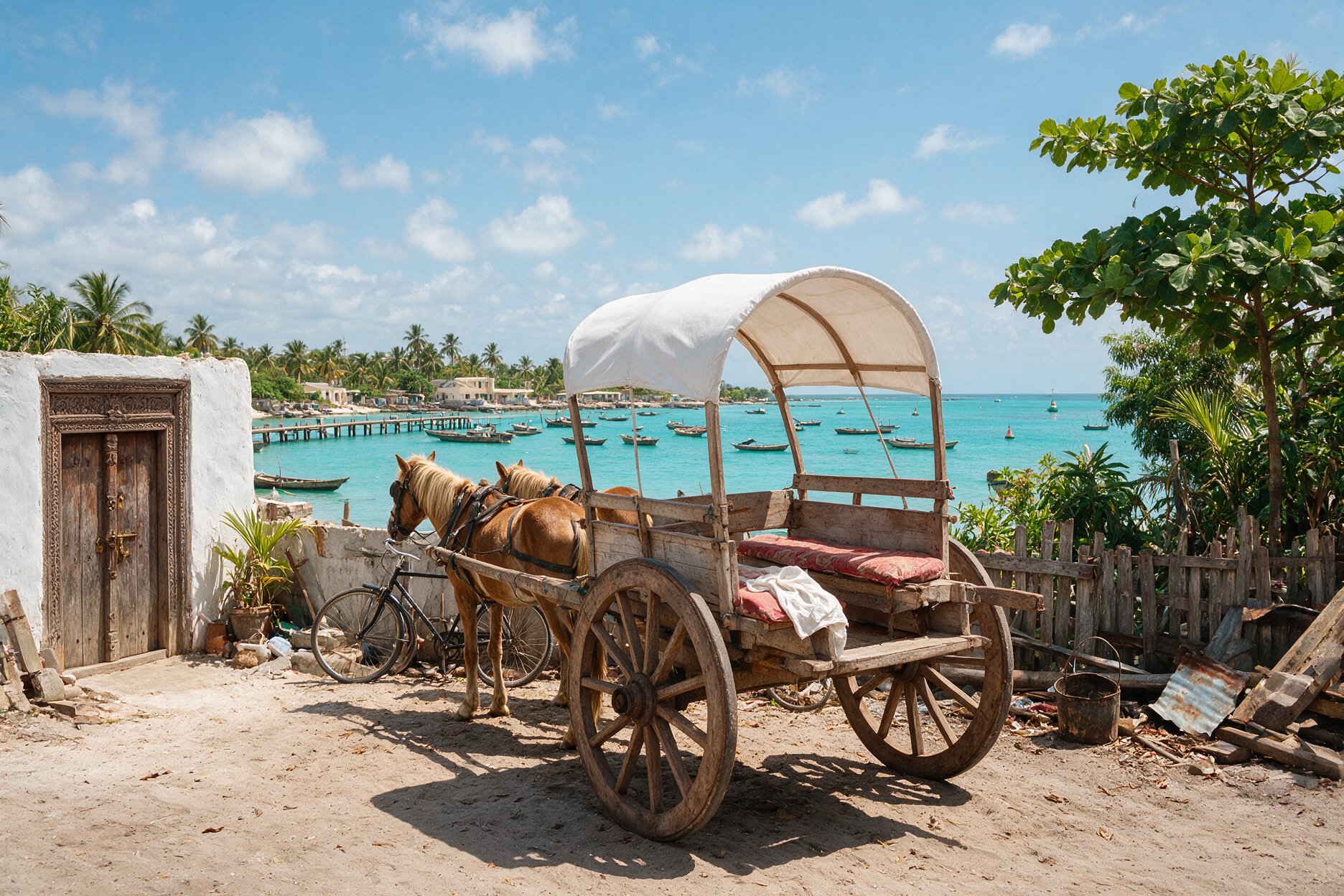
Getting around instead means one of two things. The first is a cidomo, a small horse-drawn cart whose name is a local portmanteau of cikar (ox cart), dokar (horse buggy) and mobil (car). A cooperative sets and displays fixed prices at the cart stands near each harbour, and a jetty-to-hotel hop typically runs IDR 50,000–150,000 — useful on Gili Trawangan, where some resorts sit a genuine 15–20 minute walk from the harbour. Negotiate up front for anything off the standard route, and clarify whether the fare is per person or per cart.
The second option, and the one most travellers use daily, is a bicycle. Rental shops near the harbours charge IDR 50,000–75,000 a day, and most hotels rent or lend them directly. Don’t expect gears or a comfortable seat — these are basic beach cruisers, and sand plus midday heat plus a coaster brake means you’ll arrive somewhere sweaty. You’ll also increasingly see electric bicycles offered as a workaround to the no-motor rule; whether that’s officially sanctioned varies by island, so don’t assume every “e-bike” claim is uncontested.
Nusa Penida: Scooters, Private Drivers and Unforgiving Roads
Nusa Penida looks close to Bali on a map and behaves like a different island once you’re on it. It’s steeper, drier, and its roads haven’t caught up to the Instagram traffic Kelingking Beach and Angel’s Billabong now pull in. Grab and Gojek barely function here — the driver base is thin and app coverage unreliable — so you’re choosing between a self-drive scooter or a hired driver with a car.
Scooter rental runs slightly higher than the mainland: a Honda Scoopy or similar automatic is IDR 80,000–100,000 a day, a Vario around IDR 100,000, and bigger bikes like an NMax or PCX — genuinely worth it given how steep some climbs to the viewpoints are — run IDR 150,000–200,000. Main roads are mostly sealed now, but the side roads down to the famous cliff viewpoints are a different story: loose stones, sudden drop-offs, and a fine limestone dust that turns into an ice rink the moment it rains. This isn’t exaggeration — tourists slide out on these roads regularly, and it’s one of the more honest warnings in this guide: don’t attempt Nusa Penida’s back roads in flip-flops, right after rain, or at dusk.
A hired driver and car for the day is the safer call for anyone who isn’t fully confident on a scooter — the terrain punishes small mistakes more than Bali’s roads do, and this is usually a once-off day trip nobody wants ruined by a spill on volcanic gravel. One planning note: most visitors day-trip Nusa Penida by fast boat and don’t stay overnight, and the last boats back to Sanur typically leave by mid-to-late afternoon. Build your driving loop around that departure time so you’re not rushing switchback roads at dusk.
Komodo National Park and Flores: Boats Are the Whole Game
There’s no road route here worth mentioning — Komodo National Park and the surrounding Flores coastline run entirely on boats and one small airport.
You’ll fly into Labuan Bajo (airport code LBJ), the gateway town for the whole region. Direct flights from Denpasar start from around $90 one-way and take about 1 hour 15 minutes, on a mix of Garuda Indonesia, Batik Air, Super Air Jet, Wings Air and others; direct flights from Jakarta also run. There’s technically an overland-and-ferry route via Lombok and Sumbawa, but it takes days, not hours — fly.
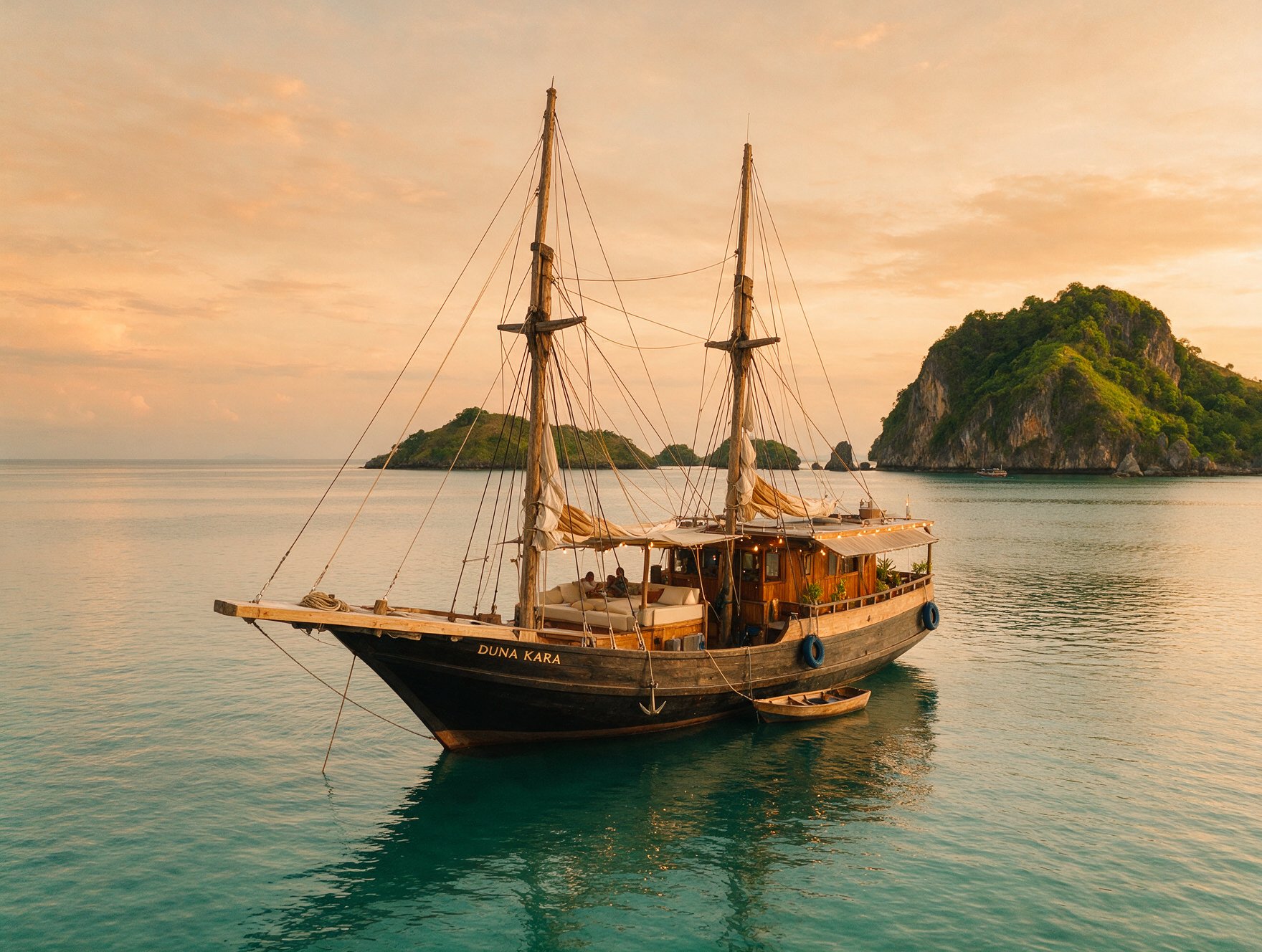
The classic way to see Komodo dragons, Pink Beach and Padar Island’s viewpoint is a liveaboard. Open-trip (shared-boat) 3D2N packages start from around $300 per person, including meals, snorkelling gear and transfers, with private charters costing considerably more and scaling with cabin count and boat class — the better call for families who don’t want to compromise on itinerary with strangers. The park entrance fee is separate: roughly IDR 250,000 (~$16) per international visitor per day, paid at the gate.
If an overnight boat isn’t your style, a chartered speedboat day trip from Labuan Bajo covering Padar Island, Pink Beach and a Komodo dragon site runs about $90 per person on a shared/open trip, or roughly $800 for a full private boat for the day — a better fit for a family that wants to set its own pace rather than vote on the itinerary with a boatload of strangers.
Our honest opinion: two days on a liveaboard beats a single rushed speedboat day. The light on Padar Island’s viewpoint is genuinely best right after sunrise, and you only catch that by sleeping on the boat the night before. A mistake to avoid: some budget operators sell a “private cabin” that’s actually one cabin on an otherwise shared open-trip departure, with common areas and the itinerary shared with other travellers’ groups. If a truly private, family-only boat is what you want, confirm the whole vessel is chartered, not just your cabin.
Jakarta: TransJakarta, MRT, KRL and Real Traffic
Jakarta’s public transport has quietly become one of the better reasons to spend a day or two there rather than treating it as a pure layover city. The TransJakarta busway network runs 14 main corridors across roughly 265 km, covering about 92.5% of Jakarta and carrying around 1.4 million riders a day as of early 2026, with a flat fare of IDR 3,500 per ride (IDR 2,000 in the 5–7am concession window).
MRT Jakarta, the north-south metro line through the CBD, is the most comfortable way to cross the city centre: fares start at IDR 3,000 and add IDR 1,000 per station, topping out around IDR 14,000. The wider KRL Commuter Line connects Jakarta to Bogor, Depok, Tangerang and Bekasi — useful if your hotel sits outside the central core — with a base fare from IDR 3,000 for the first 25km. All three systems, plus the LRT, physically meet at the Dukuh Atas interchange, so a single transit card chains a trip across systems.
Grab and Gojek remain the default for point-to-point trips, especially with luggage or late at night, and Jakarta’s traffic lives up to its reputation — a 5km trip at peak hour can genuinely take 40 minutes by car. Our honest caveat: don’t carry Bali’s private-driver mindset into Jakarta. A driver here sits in the same gridlock as everyone else, so for an airport-to-CBD run at rush hour, the MRT can beat a car door-to-door, not just on price.
Getting Between the Islands
Indonesia’s islands connect by fast boat, ferry and short domestic flight, and which one makes sense depends entirely on how much time you’re willing to trade for how much comfort.
Bali to Nusa Penida: fast boats leave from Sanur harbour, take about 30 minutes, and cost around IDR 150,000 (~$10) one-way. Roughly eight operators run the route with multiple daily departures — Angel Billabong and Maruti Express are two names that come up often as reliable — and it’s worth booking a day ahead around major Balinese ceremony dates, when locals travel too and boats fill up.
Nusa Penida to the Gili Islands: direct fast boats run up to six times a day, taking 1.5 to over 3 hours depending on route and sea conditions, with fares from roughly $14–34 one-way, on operators like Wanderlust Cruise, Starfish Fastcruise, Ekajaya Fast Ferry and Bluewater Express.
Bali to the Gilis or Lombok directly: fast boats from Padang Bai, Sanur or Serangan run in a similar price and duration bracket.
Domestic flights: for Bali-to-Labuan Bajo specifically, flying from around $90 one-way saves a day over any sea route.
A genuine caveat: fast boat schedules get cancelled in rough seas, especially November–March when swells build through the afternoon. If your itinerary is tight, book the earliest morning departure and build in a buffer day before anything time-sensitive, like a flight home. Slower public ferries also exist on some routes and cost less, but sit firmly in budget-backpacker territory rather than the mid-range-to-luxury pace most Get Tripped itineraries run on — the extra rupiah for a fast boat or short flight buys back hours you’d rather spend at the beach.
International Driving Permits: What Indian Tourists Actually Need
If you’re an Indian passport holder planning to ride a scooter yourself anywhere in Indonesia — Bali or Nusa Penida included — you need two documents together, not one: a valid Indian driving licence with a two-wheeler endorsement, and an International Driving Permit (IDP) issued in India before you leave. This isn’t something you can arrange after landing; get it from your regional RTO ahead of the trip, along with a passport photo and your existing licence.
India is a signatory to the 1949 Geneva Convention on Road Traffic, which is the framework Indonesia’s IDP recognition runs on, so a 1949-convention IDP issued in India is the correct document to carry alongside your original licence.
Riding without one carries two real risks. The more immediate is a roadside stop: police checkpoints, especially around Canggu, Seminyak and Kuta, target tourists without a valid licence or IDP, and on-the-spot fines in the rough range of $15–65 get mentioned often, sometimes handled more informally than an official ticket. The more serious risk only shows up if something goes wrong: in an accident, a travel insurer can and does deny a claim because you were riding without a legally recognised licence — hospital bills and bike repair costs then land entirely on you.
Our honest take: if you’re set on self-driving, get the IDP — it’s one RTO visit and doesn’t cost much. But for most travellers on a week-long Bali trip, especially first-timers, hiring a private driver sidesteps this entire risk category along with the traffic-navigation stress, which is exactly why it’s the option we build into most itineraries by default.
Frequently Asked Questions
Is Indonesia safe for tourists?
For the areas most travellers visit — Bali, the Gilis, Nusa Penida, Komodo and Jakarta’s tourist districts — yes, with the usual precautions. The most common real risk isn’t crime; it’s road traffic, specifically scooter accidents involving inexperienced riders. Petty theft happens occasionally and is worth normal caution, not alarm.
What is the best time to visit Indonesia?
Roughly April to October is the dry season across Bali, the Gilis and Komodo, and the easiest window for boat crossings and outdoor days. November to March brings afternoon downpours and choppier inter-island seas, which is when fast boats are most likely to get cancelled or delayed — worth building buffer days around if you’re travelling then. Jakarta is a year-round city destination where seasons matter far less to your itinerary.
How much does an Indonesia trip cost from India?
It varies by trip length, cities covered, and how much transport is pre-booked versus arranged on the ground. International airfare from Indian cities is usually the biggest swing factor, more than anything you’ll spend locally on drivers, boats or hotels. Get Tripped builds custom Indonesia trip cost estimates once we know your dates, cities and travel style.
Do I need an international driving permit in Bali?
Yes, if you plan to ride a scooter yourself. You need both a valid Indian licence with a two-wheeler endorsement and an IDP obtained in India before you fly. See the section above for what happens if you skip it.
Can I use Uber in Bali or Jakarta?
Uber doesn’t operate in Indonesia. Grab and Gojek are the ride-hailing apps that fill that role island-wide, and most travellers end up with both installed since one occasionally has more drivers available than the other in a given area.
Is it better to rent a scooter or hire a driver in Bali?
It depends on your riding experience and how long you’re staying. A confident rider based in one area for a week or more can genuinely enjoy a scooter. For a shorter trip, a first visit to Bali, or a family with kids, a private driver removes the traffic and safety questions entirely for roughly the same daily cost as a mid-range dinner for two. See the private driver section above for real numbers.
How do I get from Bali to the Gili Islands?
Fast boat is the standard route, departing from Padang Bai, Sanur or Serangan and arriving directly at Gili Trawangan or Gili Air in roughly 1.5 to 3 hours depending on the operator and route. The alternative is flying into Lombok International Airport and taking a short boat transfer from the Lombok mainland, which can make sense if you’re combining the Gilis with mainland Lombok.
What do Jakarta and Bali tour packages usually include for transport?
A well-built Jakarta and Bali tour package bundles the pieces that are genuinely annoying to arrange solo: the domestic flight or ferry connection between the two, private airport transfers on both ends, and private driver days for Bali sightseeing rather than leaving you to figure out Grab’s no-go zones or a scooter rental on arrival. That’s the combination we default to.
Getting around Indonesia well is mostly a matter of matching the right tool to the right island — a driver in Bali, a bicycle on the Gilis, a boat in Komodo, the MRT in Jakarta — rather than forcing one transport habit across all of them. Once that’s sorted, the trip stops being logistics and starts being the reason you booked it: Kelingking Beach at sunrise, a dragon sighting on Rinca, or a Jakarta rooftop after a day spent actually seeing the city. For the destination side, our guides to places to visit in Bali beyond Ubud, Seminyak and Canggu and Bali’s hidden gems cover where to actually go once transport’s figured out.
Get Tripped builds custom Bali tour packages from India and full multi-island Indonesia itineraries with the transport already worked out — the right driver days, the right boat connections, flights timed around Labuan Bajo’s short runway hours. Get in touch to plan your custom Indonesia trip, and we’ll build the transport plan around wherever on this list you actually want to go.