The first time I asked a warung owner in Ubud if the gado-gado had shrimp paste in the peanut sauce, she laughed and said “of course” like it was a silly question — then walked to the back and made me a fresh batch without it in about four minutes. That’s the thing about vegetarian food in Indonesia that nobody tells you before you go: it’s not a fight, it’s a conversation. Tempeh and tofu were invented in Java centuries before “plant-based” was a marketing term, and Bali’s Hindu kitchens have been cooking vegetable-forward temple food since long before Canggu had a single smoothie bowl on a menu.
That doesn’t mean it’s effortless everywhere. Jakarta’s food scene assumes meat by default the way most of India assumes rice. Flores outside Labuan Bajo has stretches where your options are one warung and whatever they happen to have that day. This guide is built for Indian vegetarian and vegan travelers planning a trip through Indonesia — Bali, Komodo National Park, the Gili Islands, Jakarta, Nusa Penida and Flores — with real, currently operating restaurants named for each place, the Indonesian phrases that actually get you a meat-free plate, and the honest gaps where you’ll need a backup plan instead of a restaurant recommendation.
In This Guide
- Why Indonesia Is Better for Vegetarians Than It Looks on Paper
- Indonesian Phrases Every Vegetarian Traveler Should Know
- Bali: Ubud, Canggu and Seminyak
- Nusa Penida
- The Gili Islands
- Komodo National Park and Labuan Bajo
- Flores Beyond Labuan Bajo
- Jakarta
- The One Mistake Almost Every Vegetarian Traveler Makes Here
- FAQs
- Planning Your Trip
Why Indonesia Is Better for Vegetarians Than It Looks on Paper
Indonesia is a Muslim-majority country, but the island that most Indian travelers actually visit — Bali — is roughly 85% Hindu, and that matters more for your dinner plate than any guidebook mentions. Balinese Hindu cooking leans heavily on vegetables, tempeh, tofu and coconut, partly because temple ceremonies (there’s one happening somewhere on the island most days of the year) call for plant-based offerings and feast food. Add Bali’s enormous wellness-tourism scene, built around yoga retreats in Ubud and surf culture in Canggu, and you get a genuinely serious vegan café culture — the kind you’d expect in Bangalore’s better neighborhoods, not a tropical island.
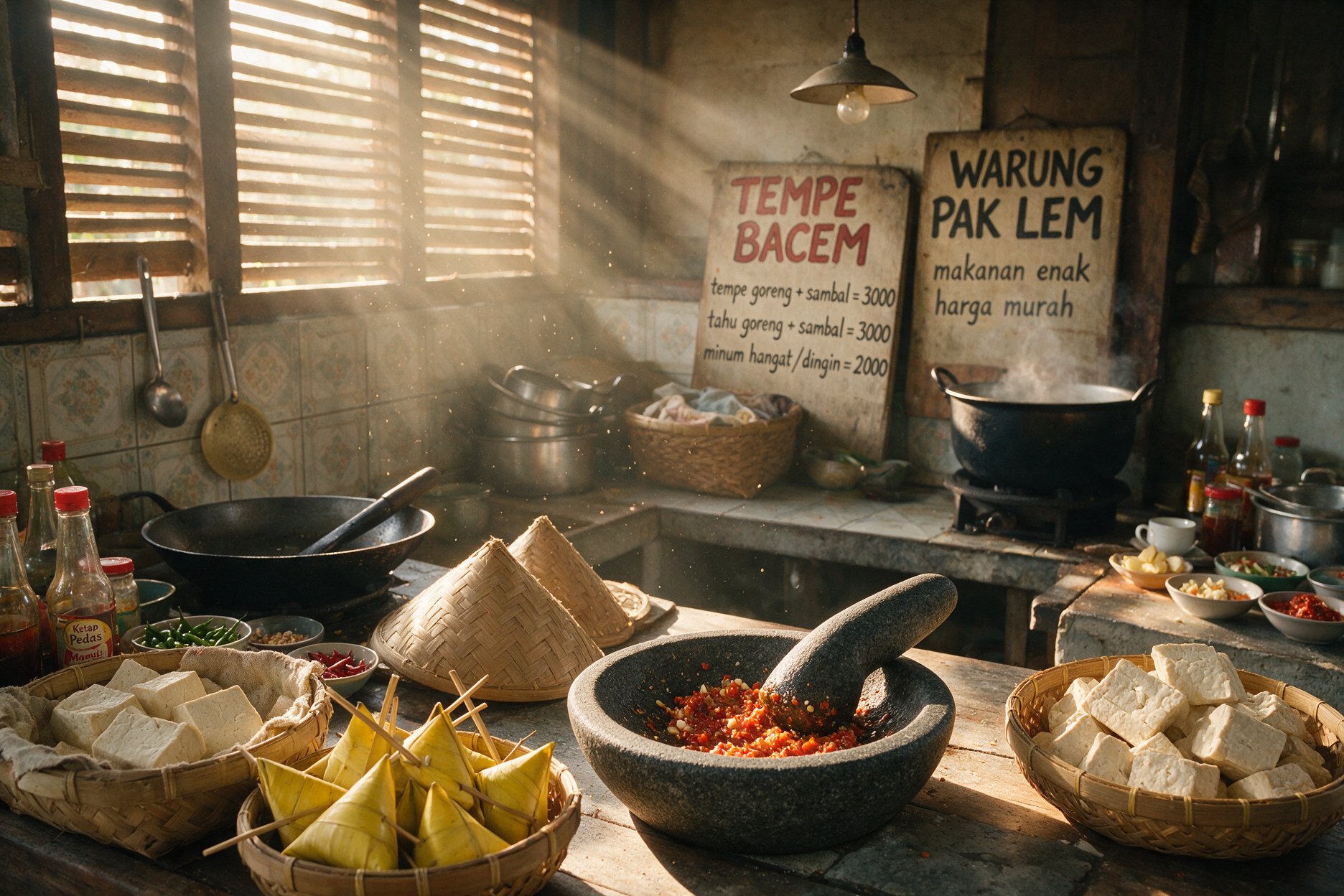
Even outside Bali, Indonesian food has a strong plant-based backbone you can lean on anywhere: tempe (fermented soybean cake, crisped up or in curry), tahu (tofu, often fried), gado-gado (steamed vegetables and tofu in peanut sauce), sayur lodeh (vegetables in coconut milk broth), cap cay (stir-fried mixed vegetables, a Chinese-Indonesian staple found everywhere), and vegetarian versions of nasi goreng and mie goreng (fried rice and fried noodles) that most cooks can make without meat if you ask before they start cooking, not after. These five dishes will keep you fed from a Jakarta food court to a warung on a Flores hillside, which is exactly why we keep repeating them through this guide.
Indonesian Phrases Every Vegetarian Traveler Should Know
English gets you surprisingly far in Bali and in tourist-facing spots elsewhere, but a few Bahasa Indonesia words change the quality of what lands on your table, especially in local warungs where “vegetarian” as a concept hasn’t been menu-tested yet.
- Saya vegetarian — “I’m vegetarian.” A reasonable opener, though it doesn’t always register that fish and shrimp paste count as non-vegetarian to you.
- Tanpa daging — “Without meat.” This is the phrase that actually works. Use it, don’t just say the word “vegetarian” and hope.
- Tanpa ikan and tanpa telur — “Without fish” and “without egg,” for vegans or anyone avoiding egg.
- Ada terasi? — “Is there shrimp paste?” Ask this specifically. Terasi hides in sambal, in the peanut sauce over gado-gado, in vegetable stir-fries that look completely plant-based. It’s the single biggest hidden non-veg ingredient in Indonesian cooking.
- Tahu, tempe — Tofu, tempeh. Useful to know by sight and by name, since they’re your default protein almost everywhere.
- Sayur saja — “Vegetables only, please.”
One honest opinion here: don’t over-rely on the word “vegetarian” alone. It’s understood in tourist zones like Ubud and Canggu, but a cook in a family-run warung in rural Flores may not immediately connect it to “leave out the ikan asin (salted fish) I always add to this dish.” Saying tanpa daging, tanpa ikan and pointing at the tofu gets a faster, more accurate result than the English word ever will.
Bali: Ubud, Canggu and Seminyak
If you’re wondering about the best places to visit in Bali as a vegetarian, start with the assumption that you’ll eat better here than almost anywhere else in Southeast Asia. This is genuinely one of the easiest islands on earth to be a plant-based traveler, and it’s a huge part of what makes Bali tour packages from India such reliable, low-stress trips for vegetarian families and solo travelers alike.
Ubud
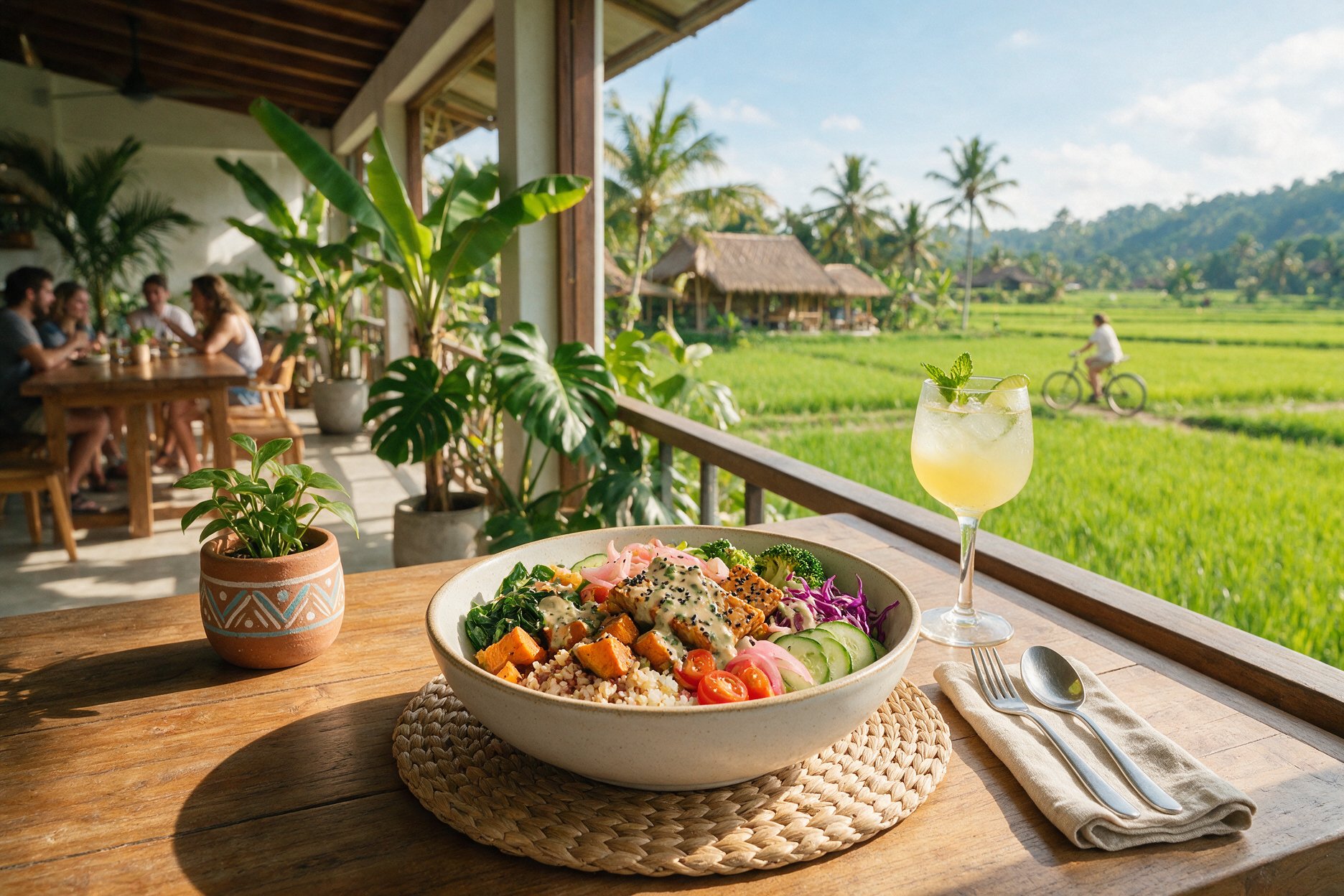
Ubud built its identity around yoga retreats and rice-paddy views, and the food followed. Moksa runs its own permaculture garden on the edge of town and serves both raw and cooked vegan dishes — the raw lasagna is the dish people mention most, layered thin and cold with a genuinely balanced cashew-based sauce rather than the mushy version you sometimes get elsewhere. Sage takes a different, more playful route with Mexican-inspired vegan food: tempeh tacos and a breakfast burrito with tofu scramble that holds its own against any Bali breakfast spot. For something local and considerably cheaper, Warung Wulan and Siboghana Waroeng serve Balinese-style nasi campur built entirely from plant-based sides for well under what you’d pay for a coffee back home.
My honest opinion: Locavore, Ubud’s famous fine-dining spot, does a genuinely excellent vegetarian tasting menu and is worth it once — but it needs reservations weeks out and eats up an entire evening. Melting Wok, a five-minute walk from the main road, will feed you a tempeh coconut curry that’s nearly as memorable for about a tenth of the price and zero advance planning. Save Locavore for a special night, not a Tuesday dinner. This is also a good base for the classic things to do in Ubud beyond the food — the Campuhan Ridge walk and the rice terraces are both free and best done before 8am, before the tour buses arrive.
Canggu and Seminyak
Canggu is where Bali’s vegan café scene gets loud about itself, in a good way. Shady Shack is fully vegetarian with rice-field views and a Japanese-inspired nori bowl that’s become something of a local institution. I Am Vegan Babe does convincing plant-based versions of comfort food — burgers, soy-bacon sandwiches — that don’t taste like a compromise. Roots, in nearby Pererenan, builds custom bowls from more than 50 ingredients including a smoked tofu katsu sandwich worth the short detour. If you want vegan Italian, Kasto does pizza and pasta with a properly rich plant-based ragu, which is rarer to find well-executed than you’d think.
In Seminyak, Tanaman at Potato Head takes a more refined, share-plate approach built around minimally processed organic ingredients, and KYND Community is a bright, plant-forward café with genuinely good gourmet sandwiches if you need a lighter lunch between beach days.
Nusa Penida
Nusa Penida gets visited mostly for its cliffside viewpoints — Kelingking Beach, Angel’s Billabong — and the food scene is younger and thinner than Bali’s mainland, but it’s not empty. Vegan Soul Kitchen, attached to Echo Alam Nusa Lodge in Sakti with jungle views, is a fully vegan restaurant doing Indonesian staples like gado-gado, tempeh satay and smoothie bowls, and it’s become the go-to name locals and repeat visitors mention first. Warung Tu Pandeh, also in Sakti, keeps a dedicated vegetarian menu with eggplant curry and vegetable nasi goreng, and it’s the kind of tourist-friendly warung that’s used to the question before you ask it. Near the harbour in Ped, Penida Espresso and the neighbouring The Gallery cover breakfast and coffee with smoothie bowls, avocado toast and plant-milk options.
A practical note: Nusa Penida’s roads are rough and distances between viewpoints are longer than the map suggests, so plan your meals around whichever side of the island your itinerary has you on that day rather than crossing the island for a specific restaurant. Most day-trip drivers know the vegetarian-friendly warungs near the main viewpoints even if they’re not famous enough to show up in a search.
The Gili Islands
The three Gilis — Trawangan, Air and Meno — sit off Lombok’s coast, no cars or motorbikes allowed, which somehow makes the food scene feel more deliberate than rushed. Gili Trawangan, the busiest of the three, has Pituq, an all-vegan café with a jackfruit curry and laksa that regularly top traveler reviews for the island, and Kayu Cafe, a relaxed, rustic spot doing raw and organic breakfast bowls. On Gili Air, quieter and more geared toward longer stays, Musa Cookery has genuinely creative vegan cooking — a satay banh mi and a jackfruit gyro that don’t read like substitutions — and Pachamama does sweet and savoury organic bowls with good raw desserts, though it runs pricier than the local warungs. If you hop over to sleepy Gili Meno, Ya Ya Warung will do gado-gado without egg on request and keeps things simple and cheap.
Fun fact worth knowing before you go: none of the Gilis have fresh groundwater. Almost everything, including a good chunk of the produce, arrives by boat from Lombok or Bali, which is part of why vegetable-forward dishes here can be a little more expensive than the mainland equivalent — you’re not being overcharged, the supply chain is just genuinely longer.
Komodo National Park and Labuan Bajo
Komodo National Park itself — the islands where you actually see the dragons, Padar’s viewpoint, Pink Beach — has no restaurants at all. You eat what your liveaboard or day-trip boat serves, or what you bring. The good news is that Indonesian boat crews cook rice, vegetables, tempeh and tofu as a matter of course, so a vegetarian meal on board is rarely a problem — but it is something you need to tell your operator in advance, not mention as you’re boarding. If you’re vegan, say so explicitly too, since “vegetarian” on a boat menu can still mean egg-fried rice by default.
Back on land in Labuan Bajo, the gateway town, the options are real and worth naming. Mugen Ramen & Grill has ocean views and four types of vegan ramen — the vegan tantanmen is the one to order. Bajo Bloom does Western-style café food with a tempeh sandwich that’s genuinely well-marinated, plus smoothie bowls and traditional Indonesian drinks. Molas Café (Wae Molas) clearly labels its vegan options, including a gado-gado spring roll that’s a nice fusion twist, along with customizable vegan waffles. Beyond these three, the small warungs near Labuan Bajo’s harbour will do tempeh, tofu, noodles and vegetables on request — ask for tanpa daging and you’ll generally be fine.

Flores Beyond Labuan Bajo
Here’s the honest gap in this guide, and we’d rather tell you than invent a café that doesn’t exist. Once you head overland from Labuan Bajo toward Bajawa, Ende or the Kelimutu volcano crater lakes, verified named vegetarian restaurants become genuinely hard to find — this stretch of Flores gets far fewer international tourists than Bali or even Komodo’s boat trips, and the food scene reflects that. We’re not going to hand you a restaurant name we can’t confirm is still open.
What we can tell you, honestly: almost every warung in this region, however small, can put together a plate of rice, sayur (mixed sautéed or coconut-braised vegetables), tempe goreng (fried tempeh) and tahu (tofu) even without a written menu, because these are pantry staples across rural Indonesia, not restaurant specialties. Lead with nasi sayur, tanpa daging, tanpa ikan and you’ll almost always get fed. If you’re travelling this route with a Get Tripped guide, tell them your dietary needs before the trip starts, not on the road — a good local guide will know which warung along each stretch handles vegetarian requests well, even if no website does. And carry snacks: dry fruit, protein bars, roasted nuts, whatever travels well, for the long driving days between Kelimutu and the coast where meal stops can be sparse and timed around the group rather than your preferences.
Jakarta
Jakarta is a different animal from Bali entirely — a sprawling, mostly Muslim megacity where meat is the default and vegetarian is a specific request, not an assumption. But it also has money, a large expat and wellness crowd, and genuinely good plant-based restaurants as a result. Burgreens is the pioneer here, with multiple outlets doing fully plant-based Asian and Western dishes and a menu built for people who don’t think of themselves as “vegan,” which keeps it approachable. Dharma Kitchen in North Jakarta is the old guard — a long-running, fully vegetarian restaurant doing Indonesian, Asian and Western comfort food with solid house-made desserts. TIASA Plant-Based Canteen in Kemang reworks Indonesian classics, including a vegan take on dendeng (spiced dried meat, here made plant-based) that’s a smart way to try a classic dish without the meat. For something lighter, Kinkitsuya in North Jakarta does Japanese vegan plates alongside good matcha and specialty coffee.
Outside these named spots, most Padang-style restaurants (the glass-fronted ones with dozens of dishes displayed) and Chinese-Indonesian eateries can do a vegetable and tofu plate, since cap cay and sayur dishes are standard menu items even at meat-focused restaurants — you’re just choosing from what’s already there rather than hunting for a dedicated vegetarian kitchen.
The One Mistake Almost Every Vegetarian Traveler Makes Here
Assuming a dish is vegetarian because it looks like vegetables. Sambal, the chili condiment served with almost everything in Indonesia, very often contains terasi (fermented shrimp paste), and it’s added in the kitchen before the plate reaches you, not stirred in at the table where you could ask. Gado-gado’s peanut sauce sometimes has the same issue. Kerupuk, the crispy crackers that come free with nearly every meal, are frequently fried in the same oil as fish or shrimp crackers, or made from fish itself. None of this is being hidden from you on purpose — it’s just how the dish has always been made, and nobody thinks to mention an ingredient that’s been standard for generations. Ask ada terasi? before you eat, every time, even when the dish is 90% vegetables.
Frequently Asked Questions
Is it hard to eat vegetarian or vegan in Bali?
No — Bali is genuinely one of the easier places in Asia to eat vegetarian, thanks to Balinese Hindu cuisine’s plant-based traditions and Ubud/Canggu’s dedicated vegan café scene. Outside Bali, it takes a bit more effort and the right phrases, but it’s manageable everywhere in this guide.
Is Indonesia safe for tourists, especially vegetarian families traveling with kids?
Yes, Indonesia’s main tourist areas — Bali, the Gilis, Labuan Bajo — are well set up for family travel, with normal precautions around traffic, sun and water safety. Indonesia family holiday packages built around Bali specifically tend to be the most stress-free entry point for first-time visitors, food included.
What’s the best time to visit Indonesia for good food and weather?
The dry season, roughly April to October, is best for both weather and for produce availability at markets and warungs, especially for the Gilis and Komodo boat trips where sea conditions matter. Best time to visit Indonesia also depends on which islands are on your itinerary, since Flores and the eastern islands have a slightly different rhythm than Bali.
Can I get vegan food easily, or just vegetarian?
Vegan is very achievable in Bali specifically, where cafés label dishes clearly. Elsewhere, vegetarian is easier than strictly vegan since egg and dairy (especially condensed milk in drinks) show up more casually, so always double-check with tanpa telur, tanpa susu.
Do Indonesian restaurants understand “vegetarian” in English?
In tourist areas, yes. In smaller towns and rural Flores, the Indonesian phrase tanpa daging (without meat) works far more reliably than the English word.
What should I eat if I can’t find a dedicated vegetarian restaurant?
Lean on the five staples covered throughout this guide: gado-gado, tempeh and tofu dishes, sayur lodeh, cap cay, and vegetarian nasi or mie goreng. They exist on almost every menu in the country, dedicated vegetarian restaurant or not.
Is street food safe to eat as a vegetarian?
Generally yes, with the same common-sense rules as anywhere — pick stalls with good turnover, freshly cooked food, and bottled water. The bigger risk for vegetarians isn’t hygiene, it’s hidden shrimp paste or fish stock, so ask before you eat rather than after.
Which Indonesian destinations are best for a vegetarian-friendly family trip?
Bali, hands down, followed by the Gili Islands if you want a quieter, no-traffic base. Both work well within broader Wonderful Indonesia travel guide itineraries that combine a few islands, and both have enough named vegetarian and vegan restaurants that you’re never stuck.
Planning Your Trip
Vegetarian and vegan travel in Indonesia isn’t a single answer — it’s genuinely easy in Bali, workable with a few phrases in the Gilis and Nusa Penida, requires forward planning in Komodo and Jakarta, and needs an honest backup plan in rural Flores. That range is exactly why a trip here benefits from local knowledge rather than a single generic packing list. If you’re mapping out places to visit in Bali alongside Komodo dragons and Flores volcanoes, or just want Bali tour packages from India built around your actual dietary needs instead of a one-size-fits-all itinerary, Get Tripped can put together a custom Indonesia trip that accounts for where you’ll eat well without a second thought, and where you’ll want to carry a snack. Get in touch and let’s design your Indonesia itinerary together.