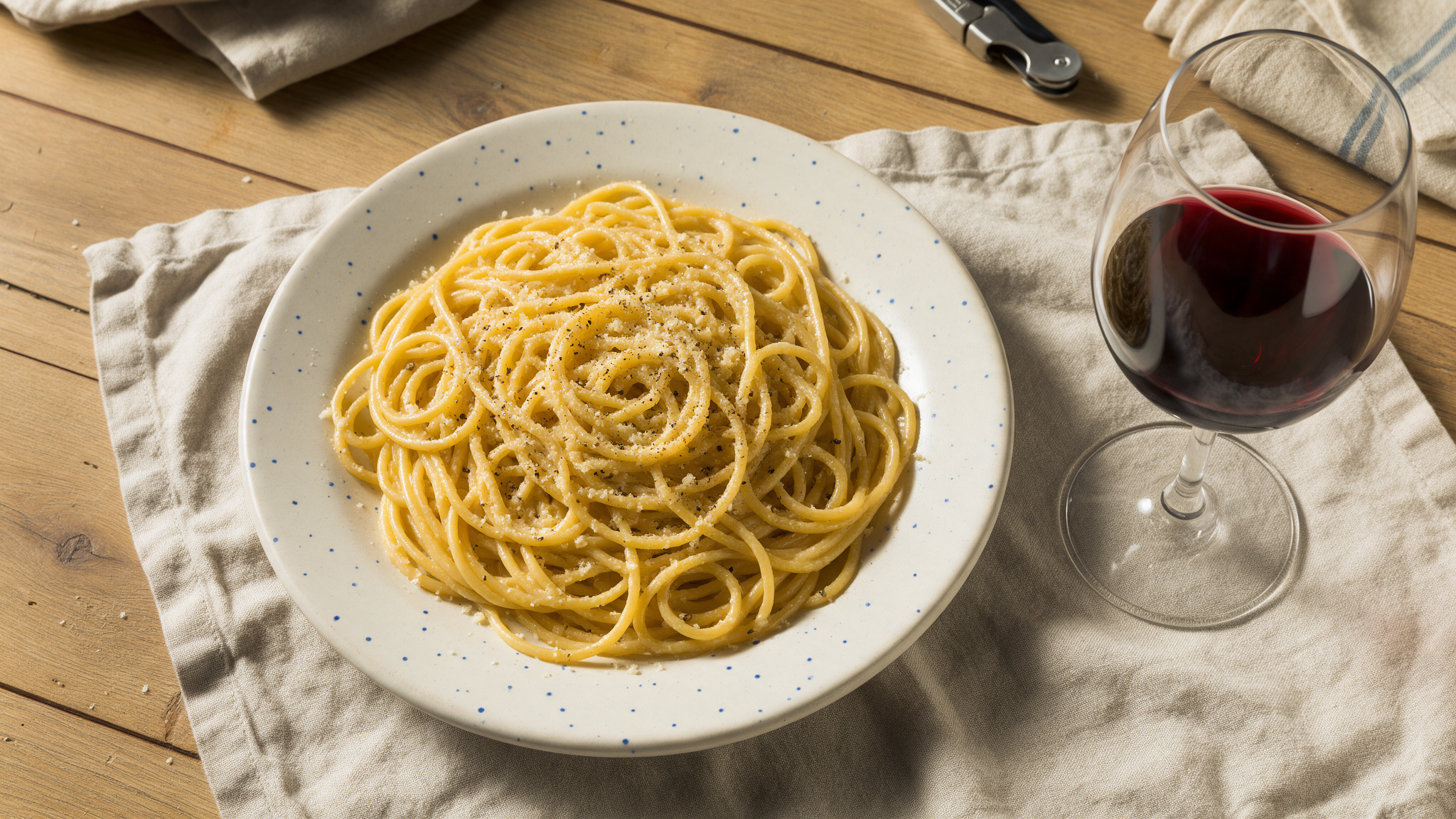
The best meal we had in Italy wasn’t at a restaurant with a Michelin star or even a menu translated into English. It was a hole-in-the-wall near Campo de’ Fiori in Rome where the owner brought out cacio e pepe without asking what we wanted, because by day three he’d already figured out our order. That’s the thing about Italian food that guidebooks undersell — it’s regional to the point of being almost tribal, and the Italy food trail changes completely depending on whether you’re in Rome, Venice, Florence, Milan, the Amalfi Coast, or up at Lake Como.
Rome: Pasta Done a Specific Way
Rome’s food identity runs through four pasta dishes — cacio e pepe, carbonara, amatriciana, and gricia — and locals have strong opinions about how each should be made (carbonara with cream is considered a minor crime). Head to the Testaccio neighborhood, Rome’s old slaughterhouse district turned food hub, for the most authentic versions; Trattoria da Danilo and Flavio al Velavevodetto both do a carbonara that doesn’t cut corners. For a late-night eat, the pizza al taglio (by-the-slice) counters near Campo de’ Fiori stay open well past midnight and serve some of the best crispy-base Roman-style pizza in the city.
Coffee note: Order your espresso standing at the bar (al banco) — sitting at a table can double the price, and Romans genuinely do drink their coffee in under two minutes at the counter, not as a performance.
Venice: Cicchetti and the Bacaro Crawl
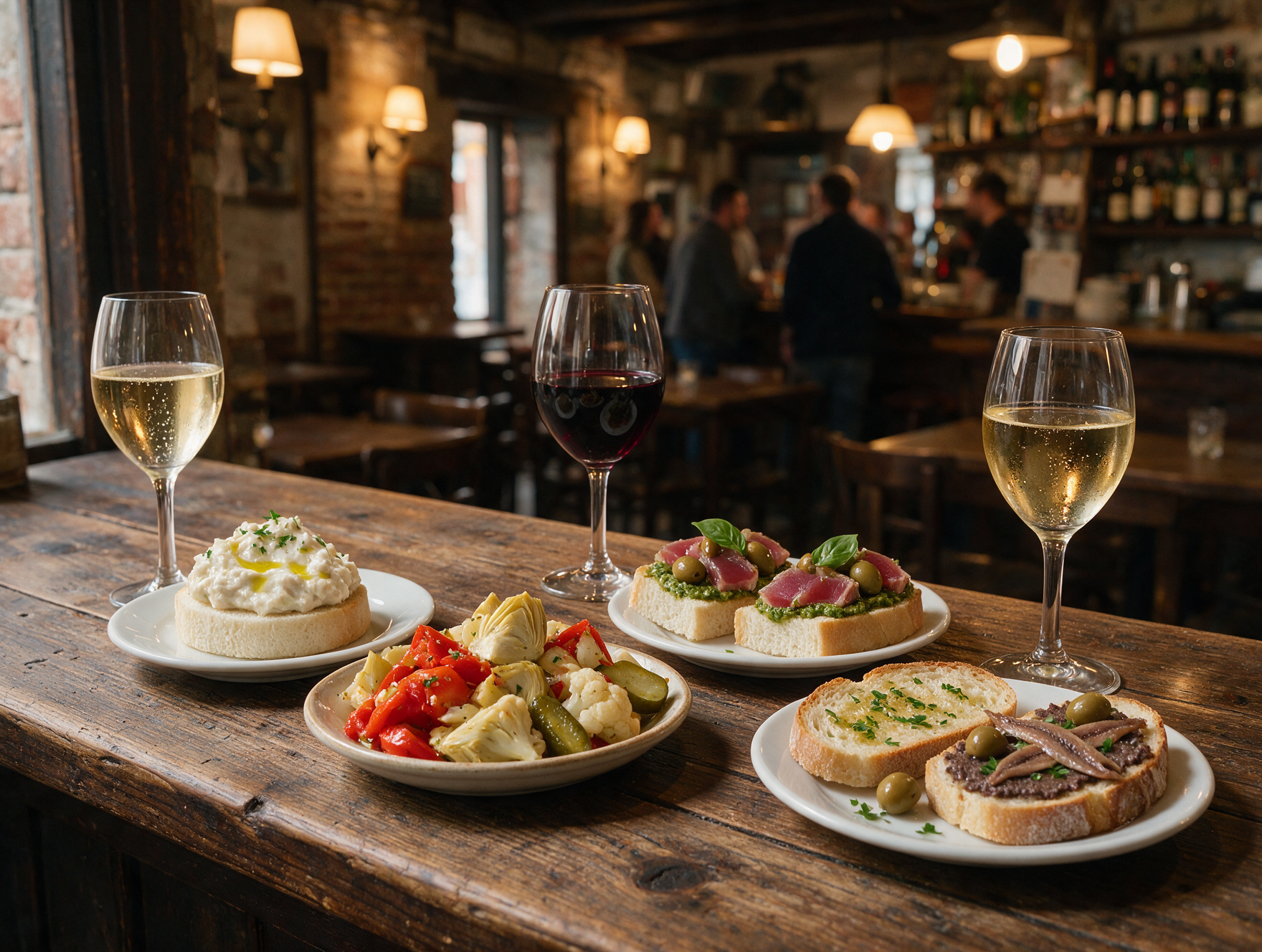
Skip the tourist-trap restaurants directly on St. Mark’s Square — the food-to-price ratio there is genuinely bad — and instead do what Venetians do: a bacaro crawl. Bacari are small wine bars serving cicchetti, Venice’s answer to tapas — little plates of baccalà mantecato (whipped salt cod), marinated sardines, or polenta topped with something briny. Cannaregio’s back streets have the highest density of good bacari with the fewest tourists. Order an ombra (small glass of wine) with each stop; it’s the local unit of measurement for a proper crawl.
Late-night eats: Venice shuts down earlier than Rome or Milan — most kitchens stop serving by 10:30pm — so plan dinner earlier than you would elsewhere in Italy.
Florence: Bistecca and Market Food
Florence’s signature dish is bistecca alla fiorentina, a thick-cut T-bone steak served rare, meant for sharing. It’s not cheap (priced by weight, often €50-70 for a steak for two), but it’s a genuine Tuscan institution, not a tourist invention. For an everyday meal, Mercato Centrale’s upper floor food hall has a dozen small vendors doing everything from truffle pasta to Florentine tripe sandwiches (lampredotto) — the tripe sandwich sounds like a hard pass until you actually try one from a stall that’s been doing it for decades.
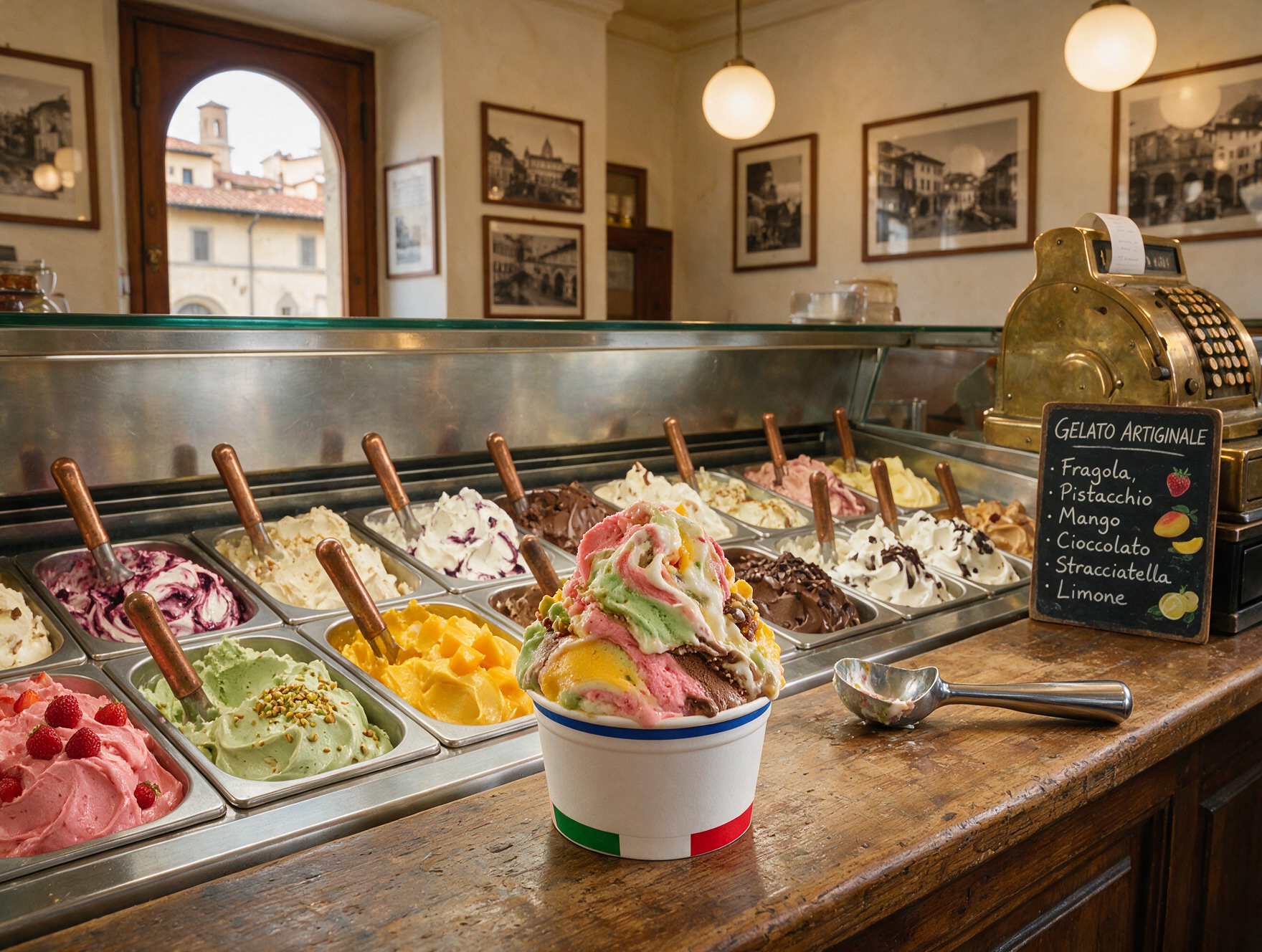
Fun fact: Florence is credited as the birthplace of gelato, developed in the Medici court kitchens in the 16th century — and the city still takes the distinction between real gelato and the bright, mounded, artificially-colored stuff seriously. If the gelato is piled into peaks taller than the tub, that’s usually a sign it’s not the real thing.
Milan: Risotto, Aperitivo, and Fast Lunches
Milan’s food culture moves at the pace of the city — quick, polished, business-lunch efficient. Risotto alla milanese, saffron-yellow and starchy in the best way, is the dish to order here, alongside the Milanese cotoletta (a breaded veal or chicken cutlet, thinner and larger than its Viennese cousin). Milan is also where aperitivo culture is taken most seriously: order a Negroni or Aperol Spritz between 6-9pm at a bar in the Navigli canal district, and the small plates that come with your drink often amount to a light dinner on their own.
Coffee runs: Milanese espresso bars near the Duomo and Brera district do a brisk morning trade — cappuccino before 11am only, ordering one after lunch marks you instantly as a tourist (Italians consider milky coffee a breakfast drink, not an after-meal one).
Amalfi Coast: Seafood and Lemons
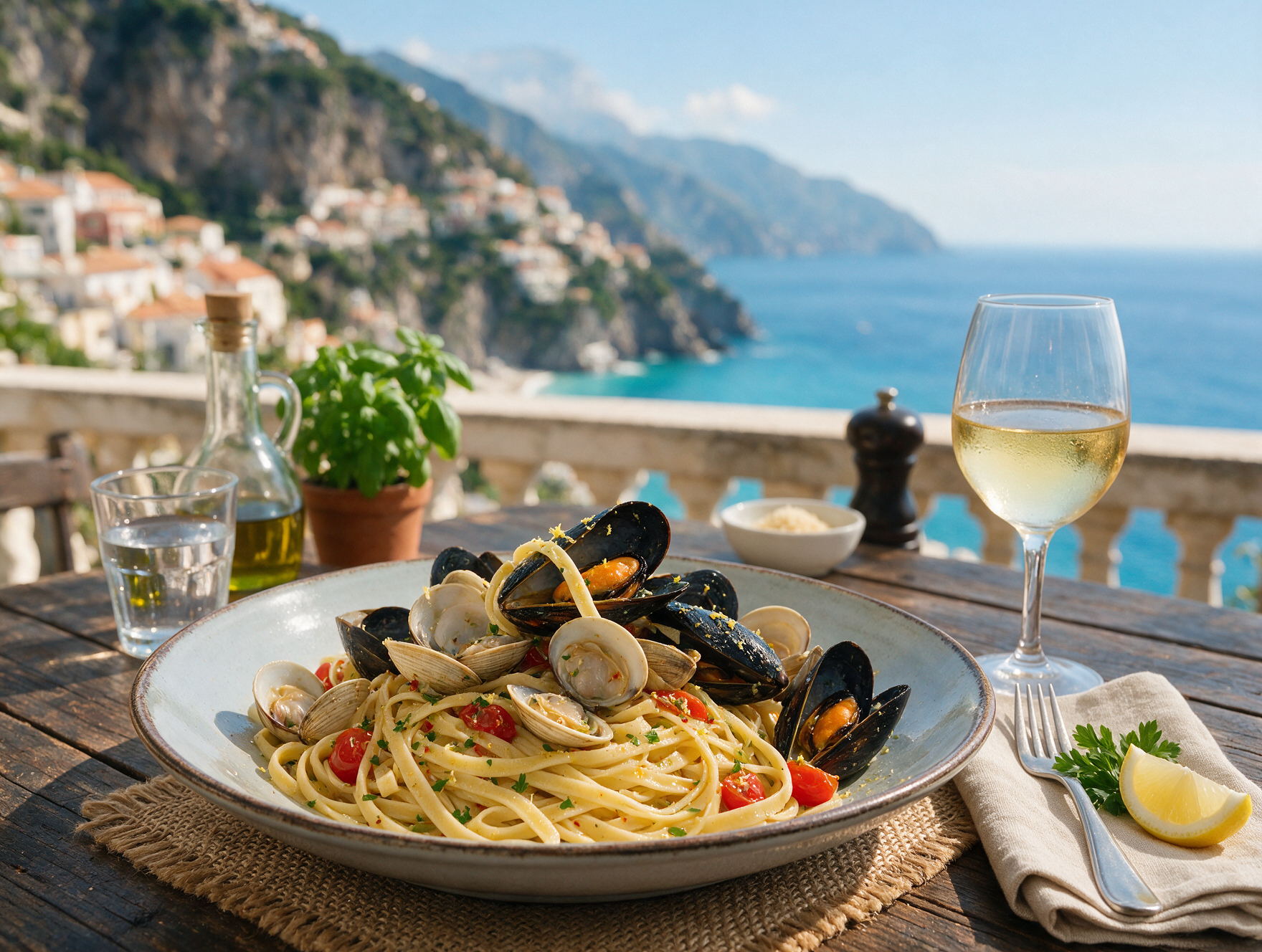
Everything here tastes like it was pulled from the water or picked off a tree that morning. Fresh seafood — grilled branzino, scialatielli ai frutti di mare (a thick, hand-cut pasta with clams and mussels) — dominates menus in Positano, Amalfi, and Sorrento. The region’s enormous lemons, grown on terraced groves along the cliffs, show up in everything from limoncello to a simple pasta al limone that’s better than it sounds. A boat-based lunch stop at a cove restaurant reachable only by water is worth arranging if your itinerary allows it — the food is often simpler than in town, but the setting does the rest of the work.
Lake Como: Lakeside Trattorias and Missoltino
Lake Como’s food is quieter and more local than the coastal towns further south — think lakeside trattorias in Bellagio and Varenna serving risotto with perch (risotto al pesce persico) pulled straight from the lake, and missoltino, a dried and salted lake fish that’s a genuinely regional specialty you won’t find outside this area. It’s an acquired taste, and we won’t pretend otherwise, but it’s worth trying once with a glass of local wine to understand why locals still make it.
A Mistake to Avoid Across All Six
Don’t order cappuccino with lunch or dinner, and don’t expect free tap water and bread the way you would elsewhere — Italian restaurants often charge a small “coperto” (cover charge) per person instead, which covers bread and table service. It’s not a scam, just a different system, and once you know to expect the €2-4 line item on the bill, it stops feeling like you’re being overcharged.
Frequently Asked Questions
What is the best food city in Italy?
There isn’t one — Rome, Florence, Milan, Venice, and the Amalfi Coast each have distinct food identities shaped by their regional ingredients and history. Rome for pasta, Florence for steak and gelato, Milan for risotto and aperitivo, Venice for cicchetti, and the Amalfi Coast for seafood and lemons.
Do Italian restaurants charge for bread and water?
Most charge a small “coperto” or cover charge (€2-4 per person) that covers bread and table service, rather than itemizing bread and water separately. Tap water is sometimes free if you specifically ask for “acqua del rubinetto,” though many restaurants default to offering bottled water.
Is it rude to order cappuccino after a meal in Italy?
It won’t get you thrown out, but it does mark you as a tourist — cappuccino and other milky coffees are considered a morning drink, and locals order espresso or macchiato after meals.
What’s a must-try dish in each Italian city?
Carbonara in Rome, bistecca alla fiorentina in Florence, risotto alla milanese in Milan, cicchetti in Venice, scialatielli ai frutti di mare on the Amalfi Coast, and risotto al pesce persico around Lake Como.
Eat Your Way Through Italy
Food is one of the best reasons to build extra time into an Italy itinerary rather than rushing between photo stops. Get Tripped’s Italy trip packages can build in food-focused experiences — a pasta-making class in Florence, a bacaro crawl guide in Venice — alongside the sightseeing. Explore our Italy tour packages or ask us to build a custom Italy itinerary around the food.